×

Mali🇲🇱 | hikesNiger River Trekfloodplain villages, seasonal wetlands, ferry crossings, riverside markets | things to do and best time to go

Explore Tellem Caves TrailExplore Ségou to Markala Walk

Backpacking in Niger River Trek
By Johan Kruseman 🇳🇱 | Updated October 15, 2026

Your boots crunch over sun-baked clay, sweat stinging your eyes as the Niger River flashes silver between acacia thorns. Somewhere behind you, a donkey brays; ahead, the air smells of woodsmoke and river mud. This is the Niger River Trek, winding through Mali’s heartland, just outside Ségou—far enough from Bamako to feel like you’ve crossed a threshold, but close enough that a battered bush taxi will get you to the trailhead if you’re patient. The trek isn’t Everest, but the heat and dust demand respect. Expect long, flat stretches broken by sudden bursts of village life—kids waving, women pounding millet, fishermen hauling nets. The scenery is hypnotic: endless river bends, baobabs like sentinels, and sunsets that turn the water to molten copper. Compared to the Dogon Country’s cliffside drama, this is a riverine slow burn—less vertical, more elemental, and absolutely worth the sweat if you want Mali’s pulse, not just its postcards.

Discover everything you want to know in the 📖 Mali Travel Guide.
Best time to go: November - April
Duration: 10 days
Distance: 250 kilometers
Total ascent: 1,200 meters
Safety warning

The current risk level for Mali is high. Check the advice before going.


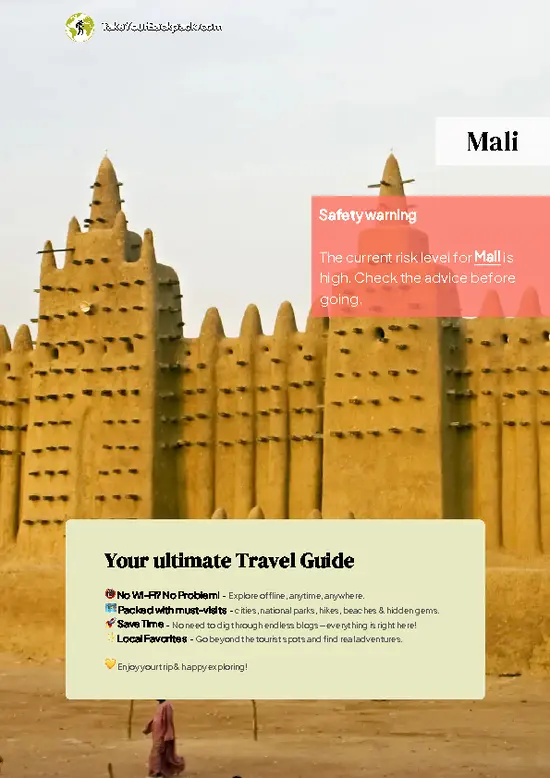
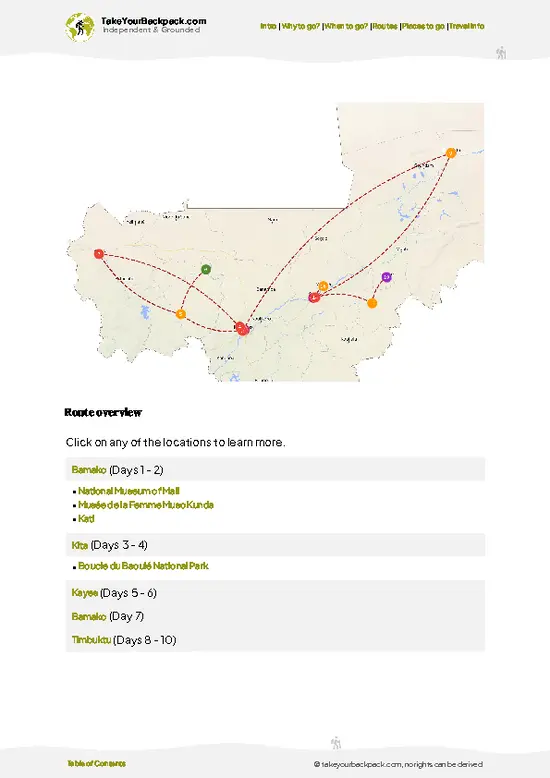
example page 0 from our offline Travel Guide for Mali
example page 1 from our offline Travel Guide for Mali
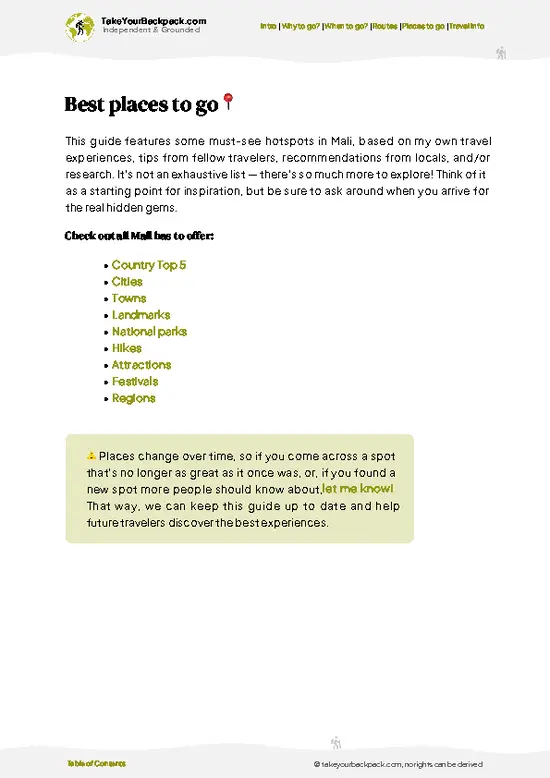
example page 2 from our offline Travel Guide for Mali
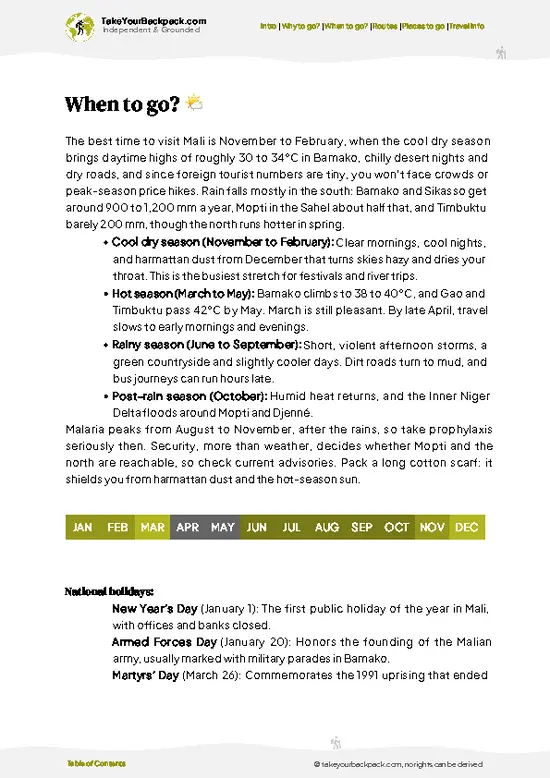
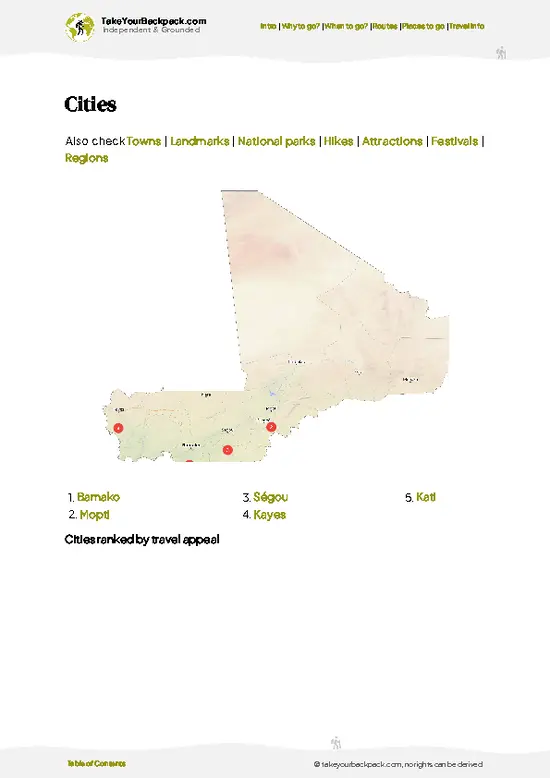
example page 3 from our offline Travel Guide for Mali
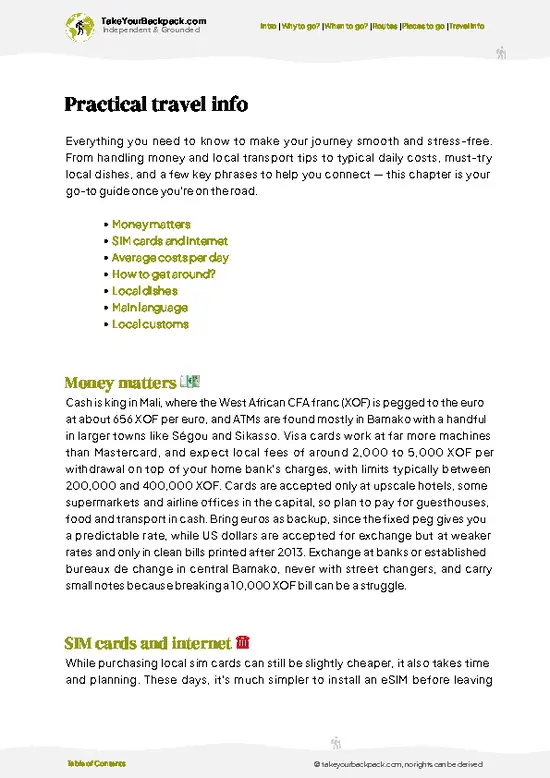
example page 4 from our offline Travel Guide for Mali
example page 5 from our offline Travel Guide for Mali
example page 6 from our offline Travel Guide for Mali
example page 7 from our offline Travel Guide for Mali
Loading the map 🌍
CLICK TO FILTER
cities
towns
landmarks
national parks
hikes
attractions
festivals
regions
SHOW COUNTRY’S BESTSHOW ALL

✨ Why go?
Ranked #99 hike in Mali
Why Niger River Trek should be on your travel list

The Niger River Trek in Mali is a backpacker’s playground, where the grit of the streets meets the serenity of nature. You’ll find yourself navigating through vibrant villages, where the rhythm of daily life pulses around you. The scenery-to-effort ratio is unbeatable; you’ll sweat it out on the trails, but each step rewards you with breathtaking views of the river winding through the landscape.

Public transport is your trusty sidekick here. Buses and shared taxis whisk you to trailheads without breaking the bank. The low cost of this trek means you can splurge on that first cold beer at the end of the day without guilt.

What’s more, the trek offers flexible distances—whether you’re up for a quick day hike or a multi-day adventure, you can tailor your experience. It fits seamlessly into … read more 👉
The Niger River Trek in Mali is a backpacker’s playground, where the grit of the streets meets the serenity of nature. You’ll find yourself navigating through vibrant villages, where the rhythm of daily life pulses around you. The scenery-to-effort ratio is unbeatable; you’ll sweat it out on the trails, but each step rewards you with breathtaking views of the river winding through the landscape.

Public transport is your trusty sidekick here. Buses and shared taxis whisk you to trailheads without breaking the bank. The low cost of this trek means you can splurge on that first cold beer at the end of the day without guilt.

What’s more, the trek offers flexible distances—whether you’re up for a quick day hike or a multi-day adventure, you can tailor your experience. It fits seamlessly into a longer backpacking route, making it a perfect stop to recharge before diving into Mali’s rich culture. The effort you put in pays off tenfold when you finally kick back and soak in the moment.

💡 HighlightsWhat this place is best known for

  • Inner Niger Delta braids and islands — Endless ribbons of water, sandbanks and temporary islands that change with the seasons. Hike along raised banks, jump into pirogues for short crossings and camp on lonely river islets; that constant reshaping of land and water is unlike most mountain or forest trails.
  • Mopti riverfront and the Bani-Niger confluence — The port town where pirogues, painted boats and market life meet spectacular light on the water. Walk the quays at dawn, watch fishermen haul nets, and stand where two big rivers blend — a buzzing, very river-centric cultural scene you won’t find inland.
  • Djenné and the Great Mosque — A mud-brick masterpiece rising from the floodplain, surrounded by a lively market and stilted village life. It’s an architectural and social highlight that
… read more 👉
  • Inner Niger Delta braids and islands — Endless ribbons of water, sandbanks and temporary islands that change with the seasons. Hike along raised banks, jump into pirogues for short crossings and camp on lonely river islets; that constant reshaping of land and water is unlike most mountain or forest trails.
  • Mopti riverfront and the Bani-Niger confluence — The port town where pirogues, painted boats and market life meet spectacular light on the water. Walk the quays at dawn, watch fishermen haul nets, and stand where two big rivers blend — a buzzing, very river-centric cultural scene you won’t find inland.
  • Djenné and the Great Mosque — A mud-brick masterpiece rising from the floodplain, surrounded by a lively market and stilted village life. It’s an architectural and social highlight that ties the river’s trade history to living tradition — and the mosque’s annual replastering is a rare communal spectacle.
  • Birdlife and hippo sightings in the wet season — The Delta is a magnet for waterbirds: herons, egrets, pelicans and lots of migrants. Hippos lurk in quieter channels too; seeing or hearing them from a low boat at dusk is one of those spine-tingling river moments.
  • Riverine villages and Bozo fishing culture — Small hamlets of reed huts, boat-builders and Bozo fishermen who still navigate by feel and current. Conversations, shared fish meals and watching traditional pirogue skills make the human side of the trek as memorable as the scenery.
Spotted a mistake or missing something? Contact us.

🌤️ When to go?Choosing the right time of year

  • Weather: The dry season from November to February is your best bet. The skies clear, the dust settles, and the riverbanks dry enough to trek without slogging through mud. Avoid the rainy season (June to September) when trails turn into slippery traps and the river swells unpredictably.
  • Temperature: Daytime highs hover around 30-35°C (86-95°F) in the dry season, manageable with early starts and shade breaks. Nights drop to a cooler 15-20°C (59-68°F), perfect for camping under stars without sweating through your sleeping bag.
  • Daylight Hours: Expect roughly 11 to 12 hours of daylight, giving you ample time to cover ground before dusk. The sun rises around 6:30 AM and sets near 6:30 PM, so plan your hikes to avoid the midday scorch.
  • Crowds: The trek is rarely crowded, but the dry season draws
… read more 👉
  • Weather: The dry season from November to February is your best bet. The skies clear, the dust settles, and the riverbanks dry enough to trek without slogging through mud. Avoid the rainy season (June to September) when trails turn into slippery traps and the river swells unpredictably.
  • Temperature: Daytime highs hover around 30-35°C (86-95°F) in the dry season, manageable with early starts and shade breaks. Nights drop to a cooler 15-20°C (59-68°F), perfect for camping under stars without sweating through your sleeping bag.
  • Daylight Hours: Expect roughly 11 to 12 hours of daylight, giving you ample time to cover ground before dusk. The sun rises around 6:30 AM and sets near 6:30 PM, so plan your hikes to avoid the midday scorch.
  • Crowds: The trek is rarely crowded, but the dry season draws a handful of adventurous souls. You’ll find solitude with just enough fellow trekkers to swap stories and share a cold drink at day’s end.
  • Seasonal Activities: November to February aligns with local festivals and market days along the river, adding cultural spice to your trek. These moments offer a break from the trail and a chance to connect with Mali’s vibrant river communities.
  • Price Fluctuations: Dry season sees a slight uptick in guide and accommodation costs due to demand, but it’s a small price for safer trails and better conditions. Off-season rates drop but come with the risk of weather-related delays and discomfort.
Pro-tip: Start your trek early in the dry season to catch the tail end of the festive buzz before the crowds thin out and the heat ramps up.


source: climatestotravel.comJANJanuary: excellent for travelingFEBFebruary: excellent for travelingMARMarch: highly recommended for travelingAPRApril: good for travelingMAYMay: fair for travelingJUNJune: below average for travelingJULJuly: below average for travelingAUGAugust: below average for travelingSEPSeptember: below average for travelingOCTOctober: fair for travelingNOVNovember: excellent for travelingDECDecember: excellent for traveling
when-to-go

✈️ The backpacker research shortcutMali Travel Guide

An offline-friendly backpacking guide with optimized travel routes, ranked highlights, transport advice, and the best areas to stay.
example page 0 from our offline Travel Guide for Mali
example page 1 from our offline Travel Guide for Mali
example page 2 from our offline Travel Guide for Mali
example page 3 from our offline Travel Guide for Mali
example page 4 from our offline Travel Guide for Mali
example page 5 from our offline Travel Guide for Mali
example page 6 from our offline Travel Guide for Mali
example page 7 from our offline Travel Guide for Mali
The digital guide (266 pages) contains:
✅ 61 highlights, ranked by travel appeal
✅ Optimized 5, 10 & 15-day travel routes
✅ Cities, national parks, landmarks, beaches
✅ How to get around
✅ Offline-friendly for travel without Wi-Fi
👉 Click to see all 30+ guide features

📅 Plan smarter in minutes, not weeks
✅ Month by month travel advice
✅ Festivals & national holidays
✅ Budget expectations

🗺️ Go to the right places, skip the overrated ones
✅ Honest pros & cons of destinations
✅ Top hikes, parks & viewpoints
✅ Lesser-known places most travelers miss
✅ Clear “worth it vs skip it” guidance

🛏️ Travel smoothly without rookie mistakes
✅ Best areas to stay
✅ Transport systems explained simply
✅ Common scams & safety advice
✅ SIM cards, money & practical tips

🌍 Understand the country, not just visit it
✅ Culture & traditions
✅ 52 Essential phrases & customs
✅ Festivals worth planning around
✅ Traveler-friendly historical context
✅ Insights that make places more meaningful

📱 Built for real travel conditions
✅ Fully downloadable PDF
✅ Works completely offline
✅ Optimized for phone use
✅ Useful in remote areas & buses
✅ Everything in one place
Stop searching, start planning
Get instant access to your full guide. 30‑day money-back guarantee.
+ Add another guide for just

By proceeding you agree to our terms.
Sent to your inbox immediately after payment • 100% Secure Checkout
Best Backpacking Travel Advisor 2025 tourism awardBest Backpacking
Travel Advisor
2025
What others say about Take Your Backpack Guides:
⭐⭐⭐⭐⭐
Fantastic, amazing amount of information!
⭐⭐⭐⭐⭐
My goodness this is amazing, it's what I've been looking for hats off too you!
⭐⭐⭐⭐⭐
I think this is absolutely BRILLIANT
⭐⭐⭐⭐
Very complete and informative. It's still missing places, but I gotta to commend you
⭐⭐⭐⭐⭐
This is truly amazing, thank you, can't wait to explore it with my kids!
⭐⭐⭐⭐⭐
Awesome resource, thank you!
⭐⭐⭐⭐⭐
This is amazing! Can't wait to explore the ones I haven't seen
⭐⭐⭐⭐
I love this! Well done, great idea.
⭐⭐⭐⭐⭐
Thanks for taking the time to make this gem!
⭐⭐⭐⭐⭐
This might be the best website I've ever seen.
⭐⭐⭐⭐⭐
Congratulations, and thank you so much for your work; it's incredibly valuable.
⭐⭐⭐⭐
In all seriousness I think you did a great job pointing out the important spots
⭐⭐⭐⭐⭐
10/10 very good
⭐⭐⭐⭐⭐
As someone who's only just starting to visit regularly this is awesome, thank you.
⭐⭐⭐⭐
Thank you very much! I'm going to visit my dad, it's going to be very useful!
⭐⭐⭐⭐⭐
This is really cool! We'll be travelling for the first time and this definitely come in handy.
⭐⭐⭐⭐⭐
You are now our minister of culture, congratulations 👨‍💼
⭐⭐⭐⭐⭐
Just wanted to tell you that this is a pearl! Going to follow your recommendations.
⭐⭐⭐⭐⭐
This is so cool. I'll definitely be using the resource for my travels soon.
⭐⭐⭐⭐⭐
This is very impressive! Good work.
⭐⭐⭐⭐⭐
This is an amazing and informative site. Very well done!

🛏️ Where to stay?Best areas and accommodation options

If you enjoy meeting fellow travelers, consider choosing hostels with high ratings for atmosphere. On the other hand, if you prefer having your own space, a hotel might be a better option.

🥾 Hike detailsEverything you need to know before hiking Niger River Trek

Total Distance: The Niger River Trek spans approximately 150 kilometers, making it a solid multi-day hike that can really test your endurance and planning skills.

Estimated Duration: Most hikers take around 7 to 10 days to complete the trek, depending on your pace and how much time you want to spend soaking in the scenery or exploring local villages.

Difficulty Level: This trail is generally rated as moderate to challenging. You’ll encounter some rugged terrain, especially near the riverbanks, and the heat can be quite intense during the day.

Starting Point: You’ll kick off your adventure in … read more 👉
Total Distance: The Niger River Trek spans approximately 150 kilometers, making it a solid multi-day hike that can really test your endurance and planning skills.

Estimated Duration: Most hikers take around 7 to 10 days to complete the trek, depending on your pace and how much time you want to spend soaking in the scenery or exploring local villages.

Difficulty Level: This trail is generally rated as moderate to challenging. You’ll encounter some rugged terrain, especially near the riverbanks, and the heat can be quite intense during the day.

Starting Point: You’ll kick off your adventure in the town of Segou. To get there, hop on a bush taxi or a bus from Bamako, which should take about 3 to 4 hours. Just make sure to negotiate your fare before you hop in.

Major Landmarks Along the Route:
  • Segou: Known for its vibrant markets and traditional mud-brick architecture.
  • Lake Debo: A beautiful spot where you can take a breather and enjoy the local birdlife.
  • Tombouctou: While not directly on the trek, it’s a famous destination nearby, worth a visit if you have time.

Type of Terrain and Scenery: Expect a mix of sandy riverbanks, rocky paths, and occasional forested areas. The scenery is stunning, with views of the Niger River winding through the landscape, dotted with traditional villages and lush patches of vegetation.

Typical Vegetation and Wildlife:
  • Vegetation: You’ll see a mix of acacia trees, baobabs, and various grasses. The riverbanks are often lush with reeds and other aquatic plants.
  • Wildlife: Keep your eyes peeled for birds like herons and kingfishers, and if you’re lucky, you might spot some monkeys or even crocodiles basking in the sun.

Pack plenty of water, a good map, and a sense of adventure. The Niger River Trek offers a unique glimpse into the heart of Mali and its culture, so take your time and enjoy the journey!
⚠️ Hiking info can sometimes be outdated or inaccurate. Before you hit the trail, check the latest conditions with locals. If you do spot anything that's off, I'd love to hear from you, so I can update it for fellow travelers.

🛡️ SafetyScams, Hazards, and Annoyances

The Niger River Trek in Mali offers a raw, immersive experience, but it’s not without its realities. Expect heat and humidity, especially from April to June. Hydration is your best friend; carry plenty of water and take breaks in shaded spots. The terrain varies—some sections are flat, while others demand careful footing over rocky paths. Navigation can be tricky; a good map and a compass are essential.

Wildlife encounters are rare, but if you spot a monitor lizard or a troop of baboons, keep your distance. They’re more interested in their business than yours.

Timing is crucial. Early mornings are cooler and less humid, making for a more enjoyable trek. Pack lightweight gear and sturdy shoes; your feet will thank you. Embrace the challenge, and when you finally catch that sweeping view of the river, it’ll all be worth it.

FAQFrequently asked questions about Niger River Trek

The Niger River Trek typically takes about 7 to 10 days to complete, depending on the route and pace. The trek covers roughly 150 to 200 kilometers along the river. Planning for daily stages of 15 to 25 kilometers is common.
The difficulty of the Niger River Trek is moderate to challenging due to varied terrain including riverbanks, sandy paths, and occasional rocky sections. Temperatures can be high, especially from March to May, requiring good physical fitness and heat acclimatization. The trek is suitable for experienced backpackers with endurance for multi-day hikes.
Yes, a local guide is highly recommended for navigation, safety, and cultural insights, especially since the area can be remote and security conditions vary. A permit is generally required and must be obtained through local authorities or tour operators, often costing around 20 to 50 USD. Independent trekking without a guide or permit is not advised.
⚠️ Things can change over time, so always validate details locally before you go.

Other Malian hikes near Niger River Trek

Explore more nearby:

  • Dogon Country Trek—cliff villages, mud-brick granaries, animist shrines, baobab plateaus| 109 km away
  • Ségou to Markala Walk—colonial-era architecture, irrigation canals, cotton fields, rural hamlets| 229 km away
  • Hombori Tondo—rock pinnacles, panoramic summit, rare flora, sandstone outcrops| 308 km away

💡 Not sure where to go next?
Create a personalized itinerary for Mali including Niger River Trek and the places that fit your trip.

Generate my itinerary

👉 Discover all hikes

Or checkout all Mali has to offer (think cities, towns, villages, national parks, hikes, beaches, festivals)
Country photo of Mali

We 💚 feedbackFinal thoughts on hiking the Niger River Trek

The Niger River Trek is a wild ride. You’ll sweat, you’ll stumble, but when you finally catch that sunset over the water, it’s pure magic. The locals? They’ll greet you like family, sharing stories and laughter that linger long after you leave. Just a heads-up: the trails can be tricky, so keep your wits about you. But trust me, the taste of a cold beer at the end, with the river reflecting the stars, makes every step worth it.

✍️ Help improve this page!
The information on this page is based on in-depth research, insights shared by experienced travelers, and feedback from the local travel community in Mali. While every effort is made to keep the information accurate and current, conditions can change — so if you spot anything incorrect or outdated, please get in touch.


🙋‍♂️ Give feedback

👋 Meet the founderWho’s Behind Take Your Backpack?

Johan, backpacker and founder of TakeYourBackpackHi, I’m Johan (Netherlands 🇳🇱), the creator of TakeYourBackpack. Over the past 3 decades, I’ve backpacked through 90+ countries across six continents, gaining extensive experience with independent travel, long-term trips, and overland routes.

This site is built on a combination of firsthand travel experience and carefully curated insights from other backpackers. Many guides are based on places I’ve personally visited, while others bring together tips, observations, and practical advice shared by trusted travelers I’ve met along the way.

The goal is to provide realistic, experience-driven guidance — not generic itineraries — so you can explore destinations with better context, clearer expectations, and more confidence.