×

Mali🇲🇱 | hikesSégou to Markala Walkcolonial-era architecture, irrigation canals, cotton fields, rural hamlets | things to do and best time to go

Explore Niger River TrekExplore Bafing National Park

Backpacking in Ségou to Markala Walk
👀 For curious travelershike ranked #5
By Johan Kruseman 🇳🇱 | Updated July 30, 2026

Most guides gloss over this, but the Ségou to Markala walk isn’t just a riverside stroll—it’s a test of patience and grit, thanks to relentless sun, dust, and the constant thrum of daily life along the Niger. You’ll find this route in central Mali, tracing the river’s edge northeast from Ségou, a city that hums with colonial echoes, to the utilitarian dam town of Markala. The hike itself is a raw, 35-kilometer push through peanut fields, baobab silhouettes, and villages where kids shout “toubab!” and women balance buckets with regal posture. It’s flat, but the heat and lack of shade make it tougher than it looks. Public minibuses drop you in Ségou with ease, but don’t expect trail markers or tourist infrastructure—this is Mali unplugged. Compared to the Dogon escarpment, this walk is less dramatic but more immersive, trading cliffs for riverbank camaraderie and the slow, hypnotic rhythm of rural West Africa.

Discover everything you want to know in the 📖 Mali Travel Guide.
Best time to go: October - April
Duration: 3 days
Distance: 30 kilometers
Total ascent: 200 meters
Safety warning

The current risk level for Mali is high. Check the advice before going.


Get your Mali guide
72 ranked highlights, routes & tips, works offline (299 pages)
Loading the map 🌍
CLICK TO FILTER
cities
towns
landmarks
national parks
hikes
attractions
festivals
regions
SHOW COUNTRY’S BESTSHOW ALL

✨ Why go?
Ranked #5 hike in Mali
What makes it a must-see hike

The Ségou to Markala Walk in Mali is a backpacker’s dream, blending effort with reward. You’ll traverse dusty paths lined with baobab trees, feeling the sun on your back as you soak in the vibrant local life. The scenery-to-effort ratio is unbeatable; you’re not just walking—you’re immersing yourself in the rhythm of the land.

Public transport makes access a breeze. Hop on a local bus, and you’re dropped right at the trailhead, ready to hit the ground running. The trail offers flexible distances, allowing you to tailor your journey to your energy levels. Whether you want a quick jaunt or a full day of exploration, it’s all within reach.

Best of all, this hike fits seamlessly into a longer backpacking route through Mali. It’s low-cost, making it easy to stretch your budget while still enjoying … read more 👉
The Ségou to Markala Walk in Mali is a backpacker’s dream, blending effort with reward. You’ll traverse dusty paths lined with baobab trees, feeling the sun on your back as you soak in the vibrant local life. The scenery-to-effort ratio is unbeatable; you’re not just walking—you’re immersing yourself in the rhythm of the land.

Public transport makes access a breeze. Hop on a local bus, and you’re dropped right at the trailhead, ready to hit the ground running. The trail offers flexible distances, allowing you to tailor your journey to your energy levels. Whether you want a quick jaunt or a full day of exploration, it’s all within reach.

Best of all, this hike fits seamlessly into a longer backpacking route through Mali. It’s low-cost, making it easy to stretch your budget while still enjoying the rich culture and stunning landscapes. Each step brings you closer to the reward—a cold beer at the end, shared with fellow travelers, celebrating the grit of the journey.
Want to include Ségou to Markala Walk in your Mali route?
Create a personalized Mali itinerary that includes Ségou to Markala Walk and the places that fit your trip — based on your travel style, budget, and available time. Get your route in seconds.

Generate my trip

💡 HighlightsThe experiences that define the visit

  1. Ségou riverfront and mud-brick streets — The town’s clay architecture and low, red-brown buildings right on the Niger give a riverfront vibe you don’t get on forest or mountain trails. Walk the quay at dawn and you’ll see pirogues, market stalls and pottery women going about their day against a very photogenic backdrop.
  2. Pirogue traffic and riverside fishermen — Constant small-boat activity is the soundtrack here: nets being cast, fish laid out to dry, and narrow canoes threading channels. It’s an immediate, human river landscape — more working waterfront than postcard wilderness — and great for close-up cultural moments.
  3. Riverside villages and local markets — Small Bambara and Bozo settlements line the route, with weekly markets where you can buy millet, smoked fish and hand-made goods.
read more 👉
  1. Ségou riverfront and mud-brick streets — The town’s clay architecture and low, red-brown buildings right on the Niger give a riverfront vibe you don’t get on forest or mountain trails. Walk the quay at dawn and you’ll see pirogues, market stalls and pottery women going about their day against a very photogenic backdrop.
  2. Pirogue traffic and riverside fishermen — Constant small-boat activity is the soundtrack here: nets being cast, fish laid out to dry, and narrow canoes threading channels. It’s an immediate, human river landscape — more working waterfront than postcard wilderness — and great for close-up cultural moments.
  3. Riverside villages and local markets — Small Bambara and Bozo settlements line the route, with weekly markets where you can buy millet, smoked fish and hand-made goods. The pace of life and openness of people make interactions easy; the cultural exchange is the real highlight compared with more isolated hikes.
  4. Seasonal sandbanks, baobabs and river islands — The Niger’s channels shift with the seasons, exposing wide sandbars and clusters of baobabs. The changing light on the flat floodplain is spectacular at sunrise/sunset, and the exposed islands are fun to explore when water levels are low.
  5. Markala barrage and irrigated rice plains — The barrage and its canals are a striking human imprint on the Sahel: huge stretches of bright green rice fields next to the dry landscape. It’s both a scenic contrast and a reminder of how the river shapes local agriculture and livelihoods, plus it draws lots of wading birds.
Spotted a mistake or missing something? Contact us.

🌤️ When to go?When to go for the best experience


  • Weather: The best window is during the dry season, from November to February. Expect clear skies and minimal rain, which means trails stay firm and rivers don’t swell unexpectedly. Avoid the rainy season (June to September) when mud and flooding can turn the walk into a slog.

  • Temperature: Daytime highs hover around 28–32°C (82–90°F) in the dry months, perfect for steady trekking without overheating. Nights can dip to 15°C (59°F), so pack a light layer. The wet season cranks humidity and heat, pushing temps above 35°C (95°F), making the walk exhausting.

  • Daylight Hours: Daylight stays steady year-round, roughly 11 to 12 hours. Start early to beat the midday heat and maximize your pace before dusk.

  • Crowds: This route is rarely crowded, but dry season draws local traders and fishermen,
read more 👉

  • Weather: The best window is during the dry season, from November to February. Expect clear skies and minimal rain, which means trails stay firm and rivers don’t swell unexpectedly. Avoid the rainy season (June to September) when mud and flooding can turn the walk into a slog.

  • Temperature: Daytime highs hover around 28–32°C (82–90°F) in the dry months, perfect for steady trekking without overheating. Nights can dip to 15°C (59°F), so pack a light layer. The wet season cranks humidity and heat, pushing temps above 35°C (95°F), making the walk exhausting.

  • Daylight Hours: Daylight stays steady year-round, roughly 11 to 12 hours. Start early to beat the midday heat and maximize your pace before dusk.

  • Crowds: This route is rarely crowded, but dry season draws local traders and fishermen, adding life to the villages without overwhelming the trail.

  • Seasonal Activities: Dry season coincides with harvests and local markets, offering a chance to sync your walk with vibrant community rhythms and fresh produce.

  • Price Fluctuations: Accommodation and local transport costs rise slightly in the dry season due to increased demand, but the trade-off is worth it for reliable conditions and richer cultural encounters.


Pro-tip: Time your hike for early dry season—November—when the land is fresh from rains but the trail is dry, and the villages buzz with post-harvest energy.


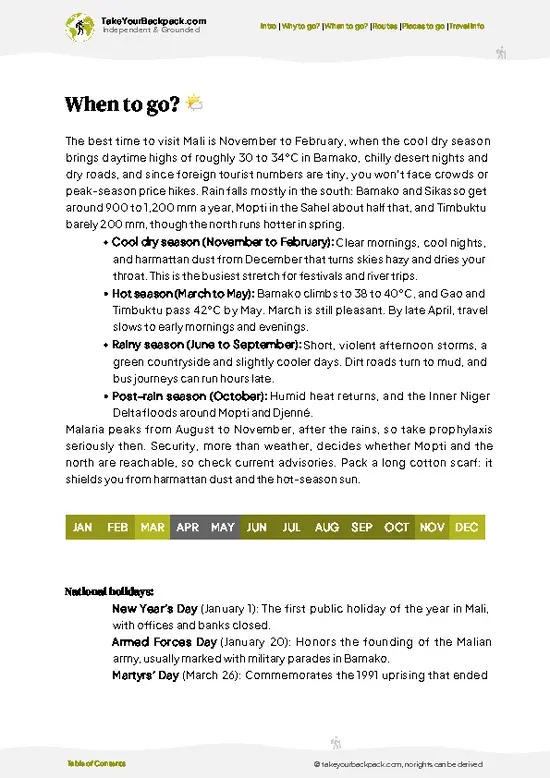
source: climatestotravel.comJANJanuary: excellent for travelingFEBFebruary: excellent for travelingMARMarch: highly recommended for travelingAPRApril: good for travelingMAYMay: fair for travelingJUNJune: below average for travelingJULJuly: below average for travelingAUGAugust: below average for travelingSEPSeptember: below average for travelingOCTOctober: good for travelingNOVNovember: excellent for travelingDECDecember: excellent for traveling
when-to-go

✈️ The backpacker research shortcutMali Travel Guide

An offline-friendly backpacking guide with optimized travel routes, ranked highlights, transport advice, and the best areas to stay.
example page 0 from our offline Travel Guide for Mali
example page 1 from our offline Travel Guide for Mali
example page 2 from our offline Travel Guide for Mali
example page 3 from our offline Travel Guide for Mali
example page 4 from our offline Travel Guide for Mali
example page 5 from our offline Travel Guide for Mali
example page 6 from our offline Travel Guide for Mali
example page 7 from our offline Travel Guide for Mali
The digital guide (299 pages) contains:
72 highlights, ranked by travel appeal
Optimized 5, 10 & 15-day travel routes
Cities, national parks, landmarks, beaches
How to get around
Offline-friendly for travel without Wi-Fi
👉 Click to see all 30+ guide features

📅 Plan smarter in minutes, not weeks
Month by month travel advice
Festivals & national holidays
Budget expectations

🗺️ Go to the right places, skip the overrated ones
Honest pros & cons of destinations
Top hikes, parks & viewpoints
Lesser-known places most travelers miss
Clear “worth it vs skip it” guidance

🛏️ Travel smoothly without rookie mistakes
Best areas to stay
Transport systems explained simply
Common scams & safety advice
SIM cards, money & practical tips

🌍 Understand the country, not just visit it
Culture & traditions
52 Essential phrases & customs
Festivals worth planning around
Traveler-friendly historical context
Insights that make places more meaningful

📱 Built for real travel conditions
Fully downloadable PDF
Works completely offline
Optimized for phone use
Useful in remote areas & buses
Everything in one place
Save weeks of stressful planning
Get instant access to your full guide. 30‑day money-back guarantee.


By proceeding you agree to our terms.
Sent to your inbox immediately after payment • 100% Secure Checkout
Best Backpacking Travel Advisor 2025 tourism awardBest Backpacking
Travel Advisor
2025
What others say about Take Your Backpack Guides:
⭐⭐⭐⭐⭐
Fantastic, amazing amount of information!
⭐⭐⭐⭐⭐
My goodness this is amazing, it's what I've been looking for hats off too you!
⭐⭐⭐⭐⭐
I think this is absolutely BRILLIANT
⭐⭐⭐⭐
Very complete and informative. It's still missing places, but I gotta to commend you
⭐⭐⭐⭐⭐
This is truly amazing, thank you, can't wait to explore it with my kids!
⭐⭐⭐⭐⭐
Awesome resource, thank you!
⭐⭐⭐⭐⭐
This is amazing! Can't wait to explore the ones I haven't seen
⭐⭐⭐⭐
I love this! Well done, great idea.
⭐⭐⭐⭐⭐
Thanks for taking the time to make this gem!
⭐⭐⭐⭐⭐
This might be the best website I've ever seen.
⭐⭐⭐⭐⭐
Congratulations, and thank you so much for your work; it's incredibly valuable.
⭐⭐⭐⭐
In all seriousness I think you did a great job pointing out the important spots
⭐⭐⭐⭐⭐
10/10 very good
⭐⭐⭐⭐⭐
As someone who's only just starting to visit regularly this is awesome, thank you.
⭐⭐⭐⭐
Thank you very much! I'm going to visit my dad, it's going to be very useful!
⭐⭐⭐⭐⭐
This is really cool! We'll be travelling for the first time and this definitely come in handy.
⭐⭐⭐⭐⭐
You are now our minister of culture, congratulations 👨‍💼
⭐⭐⭐⭐⭐
Just wanted to tell you that this is a pearl! Going to follow your recommendations.
⭐⭐⭐⭐⭐
This is so cool. I'll definitely be using the resource for my travels soon.
⭐⭐⭐⭐⭐
This is very impressive! Good work.
⭐⭐⭐⭐⭐
This is an amazing and informative site. Very well done!

🛏️ Where to stay?Best areas and accommodation options

If you enjoy meeting fellow travelers, consider choosing hostels with high ratings for atmosphere. On the other hand, if you prefer having your own space, a hotel might be a better option.

🥾 Hike detailsTrail overview: what to expect on the hike

Total Distance: The Ségou to Markala Walk spans approximately 20 kilometers (about 12.4 miles), making it a solid day hike for those looking to stretch their legs.

Estimated Duration: Expect to spend around 5 to 7 hours on this trail. This includes time for breaks, soaking in the scenery, and maybe chatting with locals along the way.

Difficulty Level: This trail is generally considered moderate. While there are no technical climbs, the heat can be a challenge, and some sections may be uneven or sandy.

Starting Point: You can kick off your hike in Ségou. To get there by public transport, hop … read more 👉
Total Distance: The Ségou to Markala Walk spans approximately 20 kilometers (about 12.4 miles), making it a solid day hike for those looking to stretch their legs.

Estimated Duration: Expect to spend around 5 to 7 hours on this trail. This includes time for breaks, soaking in the scenery, and maybe chatting with locals along the way.

Difficulty Level: This trail is generally considered moderate. While there are no technical climbs, the heat can be a challenge, and some sections may be uneven or sandy.

Starting Point: You can kick off your hike in Ségou. To get there by public transport, hop on a bus or shared taxi from Bamako, which will take about 4 to 5 hours. Once in Ségou, the trailhead is accessible from the town center, so it’s easy to find your way.

Major Landmarks Along the Route:
  • Ségou’s Grand Mosque: A beautiful structure that’s worth a quick visit before you hit the trail.
  • River Niger: You’ll walk alongside this iconic river, offering stunning views and a chance to see local fishermen at work.
  • Markala Dam: A significant engineering feat that provides irrigation and electricity, it’s an interesting spot to take a break and admire the surroundings.

Type of Terrain and Scenery: The terrain varies from sandy paths to dirt roads, with some rocky sections. You’ll experience a mix of open fields and shaded areas, especially near the river. The views are a delightful blend of rural Mali, with traditional mud-brick homes and vibrant agricultural fields.

Typical Vegetation and Wildlife:
  • Vegetation: Expect to see a variety of grasses, baobab trees, and crops like millet and sorghum, particularly as you pass through farming areas.
  • Wildlife: You might spot birds like herons and kingfishers along the river, and if you’re lucky, some small mammals or reptiles that call this area home.

This trail is a great way to immerse yourself in the local culture while enjoying the natural beauty of Mali. Just make sure to stay hydrated and pace yourself—it’s a long trek, but well worth the effort!
⚠️ Hiking info can sometimes be outdated or inaccurate. Before you hit the trail, check the latest conditions with locals. If you do spot anything that's off, I'd love to hear from you, so I can update it for fellow travelers.

🛡️ SafetyTraveler Safety Guide

The Ségou to Markala Walk offers a straightforward yet invigorating experience, but a few realities shape your journey. The heat can be relentless, especially from late morning to mid-afternoon. Start early to beat the sun and keep your water supply ample; dehydration sneaks up on you.

The terrain is mostly flat, but watch for uneven footing and occasional sandy patches that can slow you down. Navigation is generally clear, but a good map or GPS app is your friend, especially near river crossings where the path can shift.

Wildlife encounters are rare, but if you spot a local animal, keep your distance and observe quietly. Respect the space of both nature and fellow hikers. With the right pace and preparation, you’ll find the reward in the vibrant landscapes and the satisfaction of a cold drink waiting for you at the end.

Other Malian hikes near Ségou to Markala Walk

Explore more nearby:

  • Niger River Trek—floodplain villages, seasonal wetlands, ferry crossings, riverside markets| 229 km away
  • Dogon Country—cliff villages, mud-brick granaries, animist shrines, baobab plateaus| 320 km away
  • Mount Hombori Trek—rock pinnacles, panoramic summit, rare flora, sandstone outcrops| 534 km away

💡 Not sure where to go next?
Create a personalized itinerary for Mali including Ségou to Markala Walk and the places that fit your trip.

Generate my itinerary

👉 Discover all hikes

Or checkout all Mali has to offer (think cities, towns, villages, national parks, hikes, beaches, festivals)
Country photo of Mali

We 💚 feedbackIs it worth it?

The walk from Ségou to Markala is a raw, pulse-pounding experience. You’ll feel the earth beneath your feet and the sun on your back, with locals greeting you like an old friend. The best surprise? Stumbling upon a riverside market where the scent of grilled fish mingles with laughter. Just a heads-up: the trails can get muddy in the rainy season, so pack sturdy shoes. Embrace the grit; the views and connections you’ll make are worth every step.

✍️ Help improve this page!
The information on this page is based on in-depth research, insights shared by experienced travelers, and feedback from the local travel community in Mali. While every effort is made to keep the information accurate and current, conditions can change — so if you spot anything incorrect or outdated, please get in touch.


🙋‍♂️ Give feedback

👋 Meet the founderWho’s Behind Take Your Backpack?

Johan, backpacker and founder of TakeYourBackpackHi, I’m Johan (Netherlands 🇳🇱), the creator of TakeYourBackpack. Over the past decade, I’ve backpacked through 80+ countries across six continents, gaining extensive experience with independent travel, long-term trips, and overland routes.

This site is built on a combination of firsthand travel experience and carefully curated insights from other backpackers. Many guides are based on places I’ve personally visited, while others bring together tips, observations, and practical advice shared by trusted travelers I’ve met along the way.

The goal is to provide realistic, experience-driven guidance — not generic itineraries — so you can explore destinations with better context, clearer expectations, and more confidence.

Get full Mali guide •
Instant download • 72 highlights • Full Offline guide