×

Mali🇲🇱 | townsKéniébaGold mining, border proximity, hilly terrain | things to do and best time to go

Explore BankassExplore Yanfolila

Backpacking in Kéniéba
👀 For curious travelerstown ranked #24
By Johan Kruseman 🇳🇱 | Updated June 13, 2026

Everyone hears about Kéniéba because of the gold—locals panning in the river, the shimmer of promise in the dust—but if you’re backpacking, that’s not the real draw. What matters is the pulse of a Malian frontier town, tucked in the southwest near the Senegalese border, where the Sahel’s heat presses down and the air smells of earth and diesel. Kéniéba isn’t pretty, but it’s honest: a practical stopover if you’re crossing between Mali and Senegal, or chasing the wild, red hills nearby. Don’t expect a lively hostel scene or much English; this is a place for slow evenings, basic guesthouses, and the kind of market where you haggle for oranges with gold miners. It’s cheaper than Kayes, less hectic than Bamako, and feels more like a crossroads than a destination. Transport is rough—bush taxis, battered buses, and plenty of walking—but that’s the price of seeing Mali’s raw edge up close.

Discover everything you want to know in the 📖 Mali Travel Guide.
Safety warning

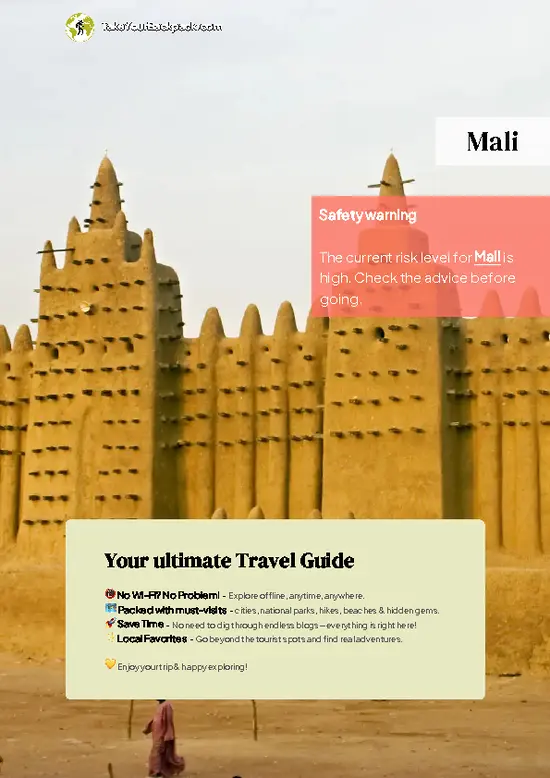
The current risk level for Mali is high. Check the advice before going.


Get your Mali guide
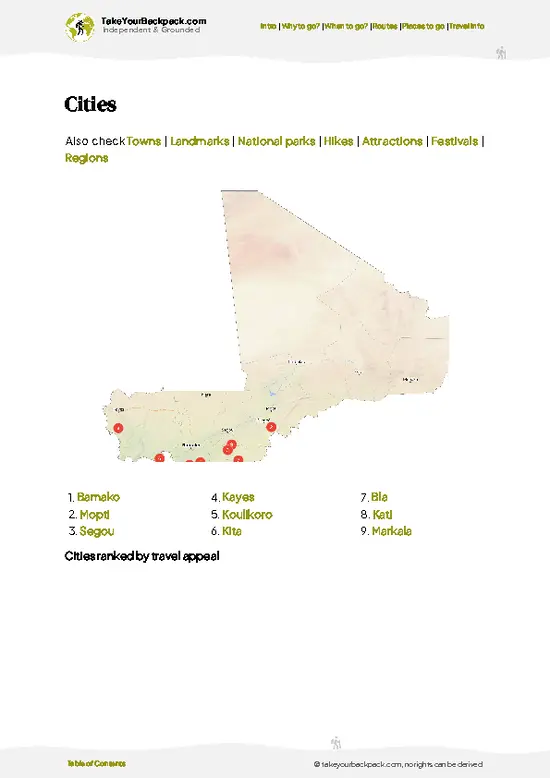
76 ranked highlights, routes & tips, works offline (321 pages)
Loading the map 🌍
CLICK TO FILTER
cities
towns
landmarks
national parks
hikes
attractions
festivals
regions
SHOW COUNTRY’S BESTSHOW ALL

✨ Why go?
Ranked #24 town in Mali
Why visitors keep coming back

Kéniéba serves as a gateway for backpackers seeking the raw beauty of Mali. Nestled near the Falaise de Bandiagara, it’s a launchpad for hikes that reveal stunning landscapes and local culture. The walkable streets are lined with small-scale guesthouses and hostels, offering a cozy atmosphere where you can swap stories with fellow travelers.

The local food scene is vibrant, with street vendors serving up spicy stews and fresh bread that fill the air with mouthwatering aromas. Most backpackers tend to linger here for a few days, soaking in the friendly vibe and connecting with the community. It’s a place for slow travelers and solo adventurers who appreciate a quieter pace, rather than those chasing nightlife.

Kéniéba isn’t just a stop; it’s a chance to breathe in the essence of Mali before heading into the wild.
Want to include Kéniéba in your Mali route?
Create a personalized Mali itinerary that includes Kéniéba and the places that fit your trip — based on your travel style, budget, and available time. Get your route in seconds.

Generate my trip

💡 HighlightsPlaces and moments you shouldn't skip

  • Kéniéba Central Market (Marché) — The town’s busiest place: traders, fresh produce, secondhand clothing, local cloth and basic tools. Walking the stalls gives a real feel for daily life and is where locals buy and sell everything from food to small mining supplies.
  • Artisanal gold-mining quarters (orpaillage areas on the town’s outskirts) — The reason Kéniéba exists today: clusters of hand-dug shafts, sluice pits and gold buyers. Visiting (with a local guide) shows the economy, techniques and social reality of small-scale gold work — powerful, gritty, and memorable. Observe from safe distances and follow local guidance.
  • Main mosque and town centre — The mosque is the social hub for daily rhythms and Friday prayers; the surrounding streets and cafés are where conversation, commerce and local
read more 👉
  • Kéniéba Central Market (Marché) — The town’s busiest place: traders, fresh produce, secondhand clothing, local cloth and basic tools. Walking the stalls gives a real feel for daily life and is where locals buy and sell everything from food to small mining supplies.
  • Artisanal gold-mining quarters (orpaillage areas on the town’s outskirts) — The reason Kéniéba exists today: clusters of hand-dug shafts, sluice pits and gold buyers. Visiting (with a local guide) shows the economy, techniques and social reality of small-scale gold work — powerful, gritty, and memorable. Observe from safe distances and follow local guidance.
  • Main mosque and town centre — The mosque is the social hub for daily rhythms and Friday prayers; the surrounding streets and cafés are where conversation, commerce and local life play out. Good for people-watching, seeing traditional dress and catching community events.
Nearby visitable highlights for day trips: the Falémé River valley (scenic river crossings and borderland landscapes), nearby industrial and concession mining sites around the Kéniéba goldfields (viewable from public roads or with arranged visits), and small surrounding villages that preserve local Mandé/Malinké crafts and mud-brick architecture.
Spotted a mistake or missing something? Contact us.
🏘️ NeighborhoodsWhere things are and how it's laid out

Kéniéba is a vibrant hub for backpackers, offering a blend of culture, adventure, and local charm. Here’s how to navigate its neighborhoods for the best experience.

Centre Ville: This is the heart of Kéniéba, where you’ll find bustling markets and street vendors. The vibe is energetic, perfect for soaking in local life. It’s walkable, with plenty of budget-friendly accommodations. Nightlife is low-key, but you can find a few bars to unwind. Ideal for short stays, as everything is within reach.

Quartier Malien: A quieter area, Quartier Malien offers a more laid-back atmosphere. It’s less touristy, making it a great spot for longer stays if you want to immerse yourself in daily life. The streets are safe for walking, and you’ll find local eateries serving authentic Malian dishes. Transport … read more 👉
Kéniéba is a vibrant hub for backpackers, offering a blend of culture, adventure, and local charm. Here’s how to navigate its neighborhoods for the best experience.

Centre Ville: This is the heart of Kéniéba, where you’ll find bustling markets and street vendors. The vibe is energetic, perfect for soaking in local life. It’s walkable, with plenty of budget-friendly accommodations. Nightlife is low-key, but you can find a few bars to unwind. Ideal for short stays, as everything is within reach.

Quartier Malien: A quieter area, Quartier Malien offers a more laid-back atmosphere. It’s less touristy, making it a great spot for longer stays if you want to immerse yourself in daily life. The streets are safe for walking, and you’ll find local eateries serving authentic Malian dishes. Transport options are limited, but you can easily catch a taxi.

Quartier de l’Indépendance: This neighborhood strikes a balance between activity and tranquility. It has a mix of guesthouses and local cafes. The vibe is friendly, and it’s a good base for exploring nearby attractions. Walkability is decent, and you’ll find transport links to other parts of town. Perfect for those looking to blend relaxation with adventure.

⌛️ 1 dayHow to make the most of one day

Kéniéba, a vibrant town in Mali, pulses with the rhythm of daily life, surrounded by the rugged beauty of the Fouta Djallon mountains. Here, the air is rich with the scent of spices and the sounds of laughter, making it a perfect spot for an immersive day.

Start your morning at the bustling market in the heart of Kéniéba. The sun casts a warm glow on colorful stalls brimming with fresh produce, handmade crafts, and aromatic street food. Grab a flaky *brioche* from a local vendor and sip on sweet, milky tea while soaking in the lively atmosphere. This is where you’ll feel the town’s heartbeat, so take your time to chat with vendors and sample local delicacies.

As the day unfolds, head towards the nearby hills for a hike. The trails are not overly crowded, offering a chance to connect with … read more 👉
Kéniéba, a vibrant town in Mali, pulses with the rhythm of daily life, surrounded by the rugged beauty of the Fouta Djallon mountains. Here, the air is rich with the scent of spices and the sounds of laughter, making it a perfect spot for an immersive day.

Start your morning at the bustling market in the heart of Kéniéba. The sun casts a warm glow on colorful stalls brimming with fresh produce, handmade crafts, and aromatic street food. Grab a flaky *brioche* from a local vendor and sip on sweet, milky tea while soaking in the lively atmosphere. This is where you’ll feel the town’s heartbeat, so take your time to chat with vendors and sample local delicacies.

As the day unfolds, head towards the nearby hills for a hike. The trails are not overly crowded, offering a chance to connect with nature and enjoy panoramic views of the landscape. The scent of wild herbs fills the air, and the sounds of birds create a serene backdrop. This hike isn’t just exercise; it’s a way to appreciate the rugged beauty that surrounds Kéniéba.

In the afternoon, visit the lesser-known village of Koniakary, just a short drive away. Here, you can witness traditional weaving techniques that have been passed down through generations. Engage with the artisans, and you’ll leave with a deeper understanding of the local culture.

As evening approaches, return to Kéniéba and find a cozy spot at a local eatery. Enjoy a hearty plate of *tiguadege na* (a peanut stew) while watching the sunset paint the sky in hues of orange and pink. This day, filled with sensory experiences and authentic connections, will leave you with a sense of fulfillment that’s hard to match.
Turn your Kéniéba visit into an Mali adventure
Build a complete Mali route with Kéniéba, hidden gems, must-see destinations, and realistic travel times included.

Generate my trip

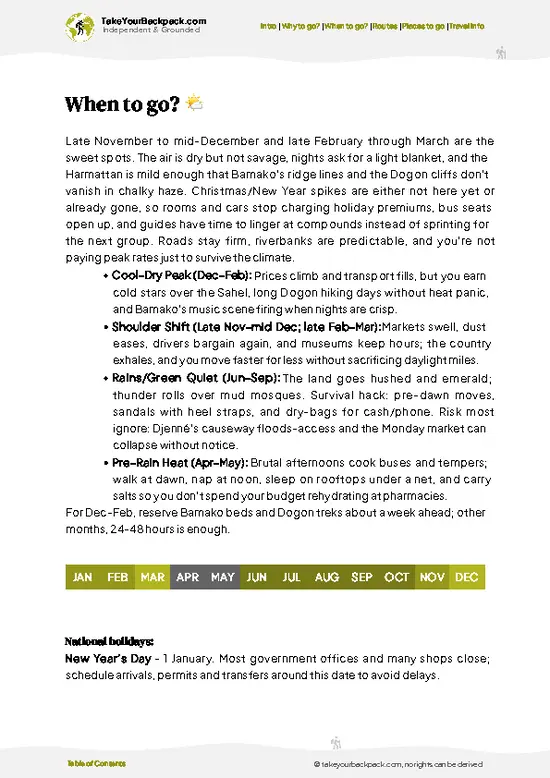
🌤️ When to go?Choosing the right time of year


  • Weather: The dry season from November to February offers clear skies and minimal dust, making trekking and exploring more comfortable. Avoid the rainy season (June to September) when heavy downpours turn paths to mud and swell rivers unpredictably.

  • Temperature: Daytime highs hover around 30-35°C (86-95°F) in the dry season, dropping to a cool 15°C (59°F) at night—perfect for layered clothing. The wet season heats up with humidity, pushing temps above 38°C (100°F), which can drain your energy fast.

  • Daylight Hours: Around 11 to 12 hours of daylight year-round, but the dry season’s clearer skies mean more reliable light for early starts and late finishes without the threat of sudden storms.

  • Crowds: Kéniéba sees few tourists year-round, but the dry season attracts local traders and seasonal
read more 👉

  • Weather: The dry season from November to February offers clear skies and minimal dust, making trekking and exploring more comfortable. Avoid the rainy season (June to September) when heavy downpours turn paths to mud and swell rivers unpredictably.

  • Temperature: Daytime highs hover around 30-35°C (86-95°F) in the dry season, dropping to a cool 15°C (59°F) at night—perfect for layered clothing. The wet season heats up with humidity, pushing temps above 38°C (100°F), which can drain your energy fast.

  • Daylight Hours: Around 11 to 12 hours of daylight year-round, but the dry season’s clearer skies mean more reliable light for early starts and late finishes without the threat of sudden storms.

  • Crowds: Kéniéba sees few tourists year-round, but the dry season attracts local traders and seasonal workers, adding a lively, authentic buzz without overwhelming the town.

  • Seasonal Activities: The dry season hosts local markets and traditional ceremonies, offering a deeper cultural dive. The wet season’s lush landscape is beautiful but less accessible for hiking or village visits.

  • Price Fluctuations: Accommodation and transport costs rise slightly in the dry season due to demand but remain reasonable. The wet season offers cheaper rates but at the cost of comfort and accessibility.


Pro-tip: Aim for late November to early February—when the air is crisp, the light is sharp, and the town hums with life—so you get the full Kéniéba experience without the mud or the heat haze.


source: climatestotravel.comJANJanuary: excellent for travelingFEBFebruary: excellent for travelingMARMarch: highly recommended for travelingAPRApril: good for travelingMAYMay: fair for travelingJUNJune: below average for travelingJULJuly: below average for travelingAUGAugust: below average for travelingSEPSeptember: below average for travelingOCTOctober: fair for travelingNOVNovember: excellent for travelingDECDecember: excellent for traveling
when-to-go

✈️ The backpacker research shortcutMali Travel Guide

An offline-friendly backpacking guide with optimized travel routes, ranked highlights, transport advice, and the best areas to stay.
example page 0 from our offline Travel Guide for Mali
example page 1 from our offline Travel Guide for Mali
example page 2 from our offline Travel Guide for Mali
example page 3 from our offline Travel Guide for Mali
example page 4 from our offline Travel Guide for Mali
example page 5 from our offline Travel Guide for Mali
example page 6 from our offline Travel Guide for Mali
example page 7 from our offline Travel Guide for Mali
The digital guide (321 pages) contains:
76 highlights, ranked by travel appeal
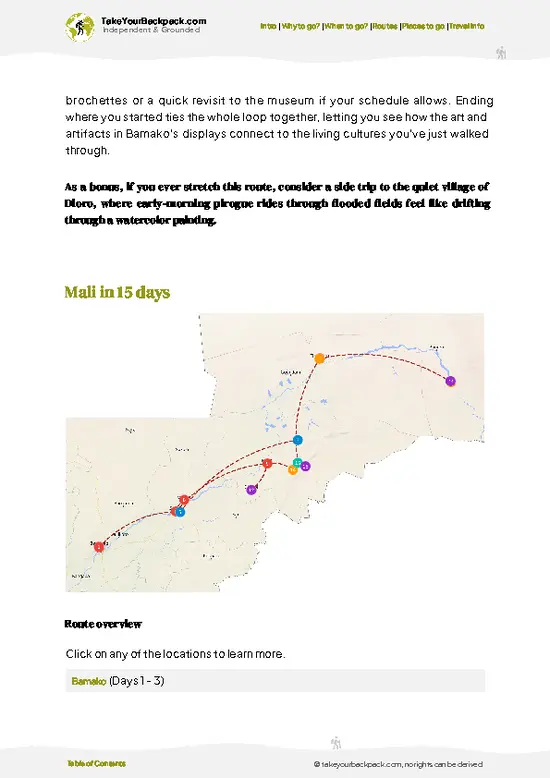
Optimized 5, 10 & 15-day travel routes
Cities, national parks, landmarks, beaches
How to get around
Offline-friendly for travel without Wi-Fi
👉 Click to see all 30+ guide features

📅 Plan smarter in minutes, not weeks
Month by month travel advice
Festivals & national holidays
Budget expectations

🗺️ Go to the right places, skip the overrated ones
Honest pros & cons of destinations
Top hikes, parks & viewpoints
Lesser-known places most travelers miss
Clear “worth it vs skip it” guidance

🛏️ Travel smoothly without rookie mistakes
Best areas to stay
Transport systems explained simply
Common scams & safety advice
SIM cards, money & practical tips

🌍 Understand the country, not just visit it
Culture & traditions
52 Essential phrases & customs
Festivals worth planning around
Traveler-friendly historical context
Insights that make places more meaningful

📱 Built for real travel conditions
Fully downloadable PDF
Works completely offline
Optimized for phone use
Useful in remote areas & buses
Everything in one place
Save weeks of stressful planning
Get instant access to your full guide. 30‑day money-back guarantee.


By proceeding you agree to our terms.
Sent to your inbox immediately after payment • 100% Secure Checkout
Best Backpacking Travel Advisor 2025 tourism awardBest Backpacking
Travel Advisor
2025
What others say about Take Your Backpack Guides:
⭐⭐⭐⭐⭐
Fantastic, amazing amount of information!
⭐⭐⭐⭐⭐
My goodness this is amazing, it's what I've been looking for hats off too you!
⭐⭐⭐⭐⭐
I think this is absolutely BRILLIANT
⭐⭐⭐⭐
Very complete and informative. It's still missing places, but I gotta to commend you
⭐⭐⭐⭐⭐
This is truly amazing, thank you, can't wait to explore it with my kids!
⭐⭐⭐⭐⭐
Awesome resource, thank you!
⭐⭐⭐⭐⭐
This is amazing! Can't wait to explore the ones I haven't seen
⭐⭐⭐⭐
I love this! Well done, great idea.
⭐⭐⭐⭐⭐
Thanks for taking the time to make this gem!
⭐⭐⭐⭐⭐
This might be the best website I've ever seen.
⭐⭐⭐⭐⭐
Congratulations, and thank you so much for your work; it's incredibly valuable.
⭐⭐⭐⭐
In all seriousness I think you did a great job pointing out the important spots
⭐⭐⭐⭐⭐
10/10 very good
⭐⭐⭐⭐⭐
As someone who's only just starting to visit regularly this is awesome, thank you.
⭐⭐⭐⭐
Thank you very much! I'm going to visit my dad, it's going to be very useful!
⭐⭐⭐⭐⭐
This is really cool! We'll be travelling for the first time and this definitely come in handy.
⭐⭐⭐⭐⭐
You are now our minister of culture, congratulations 👨‍💼
⭐⭐⭐⭐⭐
Just wanted to tell you that this is a pearl! Going to follow your recommendations.
⭐⭐⭐⭐⭐
This is so cool. I'll definitely be using the resource for my travels soon.
⭐⭐⭐⭐⭐
This is very impressive! Good work.
⭐⭐⭐⭐⭐
This is an amazing and informative site. Very well done!

🛏️ Where to stay?Best areas to stay in Mali

In Kéniéba, the best spot for backpackers is the town center near the main market. This area hums with life from dawn, the scent of fresh millet mingling with dust and diesel, but it’s also where you’ll find the friendliest faces and the most affordable guesthouses. Staying here means you’re steps away from local eateries and the pulse of daily trade, making it easy to strike up conversations and soak in authentic rhythms. Other neighborhoods feel quieter but less connected—more isolated and lacking the social buzz that solo travelers crave. Hostels are rare, so budget guesthouses in this central … read more 👉
In Kéniéba, the best spot for backpackers is the town center near the main market. This area hums with life from dawn, the scent of fresh millet mingling with dust and diesel, but it’s also where you’ll find the friendliest faces and the most affordable guesthouses. Staying here means you’re steps away from local eateries and the pulse of daily trade, making it easy to strike up conversations and soak in authentic rhythms. Other neighborhoods feel quieter but less connected—more isolated and lacking the social buzz that solo travelers crave. Hostels are rare, so budget guesthouses in this central zone become your social hub and launchpad for exploring.

🚌 Getting aroundHow to get from A to B

Kéniéba moves at its own rhythm—less a clock-driven town and more a place where the sun’s position and the chatter of locals set the pace. The air carries the dry, earthy scent of the Sahel, dust swirling in lazy spirals as motorbikes buzz past and market vendors call out their wares. You won’t find strict timetables here; instead, transit feels like a dance of intuition and patience, where knowing when to show up is as much about reading the mood as checking a schedule. This is a town where the journey is part of the experience, and mastering its flow means embracing a bit of unpredictability with a sense of adventure.


  • Walking: The heart of Kéniéba is compact and walkable, with dusty streets and shaded alleys. Walking costs nothing, lets you absorb the local vibe, and is often faster
read more 👉
Kéniéba moves at its own rhythm—less a clock-driven town and more a place where the sun’s position and the chatter of locals set the pace. The air carries the dry, earthy scent of the Sahel, dust swirling in lazy spirals as motorbikes buzz past and market vendors call out their wares. You won’t find strict timetables here; instead, transit feels like a dance of intuition and patience, where knowing when to show up is as much about reading the mood as checking a schedule. This is a town where the journey is part of the experience, and mastering its flow means embracing a bit of unpredictability with a sense of adventure.


  • Walking: The heart of Kéniéba is compact and walkable, with dusty streets and shaded alleys. Walking costs nothing, lets you absorb the local vibe, and is often faster than waiting for transport during busy market hours.

  • Shared Taxis: These minibuses run between Kéniéba and nearby towns like Kayes. They leave when full, so timing is flexible but unpredictable. Expect to pay around 500-1000 CFA francs, with rides lasting 1-2 hours depending on stops.

  • Motorbike Taxis (Moto-Taxis): The quickest way to get around town or reach nearby villages. Prices are negotiable but usually under 300 CFA francs for short trips. Hold on tight—the ride is bumpy but fast, and helmets are rare.

  • Local Buses: Less frequent and slower, these buses connect Kéniéba to regional hubs. They run early morning to late afternoon, costing about 700 CFA francs. Comfort is basic, so bring patience and water.

👛 Costs (as of 3 April 2026)Typical daily expenses

Backpacking in Kéniéba, Mali, means embracing a raw, off-the-beaten-path vibe where every expense reflects the simplicity and local pace of life. Here’s what you’re looking at day-to-day:
  • Dorm Accommodation: Expect basic guesthouses or small hostels with shared rooms. Prices hover around €5 to €10 per night. These places won’t have frills but offer a clean bed and a chance to mingle with other travelers or locals.
  • Meals: Street food and local eateries dominate here. A filling meal of traditional Malian dishes like tô or rice with sauce costs about €1 to €3. If you opt for something a bit more substantial or westernized, it might push closer to €4 or €5.
  • Local Transport: Transport is mostly informal—shared taxis or bush taxis. Short rides within town generally cost under €1, while longer
read more 👉
Backpacking in Kéniéba, Mali, means embracing a raw, off-the-beaten-path vibe where every expense reflects the simplicity and local pace of life. Here’s what you’re looking at day-to-day:
  • Dorm Accommodation: Expect basic guesthouses or small hostels with shared rooms. Prices hover around €5 to €10 per night. These places won’t have frills but offer a clean bed and a chance to mingle with other travelers or locals.
  • Meals: Street food and local eateries dominate here. A filling meal of traditional Malian dishes like tô or rice with sauce costs about €1 to €3. If you opt for something a bit more substantial or westernized, it might push closer to €4 or €5.
  • Local Transport: Transport is mostly informal—shared taxis or bush taxis. Short rides within town generally cost under €1, while longer trips to nearby villages or towns can run €2 to €5. Walking is often the best way to soak in the atmosphere and save money.
  • Basic Activities/Entry Fees: Kéniéba’s attractions are mostly natural or cultural, with minimal to no entry fees. Visiting local markets or historical sites might cost a small donation or €0.50 to €1 if there’s a guide involved.
  • Miscellaneous Expenses: This covers bottled water, snacks, occasional phone credit, or small tips. Budget around €1 to €3 daily, depending on your habits and needs.

All told, you’re looking at roughly €10 to €22 per day to cover the essentials without cutting corners. This modest budget unlocks a genuine experience of Kéniéba’s pace and character, where the simplicity of daily life is part of the adventure itself.
⚠️ Prices can change and everyone travels differently, so take this as a rough guide. Hope it helps you plan your adventure!

🚌 Day tripsExploring the surroundings

Kéniéba, Mali, is a backpacker’s dream base, offering a gateway to stunning landscapes and rich culture. The town itself buzzes with life, from the scent of grilled fish wafting through the market to the vibrant chatter of locals. Here are some day trips that truly capture the essence of this region.

Mount Dibi Trek
A hike up Mount Dibi rewards you with panoramic views of the surrounding hills and valleys. The trail is about 10 kilometers and takes roughly four hours to ascend. You’ll feel the sun warming your back as you navigate rocky paths, and the scent of wild herbs fills the air. Bring water and snacks; total costs hover around $5 for transport and a guide. The best time to go is during the cooler months, from November to February. A common mistake is underestimating the trail’s difficulty; … read more 👉
Kéniéba, Mali, is a backpacker’s dream base, offering a gateway to stunning landscapes and rich culture. The town itself buzzes with life, from the scent of grilled fish wafting through the market to the vibrant chatter of locals. Here are some day trips that truly capture the essence of this region.

Mount Dibi Trek
A hike up Mount Dibi rewards you with panoramic views of the surrounding hills and valleys. The trail is about 10 kilometers and takes roughly four hours to ascend. You’ll feel the sun warming your back as you navigate rocky paths, and the scent of wild herbs fills the air. Bring water and snacks; total costs hover around $5 for transport and a guide. The best time to go is during the cooler months, from November to February. A common mistake is underestimating the trail’s difficulty; wear sturdy shoes and pace yourself.


Falaise de Bandiagara
This UNESCO World Heritage site is a must-see, showcasing dramatic cliffs and ancient dwellings. It’s about a two-hour drive from Kéniéba. The journey costs around $10 for a shared taxi. Spend the day exploring the fascinating Dogon culture and the stunning rock formations. The ideal time to visit is during the dry season, from October to April. Many first-timers miss the chance to engage with local guides, who offer invaluable insights into the history and traditions of the area.


Lake Selingue
Just an hour away, Lake Selingue is perfect for a relaxing day by the water. You can swim, fish, or simply enjoy a picnic while soaking in the serene atmosphere. Expect to spend about $3 on transport. The best months are from November to March when the weather is pleasant. A common rookie mistake is not bringing enough food or drinks; pack a cooler to make the most of your lakeside retreat.
Want to know what more Mali offers?
The Mali Travel Guide describes 76 highlights, from cities to national parks, from beaches to hikes

Get the Travel Guide -

🛡️ SafetyStaying Safe: What Travelers Should Know

Kéniéba is generally safe, but a few practical tips can enhance your experience. Stay aware in crowded markets; pickpockets can be a nuisance, especially when locals are bustling about. If you’re solo, avoid wandering too far after dark. The streets can feel quiet, and it’s better to stick to well-lit areas.

Common scams are rare, but be cautious with overly friendly strangers offering unsolicited help. Politely decline and keep your belongings close. The heat can be oppressive, so hydrate often and take breaks in shaded spots.

Embrace the local vibe, but trust your instincts. A confident demeanor goes a long way in blending in and enjoying the rich culture without unnecessary hassle.

Other Malian towns near Kéniéba

Explore more nearby:

  • Bafoulabé—River confluence, colonial relics, ferry crossing| 116 km away
  • Diéma—Sahelian plains, livestock trading, transit stop| 290 km away
  • Nioro du Sahel—Trans-Saharan route, Islamic learning, Sahelian market| 319 km away

💡 Not sure where to go next?
Create a personalized itinerary for Mali including Kéniéba and the places that fit your trip.

Generate my itinerary

👉 Discover all towns

Or checkout all Mali has to offer (think cities, towns, villages, national parks, hikes, beaches, festivals)
Country photo of Mali

We 💚 feedbackFinal thoughts on visiting Kéniéba

Kéniéba is a breath of fresh air, where the scent of earth after rain mingles with the laughter of locals. The best surprise? Stumbling upon a spontaneous dance at sunset, where the rhythm pulls you in. Just a heads-up: the roads can be rough, so pack patience along with your gear. Embrace the journey, and you’ll find that every bump leads to a richer experience.

✍️ Help improve this page!
The information on this page is based on in-depth research, insights shared by experienced travelers, and feedback from the local travel community in Mali. While every effort is made to keep the information accurate and current, conditions can change — so if you spot anything incorrect or outdated, please get in touch.


🙋‍♂️ Give feedback

👋 Meet the founderWho’s Behind Take Your Backpack?

Johan, backpacker and founder of TakeYourBackpackHi, I’m Johan (Netherlands 🇳🇱), the creator of TakeYourBackpack. Over the past decade, I’ve backpacked through 80+ countries across six continents, gaining extensive experience with independent travel, long-term trips, and overland routes.

This site is built on a combination of firsthand travel experience and carefully curated insights from other backpackers. Many guides are based on places I’ve personally visited, while others bring together tips, observations, and practical advice shared by trusted travelers I’ve met along the way.

The goal is to provide realistic, experience-driven guidance — not generic itineraries — so you can explore destinations with better context, clearer expectations, and more confidence.

Get full Mali guide •
Instant download • 76 highlights • Full Offline guide