×

Mali🇲🇱 | attractionsMaison des ArtisansHand looms, mud cloth, pottery, Monday market | things to do and best time to go

Explore Musée de la Femme Muso KundaExplore Musée des Armées

Backpacking in Maison des Artisans
👍 Recommendedattraction ranked #8
By Johan Kruseman 🇳🇱 | Updated October 22, 2026

Handmade goods from Djenné’s own workshops are what you come here for: woven blankets, mud cloth, pottery and leather pieces. Maison des Artisans sits in Djenné, in central Mali, southwest of Mopti. Buying here makes sense because you meet the makers directly, so the money goes to them and you skip the resellers working the mosque square. Bargain politely, since prices are never fixed, and pay in cash because card machines are not part of daily trade. Don’t expect a polished museum, and don’t budget more than an hour or so unless you want to watch a technique closely. Come on a Monday, when the town fills with market traders and the whole place hums, and look for a hand loom clacking in a doorway.

Discover everything you want to know in the 📖 Mali Travel Guide.
Safety warning

The current risk level for Mali is high. Check the advice before going.


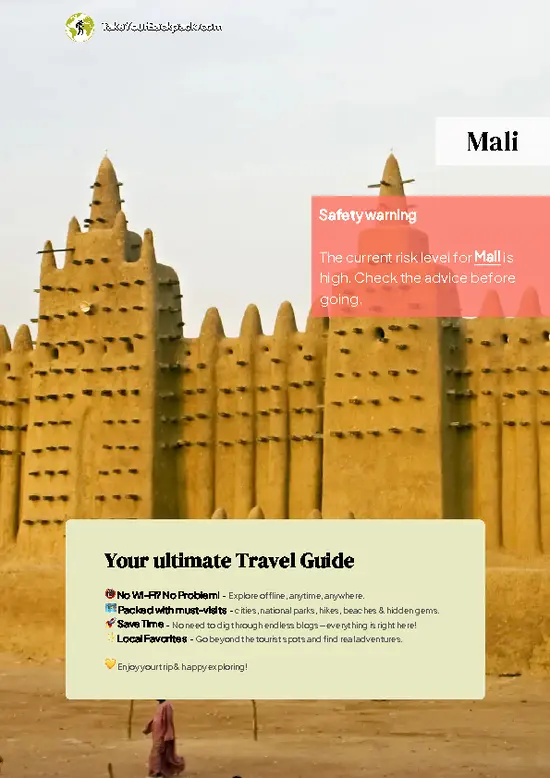
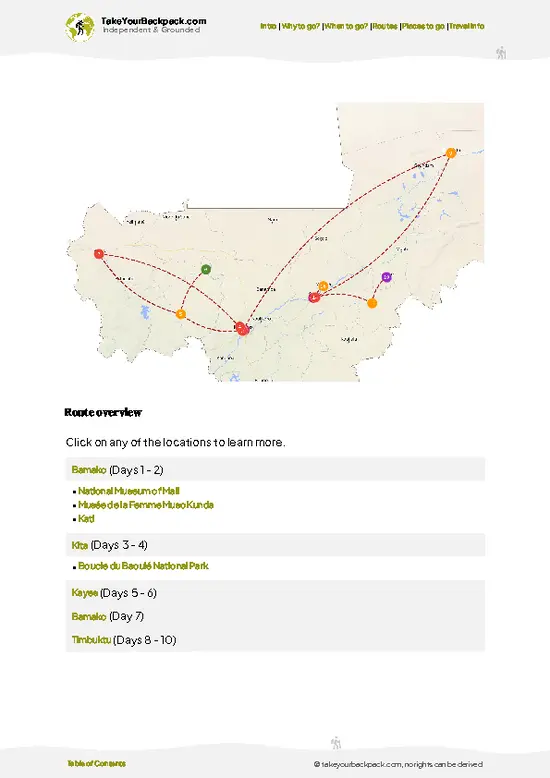
example page 0 from our offline Travel Guide for Mali
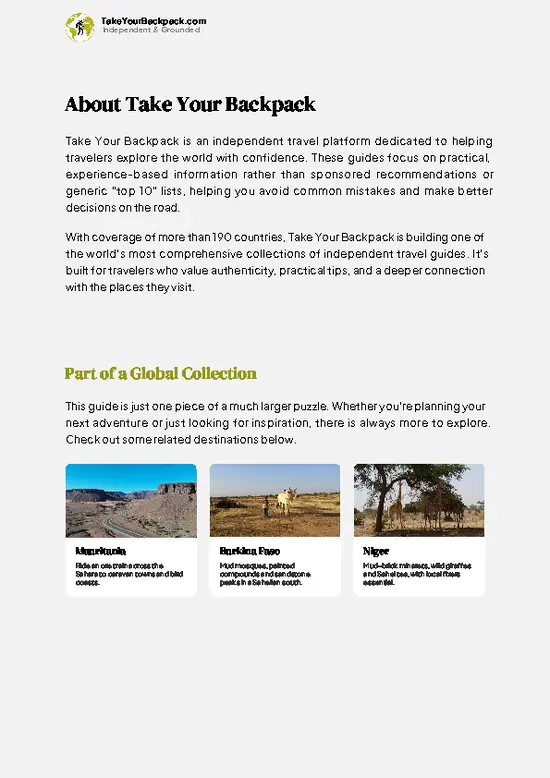
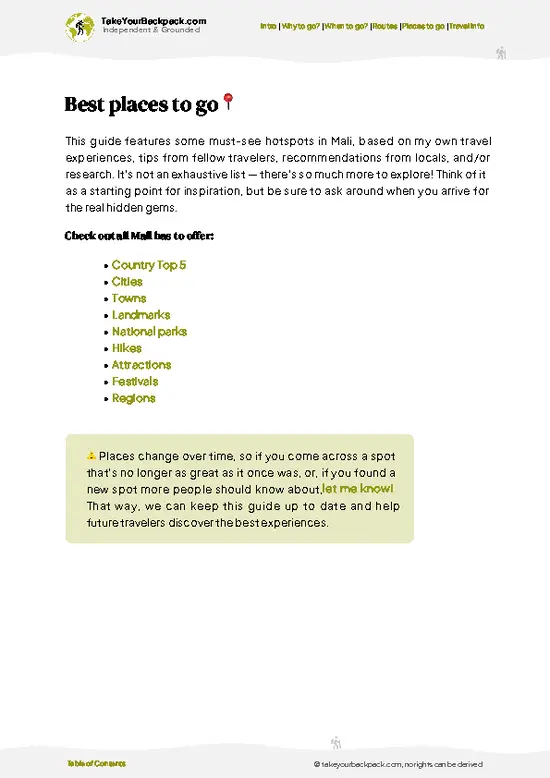
example page 1 from our offline Travel Guide for Mali
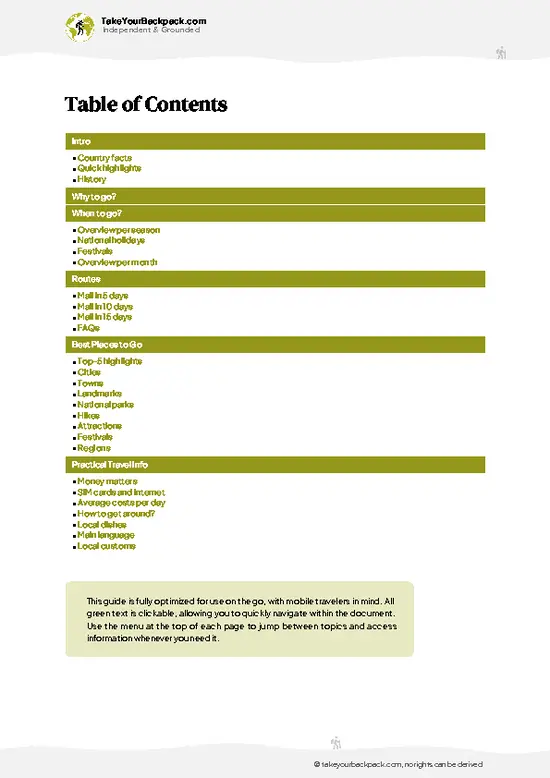
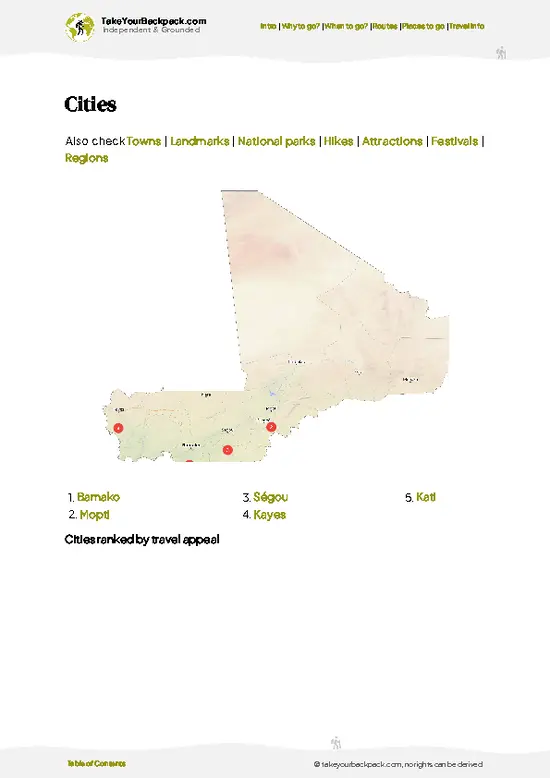
example page 2 from our offline Travel Guide for Mali
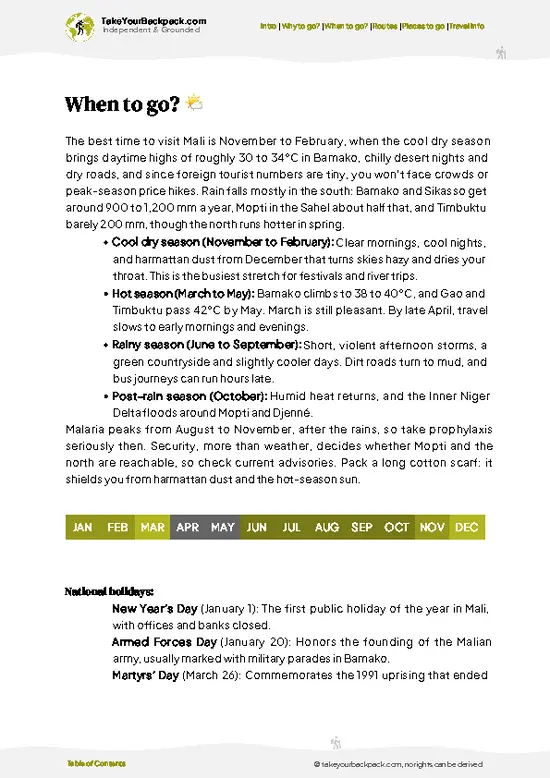
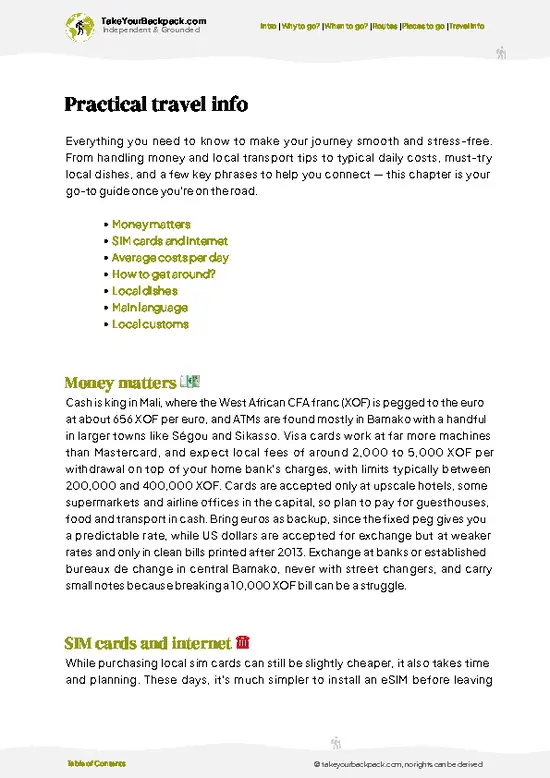
example page 3 from our offline Travel Guide for Mali
example page 4 from our offline Travel Guide for Mali
example page 5 from our offline Travel Guide for Mali
example page 6 from our offline Travel Guide for Mali
example page 7 from our offline Travel Guide for Mali
Loading the map 🌍
CLICK TO FILTER
cities
towns
landmarks
national parks
hikes
attractions
festivals
regions
SHOW COUNTRY’S BESTSHOW ALL

✨ Why go?
Ranked #8 attraction in Mali
Reasons people choose to visit here

Maison des Artisans gives you a way to meet Djenné’s craftspeople without a middleman, and that matters in a town where nearly every street corner has a souvenir hustler. You can watch work happen, ask how a blanket is woven or how mud cloth is dyed, and leave with something you can trace to a pair of hands. That is a better memory than a mass-made trinket.

It also fits Djenné’s story. The town is a UNESCO World Heritage city built of mud brick, and its crafts grew from the same trading culture that made it rich along the Niger inland delta. Add the Monday market and you have one very full day on the route between Mopti and Ségou.

💡 HighlightsMust-see experiences and standout moments

  1. Great Mosque of Djenné: the largest mud-brick building in the world, with towering pillars and wooden spikes sticking out of the walls. Non-Muslims view it from outside, and the market square in front gives the best angle.
  2. Maison des Artisans workshops: watch weavers, dyers and potters at work, and buy straight from them.
  3. Monday Market: farmers, herders and traders pour in from the surrounding villages and fill the square around the mosque with produce, cloth and livestock.
  4. Old town mud-brick streets: walk the lanes to see the carved wooden doors and the facades with their distinctive projecting towers.
  5. Djenné-Djenno: the archaeological site of a much older settlement with traces of early urban life and burial jars, set on low mounds outside town.
  6. Tomb of Tapama Djennepo: a small, quiet tomb tied
… read more 👉
  1. Great Mosque of Djenné: the largest mud-brick building in the world, with towering pillars and wooden spikes sticking out of the walls. Non-Muslims view it from outside, and the market square in front gives the best angle.
  2. Maison des Artisans workshops: watch weavers, dyers and potters at work, and buy straight from them.
  3. Monday Market: farmers, herders and traders pour in from the surrounding villages and fill the square around the mosque with produce, cloth and livestock.
  4. Old town mud-brick streets: walk the lanes to see the carved wooden doors and the facades with their distinctive projecting towers.
  5. Djenné-Djenno: the archaeological site of a much older settlement with traces of early urban life and burial jars, set on low mounds outside town.
  6. Tomb of Tapama Djennepo: a small, quiet tomb tied to a local legend about a young girl’s sacrifice for the town’s founding.
  7. Bani River views: the riverside edge of the town, where boats and washing life play out in the open.
The mosque exterior, the old streets and the Monday market cost nothing to enjoy, while Maison des Artisans is free to browse until you decide to buy.
Spotted a mistake or missing something? Contact us.

🌤️ When to go?Choosing the right time of year

  • Cool Dry Season (November to February): Mornings sit around 16 to 20°C (61 to 68°F) and afternoons reach 32 to 35°C (90 to 95°F), so walking between San workshops is comfortable. Harmattan haze can dull the sky and the dust stings eyes. Prices for rooms and guides are highest.
  • Hot Season (March to May): Afternoons climb to 40 to 43°C (104 to 109°F). Workshops go quiet from noon to mid-afternoon, and you will want to browse before the heat peaks. Crowds are thin and bargaining is easier.
  • Rainy Season (June to October): Highs ease to 30 to 35°C (86 to 95°F) with downpours, mostly July to September. Dirt roads turn muddy and the fields turn green. Few tourists, softer prices, and some artisans are away farming.
Arrive in late November or early December for working studios, cooler nights and the best chance of finding makers at their benches.

source: climatestotravel.comJANJanuary: highly recommended for travelingFEBFebruary: excellent for travelingMARMarch: good for travelingAPRApril: below average for travelingMAYMay: below average for travelingJUNJune: fair for travelingJULJuly: fair for travelingAUGAugust: fair for travelingSEPSeptember: fair for travelingOCTOctober: good for travelingNOVNovember: excellent for travelingDECDecember: highly recommended for traveling
when-to-go

✈️ The backpacker research shortcutMali Travel Guide

An offline-friendly backpacking guide with optimized travel routes, ranked highlights, transport advice, and the best areas to stay.
example page 0 from our offline Travel Guide for Mali
example page 1 from our offline Travel Guide for Mali
example page 2 from our offline Travel Guide for Mali
example page 3 from our offline Travel Guide for Mali
example page 4 from our offline Travel Guide for Mali
example page 5 from our offline Travel Guide for Mali
example page 6 from our offline Travel Guide for Mali
example page 7 from our offline Travel Guide for Mali
The digital guide (266 pages) contains:
✅ 61 highlights, ranked by travel appeal
✅ Optimized 5, 10 & 15-day travel routes
✅ Cities, national parks, landmarks, beaches
✅ How to get around
✅ Offline-friendly for travel without Wi-Fi
👉 Click to see all 30+ guide features

📅 Plan smarter in minutes, not weeks
✅ Month by month travel advice
✅ Festivals & national holidays
✅ Budget expectations

🗺️ Go to the right places, skip the overrated ones
✅ Honest pros & cons of destinations
✅ Top hikes, parks & viewpoints
✅ Lesser-known places most travelers miss
✅ Clear “worth it vs skip it” guidance

🛏️ Travel smoothly without rookie mistakes
✅ Best areas to stay
✅ Transport systems explained simply
✅ Common scams & safety advice
✅ SIM cards, money & practical tips

🌍 Understand the country, not just visit it
✅ Culture & traditions
✅ 52 Essential phrases & customs
✅ Festivals worth planning around
✅ Traveler-friendly historical context
✅ Insights that make places more meaningful

📱 Built for real travel conditions
✅ Fully downloadable PDF
✅ Works completely offline
✅ Optimized for phone use
✅ Useful in remote areas & buses
✅ Everything in one place
Stop searching, start planning
Get instant access to your full guide. 30‑day money-back guarantee.
+ Add another guide for just

By proceeding you agree to our terms.
Sent to your inbox immediately after payment • 100% Secure Checkout
Best Backpacking Travel Advisor 2025 tourism awardBest Backpacking
Travel Advisor
2025
What others say about Take Your Backpack Guides:
⭐⭐⭐⭐⭐
Fantastic, amazing amount of information!
⭐⭐⭐⭐⭐
My goodness this is amazing, it's what I've been looking for hats off too you!
⭐⭐⭐⭐⭐
I think this is absolutely BRILLIANT
⭐⭐⭐⭐
Very complete and informative. It's still missing places, but I gotta to commend you
⭐⭐⭐⭐⭐
This is truly amazing, thank you, can't wait to explore it with my kids!
⭐⭐⭐⭐⭐
Awesome resource, thank you!
⭐⭐⭐⭐⭐
This is amazing! Can't wait to explore the ones I haven't seen
⭐⭐⭐⭐
I love this! Well done, great idea.
⭐⭐⭐⭐⭐
Thanks for taking the time to make this gem!
⭐⭐⭐⭐⭐
This might be the best website I've ever seen.
⭐⭐⭐⭐⭐
Congratulations, and thank you so much for your work; it's incredibly valuable.
⭐⭐⭐⭐
In all seriousness I think you did a great job pointing out the important spots
⭐⭐⭐⭐⭐
10/10 very good
⭐⭐⭐⭐⭐
As someone who's only just starting to visit regularly this is awesome, thank you.
⭐⭐⭐⭐
Thank you very much! I'm going to visit my dad, it's going to be very useful!
⭐⭐⭐⭐⭐
This is really cool! We'll be travelling for the first time and this definitely come in handy.
⭐⭐⭐⭐⭐
You are now our minister of culture, congratulations 👨‍💼
⭐⭐⭐⭐⭐
Just wanted to tell you that this is a pearl! Going to follow your recommendations.
⭐⭐⭐⭐⭐
This is so cool. I'll definitely be using the resource for my travels soon.
⭐⭐⭐⭐⭐
This is very impressive! Good work.
⭐⭐⭐⭐⭐
This is an amazing and informative site. Very well done!

🛏️ Where to stay?Best areas to stay in Mali

San, the town around Maison des Artisans, is the practical base, and its central neighborhoods near the main market and the grand mosque area are the best bet for backpackers. Staying here puts the workshops within a short walk or a cheap moto-taxi hop, and you can eat at street stalls selling grilled meat, rice and sauce for a few euros. The scene is quiet rather than social, so expect to meet other travelers in shared courtyards of small guesthouses rather than in big hostel common rooms. Safety is generally calm in the center, but travel in the region needs checking with locals and your embassy … read more 👉
San, the town around Maison des Artisans, is the practical base, and its central neighborhoods near the main market and the grand mosque area are the best bet for backpackers. Staying here puts the workshops within a short walk or a cheap moto-taxi hop, and you can eat at street stalls selling grilled meat, rice and sauce for a few euros. The scene is quiet rather than social, so expect to meet other travelers in shared courtyards of small guesthouses rather than in big hostel common rooms. Safety is generally calm in the center, but travel in the region needs checking with locals and your embassy before you commit to any overland leg. Choose a place with a courtyard and a fan or air-conditioning, because nights in the hot season stay uncomfortable. The area near the bus yards suits early departures toward Bamako, Ségou or Mopti, though it is noisier. Book ahead from November to February, when rooms are scarcer.

👛 Costs (as of 22 October 2026)Money, prices, and spending tips

Maison des Artisans costs most visitors about €0 to 2 a day, with a total daily budget of €41 once you add a bed, food and local transport. Entry to browse is usually free, and spending depends on what you buy. Travelers pay in West African francs, and cash is essential outside the few bank machines in town.
CategoryBudget RangeLocal Reality
Entry€0 to 2Browsing is usually free. A small gratuity to a guide is appreciated.
Accommodation (high season)€12 to 20Basic guesthouse room with a fan. Rooms with air-conditioning cost more.
Accommodation (low season)€8 to 14Discounts are easy to negotiate from June to October.
Food€5 to 9Rice, grilled meat and sauce at street stalls and small restaurants.
Local transport€1 to 3Moto-taxis within town are cheap, fares are agreed beforehand.
Crafts and souvenirs€5
… read more 👉
Maison des Artisans costs most visitors about €0 to 2 a day, with a total daily budget of €41 once you add a bed, food and local transport. Entry to browse is usually free, and spending depends on what you buy. Travelers pay in West African francs, and cash is essential outside the few bank machines in town.
CategoryBudget RangeLocal Reality
Entry€0 to 2Browsing is usually free. A small gratuity to a guide is appreciated.
Accommodation (high season)€12 to 20Basic guesthouse room with a fan. Rooms with air-conditioning cost more.
Accommodation (low season)€8 to 14Discounts are easy to negotiate from June to October.
Food€5 to 9Rice, grilled meat and sauce at street stalls and small restaurants.
Local transport€1 to 3Moto-taxis within town are cheap, fares are agreed beforehand.
Crafts and souvenirs€5 to 15Small leatherwork, textiles or carvings. Bargain politely.
Total Daily Budget€41Comfortable for one traveler, excluding long-distance transport.
⚠️ Prices can change and everyone travels differently, so take this as a rough guide. Hope it helps you plan your adventure!

FAQFrequently asked questions about Maison des Artisans

Allow one to two hours for Maison des Artisans if you only want to browse, or half a day to watch makers at work and talk through commissions. San is small, so you can add the main market and the old mosque quarter in the same day. Staying one night in town lets you visit in the cool morning, around 7 to 11 am.
Maison des Artisans is worth visiting when entry is free or costs only about €0 to 2, because you pay only for what you buy. Prices for leatherwork, textiles and carvings usually range from €5 to 40, and buying direct from the maker beats market stall prices. Come with cash, since cards are rarely accepted in San.
Maison des Artisans lies in San, reached by road from Bamako (roughly 430 km, 6 to 8 hours by bus) or from Ségou (about 2.5 to 3 hours) and Mopti (about 3 to 4 hours). Buses cost roughly €8 to 15 depending on the route and operator. Within town, a moto-taxi costs about €1 to 2. Check current security advice for regional roads before traveling.
⚠️ Things can change over time, so always validate details locally before you go.

Other Malian attractions near Maison des Artisans

Explore more nearby:


💡 Not sure where to go next?
Create a personalized itinerary for Mali including Maison des Artisans and the places that fit your trip.

Generate my itinerary

👉 Discover all attractions

Or checkout all Mali has to offer (think cities, towns, villages, national parks, hikes, beaches, festivals)
Country photo of Mali

We 💚 feedbackParting advice and final tips

Maison des Artisans is best on a Monday morning, when the town is loud and the makers are in full swing. Arrive early, before the heat builds, and walk the old streets first. I would bring small cash notes and leave room in your bag for a blanket.

✍️ Help improve this page!
The information on this page is based on in-depth research, insights shared by experienced travelers, and feedback from the local travel community in Mali. While every effort is made to keep the information accurate and current, conditions can change — so if you spot anything incorrect or outdated, please get in touch.


🙋‍♂️ Give feedback

👋 Meet the founderWho’s Behind Take Your Backpack?

Johan, backpacker and founder of TakeYourBackpackHi, I’m Johan (Netherlands 🇳🇱), the creator of TakeYourBackpack. Over the past 3 decades, I’ve backpacked through 90+ countries across six continents, gaining extensive experience with independent travel, long-term trips, and overland routes.

This site is built on a combination of firsthand travel experience and carefully curated insights from other backpackers. Many guides are based on places I’ve personally visited, while others bring together tips, observations, and practical advice shared by trusted travelers I’ve met along the way.

The goal is to provide realistic, experience-driven guidance — not generic itineraries — so you can explore destinations with better context, clearer expectations, and more confidence.