×

Mali🇲🇱 | festivalsSalon International de l’Artisanat du MaliCraft halls, indigo dyers, Tuareg silver, mask carvers | things to do and best time to go

Explore Festival des Masques et Marionnettes de MarkalaExplore Festival Ogobagna

Backpacking in Salon International de l’Artisanat du Mali
👀 For curious travelersfestival ranked #10
By Johan Kruseman 🇳🇱 | Updated October 22, 2026

A dyeing demonstrator wrings indigo-black cloth over a bucket while the next stall hammers brass, and the air smells of tanned leather and hot dust. That is the Salon International de l’Artisanat du Mali, held in Bamako, Mali’s capital, in the Niger River valley at the edge of the city center. It is a biennial trade fair for craftspeople from Mali and neighboring countries, with bogolan mud cloth, Tuareg silver, wood carving and basketry sold straight from the makers. Expect Malian families, buyers and a few foreign travelers, not a party crowd. The speeches are skippable. The workshops and haggling are not. Arrive at opening hours, walk the craft halls first, and eat at the food stalls when your feet give out.

Discover everything you want to know in the 📖 Mali Travel Guide.
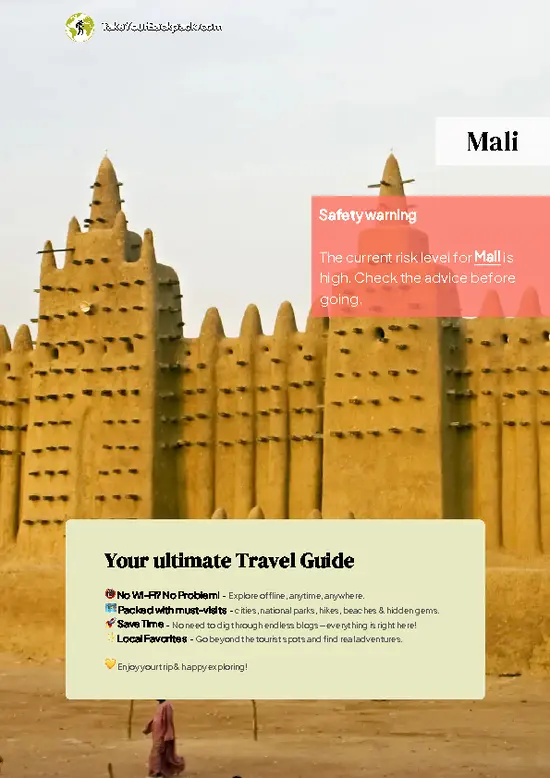
Safety warning

The current risk level for Mali is high. Check the advice before going.


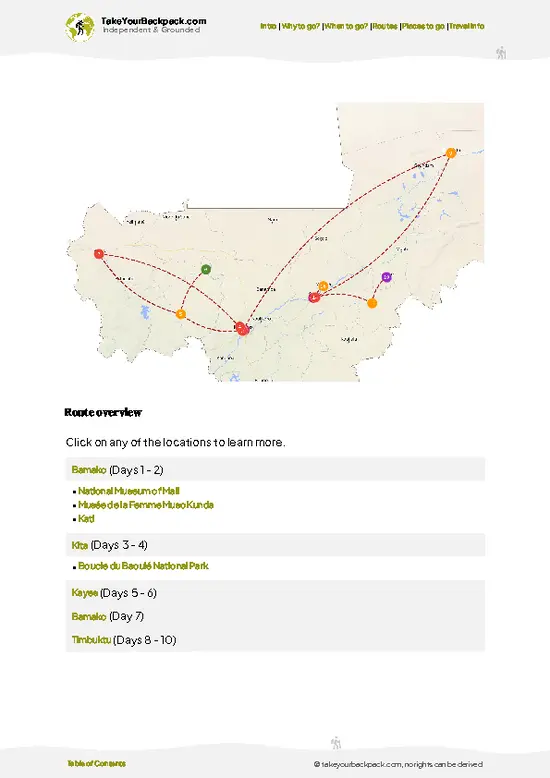
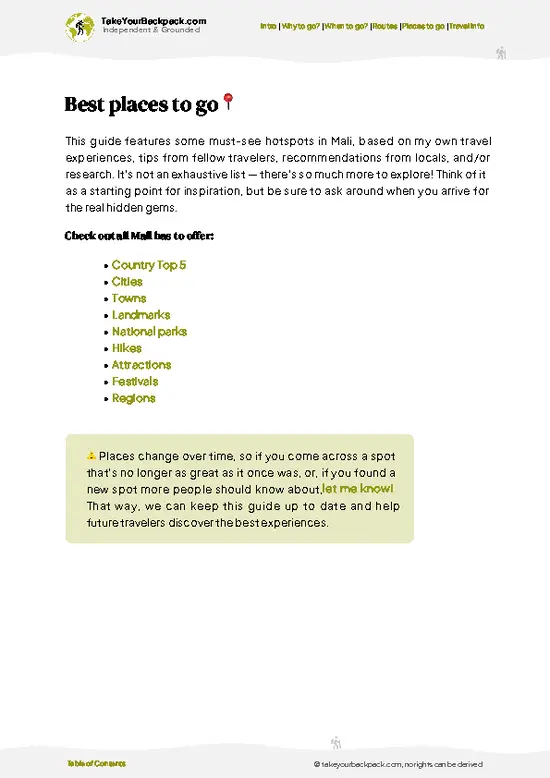
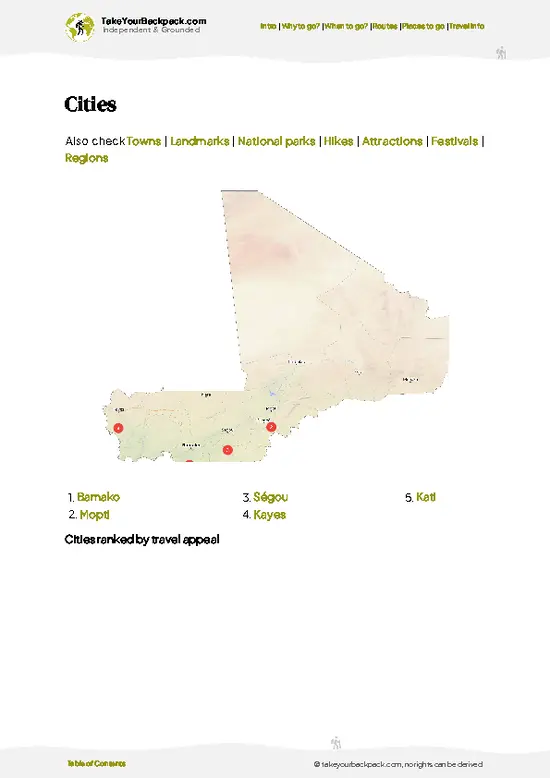
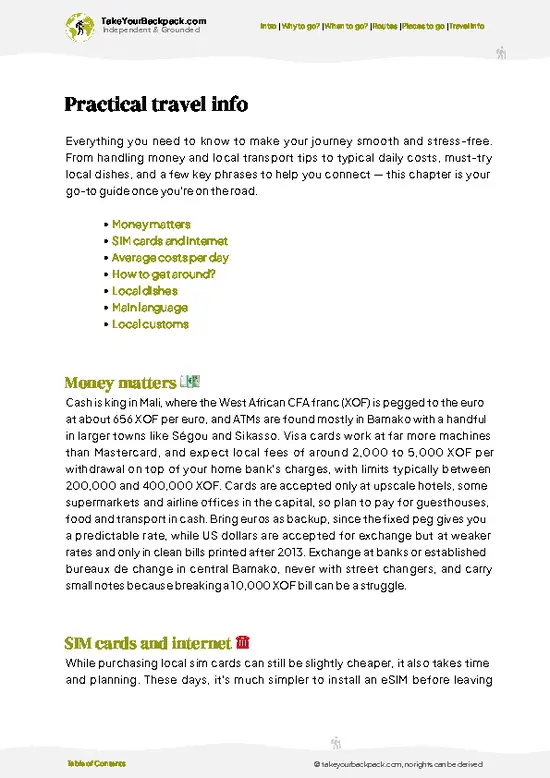
example page 0 from our offline Travel Guide for Mali
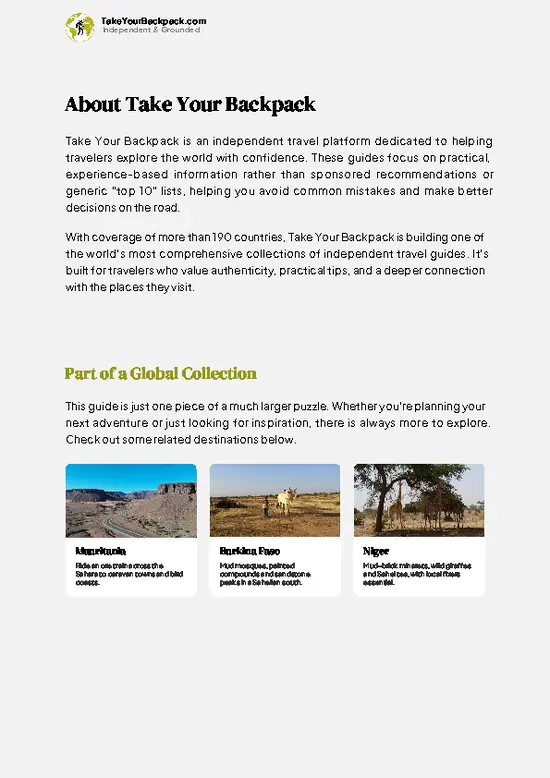
example page 1 from our offline Travel Guide for Mali
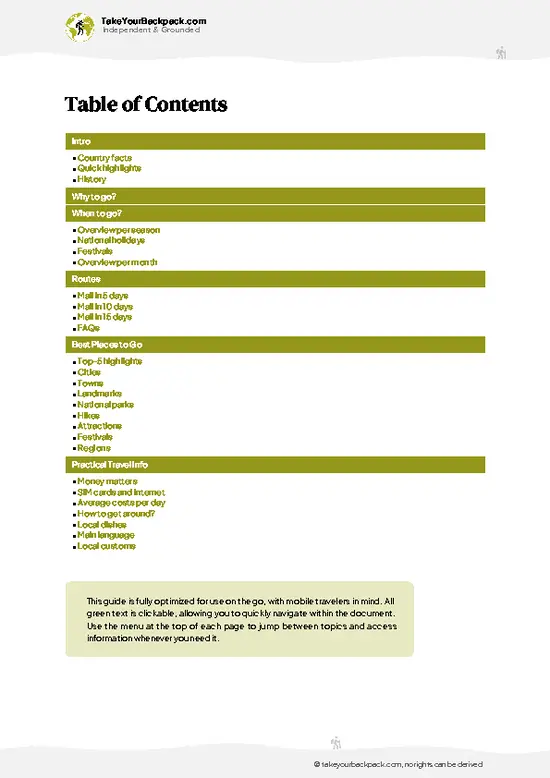
example page 2 from our offline Travel Guide for Mali
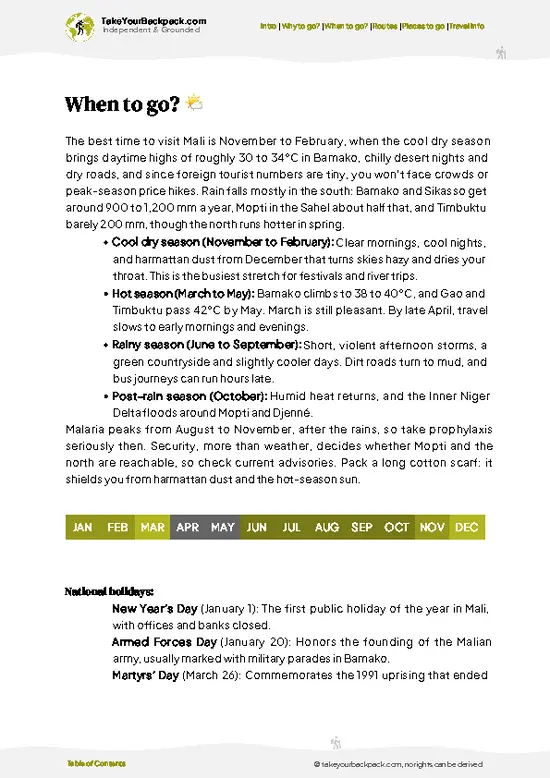
example page 3 from our offline Travel Guide for Mali
example page 4 from our offline Travel Guide for Mali
example page 5 from our offline Travel Guide for Mali
example page 6 from our offline Travel Guide for Mali
example page 7 from our offline Travel Guide for Mali
Loading the map 🌍
CLICK TO FILTER
cities
towns
landmarks
national parks
hikes
attractions
festivals
regions
SHOW COUNTRY’S BESTSHOW ALL

✨ Why go?
Ranked #10 festival in Mali
Why Salon International de l’Artisanat du Mali should be on your travel list

Salon International de l’Artisanat du Mali puts weavers, leatherworkers, jewelers and potters from across the country in one place, which would otherwise take weeks of overland travel through Segou, Mopti and the north. For a backpacker that is the real draw: you meet makers, watch them work and ask how a piece was made before you buy. Prices are negotiated with the artist, so you pay far less than in shops selling the same bogolan mud cloth. The fair also gathers craftspeople from neighboring West African countries, so you compare Malian work with Burkinabe and Senegalese styles in an afternoon. It slots well into a Bamako stay before heading to Djenne or Dogon country, and you leave with gifts you can trust to be handmade.

💡 HighlightsTop highlights of Salon International de l’Artisanat du Mali

  1. Bogolan mud cloth stalls: Artisans paint fermented mud onto handwoven cotton in geometric patterns, and many will explain the symbols and the days-long process.
  2. Tuareg silver and leather work: Jewelers hammer crosses, rings and amulets while leatherworkers sell pouches and sandals, all made by hand and often priced by weight and skill.
  3. Wood carving and Dogon-style masks: Carvers show the tools and tell you which pieces are decorative and which copy ritual forms, a useful lesson before buying anywhere in Mali.
  4. Dyeing and weaving demonstrations: Watching indigo dyers and strip weavers work makes the finished cloth make sense, and you can photograph with permission.
  5. Food and tea stalls: Between halls you can sit for sweet green tea and grilled meat or fresh juices of bissap and ginger, among artisans
… read more 👉
  1. Bogolan mud cloth stalls: Artisans paint fermented mud onto handwoven cotton in geometric patterns, and many will explain the symbols and the days-long process.
  2. Tuareg silver and leather work: Jewelers hammer crosses, rings and amulets while leatherworkers sell pouches and sandals, all made by hand and often priced by weight and skill.
  3. Wood carving and Dogon-style masks: Carvers show the tools and tell you which pieces are decorative and which copy ritual forms, a useful lesson before buying anywhere in Mali.
  4. Dyeing and weaving demonstrations: Watching indigo dyers and strip weavers work makes the finished cloth make sense, and you can photograph with permission.
  5. Food and tea stalls: Between halls you can sit for sweet green tea and grilled meat or fresh juices of bissap and ginger, among artisans on their break.
For a first visit, start with the bogolan mud cloth stalls, because the makers are talkative, the craft is distinctly Malian and the pieces pack flat.
Spotted a mistake or missing something? Contact us.

Things to do near Salon International de l’Artisanat du Mali

Ratings based on Tripadvisor reviews. When you book through this link, you support our work at no extra cost to you.

🌤️ When to go?When is the celebration of Salon International de l’Artisanat du Mali?

The Salon International de l’Artisanat du Mali (SIAMA) is held in Bamako, usually in late October or early November, and runs about a week at the Parc des Expositions near the Bamako airport side of town.
  • Best day: Go on a weekday morning for room to talk with weavers, potters and leatherworkers. Weekends fill with Bamako families and the aisles slow to a shuffle.
  • Weather: Expect 32 to 35°C (90 to 95°F), little rain and strong sun. Bring a hat, water bottle and a cloth bag for purchases.
  • Booking: Reserve a bed two to three weeks ahead, since hotel rates in Bamako can rise 20 to 30 percent while delegations are in town.
  • Arrival: Traffic on the bridges over the Niger jams from late afternoon, so arrive before noon and leave before 4 pm.
Confirm the dates locally, because the organizers shift them from year to year.

source: climatestotravel.comJANJanuary: not recommended for travelingFEBFebruary: not recommended for travelingMARMarch: not recommended for travelingAPRApril: not recommended for travelingMAYMay: not recommended for travelingJUNJune: not recommended for travelingJULJuly: not recommended for travelingAUGAugust: not recommended for travelingSEPSeptember: not recommended for travelingOCTOctober: not recommended for travelingNOVNovember: not recommended for travelingDECDecember: excellent for traveling

✈️ The backpacker research shortcutMali Travel Guide

An offline-friendly backpacking guide with optimized travel routes, ranked highlights, transport advice, and the best areas to stay.
example page 0 from our offline Travel Guide for Mali
example page 1 from our offline Travel Guide for Mali
example page 2 from our offline Travel Guide for Mali
example page 3 from our offline Travel Guide for Mali
example page 4 from our offline Travel Guide for Mali
example page 5 from our offline Travel Guide for Mali
example page 6 from our offline Travel Guide for Mali
example page 7 from our offline Travel Guide for Mali
The digital guide (266 pages) contains:
✅ 61 highlights, ranked by travel appeal
✅ Optimized 5, 10 & 15-day travel routes
✅ Cities, national parks, landmarks, beaches
✅ How to get around
✅ Offline-friendly for travel without Wi-Fi
👉 Click to see all 30+ guide features

📅 Plan smarter in minutes, not weeks
✅ Month by month travel advice
✅ Festivals & national holidays
✅ Budget expectations

🗺️ Go to the right places, skip the overrated ones
✅ Honest pros & cons of destinations
✅ Top hikes, parks & viewpoints
✅ Lesser-known places most travelers miss
✅ Clear “worth it vs skip it” guidance

🛏️ Travel smoothly without rookie mistakes
✅ Best areas to stay
✅ Transport systems explained simply
✅ Common scams & safety advice
✅ SIM cards, money & practical tips

🌍 Understand the country, not just visit it
✅ Culture & traditions
✅ 52 Essential phrases & customs
✅ Festivals worth planning around
✅ Traveler-friendly historical context
✅ Insights that make places more meaningful

📱 Built for real travel conditions
✅ Fully downloadable PDF
✅ Works completely offline
✅ Optimized for phone use
✅ Useful in remote areas & buses
✅ Everything in one place
Stop searching, start planning
Get instant access to your full guide. 30‑day money-back guarantee.
+ Add another guide for just

By proceeding you agree to our terms.
Sent to your inbox immediately after payment • 100% Secure Checkout
Best Backpacking Travel Advisor 2025 tourism awardBest Backpacking
Travel Advisor
2025
What others say about Take Your Backpack Guides:
⭐⭐⭐⭐⭐
Fantastic, amazing amount of information!
⭐⭐⭐⭐⭐
My goodness this is amazing, it's what I've been looking for hats off too you!
⭐⭐⭐⭐⭐
I think this is absolutely BRILLIANT
⭐⭐⭐⭐
Very complete and informative. It's still missing places, but I gotta to commend you
⭐⭐⭐⭐⭐
This is truly amazing, thank you, can't wait to explore it with my kids!
⭐⭐⭐⭐⭐
Awesome resource, thank you!
⭐⭐⭐⭐⭐
This is amazing! Can't wait to explore the ones I haven't seen
⭐⭐⭐⭐
I love this! Well done, great idea.
⭐⭐⭐⭐⭐
Thanks for taking the time to make this gem!
⭐⭐⭐⭐⭐
This might be the best website I've ever seen.
⭐⭐⭐⭐⭐
Congratulations, and thank you so much for your work; it's incredibly valuable.
⭐⭐⭐⭐
In all seriousness I think you did a great job pointing out the important spots
⭐⭐⭐⭐⭐
10/10 very good
⭐⭐⭐⭐⭐
As someone who's only just starting to visit regularly this is awesome, thank you.
⭐⭐⭐⭐
Thank you very much! I'm going to visit my dad, it's going to be very useful!
⭐⭐⭐⭐⭐
This is really cool! We'll be travelling for the first time and this definitely come in handy.
⭐⭐⭐⭐⭐
You are now our minister of culture, congratulations 👨‍💼
⭐⭐⭐⭐⭐
Just wanted to tell you that this is a pearl! Going to follow your recommendations.
⭐⭐⭐⭐⭐
This is so cool. I'll definitely be using the resource for my travels soon.
⭐⭐⭐⭐⭐
This is very impressive! Good work.
⭐⭐⭐⭐⭐
This is an amazing and informative site. Very well done!

🛏️ Where to stay?Choosing the right base

Hippodrome and Badalabougou are the two areas I would choose for a stay around the Salon. Badalabougou, on the south bank of the Niger, has quiet streets, restaurants that stay open into the evening and the easiest meeting point for sharing taxis. Hippodrome, on the north side, has a mix of guesthouses, small bars and expats, so you can find company for dinner without wandering far after dark. Both have a lot of budget rooms at €15 to 35 a night, which is cheaper than the central business district around ACI 2000 where conference travelers stay. Avoid sleeping in far-flung neighborhoods, since … read more 👉
Hippodrome and Badalabougou are the two areas I would choose for a stay around the Salon. Badalabougou, on the south bank of the Niger, has quiet streets, restaurants that stay open into the evening and the easiest meeting point for sharing taxis. Hippodrome, on the north side, has a mix of guesthouses, small bars and expats, so you can find company for dinner without wandering far after dark. Both have a lot of budget rooms at €15 to 35 a night, which is cheaper than the central business district around ACI 2000 where conference travelers stay. Avoid sleeping in far-flung neighborhoods, since taxi fares at night add up and the Niger bridges clog in rush hour. Solo travelers do best in a guesthouse with a shared courtyard, because the owners usually know which drivers are reliable and can arrange rides to the fairgrounds. Book ahead during the Salon, when rooms near the center fill with exhibitors.

👛 Costs (as of 22 October 2026)Travel costs and budget guide for Salon International de l’Artisanat du Mali

A day at the Salon International de l’Artisanat du Mali costs about €38 to 60 for an independent traveler, with the total sitting at €56 in my estimate for high season.
CategoryBudget RangeLocal Reality
Festival tickets€1 to 3Entry is low, paid in cash at the gate, and varies by day.
Accommodation€15 to 30 (high season)Simple guesthouse rooms in Hippodrome or Badalabougou; prices rise during the fair.
Local transport€3 to 8Shared taxis and motorbike taxis; negotiate before getting in.
Food & drinks€5 to 10Stall plates of rice or grilled chicken cost €2 to 4, with juices under €1.
Miscellaneous expenses€10 to 30Small crafts such as bogolan cloth or leather goods; bargaining is expected.
Total Daily Budget€56Excludes flights and big purchases.
⚠️ Prices can change and everyone travels differently, so take this as a rough guide. Hope it helps you plan your adventure!

🍲 FoodLocal Flavors for Backpackers

Eat where the exhibitors eat. Around the fairgrounds, women’s food stalls serve riz gras, rice cooked in tomato and oil with meat, and poulet braisé grilled over charcoal with onions and mustard. Brochettes of beef, called dibi when roasted Sahel style, come wrapped in paper with chili powder, and I would pick those for a quick plate. Regional exhibitors often bring dried fish, millet cakes and peanut sweets to sell alongside their crafts, so sample before you buy.
For drinks, try bissap, a sharp hibiscus drink, and gingembre, ginger juice that bites. Both come in small plastic bags or bottles, usually under €1. Attap tea is poured in three rounds, bitter first and sweet last, and refusing the second glass can seem curt.
Cash is the rule, in small notes, and change runs short at midday. Meals … read more 👉
Eat where the exhibitors eat. Around the fairgrounds, women’s food stalls serve riz gras, rice cooked in tomato and oil with meat, and poulet braisé grilled over charcoal with onions and mustard. Brochettes of beef, called dibi when roasted Sahel style, come wrapped in paper with chili powder, and I would pick those for a quick plate. Regional exhibitors often bring dried fish, millet cakes and peanut sweets to sell alongside their crafts, so sample before you buy.
For drinks, try bissap, a sharp hibiscus drink, and gingembre, ginger juice that bites. Both come in small plastic bags or bottles, usually under €1. Attap tea is poured in three rounds, bitter first and sweet last, and refusing the second glass can seem curt.
Cash is the rule, in small notes, and change runs short at midday. Meals are shared from one big bowl in some stalls, so wash your hands and eat from the side nearest you. Lines are loose, so speak up politely.

FAQFrequently asked questions about Salon International de l’Artisanat du Mali

The Salon International de l’Artisanat du Mali is held in Bamako, usually in late October or early November, and lasts about a week. It takes place at the Parc des Expositions, and exact dates change from edition to edition. Plan to arrive in the city two days before the opening.
Entry to the Salon International de l’Artisanat du Mali is low, roughly €1 to 3 per person, paid in cash at the gate. Budget another €15 to 30 a night for a room in Hippodrome or Badalabougou and about €5 to 10 a day for food. Crafts are the real expense, with bogolan cloth and leather goods starting around €10.
For the Salon International de l’Artisanat du Mali you can normally buy tickets at the gate, so there is no need to book far ahead. Rooms are the thing to reserve, two to three weeks before, as exhibitors and delegations fill hotels in Bamako. Arrive before noon, because afternoon traffic on the Niger bridges can add an hour to your trip.
⚠️ Things can change over time, so always validate details locally before you go.

Other Malian festivals near Salon International de l’Artisanat du Mali

Explore more nearby:


💡 Not sure where to go next?
Create a personalized itinerary for Mali including Salon International de l’Artisanat du Mali and the places that fit your trip.

Generate my itinerary

👉 Discover all festivals

Or checkout all Mali has to offer (think cities, towns, villages, national parks, hikes, beaches, festivals)
Country photo of Mali

We 💚 feedbackWhat to keep in mind

Salon International de l’Artisanat du Mali pairs well with a few days in Bamako, then a trip to Segou for pottery and textiles, or to Djenne for its mud architecture. I would bring small bills, a tote bag and a plan to browse everything once before buying.

✍️ Help improve this page!
The information on this page is based on in-depth research, insights shared by experienced travelers, and feedback from the local travel community in Mali. While every effort is made to keep the information accurate and current, conditions can change — so if you spot anything incorrect or outdated, please get in touch.


🙋‍♂️ Give feedback

👋 Meet the founderWho’s Behind Take Your Backpack?

Johan, backpacker and founder of TakeYourBackpackHi, I’m Johan (Netherlands 🇳🇱), the creator of TakeYourBackpack. Over the past 3 decades, I’ve backpacked through 90+ countries across six continents, gaining extensive experience with independent travel, long-term trips, and overland routes.

This site is built on a combination of firsthand travel experience and carefully curated insights from other backpackers. Many guides are based on places I’ve personally visited, while others bring together tips, observations, and practical advice shared by trusted travelers I’ve met along the way.

The goal is to provide realistic, experience-driven guidance — not generic itineraries — so you can explore destinations with better context, clearer expectations, and more confidence.