×

Malta🇲🇹 | townsBormlaDockyard Creek, Cottonera Lines bastions, baroque basilica dome, rough-edged streets | things to do and best time to go

Explore SengleaExplore Mellieħa

Backpacking in Bormla
👌 Worth visitingtown ranked #9
By Johan Kruseman 🇳🇱 | Updated November 6, 2026

Bormla was once the gritty, half-forgotten dockyard neighbor that guidebooks skipped. Today it is a quiet, rapidly polishing town, still lived-in and still a little rough at the edges. It sits in the south-east of Malta, across Grand Harbour from Valletta, one of the Three Cities. Bus connections are easy, and the walk to Vittoriosa takes minutes. Evenings are slow: a few band clubs, bars and small cafés, not a hostel scene, so meeting other backpackers takes effort. Walk the fortified edges at golden hour, when the stone is warm and the tour groups have gone. Bormla is rawer and less restored than Vittoriosa, which has the postcard waterfront and the crowds that come with it.

Discover everything you want to know in the 📖 Malta Travel Guide.


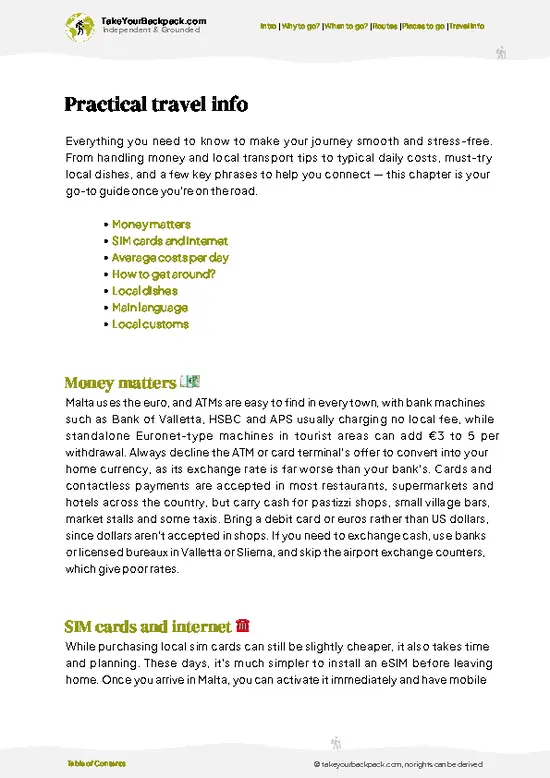
example page 0 from our offline Travel Guide for Malta
example page 1 from our offline Travel Guide for Malta
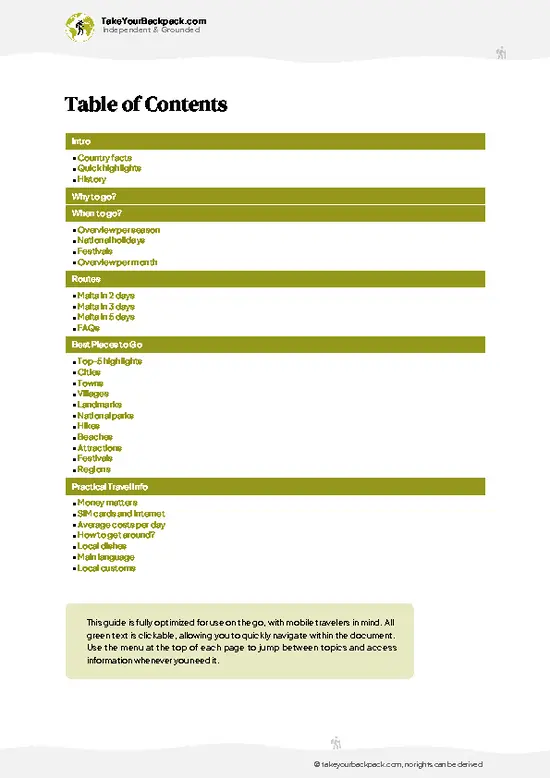
example page 2 from our offline Travel Guide for Malta
example page 3 from our offline Travel Guide for Malta
example page 4 from our offline Travel Guide for Malta
example page 5 from our offline Travel Guide for Malta
example page 6 from our offline Travel Guide for Malta
example page 7 from our offline Travel Guide for Malta
Loading the map 🌍
CLICK TO FILTER
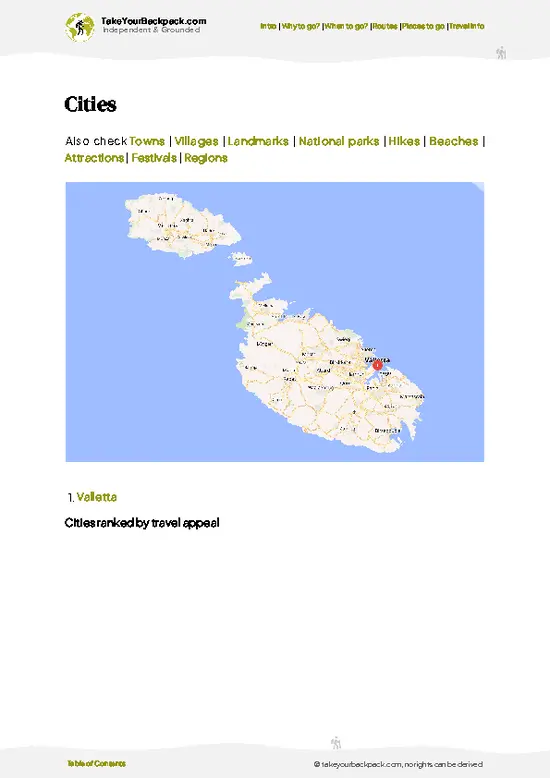
cities
towns
landmarks
national parks
hikes
beaches
attractions
festivals
regions
SHOW COUNTRY’S BESTSHOW ALL

✨ Why go?
Ranked #9 town in Malta
Reasons people choose to visit here

Bormla suits the traveler who wants Malta without the souvenir shops. It sits inside the massive Cottonera Lines and beside the old dockyards, so the walls, bastions and creek views are right on your doorstep. Stay a night or two, not a week. It works well for slow travelers and solo walkers who like Santa Margherita Hill style fortress edges, local bakeries selling pastizzi and a town that still lives by its parish calendar. The pace is quiet, nightlife is minimal, and you will mostly meet locals rather than other backpackers. Its position makes it a calm base for the other two historic cities nearby and a short hop to Valletta by ferry or bus. If you need a hostel party, go elsewhere. If you want real Maltese street life, this is it.

💡 HighlightsThe experiences that define the visit

  1. Immaculate Conception Basilica (Bormla Parish Church): A huge baroque church with a dome and a painted interior that dominates the skyline. Visit in the morning when it is open and quiet. Entry is free, donations welcome, 20 to 30 minutes.
  2. Cottonera Lines: The vast 17th-century land fortifications that enclose the Three Cities, with long bastion walks. Go in the cooler hours. Free, 1 to 2 hours to walk a section.
  3. Notre Dame Gate: The main baroque gateway of the Cottonera Lines, ideal for photos and a sense of the scale of the defenses. Free, 10 to 15 minutes.
  4. Dockyard Creek waterfront: Old dockyard buildings and the creek where you can watch dgħajsa water taxis cross to Valletta. Best in late afternoon. Free to stroll, 30 to 45 minutes.
  5. Malta Maritime Museum: Housed in the former Royal Naval Bakery
… read more 👉
  1. Immaculate Conception Basilica (Bormla Parish Church): A huge baroque church with a dome and a painted interior that dominates the skyline. Visit in the morning when it is open and quiet. Entry is free, donations welcome, 20 to 30 minutes.
  2. Cottonera Lines: The vast 17th-century land fortifications that enclose the Three Cities, with long bastion walks. Go in the cooler hours. Free, 1 to 2 hours to walk a section.
  3. Notre Dame Gate: The main baroque gateway of the Cottonera Lines, ideal for photos and a sense of the scale of the defenses. Free, 10 to 15 minutes.
  4. Dockyard Creek waterfront: Old dockyard buildings and the creek where you can watch dgħajsa water taxis cross to Valletta. Best in late afternoon. Free to stroll, 30 to 45 minutes.
  5. Malta Maritime Museum: Housed in the former Royal Naval Bakery just across the creek in Birgu, it covers Malta’s seafaring history. Its permanent galleries are closed for restoration, so check what is open before you go.
From Bormla you can easily reach Valletta, Marsaxlokk and the Hypogeum in Paola as day trips. The basilica and the Cottonera walls combine well in a single morning.
Spotted a mistake or missing something? Contact us.

Things to do around Bormla

Ratings based on Tripadvisor reviews. When you book through this link, you support our work at no extra cost to you.

🏘️ NeighborhoodsHow different areas shape the experience

Bormla (Cospicua) is small enough to cover on foot in an hour, and each quarter has its own pace, so pick the order that suits the time of day.
  • Città Cospicua core: Streets around the Immaculate Conception church and the main square are lined with old limestone townhouses. Go before noon, when the bakeries sell pastizzi for about €0.50 to 1 and the lanes are shaded, since there is little shade later.
  • Waterfront and Dockyard Creek: The promenade faces Vittoriosa across the water and has the best views in town. Walk it in the evening, when the stone turns gold and the cafes fill with locals, because the heavy dockyard traffic by day makes it noisy.
  • Cottonera Lines and Gates: The massive 17th-century fortifications, including the Santa Margherita Lines and the Notre Dame Gate, are free to walk.
… read more 👉
Bormla (Cospicua) is small enough to cover on foot in an hour, and each quarter has its own pace, so pick the order that suits the time of day.
  • Città Cospicua core: Streets around the Immaculate Conception church and the main square are lined with old limestone townhouses. Go before noon, when the bakeries sell pastizzi for about €0.50 to 1 and the lanes are shaded, since there is little shade later.
  • Waterfront and Dockyard Creek: The promenade faces Vittoriosa across the water and has the best views in town. Walk it in the evening, when the stone turns gold and the cafes fill with locals, because the heavy dockyard traffic by day makes it noisy.
  • Cottonera Lines and Gates: The massive 17th-century fortifications, including the Santa Margherita Lines and the Notre Dame Gate, are free to walk. Wear sturdy shoes and bring water, as the paths are exposed and there are few services up there.
  • Bormla Marina edge: Quieter streets with a few local bars. Nightlife is low-key, so for a lively night take the short ferry or walk to Vittoriosa or Senglea.

⌛️ 1 daySeeing the highlights in 24 hours

9:00 AM, Immaculate Conception Basilica: Start here before the heat. The huge dome and gilded interior are best seen with few people. Take your time, then walk toward the creek.
10:30 AM, Dockyard Creek waterfront: Stroll the quay and watch the old dgħajsa boats shuttle across. The industrial buildings give the best sense of the town’s working past.
12:00 PM, Malta Maritime Museum: Cross the creek to the former Naval Bakery in Birgu and see what is open while the museum’s restoration continues.
2:00 PM, Local pastizzeria lunch: Grab pastizzi and tea from a neighborhood shop. It is simple, cheap and exactly what locals eat.
4:00 PM, Notre Dame Gate and Cottonera Lines: Walk the bastions, a lesser-known stop where you get long views over the fortifications and rooftops without crowds.
6:30 PM, Creekside … read more 👉
9:00 AM, Immaculate Conception Basilica: Start here before the heat. The huge dome and gilded interior are best seen with few people. Take your time, then walk toward the creek.
10:30 AM, Dockyard Creek waterfront: Stroll the quay and watch the old dgħajsa boats shuttle across. The industrial buildings give the best sense of the town’s working past.
12:00 PM, Malta Maritime Museum: Cross the creek to the former Naval Bakery in Birgu and see what is open while the museum’s restoration continues.
2:00 PM, Local pastizzeria lunch: Grab pastizzi and tea from a neighborhood shop. It is simple, cheap and exactly what locals eat.
4:00 PM, Notre Dame Gate and Cottonera Lines: Walk the bastions, a lesser-known stop where you get long views over the fortifications and rooftops without crowds.
6:30 PM, Creekside drink: End at a local bar or band club cafe as the light softens and the streets quiet down.

🌤️ When to go?Best time to visit Bormla

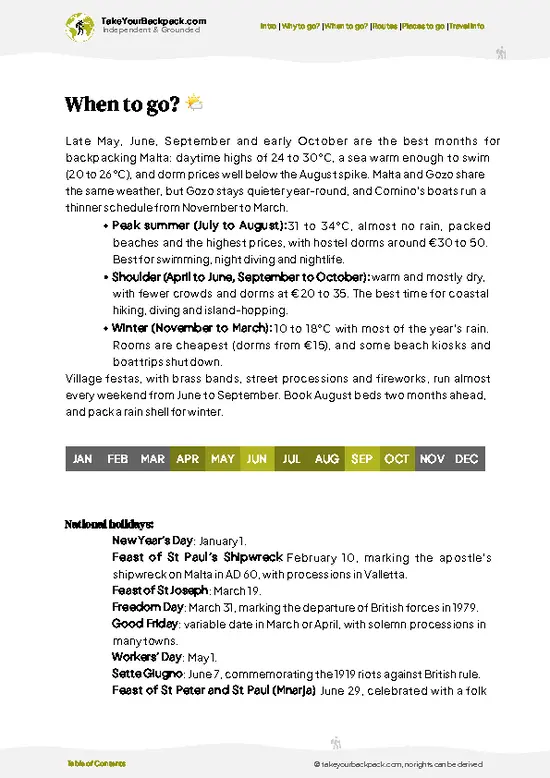
May to June and September to October are the easiest months for backpacking around Bormla, with daytime highs of 24 to 30°C (75 to 86°F) and warm sea water.
  • Summer (July to August): Highs of 31 to 35°C (88 to 95°F) make the exposed fortification walks punishing. Days are long, but rooms cost the most.
  • Autumn: Temperatures hold at 22 to 29°C (72 to 84°F) and crowds thin out. Rain starts to show up in October.
  • Winter (December to February): Highs of 14 to 17°C (57 to 63°F), frequent showers and short days. Beds are cheapest, but wind on the waterfront bites.
  • Spring: Mild, 17 to 23°C (63 to 73°F), with wildflowers on the bastions and Easter processions filling the streets.
For the best balance of weather and price, come in May or late September.

source: climatestotravel.comJANJanuary: fair for travelingFEBFebruary: fair for travelingMARMarch: good for travelingAPRApril: highly recommended for travelingMAYMay: excellent for travelingJUNJune: highly recommended for travelingJULJuly: good for travelingAUGAugust: good for travelingSEPSeptember: excellent for travelingOCTOctober: highly recommended for travelingNOVNovember: fair for travelingDECDecember: fair for traveling
when-to-go

✈️ The backpacker research shortcutMalta Travel Guide

An offline-friendly backpacking guide with optimized travel routes, ranked highlights, transport advice, and the best areas to stay.
example page 0 from our offline Travel Guide for Malta
example page 1 from our offline Travel Guide for Malta
example page 2 from our offline Travel Guide for Malta
example page 3 from our offline Travel Guide for Malta
example page 4 from our offline Travel Guide for Malta
example page 5 from our offline Travel Guide for Malta
example page 6 from our offline Travel Guide for Malta
example page 7 from our offline Travel Guide for Malta
The digital guide (186 pages) contains:
✅ 52 highlights, ranked by travel appeal
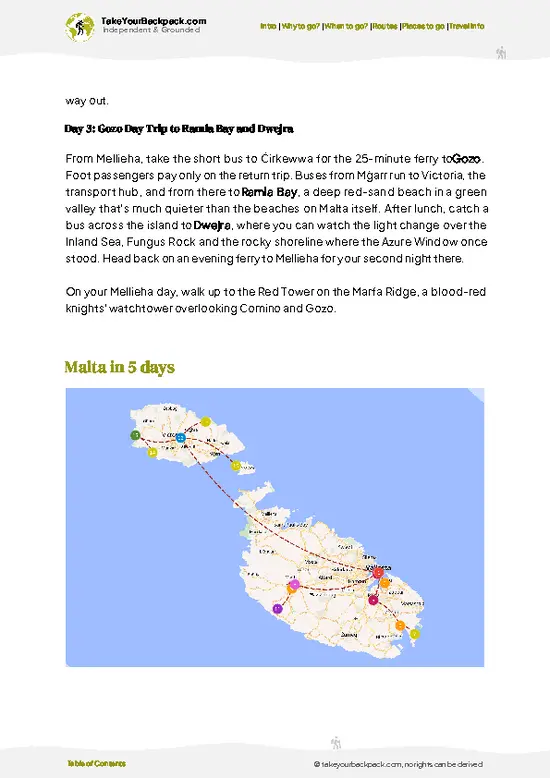
✅ Optimized 2, 3 & 5-day travel routes
✅ Cities, national parks, landmarks, beaches
✅ How to get around
✅ Offline-friendly for travel without Wi-Fi
👉 Click to see all 30+ guide features

📅 Plan smarter in minutes, not weeks
✅ Month by month travel advice
✅ Festivals & national holidays
✅ Budget expectations

🗺️ Go to the right places, skip the overrated ones
✅ Honest pros & cons of destinations
✅ Top hikes, parks & viewpoints
✅ Lesser-known places most travelers miss
✅ Clear “worth it vs skip it” guidance

🛏️ Travel smoothly without rookie mistakes
✅ Best areas to stay
✅ Transport systems explained simply
✅ Common scams & safety advice
✅ SIM cards, money & practical tips

🌍 Understand the country, not just visit it
✅ Culture & traditions
✅ 52 Essential phrases & customs
✅ Festivals worth planning around
✅ Traveler-friendly historical context
✅ Insights that make places more meaningful

📱 Built for real travel conditions
✅ Fully downloadable PDF
✅ Works completely offline
✅ Optimized for phone use
✅ Useful in remote areas & buses
✅ Everything in one place
Stop searching, start planning
Get instant access to your full guide. 30‑day money-back guarantee.
+ Add another guide for just

By proceeding you agree to our terms.
Sent to your inbox immediately after payment • 100% Secure Checkout
Best Backpacking Travel Advisor 2025 tourism awardBest Backpacking
Travel Advisor
2025
What others say about Take Your Backpack Guides:
⭐⭐⭐⭐⭐
Fantastic, amazing amount of information!
⭐⭐⭐⭐⭐
My goodness this is amazing, it's what I've been looking for hats off too you!
⭐⭐⭐⭐⭐
I think this is absolutely BRILLIANT
⭐⭐⭐⭐
Very complete and informative. It's still missing places, but I gotta to commend you
⭐⭐⭐⭐⭐
This is truly amazing, thank you, can't wait to explore it with my kids!
⭐⭐⭐⭐⭐
Awesome resource, thank you!
⭐⭐⭐⭐⭐
This is amazing! Can't wait to explore the ones I haven't seen
⭐⭐⭐⭐
I love this! Well done, great idea.
⭐⭐⭐⭐⭐
Thanks for taking the time to make this gem!
⭐⭐⭐⭐⭐
This might be the best website I've ever seen.
⭐⭐⭐⭐⭐
Congratulations, and thank you so much for your work; it's incredibly valuable.
⭐⭐⭐⭐
In all seriousness I think you did a great job pointing out the important spots
⭐⭐⭐⭐⭐
10/10 very good
⭐⭐⭐⭐⭐
As someone who's only just starting to visit regularly this is awesome, thank you.
⭐⭐⭐⭐
Thank you very much! I'm going to visit my dad, it's going to be very useful!
⭐⭐⭐⭐⭐
This is really cool! We'll be travelling for the first time and this definitely come in handy.
⭐⭐⭐⭐⭐
You are now our minister of culture, congratulations 👨‍💼
⭐⭐⭐⭐⭐
Just wanted to tell you that this is a pearl! Going to follow your recommendations.
⭐⭐⭐⭐⭐
This is so cool. I'll definitely be using the resource for my travels soon.
⭐⭐⭐⭐⭐
This is very impressive! Good work.
⭐⭐⭐⭐⭐
This is an amazing and informative site. Very well done!

🛏️ Where to stay?How to pick the right area

The best budget base is Bormla’s own old center, or the neighboring waterfront of Birgu a few minutes away. Dorm beds are limited in Bormla itself, so most backpackers pair a short stay here with hostels in Valletta or the Sliema and St Julian’s strip, where beds are far more plentiful. In the old center you will find guesthouses and private rooms, often quieter and cheaper than the tourist hubs, with dorm-style options scarce.

Safety at night is fine on the main lanes, which stay lit and lived in, though the quiet back streets are best skipped late. Noise peaks around feast days, especially … read more 👉
The best budget base is Bormla’s own old center, or the neighboring waterfront of Birgu a few minutes away. Dorm beds are limited in Bormla itself, so most backpackers pair a short stay here with hostels in Valletta or the Sliema and St Julian’s strip, where beds are far more plentiful. In the old center you will find guesthouses and private rooms, often quieter and cheaper than the tourist hubs, with dorm-style options scarce.

Safety at night is fine on the main lanes, which stay lit and lived in, though the quiet back streets are best skipped late. Noise peaks around feast days, especially the Immaculate Conception celebrations on 8 December, with brass bands and fireworks, so book early and bring earplugs.

Transport links are straightforward. Buses leave for Valletta from the town edge, and Birgu’s ferry point is a short walk. If you want a livelier evening scene, sleep in St Julian’s and visit Bormla as a day outing.

🚌 Getting aroundGetting around like a local

Bormla’s historic core, the old fortified streets around the Immaculate Conception church and the Cottonera Lines, takes about 15 minutes to cross on foot, so you won’t need a vehicle inside it. Walking stops making sense when you head for Valletta or the outer beaches, and in the hot months when the climb up to the bastions feels steeper than it looks.

Most backpackers lean on Malta’s public buses, and I’d do the same. Here’s how it works and how to handle it.

  • Walking. The lanes are narrow and shaded in the morning, and many are stepped, so you’ll want shoes with grip. Pavements vanish on the busy road along the Dockyard Creek, so cross at the marked points and keep to the inner streets.
  • Public bus. Routes link Bormla with Valletta, usually a 15 to 25 minute ride depending on traffic. A
… read more 👉
Bormla’s historic core, the old fortified streets around the Immaculate Conception church and the Cottonera Lines, takes about 15 minutes to cross on foot, so you won’t need a vehicle inside it. Walking stops making sense when you head for Valletta or the outer beaches, and in the hot months when the climb up to the bastions feels steeper than it looks.

Most backpackers lean on Malta’s public buses, and I’d do the same. Here’s how it works and how to handle it.

  • Walking. The lanes are narrow and shaded in the morning, and many are stepped, so you’ll want shoes with grip. Pavements vanish on the busy road along the Dockyard Creek, so cross at the marked points and keep to the inner streets.
  • Public bus. Routes link Bormla with Valletta, usually a 15 to 25 minute ride depending on traffic. A single journey costs €2.50 in summer (14 June to 18 October) and €2 in winter. If you will ride more than a few times, the 12-journey card at €19 or the 7-day Explore card at €25 is cheaper. Buses crawl at rush hour because the area funnels through a few roads, so travel mid-morning or after 19:00 to avoid the squeeze.
  • Ferry via Birgu. A short walk or hop over the creek puts you at the waterfront in Birgu, where a small traditional boat crosses to Valletta. The Sliema to Valletta ferry costs €3 one way and €5 return by day, a useful link if you are heading to Sliema’s nightlife. Check the last sailing before an evening out, because the services wind down early.
  • Taxi and ride-hailing apps. Apps are cheaper than street taxis, which charge more for the same distance. A ride to Valletta runs roughly €10 to 15. Use them for late nights when buses are thin, and split the fare with a hostel mate.

👛 Costs (as of 6 November 2026)Money, prices, and spending tips

Bormla costs most backpackers about €60 a day on a typical budget. Prices below reflect independent travelers paying in euros, with beds in nearby hostels since dorm choice in town is thin.
CategoryBudget RangeLocal Reality
Dorm accommodation€20 to 30 (high season), €12 to 20 (low season)Few dorms in Bormla itself, so expect a bed in Valletta or Sliema or a basic private room.
Meals€12 to 20Pastizzi from a bakery cost about €0.50 to 1, and a simple sit-down meal runs €8 to 12.
Local transport€2 to 5Buses cost €2.50 per journey in summer and €2 in winter, with cards for frequent riders.
Basic activities/entry fees€5 to 15Churches and fortifications are often cheap or free, while major museums charge more.
Miscellaneous€3 to 8Water, coffee and the occasional beer at about €2.50 to 4.
Total Daily Budget€60Lower
… read more 👉
Bormla costs most backpackers about €60 a day on a typical budget. Prices below reflect independent travelers paying in euros, with beds in nearby hostels since dorm choice in town is thin.
CategoryBudget RangeLocal Reality
Dorm accommodation€20 to 30 (high season), €12 to 20 (low season)Few dorms in Bormla itself, so expect a bed in Valletta or Sliema or a basic private room.
Meals€12 to 20Pastizzi from a bakery cost about €0.50 to 1, and a simple sit-down meal runs €8 to 12.
Local transport€2 to 5Buses cost €2.50 per journey in summer and €2 in winter, with cards for frequent riders.
Basic activities/entry fees€5 to 15Churches and fortifications are often cheap or free, while major museums charge more.
Miscellaneous€3 to 8Water, coffee and the occasional beer at about €2.50 to 4.
Total Daily Budget€60Lower if you cook and walk.
Buy a 12-journey card at €19 rather than paying per ride, and stock up on food at a local grocer or bakery.
⚠️ Prices can change and everyone travels differently, so take this as a rough guide. Hope it helps you plan your adventure!

🚌 Day tripsEasy escapes and nearby places

Bormla is a quiet, low-cost base for short outings, and the bus network reaches most of Malta’s main sights within an hour.

Valletta:
The capital sits across the harbor, about 15 to 25 minutes by bus or a ferry hop via Birgu. Allow a full day for the Upper Barrakka Gardens, St John’s Co-Cathedral (entry around €15) and the streets of the old town. Go in spring or autumn, when the heat does not drain you by noon. Many first-timers stick to the main street, so wander the side lanes too. Budget about €15 to 25 with a coffee and lunch.
👉 Explore Valletta

Birgu:
Birgu is a short walk or quick bus from Bormla, with a waterfront lined with yachts and a maze of old lanes. The Malta Maritime Museum is here, not in Bormla, and fits a slow morning. Costs stay under €15 unless you take a boat tour. Visit … read more 👉
Bormla is a quiet, low-cost base for short outings, and the bus network reaches most of Malta’s main sights within an hour.

Valletta:
The capital sits across the harbor, about 15 to 25 minutes by bus or a ferry hop via Birgu. Allow a full day for the Upper Barrakka Gardens, St John’s Co-Cathedral (entry around €15) and the streets of the old town. Go in spring or autumn, when the heat does not drain you by noon. Many first-timers stick to the main street, so wander the side lanes too. Budget about €15 to 25 with a coffee and lunch.
👉 Explore Valletta

Birgu:
Birgu is a short walk or quick bus from Bormla, with a waterfront lined with yachts and a maze of old lanes. The Malta Maritime Museum is here, not in Bormla, and fits a slow morning. Costs stay under €15 unless you take a boat tour. Visit in the cooler months.
👉 Explore Birgu

Marsaxlokk:
This fishing harbor has colorful boats and a Sunday fish market. The bus takes roughly 30 to 45 minutes, with a change possible. Plan €10 to 20 including a fish lunch. Arrive before the tour buses after 10:00.
👉 Explore Marsaxlokk

Mdina:
The walled old capital is about an hour away by bus, usually changing in Valletta. Come late afternoon for quieter lanes, and budget €10 to 20 for transport and snacks. Early evening is the best time because crowds thin.
👉 Explore Mdina

🛡️ SafetyTraveler Safety Guide

Bormla is a safe, working-class town where most visitors feel comfortable day and night. Violent crime is rare. Pickpocketing is uncommon, but keep phones and wallets secure on crowded buses and in tourist areas such as Valletta. After dark, stick to well-lit main streets, as some quiet back lanes near the dockyard are poorly lit and empty. Solo travelers, including women, generally report no problems, though late-night walks along the waterfront are best done with company. Taxis not booked through an app may overcharge, so use Bolt or eCabs, or agree a fare first. Stray cats and heavy traffic are the main everyday annoyances, plus strong sun in summer, so carry water and a hat.

FAQCommon questions from travelers

Bormla is worth a half day to a full day for its fortified streets, the Cottonera Lines and its baroque church, ideal if you like quiet, local atmosphere over beaches. The Immaculate Conception feast on 8 December adds bands and fireworks. Entry costs are minimal, and the town pairs easily with neighboring Birgu.
Bormla needs about half a day on its own, or one full day if you combine it with Birgu and Senglea. A walk along the bastions takes around two hours, with extra time for the church and a coffee stop. Visit on 8 December if you want the main feast in full swing.
Yes, Bormla is easy as a day trip from Valletta, about 15 to 25 minutes by bus at €2.50 in summer or €2 in winter. You can also reach it via the ferry to Birgu followed by a short walk. Most visitors combine it with Birgu and finish before evening, when buses thin out.
⚠️ Things can change over time, so always validate details locally before you go.

Other Maltese towns near Bormla

Explore more nearby:

  • Birgu—Fort St. Angelo, Inquisitor’s Palace, wartime tunnels, marina dinners| 1 km away
  • Senglea—Gardjola lookout, yacht marina, wooden balconies, dgħajsa boats| 1 km away
  • Kalkara—Creek quay, luzzu boats, naval cemetery, Bighi headland| 1 km away

💡 Not sure where to go next?
Create a personalized itinerary for Malta including Bormla and the places that fit your trip.

Generate my itinerary

👉 Discover all towns

Or checkout all Malta has to offer (think cities, towns, villages, national parks, hikes, beaches, festivals)
Country photo of Malta

We 💚 feedbackIs it worth it?

Bormla is best in the evening, when the heat drops and the fortress stone turns warm. The feast of the Immaculate Conception on 8 December brings bands and fireworks, so come then if you like noise. Otherwise aim for a weekday, bring comfortable shoes for the bastions, and walk to Vittoriosa for dinner.

✍️ Help improve this page!
The information on this page is based on in-depth research, insights shared by experienced travelers, and feedback from the local travel community in Malta. While every effort is made to keep the information accurate and current, conditions can change — so if you spot anything incorrect or outdated, please get in touch.


🙋‍♂️ Give feedback

👋 Meet the founderWho’s Behind Take Your Backpack?

Johan, backpacker and founder of TakeYourBackpackHi, I’m Johan (Netherlands 🇳🇱), the creator of TakeYourBackpack. Over the past 3 decades, I’ve backpacked through 90+ countries across six continents, gaining extensive experience with independent travel, long-term trips, and overland routes.

This site is built on a combination of firsthand travel experience and carefully curated insights from other backpackers. Many guides are based on places I’ve personally visited, while others bring together tips, observations, and practical advice shared by trusted travelers I’ve met along the way.

The goal is to provide realistic, experience-driven guidance — not generic itineraries — so you can explore destinations with better context, clearer expectations, and more confidence.