×

Malta🇲🇹 | villagesRabatcatacombs, narrow lanes, village squares | things to do and best time to go

Explore MdinaExplore St. John’s Co-Cathedral

Backpacking in Rabat
👍 Recommendedvillage ranked #2
By Johan Kruseman 🇳🇱 | Updated September 4, 2026

Years ago, Rabat felt like a sleepy Maltese town where the church bells and old men playing cards set the pace; today you still get that, but layered with day-trippers spilling in from Mdina’s walls and a quieter trickle of backpackers chasing something less polished than Valletta. It sits right in the middle of Malta, just outside Mdina, so you’re inland, not a beach town. That’s the trade: fewer sunsets over water, more stone alleys, catacombs, and everyday Maltese life. As a base, Rabat works best for slow travelers using buses to ping out to Dingli Cliffs, the west coast, or Mdina at night, then coming “home” to cheaper meals, calmer streets, and a couple of low-key bars. It’s walkable, safe, and cheaper than Sliema or Valletta, but nightlife and hostel culture are thin, so it suits duos, small groups, or solo travelers who don’t need a built-in party.

Discover everything you want to know in the 📖 Malta Travel Guide.


Get your Malta guide
52 ranked highlights, routes & tips, works offline (209 pages)
Loading the map 🌍
CLICK TO FILTER
towns
villages
landmarks
national parks
hikes
beaches
attractions
festivals
regions
SHOW COUNTRY’S BESTSHOW ALL

✨ Why go?
Ranked #2 village in Malta
What makes this village worth visiting

Rabat, Malta, is a strategic stop for backpackers weaving through the island. Its proximity to hiking trails like those leading to the cliffs of Dingli makes it a natural base for outdoor enthusiasts. The charming streets invite leisurely strolls, where the scent of freshly baked pastizzi wafts through the air, tempting you to pause and savor local flavors. Small-scale hostels and guesthouses foster a friendly vibe, perfect for solo travelers or small groups looking to connect. While some pass through quickly, others linger for a few days, soaking in the rich history and cultural sites nearby, like the ancient catacombs. The atmosphere is more relaxed than raucous, making it ideal for slow travelers who appreciate a balance of exploration and downtime. If you’re seeking a blend of adventure and authenticity, Rabat is a rewarding waypoint.
Want to include Rabat in your Malta route?
Create a personalized Malta itinerary that includes Rabat and the places that fit your trip — based on your travel style, budget, and available time. Get your route in seconds.

Generate my trip

💡 HighlightsWhat this place is best known for

  • St. Paul’s Catacombs — The biggest early-Christian burial complex in Malta: a maze of rock-cut galleries, family tombs and arcosolia that give a vivid sense of Roman-and-late-antique funerary life.
  • St. Agatha’s Catacombs — A compact, atmospheric set of underground chambers with chapels and carved tombs tied to early Christian devotion; quieter and easier to explore than the larger complexes.
  • Ta’ Bistra Catacombs — A lesser-visited section of Rabat’s underground cemetery network with well-preserved galleries and clear examples of burial architecture, great for avoiding crowds while still seeing authentic subterranean archaeology.
  • St. Paul’s Grotto — The cave reputed to be where St. Paul lived after the shipwreck; the site is an active place of worship with small chapels, frescoes and a
read more 👉
  • St. Paul’s Catacombs — The biggest early-Christian burial complex in Malta: a maze of rock-cut galleries, family tombs and arcosolia that give a vivid sense of Roman-and-late-antique funerary life.
  • St. Agatha’s Catacombs — A compact, atmospheric set of underground chambers with chapels and carved tombs tied to early Christian devotion; quieter and easier to explore than the larger complexes.
  • Ta’ Bistra Catacombs — A lesser-visited section of Rabat’s underground cemetery network with well-preserved galleries and clear examples of burial architecture, great for avoiding crowds while still seeing authentic subterranean archaeology.
  • St. Paul’s Grotto — The cave reputed to be where St. Paul lived after the shipwreck; the site is an active place of worship with small chapels, frescoes and a strong sense of continuity between ancient and modern devotion.
  • Domus Romana — A Roman townhouse museum with original mosaic floors and excavated rooms plus finds on display; it’s the best spot in Rabat to see domestic Roman life up close.
  • Wignacourt Museum — Small but rich: archaeological finds, ecclesiastical art and local history housed in an old priory building. Good combination of artifacts and context for Rabat’s religious heritage.
  • St. Paul’s Parish Church (Collegiate) — The main church in Rabat’s square, notable for its baroque interior and important local altarpieces; it anchors daily life in the town and is worth popping into for architecture and art.
  • St. Augustine’s Church and Priory — A 17th-century friary with a calm cloister and atmospheric interior; a quieter religious site that gives insight into Rabat’s monastic traditions and community life.
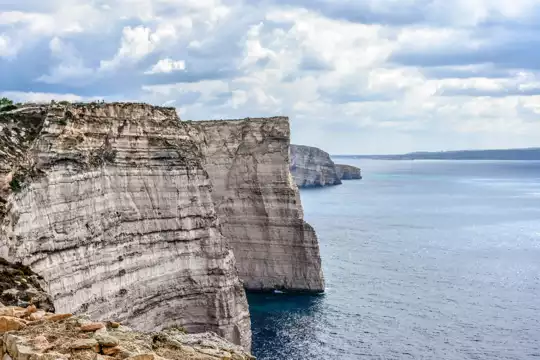
Mdina (the Silent City), the coastal Dingli Cliffs, and the Hagar Qim & Mnajdra megalithic temples are all real, visitable highlights just outside Rabat that make excellent day trips.
Spotted a mistake or missing something? Contact us.

Things to do around Rabat

Ratings based on Tripadvisor reviews. When you book through this link, you support our work at no extra cost to you.

⌛️ 1 dayHow to make the most of one day

Rabat, Malta, is a treasure trove of history and culture, where ancient ruins whisper stories and narrow streets invite exploration. Start your day with a stroll through the charming streets of the old town, where the scent of fresh pastizzi wafts from local bakeries. Grab one for breakfast; the flaky pastry filled with ricotta or peas is a must-try.

After fueling up, head to the stunning St. Paul’s Catacombs. This lesser-known site offers a fascinating glimpse into early Christian burial practices. The cool, dimly lit chambers create an atmosphere that feels both eerie and reverent. Spend an hour wandering through the labyrinthine tunnels, letting the weight of history settle in.

In the afternoon, make your way to the nearby Mdina, the ancient capital. The golden stone walls glow in the … read more 👉
Rabat, Malta, is a treasure trove of history and culture, where ancient ruins whisper stories and narrow streets invite exploration. Start your day with a stroll through the charming streets of the old town, where the scent of fresh pastizzi wafts from local bakeries. Grab one for breakfast; the flaky pastry filled with ricotta or peas is a must-try.

After fueling up, head to the stunning St. Paul’s Catacombs. This lesser-known site offers a fascinating glimpse into early Christian burial practices. The cool, dimly lit chambers create an atmosphere that feels both eerie and reverent. Spend an hour wandering through the labyrinthine tunnels, letting the weight of history settle in.

In the afternoon, make your way to the nearby Mdina, the ancient capital. The golden stone walls glow in the sunlight, and the views from the bastions are breathtaking. Grab lunch at a café with outdoor seating, where you can savor local dishes while soaking in the vibrant atmosphere.

As the sun begins to dip, return to Rabat and explore the tranquil gardens of the Wignacourt Museum. This hidden gem showcases art and artifacts, often overlooked by tourists.

Wrap up your day with dinner at a family-run trattoria, where the warmth of the locals matches the hearty flavors of the food. Enjoy a glass of local wine as you reflect on a day well spent, filled with the rich tapestry of Rabat’s history and charm.
Turn your Rabat visit into an Malta adventure
Build a complete Malta route with Rabat, hidden gems, must-see destinations, and realistic travel times included.

Generate my trip

🌤️ When to go?Best time to visit Rabat


  • Weather: Rabat basks in a Mediterranean climate. Spring (March to May) offers mild, pleasant days around 17-22°C (63-72°F), perfect for wandering without overheating or rain dampening your plans.

  • Temperature: Summer spikes to 30-35°C (86-95°F), which can drain your energy fast, especially under the Maltese sun reflecting off limestone walls. Autumn cools down to a comfortable 20-25°C (68-77°F), ideal for longer hikes and exploring.

  • Daylight Hours: Long summer days stretch up to 14 hours, giving you more time to soak in the town’s historic charm. Winter days shrink to about 9 hours, which can rush your sightseeing but offer a cozy, intimate vibe.

  • Crowds: Peak tourist season from June to August floods Rabat with visitors, turning narrow streets into bustling corridors. Shoulder seasons
read more 👉

  • Weather: Rabat basks in a Mediterranean climate. Spring (March to May) offers mild, pleasant days around 17-22°C (63-72°F), perfect for wandering without overheating or rain dampening your plans.

  • Temperature: Summer spikes to 30-35°C (86-95°F), which can drain your energy fast, especially under the Maltese sun reflecting off limestone walls. Autumn cools down to a comfortable 20-25°C (68-77°F), ideal for longer hikes and exploring.

  • Daylight Hours: Long summer days stretch up to 14 hours, giving you more time to soak in the town’s historic charm. Winter days shrink to about 9 hours, which can rush your sightseeing but offer a cozy, intimate vibe.

  • Crowds: Peak tourist season from June to August floods Rabat with visitors, turning narrow streets into bustling corridors. Shoulder seasons (April-May, September-October) strike a balance—fewer people, easier access to local spots, and a more authentic pace.

  • Seasonal Activities: Spring and autumn host local festivals and markets, where you can taste fresh Maltese produce and catch traditional music without the summer crush.

  • Price Fluctuations: Accommodation and flights surge in summer. Booking in shoulder seasons can save you 20-40%, letting you upgrade your stay or splurge on local experiences.


Pro-tip: Aim for late April or early October—cool air, manageable crowds, and lively local culture combine to make Rabat feel like it’s yours alone.


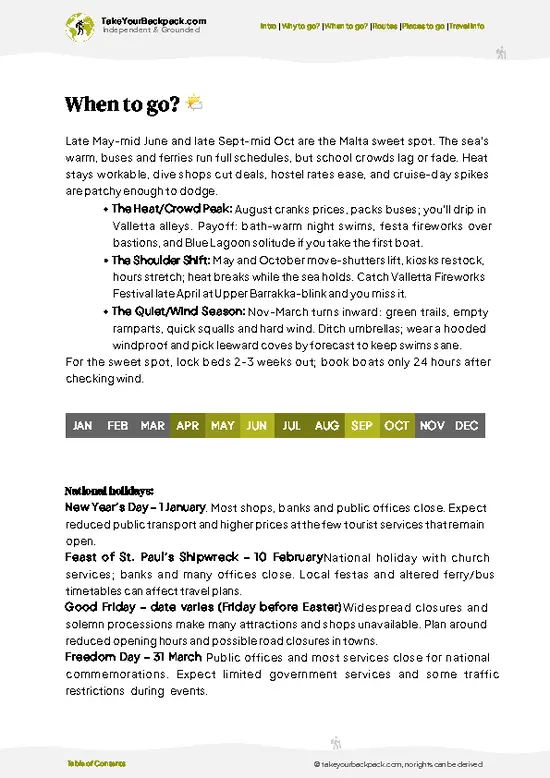
source: climatestotravel.comJANJanuary: fair for travelingFEBFebruary: fair for travelingMARMarch: highly recommended for travelingAPRApril: excellent for travelingMAYMay: highly recommended for travelingJUNJune: good for travelingJULJuly: fair for travelingAUGAugust: fair for travelingSEPSeptember: highly recommended for travelingOCTOctober: excellent for travelingNOVNovember: good for travelingDECDecember: fair for traveling
malta-city-rabat
© Google |

✈️ The backpacker research shortcutMalta Travel Guide

An offline-friendly backpacking guide with optimized travel routes, ranked highlights, transport advice, and the best areas to stay.
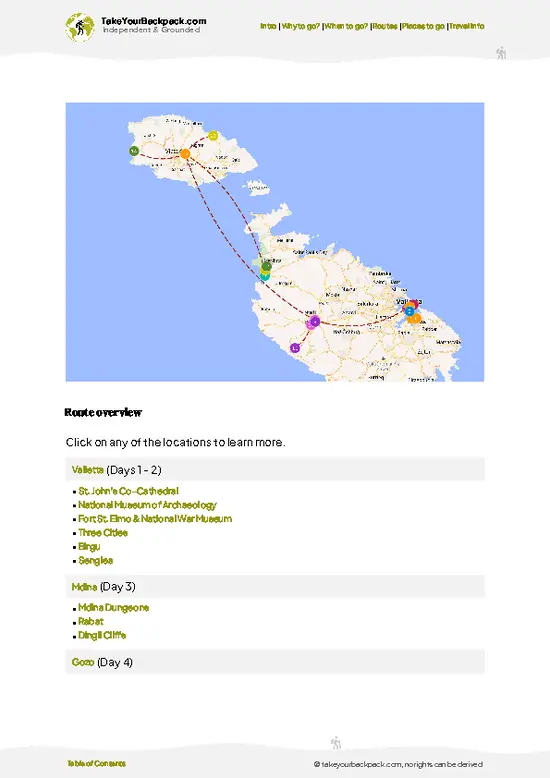
example page 0 from our offline Travel Guide for Malta
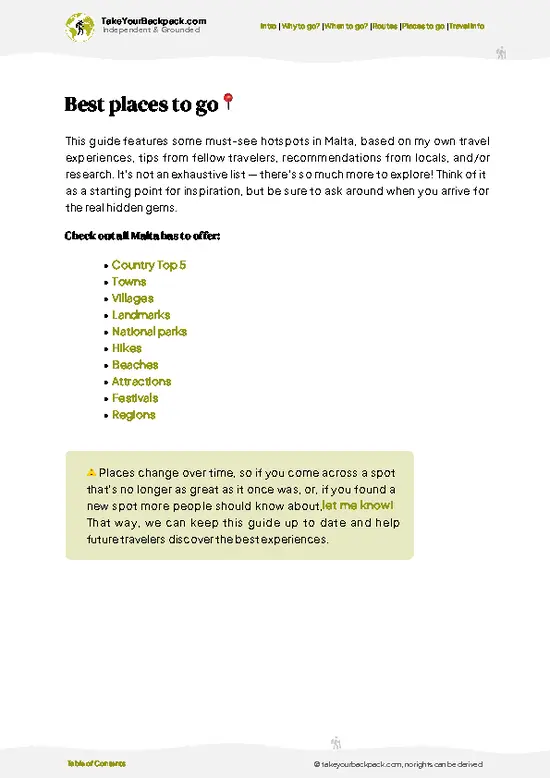
example page 1 from our offline Travel Guide for Malta
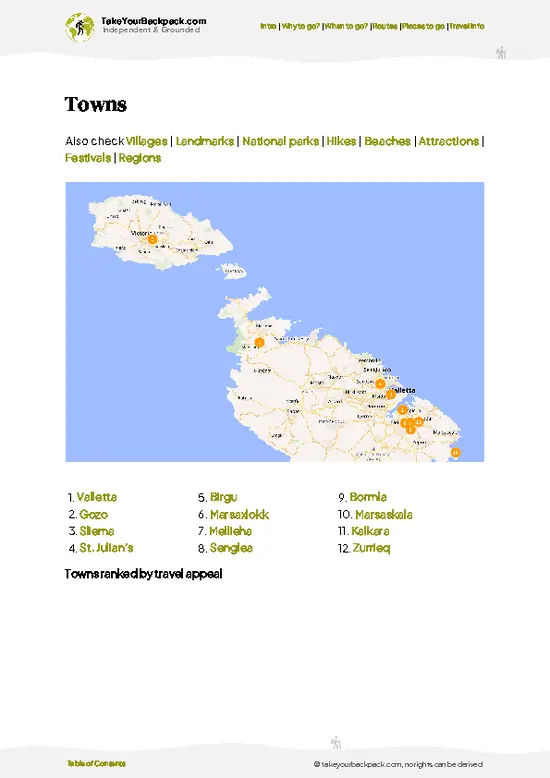
example page 2 from our offline Travel Guide for Malta
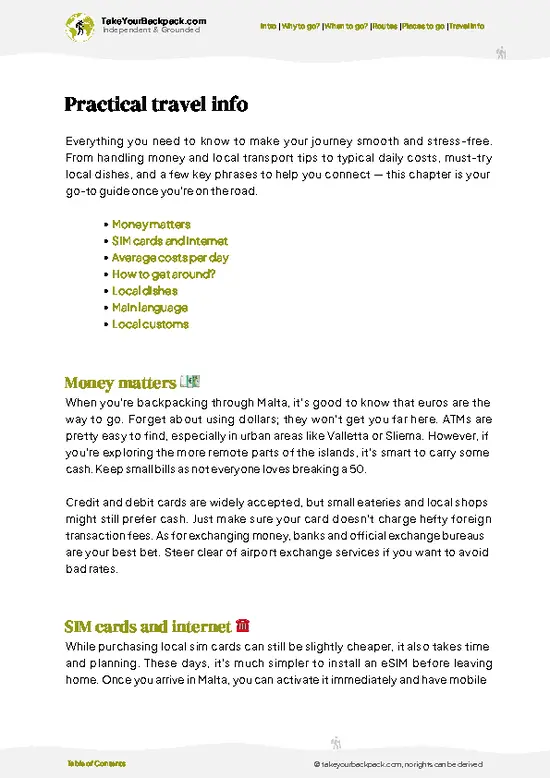
example page 3 from our offline Travel Guide for Malta
example page 4 from our offline Travel Guide for Malta
example page 5 from our offline Travel Guide for Malta
example page 6 from our offline Travel Guide for Malta
example page 7 from our offline Travel Guide for Malta
The digital guide (209 pages) contains:
52 highlights, ranked by travel appeal
Optimized 2, 3 & 5-day travel routes
Cities, national parks, landmarks, beaches
How to get around
Offline-friendly for travel without Wi-Fi
👉 Click to see all 30+ guide features

📅 Plan smarter in minutes, not weeks
Month by month travel advice
Festivals & national holidays
Budget expectations

🗺️ Go to the right places, skip the overrated ones
Honest pros & cons of destinations
Top hikes, parks & viewpoints
Lesser-known places most travelers miss
Clear “worth it vs skip it” guidance

🛏️ Travel smoothly without rookie mistakes
Best areas to stay
Transport systems explained simply
Common scams & safety advice
SIM cards, money & practical tips

🌍 Understand the country, not just visit it
Culture & traditions
52 Essential phrases & customs
Festivals worth planning around
Traveler-friendly historical context
Insights that make places more meaningful

📱 Built for real travel conditions
Fully downloadable PDF
Works completely offline
Optimized for phone use
Useful in remote areas & buses
Everything in one place
Save weeks of stressful planning
Get instant access to your full guide. 30‑day money-back guarantee.
+ Add another guide for just US$7.80

By proceeding you agree to our terms.
Sent to your inbox immediately after payment • 100% Secure Checkout
Best Backpacking Travel Advisor 2025 tourism awardBest Backpacking
Travel Advisor
2025
What others say about Take Your Backpack Guides:
⭐⭐⭐⭐⭐
Fantastic, amazing amount of information!
⭐⭐⭐⭐⭐
My goodness this is amazing, it's what I've been looking for hats off too you!
⭐⭐⭐⭐⭐
I think this is absolutely BRILLIANT
⭐⭐⭐⭐
Very complete and informative. It's still missing places, but I gotta to commend you
⭐⭐⭐⭐⭐
This is truly amazing, thank you, can't wait to explore it with my kids!
⭐⭐⭐⭐⭐
Awesome resource, thank you!
⭐⭐⭐⭐⭐
This is amazing! Can't wait to explore the ones I haven't seen
⭐⭐⭐⭐
I love this! Well done, great idea.
⭐⭐⭐⭐⭐
Thanks for taking the time to make this gem!
⭐⭐⭐⭐⭐
This might be the best website I've ever seen.
⭐⭐⭐⭐⭐
Congratulations, and thank you so much for your work; it's incredibly valuable.
⭐⭐⭐⭐
In all seriousness I think you did a great job pointing out the important spots
⭐⭐⭐⭐⭐
10/10 very good
⭐⭐⭐⭐⭐
As someone who's only just starting to visit regularly this is awesome, thank you.
⭐⭐⭐⭐
Thank you very much! I'm going to visit my dad, it's going to be very useful!
⭐⭐⭐⭐⭐
This is really cool! We'll be travelling for the first time and this definitely come in handy.
⭐⭐⭐⭐⭐
You are now our minister of culture, congratulations 👨‍💼
⭐⭐⭐⭐⭐
Just wanted to tell you that this is a pearl! Going to follow your recommendations.
⭐⭐⭐⭐⭐
This is so cool. I'll definitely be using the resource for my travels soon.
⭐⭐⭐⭐⭐
This is very impressive! Good work.
⭐⭐⭐⭐⭐
This is an amazing and informative site. Very well done!

🛏️ Where to stay?Best areas to stay in Malta

Rabat’s charm lies in its quiet streets and historic pulse, but for backpackers, the best base is the area around the town center, especially near the main square and along Triq il-Kbira. This neighborhood is a sweet spot: safe, walkable, and buzzing enough to meet fellow travelers without the noise of a party hub. The streets here catch the warm Maltese light just right in the late afternoon, casting long shadows over limestone walls that smell faintly of sea salt and baked earth.

Hostels and budget stays cluster around this core, offering simple digs that encourage socializing in common rooms … read more 👉
Rabat’s charm lies in its quiet streets and historic pulse, but for backpackers, the best base is the area around the town center, especially near the main square and along Triq il-Kbira. This neighborhood is a sweet spot: safe, walkable, and buzzing enough to meet fellow travelers without the noise of a party hub. The streets here catch the warm Maltese light just right in the late afternoon, casting long shadows over limestone walls that smell faintly of sea salt and baked earth.

Hostels and budget stays cluster around this core, offering simple digs that encourage socializing in common rooms or shared courtyards. It’s a place where you can swap stories over a cheap coffee or a local pastry, then step out to explore ancient catacombs or the nearby Mdina walls without a taxi. Compared to quieter residential pockets or the more tourist-heavy Sliema, this area balances calm with connection, making it a natural choice for solo backpackers who want to feel part of the town’s rhythm without losing their peace.

🚌 Getting aroundHow to get from A to B

Rabat moves at a pace that feels like a conversation between old friends—unhurried but purposeful. The sun casts long shadows on the ochre walls as locals drift from cafes to markets, guided more by instinct than by clocks. This city isn’t about rigid timetables; it’s about reading the rhythm of the streets, where a shared glance or a shouted call can change your route in an instant. The air carries the scent of sea salt mixed with spices, and the cobblestones beneath your feet tell stories of centuries. To navigate Rabat like a local, you’ll want to blend into this flow, balancing patience with savvy moves that save time and money.


  • Walking: Rabat’s compact medina and waterfront areas are best explored on foot. The narrow alleys and bustling souks reveal their secrets slowly—no rush, just
read more 👉
Rabat moves at a pace that feels like a conversation between old friends—unhurried but purposeful. The sun casts long shadows on the ochre walls as locals drift from cafes to markets, guided more by instinct than by clocks. This city isn’t about rigid timetables; it’s about reading the rhythm of the streets, where a shared glance or a shouted call can change your route in an instant. The air carries the scent of sea salt mixed with spices, and the cobblestones beneath your feet tell stories of centuries. To navigate Rabat like a local, you’ll want to blend into this flow, balancing patience with savvy moves that save time and money.


  • Walking: Rabat’s compact medina and waterfront areas are best explored on foot. The narrow alleys and bustling souks reveal their secrets slowly—no rush, just the crunch of gravel and the murmur of daily life. Walking costs nothing and lets you absorb the city’s textures and smells up close.


  • Tramway: The modern tram system is the backbone of Rabat’s public transit, running from early morning (around 6:30 AM) until about 11 PM. Tickets are cheap—around 6 MAD per ride—and the trams are clean, air-conditioned, and punctual. They slice through the city faster than buses, connecting key spots like Agdal, Hassan, and the train station with smooth efficiency.


  • Buses: The bus network covers more ground but can be unpredictable. Buses run roughly from 6 AM to 9 PM, with fares around 4-6 MAD. They’re slower and often crowded, but essential if you’re heading to neighborhoods beyond the tram’s reach. Keep small change ready and expect a lively atmosphere.


  • Petit Taxis: These small, shared taxis are a flexible option for short hops within the city. They operate on a fixed meter fare, usually under 10 MAD for most trips. Flag one down on the street, but be ready to share with other passengers going your way. They’re quick but can feel cramped during rush hour.


  • Grand Taxis: For trips outside Rabat or to the airport, grand taxis are your go-to. They’re larger, usually old Mercedes, and can be hired privately or shared. Prices vary, so negotiate upfront. They leave when full, so timing depends on the flow of passengers, not a schedule.

👛 Costs (as of 4 September 2026)Typical daily expenses

Backpacking in Rabat, Malta, offers a blend of Mediterranean charm and manageable costs, but knowing where your money goes helps you stretch your budget without missing out.
  • Dorm Accommodation: Expect to pay around €20 to €35 per night for a bed in a shared dorm. Hostels here tend to be clean and basic, often with a communal kitchen, which is a big help for saving on food.
  • Meals: Street food and casual eateries will run you about €5 to €10 for a filling meal. Think pastizzi from a local bakery or a simple plate of pasta. If you lean into cooking some meals yourself, groceries can cost roughly €15 to €20 per week, which breaks down to about €2 to €3 per day.
  • Local Transport: Rabat is compact, so walking is your best bet. When you do need a bus, single fares hover around €1.50, with daily
read more 👉
Backpacking in Rabat, Malta, offers a blend of Mediterranean charm and manageable costs, but knowing where your money goes helps you stretch your budget without missing out.
  • Dorm Accommodation: Expect to pay around €20 to €35 per night for a bed in a shared dorm. Hostels here tend to be clean and basic, often with a communal kitchen, which is a big help for saving on food.
  • Meals: Street food and casual eateries will run you about €5 to €10 for a filling meal. Think pastizzi from a local bakery or a simple plate of pasta. If you lean into cooking some meals yourself, groceries can cost roughly €15 to €20 per week, which breaks down to about €2 to €3 per day.
  • Local Transport: Rabat is compact, so walking is your best bet. When you do need a bus, single fares hover around €1.50, with daily passes available for about €2.50 to €3. This keeps transport costs low and flexible.
  • Basic Activities/Entry Fees: Many historical sites in Rabat, like the catacombs or museums, charge entry fees between €3 and €7. Budgeting around €5 to €10 per day for activities lets you explore without feeling pinched.
  • Miscellaneous Expenses: This covers essentials like water, occasional coffee, or small souvenirs. Around €3 to €5 daily is a safe bet to keep you covered without overdoing it.

Altogether, a realistic daily budget for backpacking in Rabat falls between €35 and €55. This range balances comfort and experience, letting you savor the town’s atmosphere—the warm limestone walls glowing in the afternoon sun, the scent of fresh bread from corner bakeries—without constantly watching your wallet.


source: visitmalta.com
⚠️ Prices can change and everyone travels differently, so take this as a rough guide. Hope it helps you plan your adventure!

🚌 Day tripsEasy escapes and nearby places

Rabat, Malta, is a backpacker’s dream base for day trips, offering a mix of history, culture, and stunning landscapes just a bus ride away.

Mdina: The Silent City
Just a short 15-minute walk from Rabat, Mdina feels like stepping into a time capsule. The narrow, winding streets are lined with honey-colored stone buildings that glow in the afternoon sun. You can explore the ancient walls and enjoy panoramic views of the island. A budget traveler can easily spend a few euros on a coffee at a local café while soaking in the atmosphere. Aim for early morning or late afternoon to avoid the crowds and catch that golden light. A common mistake? Skipping the quieter back alleys where you’ll find charming nooks and crannies.
👉 Explore Mdina

Golden Bay: Beach Bliss
About 30 minutes by bus, Golden … read more 👉
Rabat, Malta, is a backpacker’s dream base for day trips, offering a mix of history, culture, and stunning landscapes just a bus ride away.

Mdina: The Silent City
Just a short 15-minute walk from Rabat, Mdina feels like stepping into a time capsule. The narrow, winding streets are lined with honey-colored stone buildings that glow in the afternoon sun. You can explore the ancient walls and enjoy panoramic views of the island. A budget traveler can easily spend a few euros on a coffee at a local café while soaking in the atmosphere. Aim for early morning or late afternoon to avoid the crowds and catch that golden light. A common mistake? Skipping the quieter back alleys where you’ll find charming nooks and crannies.
👉 Explore Mdina

Golden Bay: Beach Bliss
About 30 minutes by bus, Golden Bay offers a refreshing escape. The soft sand and clear waters are perfect for a swim or just lounging under the sun. Bring a packed lunch to save cash, as beachside eateries can be pricey. Late spring or early fall is ideal for fewer tourists and pleasant weather. A rookie error is arriving without sunscreen; the Maltese sun can be relentless.
👉 Explore Golden Bay

Gozo: Island Adventure
Catch a ferry from Cirkewwa, just a 40-minute bus ride from Rabat. Gozo is a world apart, with rugged cliffs and rural charm. Spend the day hiking the coastal trails or exploring the ancient temples. The ferry ride costs around €5 round trip, and the views are worth every cent. Best visited in spring when the wildflowers bloom. Many first-timers underestimate the time needed to explore, so plan for a full day.
👉 Explore Gozo

Comino: Crystal Waters
A quick ferry ride from Gozo, Comino is famous for the Blue Lagoon. The turquoise waters are mesmerizing, perfect for a swim or snorkeling. The ferry is about €10 round trip, and you’ll want to go early to beat the crowds. Summer is peak season, but spring offers a quieter experience. Don’t forget to bring water; it’s easy to get dehydrated under the sun.
Want to know what more Malta offers?
The Malta Travel Guide describes 52 highlights, from cities to national parks, from beaches to hikes

Get the Travel Guide -

🛡️ SafetyScams, Hazards, and Annoyances

Rabat, Malta, is generally safe, but a few areas deserve your attention. Stick to well-lit streets at night, especially around the outskirts. The narrow alleys can feel charming but may also harbor the occasional stray cat or two, so keep your wits about you.

When it comes to scams, be cautious of overly friendly locals offering unsolicited help. They might expect a tip or lead you to shops with inflated prices. Always agree on prices before engaging services, like taxis or guided tours.

Carry yourself confidently; a relaxed demeanor often deters unwanted attention. Trust your instincts—if something feels off, it probably is. Enjoy the rich history and vibrant culture, but stay aware, and you’ll have a smooth experience.

FAQTraveler FAQ

Rabat can be reached by bus from Valletta or other major towns, with routes 51, 52, and 53 serving the area. The bus journey from Valletta takes about 20-25 minutes. Taxis and rental cars are also convenient options for direct access.
Yes, Rabat is worth the trip for its rich history and cultural sites, including the St. Paul's Catacombs and the Domus Romana. Visitors often spend 2-3 hours exploring these well-preserved archaeological sites and charming streets.
Yes, Rabat can be visited as a day trip. It is close to Mdina, allowing travelers to combine both in one day, with enough time to see key attractions and enjoy local cafes.
⚠️ Things can change over time, so always validate details locally before you go.

Expanding your trip beyond this stop

Rabat isn’t the only highlight in Malta. Explore all what Malta has to offer.
Country photo of Malta

We 💚 feedbackWhat to keep in mind

Rabat’s charm sneaks up on you. The narrow streets hum with history, and the scent of fresh bread wafts from local bakeries. Don’t miss the quiet beauty of St. Paul’s Catacombs; it’s a haunting yet serene experience. Just be ready for uneven cobblestones—comfortable shoes are a must. Embrace the slower pace; it’s where the real magic happens.

✍️ Help improve this page!
The information on this page is based on in-depth research, insights shared by experienced travelers, and feedback from the local travel community in Malta. While every effort is made to keep the information accurate and current, conditions can change — so if you spot anything incorrect or outdated, please get in touch.


🙋‍♂️ Give feedback

👋 Meet the founderWho’s Behind Take Your Backpack?

Johan, backpacker and founder of TakeYourBackpackHi, I’m Johan (Netherlands 🇳🇱), the creator of TakeYourBackpack. Over the past decade, I’ve backpacked through 80+ countries across six continents, gaining extensive experience with independent travel, long-term trips, and overland routes.

This site is built on a combination of firsthand travel experience and carefully curated insights from other backpackers. Many guides are based on places I’ve personally visited, while others bring together tips, observations, and practical advice shared by trusted travelers I’ve met along the way.

The goal is to provide realistic, experience-driven guidance — not generic itineraries — so you can explore destinations with better context, clearer expectations, and more confidence.

Get full Malta guide •
Instant download • 52 highlights • Full Offline guide