×

Marshall Islands🇲🇭 | best regionsYour Guide to the 10 Best regions in Marshall Islands

Marshall Islands regions come in two kinds: the two urban atolls of Majuro and Kwajalein’s Ebeye, with paved roads, fuel and flights, and the outer atolls, where a ring of white sand holds coconut palms, lagoon glare and almost no infrastructure. Costs, crowds and comfort shift sharply between them. Independent travel here means planning around thin flight schedules and slow, salty boat hops.

By Johan Kruseman 🇳🇱 | Updated October 23, 2026
Explore the best towns in Marshall Islands

Why go?Why These region Stand Out

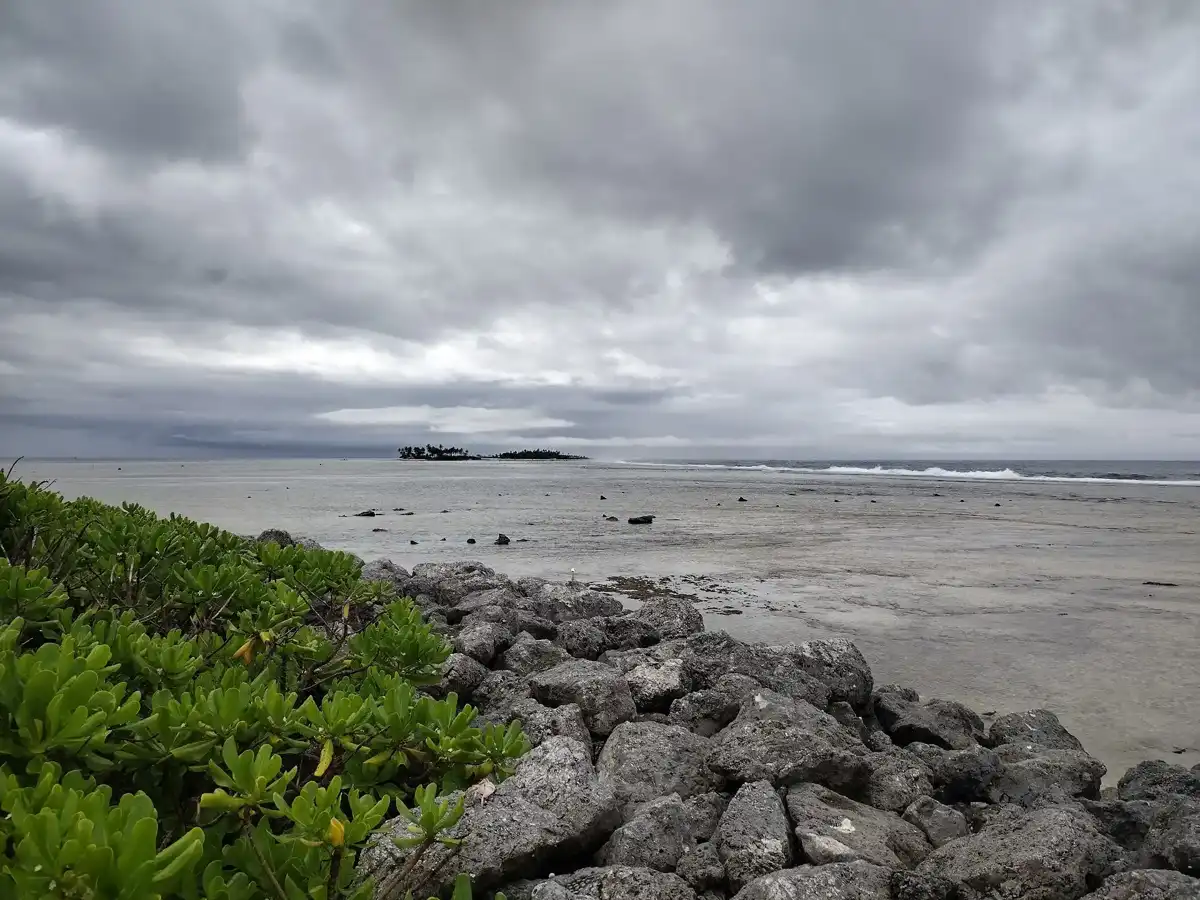
Thirty-four coral atolls scatter across roughly 1.9 million square kilometers of Pacific, yet total land is only about 180 square kilometers. Most islets rise barely two meters above the sea, so every walk ends at a lagoon on one side and surf on the other. Distance defines everything: air links by Air Marshall Islands are infrequent and often delayed, and many outer atolls have no regular boat service at all. Imported food keeps prices high, and on outer atolls you eat fish, breadfruit, coconut and rice. Culture runs on clan land ownership (bwij), so permission matters for beaches, wrecks and campsites. Nuclear testing legacies at Bikini and Enewetak add history, plus access rules. Expect heat, salt and sudden squalls.
Our Approach to Ranking
The list of best regions in Marshall Islands is created based on landscapes, local culture, attractions, vibes, and overall appeal. If you feel a region is missing in this list, please let us know.

When to go?Optimal Periods for Travel

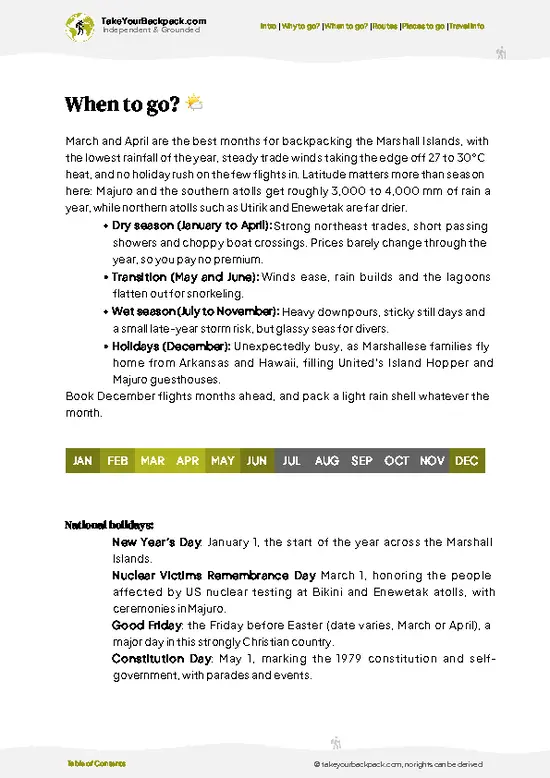
Best months and weather: The best months are December to April, when the dry season brings steady northeast trade winds, lagoons sit calm and clear, and rain is lightest. Temperatures hold at about 27 to 31°C all year, so heat is constant, with humidity that leaves shirts damp by mid-morning. Shoulder and wet season: From May to November rain increases, often as short, heavy showers, and Majuro averages over 3,000 millimeters a year. Southern atolls tend to be wetter than the drier north, where drought can strain water supplies. Typhoons are rare, though storms and king tides can flood low islets. Crowds and prices: Tourism is tiny, so there is no true peak. Flights and boats are less reliable in rough seas, and flight prices can jump around holidays such as Christmas and Constitution Day in May.

region hoppingOptimizing Your Multi-Stop Itinerary

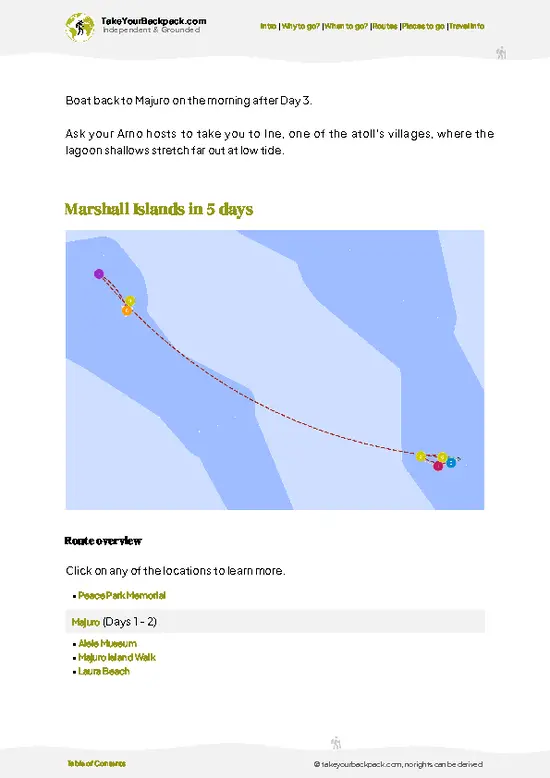
How many days to allow: A trip linking several regions needs 10 to 14 days, because flights and boats set the pace, not distance. Start in Majuro, the hub, and move outward, finishing back there for international departures. Pacing and transfers: Allow 3 to 5 days per outer atoll, since planes often run only once or twice a week and a delay can stretch a stay. Flights from Majuro to Kwajalein take about 1 to 1.5 hours, and some outer atoll hops are 45 minutes to 2 hours over blue water. Boat trips between islets within a lagoon take 30 minutes to a few hours in spray and sun. Common planning mistakes: The classic error is cramming too many atolls into a short window. Build in buffer days before your international flight, confirm lodging and return seats before leaving Majuro, and carry extra food and cash.

The ListHighly Recommended regions of Marshall Islands

1 Arno Atoll

Ine porches, pandanus mats, lagoon skiffs, sandy single lane

Walk the sandy lane of Ine at golden hour, watch weavers plait mats on their porches, then hire a skiff to snorkel the wide lagoon.

2 Kwajalein Atoll

Prinz Eugen wreck, pale-green lagoon, Ebeye crowds, Roi-Namur bunkers

Dive the capsized cruiser off Carlson Island, walk Ebeye’s packed main road, and look out over a lagoon ringed by more than 90 islets.

marshall-islands-region-kwajalein-atoll
© Google | Paul Pearson

3 Majuro

Capital road, Alele Museum, Laura Beach, reef drop-offs

Ride shared taxis along the single road to a museum of stick charts, lagoon swimming spots, war relics and dive sites.

4 Ailuk Atoll

Islet-to-islet wading, pandanus weavers, milky lagoon shallows, host-family stay

Wander sandy village lanes and tidal reef flats between islets, then sit with weavers and watch frigatebirds ride the wind along the windward shore.

marshall-islands-region-ailuk-atoll
© Google | Rob Birch

5 Rongelap Atoll

Evacuated village, 1954 fallout, Ailinginae, ocean reef flats

Walk overgrown paths and rebuilt foundations on the main island, then cross low-tide reef flats beside a lagoon with no visitor infrastructure.

marshall-islands-region-rongelap-atoll
© Google | Lewis Engel

6 Ailinglaplap Atoll

Woja airstrip, jade lagoon, canoe builders, clan-owned islets

Cross a pale green lagoon by small boat with a local guide, visiting canoe builders, village hymns and sandbar picnic islets.

7 Namu Atoll

Homestays, jade lagoon, outer-islet picnics, Sunday hymns

Sleep in a local home, take a skiff to empty islets for grilled fish, and join the village for Sunday hymns.

marshall-islands-region-namu-atoll
© Google | M.ennur GÜven

8 Likiep Atoll

Capelle and de Brum houses, copra yards, village lane, family stays

Walk a sandy village lane past wooden verandas built by founding families, then swim the calm lagoon and share dinner with your hosts.

9 Mili Atoll

Wartime airstrip, coastal guns, copra villages, turquoise reef flats

Crawl through vine-covered Japanese bunkers, follow the old runway on foot, and wade warm reef flats beside a quiet island village.

10 Maloelap Atoll

Taroa airbase ruins, Zero wreck, lagoon wrecks, reef passes

Climb around rusting coastal guns and bunkers on Taroa, then snorkel sunken ships and drift through reef passes with a local boatman.

Loading the map 🌍

Expert viewWhat You Should Know

How many regions to visit: I recommend two or three regions in a single trip. Flights are infrequent, a delay can eat a day, and slow time on one lagoon (warm water, coconut shade, the hum of generators at dusk) gives far more than box-ticking. Choosing a kind of region: If you want comfort, restaurants and diving or surf logistics, choose a developed atoll and take day trips. If you want quiet villages, reef fishing and nights under unpolluted stars, choose an outer atoll, and accept bucket showers, rainwater, and rice with fish. Divers and history buffs should prioritize atolls with wrecks and testing-era sites, which need advance permits and costly charters. What it costs: Budget about US$60 to 120 a day in urban atolls, where guesthouses run US$50 to 110 and meals US$8 to 20. Outer atolls … read more 👉
How many regions to visit: I recommend two or three regions in a single trip. Flights are infrequent, a delay can eat a day, and slow time on one lagoon (warm water, coconut shade, the hum of generators at dusk) gives far more than box-ticking. Choosing a kind of region: If you want comfort, restaurants and diving or surf logistics, choose a developed atoll and take day trips. If you want quiet villages, reef fishing and nights under unpolluted stars, choose an outer atoll, and accept bucket showers, rainwater, and rice with fish. Divers and history buffs should prioritize atolls with wrecks and testing-era sites, which need advance permits and costly charters. What it costs: Budget about US$60 to 120 a day in urban atolls, where guesthouses run US$50 to 110 and meals US$8 to 20. Outer atolls can cost US$40 to 80 a day with homestays, though domestic flights often cost US$150 to 400 return, and boat charters, guides and local fees add US$30 to 150 per outing. Bring cash in US dollars, since the US dollar is the currency and card acceptance is spotty. Safety and culture: Ask the landowner or mayor before swimming off, camping on or photographing private islets. Dress modestly: women usually wear knee-length skirts or shorts over swimwear, and men avoid going shirtless in villages. Sundays are quiet, with church central to life. Currents through lagoon passes can be strong, sun is fierce, and medical help on outer atolls is basic, so bring water purification, reef shoes, a first aid kit and any prescriptions.

✈️ The backpacker research shortcutMarshall Islands Travel Guide

An offline-friendly backpacking guide with optimized travel routes, ranked highlights, transport advice, and the best areas to stay.
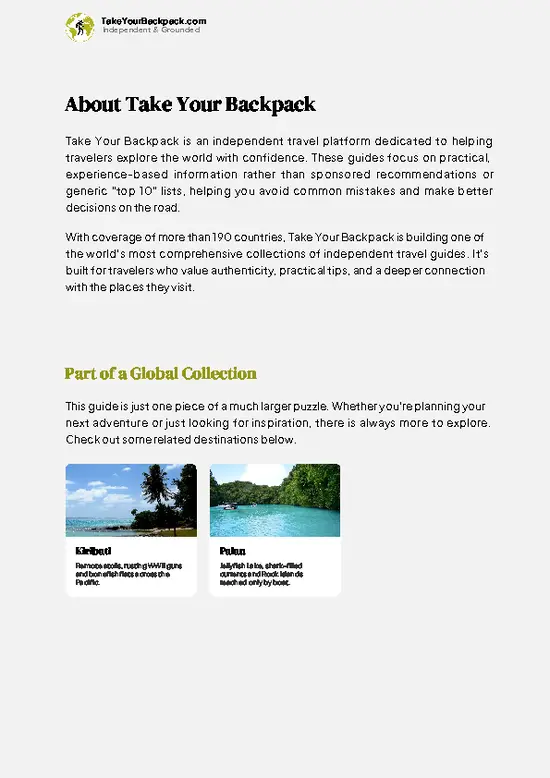
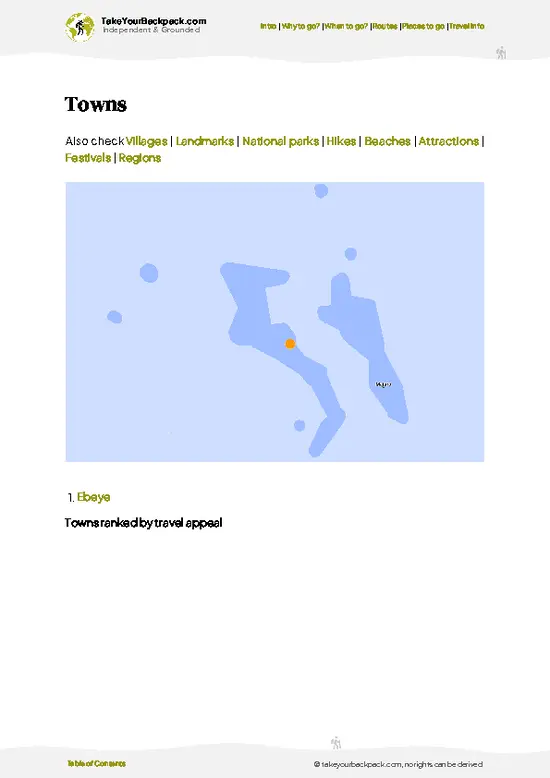
example page 0 from our offline Travel Guide for Marshall Islands
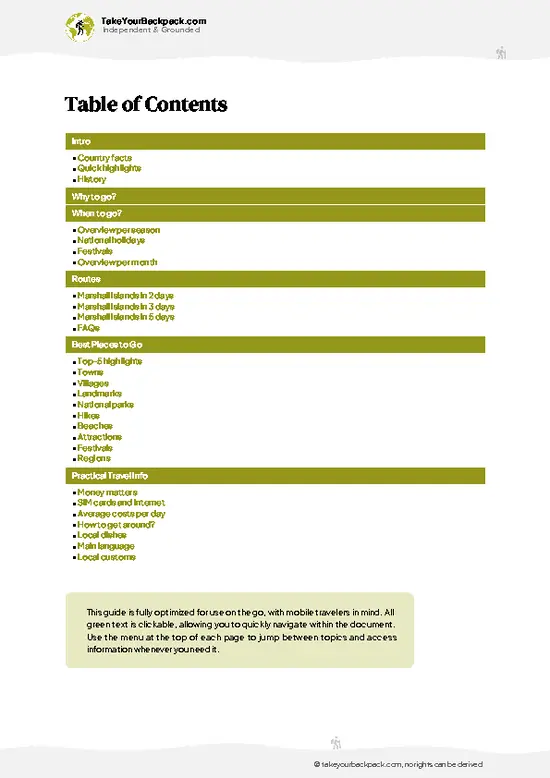
example page 1 from our offline Travel Guide for Marshall Islands
example page 2 from our offline Travel Guide for Marshall Islands
example page 3 from our offline Travel Guide for Marshall Islands
example page 4 from our offline Travel Guide for Marshall Islands
example page 5 from our offline Travel Guide for Marshall Islands
example page 6 from our offline Travel Guide for Marshall Islands
example page 7 from our offline Travel Guide for Marshall Islands
The digital guide (125 pages) contains:
✅ 27 highlights, ranked by travel appeal
✅ Optimized 2, 3 & 5-day travel routes
✅ Cities, national parks, landmarks, beaches
✅ How to get around
✅ Offline-friendly for travel without Wi-Fi
👉 Click to see all 30+ guide features

📅 Plan smarter in minutes, not weeks
✅ Month by month travel advice
✅ Festivals & national holidays
✅ Budget expectations

🗺️ Go to the right places, skip the overrated ones
✅ Honest pros & cons of destinations
✅ Top hikes, parks & viewpoints
✅ Lesser-known places most travelers miss
✅ Clear “worth it vs skip it” guidance

🛏️ Travel smoothly without rookie mistakes
✅ Best areas to stay
✅ Transport systems explained simply
✅ Common scams & safety advice
✅ SIM cards, money & practical tips

🌍 Understand the country, not just visit it
✅ Culture & traditions
✅ 52 Essential phrases & customs
✅ Festivals worth planning around
✅ Traveler-friendly historical context
✅ Insights that make places more meaningful

📱 Built for real travel conditions
✅ Fully downloadable PDF
✅ Works completely offline
✅ Optimized for phone use
✅ Useful in remote areas & buses
✅ Everything in one place
Stop searching, start planning
Get instant access to your full guide. 30‑day money-back guarantee.
+ Add another guide for just

By proceeding you agree to our terms.
Sent to your inbox immediately after payment • 100% Secure Checkout
Best Backpacking Travel Advisor 2025 tourism awardBest Backpacking
Travel Advisor
2025
What others say about Take Your Backpack Guides:
⭐⭐⭐⭐⭐
Fantastic, amazing amount of information!
⭐⭐⭐⭐⭐
My goodness this is amazing, it's what I've been looking for hats off too you!
⭐⭐⭐⭐⭐
I think this is absolutely BRILLIANT
⭐⭐⭐⭐
Very complete and informative. It's still missing places, but I gotta to commend you
⭐⭐⭐⭐⭐
This is truly amazing, thank you, can't wait to explore it with my kids!
⭐⭐⭐⭐⭐
Awesome resource, thank you!
⭐⭐⭐⭐⭐
This is amazing! Can't wait to explore the ones I haven't seen
⭐⭐⭐⭐
I love this! Well done, great idea.
⭐⭐⭐⭐⭐
Thanks for taking the time to make this gem!
⭐⭐⭐⭐⭐
This might be the best website I've ever seen.
⭐⭐⭐⭐⭐
Congratulations, and thank you so much for your work; it's incredibly valuable.
⭐⭐⭐⭐
In all seriousness I think you did a great job pointing out the important spots
⭐⭐⭐⭐⭐
10/10 very good
⭐⭐⭐⭐⭐
As someone who's only just starting to visit regularly this is awesome, thank you.
⭐⭐⭐⭐
Thank you very much! I'm going to visit my dad, it's going to be very useful!
⭐⭐⭐⭐⭐
This is really cool! We'll be travelling for the first time and this definitely come in handy.
⭐⭐⭐⭐⭐
You are now our minister of culture, congratulations 👨‍💼
⭐⭐⭐⭐⭐
Just wanted to tell you that this is a pearl! Going to follow your recommendations.
⭐⭐⭐⭐⭐
This is so cool. I'll definitely be using the resource for my travels soon.
⭐⭐⭐⭐⭐
This is very impressive! Good work.
⭐⭐⭐⭐⭐
This is an amazing and informative site. Very well done!

🛏️ Where to stay?Best Places to Stay in Marshall Islands

There are no true hostels in the Marshall Islands, so budget accommodation means simple guesthouses and basic motel rooms, usually around US$80 to 150 a night, with very few beds below that. Most options sit in the Delap, Uliga and Djarrit strip of Majuro, where you are within walking distance or a short shared taxi ride of shops, restaurants, the few bars and the government offices, though traffic noise along the single main road can be constant. For quiet beach evenings, Laura at the western tip of the atoll has a handful of guesthouse-style stays, but it is roughly an hour from town by road with almost no nightlife, while Ebeye on Kwajalein has a few plain rooms that are crowded, cramped … read more 👉
There are no true hostels in the Marshall Islands, so budget accommodation means simple guesthouses and basic motel rooms, usually around US$80 to 150 a night, with very few beds below that. Most options sit in the Delap, Uliga and Djarrit strip of Majuro, where you are within walking distance or a short shared taxi ride of shops, restaurants, the few bars and the government offices, though traffic noise along the single main road can be constant. For quiet beach evenings, Laura at the western tip of the atoll has a handful of guesthouse-style stays, but it is roughly an hour from town by road with almost no nightlife, while Ebeye on Kwajalein has a few plain rooms that are crowded, cramped and mainly practical for onward travel.

If you enjoy meeting fellow travelers, consider choosing hostels with high ratings for atmosphere. On the other hand, if you prefer having your own space, a hotel might be a better option.

Marshall IslandsExplore Marshall Islands

👋 Meet the founderWho’s Behind Take Your Backpack?

Johan, backpacker and founder of TakeYourBackpackHi, I’m Johan (Netherlands 🇳🇱), the creator of TakeYourBackpack. Over the past 3 decades, I’ve backpacked through 90+ countries across six continents, gaining extensive experience with independent travel, long-term trips, and overland routes.

This site is built on a combination of firsthand travel experience and carefully curated insights from other backpackers. Many guides are based on places I’ve personally visited, while others bring together tips, observations, and practical advice shared by trusted travelers I’ve met along the way.

The goal is to provide realistic, experience-driven guidance — not generic itineraries — so you can explore destinations with better context, clearer expectations, and more confidence.