
×

Marshall Islands🇲🇭 | landmarksBikini AtollNuclear-test wrecks, liveaboard-only access, technical depths, lagoon sharks | things to do and best time to go

Explore EbeyeExplore Likiep

Backpacking in Bikini Atoll
🏆 Top pickunique site ranked #1
By Johan Kruseman 🇳🇱 | Updated October 22, 2026

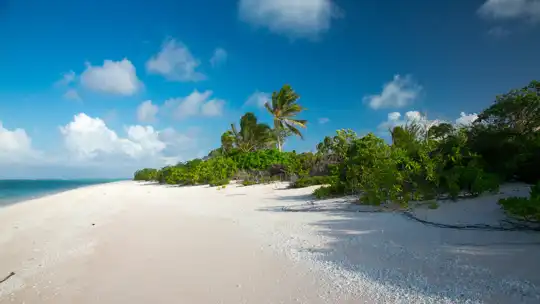
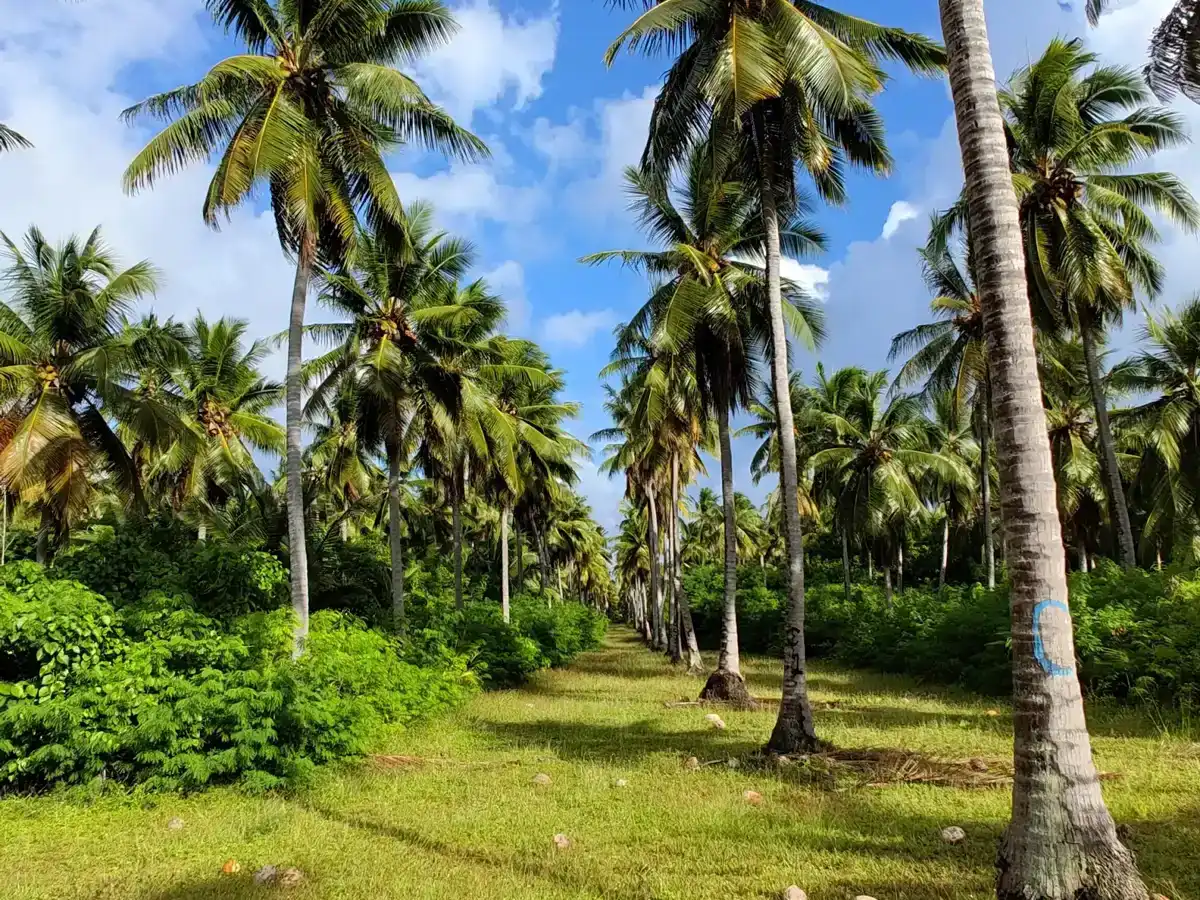
Bikini Atoll puts you in a lagoon where the wrecks of a nuclear-test fleet sit upright in clear water, and the dive boats do the logistics for you. The atoll lies in the north of the Marshall Islands, a ring of low islets around a lagoon roughly 40 kilometers across. Expect white coral sand, coconut palms, the hum of a liveaboard generator and the smell of diesel and salt. Sharks cruise the passes in numbers that surprise first-timers. The hard parts are part of the place. There is no airstrip and no lodge, so you arrive only on a licensed liveaboard, and a berth often has to be booked many months ahead. Book early, read the cancellation terms, and keep a buffer day around your Majuro connections so a delayed departure does not cost you the trip. Dive depths demand technical training, so confirm your certification before paying a deposit. Divers who want wrecks and big fish will love it. Anyone after beaches, nightlife or independent wandering will not.

Discover everything you want to know in the 📖 Marshall Islands Travel Guide.


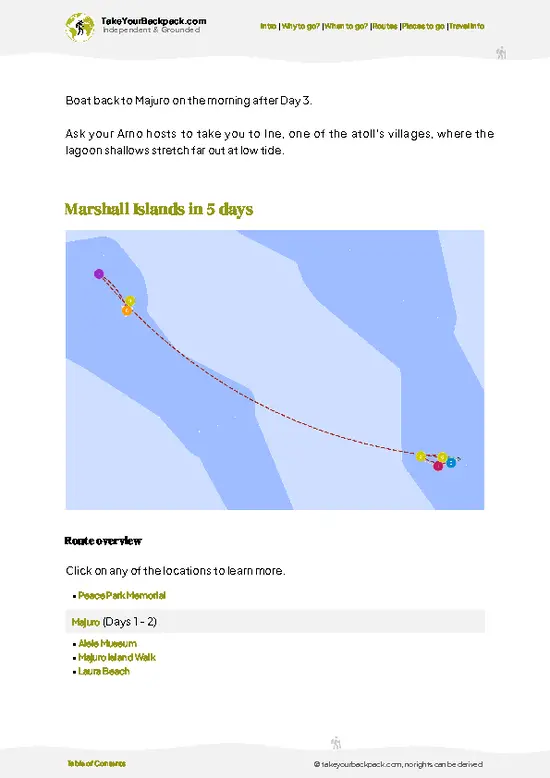
example page 0 from our offline Travel Guide for Marshall Islands
example page 1 from our offline Travel Guide for Marshall Islands
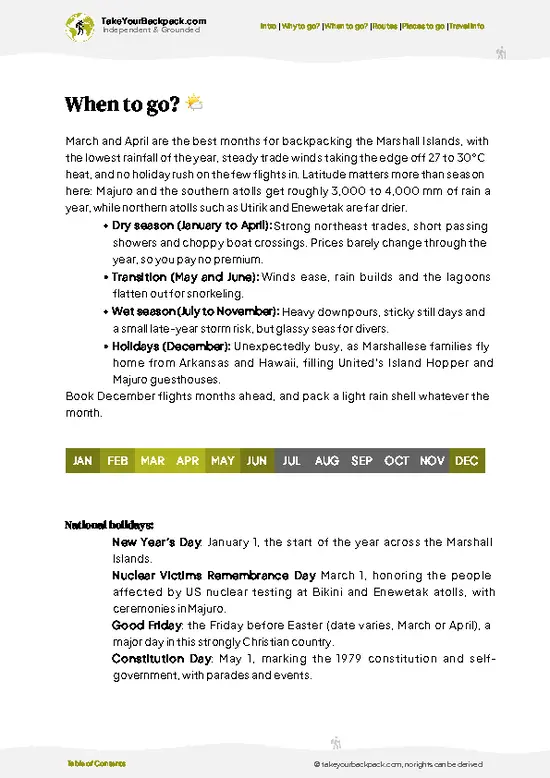
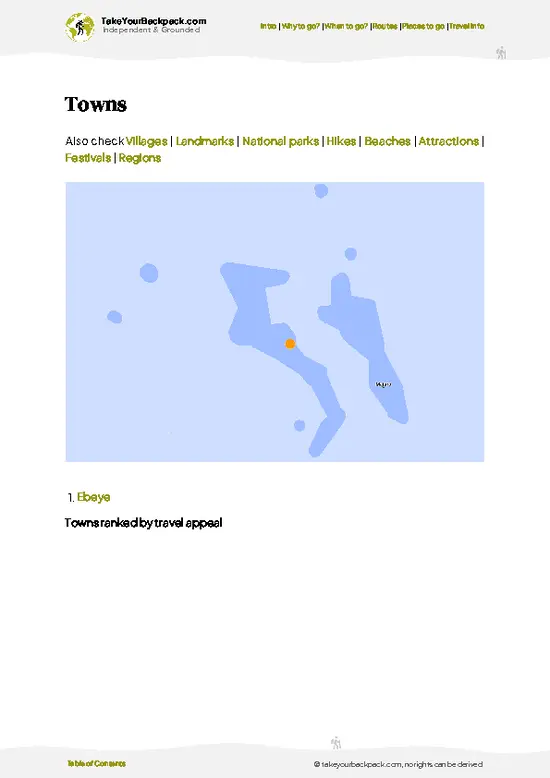
example page 2 from our offline Travel Guide for Marshall Islands
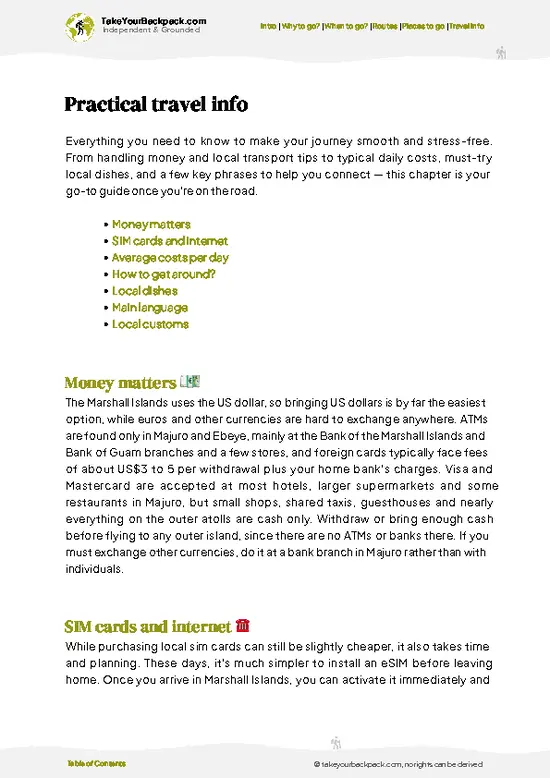
example page 3 from our offline Travel Guide for Marshall Islands
example page 4 from our offline Travel Guide for Marshall Islands
example page 5 from our offline Travel Guide for Marshall Islands
example page 6 from our offline Travel Guide for Marshall Islands
example page 7 from our offline Travel Guide for Marshall Islands
Loading the map 🌍
CLICK TO FILTER
towns
villages
landmarks
national parks
hikes
beaches
attractions
festivals
regions
SHOW COUNTRY’S BESTSHOW ALL

✨ Why go?
Ranked #1 unique site in Marshall Islands
What makes it a must-see unique site

Bikini Atoll is the only place where you can dive the USS Saratoga, an aircraft carrier lying upright on the lagoon floor, and the Japanese flagship Nagato, both sunk in the 1946 Operation Crossroads tests. That alone pulls divers from across the world. The other reason is the fish. With almost no people and no fishing pressure for decades, the reefs hold grey reef sharks, big schools of jacks and healthy coral, and the passes can feel like a drift through a shark aquarium. Independent travel in the usual backpacker sense does not exist here. Access is by liveaboard only, in a season running from May to October, so you choose a boat rather than a route. That suits travelers who like their days simple: dive, eat, sleep, repeat. If you want to wander ashore at will, this is not that kind of … read more 👉
Bikini Atoll is the only place where you can dive the USS Saratoga, an aircraft carrier lying upright on the lagoon floor, and the Japanese flagship Nagato, both sunk in the 1946 Operation Crossroads tests. That alone pulls divers from across the world. The other reason is the fish. With almost no people and no fishing pressure for decades, the reefs hold grey reef sharks, big schools of jacks and healthy coral, and the passes can feel like a drift through a shark aquarium. Independent travel in the usual backpacker sense does not exist here. Access is by liveaboard only, in a season running from May to October, so you choose a boat rather than a route. That suits travelers who like their days simple: dive, eat, sleep, repeat. If you want to wander ashore at will, this is not that kind of trip. If you want wrecks with a story that fills history books, few places compare.

💡 HighlightsTop highlights of Bikini Atoll

  1. USS Saratoga: A 270-meter aircraft carrier resting upright, with its deck near 50 meters and the island structure higher up. Aircraft and gear are still visible, and it is a technical-level dive.
  2. Japanese battleship Nagato: Admiral Yamamoto’s flagship at the time of Pearl Harbor, lying capsized in deep water. Its massive guns and hull make it one of the great wreck dives anywhere.
  3. USS Arkansas: A battleship upside down on the lagoon floor, with turrets crushed beneath the hull. Visibility is often excellent.
  4. Submarines Apogon and Pilotfish: Two US submarines sunk during the tests, resting on the bottom of the lagoon. Both are favorites for divers who like intact hulls.
  5. Shark-filled lagoon passes: Grey reef and other sharks gather in the channels, and drift dives bring you close to dense schools
… read more 👉
  1. USS Saratoga: A 270-meter aircraft carrier resting upright, with its deck near 50 meters and the island structure higher up. Aircraft and gear are still visible, and it is a technical-level dive.
  2. Japanese battleship Nagato: Admiral Yamamoto’s flagship at the time of Pearl Harbor, lying capsized in deep water. Its massive guns and hull make it one of the great wreck dives anywhere.
  3. USS Arkansas: A battleship upside down on the lagoon floor, with turrets crushed beneath the hull. Visibility is often excellent.
  4. Submarines Apogon and Pilotfish: Two US submarines sunk during the tests, resting on the bottom of the lagoon. Both are favorites for divers who like intact hulls.
  5. Shark-filled lagoon passes: Grey reef and other sharks gather in the channels, and drift dives bring you close to dense schools of fish.
  6. Bikini Island ashore: Where permitted by the boat’s schedule, you can walk the sand and see the quiet ruins of a community that was relocated before the tests.
  7. Healthy coral gardens: Shallow reef with table corals and clear water, good for easier second dives between the deep wrecks.
Plan on a week aboard a liveaboard to see all of this, with several days of diving.
Spotted a mistake or missing something? Contact us.
🌤️ When to go?Choosing the right time of year

  • Dive Season (May to October): This is the only window when licensed liveaboards run trips to Bikini Atoll. Air temperatures sit around 27 to 31°C (81 to 88°F), the lagoon is about 28 to 30°C (82 to 86°F), and seas are generally calmer than in winter.
  • Peak Months (June to September): Boats fill first, and prices for a berth are at their highest. Expect only a handful of divers at any wreck, since total visitor numbers stay small year-round.
  • Shoulder Months (May and October): Fewer people on board and sometimes lower rates. Rain is more likely in October as the wetter months build.
  • Off Season (November to April): No liveaboard trips operate. Trade winds are stronger, seas are rougher, and the same warm temperatures apply.
  • Daylight: Close to the equator, days run about 12 hours in every month, so
… read more 👉
  • Dive Season (May to October): This is the only window when licensed liveaboards run trips to Bikini Atoll. Air temperatures sit around 27 to 31°C (81 to 88°F), the lagoon is about 28 to 30°C (82 to 86°F), and seas are generally calmer than in winter.
  • Peak Months (June to September): Boats fill first, and prices for a berth are at their highest. Expect only a handful of divers at any wreck, since total visitor numbers stay small year-round.
  • Shoulder Months (May and October): Fewer people on board and sometimes lower rates. Rain is more likely in October as the wetter months build.
  • Off Season (November to April): No liveaboard trips operate. Trade winds are stronger, seas are rougher, and the same warm temperatures apply.
  • Daylight: Close to the equator, days run about 12 hours in every month, so dive schedules barely change.
Book your berth many months ahead, because a typical season has only a limited number of departures from Kwajalein or Majuro.


source: climatestotravel.comJANJanuary: excellent for travelingFEBFebruary: excellent for travelingMARMarch: excellent for travelingAPRApril: highly recommended for travelingMAYMay: fair for travelingJUNJune: fair for travelingJULJuly: fair for travelingAUGAugust: fair for travelingSEPSeptember: fair for travelingOCTOctober: fair for travelingNOVNovember: good for travelingDECDecember: excellent for traveling
marshall-islands-unique-site-bikini-atoll
© Google | Szymon Winciorek

✈️ The backpacker research shortcutMarshall Islands Travel Guide

An offline-friendly backpacking guide with optimized travel routes, ranked highlights, transport advice, and the best areas to stay.
example page 0 from our offline Travel Guide for Marshall Islands
example page 1 from our offline Travel Guide for Marshall Islands
example page 2 from our offline Travel Guide for Marshall Islands
example page 3 from our offline Travel Guide for Marshall Islands
example page 4 from our offline Travel Guide for Marshall Islands
example page 5 from our offline Travel Guide for Marshall Islands
example page 6 from our offline Travel Guide for Marshall Islands
example page 7 from our offline Travel Guide for Marshall Islands
The digital guide (125 pages) contains:
✅ 27 highlights, ranked by travel appeal
✅ Optimized 2, 3 & 5-day travel routes
✅ Cities, national parks, landmarks, beaches
✅ How to get around
✅ Offline-friendly for travel without Wi-Fi
👉 Click to see all 30+ guide features

📅 Plan smarter in minutes, not weeks
✅ Month by month travel advice
✅ Festivals & national holidays
✅ Budget expectations

🗺️ Go to the right places, skip the overrated ones
✅ Honest pros & cons of destinations
✅ Top hikes, parks & viewpoints
✅ Lesser-known places most travelers miss
✅ Clear “worth it vs skip it” guidance

🛏️ Travel smoothly without rookie mistakes
✅ Best areas to stay
✅ Transport systems explained simply
✅ Common scams & safety advice
✅ SIM cards, money & practical tips

🌍 Understand the country, not just visit it
✅ Culture & traditions
✅ 52 Essential phrases & customs
✅ Festivals worth planning around
✅ Traveler-friendly historical context
✅ Insights that make places more meaningful

📱 Built for real travel conditions
✅ Fully downloadable PDF
✅ Works completely offline
✅ Optimized for phone use
✅ Useful in remote areas & buses
✅ Everything in one place
Stop searching, start planning
Get instant access to your full guide. 30‑day money-back guarantee.
+ Add another guide for just

By proceeding you agree to our terms.
Sent to your inbox immediately after payment • 100% Secure Checkout
Best Backpacking Travel Advisor 2025 tourism awardBest Backpacking
Travel Advisor
2025
What others say about Take Your Backpack Guides:
⭐⭐⭐⭐⭐
Fantastic, amazing amount of information!
⭐⭐⭐⭐⭐
My goodness this is amazing, it's what I've been looking for hats off too you!
⭐⭐⭐⭐⭐
I think this is absolutely BRILLIANT
⭐⭐⭐⭐
Very complete and informative. It's still missing places, but I gotta to commend you
⭐⭐⭐⭐⭐
This is truly amazing, thank you, can't wait to explore it with my kids!
⭐⭐⭐⭐⭐
Awesome resource, thank you!
⭐⭐⭐⭐⭐
This is amazing! Can't wait to explore the ones I haven't seen
⭐⭐⭐⭐
I love this! Well done, great idea.
⭐⭐⭐⭐⭐
Thanks for taking the time to make this gem!
⭐⭐⭐⭐⭐
This might be the best website I've ever seen.
⭐⭐⭐⭐⭐
Congratulations, and thank you so much for your work; it's incredibly valuable.
⭐⭐⭐⭐
In all seriousness I think you did a great job pointing out the important spots
⭐⭐⭐⭐⭐
10/10 very good
⭐⭐⭐⭐⭐
As someone who's only just starting to visit regularly this is awesome, thank you.
⭐⭐⭐⭐
Thank you very much! I'm going to visit my dad, it's going to be very useful!
⭐⭐⭐⭐⭐
This is really cool! We'll be travelling for the first time and this definitely come in handy.
⭐⭐⭐⭐⭐
You are now our minister of culture, congratulations 👨‍💼
⭐⭐⭐⭐⭐
Just wanted to tell you that this is a pearl! Going to follow your recommendations.
⭐⭐⭐⭐⭐
This is so cool. I'll definitely be using the resource for my travels soon.
⭐⭐⭐⭐⭐
This is very impressive! Good work.
⭐⭐⭐⭐⭐
This is an amazing and informative site. Very well done!

🛏️ Where to stay?Best areas and accommodation options

The only place to stay for Bikini Atoll is aboard a licensed liveaboard dive boat. There is no lodge or guesthouse on the atoll, and land-based diving ended in 2008, so your cabin on the boat is your base for the whole trip. Cabins range from shared twin or bunk rooms to private en-suite ones, and meals, tanks and weights are normally bundled into the package. Trips run roughly a week and the boat stays anchored in the lagoon near the wrecks, which means you sleep within a short tender ride of the dive sites.

For nights before or after the trip, you stay in Majuro, the capital of the Marshall … read more 👉
The only place to stay for Bikini Atoll is aboard a licensed liveaboard dive boat. There is no lodge or guesthouse on the atoll, and land-based diving ended in 2008, so your cabin on the boat is your base for the whole trip. Cabins range from shared twin or bunk rooms to private en-suite ones, and meals, tanks and weights are normally bundled into the package. Trips run roughly a week and the boat stays anchored in the lagoon near the wrecks, which means you sleep within a short tender ride of the dive sites.

For nights before or after the trip, you stay in Majuro, the capital of the Marshall Islands and the usual gateway. Hotels there cluster along the main road between the airport and Delap, and they are simple, with air-conditioning, a restaurant or two and a bar. Budget rooms are limited, so book ahead in dive season. Some liveaboard itineraries also include time around Kwajalein, which is a restricted military base and not open for casual stays, so confirm the embarkation point with your operator before booking flights. Arrive a day early to absorb any delay from the thin flight schedule.

👛 Costs (as of 22 October 2026)Travel costs and budget guide for Bikini Atoll

A realistic daily budget for Bikini Atoll is about US$420 to 690, driven almost entirely by the liveaboard package. The table spreads a typical week-long trip over days.
CategoryBudget RangeLocal Reality
Liveaboard berth (high season)US$350 to 550 per dayWeeklong trips usually cost about US$2,500 to 4,000 per person, covering the cabin, meals and tank fills.
Bikini permit and feesUS$30 to 50 per dayThe local government charges a diving permit and fees, often built into the package price or billed separately.
Local transportUS$20 to 40 per dayFlights to Majuro and onward legs are the big cost; averaged over a week, they add a modest daily figure beyond the fare itself. Taxis in Majuro cost about US$1 to 3 per ride.
Food and suppliesUS$10 to 20 per dayMeals on the boat are included. You pay for snacks,
… read more 👉
A realistic daily budget for Bikini Atoll is about US$420 to 690, driven almost entirely by the liveaboard package. The table spreads a typical week-long trip over days.
CategoryBudget RangeLocal Reality
Liveaboard berth (high season)US$350 to 550 per dayWeeklong trips usually cost about US$2,500 to 4,000 per person, covering the cabin, meals and tank fills.
Bikini permit and feesUS$30 to 50 per dayThe local government charges a diving permit and fees, often built into the package price or billed separately.
Local transportUS$20 to 40 per dayFlights to Majuro and onward legs are the big cost; averaged over a week, they add a modest daily figure beyond the fare itself. Taxis in Majuro cost about US$1 to 3 per ride.
Food and suppliesUS$10 to 20 per dayMeals on the boat are included. You pay for snacks, drinks and meals in Majuro on the days around the trip.
Hotel nights in MajuroUS$10 to 30 per dayRooms run about US$90 to 150 a night, averaged over a week with a couple of nights on land.
Total Daily BudgetUS$420 to 690Midpoint around US$550 per day for most divers, excluding international flights.
Pay in US dollars, which is the currency of the Marshall Islands. Nitrox, rental gear and tips are usually extra.
⚠️ Prices can change and everyone travels differently, so take this as a rough guide. Hope it helps you plan your adventure!

🛡️ SafetyStaying Safe: What Travelers Should Know

Bikini Atoll is safe for hikers and divers who follow the boat’s rules, and the main risks are diving-related. The wrecks, including the USS Saratoga and the Japanese battleship Nagato, lie deep, so most dives are technical or near the limit of recreational depth. Come with advanced certification and recent logged dives, and listen closely to briefings about currents and decompression. The nearest recompression chamber is far away, so dive conservatively.

On land, the islands are uninhabited. Bring sun protection, because shade is limited and the equatorial sun is intense. Drink plenty of water, as heat and dehydration add to decompression risk. Reef sharks are common and usually ignore divers. Do not touch or take anything from the wrecks. Some lagoon islands still carry elevated radiation … read more 👉
Bikini Atoll is safe for hikers and divers who follow the boat’s rules, and the main risks are diving-related. The wrecks, including the USS Saratoga and the Japanese battleship Nagato, lie deep, so most dives are technical or near the limit of recreational depth. Come with advanced certification and recent logged dives, and listen closely to briefings about currents and decompression. The nearest recompression chamber is far away, so dive conservatively.

On land, the islands are uninhabited. Bring sun protection, because shade is limited and the equatorial sun is intense. Drink plenty of water, as heat and dehydration add to decompression risk. Reef sharks are common and usually ignore divers. Do not touch or take anything from the wrecks. Some lagoon islands still carry elevated radiation in soil and local food, so do not eat coconuts or other food grown on the atoll. Stay on the paths your guides indicate. Seas outside the lagoon can be rough, so take seasickness tablets if you are prone.

FAQFrequently asked questions about Bikini Atoll

Plan on a full week for Bikini Atoll, because liveaboard trips typically run about 7 to 10 days. That gives you roughly 15 to 20 dives on wrecks such as the USS Saratoga and the Nagato. Add one or two nights in Majuro before and after for flight buffers.
No, Bikini Atoll cannot be reached without a boat. There are no flights to the atoll and no lodge, so the only way is a licensed liveaboard dive boat, with a dive season from May to October. The boat departs from Majuro or Kwajalein, and the sea crossing takes about a day or more depending on the route.
Yes, Bikini Atoll requires a permit arranged through the Bikini local government, and the liveaboard operator normally handles it for you. Expect fees of roughly US$30 to 50 per day, often included in the trip price. Diving there is only allowed with licensed operators, so independent visits are not possible.
⚠️ Things can change over time, so always validate details locally before you go.

Ideas for continuing your journey

Bikini Atoll isn’t the only highlight in Marshall Islands. Explore all what Marshall Islands has to offer.
Country photo of Marshall Islands

We 💚 feedbackIs it worth it?

Go in the middle of the season, when the lagoon is calm and the water is at its clearest, and plan the deep wrecks for early morning dives when the light is best. Bikini Atoll is quiet at dusk, with the boat’s lights on the water and sharks circling below. Book your berth early, and bring a good dive light.

✍️ Help improve this page!
The information on this page is based on in-depth research, insights shared by experienced travelers, and feedback from the local travel community in Marshall Islands. While every effort is made to keep the information accurate and current, conditions can change — so if you spot anything incorrect or outdated, please get in touch.


🙋‍♂️ Give feedback

👋 Meet the founderWho’s Behind Take Your Backpack?

Johan, backpacker and founder of TakeYourBackpackHi, I’m Johan (Netherlands 🇳🇱), the creator of TakeYourBackpack. Over the past 3 decades, I’ve backpacked through 90+ countries across six continents, gaining extensive experience with independent travel, long-term trips, and overland routes.

This site is built on a combination of firsthand travel experience and carefully curated insights from other backpackers. Many guides are based on places I’ve personally visited, while others bring together tips, observations, and practical advice shared by trusted travelers I’ve met along the way.

The goal is to provide realistic, experience-driven guidance — not generic itineraries — so you can explore destinations with better context, clearer expectations, and more confidence.