
×

Marshall Islands🇲🇭 | townsEbeyeCrowded island, lagoon ferry dock, Gugeegue causeway, Sunday hymns | things to do and best time to go

Explore MajuroExplore Bikini Atoll

Backpacking in Ebeye
🏆 Top picktown ranked #1
By Johan Kruseman 🇳🇱 | Updated October 22, 2026

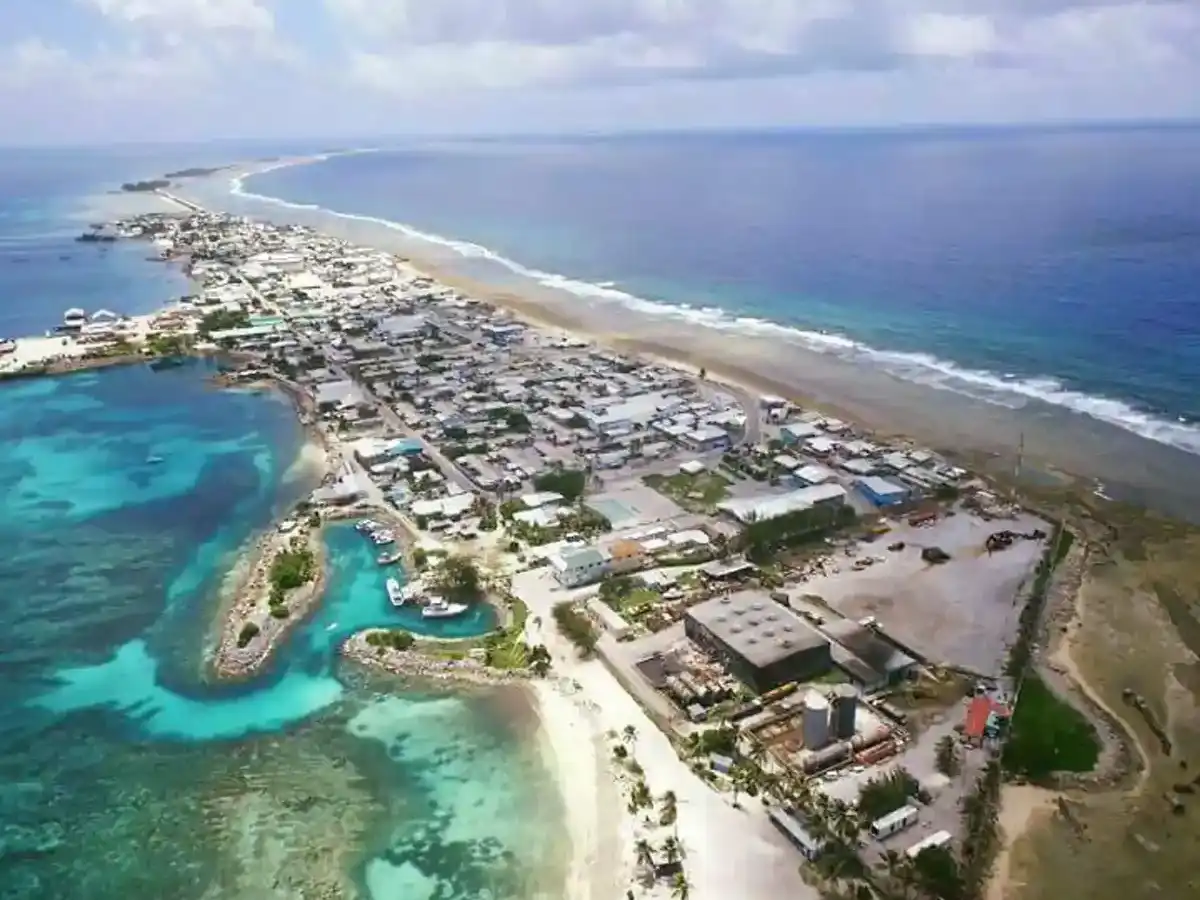
Ebeye packs roughly 9,000 to 10,000 people onto an island you can walk end to end in about twenty minutes, one of the most crowded places in the Pacific. It sits at the southern end of Kwajalein Atoll, in the west of the Marshall Islands, facing a lagoon the color of sea glass. On the ground it is tight and loud: concrete houses shoulder to shoulder, pickup taxis honking down the single main road, generators humming, fried dough and rice smells drifting from doorways. There are no resorts and little polish, and you should plan on being a curiosity. That is both the difficulty and the appeal. You come for unscripted daily life, not for sights, and you will probably be the only traveler around, so conversations with locals replace hostel common rooms. Getting here takes some arranging, and you won’t find hostels or a café scene. As the light turns orange, children leap from the lagoon-side seawall in tight, shrieking clusters.

Discover everything you want to know in the 📖 Marshall Islands Travel Guide.


example page 0 from our offline Travel Guide for Marshall Islands
example page 1 from our offline Travel Guide for Marshall Islands
example page 2 from our offline Travel Guide for Marshall Islands
example page 3 from our offline Travel Guide for Marshall Islands
example page 4 from our offline Travel Guide for Marshall Islands
example page 5 from our offline Travel Guide for Marshall Islands
example page 6 from our offline Travel Guide for Marshall Islands
example page 7 from our offline Travel Guide for Marshall Islands
Loading the map 🌍
CLICK TO FILTER
towns
villages
landmarks
national parks
hikes
beaches
attractions
festivals
regions
SHOW COUNTRY’S BESTSHOW ALL

✨ Why go?
Ranked #1 town in Marshall Islands
The unique appeal for travelers

Ebeye is for the slow, curious traveler who wants to see how a modern Marshallese community actually works, not a place to tick off. It is where Kwajalein Atoll’s workforce lives, and the island’s daily rhythm of ferries to the nearby Kwajalein base shapes everything from the morning crowds at the dock to the quiet after dark. Stay a day or two, no more. Walking the main road, you pass small shops, church halls, volleyball games and kids who will want to know your name within minutes. It is easy to talk with people here, and a polite hello gets you far. The nearby causeway to Gugeegue gives you a quieter stretch of beach and a different pace within easy reach on foot. Solo travelers with a flexible attitude and some cultural sensitivity will get the most out of it. If you need nightlife, polished … read more 👉
Ebeye is for the slow, curious traveler who wants to see how a modern Marshallese community actually works, not a place to tick off. It is where Kwajalein Atoll’s workforce lives, and the island’s daily rhythm of ferries to the nearby Kwajalein base shapes everything from the morning crowds at the dock to the quiet after dark. Stay a day or two, no more. Walking the main road, you pass small shops, church halls, volleyball games and kids who will want to know your name within minutes. It is easy to talk with people here, and a polite hello gets you far. The nearby causeway to Gugeegue gives you a quieter stretch of beach and a different pace within easy reach on foot. Solo travelers with a flexible attitude and some cultural sensitivity will get the most out of it. If you need nightlife, polished tours or a variety of places to eat, skip it and spend your time on a more outer-island stop.

💡 HighlightsDon't-miss highlights and experiences

  1. Lagoon-side waterfront and ferry dock: This is the island’s front door and the best place to understand it. Workers queue for the boats, fishermen unload catch, and children swim off the edges. Go at dawn or late afternoon for the busiest, most photogenic stretch. Free, 45 minutes to an hour.
  2. Gugeegue causeway and beach: A road link carries you north from the crowded part of Ebeye to the islet of Gugeegue, where there is more space, palms and calm lagoon water for a swim. Go in the morning before the heat builds. Free, 1.5 to 2 hours including the walk.
  3. Main road shops and street stalls: A walk along Ebeye’s single main road is the closest thing the island has to a market tour. Look for fried doughnuts, local snacks, imported goods and conversations in Marshallese. Mornings are liveliest. Budget
… read more 👉
  1. Lagoon-side waterfront and ferry dock: This is the island’s front door and the best place to understand it. Workers queue for the boats, fishermen unload catch, and children swim off the edges. Go at dawn or late afternoon for the busiest, most photogenic stretch. Free, 45 minutes to an hour.
  2. Gugeegue causeway and beach: A road link carries you north from the crowded part of Ebeye to the islet of Gugeegue, where there is more space, palms and calm lagoon water for a swim. Go in the morning before the heat builds. Free, 1.5 to 2 hours including the walk.
  3. Main road shops and street stalls: A walk along Ebeye’s single main road is the closest thing the island has to a market tour. Look for fried doughnuts, local snacks, imported goods and conversations in Marshallese. Mornings are liveliest. Budget US$2 to 5 for snacks, 1 to 2 hours.
  4. Sunday church service: Churches are central to Marshallese life, and Sunday services fill the island with harmony singing in white and pastel dress. Visitors are generally welcome if they dress modestly and sit quietly near the back. Free, 1 to 2 hours, mornings.
  5. Ocean-side seawall at sunset: The eastern edge faces open Pacific, with waves breaking on the reef and a long, flat horizon. Locals gather here in the evening to fish and talk. Arrive about 45 minutes before dusk. Free, 45 minutes.
Beyond Ebeye itself, nearby lagoon islets such as Ennylabegan can be reached by local boat with a bit of arranging, and make good half-day trips. If time is short, skip the ocean-side seawall and spend the hour on the waterfront instead.
Spotted a mistake or missing something? Contact us.
🏘️ NeighborhoodsKey areas and districts to know

Ebeye is one island of roughly 80 acres, so the “neighborhoods” are really zones along a single spine of road, and you can walk all of it in under an hour.
  • Ferry dock and north end: Boats unload workers and families into a crush of voices, diesel fumes and sizzling street grills. Stand near the seawall at sunset and watch the lagoon turn copper while kids dive off the concrete.
  • Main road and market stretch: Small shops, a few cafes and food counters line the road, with pickup-bed taxis honking past. Plates of rice with fried chicken, tuna or breadfruit cost a few dollars, and you eat them with the radio blaring and the smell of coconut oil in the air.
  • Residential middle: Tin-roofed houses stack close, laundry hangs between them, and church choirs drift out on Sundays. Walk it slowly, say hello,
… read more 👉
Ebeye is one island of roughly 80 acres, so the “neighborhoods” are really zones along a single spine of road, and you can walk all of it in under an hour.
  • Ferry dock and north end: Boats unload workers and families into a crush of voices, diesel fumes and sizzling street grills. Stand near the seawall at sunset and watch the lagoon turn copper while kids dive off the concrete.
  • Main road and market stretch: Small shops, a few cafes and food counters line the road, with pickup-bed taxis honking past. Plates of rice with fried chicken, tuna or breadfruit cost a few dollars, and you eat them with the radio blaring and the smell of coconut oil in the air.
  • Residential middle: Tin-roofed houses stack close, laundry hangs between them, and church choirs drift out on Sundays. Walk it slowly, say hello, and you get a real picture of one of the most crowded places in the Pacific.
  • Hospital, schools and south end: Quieter, with open sky, a few coconut palms and the rougher ocean side. The wind off the reef is the best air on the island.
  • Gugeegue causeway: A walk or short ride north puts you on a narrow strip of land with water on both sides. It is hot and shadeless, and the reward is a wide lagoon view with the Kwajalein skyline on the horizon.

⌛️ 1 day1-day itinerary for Ebeye

7:00 AM: Lagoon-side waterfront and ferry dock. Start where the island wakes up. Workers stream toward the boats, fishing skiffs come in, and the light is soft and cool before the heat arrives. Watch for twenty minutes, then walk along the main road toward the center.

8:30 AM: Main road shops. Buy a fried doughnut or a snack and a cold drink from a small shop, and take your time. Greetings are warm, and a few words of Marshallese such as “yokwe” go a long way. Browse slowly, then head north.

10:00 AM: Gugeegue causeway. Walk the road out to Gugeegue, where the crowding eases and palms shade the shore. This stretch is often overlooked by the few visitors who come. Swim in the calm lagoon water and rest in the shade through the midday heat.

12:30 PM: Lunch back on the main road. Return to the island’s … read more 👉
7:00 AM: Lagoon-side waterfront and ferry dock. Start where the island wakes up. Workers stream toward the boats, fishing skiffs come in, and the light is soft and cool before the heat arrives. Watch for twenty minutes, then walk along the main road toward the center.

8:30 AM: Main road shops. Buy a fried doughnut or a snack and a cold drink from a small shop, and take your time. Greetings are warm, and a few words of Marshallese such as “yokwe” go a long way. Browse slowly, then head north.

10:00 AM: Gugeegue causeway. Walk the road out to Gugeegue, where the crowding eases and palms shade the shore. This stretch is often overlooked by the few visitors who come. Swim in the calm lagoon water and rest in the shade through the midday heat.

12:30 PM: Lunch back on the main road. Return to the island’s center and find a plate of rice with fish or chicken at a simple local eatery. Keep the afternoon quiet, since the heat is strongest between noon and three.

3:00 PM: Residential lanes. Wander the back lanes between houses, where volleyball games, laundry lines and children’s games spill into the street. This is the part of Ebeye most itineraries skip, and it shows the real density of daily life. Ask before taking photographs of people, and keep greeting everyone you pass.

5:15 PM: Ocean-side seawall. Finish on the eastern edge as the sun drops behind the lagoon. Waves break on the reef, fishermen cast from the wall and families settle in for the evening. Stay until the sky has faded, then walk back along the main road while the island lights up.

🌤️ When to go?Best time to visit Ebeye

December to April is the easiest window, with steadier trade winds and less rain.
  • Dry Season (December to April): Highs reach 29 to 31°C (84 to 88°F) and nights drop to about 26°C (79°F). Lagoon boat trips run smoothest, though ocean swells and king tides can slosh over the low shoreline in some years.
  • Wet Season (May to November): Expect daily downpours, thick humidity and 27 to 30°C (81 to 86°F). Squalls pass quickly, but the lagoon can get choppy and flights occasionally slip.
  • Daylight and Crowds: Near 8.8°N, sunrise falls between about 6:30 and 7:10 and sunset between about 6:25 and 7:10 all year. Ebeye has almost no tourist season, so crowds mean locals, not visitors.
  • Prices: Everything is imported, so costs stay flat. Rooms are limited, and supply ships or holidays can leave shelves bare
… read more 👉
December to April is the easiest window, with steadier trade winds and less rain.
  • Dry Season (December to April): Highs reach 29 to 31°C (84 to 88°F) and nights drop to about 26°C (79°F). Lagoon boat trips run smoothest, though ocean swells and king tides can slosh over the low shoreline in some years.
  • Wet Season (May to November): Expect daily downpours, thick humidity and 27 to 30°C (81 to 86°F). Squalls pass quickly, but the lagoon can get choppy and flights occasionally slip.
  • Daylight and Crowds: Near 8.8°N, sunrise falls between about 6:30 and 7:10 and sunset between about 6:25 and 7:10 all year. Ebeye has almost no tourist season, so crowds mean locals, not visitors.
  • Prices: Everything is imported, so costs stay flat. Rooms are limited, and supply ships or holidays can leave shelves bare for a day or two.
Book your room before you fly, since beds are few and timing flights around Kwajalein access matters more than the season.


source: climatestotravel.comJANJanuary: excellent for travelingFEBFebruary: excellent for travelingMARMarch: excellent for travelingAPRApril: highly recommended for travelingMAYMay: fair for travelingJUNJune: fair for travelingJULJuly: fair for travelingAUGAugust: fair for travelingSEPSeptember: fair for travelingOCTOctober: fair for travelingNOVNovember: highly recommended for travelingDECDecember: excellent for traveling
marshall-islands-city-ebeye
© Google | Virginia Bleth

✈️ The backpacker research shortcutMarshall Islands Travel Guide

An offline-friendly backpacking guide with optimized travel routes, ranked highlights, transport advice, and the best areas to stay.
example page 0 from our offline Travel Guide for Marshall Islands
example page 1 from our offline Travel Guide for Marshall Islands
example page 2 from our offline Travel Guide for Marshall Islands
example page 3 from our offline Travel Guide for Marshall Islands
example page 4 from our offline Travel Guide for Marshall Islands
example page 5 from our offline Travel Guide for Marshall Islands
example page 6 from our offline Travel Guide for Marshall Islands
example page 7 from our offline Travel Guide for Marshall Islands
The digital guide (125 pages) contains:
✅ 27 highlights, ranked by travel appeal
✅ Optimized 2, 3 & 5-day travel routes
✅ Cities, national parks, landmarks, beaches
✅ How to get around
✅ Offline-friendly for travel without Wi-Fi
👉 Click to see all 30+ guide features

📅 Plan smarter in minutes, not weeks
✅ Month by month travel advice
✅ Festivals & national holidays
✅ Budget expectations

🗺️ Go to the right places, skip the overrated ones
✅ Honest pros & cons of destinations
✅ Top hikes, parks & viewpoints
✅ Lesser-known places most travelers miss
✅ Clear “worth it vs skip it” guidance

🛏️ Travel smoothly without rookie mistakes
✅ Best areas to stay
✅ Transport systems explained simply
✅ Common scams & safety advice
✅ SIM cards, money & practical tips

🌍 Understand the country, not just visit it
✅ Culture & traditions
✅ 52 Essential phrases & customs
✅ Festivals worth planning around
✅ Traveler-friendly historical context
✅ Insights that make places more meaningful

📱 Built for real travel conditions
✅ Fully downloadable PDF
✅ Works completely offline
✅ Optimized for phone use
✅ Useful in remote areas & buses
✅ Everything in one place
Stop searching, start planning
Get instant access to your full guide. 30‑day money-back guarantee.
+ Add another guide for just

By proceeding you agree to our terms.
Sent to your inbox immediately after payment • 100% Secure Checkout
Best Backpacking Travel Advisor 2025 tourism awardBest Backpacking
Travel Advisor
2025
What others say about Take Your Backpack Guides:
⭐⭐⭐⭐⭐
Fantastic, amazing amount of information!
⭐⭐⭐⭐⭐
My goodness this is amazing, it's what I've been looking for hats off too you!
⭐⭐⭐⭐⭐
I think this is absolutely BRILLIANT
⭐⭐⭐⭐
Very complete and informative. It's still missing places, but I gotta to commend you
⭐⭐⭐⭐⭐
This is truly amazing, thank you, can't wait to explore it with my kids!
⭐⭐⭐⭐⭐
Awesome resource, thank you!
⭐⭐⭐⭐⭐
This is amazing! Can't wait to explore the ones I haven't seen
⭐⭐⭐⭐
I love this! Well done, great idea.
⭐⭐⭐⭐⭐
Thanks for taking the time to make this gem!
⭐⭐⭐⭐⭐
This might be the best website I've ever seen.
⭐⭐⭐⭐⭐
Congratulations, and thank you so much for your work; it's incredibly valuable.
⭐⭐⭐⭐
In all seriousness I think you did a great job pointing out the important spots
⭐⭐⭐⭐⭐
10/10 very good
⭐⭐⭐⭐⭐
As someone who's only just starting to visit regularly this is awesome, thank you.
⭐⭐⭐⭐
Thank you very much! I'm going to visit my dad, it's going to be very useful!
⭐⭐⭐⭐⭐
This is really cool! We'll be travelling for the first time and this definitely come in handy.
⭐⭐⭐⭐⭐
You are now our minister of culture, congratulations 👨‍💼
⭐⭐⭐⭐⭐
Just wanted to tell you that this is a pearl! Going to follow your recommendations.
⭐⭐⭐⭐⭐
This is so cool. I'll definitely be using the resource for my travels soon.
⭐⭐⭐⭐⭐
This is very impressive! Good work.
⭐⭐⭐⭐⭐
This is an amazing and informative site. Very well done!

🛏️ Where to stay?Where staying makes the most sense

Stay on Ebeye itself, near the ferry dock and main road, since there are only a handful of guesthouses and small hotels and no dorm-style hostels. Budget rooms usually run US$60 to 100 a night, and availability is tight, so confirm ahead of arrival.
The north end near the ferry gives you the shortest walk from the boat and the best transport links. Taxis gather there, shops and food counters are within a few minutes on foot, and you can leave early for a boat trip without hunting for a ride. The tradeoff is noise. Generators, music, voices and traffic run late, and roosters start before dawn, so … read more 👉
Stay on Ebeye itself, near the ferry dock and main road, since there are only a handful of guesthouses and small hotels and no dorm-style hostels. Budget rooms usually run US$60 to 100 a night, and availability is tight, so confirm ahead of arrival.
The north end near the ferry gives you the shortest walk from the boat and the best transport links. Taxis gather there, shops and food counters are within a few minutes on foot, and you can leave early for a boat trip without hunting for a ride. The tradeoff is noise. Generators, music, voices and traffic run late, and roosters start before dawn, so bring earplugs.
The middle of the island along the main road is the other solid option. It is slightly quieter once the market winds down, and you are still a short walk from food and the dock. Streets feel safe enough after dark for walking short distances, but crowds thin and lighting is patchy, so stay on the main road and take a taxi for longer trips.
Rooms tend to have air conditioning, which matters in the heat, though power cuts happen. Water supply can be limited, so ask about hot water and drinking water at check-in. Self-catering is rare, so plan to eat out. Staying in a private home is possible only with local contacts.

🚌 Getting aroundMoving around without the hassle

From the ferry dock, the center of Ebeye is a two-minute walk up the concrete ramp, past women selling snacks and idling taxis. Nearly every traveler arrives this way, since flights land at Bucholz Army Airfield on Kwajalein and a boat crosses the lagoon to Ebeye. Once on the island, it is flat, loud and compact, with one main road, a lot of foot traffic and little formal public transport. Expect heat, sun glare off the pavement and dogs dozing in the shade.
  • Walking: Free, and the best way to see Ebeye. The whole island takes under an hour end to end, and you get doorway greetings, smells of frying fish and kids who want to practice English. Carry water and a hat, because shade is patchy.
  • Shared taxis: Small cars and pickups circle the main road and stop for anyone who waves, usually for US$1
… read more 👉
From the ferry dock, the center of Ebeye is a two-minute walk up the concrete ramp, past women selling snacks and idling taxis. Nearly every traveler arrives this way, since flights land at Bucholz Army Airfield on Kwajalein and a boat crosses the lagoon to Ebeye. Once on the island, it is flat, loud and compact, with one main road, a lot of foot traffic and little formal public transport. Expect heat, sun glare off the pavement and dogs dozing in the shade.
  • Walking: Free, and the best way to see Ebeye. The whole island takes under an hour end to end, and you get doorway greetings, smells of frying fish and kids who want to practice English. Carry water and a hat, because shade is patchy.
  • Shared taxis: Small cars and pickups circle the main road and stop for anyone who waves, usually for US$1 to 2 per ride. They are cramped, windows down, music up, and the quick way to cross the island in the midday heat.
  • Ferry from Kwajalein: The lagoon crossing takes roughly 20 to 30 minutes, with flat water in the morning and spray on windier afternoons. Schedules follow the workday, with early morning and late afternoon runs tied to base shifts, so check times with your host. Access to Kwajalein is controlled, and you need clearance before you travel.
  • Chartered boats: Local skippers run small skiffs to nearby islets in the atoll. Expect roughly US$30 to 80 for a half-day, split among passengers. You get open water, bright turquoise shallows and the chance to see islets with no road or crowd.
  • Flights to Kwajalein: Air Marshall Islands and the United Island Hopper serve Kwajalein from Majuro, usually a flight of about 1 to 1.5 hours. Fares vary widely, so book early. The view of the atoll from the window is the best intro you will get.

👛 Costs (as of 22 October 2026)Typical daily expenses

Expect to spend about US$90 to 161 a day on Ebeye, with the room taking most of it because supply is small and everything is imported. The US dollar is the local currency.
CategoryBudget RangeLocal Reality
Dorm accommodationUS$60 to 100No hostels. A basic private room in a guesthouse or small hotel is the cheapest option, and air conditioning is common.
MealsUS$10 to 20Rice plates with chicken, fish or pork run about US$4 to 8. Imported groceries are pricey and the selection changes with ship arrivals.
Local transportUS$2 to 4Shared taxis charge about US$1 to 2 a ride, and the island is small enough to walk most of it.
Basic activities/entry feesUS$10 to 25Few entry fees. Your main cost is a shared boat to nearby islets, around US$30 to 80 per boat when split.
Miscellaneous expensesUS$8 to 12Bottled
… read more 👉
Expect to spend about US$90 to 161 a day on Ebeye, with the room taking most of it because supply is small and everything is imported. The US dollar is the local currency.
CategoryBudget RangeLocal Reality
Dorm accommodationUS$60 to 100No hostels. A basic private room in a guesthouse or small hotel is the cheapest option, and air conditioning is common.
MealsUS$10 to 20Rice plates with chicken, fish or pork run about US$4 to 8. Imported groceries are pricey and the selection changes with ship arrivals.
Local transportUS$2 to 4Shared taxis charge about US$1 to 2 a ride, and the island is small enough to walk most of it.
Basic activities/entry feesUS$10 to 25Few entry fees. Your main cost is a shared boat to nearby islets, around US$30 to 80 per boat when split.
Miscellaneous expensesUS$8 to 12Bottled water, snacks, sunscreen, repellent and phone credit add up in the heat.
Total Daily BudgetUS$90 to 161Higher end if you charter a boat or eat out for every meal.
Buy bottled water in larger jugs and split boat charters with other travelers to cut daily costs noticeably.
⚠️ Prices can change and everyone travels differently, so take this as a rough guide. Hope it helps you plan your adventure!

🚌 Day tripsShort trips worth adding

Ebeye works as a base for short boat hops within Kwajalein Atoll, mostly arranged through your guesthouse or a local skipper, and nothing here requires an overnight stay.Gugeegue Causeway: A walk or short ride north from the main road takes you along a narrow causeway with lagoon on one side and ocean on the other. Plan an hour or two and about US$2 to 4 by taxi if you do not want to walk. Go early or late, because there is almost no shade, and first-timers often forget water.
Ennylabegan Island: A short skiff ride across the lagoon brings you to a small, quiet island with a village, coconut trees and WWII-era remains. Allow half a day. Boat charters cost about US$30 to 80 split between riders, and morning is calmer. A common mistake is arriving without arranging a return pickup time, so agree … read more 👉
Ebeye works as a base for short boat hops within Kwajalein Atoll, mostly arranged through your guesthouse or a local skipper, and nothing here requires an overnight stay.Gugeegue Causeway: A walk or short ride north from the main road takes you along a narrow causeway with lagoon on one side and ocean on the other. Plan an hour or two and about US$2 to 4 by taxi if you do not want to walk. Go early or late, because there is almost no shade, and first-timers often forget water.
Ennylabegan Island: A short skiff ride across the lagoon brings you to a small, quiet island with a village, coconut trees and WWII-era remains. Allow half a day. Boat charters cost about US$30 to 80 split between riders, and morning is calmer. A common mistake is arriving without arranging a return pickup time, so agree it before you leave.
Enniburr Island: Enniburr is a low islet with a busy village beside Roi-Namur, at the far northern end of the atoll, and lagoon shallows good for wading and photos. It lies roughly 70 km north of Ebeye and about 10 minutes by boat from Roi-Namur; the best time is the drier months from December to April. Bring your own food and water, since there is little to buy. Locals appreciate a polite greeting and asking before photographing homes.
Kwajalein Island (with clearance): The main island of the atoll, home to a US Army garrison, sits a short ferry ride away, but access depends on prior authorization and rules on photography and movement. If you have clearance, it is a contrast of manicured lawns, bike paths and WWII history against Ebeye’s density. Costs are minimal beyond the ferry, and the key mistake is turning up without approval.

🛡️ SafetyScams, Hazards, and Annoyances

Ebeye is generally calm for visitors, and the main issues are crowding, heat and health rather than crime. Petty theft can happen, so keep your phone and cash tucked away on crowded ferries and taxis and lock your room. Walk on the main road after dark, where there are people about, and take a taxi for longer distances. Solo travelers, including women, will draw curiosity more than trouble, so dress modestly and greet people, which goes a long way. Alcohol-fueled arguments can break out late at night, so move along if voices rise. Swimming near the shoreline is not advisable, since the water close to the densely populated areas can be polluted, and currents run strong at reef edges and channels. Drink only bottled or boiled water and use mosquito repellent, as dengue occurs in the region. … read more 👉
Ebeye is generally calm for visitors, and the main issues are crowding, heat and health rather than crime. Petty theft can happen, so keep your phone and cash tucked away on crowded ferries and taxis and lock your room. Walk on the main road after dark, where there are people about, and take a taxi for longer distances. Solo travelers, including women, will draw curiosity more than trouble, so dress modestly and greet people, which goes a long way. Alcohol-fueled arguments can break out late at night, so move along if voices rise. Swimming near the shoreline is not advisable, since the water close to the densely populated areas can be polluted, and currents run strong at reef edges and channels. Drink only bottled or boiled water and use mosquito repellent, as dengue occurs in the region. Stray dogs are common, so keep your distance. Ask before photographing people, and avoid photographing anything near Kwajalein military areas. Follow instructions about access and curfews there.

FAQFrequently asked questions about Ebeye

Ebeye is worth a visit if you want to see everyday Marshallese life in one of the Pacific’s most crowded places, but it is not a beach getaway. Expect street food, church music, lagoon views at sunset and short boat hops to quiet islets. Beds are few, and access depends on flights into Kwajalein and the lagoon ferry. Travelers seeking resorts or snorkeling beaches will do better elsewhere in the country.
Two days is enough to cover Ebeye: one to walk the island, eat at local counters and cross the Gugeegue causeway, and another for a boat trip to an islet such as Ennylabegan. Add a third day if you want a slower pace or have flight timing to manage. Budget roughly US$90 to 161 per day, mostly for the room.
A day trip to Ebeye only works from Kwajalein, the closest point across the lagoon, with the ferry taking about 20 to 30 minutes. Anyone coming from Kwajalein needs prior clearance, and ferry timing follows the workday, so a late return is hard. From Majuro it is not practical, since the flight takes about 1 to 1.5 hours and boats run on limited schedules, so plan to stay at least one night.
⚠️ Things can change over time, so always validate details locally before you go.

Other destinations worth considering

Ebeye isn’t the only highlight in Marshall Islands. Explore all what Marshall Islands has to offer.
Country photo of Marshall Islands

We 💚 feedbackKey takeaways before you go

One night is enough for most people, two if you want to join a Sunday church service and spend a slow morning at Gugeegue. Bring small bills, a refillable bottle and a patient attitude, and say hello to everyone. I would plan the stay around the walk to Gugeegue in the morning, since the island is calmest then.

✍️ Help improve this page!
The information on this page is based on in-depth research, insights shared by experienced travelers, and feedback from the local travel community in Marshall Islands. While every effort is made to keep the information accurate and current, conditions can change — so if you spot anything incorrect or outdated, please get in touch.


🙋‍♂️ Give feedback

👋 Meet the founderWho’s Behind Take Your Backpack?

Johan, backpacker and founder of TakeYourBackpackHi, I’m Johan (Netherlands 🇳🇱), the creator of TakeYourBackpack. Over the past 3 decades, I’ve backpacked through 90+ countries across six continents, gaining extensive experience with independent travel, long-term trips, and overland routes.

This site is built on a combination of firsthand travel experience and carefully curated insights from other backpackers. Many guides are based on places I’ve personally visited, while others bring together tips, observations, and practical advice shared by trusted travelers I’ve met along the way.

The goal is to provide realistic, experience-driven guidance — not generic itineraries — so you can explore destinations with better context, clearer expectations, and more confidence.