×

Marshall Islands🇲🇭 | regionsMajuroatoll lagoon, government center, local markets, coral islets | things to do and best time to go

Explore Maloelap AtollExplore Ebeye

Backpacking in Majuro
🏆 Top pickregion ranked #1
By Johan Kruseman 🇳🇱 | Updated September 4, 2026

Majuro used to be the kind of place where you’d land on a sunbaked runway, step into a sleepy town, and feel like you’d stumbled into someone else’s quiet backyard barbecue—locals waving, kids fishing off the causeway, and barely a whiff of tourism in the air. Fast-forward to today: Majuro is still the capital of the Marshall Islands, strung out like a necklace of islets in the central Pacific, but now you’ll find a few more guesthouses, a couple of expat-run cafés, and the odd NGO worker tapping away on a laptop. For backpackers, Majuro is a paradox—gorgeous turquoise lagoons, palm-fringed motus, and a culture that’s warm if you’re patient, but it’s not cheap or easy to get around. Public transport is a patchwork of shared taxis and hit-or-miss boats; you’ll pay more for basics than in Southeast Asia, and nightlife is nearly nonexistent. Still, compared to Ebeye’s gritty bustle or the near-deserted outer atolls, Majuro offers a rare blend of real island life and just enough infrastructure to keep you afloat—if you know how to work the trade-offs.

Discover everything you want to know in the 📖 Marshall Islands Travel Guide.
Loading the map 🌍
CLICK TO FILTER
towns
villages
landmarks
national parks
hikes
beaches
attractions
festivals
regions
SHOW COUNTRY’S BESTSHOW ALL

✨ Why go?
Ranked #1 region in Marshall Islands
The unique appeal for travelers

Majuro isn’t just a dot on the map—it’s where you get the best bang for your backpacking buck in the Marshall Islands. Here’s the insider scoop: you can actually experience a surprising variety of landscapes without hopping islands every day. From coral atolls to quiet lagoons, it’s a compact playground that saves you time and energy. That means less packing and unpacking, more soaking in the vibe.

Transport? Forget the hassle. Majuro’s small size means you can grab a local bus, rent a bike, or even hitch a ride with friendly locals. This flexibility lets you stretch your day without burning cash on pricey taxis or flights. It’s the kind of freedom that turns a trip from rushed to relaxed.

But here’s the real kicker: Majuro lets you mix nature and culture effortlessly. You can snorkel pristine … read more 👉
Majuro isn’t just a dot on the map—it’s where you get the best bang for your backpacking buck in the Marshall Islands. Here’s the insider scoop: you can actually experience a surprising variety of landscapes without hopping islands every day. From coral atolls to quiet lagoons, it’s a compact playground that saves you time and energy. That means less packing and unpacking, more soaking in the vibe.

Transport? Forget the hassle. Majuro’s small size means you can grab a local bus, rent a bike, or even hitch a ride with friendly locals. This flexibility lets you stretch your day without burning cash on pricey taxis or flights. It’s the kind of freedom that turns a trip from rushed to relaxed.

But here’s the real kicker: Majuro lets you mix nature and culture effortlessly. You can snorkel pristine reefs in the morning, then spend the afternoon chatting with locals or exploring WWII relics. This slow travel rhythm is gold. It’s about savoring moments, not just ticking boxes. If you want to feel like you’re living the island life, not just passing through, Majuro is your sweet spot.
Want to include Majuro in your Marshall Islands route?
Create a personalized Marshall Islands itinerary that includes Majuro and the places that fit your trip — based on your travel style, budget, and available time. Get your route in seconds.

Generate my trip

💡 HighlightsDon't-miss highlights and experiences

1. Laura Village & WWII Relics
If you want to feel the pulse of Majuro’s living history, Laura Village is your ticket. It’s the far end of the atoll, where the road peters out and the jungle starts to reclaim old American WWII bunkers and rusted artillery. You’ll find locals fishing, kids playing, and the kind of quiet that makes you forget the rest of the world exists. The relics aren’t roped off or sanitized—touch the history, but do it respectfully.

2. Eneko Island
Hop a local boat or the public ferry for a day trip to Eneko. This is where Majuroans go to escape the main island’s bustle (such as it is). Think: powdery sand, reef snorkeling, and a picnic under palms. You can even rent a simple bungalow if you want to overnight. The water clarity here is next-level, and the vibe is pure, unhurried … read more 👉
1. Laura Village & WWII Relics
If you want to feel the pulse of Majuro’s living history, Laura Village is your ticket. It’s the far end of the atoll, where the road peters out and the jungle starts to reclaim old American WWII bunkers and rusted artillery. You’ll find locals fishing, kids playing, and the kind of quiet that makes you forget the rest of the world exists. The relics aren’t roped off or sanitized—touch the history, but do it respectfully.

2. Eneko Island
Hop a local boat or the public ferry for a day trip to Eneko. This is where Majuroans go to escape the main island’s bustle (such as it is). Think: powdery sand, reef snorkeling, and a picnic under palms. You can even rent a simple bungalow if you want to overnight. The water clarity here is next-level, and the vibe is pure, unhurried Marshallese.

3. Majuro Bridge
It’s not just a bridge—it’s the best sunset seat in town. Locals gather here in the evening, fishing lines dangling, gossip flowing. The bridge connects Delap and Uliga, and the views over the lagoon are unbeatable. If you want to feel like you belong, grab a cold drink and join the crowd as the sky goes technicolor.

4. Alele Museum & Public Library
Small but mighty, this is the cultural heart of Majuro. The museum’s collection of traditional tools, woven mats, and navigation charts tells the story of the Marshallese wayfinding genius. It’s the best crash course you’ll get on the islands’ heritage—skip the glossy brochures and come here for the real deal.

5. Delap Fish Market
Early morning is the magic hour. Fishermen haul in their catch—tuna, mahi-mahi, reef fish—while local women haggle and trade. It’s loud, messy, and absolutely authentic. If you want to taste the freshest poke of your life, this is where you do it. Bring cash and a sense of adventure.

6. Bikenibeu Cemetery
A quiet, shaded spot that most visitors drive past without a glance. But if you stop, you’ll find a patchwork of headstones and coral crosses, many dating back to the 19th century. It’s a poignant reminder of Majuro’s layered history—missionaries, islanders, and outsiders all resting together.

7. Rita Beach
Locals’ favorite for a reason. The sand isn’t perfect, but the swimming is safe and the atmosphere is pure Marshallese—families grilling, kids splashing, and impromptu volleyball games. If you want to see how Majuro relaxes, come here on a Sunday afternoon.

8. Uliga Dock
This is where the island’s heartbeat is loudest. Cargo ships, fishing boats, and outrigger canoes all jostle for space. Watch the organized chaos, chat with the dockworkers, and—if you’re lucky—score a ride out to one of the outer islets. It’s gritty, real, and totally unfiltered.

9. Jitdam Kapeel Handicraft Market
Skip the airport gift shop. This open-air market is where local artisans sell woven baskets, shell jewelry, and pandanus mats. Prices are fair, and you’ll meet the makers themselves. If you want a souvenir with soul, this is the place.

10. Ajeltake Mangroves
A true hidden gem. Tucked away on the lagoon side, these tangled mangroves are a haven for birdlife and a favorite fishing spot for those in the know. Bring sturdy shoes and a sense of curiosity—exploring here feels like stepping into another world, far from the main road’s hum.
Spotted a mistake or missing something? Contact us.

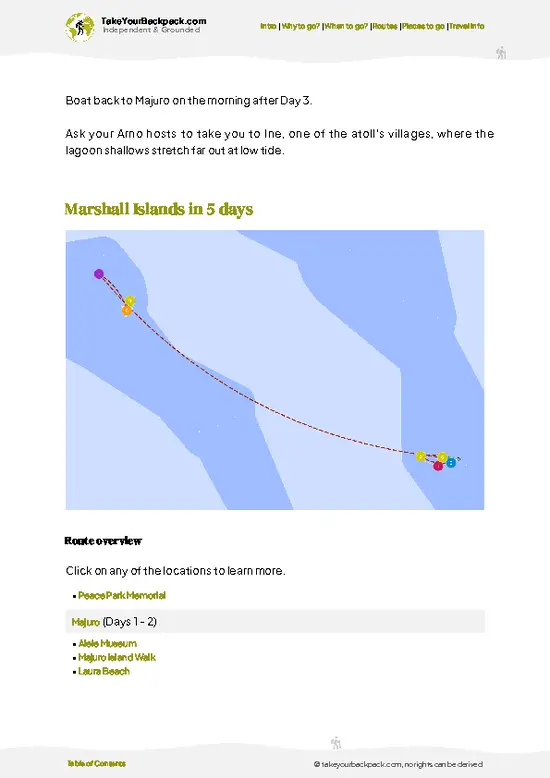
⌛️ 5 daysSeeing the highlights in 5 days

Day 1: Majuro Atoll Arrival


Start slow. Majuro’s transport is a patchwork of shared taxis and infrequent buses, so rushing out of the airport is a rookie move. Spend your first day settling into the rhythm of the atoll. The main highway hugs the lagoon side, and everything you’ll want to see is strung along this spine. Use this day to get your bearings, grab a local SIM, and catch a sunset at Laura Beach. It’s the kind of place where the ocean’s calm, and the pace reminds you that you’re not in a city anymore.

Day 2: Majuro Town Exploration


Majuro’s town is compact but layered. The bus system here is your friend if you time it right—buses run every hour or so, mostly along the main road. This day is about hitting the cultural spots: the Alele Museum and the local market. Walk between … read more 👉

Day 1: Majuro Atoll Arrival


Start slow. Majuro’s transport is a patchwork of shared taxis and infrequent buses, so rushing out of the airport is a rookie move. Spend your first day settling into the rhythm of the atoll. The main highway hugs the lagoon side, and everything you’ll want to see is strung along this spine. Use this day to get your bearings, grab a local SIM, and catch a sunset at Laura Beach. It’s the kind of place where the ocean’s calm, and the pace reminds you that you’re not in a city anymore.

Day 2: Majuro Town Exploration


Majuro’s town is compact but layered. The bus system here is your friend if you time it right—buses run every hour or so, mostly along the main road. This day is about hitting the cultural spots: the Alele Museum and the local market. Walk between stops to soak in the street life and chat with vendors. The trade-off here is clear: you’ll sacrifice speed for authenticity. The buses aren’t fast, but they drop you right where the locals hang out.

Day 3: Outer Islands Day Trip


This is your splurge day. Ferries to the outer islands run twice a week, so if you catch one, you’re in for a treat. The ride is slow, but the payoff is huge—pristine beaches and near-empty snorkeling spots. The trade-off? Time. You’ll spend most of the day on the water, but the comfort of escaping the atoll’s bustle is worth every minute.

Day 4: Laura Peninsula and WWII Sites


Back on the main atoll, the Laura Peninsula is a must for history buffs and beach lovers alike. Getting here means a shared taxi or a long walk from the bus stop. The roads are rough, so comfort dips, but the payoff is a quiet stretch of beach and WWII relics that tell a story you won’t find in guidebooks.

Day 5: Off-Path Reward – Delap Market Morning


Before you leave, hit Delap Market early. It’s a sensory overload in the best way—fresh fish, tropical fruits, and local chatter. It’s a quick detour that fits neatly into your transport rhythm since it’s close to the main bus line. This market visit is your insider’s snapshot of daily life, a perfect counterbalance to the slower, scenic days.

Must-Do Day: Day 3, the Outer Islands trip. It’s the one experience that justifies the whole journey—time-consuming, yes, but unmatched in payoff. The slow ferry ride is your gateway to the real Marshall Islands, away from the atoll’s spine and wiring.
Turn your Majuro visit into an Marshall Islands adventure
Build a complete Marshall Islands route with Majuro, hidden gems, must-see destinations, and realistic travel times included.

Generate my trip

🌤️ When to go?Seasonal considerations and timing


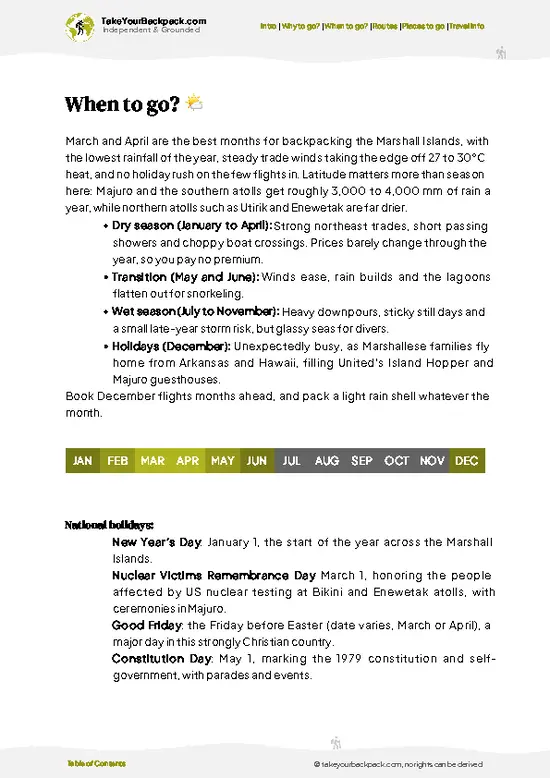
  • Topic: Weather – The dry season from December to April is your golden window. Expect less rain and humidity, making it easier to explore without the constant threat of tropical downpours. The wet season, May through November, brings heavier rains and occasional storms that can seriously cramp your style.

  • Topic: Temperature – Temperatures hover between 27°C and 31°C (80°F to 88°F) year-round, but the dry season feels more comfortable thanks to lower humidity. The wet season’s muggy heat can sap your energy faster than you’d like.

  • Topic: Daylight Hours – Daylight is pretty steady all year, roughly 12 hours a day. No drastic shifts, so you won’t be racing the sunset like in higher latitudes.

  • Topic: Crowds – Majuro isn’t exactly a tourist hotspot, but the dry season sees a slight uptick
read more 👉

  • Topic: Weather – The dry season from December to April is your golden window. Expect less rain and humidity, making it easier to explore without the constant threat of tropical downpours. The wet season, May through November, brings heavier rains and occasional storms that can seriously cramp your style.

  • Topic: Temperature – Temperatures hover between 27°C and 31°C (80°F to 88°F) year-round, but the dry season feels more comfortable thanks to lower humidity. The wet season’s muggy heat can sap your energy faster than you’d like.

  • Topic: Daylight Hours – Daylight is pretty steady all year, roughly 12 hours a day. No drastic shifts, so you won’t be racing the sunset like in higher latitudes.

  • Topic: Crowds – Majuro isn’t exactly a tourist hotspot, but the dry season sees a slight uptick in visitors, especially around holidays like Christmas and Easter. If you want near solitude, aim for shoulder months like November or May.

  • Topic: Seasonal Activities – The dry months are prime for snorkeling, diving, and fishing. Coral reefs are clearer, and the ocean’s calmer. Wet season activities are limited by rough seas and less predictable weather.

  • Topic: Price Fluctuations – Flights and accommodations spike during the dry season’s holidays. Booking early can save you a bundle. The wet season offers lower prices but comes with the risk of weather disruptions.


Pro-tip: Lock in your trip for late April or early November—just before or after the wet season—when you get the best mix of decent weather, fewer crowds, and wallet-friendly rates.


source: climatestotravel.comJANJanuary: excellent for travelingFEBFebruary: excellent for travelingMARMarch: excellent for travelingAPRApril: highly recommended for travelingMAYMay: good for travelingJUNJune: fair for travelingJULJuly: fair for travelingAUGAugust: fair for travelingSEPSeptember: fair for travelingOCTOctober: fair for travelingNOVNovember: highly recommended for travelingDECDecember: excellent for traveling
when-to-go

✈️ The backpacker research shortcutMarshall Islands Travel Guide

An offline-friendly backpacking guide with optimized travel routes, ranked highlights, transport advice, and the best areas to stay.
example page 0 from our offline Travel Guide for Marshall Islands
example page 1 from our offline Travel Guide for Marshall Islands
example page 2 from our offline Travel Guide for Marshall Islands
example page 3 from our offline Travel Guide for Marshall Islands
example page 4 from our offline Travel Guide for Marshall Islands
example page 5 from our offline Travel Guide for Marshall Islands
example page 6 from our offline Travel Guide for Marshall Islands
example page 7 from our offline Travel Guide for Marshall Islands
The digital guide (137 pages) contains:
31 highlights, ranked by travel appeal
Optimized 2, 3 & 5-day travel routes
Cities, national parks, landmarks, beaches
How to get around
Offline-friendly for travel without Wi-Fi
👉 Click to see all 30+ guide features

📅 Plan smarter in minutes, not weeks
Month by month travel advice
Festivals & national holidays
Budget expectations

🗺️ Go to the right places, skip the overrated ones
Honest pros & cons of destinations
Top hikes, parks & viewpoints
Lesser-known places most travelers miss
Clear “worth it vs skip it” guidance

🛏️ Travel smoothly without rookie mistakes
Best areas to stay
Transport systems explained simply
Common scams & safety advice
SIM cards, money & practical tips

🌍 Understand the country, not just visit it
Culture & traditions
52 Essential phrases & customs
Festivals worth planning around
Traveler-friendly historical context
Insights that make places more meaningful

📱 Built for real travel conditions
Fully downloadable PDF
Works completely offline
Optimized for phone use
Useful in remote areas & buses
Everything in one place
Save weeks of stressful planning
Get instant access to your full guide. 30‑day money-back guarantee.
+ Add another guide for just US$7.80

By proceeding you agree to our terms.
Sent to your inbox immediately after payment • 100% Secure Checkout
Best Backpacking Travel Advisor 2025 tourism awardBest Backpacking
Travel Advisor
2025
What others say about Take Your Backpack Guides:
⭐⭐⭐⭐⭐
Fantastic, amazing amount of information!
⭐⭐⭐⭐⭐
My goodness this is amazing, it's what I've been looking for hats off too you!
⭐⭐⭐⭐⭐
I think this is absolutely BRILLIANT
⭐⭐⭐⭐
Very complete and informative. It's still missing places, but I gotta to commend you
⭐⭐⭐⭐⭐
This is truly amazing, thank you, can't wait to explore it with my kids!
⭐⭐⭐⭐⭐
Awesome resource, thank you!
⭐⭐⭐⭐⭐
This is amazing! Can't wait to explore the ones I haven't seen
⭐⭐⭐⭐
I love this! Well done, great idea.
⭐⭐⭐⭐⭐
Thanks for taking the time to make this gem!
⭐⭐⭐⭐⭐
This might be the best website I've ever seen.
⭐⭐⭐⭐⭐
Congratulations, and thank you so much for your work; it's incredibly valuable.
⭐⭐⭐⭐
In all seriousness I think you did a great job pointing out the important spots
⭐⭐⭐⭐⭐
10/10 very good
⭐⭐⭐⭐⭐
As someone who's only just starting to visit regularly this is awesome, thank you.
⭐⭐⭐⭐
Thank you very much! I'm going to visit my dad, it's going to be very useful!
⭐⭐⭐⭐⭐
This is really cool! We'll be travelling for the first time and this definitely come in handy.
⭐⭐⭐⭐⭐
You are now our minister of culture, congratulations 👨‍💼
⭐⭐⭐⭐⭐
Just wanted to tell you that this is a pearl! Going to follow your recommendations.
⭐⭐⭐⭐⭐
This is so cool. I'll definitely be using the resource for my travels soon.
⭐⭐⭐⭐⭐
This is very impressive! Good work.
⭐⭐⭐⭐⭐
This is an amazing and informative site. Very well done!

🛏️ Where to stay?Best areas to stay in Marshall Islands

Majuro isn’t sprawling with neighborhoods like a big city, but that’s exactly why you want to zero in on the right spots. The capital island itself is your playground, and the key is to stay close to Delap and Djarrit. These two areas are the heartbeat of Majuro’s backpacker scene—safe, social, and where you’ll find the pulse of local life without the touristy gloss.

Delap is where you’ll catch the vibe of everyday Marshallese living. It’s got that laid-back, island-town feel with markets, street food stalls, and locals who are curious but welcoming. Staying here means you’re not just passing … read more 👉
Majuro isn’t sprawling with neighborhoods like a big city, but that’s exactly why you want to zero in on the right spots. The capital island itself is your playground, and the key is to stay close to Delap and Djarrit. These two areas are the heartbeat of Majuro’s backpacker scene—safe, social, and where you’ll find the pulse of local life without the touristy gloss.

Delap is where you’ll catch the vibe of everyday Marshallese living. It’s got that laid-back, island-town feel with markets, street food stalls, and locals who are curious but welcoming. Staying here means you’re not just passing through; you’re part of the rhythm. It’s also where you’ll find the best spots to connect with other travelers and locals alike, especially in the evenings when the community gathers.

Djarrit, on the other hand, leans a bit more into the tourist-friendly side but without losing authenticity. It’s quieter but still social enough to meet fellow backpackers. Plus, it’s closer to the lagoon’s calm waters, perfect for early morning swims or catching a sunset that feels like your own secret show.

Both areas keep you within walking distance of essentials, so you’re saving time and money on transport—big wins when every minute and dollar counts. The trade-off? You’re choosing comfort in the form of local immersion over flashy resorts. But trust me, that’s the kind of comfort that sticks with you long after the trip ends.

🚌 Getting aroundHow to get around Majuro

Majuro moves at its own rhythm—think less Swiss train precision, more island pulse. The pace is laid-back but not lazy; schedules exist, but they’re suggestions, not gospel. You’ll find that getting around here is a dance between patience and local savvy. The roads are narrow, the traffic light on the wild side, and the vibe is all about improvisation. If you’re expecting strict timetables, you’ll be disappointed. Instead, lean into the flow, and you’ll find the island’s transport options surprisingly straightforward—and even a bit fun.


  • Public Buses: These are the backbone for locals, running roughly from 6 AM to 6 PM. Expect a loose schedule—buses leave when they’re full or when the driver feels like it. Fares hover around $0.50, making them the cheapest way to get around, but don’t count
read more 👉
Majuro moves at its own rhythm—think less Swiss train precision, more island pulse. The pace is laid-back but not lazy; schedules exist, but they’re suggestions, not gospel. You’ll find that getting around here is a dance between patience and local savvy. The roads are narrow, the traffic light on the wild side, and the vibe is all about improvisation. If you’re expecting strict timetables, you’ll be disappointed. Instead, lean into the flow, and you’ll find the island’s transport options surprisingly straightforward—and even a bit fun.


  • Public Buses: These are the backbone for locals, running roughly from 6 AM to 6 PM. Expect a loose schedule—buses leave when they’re full or when the driver feels like it. Fares hover around $0.50, making them the cheapest way to get around, but don’t count on air conditioning or comfort; it’s a standing-room kind of ride.


  • Shared Taxis: The sweet spot between cost and speed. They operate on main routes and leave once packed, usually between 7 AM and 7 PM. Prices are about $1-$2 depending on distance. These rides are quicker than buses but still offer that local flavor—expect some friendly chatter and occasional detours for passengers.


  • Rental Scooters: If you’re comfortable on two wheels, this is your ticket to freedom. Rentals run about $20-$30 per day. Scooters let you explore at your own pace, dodge traffic jams, and reach spots buses don’t. Just watch out for uneven roads and remember helmets aren’t always standard issue.


  • Walking: Majuro’s compact size makes walking a surprisingly viable option. The main town area is about 3 miles long, so if you’re light on luggage and up for some exercise, this is free, flexible, and a great way to soak in the island’s vibe up close.


  • Boat Taxis: For hopping between islets or reaching remote spots, boat taxis operate on demand. Prices vary, but expect to negotiate. They’re not on a schedule, so timing depends on your hustle and the tide.


Master Tactical Tip: Combine shared taxis for longer hauls with walking or scooter rentals for last-mile freedom. Shared taxis get you where you need to be fast and cheap, but once you’re there, ditch the waiting game and explore on your own terms. This combo keeps your wallet happy and your itinerary flexible—exactly how a local would roll.

🍲 FoodLocal Flavors for Backpackers

Majuro’s food scene is a quiet rebellion against the usual tourist fare—think fresh, ocean-kissed flavors that hit you with a punch of island authenticity. The star here is definitely breadfruit, often roasted until its edges caramelize, giving it a smoky sweetness that pairs perfectly with salty, flaky fish caught just hours before. Don’t miss out on fish soup, a comforting broth brimming with coconut milk, lime, and a hint of chili that wakes up your palate without knocking you out. For a real insider’s sip, try toddy, a mildly fermented palm drink that locals enjoy for its subtle tang and social buzz.

Forget fancy restaurants; your best bets are the local markets where vendors grill fresh catch over open flames, filling the air with a smoky, salty aroma that’s impossible to resist. Small … read more 👉
Majuro’s food scene is a quiet rebellion against the usual tourist fare—think fresh, ocean-kissed flavors that hit you with a punch of island authenticity. The star here is definitely breadfruit, often roasted until its edges caramelize, giving it a smoky sweetness that pairs perfectly with salty, flaky fish caught just hours before. Don’t miss out on fish soup, a comforting broth brimming with coconut milk, lime, and a hint of chili that wakes up your palate without knocking you out. For a real insider’s sip, try toddy, a mildly fermented palm drink that locals enjoy for its subtle tang and social buzz.

Forget fancy restaurants; your best bets are the local markets where vendors grill fresh catch over open flames, filling the air with a smoky, salty aroma that’s impossible to resist. Small cafés and roadside shacks serve up quick bites like coconut crab or taro root, often wrapped in banana leaves, which adds a faint earthiness you won’t find in any packaged snack. The vibe is casual, communal—grab a plastic chair, strike up a conversation, and let the rhythm of island life slow your pace.

Heads up: dining here is less about strict etiquette and more about respect. Sharing is the norm, and meals often stretch into long, laughter-filled sessions. Don’t rush. If you’re offered food, accept it—declining can come off as rude. And if you want to blend in, eat with your right hand; the left is reserved for, well, less savory tasks. This is food as connection, not just fuel.

FAQCommon questions from travelers

3 to 4 days are sufficient to explore Majuro, covering its main attractions and local culture. This allows time for visiting the Alele Museum, local markets, and nearby beaches. Additional days may be needed for diving or fishing excursions.
You can get around Majuro without a car by using local buses, taxis, or walking. Buses are inexpensive, typically costing around $1 per ride, and taxis are available but more costly. Walking is practical within the town center due to its compact size.
Majuro is known for its beautiful lagoon, World War II relics, and vibrant local culture. It serves as the capital of the Marshall Islands and is a key hub for fishing and diving activities. The Alele Museum offers insights into the island’s history and traditions.
⚠️ Things can change over time, so always validate details locally before you go.

Other Marshallese regions near Majuro

Explore more nearby:

  • Maloelap Atoll—World War II ruins, overgrown airstrips, remote outer islets, coral reefs| 20 km away
  • Ailinglaplap Atoll—traditional villages, breadfruit groves, lagoon islets, local canoe building| 21 km away
  • Likiep Atoll—historic copra plantations, colonial-era church, calm turquoise lagoon, coconut palms| 512 km away

💡 Not sure where to go next?
Create a personalized itinerary for Marshall Islands including Majuro and the places that fit your trip.

Generate my itinerary

👉 Discover all regions

Or checkout all Marshall Islands has to offer (think cities, towns, villages, national parks, hikes, beaches, festivals)
Country photo of Marshall Islands

We 💚 feedbackIs it worth it?

Here’s the deal with Majuro: it’s not flashy, but that’s exactly why it clicks. The vibe is laid-back, like everyone’s on island time—even when they’re hustling. Your best surprise? The local food stalls tucked behind the main drag—skip the tourist spots and dive into fresh fish grilled over coconut husks. Heads-up: internet can be spotty, so plan offline or embrace the slow scroll. If you want a genuine slice of Pacific life without the tourist circus, this is your spot. Just don’t expect luxury; expect real.

✍️ Help improve this page!
The information on this page is based on in-depth research, insights shared by experienced travelers, and feedback from the local travel community in Marshall Islands. While every effort is made to keep the information accurate and current, conditions can change — so if you spot anything incorrect or outdated, please get in touch.


🙋‍♂️ Give feedback

👋 Meet the founderWho’s Behind Take Your Backpack?

Johan, backpacker and founder of TakeYourBackpackHi, I’m Johan (Netherlands 🇳🇱), the creator of TakeYourBackpack. Over the past decade, I’ve backpacked through 80+ countries across six continents, gaining extensive experience with independent travel, long-term trips, and overland routes.

This site is built on a combination of firsthand travel experience and carefully curated insights from other backpackers. Many guides are based on places I’ve personally visited, while others bring together tips, observations, and practical advice shared by trusted travelers I’ve met along the way.

The goal is to provide realistic, experience-driven guidance — not generic itineraries — so you can explore destinations with better context, clearer expectations, and more confidence.

Get full country guide •
Instant download • 31 highlights • Full Offline guide