×

Martinique🇲🇶 | national parksParc Naturel Régional de la MartiniqueMont Pelée, Pitons du Carbet, canyon wading, forest waterfalls | things to do and best time to go

Explore Mount Pelée National ParkExplore Savane des Pétrifications

Backpacking in Parc Naturel Régional de la Martinique
🏆 Top picknational park ranked #1
By Johan Kruseman 🇳🇱 | Updated October 23, 2026

Parc Naturel Régional de la Martinique is not one tidy park with a gate and a ticket booth. It is a regional designation covering roughly two thirds of the island, stretching from the rainforest and Mount Pelée in the north through the Pitons du Carbet to the dry southern peninsula, and that is the first thing to get straight. Pelée and the Caravelle peninsula sit in Martinique's north and east, a drive from Fort-de-France. Here is how to dodge the usual stumbles. Summits cloud over by late morning, so start hiking at dawn or the views vanish. Trails turn to slick red mud after rain, so wear real tread, not sandals. Buses are thin outside the capital, so a rental car saves whole days. Expect birdsong, tree ferns, and few crowds, though weekends bring local families. Pack a rain shell and start early. The old Trace des Jésuites path still runs through moss-draped forest where humidity beads on every leaf.

Discover everything you want to know in the 📖 Martinique Travel Guide.


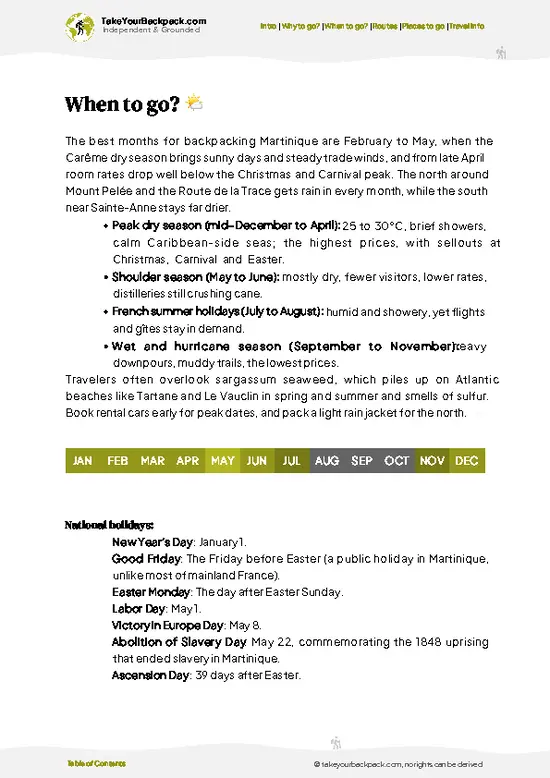
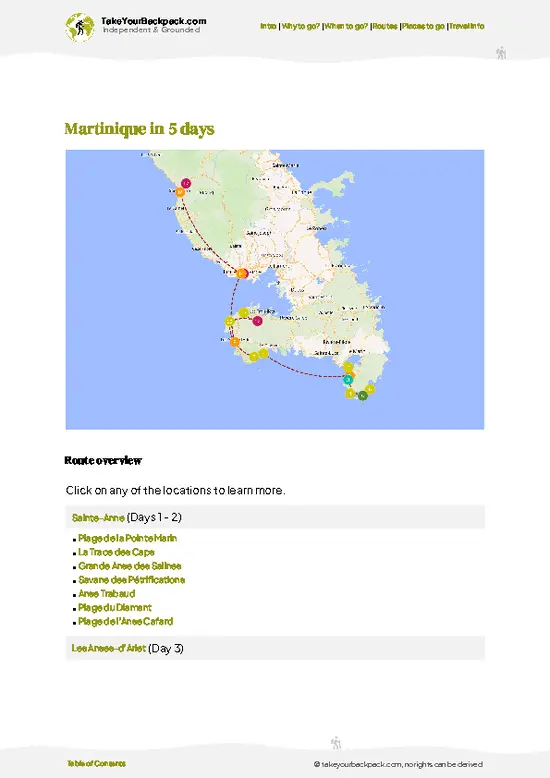
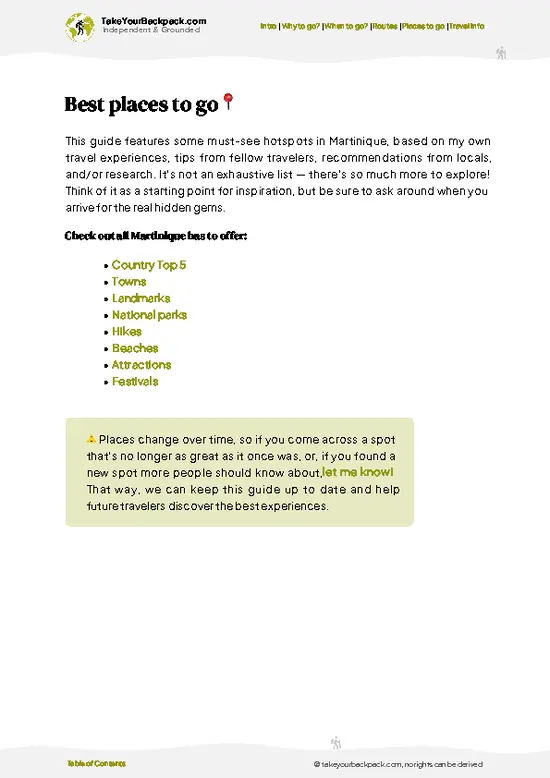
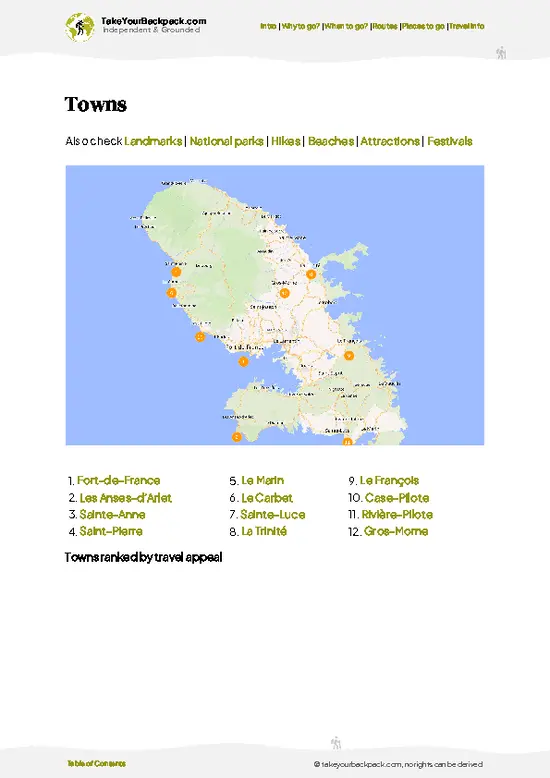
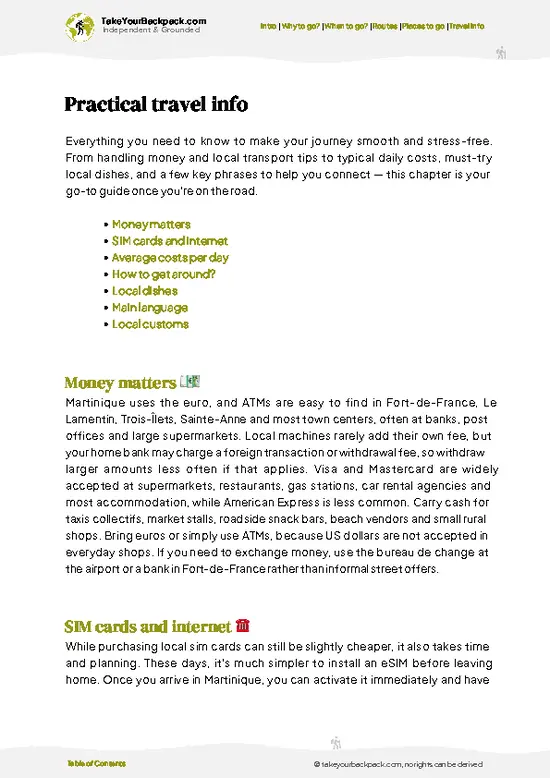
example page 0 from our offline Travel Guide for Martinique
example page 1 from our offline Travel Guide for Martinique
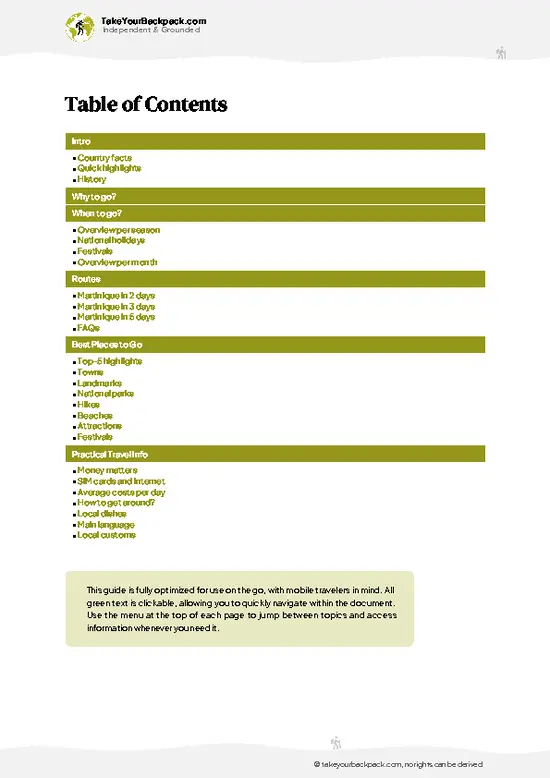
example page 2 from our offline Travel Guide for Martinique
example page 3 from our offline Travel Guide for Martinique
example page 4 from our offline Travel Guide for Martinique
example page 5 from our offline Travel Guide for Martinique
example page 6 from our offline Travel Guide for Martinique
example page 7 from our offline Travel Guide for Martinique
Loading the map 🌍
CLICK TO FILTER
towns
landmarks
national parks
hikes
beaches
attractions
festivals
SHOW COUNTRY’S BESTSHOW ALL

✨ Why go?
Ranked #1 national park in Martinique
Why visitors keep coming back

Parc Naturel Régional de la Martinique suits independent walkers because the best routes are free, signed, and start from roadside lots you can reach without a guide. Nobody checks your name at a trailhead, so you set your own pace and turn around when the cloud rolls in. The variety is the real draw: you can climb the Montagne Pelée volcano in the morning, then be on the dry, cactus-lined Presqu'île de la Caravelle trails by afternoon, two very different landscapes within a short drive. The Trace des Jésuites and the old Caribbean footpaths give you forest walking without technical skill. Camping is limited, so many backpackers sleep in small guesthouses and gîtes near the trailheads and walk out each day with a light pack. Guided tours exist, mostly for canyoning and gorge work, but self-guided … read more 👉
Parc Naturel Régional de la Martinique suits independent walkers because the best routes are free, signed, and start from roadside lots you can reach without a guide. Nobody checks your name at a trailhead, so you set your own pace and turn around when the cloud rolls in. The variety is the real draw: you can climb the Montagne Pelée volcano in the morning, then be on the dry, cactus-lined Presqu'île de la Caravelle trails by afternoon, two very different landscapes within a short drive. The Trace des Jésuites and the old Caribbean footpaths give you forest walking without technical skill. Camping is limited, so many backpackers sleep in small guesthouses and gîtes near the trailheads and walk out each day with a light pack. Guided tours exist, mostly for canyoning and gorge work, but self-guided hiking covers nearly everything else. Tracks are signed in French, so a basic phrasebook helps, and a paper map or offline download covers gaps where the signal dies under the canopy.

💡 HighlightsWhat this place is best known for

  1. Montagne Pelée: The 1,397 meter volcano that destroyed Saint-Pierre in 1902 is the island's defining summit. The climb passes through dense forest into bare, windswept rock, and the crater view is spectacular on a clear morning.
  2. Gorges de la Falaise: A guided canyon walk in the north where you wade, swim, and scramble through a narrow gorge ending at a waterfall. Expect cold, clear water and wet shoes.
  3. Trace des Jésuites: An old forest path of tree ferns, bamboo, and moss, linking rainforest at Morne Rouge with the Route de la Trace near Deux-Choux. It is shaded and easy to follow.
  4. Presqu'île de la Caravelle: A wild peninsula on the Atlantic coast with dry forest, mangroves, and ruins of Château Dubuc. Entry is cheap and trails are gentle.
  5. Les Pitons du Carbet: A cluster of jagged green peaks
… read more 👉
  1. Montagne Pelée: The 1,397 meter volcano that destroyed Saint-Pierre in 1902 is the island's defining summit. The climb passes through dense forest into bare, windswept rock, and the crater view is spectacular on a clear morning.
  2. Gorges de la Falaise: A guided canyon walk in the north where you wade, swim, and scramble through a narrow gorge ending at a waterfall. Expect cold, clear water and wet shoes.
  3. Trace des Jésuites: An old forest path of tree ferns, bamboo, and moss, linking rainforest at Morne Rouge with the Route de la Trace near Deux-Choux. It is shaded and easy to follow.
  4. Presqu'île de la Caravelle: A wild peninsula on the Atlantic coast with dry forest, mangroves, and ruins of Château Dubuc. Entry is cheap and trails are gentle.
  5. Les Pitons du Carbet: A cluster of jagged green peaks above Fort-de-France, with demanding ridge hikes that reward fit walkers with long views over the Caribbean.
  6. Saut du Gendarme: A small waterfall in the north, reached on an easy forest path, ideal for a quick swim after a hike.
For a first visit, the Montagne Pelée climb is the one to choose: it gives you the volcano, the forest, and the island's story in a single morning.
Spotted a mistake or missing something? Contact us.

Things to do around Parc Naturel Régional de la Martinique

Ratings based on Tripadvisor reviews. When you book through this link, you support our work at no extra cost to you.

🌤️ When to go?Seasonal considerations and timing

February to April is the best window for hiking in the Parc Naturel Régional de la Martinique, with the driest trails and the clearest views from the Pitons du Carbet and Montagne Pelée.
  • Dry Season (Dec to May): Days run 27 to 30°C (81 to 86°F), nights 20 to 23°C (68 to 73°F). Trails are firmest from February. Daylight lasts about 11 to 12 hours year-round, so start early.
  • Wet Season (Jun to Nov): Hot, humid, 29 to 32°C (84 to 90°F), with afternoon downpours that turn ridge paths to mud and swell rivers. August to October is peak hurricane risk, and some trails close.
  • Crowds: Christmas to Easter and July to August French school holidays fill gites and rental cars. Hiking trails stay quiet outside weekends.
  • Prices: Lodging and flights from France rise about 20 to 40% in December to February and
… read more 👉
February to April is the best window for hiking in the Parc Naturel Régional de la Martinique, with the driest trails and the clearest views from the Pitons du Carbet and Montagne Pelée.
  • Dry Season (Dec to May): Days run 27 to 30°C (81 to 86°F), nights 20 to 23°C (68 to 73°F). Trails are firmest from February. Daylight lasts about 11 to 12 hours year-round, so start early.
  • Wet Season (Jun to Nov): Hot, humid, 29 to 32°C (84 to 90°F), with afternoon downpours that turn ridge paths to mud and swell rivers. August to October is peak hurricane risk, and some trails close.
  • Crowds: Christmas to Easter and July to August French school holidays fill gites and rental cars. Hiking trails stay quiet outside weekends.
  • Prices: Lodging and flights from France rise about 20 to 40% in December to February and in July to August. September to November is cheapest.
  • Summits: Mornings give the best odds of clear peaks, as cloud builds on Pelée by midday.
Book a rental car and your first gite at least two months ahead for any trip between December and April.


source: climatestotravel.comJANJanuary: excellent for travelingFEBFebruary: excellent for travelingMARMarch: excellent for travelingAPRApril: highly recommended for travelingMAYMay: highly recommended for travelingJUNJune: fair for travelingJULJuly: fair for travelingAUGAugust: fair for travelingSEPSeptember: below average for travelingOCTOctober: fair for travelingNOVNovember: highly recommended for travelingDECDecember: excellent for traveling
martinique-national-park-parc-naturel-regional-de-la-martinique
© Google | Christian Rabbat

✈️ The backpacker research shortcutMartinique Travel Guide

An offline-friendly backpacking guide with optimized travel routes, ranked highlights, transport advice, and the best areas to stay.
example page 0 from our offline Travel Guide for Martinique
example page 1 from our offline Travel Guide for Martinique
example page 2 from our offline Travel Guide for Martinique
example page 3 from our offline Travel Guide for Martinique
example page 4 from our offline Travel Guide for Martinique
example page 5 from our offline Travel Guide for Martinique
example page 6 from our offline Travel Guide for Martinique
example page 7 from our offline Travel Guide for Martinique
The digital guide (180 pages) contains:
✅ 43 highlights, ranked by travel appeal
✅ Optimized 2, 3 & 5-day travel routes
✅ Cities, national parks, landmarks, beaches
✅ How to get around
✅ Offline-friendly for travel without Wi-Fi
👉 Click to see all 30+ guide features

📅 Plan smarter in minutes, not weeks
✅ Month by month travel advice
✅ Festivals & national holidays
✅ Budget expectations

🗺️ Go to the right places, skip the overrated ones
✅ Honest pros & cons of destinations
✅ Top hikes, parks & viewpoints
✅ Lesser-known places most travelers miss
✅ Clear “worth it vs skip it” guidance

🛏️ Travel smoothly without rookie mistakes
✅ Best areas to stay
✅ Transport systems explained simply
✅ Common scams & safety advice
✅ SIM cards, money & practical tips

🌍 Understand the country, not just visit it
✅ Culture & traditions
✅ 52 Essential phrases & customs
✅ Festivals worth planning around
✅ Traveler-friendly historical context
✅ Insights that make places more meaningful

📱 Built for real travel conditions
✅ Fully downloadable PDF
✅ Works completely offline
✅ Optimized for phone use
✅ Useful in remote areas & buses
✅ Everything in one place
Stop searching, start planning
Get instant access to your full guide. 30‑day money-back guarantee.
+ Add another guide for just

By proceeding you agree to our terms.
Sent to your inbox immediately after payment • 100% Secure Checkout
Best Backpacking Travel Advisor 2025 tourism awardBest Backpacking
Travel Advisor
2025
What others say about Take Your Backpack Guides:
⭐⭐⭐⭐⭐
Fantastic, amazing amount of information!
⭐⭐⭐⭐⭐
My goodness this is amazing, it's what I've been looking for hats off too you!
⭐⭐⭐⭐⭐
I think this is absolutely BRILLIANT
⭐⭐⭐⭐
Very complete and informative. It's still missing places, but I gotta to commend you
⭐⭐⭐⭐⭐
This is truly amazing, thank you, can't wait to explore it with my kids!
⭐⭐⭐⭐⭐
Awesome resource, thank you!
⭐⭐⭐⭐⭐
This is amazing! Can't wait to explore the ones I haven't seen
⭐⭐⭐⭐
I love this! Well done, great idea.
⭐⭐⭐⭐⭐
Thanks for taking the time to make this gem!
⭐⭐⭐⭐⭐
This might be the best website I've ever seen.
⭐⭐⭐⭐⭐
Congratulations, and thank you so much for your work; it's incredibly valuable.
⭐⭐⭐⭐
In all seriousness I think you did a great job pointing out the important spots
⭐⭐⭐⭐⭐
10/10 very good
⭐⭐⭐⭐⭐
As someone who's only just starting to visit regularly this is awesome, thank you.
⭐⭐⭐⭐
Thank you very much! I'm going to visit my dad, it's going to be very useful!
⭐⭐⭐⭐⭐
This is really cool! We'll be travelling for the first time and this definitely come in handy.
⭐⭐⭐⭐⭐
You are now our minister of culture, congratulations 👨‍💼
⭐⭐⭐⭐⭐
Just wanted to tell you that this is a pearl! Going to follow your recommendations.
⭐⭐⭐⭐⭐
This is so cool. I'll definitely be using the resource for my travels soon.
⭐⭐⭐⭐⭐
This is very impressive! Good work.
⭐⭐⭐⭐⭐
This is an amazing and informative site. Very well done!

🛏️ Where to stay?Choosing the right base

Most backpackers sleep in Saint-Pierre, Le Prêcheur or Morne-Rouge for the northern trails, and in Fort-de-France or Trois-Îlets for the southern and central ones, because there are no lodgings inside the park.
Saint-Pierre is the best base for Montagne Pelée, with guesthouses and small hotels at roughly €45 to 90 a double, plus cafes and a market. The Pelée trailhead at Aileron sits about 30 to 40 minutes uphill by car. Le Prêcheur is quieter, close to the Anse Couleuvre trail, and has a few gites at €50 to 80.
Morne-Rouge, in the cool forest on the slopes, has a handful of inns and gives you the … read more 👉
Most backpackers sleep in Saint-Pierre, Le Prêcheur or Morne-Rouge for the northern trails, and in Fort-de-France or Trois-Îlets for the southern and central ones, because there are no lodgings inside the park.
Saint-Pierre is the best base for Montagne Pelée, with guesthouses and small hotels at roughly €45 to 90 a double, plus cafes and a market. The Pelée trailhead at Aileron sits about 30 to 40 minutes uphill by car. Le Prêcheur is quieter, close to the Anse Couleuvre trail, and has a few gites at €50 to 80.
Morne-Rouge, in the cool forest on the slopes, has a handful of inns and gives you the shortest drive to Aileron. Le Morne-Vert and Fonds-Saint-Denis suit the Pitons du Carbet, with gites and chambres d’hôtes at €55 to 95.
Fort-de-France has the widest choice, including a few hostel-style rooms at about €25 to 40 for a dorm bed or basic room, and is where buses and shared taxis (taxis collectifs) converge. Trois-Îlets and Les Anses-d’Arlet work for the south coast and Presqu’île trails, with apartments from €60.
Camping is limited, so check each site’s rules before arriving. Most hikers use a rental car, since evening bus service to trailheads is sparse.

👛 Costs (as of 23 October 2026)Money, prices, and spending tips

A backpacker visiting the Parc Naturel Régional de la Martinique should expect to spend about €95 to 175 a day, with a rental car as the biggest line item.
CategoryBudget RangeLocal Reality
Entrance fees€0Trails in the park are free to walk. Some sites such as botanical gardens or guided gorge outings charge separately, about €5 to 20.
Accommodation (high season)€45 to 80Dorm or basic room in Fort-de-France from about €25 to 40. Gites and guesthouses near Saint-Pierre or Morne-Rouge cost €50 to 90 a double, so solo travelers pay more per person.
Local transport€30 to 45A small rental car costs about €35 to 55 a day, cheaper if shared. Buses and shared taxis are far cheaper (a few euros a ride) but rarely reach trailheads.
Food and supplies€20 to 35Bakery breakfast, a plat du jour lunch at €10 to
… read more 👉
A backpacker visiting the Parc Naturel Régional de la Martinique should expect to spend about €95 to 175 a day, with a rental car as the biggest line item.
CategoryBudget RangeLocal Reality
Entrance fees€0Trails in the park are free to walk. Some sites such as botanical gardens or guided gorge outings charge separately, about €5 to 20.
Accommodation (high season)€45 to 80Dorm or basic room in Fort-de-France from about €25 to 40. Gites and guesthouses near Saint-Pierre or Morne-Rouge cost €50 to 90 a double, so solo travelers pay more per person.
Local transport€30 to 45A small rental car costs about €35 to 55 a day, cheaper if shared. Buses and shared taxis are far cheaper (a few euros a ride) but rarely reach trailheads.
Food and supplies€20 to 35Bakery breakfast, a plat du jour lunch at €10 to 15, and groceries from supermarkets. Dinner in a restaurant runs €18 to 30.
Guides and extras€0 to 15Most trails need no guide. Guided hikes are about €30 to 60 if you want one, and fuel adds to car costs. Payments are made in euros.
Total Daily Budget€95 to 175Sharing a car and a room brings the lower end within reach. Midweek and low season help.


source: martinique.org
⚠️ Prices can change and everyone travels differently, so take this as a rough guide. Hope it helps you plan your adventure!

🥾 TrailsBest hikes in Parc Naturel Régional de la Martinique national park

Parc Naturel Régional de la Martinique offers walking for nearly every level, from forest strolls to steep volcanic climbs. Trails are mostly marked with paint blazes and small signs, though mud and cloud can hide the path.
  • Montagne Pelée (from Aileron): A strenuous climb of roughly 8 kilometers round trip, taking 4 to 5 hours. Terrain shifts from forest to slippery volcanic rock with steep, exposed stretches near the rim.
  • Trace des Jésuites: An easy to moderate forest walk of about 3 to 4 hours one way depending on the section. It is mostly shaded, with root-tangled ground and muddy patches.
  • Presqu'île
… read more 👉
Parc Naturel Régional de la Martinique offers walking for nearly every level, from forest strolls to steep volcanic climbs. Trails are mostly marked with paint blazes and small signs, though mud and cloud can hide the path.
  • Montagne Pelée (from Aileron): A strenuous climb of roughly 8 kilometers round trip, taking 4 to 5 hours. Terrain shifts from forest to slippery volcanic rock with steep, exposed stretches near the rim.
  • Trace des Jésuites: An easy to moderate forest walk of about 3 to 4 hours one way depending on the section. It is mostly shaded, with root-tangled ground and muddy patches.
  • Presqu'île de la Caravelle loop: A moderate coastal circuit of around 3 to 4 hours passing mangroves, dry scrub, and the ruins at Château Dubuc. Look for herons and the occasional lizard.
  • Pitons du Carbet ridges: Hard, steep routes with ropes in places, usually 4 to 6 hours. Only attempt them in dry weather.
Wildlife is modest but rewarding: hummingbirds, mongooses, tree frogs after rain, and the tiny whistling tree frog heard at night. Getting around is easiest with a rental car, since public buses reach only some villages and trailheads sit far from stops. Most trails are free to walk, though Château Dubuc on the Caravelle charges about €8. Weekends draw local families to waterfalls, while weekday mornings stay quiet. Carry water, a rain jacket, and a headlamp.
⚠️ Hiking info can sometimes be outdated or inaccurate. Before you hit the trail, check the latest conditions with locals. If you do spot anything that's off, I'd love to hear from you, so I can update it for fellow travelers.

🛡️ SafetyScams, Hazards, and Annoyances

Martinique’s trails are generally safe and well signposted, and the main risks are mud, heat and sudden rain rather than anything dramatic.
Trails on the Pitons du Carbet and Montagne Pelée are steep, root-tangled and slippery after rain, so wear shoes with real grip and carry trekking poles if your knees complain. Pelée’s summit often clouds over by late morning; start at dawn, bring a windproof layer, and turn around if the markers disappear. Rivers rise fast after storms, so skip gorge crossings when it has rained upstream.
The island has no dangerous large wildlife, but the fer-de-lance snake lives in forest and cane fields. Watch where you put hands and feet, stay on paths, and wear closed shoes. Mosquitoes carry dengue, so use repellent.
Bring at least 2 liters of water per person, a headlamp … read more 👉
Martinique’s trails are generally safe and well signposted, and the main risks are mud, heat and sudden rain rather than anything dramatic.
Trails on the Pitons du Carbet and Montagne Pelée are steep, root-tangled and slippery after rain, so wear shoes with real grip and carry trekking poles if your knees complain. Pelée’s summit often clouds over by late morning; start at dawn, bring a windproof layer, and turn around if the markers disappear. Rivers rise fast after storms, so skip gorge crossings when it has rained upstream.
The island has no dangerous large wildlife, but the fer-de-lance snake lives in forest and cane fields. Watch where you put hands and feet, stay on paths, and wear closed shoes. Mosquitoes carry dengue, so use repellent.
Bring at least 2 liters of water per person, a headlamp and a charged phone with the offline map. Leave nothing in parked cars at trailheads, since break-ins happen. Check the Météo-France forecast and any trail closure notices the day before.

FAQFrequently asked questions about Parc Naturel Régional de la Martinique

Plan on 3 to 5 days for the Parc Naturel Régional de la Martinique. One day covers Montagne Pelée from Aileron (about 5 to 6 hours round trip), another suits the Pitons du Carbet or Gorges de la Falaise, and a third covers the Anse Couleuvre coast trail.
Yes, though it is slow. Buses and shared taxis (taxis collectifs) link Fort-de-France with Saint-Pierre, Le Prêcheur and Morne-Rouge for a few euros, but they rarely reach trailheads such as Aileron, which is a long uphill walk or a taxi ride of about €30 to 50. Renting a small car at roughly €35 to 55 a day is the practical option for the Parc Naturel Régional de la Martinique.
No, there is no entrance fee for the Parc Naturel Régional de la Martinique, and walking its marked trails needs no permit. Some attractions inside or beside it, such as gardens, gorge outings or guided canyon trips, charge about €5 to 20. Guided hikes run about €30 to 60 if you want local company.
⚠️ Things can change over time, so always validate details locally before you go.

Other Martinican national parks near Parc Naturel Régional de la Martinique

Explore more nearby:


💡 Not sure where to go next?
Create a personalized itinerary for Martinique including Parc Naturel Régional de la Martinique and the places that fit your trip.

Generate my itinerary

👉 Discover all national parks

Or checkout all Martinique has to offer (think cities, towns, villages, national parks, hikes, beaches, festivals)
Country photo of Martinique

We 💚 feedbackWhat to keep in mind

Give Parc Naturel Régional de la Martinique three full days: one for Pelée at dawn, one for the Caravelle and the Atlantic coast, and one for a gorge or waterfall to rinse off the mud. Fewer than that and you will be chasing clouds. Pack dry socks, because wet trails are a certainty.

✍️ Help improve this page!
The information on this page is based on in-depth research, insights shared by experienced travelers, and feedback from the local travel community in Martinique. While every effort is made to keep the information accurate and current, conditions can change — so if you spot anything incorrect or outdated, please get in touch.


🙋‍♂️ Give feedback

👋 Meet the founderWho’s Behind Take Your Backpack?

Johan, backpacker and founder of TakeYourBackpackHi, I’m Johan (Netherlands 🇳🇱), the creator of TakeYourBackpack. Over the past 3 decades, I’ve backpacked through 90+ countries across six continents, gaining extensive experience with independent travel, long-term trips, and overland routes.

This site is built on a combination of firsthand travel experience and carefully curated insights from other backpackers. Many guides are based on places I’ve personally visited, while others bring together tips, observations, and practical advice shared by trusted travelers I’ve met along the way.

The goal is to provide realistic, experience-driven guidance — not generic itineraries — so you can explore destinations with better context, clearer expectations, and more confidence.