×

Mauritania🇲🇷 | townsKaédiSenegal River banks, mud-brick architecture, weekly market, Fulani communities | things to do and best time to go

Explore RossoExplore Sélibaby

Backpacking in Kaédi
🌟 Highlighttown ranked #4
By Johan Kruseman 🇳🇱 | Updated June 9, 2026

Kaédi’s surprise: it’s one of the greenest corners of Mauritania, thanks to the Senegal River’s lifeblood—think mango groves and vegetable plots, not endless sand. You’ll find Kaédi in the far south, hugging the river and the Senegalese border, a world away from the Saharan monotony up north. For backpackers, Kaédi is a paradox: the domed mud-brick hospital is a modernist oddity worth seeing, and the riverside market is a riot of color and languages, but there’s little in the way of classic “sights.” The city’s rhythm is slow, humid, and communal; you’ll meet more traders than tourists, and solo travelers are rare enough to spark genuine curiosity. Costs are low, but transport is slow and rough—expect bush taxis, not buses. Safety is decent by Mauritanian standards, but the vibe is less cosmopolitan than Nouakchott or Nouadhibou. Kaédi rewards patience and openness, not checklist tourism.

Discover everything you want to know in the 📖 Mauritania Travel Guide.
Safety warning

The current risk level for Mauritania is high. Check the advice before going.


Get your Mauritania guide
63 ranked highlights, routes & tips, works offline (269 pages)
Loading the map 🌍
CLICK TO FILTER
cities
towns
villages
landmarks
national parks
hikes
beaches
attractions
festivals
regions
SHOW COUNTRY’S BESTSHOW ALL

✨ Why go?
Ranked #4 town in Mauritania
What makes this town worth visiting

Kaédi is a strategic stop for backpackers weaving through Mauritania. It’s not just a place to pass through; it’s a basecamp for adventure. The city offers a mix of affordable hostels that cater to budget travelers, providing a comfortable spot to recharge. You’ll find local food stalls serving hearty meals that won’t break the bank, giving you a taste of authentic Mauritanian cuisine without the tourist markup.

The walkability of Kaédi makes it easy to explore on foot, allowing you to soak in the local vibe without the hassle of transport. While the nightlife isn’t wild, you’ll find a few spots to unwind and mingle with fellow travelers, adding a social element to your stay.

Most importantly, Kaédi serves as a gateway for day trips to nearby highlights, making it a practical choice for … read more 👉
Kaédi is a strategic stop for backpackers weaving through Mauritania. It’s not just a place to pass through; it’s a basecamp for adventure. The city offers a mix of affordable hostels that cater to budget travelers, providing a comfortable spot to recharge. You’ll find local food stalls serving hearty meals that won’t break the bank, giving you a taste of authentic Mauritanian cuisine without the tourist markup.

The walkability of Kaédi makes it easy to explore on foot, allowing you to soak in the local vibe without the hassle of transport. While the nightlife isn’t wild, you’ll find a few spots to unwind and mingle with fellow travelers, adding a social element to your stay.

Most importantly, Kaédi serves as a gateway for day trips to nearby highlights, making it a practical choice for those looking to maximize their time. If you’re on a longer journey through West Africa, this city is worth a stop; if your schedule is tight, it might be best to keep moving.
Want to include Kaédi in your Mauritania route?
Create a personalized Mauritania itinerary that includes Kaédi and the places that fit your trip — based on your travel style, budget, and available time. Get your route in seconds.

Generate my trip

💡 HighlightsTop highlights of Kaédi

  1. Senegal River waterfront and port — The river is the town’s heartbeat: fishermen, pirogues, riverside tea stalls and daily life playing out on the banks. Great for early-morning scenes and sunsets when the light turns everything golden.
  2. Confluence of the Gorgol and Senegal Rivers — Where two rivers meet just outside the core of town; the shifting currents and sandbars make it a lively place for birdlife, local fishermen, and quiet riverside walks that feel a world away from the Sahel.
  3. Kaédi Central Market (Marché) — A sensory overload in the best way: fresh produce, spices, textiles, and traders from surrounding villages. It’s the place to see how locals shop, haggle, and socialize—go in the morning for the full experience.
  4. Old quarter (traditional mud-brick neighborhoods) — Narrow lanes
read more 👉
  1. Senegal River waterfront and port — The river is the town’s heartbeat: fishermen, pirogues, riverside tea stalls and daily life playing out on the banks. Great for early-morning scenes and sunsets when the light turns everything golden.
  2. Confluence of the Gorgol and Senegal Rivers — Where two rivers meet just outside the core of town; the shifting currents and sandbars make it a lively place for birdlife, local fishermen, and quiet riverside walks that feel a world away from the Sahel.
  3. Kaédi Central Market (Marché) — A sensory overload in the best way: fresh produce, spices, textiles, and traders from surrounding villages. It’s the place to see how locals shop, haggle, and socialize—go in the morning for the full experience.
  4. Old quarter (traditional mud-brick neighborhoods) — Narrow lanes and ochre adobe façades where daily life happens on the doorstep; good for wandering, photography, and spotting decorative painted houses that show local styles and pride.
  5. Main Mosque (Grande Mosquée) — More than an architectural stop: the mosque is a social hub where the call to prayer structures the day. Respectful visitors will get a real sense of community rhythm here (observe dress and photography customs).
  6. Livestock market — Early-morning bazaar of cattle, sheep and goats—noisy, chaotic and utterly authentic. If you want to understand local economies and food systems, this is a must-see (bring stamina and a local fixer to navigate safely).
  7. Boat-building and fishing quarter — Watch craftsmen carve and repair wooden pirogues and mend nets; it’s hands-on culture and an important river economy you can actually see being made, not just displayed.
  8. Riverside palm groves and market gardens — Narrow strips of lush greenery beside the river where small-scale farmers grow vegetables and palms provide shade. It’s a calm contrast to the market—good for a picnic and to observe traditional irrigation.
  9. Ethnic neighborhoods and street life (Pulaar, Soninké, Wolof quarters) — Kaédi’s character comes from its mix of peoples; walking through different quarters reveals language, dress, music and food variations that are meaningful only when you’re actually there.
  10. Ferry/river crossing terminal — A working transport hub where you can catch a boat to nearby villages and islands, watch the loading rituals, and experience real river travel—low-tech, scenic, and memorable.
A few good day trips from Kaédi include the nearby riverside towns of Boghé and Rosso, plus the river islands and wetlands (including the Diawling/riverine marsh areas across the border) for birding and a different feel of the Senegal River.
Spotted a mistake or missing something? Contact us.

🏘️ NeighborhoodsWhere things are and how it's laid out

Kaédi is a vibrant hub in Mauritania, offering a unique blend of culture and practicality for backpackers. Here’s a breakdown of key neighborhoods to help you navigate your stay.

Centre Ville: This is the heart of Kaédi. It’s bustling, with local markets and street vendors. Expect a lively atmosphere, especially during the day. Costs are moderate, and you can easily walk to most attractions. Nightlife is minimal, but the local eateries serve up authentic Mauritanian dishes. Perfect for short stays.

Quartier des Fonctionnaires: A quieter area, ideal for those seeking a more relaxed vibe. It’s slightly more upscale, with a few guesthouses and cafes. Walkability is decent, but you might want to use local transport for longer distances. Great for longer stays if you prefer a peaceful environment. … read more 👉
Kaédi is a vibrant hub in Mauritania, offering a unique blend of culture and practicality for backpackers. Here’s a breakdown of key neighborhoods to help you navigate your stay.

Centre Ville: This is the heart of Kaédi. It’s bustling, with local markets and street vendors. Expect a lively atmosphere, especially during the day. Costs are moderate, and you can easily walk to most attractions. Nightlife is minimal, but the local eateries serve up authentic Mauritanian dishes. Perfect for short stays.

Quartier des Fonctionnaires: A quieter area, ideal for those seeking a more relaxed vibe. It’s slightly more upscale, with a few guesthouses and cafes. Walkability is decent, but you might want to use local transport for longer distances. Great for longer stays if you prefer a peaceful environment.

Quartier de la Gare: Close to the train station, this neighborhood is convenient for transport. It’s a bit chaotic, with a mix of budget accommodations and local eateries. The nightlife is more vibrant here, making it suitable for those who enjoy a lively atmosphere. Best for short stays if you’re planning to move on quickly.

Zone Agricole: This area is less touristy, offering a glimpse into local life. It’s affordable, but walkability can be challenging. Transport options are limited, making it better for longer stays if you want to immerse yourself in the local culture.

⌛️ 1 day1-day itinerary for Kaédi

Kaédi, a bustling hub in the heart of Mauritania, offers a unique blend of culture and daily life that’s often overlooked by travelers. This city, known for its vibrant markets and the nearby Senegal River, invites you to experience the rhythm of local life.

Start your morning at the lively market in the heart of the city. The air is filled with the scent of spices and fresh produce. Engage with local vendors selling everything from colorful textiles to handmade crafts. Grab a traditional Mauritanian breakfast of “mhadjeb,” a savory pancake stuffed with vegetables, at a nearby stall. It’s a delicious way to fuel up for the day ahead.

In the afternoon, head to the banks of the Senegal River. This area is less frequented by tourists but offers a serene escape. Take a leisurely stroll along … read more 👉
Kaédi, a bustling hub in the heart of Mauritania, offers a unique blend of culture and daily life that’s often overlooked by travelers. This city, known for its vibrant markets and the nearby Senegal River, invites you to experience the rhythm of local life.

Start your morning at the lively market in the heart of the city. The air is filled with the scent of spices and fresh produce. Engage with local vendors selling everything from colorful textiles to handmade crafts. Grab a traditional Mauritanian breakfast of “mhadjeb,” a savory pancake stuffed with vegetables, at a nearby stall. It’s a delicious way to fuel up for the day ahead.

In the afternoon, head to the banks of the Senegal River. This area is less frequented by tourists but offers a serene escape. Take a leisurely stroll along the river, where you can watch fishermen at work and see local families enjoying the water. If you’re feeling adventurous, consider a short boat ride to experience the river from a different perspective.

As evening approaches, make your way to the historic neighborhood of Ksar. Here, the architecture tells stories of the past. Visit the local mosque, a beautiful structure that reflects the city’s rich heritage. For dinner, find a local eatery serving “thieboudienne,” a flavorful fish and rice dish that’s a staple in Mauritania.

End your day by soaking in the sunset over the river, a perfect way to reflect on the day’s experiences. Kaédi may not be on every tourist’s radar, but its authentic charm and local flavor make it a rewarding stop. Embrace the trade-offs of time and comfort; the high-value experiences here are worth every moment.
Turn your Kaédi visit into an Mauritania adventure
Build a complete Mauritania route with Kaédi, hidden gems, must-see destinations, and realistic travel times included.

Generate my trip

🌤️ When to go?Weather, crowds, and seasonal trade-offs


  • Weather: Kaédi’s climate is hot and arid, with a sharp contrast between the scorching dry season and a brief, wetter period. The rainy season runs roughly from July to September, bringing humidity and occasional flooding that can disrupt travel plans and trail conditions.

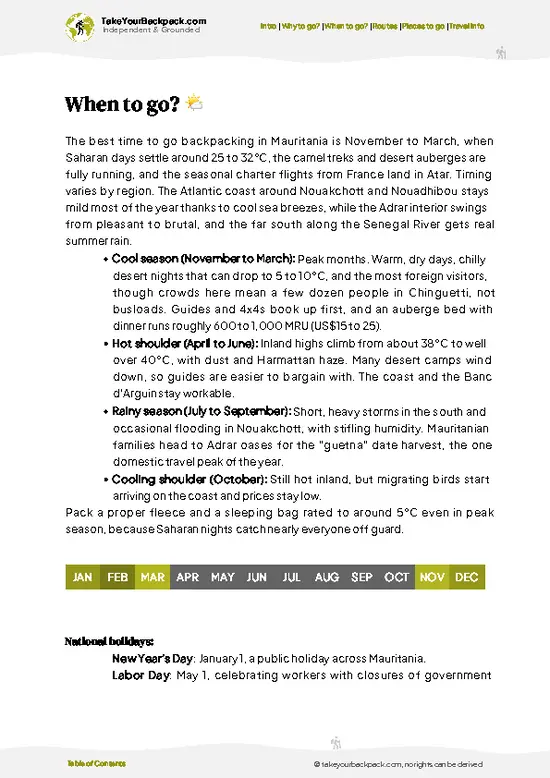
  • Temperature: From November to February, temperatures are more forgiving, averaging 20–30°C (68–86°F). Outside this window, expect highs pushing 40°C (104°F) or more, which can sap your energy and limit daytime exploration.

  • Daylight Hours: Near the equator, daylight is steady year-round, about 12 hours daily. This consistency means you won’t lose precious daylight no matter when you visit, so your timing hinges more on heat and rain than light.

  • Crowds: Kaédi isn’t a tourist hotspot, so crowds are minimal year-round.
read more 👉

  • Weather: Kaédi’s climate is hot and arid, with a sharp contrast between the scorching dry season and a brief, wetter period. The rainy season runs roughly from July to September, bringing humidity and occasional flooding that can disrupt travel plans and trail conditions.

  • Temperature: From November to February, temperatures are more forgiving, averaging 20–30°C (68–86°F). Outside this window, expect highs pushing 40°C (104°F) or more, which can sap your energy and limit daytime exploration.

  • Daylight Hours: Near the equator, daylight is steady year-round, about 12 hours daily. This consistency means you won’t lose precious daylight no matter when you visit, so your timing hinges more on heat and rain than light.

  • Crowds: Kaédi isn’t a tourist hotspot, so crowds are minimal year-round. However, local festivals during the dry season can bring a lively atmosphere without overwhelming the town.

  • Seasonal Activities: The dry season is prime for cultural immersion and riverbank walks along the Senegal River. The rainy season limits outdoor activities but offers lush landscapes if you’re prepared for mud and mosquitoes.

  • Price Fluctuations: Accommodation and transport costs dip slightly during the rainy season due to lower demand, but the trade-off is less reliable travel conditions and fewer open services.


Pro-tip: Aim for the cool, dry months (November to February) to balance comfort, accessibility, and local life—turning Kaédi’s challenges into your advantage.


source: climatestotravel.comJANJanuary: excellent for travelingFEBFebruary: excellent for travelingMARMarch: good for travelingAPRApril: good for travelingMAYMay: fair for travelingJUNJune: fair for travelingJULJuly: below average for travelingAUGAugust: below average for travelingSEPSeptember: below average for travelingOCTOctober: fair for travelingNOVNovember: excellent for travelingDECDecember: excellent for traveling
when-to-go

✈️ The backpacker research shortcutMauritania Travel Guide

An offline-friendly backpacking guide with optimized travel routes, ranked highlights, transport advice, and the best areas to stay.
example page 0 from our offline Travel Guide for Mauritania
example page 1 from our offline Travel Guide for Mauritania
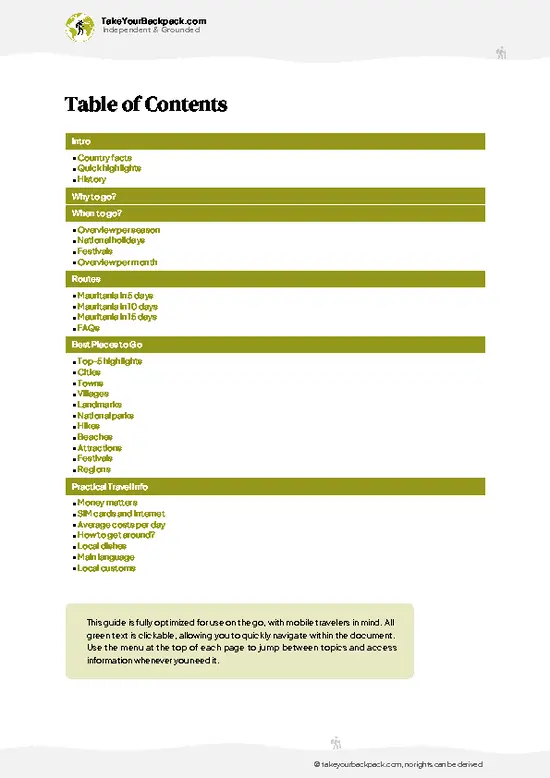
example page 2 from our offline Travel Guide for Mauritania
example page 3 from our offline Travel Guide for Mauritania
example page 4 from our offline Travel Guide for Mauritania
example page 5 from our offline Travel Guide for Mauritania
example page 6 from our offline Travel Guide for Mauritania
example page 7 from our offline Travel Guide for Mauritania
The digital guide (269 pages) contains:
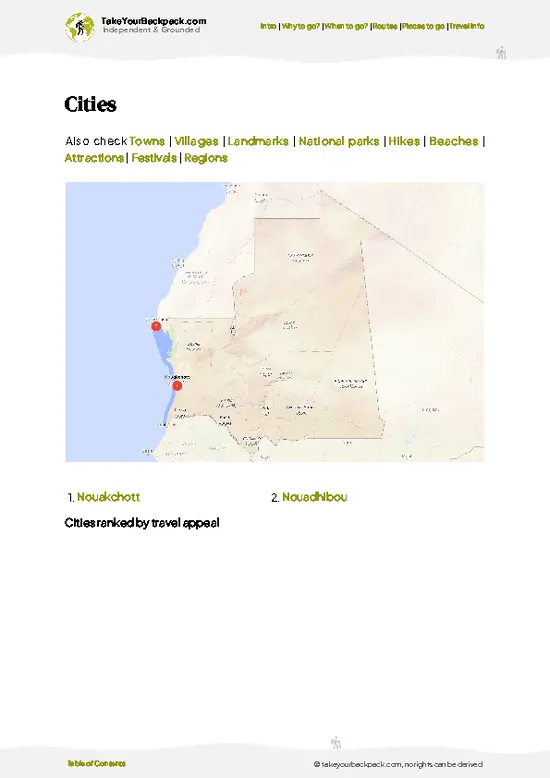
63 highlights, ranked by travel appeal
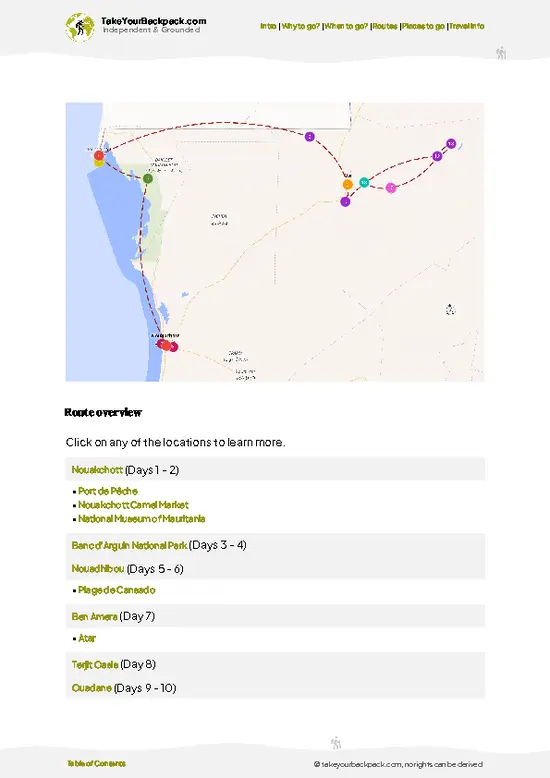
Optimized 5, 10 & 15-day travel routes
Cities, national parks, landmarks, beaches
How to get around
Offline-friendly for travel without Wi-Fi
👉 Click to see all 30+ guide features

📅 Plan smarter in minutes, not weeks
Month by month travel advice
Festivals & national holidays
Budget expectations

🗺️ Go to the right places, skip the overrated ones
Honest pros & cons of destinations
Top hikes, parks & viewpoints
Lesser-known places most travelers miss
Clear “worth it vs skip it” guidance

🛏️ Travel smoothly without rookie mistakes
Best areas to stay
Transport systems explained simply
Common scams & safety advice
SIM cards, money & practical tips

🌍 Understand the country, not just visit it
Culture & traditions
52 Essential phrases & customs
Festivals worth planning around
Traveler-friendly historical context
Insights that make places more meaningful

📱 Built for real travel conditions
Fully downloadable PDF
Works completely offline
Optimized for phone use
Useful in remote areas & buses
Everything in one place
Save weeks of stressful planning
Get instant access to your full guide. 30‑day money-back guarantee.


By proceeding you agree to our terms.
Sent to your inbox immediately after payment • 100% Secure Checkout
Best Backpacking Travel Advisor 2025 tourism awardBest Backpacking
Travel Advisor
2025
What others say about Take Your Backpack Guides:
⭐⭐⭐⭐⭐
Fantastic, amazing amount of information!
⭐⭐⭐⭐⭐
My goodness this is amazing, it's what I've been looking for hats off too you!
⭐⭐⭐⭐⭐
I think this is absolutely BRILLIANT
⭐⭐⭐⭐
Very complete and informative. It's still missing places, but I gotta to commend you
⭐⭐⭐⭐⭐
This is truly amazing, thank you, can't wait to explore it with my kids!
⭐⭐⭐⭐⭐
Awesome resource, thank you!
⭐⭐⭐⭐⭐
This is amazing! Can't wait to explore the ones I haven't seen
⭐⭐⭐⭐
I love this! Well done, great idea.
⭐⭐⭐⭐⭐
Thanks for taking the time to make this gem!
⭐⭐⭐⭐⭐
This might be the best website I've ever seen.
⭐⭐⭐⭐⭐
Congratulations, and thank you so much for your work; it's incredibly valuable.
⭐⭐⭐⭐
In all seriousness I think you did a great job pointing out the important spots
⭐⭐⭐⭐⭐
10/10 very good
⭐⭐⭐⭐⭐
As someone who's only just starting to visit regularly this is awesome, thank you.
⭐⭐⭐⭐
Thank you very much! I'm going to visit my dad, it's going to be very useful!
⭐⭐⭐⭐⭐
This is really cool! We'll be travelling for the first time and this definitely come in handy.
⭐⭐⭐⭐⭐
You are now our minister of culture, congratulations 👨‍💼
⭐⭐⭐⭐⭐
Just wanted to tell you that this is a pearl! Going to follow your recommendations.
⭐⭐⭐⭐⭐
This is so cool. I'll definitely be using the resource for my travels soon.
⭐⭐⭐⭐⭐
This is very impressive! Good work.
⭐⭐⭐⭐⭐
This is an amazing and informative site. Very well done!

🛏️ Where to stay?How to pick the right area

Kaédi’s backpacker scene is compact but distinct, with a clear trade-off between social buzz and safety. The best spot to plant your flag is the neighborhood around the central market and riverfront. This area pulses with local life—vendors, street food, and a steady flow of travelers and locals crossing paths. It’s where you’ll find the few budget guesthouses and informal hostels that cater to solo adventurers. The vibe here is lively without tipping into chaos, offering a genuine slice of daily Mauritanian rhythm.

Compared to the quieter residential zones on the city’s outskirts, this central … read more 👉
Kaédi’s backpacker scene is compact but distinct, with a clear trade-off between social buzz and safety. The best spot to plant your flag is the neighborhood around the central market and riverfront. This area pulses with local life—vendors, street food, and a steady flow of travelers and locals crossing paths. It’s where you’ll find the few budget guesthouses and informal hostels that cater to solo adventurers. The vibe here is lively without tipping into chaos, offering a genuine slice of daily Mauritanian rhythm.

Compared to the quieter residential zones on the city’s outskirts, this central pocket trades some peace for connection. You’re closer to transport hubs and eateries, which means less time and money spent on taxis or meals. The safety here is decent by local standards, with a visible police presence and a community used to outsiders. Venturing into less central neighborhoods might save a few dirhams but risks isolation and limited social opportunities—key for solo travelers craving interaction.

In Kaédi, comfort is minimalist, so the real value lies in choosing a spot that maximizes your engagement with the city’s pulse while keeping your gear and yourself secure. The central market-riverfront area nails this balance, making it the smartest base for backpackers who want to feel the city’s heartbeat without losing their footing.

🚌 Getting aroundGetting around like a local

Kaédi moves at its own rhythm, a blend of deliberate pace and spontaneous bursts. This isn’t a city where you’ll find strict timetables etched in stone, but rather a flow shaped by the sun’s arc and the pulse of daily life. The streets hum with informal exchanges, and transit options reflect this mix—some reliable, others more improvisational. Understanding this flow means you’re not just a passenger; you’re reading the city’s tempo, choosing when to sprint and when to drift.


  • Walking: The most straightforward and cost-free way to navigate Kaédi’s compact center. Streets are often uneven and shaded by acacia trees, so sturdy shoes and a good sense of direction are your best friends. Walking lets you absorb the city’s texture at your own pace, but be ready for midday heat and occasional
read more 👉
Kaédi moves at its own rhythm, a blend of deliberate pace and spontaneous bursts. This isn’t a city where you’ll find strict timetables etched in stone, but rather a flow shaped by the sun’s arc and the pulse of daily life. The streets hum with informal exchanges, and transit options reflect this mix—some reliable, others more improvisational. Understanding this flow means you’re not just a passenger; you’re reading the city’s tempo, choosing when to sprint and when to drift.


  • Walking: The most straightforward and cost-free way to navigate Kaédi’s compact center. Streets are often uneven and shaded by acacia trees, so sturdy shoes and a good sense of direction are your best friends. Walking lets you absorb the city’s texture at your own pace, but be ready for midday heat and occasional dust.


  • Shared Taxis (Taxi Collectif): These are minibuses or cars that fill up with passengers before leaving. They don’t run on a fixed schedule but depart once full, which means you might wait or jump in immediately. Fares are low—usually under a dollar for short trips—and the ride is direct but can get cramped. Ideal if you want to cover longer distances without breaking the bank, but comfort is minimal and timing unpredictable.


  • Motorcycle Taxis (Moto-Taxis): Fast and nimble, these are your go-to for weaving through traffic or reaching spots off the beaten path. Prices vary but expect to pay a bit more than shared taxis. They operate from dawn until dusk, offering flexibility and speed, though safety standards are informal. If you’re comfortable on two wheels, this is a high-value trade-off: quicker travel at the cost of some risk and less comfort.


  • Private Taxis: More expensive and less common, private taxis offer door-to-door service with more comfort and reliability. They’re best reserved for early morning or late-night trips when other options dwindle. Expect to negotiate fares upfront, often several times the cost of shared taxis, but you gain control over timing and privacy.


  • Bicycles: Not widespread but increasingly popular among locals and adventurous travelers. Renting a bike gives you freedom to explore beyond the city center at your own speed. It’s cheap and healthy but requires some stamina and caution on rough roads. A solid choice if you want to blend comfort with economy and don’t mind a bit of sweat.

👛 Costs (as of 8 June 2025)What things cost and how to budget

Backpacking in Kaédi, Mauritania, is a study in balancing modest costs with the realities of limited infrastructure. Here’s how the daily expenses typically stack up for an independent traveler navigating this city.
  • Dorm Accommodation (High Season): Expect to pay around €10 to €15 per night. Options are sparse, and prices can spike slightly during peak travel periods due to demand outstripping supply.
  • Dorm Accommodation (Off-Season): Prices drop to about €6 to €10 per night. With fewer tourists, you can negotiate better deals, but the quality and availability remain basic.
  • Meals: Street food and local eateries offer meals for roughly €2 to €5 each. Traditional dishes like grilled fish or rice with sauce are filling and affordable, but Western-style or imported foods will cost more.
  • Local
read more 👉
Backpacking in Kaédi, Mauritania, is a study in balancing modest costs with the realities of limited infrastructure. Here’s how the daily expenses typically stack up for an independent traveler navigating this city.
  • Dorm Accommodation (High Season): Expect to pay around €10 to €15 per night. Options are sparse, and prices can spike slightly during peak travel periods due to demand outstripping supply.
  • Dorm Accommodation (Off-Season): Prices drop to about €6 to €10 per night. With fewer tourists, you can negotiate better deals, but the quality and availability remain basic.
  • Meals: Street food and local eateries offer meals for roughly €2 to €5 each. Traditional dishes like grilled fish or rice with sauce are filling and affordable, but Western-style or imported foods will cost more.
  • Local Transport: Short rides on shared taxis or minibuses typically cost between €0.30 and €0.70. These are the main way to get around town, though schedules and routes can be irregular.
  • City Transport Pass: Kaédi does not have a formal city transport pass system. Budget travelers rely on individual fares for each trip, which adds up but remains inexpensive overall.
  • Basic Activities/Entry Fees: Cultural sites and local attractions usually charge minimal fees, around €1 to €3. Organized tours are rare and tend to be pricier if available.
  • Miscellaneous Expenses: Budget about €1 to €3 for essentials like bottled water, snacks, or minor supplies. Internet access and phone credit are affordable but can vary in quality.

In total, a daily budget for backpacking in Kaédi ranges from roughly €15 on a shoestring to about €30 if you lean toward more comfort or convenience. This city rewards travelers who embrace simplicity and local rhythms, trading off luxury for authentic, low-cost immersion.
⚠️ Prices can change and everyone travels differently, so take this as a rough guide. Hope it helps you plan your adventure!

🚌 Day tripsShort trips worth adding

Kaédi, Mauritania, is a strategic launchpad for day trips that blend culture, nature, and adventure. With a bit of planning, you can dive into experiences that resonate long after your boots hit the ground.

River Senegal Adventure
A short 30-minute ride from Kaédi, the River Senegal offers a refreshing escape. Rent a canoe and paddle along the banks, where you’ll spot local fishermen and vibrant birdlife. The river is a lifeline for the community, and engaging with locals can lead to fascinating stories. Expect to spend around $10 for canoe rental and snacks. The best time to go is during the cooler mornings, especially from November to February. A common mistake? Forgetting sunscreen; the sun can be relentless even in winter.


The Ancient Town of Oualata
Just under two hours away, … read more 👉
Kaédi, Mauritania, is a strategic launchpad for day trips that blend culture, nature, and adventure. With a bit of planning, you can dive into experiences that resonate long after your boots hit the ground.

River Senegal Adventure
A short 30-minute ride from Kaédi, the River Senegal offers a refreshing escape. Rent a canoe and paddle along the banks, where you’ll spot local fishermen and vibrant birdlife. The river is a lifeline for the community, and engaging with locals can lead to fascinating stories. Expect to spend around $10 for canoe rental and snacks. The best time to go is during the cooler mornings, especially from November to February. A common mistake? Forgetting sunscreen; the sun can be relentless even in winter.


The Ancient Town of Oualata
Just under two hours away, Oualata is a UNESCO World Heritage site steeped in history. Known for its striking mud-brick architecture, the town is a living museum of the trans-Saharan trade. You can explore the narrow alleys and visit the ancient libraries filled with manuscripts. Budget around $15 for transport and a guide. The ideal time to visit is during the cooler months, but be prepared for a bit of heat in the summer. Many first-timers underestimate the time needed to truly appreciate the town; don’t rush it!
👉 Explore Oualata

The Desert Oasis of Terjit
About an hour and a half from Kaédi, Terjit is a stunning oasis that feels like stepping into another world. The contrast of palm trees against the arid landscape is breathtaking. You can swim in the natural pools or hike the surrounding hills for panoramic views. Expect to spend around $20 for transport and a meal. The best time to visit is during the cooler months, from November to March. A common pitfall? Not bringing enough water; the desert can be deceptive in its beauty and heat.


Local Markets of Kaédi
While not a day trip in the traditional sense, the local markets are a must-visit. Spend a few hours wandering through vibrant stalls filled with spices, textiles, and crafts. It’s a fantastic way to immerse yourself in local culture without straying far from your base. Budget around $5 for snacks and small purchases. The markets are most lively on weekends, so plan accordingly. Many first-timers miss the chance to engage with vendors; don’t be shy—ask questions!
Want to know what more Mauritania offers?
The Mauritania Travel Guide describes 63 highlights, from cities to national parks, from beaches to hikes

Get the Travel Guide -

🍲 FoodLocal Flavors for Backpackers

In Kaédi, food is a vibrant tapestry of flavors that tells the story of the land and its people. Dive into couscous, a staple that’s often served with rich, spiced stews. The meat—usually lamb or chicken—melts in your mouth, infused with local spices that dance on your palate. Don’t miss out on fish, freshly caught from the nearby river, grilled to perfection and served with a tangy sauce.

Street food is where the magic happens. Vendors line the bustling markets, offering sambusa, crispy pastries filled with spiced meat or vegetables. The aroma wafts through the air, pulling you in. Grab a few and enjoy them with a refreshing mint tea, a local ritual that’s as much about the drink as it is about the social connection.

Eating in Kaédi is often communal. You might find yourself sharing a … read more 👉
In Kaédi, food is a vibrant tapestry of flavors that tells the story of the land and its people. Dive into couscous, a staple that’s often served with rich, spiced stews. The meat—usually lamb or chicken—melts in your mouth, infused with local spices that dance on your palate. Don’t miss out on fish, freshly caught from the nearby river, grilled to perfection and served with a tangy sauce.

Street food is where the magic happens. Vendors line the bustling markets, offering sambusa, crispy pastries filled with spiced meat or vegetables. The aroma wafts through the air, pulling you in. Grab a few and enjoy them with a refreshing mint tea, a local ritual that’s as much about the drink as it is about the social connection.

Eating in Kaédi is often communal. You might find yourself sharing a large platter with new friends, a gesture of hospitality that’s deeply rooted in the culture. Remember to eat with your right hand—it’s a sign of respect. Embrace the lively atmosphere, and let the flavors of Kaédi create lasting memories.

🛡️ SafetyStaying Safe: What Travelers Should Know

Kaédi is generally safe for travelers, but a few situational awareness tips can enhance your experience. Stick to well-lit areas at night, especially if you’re solo. The streets can feel quiet, so keep your wits about you.

Common scams are rare, but be cautious around markets. Vendors may inflate prices for tourists, so don’t hesitate to negotiate. A friendly smile and a firm “no” can go a long way.

Annoyances might include persistent touts or overly eager guides. Politely declining their offers is usually enough to keep them at bay.

Carry a small amount of cash for local transactions, as card acceptance can be hit or miss. Overall, approach Kaédi with an open mind and a confident demeanor, and you’ll navigate the city with ease.

Other Mauritanian towns near Kaédi

Explore more nearby:

  • Boghé—riverbank settlements, agricultural fields, ethnic diversity| 94 km away
  • Aleg—oasis gardens, livestock market, administrative center| 109 km away
  • Sélibaby—hilly terrain, Fulani villages, regional hospital| 180 km away

💡 Not sure where to go next?
Create a personalized itinerary for Mauritania including Kaédi and the places that fit your trip.

Generate my itinerary

👉 Discover all towns

Or checkout all Mauritania has to offer (think cities, towns, villages, national parks, hikes, beaches, festivals)
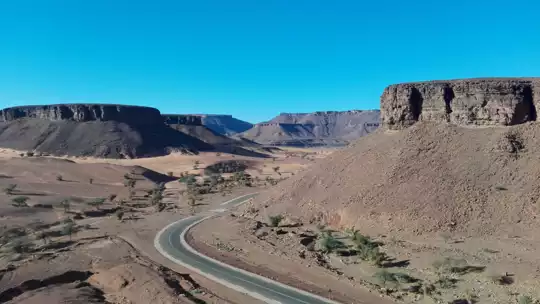
Country photo of Mauritania

We 💚 feedbackIs it worth it?

Kaédi has a raw, authentic vibe that pulls you in. The best surprise? The local markets bursting with life—colors, scents, and sounds that feel like a celebration. Don’t miss the chance to chat with the vendors; their stories are as rich as the spices they sell. Just a heads-up: the heat can be relentless, so plan your explorations for early morning or late afternoon. Embrace the rhythm of the town, and you’ll find its heart.

✍️ Help improve this page!
The information on this page is based on in-depth research, insights shared by experienced travelers, and feedback from the local travel community in Mauritania. While every effort is made to keep the information accurate and current, conditions can change — so if you spot anything incorrect or outdated, please get in touch.


🙋‍♂️ Give feedback

👋 Meet the founderWho’s Behind Take Your Backpack?

Johan, backpacker and founder of TakeYourBackpackHi, I’m Johan (Netherlands 🇳🇱), the creator of TakeYourBackpack. Over the past decade, I’ve backpacked through 80+ countries across six continents, gaining extensive experience with independent travel, long-term trips, and overland routes.

This site is built on a combination of firsthand travel experience and carefully curated insights from other backpackers. Many guides are based on places I’ve personally visited, while others bring together tips, observations, and practical advice shared by trusted travelers I’ve met along the way.

The goal is to provide realistic, experience-driven guidance — not generic itineraries — so you can explore destinations with better context, clearer expectations, and more confidence.

Get full Mauritania guide •
Instant download • 63 highlights • Full Offline guide