×

Mauritania🇲🇷 | attractionsManuscript Libraries of Oualatacalligraphy, private archives, medieval texts | things to do and best time to go

Explore Old Town and Rock-Painted Walls of OualataExplore Old Fortified Quarter of Ouadane

Backpacking in Manuscript Libraries of Oualata
🌟 Highlightattraction ranked #5
By Johan Kruseman 🇳🇱 | Updated May 13, 2026

Here’s the curveball: the Manuscript Libraries of Oualata aren’t dusty, silent tombs for ancient texts—they’re living rooms. If you’re picturing velvet ropes and glass cases, forget it. In Oualata, a remote Saharan outpost in southeastern Mauritania, centuries-old manuscripts are still kept in family homes, sometimes pulled from a wooden chest while tea simmers in the next room. This isn’t a museum; it’s a living tradition, and that’s both the magic and the risk. The wow-factor is real: you’re holding history, not staring at it through plexiglass. But getting here is a logistical marathon—think bone-rattling pistes, minimal public transport, and a price tag that’ll make you question your priorities. There are no crowds, just the occasional scholar or lost backpacker, and the vibe is raw, intimate, and humbling—nothing like the polished, tourist-friendly sites up north. If you want Mauritania’s soul, not its Instagram filter, Oualata delivers—just be ready to earn it.

Discover everything you want to know in the 📖 Mauritania Travel Guide.
Safety warning

The current risk level for Mauritania is high. Check the advice before going.


Get your Mauritania guide
63 ranked highlights, routes & tips, works offline (269 pages)
Loading the map 🌍
CLICK TO FILTER
cities
towns
villages
landmarks
national parks
hikes
beaches
attractions
festivals
regions
SHOW COUNTRY’S BESTSHOW ALL

✨ Why go?
Ranked #5 attraction in Mauritania
Reasons people choose to visit here

The Manuscript Libraries of Oualata aren’t your typical tourist stop. Forget the glossy Instagram shots—this place is about raw, unfiltered history that hits you in the gut. These libraries hold thousands of ancient manuscripts, some dating back to the 13th century, chronicling everything from Islamic scholarship to local law and poetry. It’s not just a collection; it’s a living archive of West African intellectual heritage, preserved in a town that feels like stepping into a time capsule.

Yes, getting here is no walk in the park. Oualata sits on the edge of the Sahara, and the journey tests your grit with rough roads and sparse amenities. But that’s exactly why it’s a milestone for serious backpackers in Mauritania. The effort-to-reward ratio is off the charts. You’re not just ticking off … read more 👉
The Manuscript Libraries of Oualata aren’t your typical tourist stop. Forget the glossy Instagram shots—this place is about raw, unfiltered history that hits you in the gut. These libraries hold thousands of ancient manuscripts, some dating back to the 13th century, chronicling everything from Islamic scholarship to local law and poetry. It’s not just a collection; it’s a living archive of West African intellectual heritage, preserved in a town that feels like stepping into a time capsule.

Yes, getting here is no walk in the park. Oualata sits on the edge of the Sahara, and the journey tests your grit with rough roads and sparse amenities. But that’s exactly why it’s a milestone for serious backpackers in Mauritania. The effort-to-reward ratio is off the charts. You’re not just ticking off a box; you’re connecting with a culture that’s rarely showcased and often misunderstood. The crowds? Minimal. The cost? Mostly your own stamina and time. But the payoff is a deep dive into a world where knowledge was power long before the internet, and where every manuscript whispers stories that shaped a region. This isn’t a tourist trap—it’s a pilgrimage for those who crave authenticity and history that punches above its weight.
Want to include Manuscript Libraries of Oualata in your Mauritania route?
Create a personalized Mauritania itinerary that includes Manuscript Libraries of Oualata and the places that fit your trip — based on your travel style, budget, and available time. Get your route in seconds.

Generate my trip

💡 HighlightsThe experiences that define the visit

The Manuscripts Themselves—Centuries of Handwritten Genius
Forget the Instagram shots of dusty tomes and think about this: you’re looking at manuscripts that predate the printing press, copied by hand in the Sahara heat, sometimes with ink made from pomegranate skins and charcoal. These aren’t just religious texts. You’ll find treatises on astronomy, medicine, law, poetry, and even trade secrets—real intellectual property from a time when Oualata was a crossroads for scholars and merchants. The script is so fine it looks printed, but every flourish is the work of a human hand. Some pages are so fragile they’re only shown for seconds. This is the kind of history you can smell—parchment, dust, and the faint tang of old ink.


The Family Libraries—Living Archives, Not Museums
Here’s the truth: Oualata’s … read more 👉
The Manuscripts Themselves—Centuries of Handwritten Genius
Forget the Instagram shots of dusty tomes and think about this: you’re looking at manuscripts that predate the printing press, copied by hand in the Sahara heat, sometimes with ink made from pomegranate skins and charcoal. These aren’t just religious texts. You’ll find treatises on astronomy, medicine, law, poetry, and even trade secrets—real intellectual property from a time when Oualata was a crossroads for scholars and merchants. The script is so fine it looks printed, but every flourish is the work of a human hand. Some pages are so fragile they’re only shown for seconds. This is the kind of history you can smell—parchment, dust, and the faint tang of old ink.


The Family Libraries—Living Archives, Not Museums
Here’s the truth: Oualata’s libraries aren’t government-run or curated for tourists. They’re family affairs, passed down through generations. You’ll meet the guardians—sometimes a grandfather, sometimes a teenage girl—who know every page by heart. They’ll tell you which ancestor copied which book, and why a certain margin note matters. This is living heritage, not a staged exhibit. If you’re lucky, you’ll get a story about a manuscript smuggled across the desert to escape raiders, or a family feud over a missing folio. The intimacy is real, and so is the pride.


The Architecture—Desert Geometry Meets Survival
The libraries themselves are built from mudbrick and painted with geometric patterns in ochre and white. These aren’t just pretty facades for your camera—they’re designed to keep manuscripts cool and dry in a place where the sun is merciless and sand gets everywhere. Step inside and you’ll feel the temperature drop. The walls are thick, the windows tiny, and the doors low to keep out the wind. Every architectural detail is about preservation, not showmanship. It’s functional beauty, and it works.


The Calligraphy—Artistry in Every Letter
Arabic calligraphy here isn’t just writing; it’s a form of devotion and a test of skill. Some manuscripts are so elaborately decorated that the script itself becomes a maze of lines and dots, with gold leaf or colored inks highlighting key passages. You don’t have to read Arabic to appreciate the artistry. The visual rhythm of the text, the balance of the margins, and the occasional illuminated heading—these are masterpieces in miniature, and they reward close attention.


The Oral Tradition—Stories You Won’t Find in Any Guidebook
If you come expecting silence, you’re missing the point. The real magic is in the stories told by the keepers—tales of scholars who walked for weeks to study here, of manuscripts lost and found, of wisdom passed down by word of mouth when paper was scarce. These stories aren’t rehearsed for tourists; they’re part of the fabric of Oualata. Listen closely and you’ll hear echoes of a time when knowledge was the most precious cargo in the desert.
Spotted a mistake or missing something? Contact us.

🌤️ When to go?Weather, crowds, and seasonal trade-offs


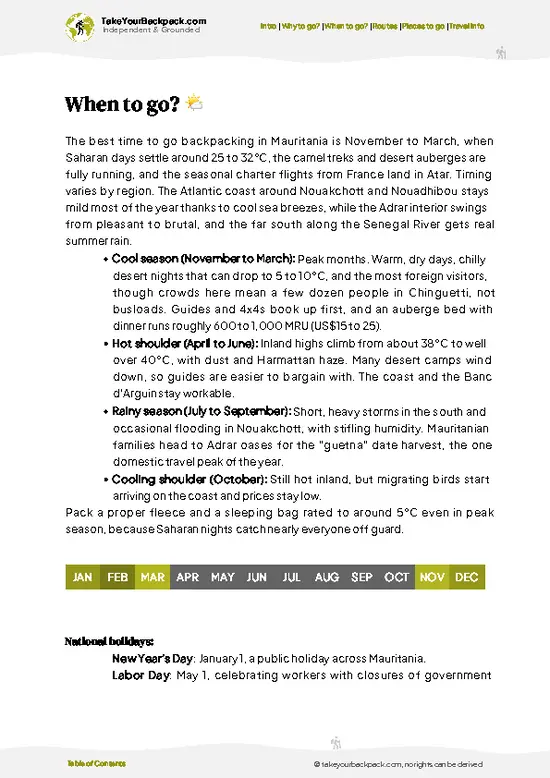
  • Weather: The best time to visit Oualata is between November and February when the Sahara’s heat eases off. Expect daytime highs around 25-30°C (77-86°F), which is manageable for trekking and exploring without frying your brain.

  • Temperature: Nights can get chilly, dropping to 10-15°C (50-59°F), so pack layers. Avoid the scorching summer months of June to August when temperatures routinely soar above 40°C (104°F), making any outdoor activity a sweat-drenched slog.

  • Daylight Hours: Daylight is fairly consistent year-round, roughly 11 to 12 hours daily, so you’ll have enough time to dive into the libraries and the town’s rich history without rushing.

  • Crowds: Don’t expect hordes of tourists here—Oualata is off the beaten path. However, the cooler months see a slight uptick in visitors,
read more 👉

  • Weather: The best time to visit Oualata is between November and February when the Sahara’s heat eases off. Expect daytime highs around 25-30°C (77-86°F), which is manageable for trekking and exploring without frying your brain.

  • Temperature: Nights can get chilly, dropping to 10-15°C (50-59°F), so pack layers. Avoid the scorching summer months of June to August when temperatures routinely soar above 40°C (104°F), making any outdoor activity a sweat-drenched slog.

  • Daylight Hours: Daylight is fairly consistent year-round, roughly 11 to 12 hours daily, so you’ll have enough time to dive into the libraries and the town’s rich history without rushing.

  • Crowds: Don’t expect hordes of tourists here—Oualata is off the beaten path. However, the cooler months see a slight uptick in visitors, mostly researchers and serious cultural travelers, so you’ll still have plenty of breathing room.

  • Seasonal Activities: The cooler season aligns with local festivals and market days, offering a rare chance to witness traditional manuscript trading and storytelling sessions that bring the libraries to life.

  • Price Fluctuations: Prices for guides and accommodations tend to rise modestly during the high season (November to February) but remain far below typical tourist hotspots. Off-season travel can save money but at the cost of brutal heat and limited local activity.


Pro-tip: Aim for late November or early February to dodge the peak crowd and enjoy pleasant weather with authentic local events still in full swing.


source: climatestotravel.comJANJanuary: excellent for travelingFEBFebruary: highly recommended for travelingMARMarch: good for travelingAPRApril: fair for travelingMAYMay: fair for travelingJUNJune: below average for travelingJULJuly: below average for travelingAUGAugust: below average for travelingSEPSeptember: fair for travelingOCTOctober: good for travelingNOVNovember: excellent for travelingDECDecember: excellent for traveling
when-to-go

✈️ The backpacker research shortcutMauritania Travel Guide

An offline-friendly backpacking guide with optimized travel routes, ranked highlights, transport advice, and the best areas to stay.
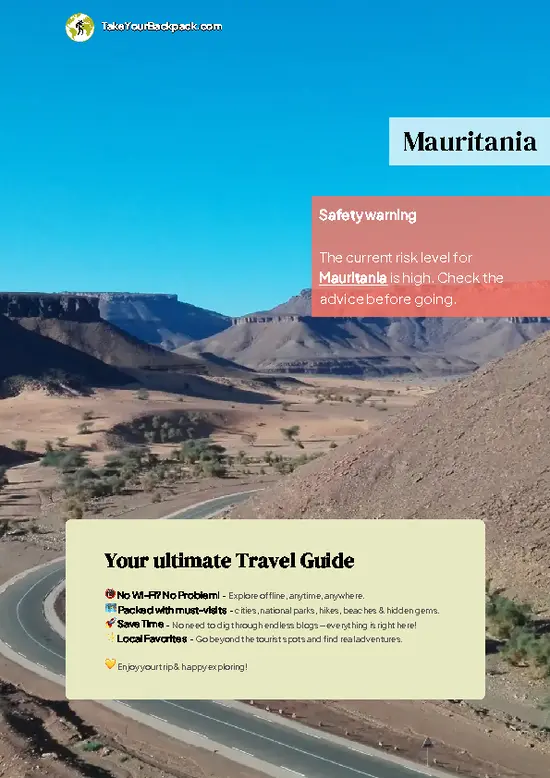
example page 0 from our offline Travel Guide for Mauritania
example page 1 from our offline Travel Guide for Mauritania
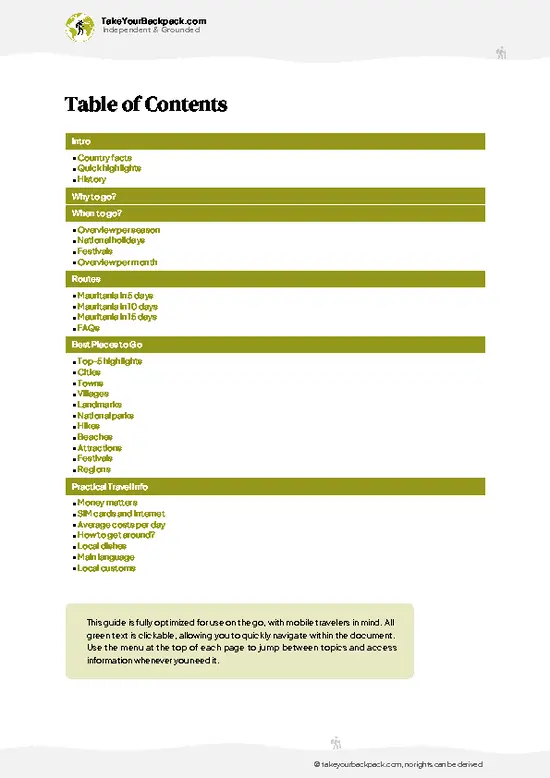
example page 2 from our offline Travel Guide for Mauritania
example page 3 from our offline Travel Guide for Mauritania
example page 4 from our offline Travel Guide for Mauritania
example page 5 from our offline Travel Guide for Mauritania
example page 6 from our offline Travel Guide for Mauritania
example page 7 from our offline Travel Guide for Mauritania
The digital guide (269 pages) contains:
63 highlights, ranked by travel appeal
Optimized 5, 10 & 15-day travel routes
Cities, national parks, landmarks, beaches
How to get around
Offline-friendly for travel without Wi-Fi
👉 Click to see all 30+ guide features

📅 Plan smarter in minutes, not weeks
Month by month travel advice
Festivals & national holidays
Budget expectations

🗺️ Go to the right places, skip the overrated ones
Honest pros & cons of destinations
Top hikes, parks & viewpoints
Lesser-known places most travelers miss
Clear “worth it vs skip it” guidance

🛏️ Travel smoothly without rookie mistakes
Best areas to stay
Transport systems explained simply
Common scams & safety advice
SIM cards, money & practical tips

🌍 Understand the country, not just visit it
Culture & traditions
52 Essential phrases & customs
Festivals worth planning around
Traveler-friendly historical context
Insights that make places more meaningful

📱 Built for real travel conditions
Fully downloadable PDF
Works completely offline
Optimized for phone use
Useful in remote areas & buses
Everything in one place
Save weeks of stressful planning
Get instant access to your full guide. 30‑day money-back guarantee.


By proceeding you agree to our terms.
Sent to your inbox immediately after payment • 100% Secure Checkout
Best Backpacking Travel Advisor 2025 tourism awardBest Backpacking
Travel Advisor
2025
What others say about Take Your Backpack Guides:
⭐⭐⭐⭐⭐
Fantastic, amazing amount of information!
⭐⭐⭐⭐⭐
My goodness this is amazing, it's what I've been looking for hats off too you!
⭐⭐⭐⭐⭐
I think this is absolutely BRILLIANT
⭐⭐⭐⭐
Very complete and informative. It's still missing places, but I gotta to commend you
⭐⭐⭐⭐⭐
This is truly amazing, thank you, can't wait to explore it with my kids!
⭐⭐⭐⭐⭐
Awesome resource, thank you!
⭐⭐⭐⭐⭐
This is amazing! Can't wait to explore the ones I haven't seen
⭐⭐⭐⭐
I love this! Well done, great idea.
⭐⭐⭐⭐⭐
Thanks for taking the time to make this gem!
⭐⭐⭐⭐⭐
This might be the best website I've ever seen.
⭐⭐⭐⭐⭐
Congratulations, and thank you so much for your work; it's incredibly valuable.
⭐⭐⭐⭐
In all seriousness I think you did a great job pointing out the important spots
⭐⭐⭐⭐⭐
10/10 very good
⭐⭐⭐⭐⭐
As someone who's only just starting to visit regularly this is awesome, thank you.
⭐⭐⭐⭐
Thank you very much! I'm going to visit my dad, it's going to be very useful!
⭐⭐⭐⭐⭐
This is really cool! We'll be travelling for the first time and this definitely come in handy.
⭐⭐⭐⭐⭐
You are now our minister of culture, congratulations 👨‍💼
⭐⭐⭐⭐⭐
Just wanted to tell you that this is a pearl! Going to follow your recommendations.
⭐⭐⭐⭐⭐
This is so cool. I'll definitely be using the resource for my travels soon.
⭐⭐⭐⭐⭐
This is very impressive! Good work.
⭐⭐⭐⭐⭐
This is an amazing and informative site. Very well done!

🛏️ Where to stay?Best areas and accommodation options

The Manuscript Libraries of Oualata are a rare treasure, but let’s cut through the Instagram gloss: Oualata is remote, dusty, and not exactly a backpacker’s party hub. Crowds? Forget it. You’ll find a handful of travelers here, mostly serious history buffs or researchers. The real challenge is the logistics—getting here is an adventure in itself, and the infrastructure is basic. That means no slick hostels or buzzing cafés where you can swap stories over craft beer.

If you want to stay close to the manuscripts, your best bet is to settle in the village of Oualata itself. This is where you’ll … read more 👉
The Manuscript Libraries of Oualata are a rare treasure, but let’s cut through the Instagram gloss: Oualata is remote, dusty, and not exactly a backpacker’s party hub. Crowds? Forget it. You’ll find a handful of travelers here, mostly serious history buffs or researchers. The real challenge is the logistics—getting here is an adventure in itself, and the infrastructure is basic. That means no slick hostels or buzzing cafés where you can swap stories over craft beer.

If you want to stay close to the manuscripts, your best bet is to settle in the village of Oualata itself. This is where you’ll find the pulse of local life—simple guesthouses run by families who know the value of hospitality, even if they don’t speak much English. Safety here is decent, but keep your wits about you; this is a place where trust is earned, not assumed. The vibe is quiet, reflective, and deeply authentic. You’ll meet other travelers in these guesthouses, but expect small groups rather than a backpacker crowd.

For a more social scene, consider staying in Néma, about 100 kilometers away. It’s the regional hub with more guesthouses and a handful of cafés where you can connect with other travelers and locals. It’s not flashy, but it’s where you’ll find the most reliable services and a chance to recharge before heading into the desert’s quiet heart.

Bottom line: If you’re chasing the manuscripts, embrace the simplicity and the slow pace of Oualata village. It’s not about comfort or nightlife—it’s about stepping into a living archive of history, where the real magic is in the dusty pages and the stories shared over mint tea in a humble courtyard.

👛 Costs (as of 13 May 2025)Money, prices, and spending tips

Visiting the Manuscript Libraries of Oualata typically involves an entrance fee ranging from 500 to 1,000 Mauritanian Ouguiyas (MRU), approximately €12 to €25. This fee often includes a guided tour, providing insights into the ancient manuscripts and the town's rich history. It's advisable to check with local guides or accommodations for the most current pricing and to confirm whether the fee covers all associated costs.

source: takeyourbackpack.com
⚠️ Prices can change and everyone travels differently, so take this as a rough guide. Hope it helps you plan your adventure!

Other Mauritanian attractions near Manuscript Libraries of Oualata

Explore more nearby:


💡 Not sure where to go next?
Create a personalized itinerary for Mauritania including Manuscript Libraries of Oualata and the places that fit your trip.

Generate my itinerary

👉 Discover all attractions

Or checkout all Mauritania has to offer (think cities, towns, villages, national parks, hikes, beaches, festivals)
Country photo of Mauritania

We 💚 feedbackWhat to keep in mind

The Manuscript Libraries of Oualata aren’t a polished tourist spot—they’re dusty, quiet, and a bit rough around the edges. Expect no crowds, but also no glossy displays. What hits you is the weight of history in the air, the fragile pages that survived centuries of desert winds and neglect. The real magic is in the stories scribbled in margins and the chance to see knowledge preserved by sheer will, not fancy tech. Just don’t expect a museum vibe—this is raw, real, and quietly powerful.

✍️ Help improve this page!
The information on this page is based on in-depth research, insights shared by experienced travelers, and feedback from the local travel community in Mauritania. While every effort is made to keep the information accurate and current, conditions can change — so if you spot anything incorrect or outdated, please get in touch.


🙋‍♂️ Give feedback

👋 Meet the founderWho’s Behind Take Your Backpack?

Johan, backpacker and founder of TakeYourBackpackHi, I’m Johan (Netherlands 🇳🇱), the creator of TakeYourBackpack. Over the past decade, I’ve backpacked through 80+ countries across six continents, gaining extensive experience with independent travel, long-term trips, and overland routes.

This site is built on a combination of firsthand travel experience and carefully curated insights from other backpackers. Many guides are based on places I’ve personally visited, while others bring together tips, observations, and practical advice shared by trusted travelers I’ve met along the way.

The goal is to provide realistic, experience-driven guidance — not generic itineraries — so you can explore destinations with better context, clearer expectations, and more confidence.

Get full Mauritania guide •
Instant download • 63 highlights • Full Offline guide