v2.webp)
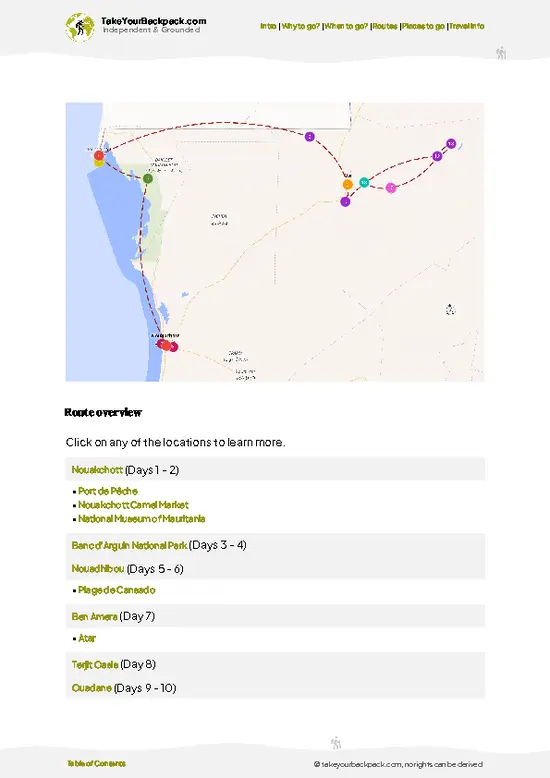
- Ship Graveyard (Cimetière des Navires) — A surreal stretch of rusting hulls beached along the Ras Nouadhibou peninsula. It’s the city’s most famous postcard: great for walking among wrecks, dramatic photos and an odd lesson in coastal commerce and decay.
- Cap Blanc Lighthouse (Phare de Ras Nouadhibou) — Perched near the peninsula tip, the lighthouse gives wide views of the bay, the ship cemetery and migrating seabirds. It’s small-scale but atmospheric, especially at low light.
- Mauritania Railway terminus & iron-ore loading docks — See the enormous ore trains arrive and the huge ship-loading gantries. It’s industrial theatre: raw, noisy, and an essential part of how Nouadhibou exists. Bring binoculars and a camera for the long trains.
- Nouadhibou Fish Market (Port de Pêche) — A raw, sensory
- Ship Graveyard (Cimetière des Navires) — A surreal stretch of rusting hulls beached along the Ras Nouadhibou peninsula. It’s the city’s most famous postcard: great for walking among wrecks, dramatic photos and an odd lesson in coastal commerce and decay.
- Cap Blanc Lighthouse (Phare de Ras Nouadhibou) — Perched near the peninsula tip, the lighthouse gives wide views of the bay, the ship cemetery and migrating seabirds. It’s small-scale but atmospheric, especially at low light.
- Mauritania Railway terminus & iron-ore loading docks — See the enormous ore trains arrive and the huge ship-loading gantries. It’s industrial theatre: raw, noisy, and an essential part of how Nouadhibou exists. Bring binoculars and a camera for the long trains.
- Nouadhibou Fish Market (Port de Pêche) — A raw, sensory place where fishermen land, sort and sell the day’s catch. Good for fresh snacks, local color and watching traditional pirogues come and go. Go early, when the action is hottest.
- Central Souk / Marché — The town’s main market where groceries, fabrics, household goods and small crafts cluster. It’s a real snapshot of daily life: bargaining, local products and a chance to pick up practical travel gear or inexpensive souvenirs.
- The Corniche and main beach — A straightforward seaside stretch used by locals for walks, social time and sunset views. Not a tropical beach, but the coastline delivers atmosphere, relaxed cafés and a front-row seat to harbor activity.
- Fishermen’s quays & pirogue workshops — Small groups of men repairing wooden boats, mending nets and preparing for trips. Watching the craftwork and chatting (with a translator) gives a direct look at traditional coastal livelihoods.
- Grande Mosquée (Central Mosque) — The city’s primary mosque where you can quietly observe local religious life and simple Saharan mosque architecture. If you plan to enter, dress respectfully and visit outside prayer times unless invited.
- Local handicraft stalls & small artisan shops — Scattered around the market and main streets: silver jewelry, leatherwork and simple carved items. They’re not museum pieces, but tangible local handiwork and good places to practice bargaining.
- Bay lookouts & birding spots (Dakhlet Nouadhibou) — The shallow bay and salt flats around the city attract waders and coastal birds. Short walks to lookout points or a quick drive to a shoreline saltpan offer surprisingly good birdwatching without leaving town.
Spotted a mistake or missing something? Contact us.

 Best Backpacking
.jpg) Hi, I’m Johan (Netherlands 🇳🇱), the creator of TakeYourBackpack. Over the past 3 decades, I’ve backpacked through 90+ countries across six continents, gaining extensive experience with independent travel, long-term trips, and overland routes.
Hi, I’m Johan (Netherlands 🇳🇱), the creator of TakeYourBackpack. Over the past 3 decades, I’ve backpacked through 90+ countries across six continents, gaining extensive experience with independent travel, long-term trips, and overland routes.