×

Mauritania🇲🇷 | best citiesExplore the 2 Best cities in Mauritania

In Mauritania, cities pulse with a blend of cultural richness and historical depth. The capital, Nouakchott, offers a bustling atmosphere with vibrant markets and a lively nightlife, making it a prime spot for backpacking and independent travel. In contrast, smaller urban centers like Atar and Kiffa provide a more intimate experience, steeped in local traditions and slower rhythms.

Seasonal nuances affect accessibility and vibe; the cooler months from November to March are ideal for exploration. Choosing the right city impacts your budget, safety, and ease of travel, shaping your cultural immersion. Each destination reveals a unique facet of Mauritania, inviting you to discover its layered identity.

By Johan Kruseman 🇳🇱 | Updated June 8, 2026
Explore the best towns in Mauritania

Why go?Understanding Their Importance

Cities in Mauritania pulse with a unique blend of cultural diversity and historical depth. They serve as crossroads of African, Arab, and Berber influences, each layer adding complexity to the urban landscape. This cultural tapestry is not just a backdrop; it shapes daily life, from bustling markets to vibrant festivals, where the scents of spices mingle with the sounds of traditional music.

Geographically, Mauritania’s cities are often isolated, surrounded by vast stretches of desert. This can make travel time-consuming, but it also means that those who venture here are rewarded with a deeper understanding of the regional identities that define each area. The trade-off is clear: longer journeys may yield fewer destinations, but the experiences are rich and immersive.

The climatic conditions … read more 👉
Cities in Mauritania pulse with a unique blend of cultural diversity and historical depth. They serve as crossroads of African, Arab, and Berber influences, each layer adding complexity to the urban landscape. This cultural tapestry is not just a backdrop; it shapes daily life, from bustling markets to vibrant festivals, where the scents of spices mingle with the sounds of traditional music.

Geographically, Mauritania’s cities are often isolated, surrounded by vast stretches of desert. This can make travel time-consuming, but it also means that those who venture here are rewarded with a deeper understanding of the regional identities that define each area. The trade-off is clear: longer journeys may yield fewer destinations, but the experiences are rich and immersive.

The climatic conditions also play a role. Summers can be blistering, which affects when and how people engage with their surroundings. Urban infrastructure varies, with some cities boasting modern amenities while others retain a more rustic charm. This disparity can impact accessibility, making some areas feel more remote.

In essence, Mauritania’s cities matter because they encapsulate a living history and a vibrant culture, but travelers must navigate the constraints of distance and climate to truly appreciate their essence.
How the List Was Created
The list of best cities in Mauritania is created based on culture, vibe, attractions, transport ease, and local charm. If you feel a city is missing in this list, please let us know.

When to go?Timing Your Visit for the Best Experience

Seasonality plays a crucial role in the experience of Mauritania’s cities. The country has a predominantly desert climate, which means temperatures can soar, especially from late spring to early autumn. Daytime heat can be intense, often exceeding 40°C (104°F), making outdoor exploration challenging. The cooler months, from November to March, offer more comfortable temperatures, ideal for wandering through bustling markets or enjoying street food.

Optimal months for visiting typically fall between November and February. During this period, the weather is milder, and the cities come alive with local rhythms. However, this is also when crowds peak, particularly around cultural festivals. Engaging with local traditions can be rewarding, but travelers should prepare for busier streets and higher … read more 👉
Seasonality plays a crucial role in the experience of Mauritania’s cities. The country has a predominantly desert climate, which means temperatures can soar, especially from late spring to early autumn. Daytime heat can be intense, often exceeding 40°C (104°F), making outdoor exploration challenging. The cooler months, from November to March, offer more comfortable temperatures, ideal for wandering through bustling markets or enjoying street food.

Optimal months for visiting typically fall between November and February. During this period, the weather is milder, and the cities come alive with local rhythms. However, this is also when crowds peak, particularly around cultural festivals. Engaging with local traditions can be rewarding, but travelers should prepare for busier streets and higher accommodation costs.

Shoulder seasons, such as late October and early March, present a different set of trade-offs. These months can offer a balance between manageable crowds and decent weather, but the risk of sandstorms increases, which can disrupt travel plans.

Peak periods often coincide with significant cultural events, drawing both locals and tourists. While the atmosphere is vibrant, it’s essential to book accommodations well in advance. Understanding these seasonal patterns allows for a more tailored and enriching experience in Mauritania’s cities.

city hoppingPlanning Your Route Efficiently

Transport Networks
Mauritania’s cities are connected by a mix of paved and unpaved roads, with the main arteries radiating from the capital, Nouakchott. Start here, as it serves as the primary hub for travel. From Nouakchott, you can head north to Atar or east to Kiffa. The roads may be rough, but the landscapes are rewarding. Expect to spend several hours on the road; a typical trip to Atar can take around 12 hours.

Regional Clustering
Cluster cities by region for efficiency. The north offers the Saharan experience in cities like Chinguetti and Ouadane, while the south reveals lush landscapes around Kiffa and Selibaby. This approach minimizes travel time and maximizes exposure to diverse cultures and environments.

Time Management
Allocate at least two days per city to soak in the local … read more 👉
Transport Networks
Mauritania’s cities are connected by a mix of paved and unpaved roads, with the main arteries radiating from the capital, Nouakchott. Start here, as it serves as the primary hub for travel. From Nouakchott, you can head north to Atar or east to Kiffa. The roads may be rough, but the landscapes are rewarding. Expect to spend several hours on the road; a typical trip to Atar can take around 12 hours.

Regional Clustering
Cluster cities by region for efficiency. The north offers the Saharan experience in cities like Chinguetti and Ouadane, while the south reveals lush landscapes around Kiffa and Selibaby. This approach minimizes travel time and maximizes exposure to diverse cultures and environments.

Time Management
Allocate at least two days per city to soak in the local atmosphere. Rushing through can lead to missed connections with the people and places.

Common Mistakes
Travelers often underestimate distances and overestimate the quality of roads. Prioritize comfort over speed; a bumpy ride can be exhausting.

Trade-offs
Balancing speed and depth is crucial. Quick visits may yield more cities but sacrifice meaningful experiences. Flexibility in planning allows for spontaneous detours that can lead to unexpected rewards, like a shared meal with locals or a stunning sunset over the dunes.

The ListTop cities of Mauritania

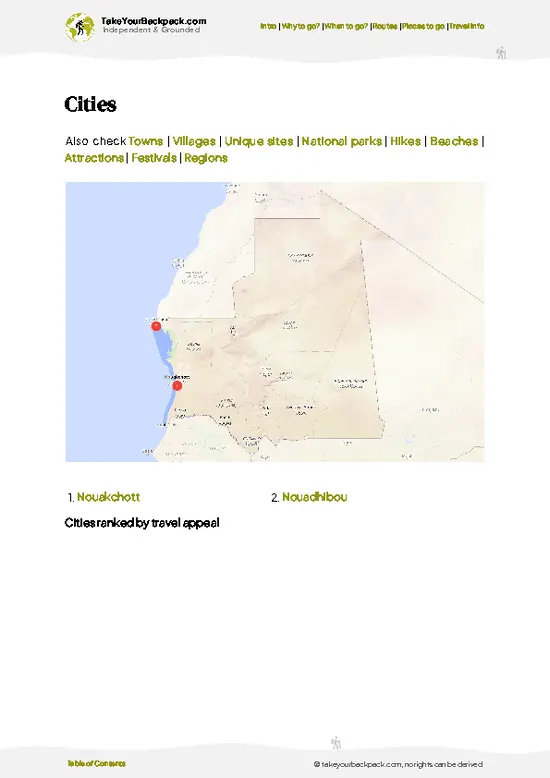
1 Nouakchott

urban sprawl, sandy streets, fish market, government quarter

Navigate a sprawling capital where sandy roads, administrative buildings, and a busy fish market reveal the city’s evolving identity.

2 Nouadhibou

Atlantic coastline, ship graveyard, fishing port, windswept peninsula

Discover a windswept port city defined by its shipwrecks, bustling docks, and the stark meeting of ocean and desert.

Loading the map 🌍

Expert viewInsights from Locals and Experts

Transport Hubs

Mauritania’s transport network is a patchwork of bustling hubs and dusty roads. The capital city serves as the primary gateway, where the airport is often the first taste of the country’s rhythm. Expect a mix of modernity and chaos—think crowded terminals and the scent of street food wafting through the air. From here, you can catch a bus or a shared taxi to other cities, but be prepared for delays and the occasional breakdown.

Traveling by road can be an adventure in itself. The highways are often unpaved, and the journey can stretch longer than anticipated. If you’re looking to explore multiple cities, consider the trade-off: speed versus depth. Rushing through may get you to more places, but you’ll miss the nuances of local life. A slower pace allows you to soak in the … read more 👉

Transport Hubs

Mauritania’s transport network is a patchwork of bustling hubs and dusty roads. The capital city serves as the primary gateway, where the airport is often the first taste of the country’s rhythm. Expect a mix of modernity and chaos—think crowded terminals and the scent of street food wafting through the air. From here, you can catch a bus or a shared taxi to other cities, but be prepared for delays and the occasional breakdown.

Traveling by road can be an adventure in itself. The highways are often unpaved, and the journey can stretch longer than anticipated. If you’re looking to explore multiple cities, consider the trade-off: speed versus depth. Rushing through may get you to more places, but you’ll miss the nuances of local life. A slower pace allows you to soak in the atmosphere, from the vibrant markets to the sounds of everyday life.

Urban Pacing

The pace of life in Mauritania varies significantly from city to city. In urban centers, the energy is palpable, with people bustling about, vendors shouting their wares, and the aroma of spices filling the air. Yet, this frenetic energy can be overwhelming. If you’re not accustomed to the hustle, it might take a few days to acclimate.

In contrast, smaller towns offer a slower, more intimate experience. Here, you can engage with locals, share a meal, and truly understand the culture. However, this slower pace comes with its own challenges—limited amenities and fewer transport options can make moving between locations more complicated. Balancing your itinerary between fast-paced cities and quieter towns is crucial.

Local Costs

Budgeting in Mauritania requires a keen eye. Costs can vary widely based on location and the type of experience you seek. In larger cities, you’ll find a range of accommodations from budget hostels to mid-range hotels. Eating local street food is both economical and a culinary adventure, but dining in more upscale restaurants can quickly inflate your budget.

If you’re planning to hop between cities, factor in transportation costs, which can add up. Shared taxis are cheaper but often come with long waits. The trade-off here is between comfort and cost. Spending a bit more on a private taxi can save you time and energy, allowing you to explore more deeply rather than just skimming the surface.

Exploring vs. Immersion

When planning your trip, consider how many cities you want to visit. Aiming for three to five cities allows for a balance of exploration and immersion. This range gives you enough time to appreciate each place without feeling rushed.

However, the temptation to see more can lead to a superficial experience. If you’re drawn to the culture, consider spending extra time in fewer locations. This approach allows you to build relationships with locals and gain insights that a quick visit simply won’t provide.

Safety is another factor to weigh. While many areas are safe for tourists, some regions may require extra caution. Understanding local customs and being respectful can enhance your experience. Engage with the community, but remain aware of your surroundings.

Mauritania offers a unique blend of experiences, but the key is to find your rhythm. Embrace the grit of the streets, the warmth of the people, and the beauty of the landscapes. The effort you put into navigating this diverse country will pay off in moments that linger long after your journey ends.

✈️ The backpacker research shortcutMauritania Travel Guide

An offline-friendly backpacking guide with optimized travel routes, ranked highlights, transport advice, and the best areas to stay.
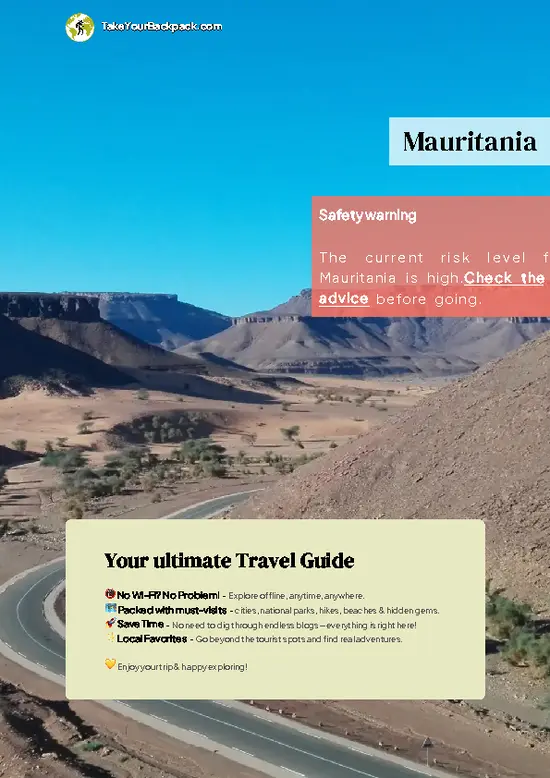
example page 0 from our offline Travel Guide for Mauritania
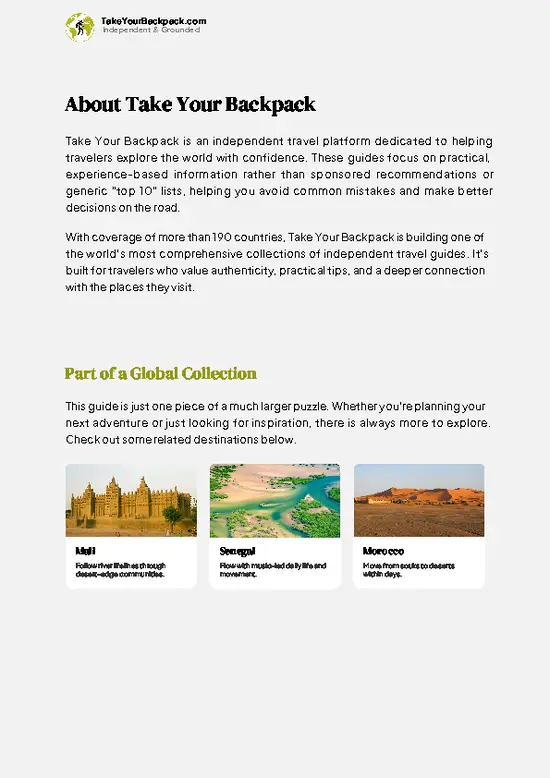
example page 1 from our offline Travel Guide for Mauritania
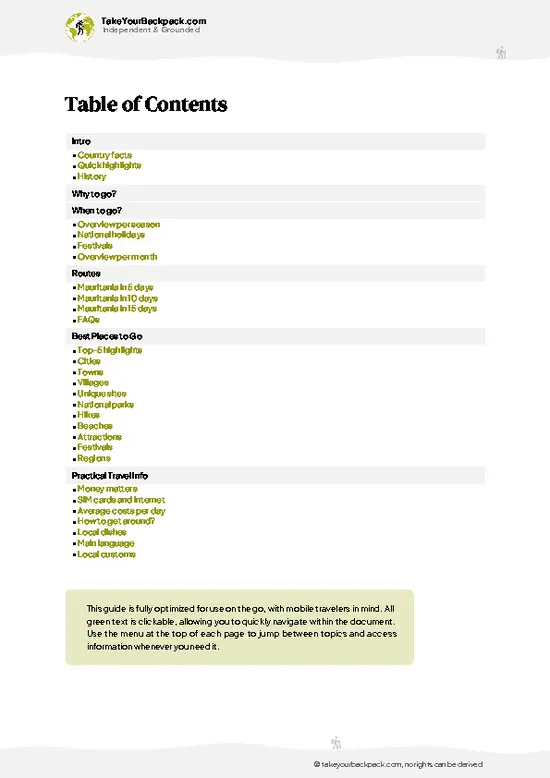
example page 2 from our offline Travel Guide for Mauritania
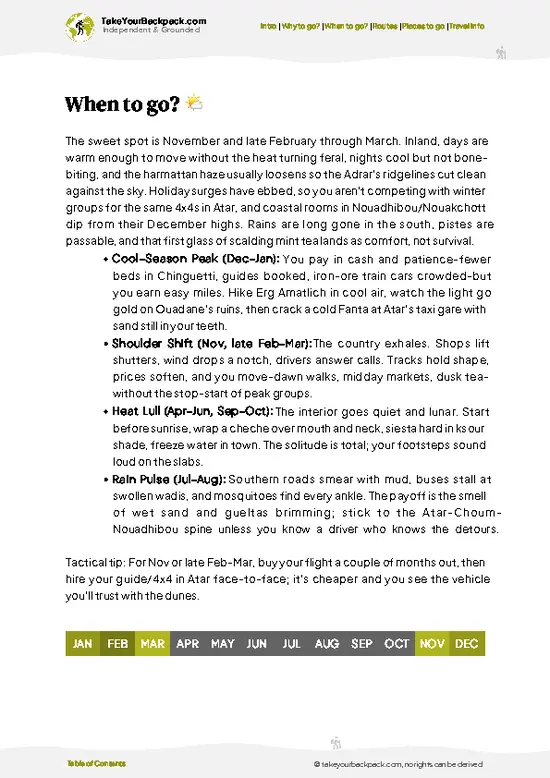
example page 3 from our offline Travel Guide for Mauritania
example page 4 from our offline Travel Guide for Mauritania
example page 5 from our offline Travel Guide for Mauritania
example page 6 from our offline Travel Guide for Mauritania
example page 7 from our offline Travel Guide for Mauritania
The digital guide (269 pages) contains:
63 highlights, ranked by travel appeal
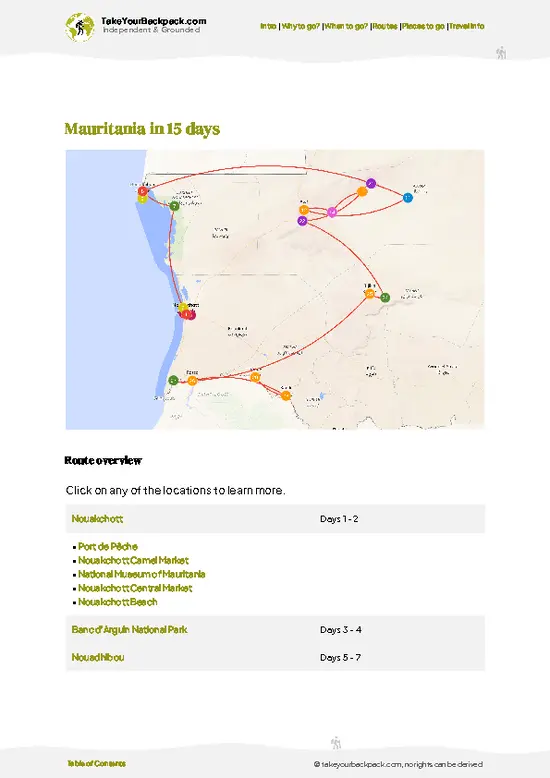
Optimized 5, 10 & 15-day travel routes
Cities, national parks, landmarks, beaches
How to get around
Offline-friendly for travel without Wi-Fi
👉 Click to see all 30+ guide features

📅 Plan smarter in minutes, not weeks
Month by month travel advice
Festivals & national holidays
Budget expectations

🗺️ Go to the right places, skip the overrated ones
Honest pros & cons of destinations
Top hikes, parks & viewpoints
Lesser-known places most travelers miss
Clear “worth it vs skip it” guidance

🛏️ Travel smoothly without rookie mistakes
Best areas to stay
Transport systems explained simply
Common scams & safety advice
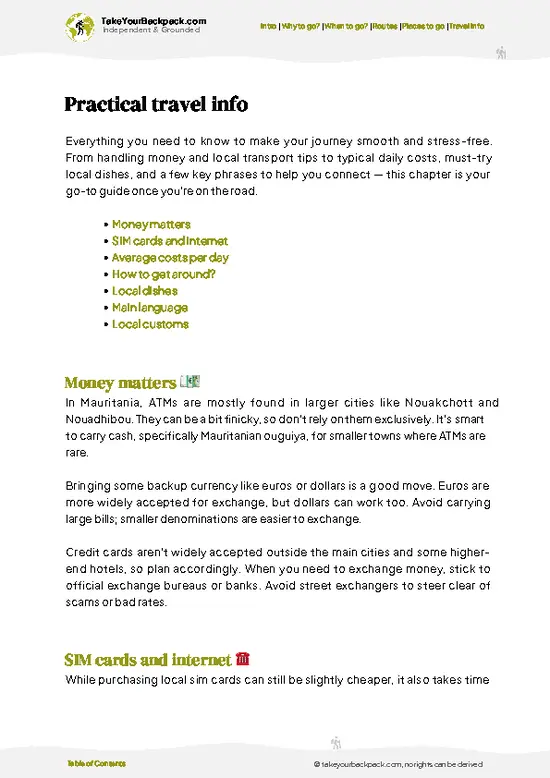
SIM cards, money & practical tips

🌍 Understand the country, not just visit it
Culture & traditions
52 Essential phrases & customs
Festivals worth planning around
Traveler-friendly historical context
Insights that make places more meaningful

📱 Built for real travel conditions
Fully downloadable PDF
Works completely offline
Optimized for phone use
Useful in remote areas & buses
Everything in one place
Save weeks of stressful planning
Get instant access to your full guide. 30‑day money-back guarantee.


By proceeding you agree to our terms.
Sent to your inbox immediately after payment • 100% Secure Checkout
Best Backpacking Travel Advisor 2025 tourism awardBest Backpacking
Travel Advisor
2025
What others say about Take Your Backpack Guides:
⭐⭐⭐⭐⭐
Fantastic, amazing amount of information!
⭐⭐⭐⭐⭐
My goodness this is amazing, it's what I've been looking for hats off too you!
⭐⭐⭐⭐⭐
I think this is absolutely BRILLIANT
⭐⭐⭐⭐
Very complete and informative. It's still missing places, but I gotta to commend you
⭐⭐⭐⭐⭐
This is truly amazing, thank you, can't wait to explore it with my kids!
⭐⭐⭐⭐⭐
Awesome resource, thank you!
⭐⭐⭐⭐⭐
This is amazing! Can't wait to explore the ones I haven't seen
⭐⭐⭐⭐
I love this! Well done, great idea.
⭐⭐⭐⭐⭐
Thanks for taking the time to make this gem!
⭐⭐⭐⭐⭐
This might be the best website I've ever seen.
⭐⭐⭐⭐⭐
Congratulations, and thank you so much for your work; it's incredibly valuable.
⭐⭐⭐⭐
In all seriousness I think you did a great job pointing out the important spots
⭐⭐⭐⭐⭐
10/10 very good
⭐⭐⭐⭐⭐
As someone who's only just starting to visit regularly this is awesome, thank you.
⭐⭐⭐⭐
Thank you very much! I'm going to visit my dad, it's going to be very useful!
⭐⭐⭐⭐⭐
This is really cool! We'll be travelling for the first time and this definitely come in handy.
⭐⭐⭐⭐⭐
You are now our minister of culture, congratulations 👨‍💼
⭐⭐⭐⭐⭐
Just wanted to tell you that this is a pearl! Going to follow your recommendations.
⭐⭐⭐⭐⭐
This is so cool. I'll definitely be using the resource for my travels soon.
⭐⭐⭐⭐⭐
This is very impressive! Good work.
⭐⭐⭐⭐⭐
This is an amazing and informative site. Very well done!

🛏️ Where to stay?Where to Stay in Mauritania

There are very few traditional hostels in Mauritania, but budget accommodation exists as small guesthouses, auberges and cheap hotels mainly in coastal cities and desert towns; expect basic facilities, intermittent hot water, simple bedding and variable cleanliness.

In Nouakchott most budget options concentrate in Tevragh Zeina (safer, closer to restaurants and expat services but pricier), Sebkha (cheaper, near markets and bus routes but dustier and busier), and the central/port area (convenient for transport and the fish market but noisier and less polished).

In Nouadhibou the city centre/port area has the widest low-cost choices near transport yet fewer amenities and occasional security … read more 👉
There are very few traditional hostels in Mauritania, but budget accommodation exists as small guesthouses, auberges and cheap hotels mainly in coastal cities and desert towns; expect basic facilities, intermittent hot water, simple bedding and variable cleanliness.

In Nouakchott most budget options concentrate in Tevragh Zeina (safer, closer to restaurants and expat services but pricier), Sebkha (cheaper, near markets and bus routes but dustier and busier), and the central/port area (convenient for transport and the fish market but noisier and less polished).

In Nouadhibou the city centre/port area has the widest low-cost choices near transport yet fewer amenities and occasional security checks, while desert hubs like Atar and Chinguetti offer very basic guesthouses ideal for accessing dunes and ruins but demand advance planning, cash payments and tolerance for spartan conditions.

If you enjoy meeting fellow travelers, consider choosing hostels with high ratings for atmosphere. On the other hand, if you prefer having your own space, a hotel might be a better option.

MauritaniaMore of Mauritania

👋 Meet the founderWho’s Behind Take Your Backpack?

Johan, backpacker and founder of TakeYourBackpackHi, I’m Johan (Netherlands 🇳🇱), the creator of TakeYourBackpack. Over the past decade, I’ve backpacked through 80+ countries across six continents, gaining extensive experience with independent travel, long-term trips, and overland routes.

This site is built on a combination of firsthand travel experience and carefully curated insights from other backpackers. Many guides are based on places I’ve personally visited, while others bring together tips, observations, and practical advice shared by trusted travelers I’ve met along the way.

The goal is to provide realistic, experience-driven guidance — not generic itineraries — so you can explore destinations with better context, clearer expectations, and more confidence.

Get full Mauritania guide •
Instant download • 63 highlights • Full Offline guide