v2.webp)
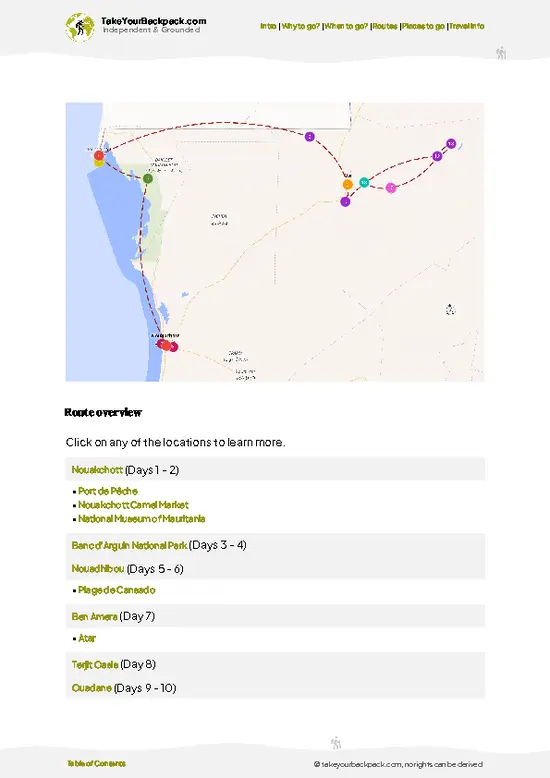
- Port de Pêche (the fishing port and fish market) — Early morning chaos: boats, men hauling nets, and raw fish piled on the quay. It’s noisy, smelly in the best way, and the best place to see everyday working life and grab unbelievably fresh seafood at tiny beachfront stalls.
- Nouakchott Corniche and Beaches — A low, sandy coastline where locals fish, kids run, and dune-scrub meets the Atlantic. Not a tropical postcard, but real coastal Mauritania: walk the shoreline, watch the sunset, and hang out with fishermen and cafés that serve grilled fish right off the grill.
- Nouakchott Central Market (Grand Marché) — A rabbit-warren souk of produce, textiles, cheap electronics and street food. Great for people-watching, bargaining for basic gear or a wrapped fabric, and getting a sense of the city’s
- Port de Pêche (the fishing port and fish market) — Early morning chaos: boats, men hauling nets, and raw fish piled on the quay. It’s noisy, smelly in the best way, and the best place to see everyday working life and grab unbelievably fresh seafood at tiny beachfront stalls.
- Nouakchott Corniche and Beaches — A low, sandy coastline where locals fish, kids run, and dune-scrub meets the Atlantic. Not a tropical postcard, but real coastal Mauritania: walk the shoreline, watch the sunset, and hang out with fishermen and cafés that serve grilled fish right off the grill.
- Nouakchott Central Market (Grand Marché) — A rabbit-warren souk of produce, textiles, cheap electronics and street food. Great for people-watching, bargaining for basic gear or a wrapped fabric, and getting a sense of the city’s daily rhythms.
- Marché de l’Artisanat (Handicraft Market) — Small stalls selling woven rugs, silver jewelry, leather goods and Saharan-style crafts. Perfect for finding a genuine souvenir and chatting with local makers about designs and materials.
- Musée National (National Museum of Mauritania) — Modest but worthwhile displays of traditional life, artifacts and ethnography. It’s the easiest place in the city to connect the dots between Mauritania’s nomadic cultures and contemporary Nouakchott.
- La Médina (the old quarter) — Narrow lanes, small shops and informal cafés where you can feel the older layers of the city. It’s not a preserved “tourist” medina, but it’s where local life is on display: tea stalls, barbers, and street vendors.
- Grande Mosquée (the main mosque) — A key religious landmark and striking piece of city architecture. Non-Muslims usually can’t enter for prayer, but the exterior and surrounding plaza give a quiet window into the city’s spiritual life.
- Palais Présidentiel (Presidential Palace) and its surroundings — Formal government architecture and well-kept grounds; you can’t wander inside, but the avenue, guards and monuments make for classic civic photography and a look at national symbolism.
- Institut Français / Cultural Centre — The city’s hub for small concerts, film screenings, exhibitions and language classes. Check the noticeboard — it’s the best place to plug into Nouakchott’s limited but genuine cultural events and meet other travelers or residents.
- Sebkha neighbourhood markets and street food lanes — Less polished than the central market but richer for spontaneous encounters: grilled meat, roadside tea, and neighborhood stalls where locals shop. For a short, authentic slice of daily life, wander these streets (stay aware of your belongings).
Spotted a mistake or missing something? Contact us.

 Best Backpacking
.jpg) Hi, I’m Johan (Netherlands 🇳🇱), the creator of TakeYourBackpack. Over the past 3 decades, I’ve backpacked through 90+ countries across six continents, gaining extensive experience with independent travel, long-term trips, and overland routes.
Hi, I’m Johan (Netherlands 🇳🇱), the creator of TakeYourBackpack. Over the past 3 decades, I’ve backpacked through 90+ countries across six continents, gaining extensive experience with independent travel, long-term trips, and overland routes.