×

Mauritius🇲🇺 | attractionsBlue Penny Museumrare stamps, colonial artifacts, art collections | things to do and best time to go

Explore ChamarelExplore Aapravasi Ghat

Backpacking in Blue Penny Museum
👍 Recommendedattraction ranked #6
By Johan Kruseman 🇳🇱 | Updated May 31, 2026

A hush falls as you lean in, nose nearly pressed to the glass, squinting at a stamp smaller than your thumb—one of the rarest on earth. The air smells faintly of old paper and polished wood. Behind you, the low hum of air conditioning and the shuffle of school groups echo off marble floors. You’re in the heart of Port Louis, inside the Caudan Waterfront, where the Blue Penny Museum sits tucked between duty-free shops and the harbor’s salty breeze.

Let’s cut through the brochure hype: the Blue Penny Museum isn’t going to flood your feed with jaw-dropping selfies. It’s not cheap for Mauritius, and you’ll share the space with cruise ship crowds and restless kids. But if you want to actually feel the pulse of Mauritian history—colonial maps, pirate legends, and the legendary Blue Penny stamp itself—this is where the island’s story gets real. It’s cerebral, not adrenaline-fueled, but it’s one of the few places in Mauritius where you can trade beach clichés for genuine context. If you’re chasing depth over dazzle, this is your move.

Discover everything you want to know in the 📖 Mauritius Travel Guide.
Loading the map 🌍
CLICK TO FILTER
cities
towns
villages
landmarks
national parks
hikes
beaches
attractions
festivals
regions
SHOW COUNTRY’S BESTSHOW ALL

✨ Why go?
Ranked #6 attraction in Mauritius
Why visitors keep coming back

The Blue Penny Museum in Mauritius isn’t your typical tourist pit stop plastered all over Instagram. Sure, it’s not a wild beach or a jungle trek, but this place holds a piece of history that hits differently once you’re inside. Backpackers who carve out time here aren’t just ticking a box—they’re diving into the heart of Mauritius’ identity. The museum houses the legendary Blue Penny Stamp, one of the rarest and most valuable stamps in the world, a symbol of colonial history and the island’s complex past. This isn’t just about stamps; it’s about understanding Mauritius beyond the postcard-perfect beaches. The exhibits weave together art, culture, and history with a quiet intensity that rewards patience and curiosity. Yes, it’s a bit of a slow burn compared to adrenaline-pumping hikes, but … read more 👉
The Blue Penny Museum in Mauritius isn’t your typical tourist pit stop plastered all over Instagram. Sure, it’s not a wild beach or a jungle trek, but this place holds a piece of history that hits differently once you’re inside. Backpackers who carve out time here aren’t just ticking a box—they’re diving into the heart of Mauritius’ identity. The museum houses the legendary Blue Penny Stamp, one of the rarest and most valuable stamps in the world, a symbol of colonial history and the island’s complex past. This isn’t just about stamps; it’s about understanding Mauritius beyond the postcard-perfect beaches. The exhibits weave together art, culture, and history with a quiet intensity that rewards patience and curiosity. Yes, it’s a bit of a slow burn compared to adrenaline-pumping hikes, but the payoff is rich context that transforms your entire trip. For backpackers mapping a route through Mauritius, the Blue Penny Museum is a milestone that grounds your journey in real stories, not just scenic snapshots. It’s where you pause, reflect, and appreciate the layers beneath the surface—making the effort to visit absolutely worth it.
Want to include Blue Penny Museum in your Mauritius route?
Create a personalized Mauritius itinerary that includes Blue Penny Museum and the places that fit your trip — based on your travel style, budget, and available time. Get your route in seconds.

Generate my trip

💡 HighlightsDon't-miss highlights and experiences

The Blue Penny Stamps: The Price of Obsession
Let’s get real: most people walk into the Blue Penny Museum because they’ve heard about the world’s rarest stamps—the 1847 Blue and Red Penny. Yes, they’re here, and yes, they’re locked away like crown jewels. The display is dimly lit, the stamps are only illuminated for a few minutes every hour to prevent fading, and you’ll probably be elbow-to-elbow with other visitors craning for a glimpse. But here’s the kicker: these tiny scraps of paper are the Mona Lisa of philately, and seeing them in person is a weirdly electric experience, even if you’ve never cared about stamps. The price tag attached to these beauties is enough to make your jaw drop, but it’s the story—colonial intrigue, printing errors, and a global hunt for lost treasures—that makes … read more 👉
The Blue Penny Stamps: The Price of Obsession
Let’s get real: most people walk into the Blue Penny Museum because they’ve heard about the world’s rarest stamps—the 1847 Blue and Red Penny. Yes, they’re here, and yes, they’re locked away like crown jewels. The display is dimly lit, the stamps are only illuminated for a few minutes every hour to prevent fading, and you’ll probably be elbow-to-elbow with other visitors craning for a glimpse. But here’s the kicker: these tiny scraps of paper are the Mona Lisa of philately, and seeing them in person is a weirdly electric experience, even if you’ve never cared about stamps. The price tag attached to these beauties is enough to make your jaw drop, but it’s the story—colonial intrigue, printing errors, and a global hunt for lost treasures—that makes this a genuine highlight.


Mauritian History, Unvarnished
Forget the sanitized, tourist-friendly version of Mauritius you get at the beach resorts. The museum’s permanent exhibition digs into the island’s tangled past—colonial power grabs, slavery, indentured labor, and the messy birth of a multicultural society. The artifacts aren’t flashy, but the honesty is refreshing. You’ll see original documents, battered navigational tools, and portraits that don’t flinch from the island’s complicated heritage. This is where you get the real Mauritius, not the Instagram filter.


Paul & Virginie: The Tragic Love Story
If you want a Mauritian Romeo and Juliet, this is it. The museum devotes a section to Bernardin de Saint-Pierre’s novel “Paul et Virginie,” which is basically required reading for anyone who wants to understand the island’s cultural DNA. The displays include rare editions, illustrations, and even a scale model of the ill-fated shipwreck that anchors the story. It’s melodramatic, sure, but it’s also a window into the soul of Mauritius—romantic, tragic, and shaped by the sea.


Port Louis: Then and Now
The museum’s city dioramas and old maps are a time machine for anyone who’s ever wondered what Port Louis looked like before the traffic jams and duty-free shops. You get a tactile sense of how the city grew from a pirate haunt to a colonial capital to the chaotic, multicultural hub it is today. The contrast between the past and present is sharp, and it’s a rare chance to see the city stripped of its modern gloss.


Temporary Exhibitions: The Wild Card
Here’s where the Blue Penny Museum throws a curveball. The rotating exhibitions are unpredictable—sometimes you’ll get a deep dive into Mauritian artists, other times it’s quirky themes like the history of sugar or the evolution of local currency. Not every show is a home run, but when they hit, they hit hard, offering a fresh angle on Mauritian identity you won’t find in any guidebook. If you catch a good one, it’s the difference between a decent museum visit and a genuinely memorable afternoon.
Spotted a mistake or missing something? Contact us.

Things to do around Blue Penny Museum

Ratings based on Tripadvisor reviews. When you book through this link, you support our work at no extra cost to you.

🌤️ When to go?When to go for the best experience


  • Weather: The best time to visit the Blue Penny Museum is during Mauritius’s cooler, drier months from May to October. Expect temperatures between 18°C and 24°C (64°F to 75°F), which means comfortable exploring without sweating through your shirt. Avoid the hot, humid summer from November to April, which brings heavy rains and occasional cyclones that can put a damper on your plans.

  • Daylight Hours: From May to October, daylight stretches roughly from 6:30 AM to 6 PM, giving you ample time to soak in the museum’s rich history without rushing. The shorter days in winter are balanced by cooler temperatures, so you won’t feel pressured to dash through exhibits.

  • Crowds: Tourist numbers peak from December through February, coinciding with holiday seasons and summer vacations. The Blue Penny
read more 👉

  • Weather: The best time to visit the Blue Penny Museum is during Mauritius’s cooler, drier months from May to October. Expect temperatures between 18°C and 24°C (64°F to 75°F), which means comfortable exploring without sweating through your shirt. Avoid the hot, humid summer from November to April, which brings heavy rains and occasional cyclones that can put a damper on your plans.

  • Daylight Hours: From May to October, daylight stretches roughly from 6:30 AM to 6 PM, giving you ample time to soak in the museum’s rich history without rushing. The shorter days in winter are balanced by cooler temperatures, so you won’t feel pressured to dash through exhibits.

  • Crowds: Tourist numbers peak from December through February, coinciding with holiday seasons and summer vacations. The Blue Penny Museum can get crowded, especially on weekends and public holidays. Visiting in the shoulder months of April or September means fewer tourists and a more intimate experience.

  • Seasonal Activities: The museum itself doesn’t change much seasonally, but pairing your visit with local cultural festivals like the Maha Shivaratri in February or the Diwali celebrations in October can add a vibrant layer to your trip. Just be ready for bigger crowds during these times.

  • Price Fluctuations: Entry fees to the museum remain fairly stable year-round, but flights and accommodation prices spike during the high season (December to February). Booking in the shoulder seasons (April, May, September, October) can save you serious cash without sacrificing the experience.


Pro-tip: Aim for late September to early November—cooler weather, manageable crowds, and wallet-friendly prices make this the sweet spot to dive deep into Mauritius’s history without the tourist circus.


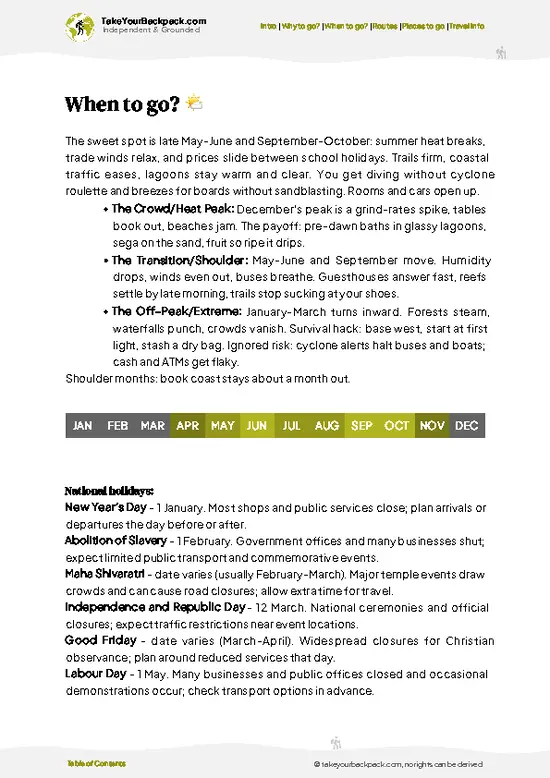
source: climatestotravel.comJANJanuary: fair for travelingFEBFebruary: fair for travelingMARMarch: fair for travelingAPRApril: highly recommended for travelingMAYMay: excellent for travelingJUNJune: excellent for travelingJULJuly: excellent for travelingAUGAugust: excellent for travelingSEPSeptember: highly recommended for travelingOCTOctober: highly recommended for travelingNOVNovember: good for travelingDECDecember: fair for traveling
when-to-go

✈️ The backpacker research shortcutMauritius Travel Guide

An offline-friendly backpacking guide with optimized travel routes, ranked highlights, transport advice, and the best areas to stay.
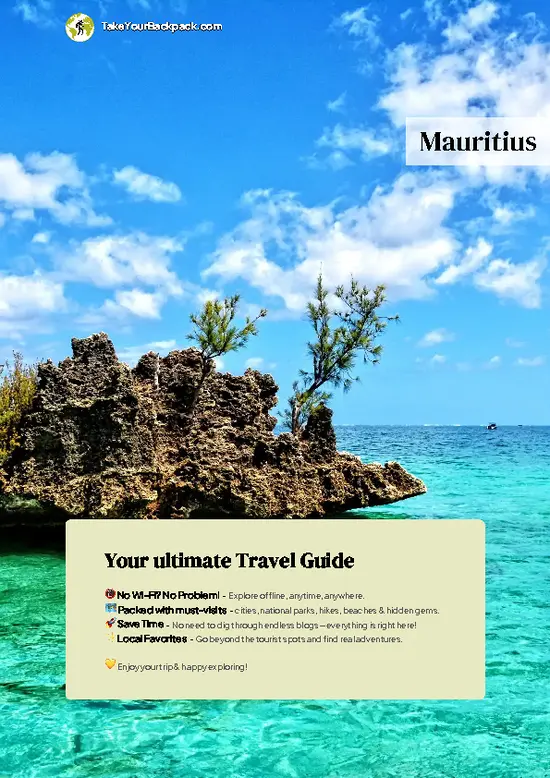
example page 0 from our offline Travel Guide for Mauritius
example page 1 from our offline Travel Guide for Mauritius
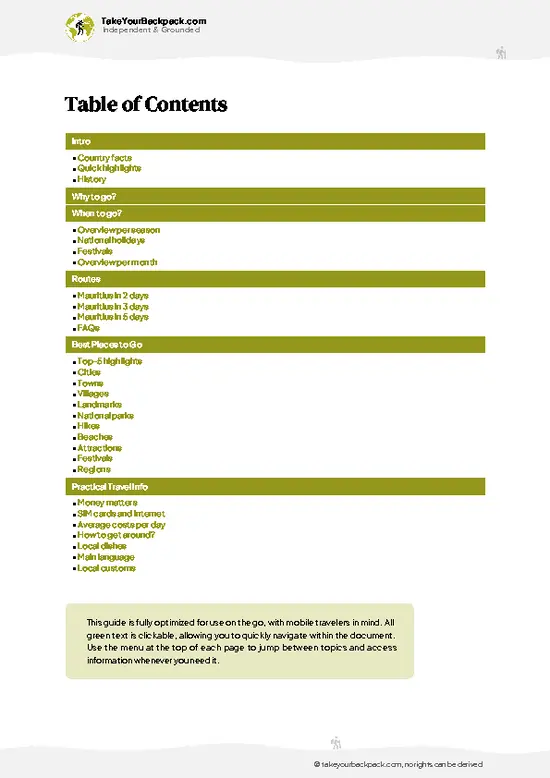
example page 2 from our offline Travel Guide for Mauritius
example page 3 from our offline Travel Guide for Mauritius
example page 4 from our offline Travel Guide for Mauritius
example page 5 from our offline Travel Guide for Mauritius
example page 6 from our offline Travel Guide for Mauritius
example page 7 from our offline Travel Guide for Mauritius
The digital guide (256 pages) contains:
68 highlights, ranked by travel appeal
Optimized 2, 3 & 5-day travel routes
Cities, national parks, landmarks, beaches
How to get around
Offline-friendly for travel without Wi-Fi
👉 Click to see all 30+ guide features

📅 Plan smarter in minutes, not weeks
Month by month travel advice
Festivals & national holidays
Budget expectations

🗺️ Go to the right places, skip the overrated ones
Honest pros & cons of destinations
Top hikes, parks & viewpoints
Lesser-known places most travelers miss
Clear “worth it vs skip it” guidance

🛏️ Travel smoothly without rookie mistakes
Best areas to stay
Transport systems explained simply
Common scams & safety advice
SIM cards, money & practical tips

🌍 Understand the country, not just visit it
Culture & traditions
Local customs
Festivals worth planning around
Traveler-friendly historical context
Insights that make places more meaningful

📱 Built for real travel conditions
Fully downloadable PDF
Works completely offline
Optimized for phone use
Useful in remote areas & buses
Everything in one place
Save weeks of stressful planning
Get instant access to your full guide. 30‑day money-back guarantee.


By proceeding you agree to our terms.
Sent to your inbox immediately after payment • 100% Secure Checkout
Best Backpacking Travel Advisor 2025 tourism awardBest Backpacking
Travel Advisor
2025
What others say about Take Your Backpack Guides:
⭐⭐⭐⭐⭐
Fantastic, amazing amount of information!
⭐⭐⭐⭐⭐
My goodness this is amazing, it's what I've been looking for hats off too you!
⭐⭐⭐⭐⭐
I think this is absolutely BRILLIANT
⭐⭐⭐⭐
Very complete and informative. It's still missing places, but I gotta to commend you
⭐⭐⭐⭐⭐
This is truly amazing, thank you, can't wait to explore it with my kids!
⭐⭐⭐⭐⭐
Awesome resource, thank you!
⭐⭐⭐⭐⭐
This is amazing! Can't wait to explore the ones I haven't seen
⭐⭐⭐⭐
I love this! Well done, great idea.
⭐⭐⭐⭐⭐
Thanks for taking the time to make this gem!
⭐⭐⭐⭐⭐
This might be the best website I've ever seen.
⭐⭐⭐⭐⭐
Congratulations, and thank you so much for your work; it's incredibly valuable.
⭐⭐⭐⭐
In all seriousness I think you did a great job pointing out the important spots
⭐⭐⭐⭐⭐
10/10 very good
⭐⭐⭐⭐⭐
As someone who's only just starting to visit regularly this is awesome, thank you.
⭐⭐⭐⭐
Thank you very much! I'm going to visit my dad, it's going to be very useful!
⭐⭐⭐⭐⭐
This is really cool! We'll be travelling for the first time and this definitely come in handy.
⭐⭐⭐⭐⭐
You are now our minister of culture, congratulations 👨‍💼
⭐⭐⭐⭐⭐
Just wanted to tell you that this is a pearl! Going to follow your recommendations.
⭐⭐⭐⭐⭐
This is so cool. I'll definitely be using the resource for my travels soon.
⭐⭐⭐⭐⭐
This is very impressive! Good work.
⭐⭐⭐⭐⭐
This is an amazing and informative site. Very well done!

🛏️ Where to stay?How to pick the right area

The Blue Penny Museum sits smack in the heart of Port Louis, Mauritius’ capital—a place that’s far from a quiet postcard scene. If you’re chasing the Instagram-perfect vibe, expect crowds, noise, and the kind of urban buzz that can either drain you or fuel your adventure. The museum itself is a gem, but the real deal is the city around it, where the pulse of local life beats strongest.

For backpackers, the best spots to crash are neighborhoods just a stone’s throw from the museum but not right on top of the tourist throng. Think areas like the Caudan Waterfront and the nearby streets where you’ll … read more 👉
The Blue Penny Museum sits smack in the heart of Port Louis, Mauritius’ capital—a place that’s far from a quiet postcard scene. If you’re chasing the Instagram-perfect vibe, expect crowds, noise, and the kind of urban buzz that can either drain you or fuel your adventure. The museum itself is a gem, but the real deal is the city around it, where the pulse of local life beats strongest.

For backpackers, the best spots to crash are neighborhoods just a stone’s throw from the museum but not right on top of the tourist throng. Think areas like the Caudan Waterfront and the nearby streets where you’ll find a mix of budget guesthouses and lively hostels. These places are safe, and crucially, they’re social hubs where solo travelers swap stories over cheap street food or a cold local beer. You’re not just renting a bed; you’re stepping into a community.

Port Louis isn’t polished or pampered—it’s gritty, real, and full of character. The markets, the street vendors, the chaotic traffic, and the unexpected quiet corners all add layers to your experience. Staying close means you can hit the museum early before the crowds flood in, then dive into the city’s raw energy without wasting time or money on taxis. It’s a backpacker’s playground if you’re ready to embrace the city’s authentic, unfiltered vibe.

👛 Costs (as of 2 September 2025)Travel costs and budget guide for Blue Penny Museum

As of the most recent estimates, the Blue Penny Museum in Mauritius charges an entry fee of 325 Mauritian rupees (approximately €7) for non-resident adults, 200 rupees (approximately €4) for children and students, and 820 rupees (approximately €16.5) for a family ticket (2 adults + 2 children). Residents pay a reduced fee of 50 rupees (approximately €1). Additional costs may apply for guided tours or special access; always check the museum's official website or contact them directly for current prices and ticketing options.

source: bluepenny.museum
⚠️ Prices can change and everyone travels differently, so take this as a rough guide. Hope it helps you plan your adventure!

Other Mauritian attractions near Blue Penny Museum

Explore more nearby:


💡 Not sure where to go next?
Create a personalized itinerary for Mauritius including Blue Penny Museum and the places that fit your trip.

Generate my itinerary

👉 Discover all attractions

Or checkout all Mauritius has to offer (think cities, towns, villages, national parks, hikes, beaches, festivals)
Country photo of Mauritius

We 💚 feedbackFinal thoughts on visiting Blue Penny Museum

The Blue Penny Museum isn’t your typical tourist stop—expect a quiet, almost reverent vibe, not a bustling crowd. The real magic isn’t just the rare stamps; it’s how the place captures Mauritius’s layered history through objects you won’t find plastered on postcards. Heads up: it’s small and can feel a bit stuffy if you’re expecting a lively museum scene. But if you lean in, the stories behind those tiny stamps and artifacts hit deeper than you’d guess. Worth it for anyone who digs history with a side of subtle charm.

✍️ Help improve this page!
The information on this page is based on in-depth research, insights shared by experienced travelers, and feedback from the local travel community in Mauritius. While every effort is made to keep the information accurate and current, conditions can change — so if you spot anything incorrect or outdated, please get in touch.


🙋‍♂️ Give feedback

👋 Meet the founderWho’s Behind Take Your Backpack?

Johan, backpacker and founder of TakeYourBackpackHi, I’m Johan (Netherlands 🇳🇱), the creator of TakeYourBackpack. Over the past decade, I’ve backpacked through 80+ countries across six continents, gaining extensive experience with independent travel, long-term trips, and overland routes.

This site is built on a combination of firsthand travel experience and carefully curated insights from other backpackers. Many guides are based on places I’ve personally visited, while others bring together tips, observations, and practical advice shared by trusted travelers I’ve met along the way.

The goal is to provide realistic, experience-driven guidance — not generic itineraries — so you can explore destinations with better context, clearer expectations, and more confidence.

Get full Mauritius guide •
Instant download • 68 highlights • Full Offline guide