×

Mayotte🇾🇹 | townsMamoudzouMarché couvert, ferry waterfront, MUMA museum, hillside quarter | things to do and best time to go

Explore Kani-KéliExplore Ouangani

Backpacking in Mamoudzou
🏆 Top picktown ranked #1
By Johan Kruseman 🇳🇱 | Updated October 22, 2026

Most travelers have to decide whether Mamoudzou is a stop worth a night or just the place where the ferry from Dzaoudzi drops you. Sleeping here tips it: the waterfront wakes up at dawn, and you get one evening of grilled skewers and honking minibuses before heading out. Mamoudzou sits on the east coast in the north of Mayotte, and it is the island’s largest town, a dense, loud, concrete-and-tin grid climbing from the lagoon. Diesel, frying oil and ripe mango hang over the Marché couvert, where you can fill a bag with bananas, cassava and spices. The sea walk along the Place du Marché gives you evening light and fishing boats. It is not pretty everywhere, traffic jams are real, and hostels are almost nonexistent, so the social scene is small and mostly found in cafés and guesthouses. It works best as a base for beaches, hikes and lagoon trips. Bring cash in euros, because many small stalls do not take cards.

Discover everything you want to know in the 📖 Mayotte Travel Guide.


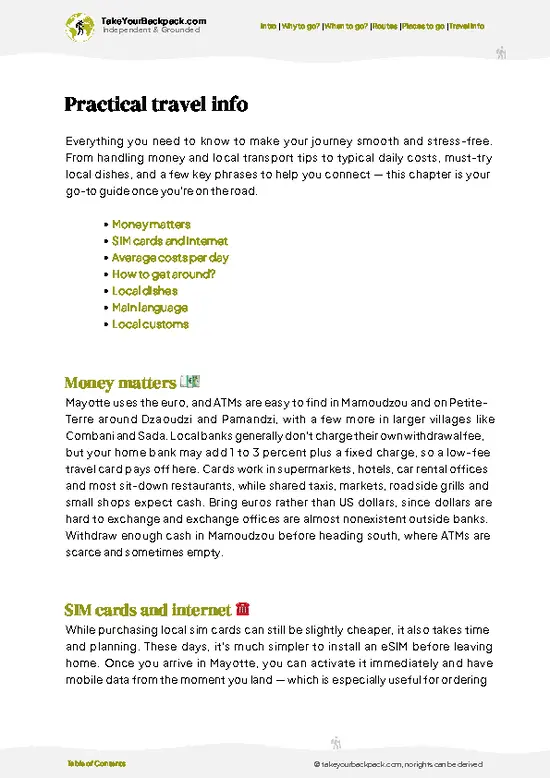
example page 0 from our offline Travel Guide for Mayotte
example page 1 from our offline Travel Guide for Mayotte
example page 2 from our offline Travel Guide for Mayotte
example page 3 from our offline Travel Guide for Mayotte
example page 4 from our offline Travel Guide for Mayotte
example page 5 from our offline Travel Guide for Mayotte
example page 6 from our offline Travel Guide for Mayotte
example page 7 from our offline Travel Guide for Mayotte
Loading the map 🌍
CLICK TO FILTER
towns
landmarks
national parks
hikes
beaches
attractions
festivals
regions
SHOW COUNTRY’S BESTSHOW ALL

✨ Why go?
Ranked #1 town in Mayotte
Why Mamoudzou should be on your travel list

Mamoudzou earns its place on a route because everything on Mayotte runs through it: the barge to Petite-Terre, the minibus network (taxis collectifs) and the shops where you stock up before a hike. Most backpackers stay one or two nights, then push on to beaches in the south or to the trails around Mont Choungui and the northern coves. Staying a little longer pays off if you like markets. The Marché couvert is a loud, practical place to eat cheaply, try island fruit and watch daily life, and the waterfront promenade at dusk fills with joggers, schoolkids and fishermen. Street food and small Comorian and Mahoran snack stalls give you a real taste of local cooking without a restaurant bill. It suits independent travelers who handle French, a little improvisation and some heat. Solo travelers … read more 👉
Mamoudzou earns its place on a route because everything on Mayotte runs through it: the barge to Petite-Terre, the minibus network (taxis collectifs) and the shops where you stock up before a hike. Most backpackers stay one or two nights, then push on to beaches in the south or to the trails around Mont Choungui and the northern coves. Staying a little longer pays off if you like markets. The Marché couvert is a loud, practical place to eat cheaply, try island fruit and watch daily life, and the waterfront promenade at dusk fills with joggers, schoolkids and fishermen. Street food and small Comorian and Mahoran snack stalls give you a real taste of local cooking without a restaurant bill. It suits independent travelers who handle French, a little improvisation and some heat. Solo travelers will find people to talk to at cafés, but not a hostel party scene. If you want quiet nature and empty sand, treat it as a short, useful stop and move on.

💡 HighlightsWhat this place is best known for

  1. Marché couvert: The town’s main market is where Mamoudzou shops, with stalls of bananas, cassava, breadfruit, vanilla, ylang-ylang products and fish. Go in the morning before the heat, when everything is freshest. Entry is free, a snack costs €1 to 3, and an hour is plenty.
  2. Front de mer and Place du Marché: The waterfront promenade is the best place to watch the barges cross, fishing boats unload and the town unwind at dusk. It is free, and 45 minutes to an hour works well in the late afternoon.
  3. Musée de Mayotte (MUMA): Housed in a colonial-era building near the sea, it covers the island’s history, the sultanate era, the Comorian and Malagasy influences and its natural heritage. Entry is around €2 to 3, and you need about 1 hour. Visit on a hot midday to escape the sun, and check the opening
… read more 👉
  1. Marché couvert: The town’s main market is where Mamoudzou shops, with stalls of bananas, cassava, breadfruit, vanilla, ylang-ylang products and fish. Go in the morning before the heat, when everything is freshest. Entry is free, a snack costs €1 to 3, and an hour is plenty.
  2. Front de mer and Place du Marché: The waterfront promenade is the best place to watch the barges cross, fishing boats unload and the town unwind at dusk. It is free, and 45 minutes to an hour works well in the late afternoon.
  3. Musée de Mayotte (MUMA): Housed in a colonial-era building near the sea, it covers the island’s history, the sultanate era, the Comorian and Malagasy influences and its natural heritage. Entry is around €2 to 3, and you need about 1 hour. Visit on a hot midday to escape the sun, and check the opening hours before you walk over.
  4. Plage de Mamoudzou and the Passamainty side: A small stretch of sand where locals swim and play football in the evening. Do not expect a resort beach. It is free, and the best time is late afternoon for 1 hour of sitting with a cold drink.
  5. Mosque and old Mahoran quarter on the hillside: A walk through the older streets, with tin-roofed houses, small shops and call to prayer drifting down the slope. Dress modestly, go in the cooler morning, and allow 1 hour. It is free, and most people simply stroll rather than enter religious buildings.
From Mamoudzou, the lagoon beaches of Moya and the Plage de N’Gouja, with its turtles, are easy excursions, as are the hiking trails around Mont Choungui and the Îlot Bandrélé. Together, these five stops fit comfortably into one slow day, around 5 to 6 hours with breaks.
Spotted a mistake or missing something? Contact us.

Things to do near Mamoudzou

Ratings based on Tripadvisor reviews. When you book through this link, you support our work at no extra cost to you.

🏘️ NeighborhoodsKey areas and districts to know

Mamoudzou is a small, hilly capital, and its areas sit within a few kilometers of each other along the lagoon.
  • Mamoudzou Centre (the waterfront): The core runs along the barge quay and the Place du Marché. Mornings smell of fish, ripe mango and diesel, and the covered market is loud with stallholders selling cassava, bananas and spices. Sambusas and brochettes appear at stands, and everything is walkable in 20 minutes. You leave with a full bag and a plate of cheap, fried, hot food.
  • Kawéni: The commercial and industrial district just north has shops, wholesalers and a dense hillside of tin-roofed homes. Traffic is heavy and the air is thick with exhaust, so it is not a place to stroll. Go for supermarkets, bus connections and a sense of how most of the island lives.
  • Mtsapéré and Passamainty:
… read more 👉
Mamoudzou is a small, hilly capital, and its areas sit within a few kilometers of each other along the lagoon.
  • Mamoudzou Centre (the waterfront): The core runs along the barge quay and the Place du Marché. Mornings smell of fish, ripe mango and diesel, and the covered market is loud with stallholders selling cassava, bananas and spices. Sambusas and brochettes appear at stands, and everything is walkable in 20 minutes. You leave with a full bag and a plate of cheap, fried, hot food.
  • Kawéni: The commercial and industrial district just north has shops, wholesalers and a dense hillside of tin-roofed homes. Traffic is heavy and the air is thick with exhaust, so it is not a place to stroll. Go for supermarkets, bus connections and a sense of how most of the island lives.
  • Mtsapéré and Passamainty: Residential hillsides with small bakeries, grocery shops and steep lanes that run uphill in the heat. Walking is tiring, so take a taxi or bus. You get quiet evenings and views over the lagoon.
  • Hamaha and the Baobab area: South of the center, a calmer seafront with a promenade and the old baobab tree. Locals jog and gather here at dusk as the breeze cools the concrete. It is the best spot for a quiet sunset drink and a stretch of pavement walking.
  • Mamoudzou Nightlife: Evenings are low-key, with a few bars and restaurants near the waterfront and a modest scene. Expect music drifting from open doors and plates of grilled fish.

⌛️ 1 dayHow to make the most of one day

7:30 AM, Marché couvert: This is a market morning, so start where the town does. Walk the stalls for bananas, fresh bread and fried snacks, and buy a bag of fruit for later. The heat is still gentle and the sellers are in good humor.
9:00 AM, Front de mer: Stroll along the water toward the barge terminal. Fishing boats, schoolchildren and minibuses create a steady soundtrack, and you get a clear look across the lagoon toward Petite-Terre.
10:30 AM, Musée de Mayotte: Spend an hour inside, out of the sun. The exhibits give context for everything you will see afterward, from the sultan history to Mahoran crafts and the lagoon’s ecology.
12:30 PM, Lunch at a local snack stall: Look for grilled fish, rice and cassava, or brochettes, in the streets behind the market. Eat where the locals queue, and … read more 👉
7:30 AM, Marché couvert: This is a market morning, so start where the town does. Walk the stalls for bananas, fresh bread and fried snacks, and buy a bag of fruit for later. The heat is still gentle and the sellers are in good humor.
9:00 AM, Front de mer: Stroll along the water toward the barge terminal. Fishing boats, schoolchildren and minibuses create a steady soundtrack, and you get a clear look across the lagoon toward Petite-Terre.
10:30 AM, Musée de Mayotte: Spend an hour inside, out of the sun. The exhibits give context for everything you will see afterward, from the sultan history to Mahoran crafts and the lagoon’s ecology.
12:30 PM, Lunch at a local snack stall: Look for grilled fish, rice and cassava, or brochettes, in the streets behind the market. Eat where the locals queue, and bring small euro coins for payment.
2:00 PM, Old hillside quarter: This is the less visited part of the day. Walk up the narrow lanes above the center, past tin-roofed houses, small mosques and shops, and you get a side of Mamoudzou that most people never see. Dress modestly, greet people, and ask before taking photos.
4:00 PM, Plage de Mamoudzou: Drop down to the sand for a swim or a rest. Local kids kick footballs, and the water is warm enough to feel like a bath.
5:30 PM, Waterfront at dusk: Finish where you began, with a cold drink from a kiosk. Joggers, families and fishermen share the promenade, and the sky over the lagoon changes color. Dinner comes from a grill stall nearby.

🌤️ When to go?When to go for the best experience

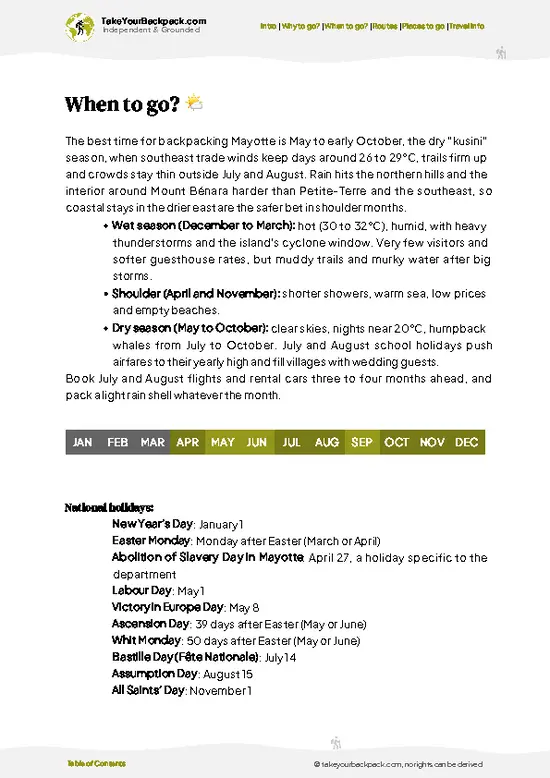
The dry season from May to October is the most comfortable time for backpacking Mamoudzou, with lower humidity and easy walking.
  • Dry Season (May to October): Days reach 27 to 30°C (81 to 86°F) and nights drop to about 20 to 22°C (68 to 72°F). Rain is scarce, the lagoon is calm, and snorkeling visibility is best. Whale sharks and humpback whales appear from about July to October. Flights and rooms cost more, especially in July and August when diaspora families visit.
  • Wet Season (November to April): Expect 29 to 33°C (84 to 91°F), heavy humidity and downpours that flood roads. Cyclones are possible from January to March, and ferry or flight schedules can be disrupted. Prices dip and the island turns deep green.
  • Daylight: The sun is up for roughly 11 to 13 hours across the year, with dusk arriving
… read more 👉
The dry season from May to October is the most comfortable time for backpacking Mamoudzou, with lower humidity and easy walking.
  • Dry Season (May to October): Days reach 27 to 30°C (81 to 86°F) and nights drop to about 20 to 22°C (68 to 72°F). Rain is scarce, the lagoon is calm, and snorkeling visibility is best. Whale sharks and humpback whales appear from about July to October. Flights and rooms cost more, especially in July and August when diaspora families visit.
  • Wet Season (November to April): Expect 29 to 33°C (84 to 91°F), heavy humidity and downpours that flood roads. Cyclones are possible from January to March, and ferry or flight schedules can be disrupted. Prices dip and the island turns deep green.
  • Daylight: The sun is up for roughly 11 to 13 hours across the year, with dusk arriving quickly. Plan hikes for the morning.
  • Ramadan: Most of the population is Muslim, so some places close early or shift hours during this month. Evenings turn lively after the fast breaks.
Book flights and lodging early if you want to travel in July or August.


source: climatestotravel.comJANJanuary: fair for travelingFEBFebruary: fair for travelingMARMarch: fair for travelingAPRApril: fair for travelingMAYMay: excellent for travelingJUNJune: highly recommended for travelingJULJuly: highly recommended for travelingAUGAugust: highly recommended for travelingSEPSeptember: excellent for travelingOCTOctober: highly recommended for travelingNOVNovember: fair for travelingDECDecember: fair for traveling
when-to-go

✈️ The backpacker research shortcutMayotte Travel Guide

An offline-friendly backpacking guide with optimized travel routes, ranked highlights, transport advice, and the best areas to stay.
example page 0 from our offline Travel Guide for Mayotte
example page 1 from our offline Travel Guide for Mayotte
example page 2 from our offline Travel Guide for Mayotte
example page 3 from our offline Travel Guide for Mayotte
example page 4 from our offline Travel Guide for Mayotte
example page 5 from our offline Travel Guide for Mayotte
example page 6 from our offline Travel Guide for Mayotte
example page 7 from our offline Travel Guide for Mayotte
The digital guide (129 pages) contains:
✅ 27 highlights, ranked by travel appeal
✅ Optimized 2, 3 & 5-day travel routes
✅ Cities, national parks, landmarks, beaches
✅ How to get around
✅ Offline-friendly for travel without Wi-Fi
👉 Click to see all 30+ guide features

📅 Plan smarter in minutes, not weeks
✅ Month by month travel advice
✅ Festivals & national holidays
✅ Budget expectations

🗺️ Go to the right places, skip the overrated ones
✅ Honest pros & cons of destinations
✅ Top hikes, parks & viewpoints
✅ Lesser-known places most travelers miss
✅ Clear “worth it vs skip it” guidance

🛏️ Travel smoothly without rookie mistakes
✅ Best areas to stay
✅ Transport systems explained simply
✅ Common scams & safety advice
✅ SIM cards, money & practical tips

🌍 Understand the country, not just visit it
✅ Culture & traditions
✅ 52 Essential phrases & customs
✅ Festivals worth planning around
✅ Traveler-friendly historical context
✅ Insights that make places more meaningful

📱 Built for real travel conditions
✅ Fully downloadable PDF
✅ Works completely offline
✅ Optimized for phone use
✅ Useful in remote areas & buses
✅ Everything in one place
Stop searching, start planning
Get instant access to your full guide. 30‑day money-back guarantee.
+ Add another guide for just

By proceeding you agree to our terms.
Sent to your inbox immediately after payment • 100% Secure Checkout
Best Backpacking Travel Advisor 2025 tourism awardBest Backpacking
Travel Advisor
2025
What others say about Take Your Backpack Guides:
⭐⭐⭐⭐⭐
Fantastic, amazing amount of information!
⭐⭐⭐⭐⭐
My goodness this is amazing, it's what I've been looking for hats off too you!
⭐⭐⭐⭐⭐
I think this is absolutely BRILLIANT
⭐⭐⭐⭐
Very complete and informative. It's still missing places, but I gotta to commend you
⭐⭐⭐⭐⭐
This is truly amazing, thank you, can't wait to explore it with my kids!
⭐⭐⭐⭐⭐
Awesome resource, thank you!
⭐⭐⭐⭐⭐
This is amazing! Can't wait to explore the ones I haven't seen
⭐⭐⭐⭐
I love this! Well done, great idea.
⭐⭐⭐⭐⭐
Thanks for taking the time to make this gem!
⭐⭐⭐⭐⭐
This might be the best website I've ever seen.
⭐⭐⭐⭐⭐
Congratulations, and thank you so much for your work; it's incredibly valuable.
⭐⭐⭐⭐
In all seriousness I think you did a great job pointing out the important spots
⭐⭐⭐⭐⭐
10/10 very good
⭐⭐⭐⭐⭐
As someone who's only just starting to visit regularly this is awesome, thank you.
⭐⭐⭐⭐
Thank you very much! I'm going to visit my dad, it's going to be very useful!
⭐⭐⭐⭐⭐
This is really cool! We'll be travelling for the first time and this definitely come in handy.
⭐⭐⭐⭐⭐
You are now our minister of culture, congratulations 👨‍💼
⭐⭐⭐⭐⭐
Just wanted to tell you that this is a pearl! Going to follow your recommendations.
⭐⭐⭐⭐⭐
This is so cool. I'll definitely be using the resource for my travels soon.
⭐⭐⭐⭐⭐
This is very impressive! Good work.
⭐⭐⭐⭐⭐
This is an amazing and informative site. Very well done!

🛏️ Where to stay?Where staying makes the most sense

The best budget base is central Mamoudzou near the waterfront, where lodging, markets and the barge are within a short walk. Budget beds on the island are limited, so options are mostly guesthouses, small apartments and a handful of simple hotels rather than a large hostel scene. Expect to pay from roughly €25 to 60 a night for a basic private room, so book ahead in July and August.

The waterfront area is lively in the daytime and quiet after dark. It is convenient for buses, taxis and the Petite-Terre barge, and the many shops and eateries mean you can eat cheaply without a ride. Street noise … read more 👉
The best budget base is central Mamoudzou near the waterfront, where lodging, markets and the barge are within a short walk. Budget beds on the island are limited, so options are mostly guesthouses, small apartments and a handful of simple hotels rather than a large hostel scene. Expect to pay from roughly €25 to 60 a night for a basic private room, so book ahead in July and August.

The waterfront area is lively in the daytime and quiet after dark. It is convenient for buses, taxis and the Petite-Terre barge, and the many shops and eateries mean you can eat cheaply without a ride. Street noise starts early with traffic and market bustle, so bring earplugs. Walk the main streets at night and use a taxi for longer distances.

The second option is the Hamaha and Baobab side to the south, which is calmer and more residential. Evenings are peaceful and the seafront is pleasant for a stroll, though you rely more on taxis or buses to reach the center. It suits travelers who value sleep over convenience.

Avoid basing yourself in Kawéni. Traffic and industry dominate it, and there is little to do after the shops close. Most travelers find that staying central saves both time and transport money.

🚌 Getting aroundHow to get around Mamoudzou

Mamoudzou has no train station, and the central barge quay and bus stop beside the market serve as the main hub, a flat walk of a few minutes to most shops, banks and the waterfront. The town is compact but the traffic is notorious, with jams building at Kawéni in the mornings and late afternoons. Buses are inexpensive, though schedules are loose.
  • Walking: The center from the barge quay to the market and the Hamaha promenade is easy on foot in about 20 minutes. Heat and humidity are heavy by midday, so go early. You see fish stalls, mosques and the lagoon glinting between buildings.
  • Shared taxis and buses (taxis collectifs): Vans and minibuses run to the surrounding villages and across the island, with fares of about €1 to 3 for most rides. Service starts around dawn, and many routes wind down
… read more 👉
Mamoudzou has no train station, and the central barge quay and bus stop beside the market serve as the main hub, a flat walk of a few minutes to most shops, banks and the waterfront. The town is compact but the traffic is notorious, with jams building at Kawéni in the mornings and late afternoons. Buses are inexpensive, though schedules are loose.
  • Walking: The center from the barge quay to the market and the Hamaha promenade is easy on foot in about 20 minutes. Heat and humidity are heavy by midday, so go early. You see fish stalls, mosques and the lagoon glinting between buildings.
  • Shared taxis and buses (taxis collectifs): Vans and minibuses run to the surrounding villages and across the island, with fares of about €1 to 3 for most rides. Service starts around dawn, and many routes wind down by early evening. Waiting can be long, but you ride with locals and hear the morning gossip and radio music.
  • Barge to Petite-Terre: The amphibious barge crosses the strait to Dzaoudzi in about 20 to 30 minutes, with departures running from early morning until late evening. A foot passenger fare costs around €1 or less each way. Salty wind, diesel fumes and a view of Dzaoudzi Rock make it worth doing for the ride alone.
  • Taxis: Private taxis are plentiful near the quay, and short city trips cost about €5 to 10, with longer rides to the airport side priced higher. Agree on the fare before you get in. They are the practical option after dark.
  • Rental car: Cars run roughly €30 to 55 a day and give freedom to reach beaches and trails. Roads are narrow, steep and congested around the capital, and parking is tight. You gain access to quiet coves that buses skip.

👛 Costs (as of 22 October 2026)How expensive it really is

Mamoudzou costs about €96 a day for a backpacker, which is high by regional standards because Mayotte is a French department and most goods are imported. Prices are in euros.
CategoryBudget RangeLocal Reality
Dorm accommodation€25 to 45True dorms are rare, so this means a simple guesthouse room or apartment. High season is July and August.
Meals€18 to 30Street food such as sambusas, brochettes and rice with fish costs €3 to 8. Restaurant meals run €12 to 20.
Local transport€5 to 15Shared minibuses cost about €1 to 3, a barge ride about €1, and taxis €5 to 10 for short hops.
Basic activities/entry fees€5 to 20Many beaches and trails are free. Snorkeling trips or guided outings cost more, often €30 to 60.
Miscellaneous expenses€5 to 10Water, SIM data and snacks. Groceries in supermarkets are pricey
… read more 👉
Mamoudzou costs about €96 a day for a backpacker, which is high by regional standards because Mayotte is a French department and most goods are imported. Prices are in euros.
CategoryBudget RangeLocal Reality
Dorm accommodation€25 to 45True dorms are rare, so this means a simple guesthouse room or apartment. High season is July and August.
Meals€18 to 30Street food such as sambusas, brochettes and rice with fish costs €3 to 8. Restaurant meals run €12 to 20.
Local transport€5 to 15Shared minibuses cost about €1 to 3, a barge ride about €1, and taxis €5 to 10 for short hops.
Basic activities/entry fees€5 to 20Many beaches and trails are free. Snorkeling trips or guided outings cost more, often €30 to 60.
Miscellaneous expenses€5 to 10Water, SIM data and snacks. Groceries in supermarkets are pricey compared with mainland Europe.
Total Daily Budget€96Based on high-season accommodation and mostly local meals.
Buying fruit, bread and fish at the central market and cooking or eating street food keeps the food line far below restaurant prices.
⚠️ Prices can change and everyone travels differently, so take this as a rough guide. Hope it helps you plan your adventure!

🚌 Day tripsEasy escapes and nearby places

Mamoudzou works well as a base because a lagoon barge, a handful of buses and rental cars reach most of the island in under two hours.
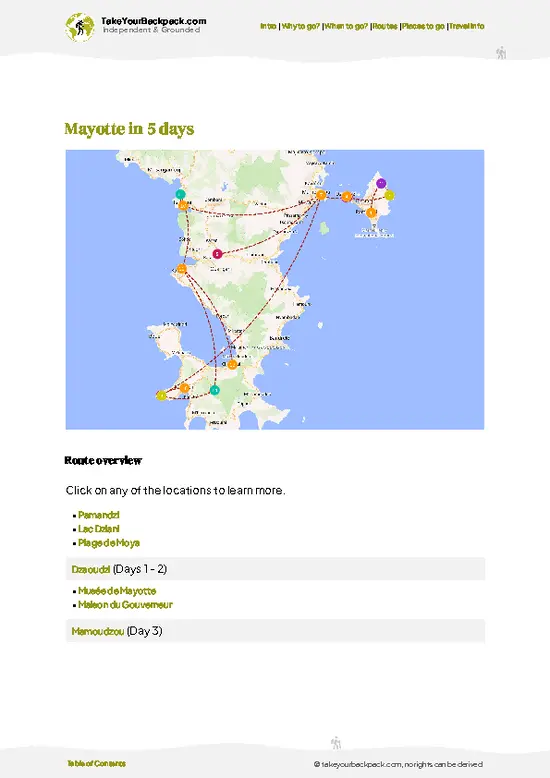
Petite-Terre and Dzaoudzi: Take the barge across the strait in about 25 minutes and explore Dzaoudzi Rock, the old colonial buildings and the beach at Moya. Budget about €5 to 15 including snacks and local transport. Go in the morning, when the heat is mild, and do not leave the last return barge too late.

Mont Choungui and Saziley: The south of the island has the Saziley peninsula, where a coastal trail leads to cliffs, sea turtles and wide ocean views. Plan a full day, with about 1 to 1.5 hours each way by car, and costs of €30 to 60 if you rent a car and share it. Go in the dry season and start early to avoid the midday heat. First-timers often underestimate … read more 👉
Mamoudzou works well as a base because a lagoon barge, a handful of buses and rental cars reach most of the island in under two hours.
Petite-Terre and Dzaoudzi: Take the barge across the strait in about 25 minutes and explore Dzaoudzi Rock, the old colonial buildings and the beach at Moya. Budget about €5 to 15 including snacks and local transport. Go in the morning, when the heat is mild, and do not leave the last return barge too late.

Mont Choungui and Saziley: The south of the island has the Saziley peninsula, where a coastal trail leads to cliffs, sea turtles and wide ocean views. Plan a full day, with about 1 to 1.5 hours each way by car, and costs of €30 to 60 if you rent a car and share it. Go in the dry season and start early to avoid the midday heat. First-timers often underestimate the shade-free trail and run out of water.

N’Gouja Beach: This quiet southwestern beach is known for turtles grazing on seagrass right near the shore, which you can see by snorkeling. Reaching it takes roughly 1 hour by car from the capital, and a day costs around €20 to 40 including fuel and a meal. Visit from May to October for calmer seas. Keep distance from the turtles and avoid touching them.

Mount Bénara and the Dapani Lookout: Mount Bénara is the island’s highest point, and a hike through forest rewards you with views over the lagoon. Allow a half day, with about 1 hour by car and low costs of €10 to 25 if you carry your own food. Choose a clear morning because cloud covers the summit by midday. Wear proper shoes because the path is muddy after rain.

🛡️ SafetyTraveler Safety Guide

Mamoudzou is broadly safe for travelers, but petty theft and occasional tension in poorer neighborhoods mean you should stay aware. Kawéni and some outer districts have seen higher crime and unrest at times, so check local news and avoid wandering there after dark. Phones and bags left in cars or on beaches are the most common loss, so keep valuables out of sight and never leave anything in a parked car.

Solo travelers, including women, usually manage well in the daytime center. At night, take a taxi instead of walking between districts, and stay on lit main streets near the waterfront. Roads are the larger daily hazard, with fast traffic, narrow shoulders and heavy congestion, so cross carefully.

Scams are not a widespread problem, though agree on taxi fares before getting in. Strikes or … read more 👉
Mamoudzou is broadly safe for travelers, but petty theft and occasional tension in poorer neighborhoods mean you should stay aware. Kawéni and some outer districts have seen higher crime and unrest at times, so check local news and avoid wandering there after dark. Phones and bags left in cars or on beaches are the most common loss, so keep valuables out of sight and never leave anything in a parked car.

Solo travelers, including women, usually manage well in the daytime center. At night, take a taxi instead of walking between districts, and stay on lit main streets near the waterfront. Roads are the larger daily hazard, with fast traffic, narrow shoulders and heavy congestion, so cross carefully.

Scams are not a widespread problem, though agree on taxi fares before getting in. Strikes or road blockades can occasionally disrupt travel, so allow buffer time before flights. Keep a copy of your passport, carry small cash, and use common sense at beaches and trailheads.

FAQFrequently asked questions about Mamoudzou

Mamoudzou is worth a day or two as the island’s gateway, though most of Mayotte’s appeal lies outside it. The covered market, the Hamaha seafront and the barge to Petite-Terre fill a day, while beaches like N’Gouja and Saziley are 1 to 1.5 hours away by road. Treat it as a base rather than a destination in itself.
Two days is enough for Mamoudzou itself, but plan 4 to 6 days on Mayotte if you want to add Petite-Terre, N’Gouja for turtle snorkeling and a hike at Mount Bénara or Saziley. Using the capital as a base works well since most sites lie within 1 to 2 hours. Daily costs run roughly €90 to 100 on a budget.
Mamoudzou itself is the main hub, so nearby places like Petite-Terre, a 25-minute barge ride away for about €1, are easy day outings. Anyone arriving from outside the island generally flies into the airport on Petite-Terre, so Mamoudzou is not a day trip from another city. Within the island, southern beaches and trails are possible in a day with an early start.
⚠️ Things can change over time, so always validate details locally before you go.

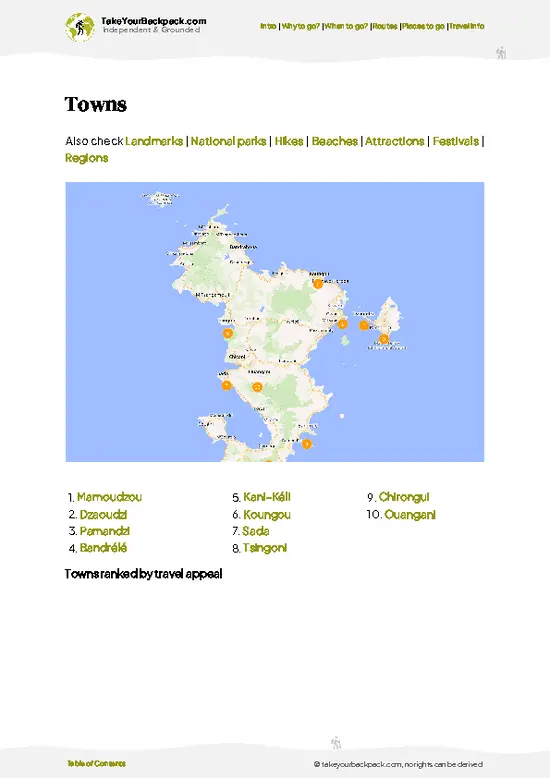
Other Mahoran towns near Mamoudzou

Explore more nearby:

  • Sima—eastern coast, fishing port, mangrove creeks| 0 km away
  • Dzaoudzi—peninsula setting, colonial architecture, ferry port| 3 km away
  • Pamandzi—airport access, Petite-Terre, salt lake| 5 km away

💡 Not sure where to go next?
Create a personalized itinerary for Mayotte including Mamoudzou and the places that fit your trip.

Generate my itinerary

👉 Discover all towns

Or checkout all Mayotte has to offer (think cities, towns, villages, national parks, hikes, beaches, festivals)
Country photo of Mayotte

We 💚 feedbackParting advice and final tips

Mamoudzou deserves one night, two if you need to stock up, sort out transport and eat well. More than that and you will be itching for the beaches and trails elsewhere on the island. Spend your evening on the waterfront with a skewer in hand, and go early to the market, because the heat and traffic build fast after 10.

✍️ Help improve this page!
The information on this page is based on in-depth research, insights shared by experienced travelers, and feedback from the local travel community in Mayotte. While every effort is made to keep the information accurate and current, conditions can change — so if you spot anything incorrect or outdated, please get in touch.


🙋‍♂️ Give feedback

👋 Meet the founderWho’s Behind Take Your Backpack?

Johan, backpacker and founder of TakeYourBackpackHi, I’m Johan (Netherlands 🇳🇱), the creator of TakeYourBackpack. Over the past 3 decades, I’ve backpacked through 90+ countries across six continents, gaining extensive experience with independent travel, long-term trips, and overland routes.

This site is built on a combination of firsthand travel experience and carefully curated insights from other backpackers. Many guides are based on places I’ve personally visited, while others bring together tips, observations, and practical advice shared by trusted travelers I’ve met along the way.

The goal is to provide realistic, experience-driven guidance — not generic itineraries — so you can explore destinations with better context, clearer expectations, and more confidence.