×

Mayotte🇾🇹 | best townsExplore the 10 Best towns in Mayotte

Towns in Mayotte are French in their paperwork and Comorian in their rhythm: concrete banks beside tin-roofed houses, minibuses honking at dawn, ylang-ylang and frying banana on warm air. The island is small, so the real differences are atmosphere and access. The crowded Grande-Terre hub is loud and pricey, while quieter southern and northern villages are slower. Independent travelers need patience, a rental car and cash.

By Johan Kruseman 🇳🇱 | Updated October 23, 2026
Explore the best landmarks in Mayotte

Why go?Understanding Their Importance

Mayotte works for towns because a volcanic island ringed by one of the world’s largest closed lagoons squeezed settlement onto narrow coastal strips and steep hillsides. The result is dense, loud places where Shimaore and Kibushi mix with French, women wear bright salouva wraps, and the call to prayer competes with scooter engines. As a French department using the euro, it has French prices, supermarkets and roads, yet public transport is thin and informal. Housing is crowded, and tin-roofed neighborhoods climb right up the slopes. Before choosing Mayotte for its towns, know that sightseeing infrastructure is limited, there are few hostels, and daily life is the attraction: markets, mosques, fishing boats at dusk, and the smell of charcoal and spice. Expect heat, litter in places, and warm, curious locals.
Evaluating the Top Choices
The list of best towns in Mayotte is created based on charm, local culture, atmosphere, hidden gems, and visitor appeal. If you feel a town is missing in this list, please let us know.

When to go?Optimal Periods for Travel

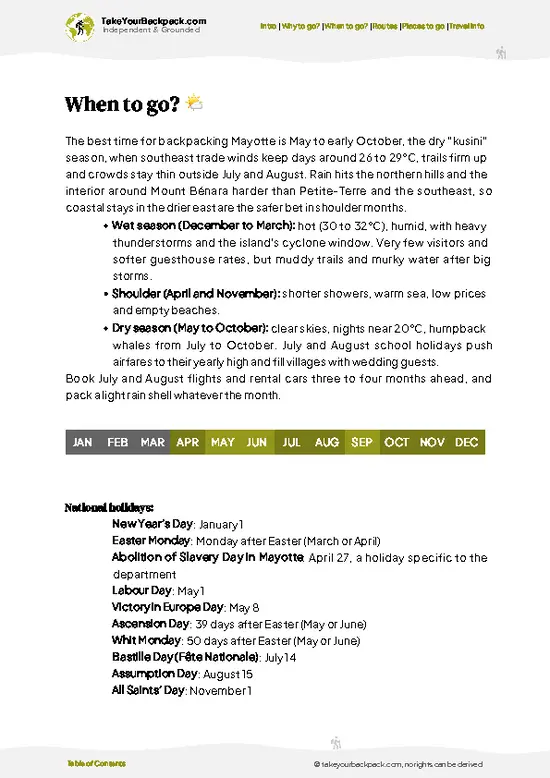
Best months: The best months are May to October, the dry season, when days sit around 27 to 30°C, humidity drops and streets are comfortable to walk. Mornings are bright, with a dry breeze and clear light on the hills.Shoulder and wet season: September to October is the sweet spot, with the lagoon calm and little rain. November to April is hot (30 to 33°C), sticky and wet, with heavy downpours that turn unpaved lanes muddy and can flood roads. Cyclone risk peaks roughly January to March, and heavy rain is common then. Rainfall is far higher in the wet months, often several hundred millimeters monthly at the peak.Crowds and prices: Mayotte has no mass tourism, but flights get dearer around July to August and French school holidays, when diaspora visitors return. Ramadan changes opening hours, … read more 👉
Best months: The best months are May to October, the dry season, when days sit around 27 to 30°C, humidity drops and streets are comfortable to walk. Mornings are bright, with a dry breeze and clear light on the hills.Shoulder and wet season: September to October is the sweet spot, with the lagoon calm and little rain. November to April is hot (30 to 33°C), sticky and wet, with heavy downpours that turn unpaved lanes muddy and can flood roads. Cyclone risk peaks roughly January to March, and heavy rain is common then. Rainfall is far higher in the wet months, often several hundred millimeters monthly at the peak.Crowds and prices: Mayotte has no mass tourism, but flights get dearer around July to August and French school holidays, when diaspora visitors return. Ramadan changes opening hours, so food stalls shut by day and come alive at sunset.

town hoppingHow to Combine towns Into One Trip

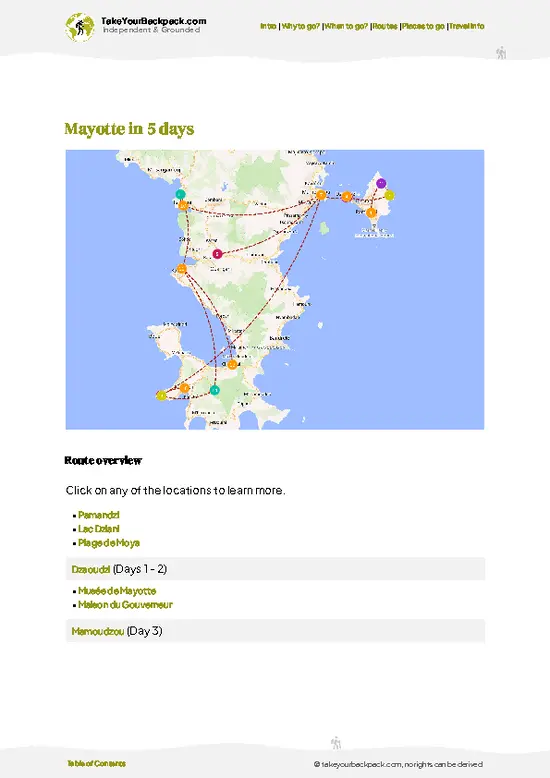
Time needed: A trip linking several towns needs 4 to 7 days, because roads are narrow and traffic is heavy. Mamoudzou, the main hub, and the ferry to Petite-Terre sit at one end of the island. Group the north and center first, then drive south and loop back, so you avoid backtracking through the capital.Pacing and transfers: Allow half a day to a full day per stop. Drives between regions usually take 45 to 90 minutes, but the Mamoudzou bottleneck can double that at morning and evening rush hour. Minibuses (taxis collectifs) run less often after mid-afternoon and are scarce on Sundays.Common mistakes: Travelers cram too many stops into one day, then sit in traffic with the heat pressing through the windows. Leave early, finish before dusk, and rent a car for flexibility. The Petite-Terre ferry … read more 👉
Time needed: A trip linking several towns needs 4 to 7 days, because roads are narrow and traffic is heavy. Mamoudzou, the main hub, and the ferry to Petite-Terre sit at one end of the island. Group the north and center first, then drive south and loop back, so you avoid backtracking through the capital.Pacing and transfers: Allow half a day to a full day per stop. Drives between regions usually take 45 to 90 minutes, but the Mamoudzou bottleneck can double that at morning and evening rush hour. Minibuses (taxis collectifs) run less often after mid-afternoon and are scarce on Sundays.Common mistakes: Travelers cram too many stops into one day, then sit in traffic with the heat pressing through the windows. Leave early, finish before dusk, and rent a car for flexibility. The Petite-Terre ferry takes about 10 minutes, but queues build, so cross outside peak hours.

The ListTop towns of Mayotte

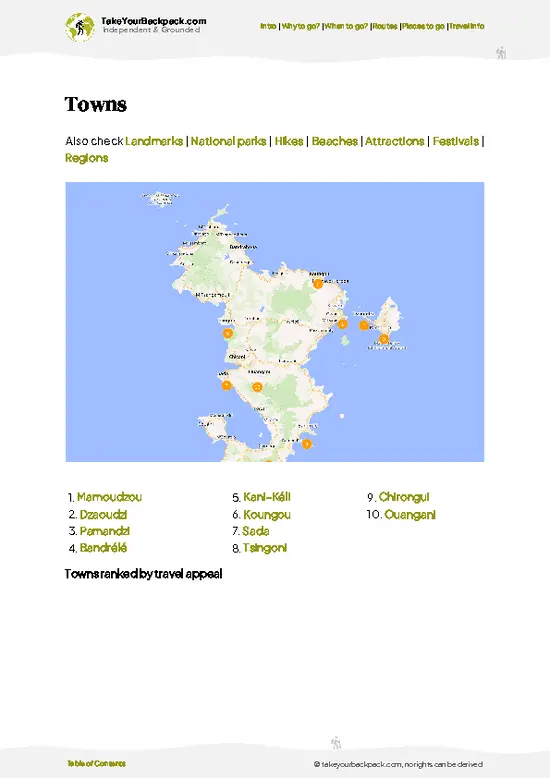
1 Mamoudzou

Marché couvert, ferry waterfront, MUMA museum, hillside quarter

Browse the covered market for cassava, vanilla and fish, watch barges cross from the seafront, and learn the island’s history at the museum.

2 Dzaoudzi

Colonial rock, barge landing, crab causeway, quayside

Climb the old administrative rock above the lagoon, visit the island museum, then walk the causeway where crabs cross the tidal mud.

3 Pamandzi

Airport town, Lac Dziani, Plage de Moya, Mont Vigie

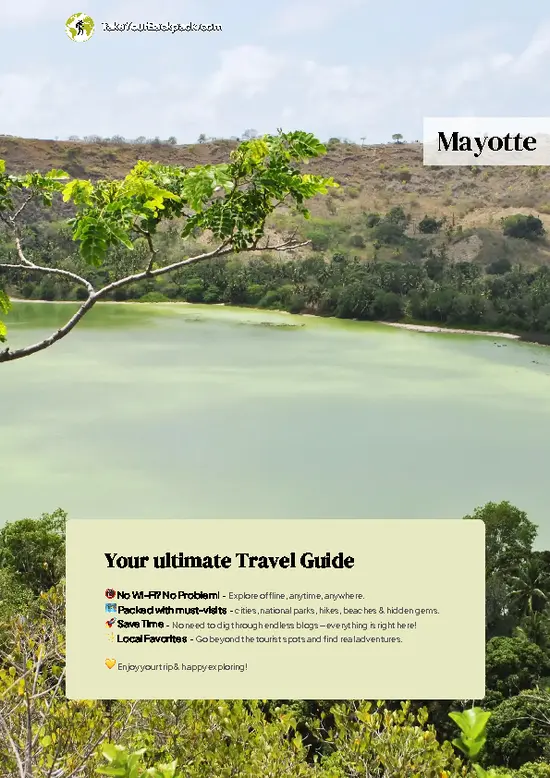
Circle the green crater lake, swim at Moya’s calm shallows, and climb a low hill for views across the runway and reef line.

mayotte-city-pamandzi
© Google |

4 Bandrélé

Iron Age remains, Musical Plage, lagoon pull-offs, roadside grilled fish

Visit the village known for early Indian Ocean settlement finds, then swim in the shallow lagoon at Musical Plage and stop at roadside stands.

mayotte-city-bandrele
© Google |

5 Kani-Kéli

Mont Choungui, ylang-ylang hills, fishing landing, southwest shore

Hike the volcanic summit for views over the southern lagoon, then walk through perfume-flower hills and watch boats bring in the catch.

6 Koungou

Mangrove seafront, neighborhood bakeries, gray-sand bays, morning market

Walk a working coast of mangroves and dark sand, buy samosas and fried banana from roadside stands, and see the older mosque quarters.

7 Sada

Fishing pirogues, west-coast mangroves, village mosque, corrugated lanes

Watch fishermen sort tuna and octopus on the sand, then follow back lanes past banana trees, the mosque minaret and tidal mangroves.

mayotte-city-sada
© Google |

8 Tsingoni

16th-century mosque, Sultans’ cemetery, fortress ruins, cassava stalls

Tour the island’s oldest mosque and the graves beside it, trace the stone remains of the sultan’s residence, and eat at roadside stalls.

9 Chirongui

Bouéni Bay mangroves, dawn pirogues, painted shutters, kayak outings

Paddle or walk the mangrove edge of the bay, then wander quiet lanes where fishermen launch wooden boats and neighbors gather outside in the afternoon.

10 Ouangani

Farming villages, Kahani, Barakani, roadside fruit stalls

Stroll through hillside villages of fruit gardens and tin roofs, and buy bananas, mangoes and cassava from growers selling beside the road.

Loading the map 🌍

Expert viewInsights from Locals and Experts

How many towns: I would advise three or four towns. Mayotte is small, but heat, traffic and thin transport eat time, and a shorter list leaves room to wander markets and shorelines at ease. You come away with the evening light on the water and a plate of grilled fish instead of a blur of car windows.Which kind to prioritize: If you want energy, choose the busy hub: loud, crowded, with fabric stalls, fruit piles and the best choice of food. If you want calm, pick smaller coastal villages where you hear waves, roosters and the call to prayer. Mixing one of each gives the clearest picture of island life.Budget: Mayotte uses the euro and costs are French-level. Budget €60 to 110 a day for a backpacker: guesthouse or basic room €40 to 80, street food or small restaurants €8 to 20 a meal, and shared … read more 👉
How many towns: I would advise three or four towns. Mayotte is small, but heat, traffic and thin transport eat time, and a shorter list leaves room to wander markets and shorelines at ease. You come away with the evening light on the water and a plate of grilled fish instead of a blur of car windows.Which kind to prioritize: If you want energy, choose the busy hub: loud, crowded, with fabric stalls, fruit piles and the best choice of food. If you want calm, pick smaller coastal villages where you hear waves, roosters and the call to prayer. Mixing one of each gives the clearest picture of island life.Budget: Mayotte uses the euro and costs are French-level. Budget €60 to 110 a day for a backpacker: guesthouse or basic room €40 to 80, street food or small restaurants €8 to 20 a meal, and shared minibuses at a few euros per ride. A rental car is about €35 to 60 a day plus fuel. Towns themselves are free to walk, and guided cultural walks or boat trips cost roughly €20 to 60. Carry cash for small stalls.Safety and culture: Mayotte is mostly Muslim, so dress modestly in town: covered shoulders and knees, especially near mosques and during Ramadan. Ask before photographing people, and women often prefer not to be photographed. Petty theft and occasional unrest affect parts of the island, so avoid walking alone after dark in dense districts, keep valuables out of sight and check local news before travel. Roads can be blocked by protests, and tropical downpours flood lanes quickly. Respect gets you far: a greeting in French or Shimaore usually brings a smile and sometimes a shared fruit.

✈️ The backpacker research shortcutMayotte Travel Guide

An offline-friendly backpacking guide with optimized travel routes, ranked highlights, transport advice, and the best areas to stay.
example page 0 from our offline Travel Guide for Mayotte
example page 1 from our offline Travel Guide for Mayotte
example page 2 from our offline Travel Guide for Mayotte
example page 3 from our offline Travel Guide for Mayotte
example page 4 from our offline Travel Guide for Mayotte
example page 5 from our offline Travel Guide for Mayotte
example page 6 from our offline Travel Guide for Mayotte
example page 7 from our offline Travel Guide for Mayotte
The digital guide (129 pages) contains:
✅ 27 highlights, ranked by travel appeal
✅ Optimized 2, 3 & 5-day travel routes
✅ Cities, national parks, landmarks, beaches
✅ How to get around
✅ Offline-friendly for travel without Wi-Fi
👉 Click to see all 30+ guide features

📅 Plan smarter in minutes, not weeks
✅ Month by month travel advice
✅ Festivals & national holidays
✅ Budget expectations

🗺️ Go to the right places, skip the overrated ones
✅ Honest pros & cons of destinations
✅ Top hikes, parks & viewpoints
✅ Lesser-known places most travelers miss
✅ Clear “worth it vs skip it” guidance

🛏️ Travel smoothly without rookie mistakes
✅ Best areas to stay
✅ Transport systems explained simply
✅ Common scams & safety advice
✅ SIM cards, money & practical tips

🌍 Understand the country, not just visit it
✅ Culture & traditions
✅ 52 Essential phrases & customs
✅ Festivals worth planning around
✅ Traveler-friendly historical context
✅ Insights that make places more meaningful

📱 Built for real travel conditions
✅ Fully downloadable PDF
✅ Works completely offline
✅ Optimized for phone use
✅ Useful in remote areas & buses
✅ Everything in one place
Stop searching, start planning
Get instant access to your full guide. 30‑day money-back guarantee.
+ Add another guide for just

By proceeding you agree to our terms.
Sent to your inbox immediately after payment • 100% Secure Checkout
Best Backpacking Travel Advisor 2025 tourism awardBest Backpacking
Travel Advisor
2025
What others say about Take Your Backpack Guides:
⭐⭐⭐⭐⭐
Fantastic, amazing amount of information!
⭐⭐⭐⭐⭐
My goodness this is amazing, it's what I've been looking for hats off too you!
⭐⭐⭐⭐⭐
I think this is absolutely BRILLIANT
⭐⭐⭐⭐
Very complete and informative. It's still missing places, but I gotta to commend you
⭐⭐⭐⭐⭐
This is truly amazing, thank you, can't wait to explore it with my kids!
⭐⭐⭐⭐⭐
Awesome resource, thank you!
⭐⭐⭐⭐⭐
This is amazing! Can't wait to explore the ones I haven't seen
⭐⭐⭐⭐
I love this! Well done, great idea.
⭐⭐⭐⭐⭐
Thanks for taking the time to make this gem!
⭐⭐⭐⭐⭐
This might be the best website I've ever seen.
⭐⭐⭐⭐⭐
Congratulations, and thank you so much for your work; it's incredibly valuable.
⭐⭐⭐⭐
In all seriousness I think you did a great job pointing out the important spots
⭐⭐⭐⭐⭐
10/10 very good
⭐⭐⭐⭐⭐
As someone who's only just starting to visit regularly this is awesome, thank you.
⭐⭐⭐⭐
Thank you very much! I'm going to visit my dad, it's going to be very useful!
⭐⭐⭐⭐⭐
This is really cool! We'll be travelling for the first time and this definitely come in handy.
⭐⭐⭐⭐⭐
You are now our minister of culture, congratulations 👨‍💼
⭐⭐⭐⭐⭐
Just wanted to tell you that this is a pearl! Going to follow your recommendations.
⭐⭐⭐⭐⭐
This is so cool. I'll definitely be using the resource for my travels soon.
⭐⭐⭐⭐⭐
This is very impressive! Good work.
⭐⭐⭐⭐⭐
This is an amazing and informative site. Very well done!

🛏️ Where to stay?Where to Stay in Mayotte

Mayotte has no backpacker hostels in the usual sense, so budget travel here means guesthouses, rural gîtes and rooms in private homes, typically €40 to €70 a night for a double. Mamoudzou has the most options and puts you at the barge terminal and bus stops, but it is loud, traffic-choked and best avoided on foot after dark, while Petite-Terre (Dzaoudzi and Pamandzi) is calmer, close to the airport and Moya beach, and has a few bars around the waterfront. The south around Kani-Kéli and N’Gouja is the quietest choice and the best for beaches and turtle snorkeling, though you will need a rental car because evening transport is close to nonexistent.

If you enjoy meeting fellow travelers, consider … read more 👉
Mayotte has no backpacker hostels in the usual sense, so budget travel here means guesthouses, rural gîtes and rooms in private homes, typically €40 to €70 a night for a double. Mamoudzou has the most options and puts you at the barge terminal and bus stops, but it is loud, traffic-choked and best avoided on foot after dark, while Petite-Terre (Dzaoudzi and Pamandzi) is calmer, close to the airport and Moya beach, and has a few bars around the waterfront. The south around Kani-Kéli and N’Gouja is the quietest choice and the best for beaches and turtle snorkeling, though you will need a rental car because evening transport is close to nonexistent.

If you enjoy meeting fellow travelers, consider choosing hostels with high ratings for atmosphere. On the other hand, if you prefer having your own space, a hotel might be a better option.

MayotteMore of Mayotte

👋 Meet the founderWho’s Behind Take Your Backpack?

Johan, backpacker and founder of TakeYourBackpackHi, I’m Johan (Netherlands 🇳🇱), the creator of TakeYourBackpack. Over the past 3 decades, I’ve backpacked through 90+ countries across six continents, gaining extensive experience with independent travel, long-term trips, and overland routes.

This site is built on a combination of firsthand travel experience and carefully curated insights from other backpackers. Many guides are based on places I’ve personally visited, while others bring together tips, observations, and practical advice shared by trusted travelers I’ve met along the way.

The goal is to provide realistic, experience-driven guidance — not generic itineraries — so you can explore destinations with better context, clearer expectations, and more confidence.