×
Chichen Itza

Mexico🇲🇽 | landmarksChichen ItzaEl Castillo echo, giant ball court, observatory, skull platform | things to do and best time to go

Explore Cenote Ik KilExplore El Tajín

Backpacking in Chichen Itza
UNESCO World Heritage site
🏆 Top pickunique site ranked #1
By Johan Kruseman 🇳🇱 | Updated October 20, 2026

I clapped once at the foot of El Castillo and a chirp like a startled bird came bouncing back down the staircase. Then I clapped nine more times, which is how I learned that forty other people were doing exactly the same thing. Chichen Itza sits in the middle of the Yucatán Peninsula in the east of Mexico, inland from the Caribbean coast and east of Mérida. Be realistic: the ticket is pricey by Mexican standards, tour buses arrive in waves by mid-morning, and ropes keep you off every pyramid. My mistake was turning up after the buses and spending my first hour dodging selfie sticks and hawkers of wooden jaguar whistles that shriek like a tortured cat. Arrive at opening and the place changes entirely. You get a thousand-year-old city with room to hear the echoes properly. The last thing I would look at is the Tzompantli, where every carved skull on the stone platform has a slightly different face.

Discover everything you want to know in the 📖 Mexico Travel Guide.


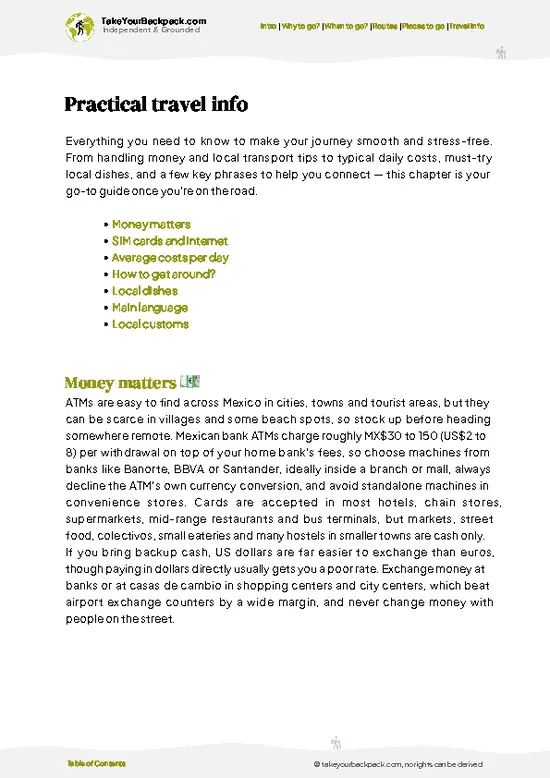
example page 0 from our offline Travel Guide for Mexico
example page 1 from our offline Travel Guide for Mexico
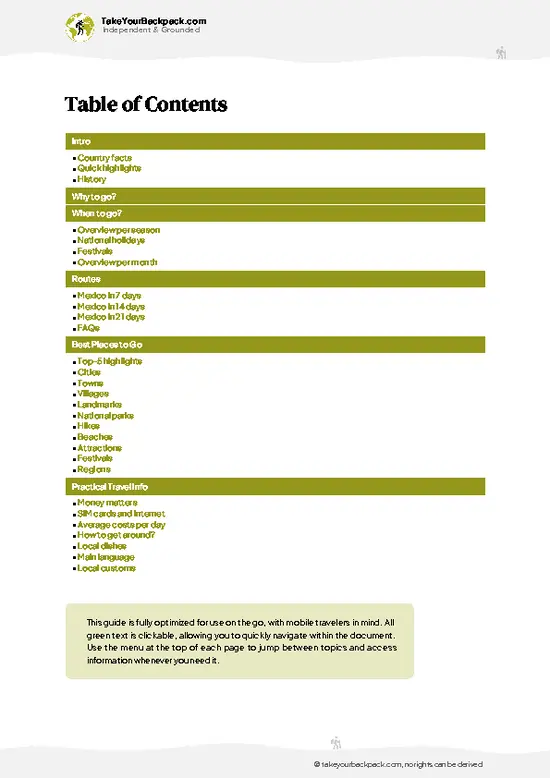
example page 2 from our offline Travel Guide for Mexico
example page 3 from our offline Travel Guide for Mexico
example page 4 from our offline Travel Guide for Mexico
example page 5 from our offline Travel Guide for Mexico
example page 6 from our offline Travel Guide for Mexico
example page 7 from our offline Travel Guide for Mexico
Loading the map 🌍
CLICK TO FILTER
cities
towns
villages
landmarks
national parks
hikes
beaches
attractions
festivals
regions
SHOW COUNTRY’S BESTSHOW ALL

✨ Why go?
Ranked #1 unique site in Mexico
What sets this place apart

Chichen Itza earns the trip because few ancient sites anywhere pair such legible engineering with such a clear story. The feathered serpent shadow that slithers down El Castillo’s staircase around the spring and autumn equinoxes was planned by Maya astronomers, and the pyramid’s 365 steps (91 on each of four sides plus the top platform) track the solar year. That is a detail you can check with your own eyes, not a guide’s claim.
It is also easy to reach. Chichen Itza lies on the main road between Mérida and the Caribbean coast, so it slots into a Yucatán loop without a detour. Valladolid, a small colonial town close by, makes a far calmer base than the resort strip, and nearby cenotes let you swim after a morning among ruins.
The site rewards a bit of planning. Go early, hire a licensed guide … read more 👉
Chichen Itza earns the trip because few ancient sites anywhere pair such legible engineering with such a clear story. The feathered serpent shadow that slithers down El Castillo’s staircase around the spring and autumn equinoxes was planned by Maya astronomers, and the pyramid’s 365 steps (91 on each of four sides plus the top platform) track the solar year. That is a detail you can check with your own eyes, not a guide’s claim.
It is also easy to reach. Chichen Itza lies on the main road between Mérida and the Caribbean coast, so it slots into a Yucatán loop without a detour. Valladolid, a small colonial town close by, makes a far calmer base than the resort strip, and nearby cenotes let you swim after a morning among ruins.
The site rewards a bit of planning. Go early, hire a licensed guide at the gate if you want the astronomy and the Great Ball Court acoustics explained, then wander the quieter southern group, where the crowds thin and the jungle presses in.

💡 HighlightsKey sights and experiences for travelers

  1. El Castillo (Temple of Kukulkan): The 30-meter stepped pyramid is the image everyone searches for. Four staircases face the cardinal directions, and serpent heads sit at the base of the north stairs. Clap in front of it and the echo returns as a bird-like chirp that guides link to the quetzal. Climbing has been banned since the mid-2000s, so views are from the plaza.
  2. Great Ball Court: At roughly 168 meters long, this is the largest known ball court in Mesoamerica. Stone rings are set high on the side walls, and carved panels show players and a beheaded figure. A whisper at one end carries remarkably far along the walls.
  3. Temple of the Warriors and Group of a Thousand Columns: Rows of square and round pillars carved with warrior figures lead up to a temple topped by a reclining Chac Mool figure.
… read more 👉
  1. El Castillo (Temple of Kukulkan): The 30-meter stepped pyramid is the image everyone searches for. Four staircases face the cardinal directions, and serpent heads sit at the base of the north stairs. Clap in front of it and the echo returns as a bird-like chirp that guides link to the quetzal. Climbing has been banned since the mid-2000s, so views are from the plaza.
  2. Great Ball Court: At roughly 168 meters long, this is the largest known ball court in Mesoamerica. Stone rings are set high on the side walls, and carved panels show players and a beheaded figure. A whisper at one end carries remarkably far along the walls.
  3. Temple of the Warriors and Group of a Thousand Columns: Rows of square and round pillars carved with warrior figures lead up to a temple topped by a reclining Chac Mool figure. The colonnades once held a roof, and the scale gives a sense of how a market or assembly hall might have worked.
  4. Sacred Cenote: A natural sinkhole about a ten-minute walk north along a stone causeway. Divers have recovered jade, gold, pottery and human remains from the water, which supports the idea that offerings were made here during drought.
  5. El Caracol: This round observatory has a spiral staircase inside, which is where it gets its snail name. Narrow window slits line up with the movements of Venus and with equinox sunsets, so the Maya used it for tracking the heavens.
  6. Tzompantli (Platform of Skulls): A low platform whose walls are carved with rows of skulls on racks. It is small and easy to walk past, but it shows the darker ritual side of the city better than any plaque does.
  7. Las Monjas and the Old Chichen group: This southern group is older and in the Puuc style, with intricate stone latticework and the Akab Dzib building. Fewer people come this far, so you can look at the carvings without a crowd.
  8. Temple of the Jaguars and Shields: Set beside the ball court, its upper chamber has faded murals of battle scenes, and jaguar figures decorate the facade. It is one of the better places to see painted detail.
Every sight above is included in the single Chichen Itza ticket (roughly US$35 to 40 for foreign visitors), so the cheapest are the ones you pass on the way, such as the Tzompantli, which needs almost no time at all.
Spotted a mistake or missing something? Contact us.

Things to do around Chichen Itza

Ratings based on Tripadvisor reviews. When you book through this link, you support our work at no extra cost to you.

🌤️ When to go?When to go for the best experience

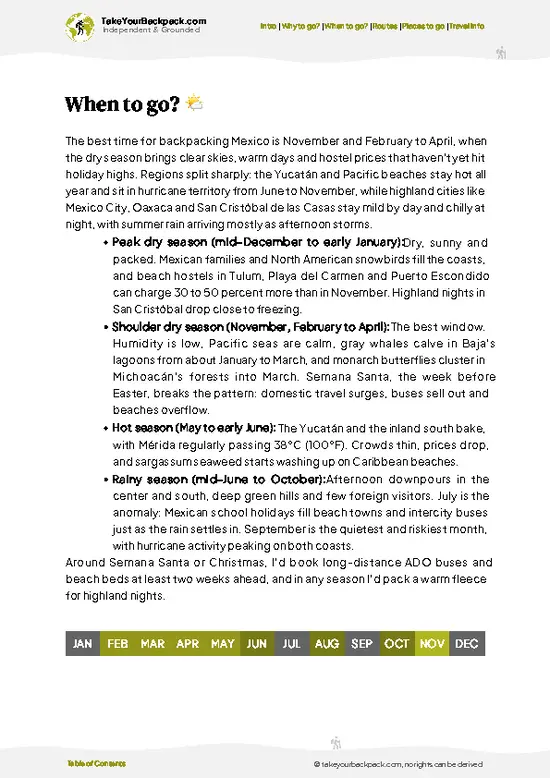
  • Dry Season (November to March): Chichen Itza is most comfortable from late November through February, with highs of 28 to 31°C (82 to 88°F) and cool mornings near 18°C (64°F). Daylight runs roughly 11 to 11.5 hours, so arrive at opening.
  • Hot Season (April to June): Highs reach 34 to 38°C (93 to 100°F) by midday, with little shade on the main plaza. Crowds thin slightly after Easter, and hotel rates in Valladolid and nearby drop.
  • Rainy Season (July to October): Expect hot, humid days of 32 to 35°C (90 to 95°F) and short afternoon downpours, with hurricane risk peaking in September and October. Mornings are usually dry, and prices are lowest.
  • Equinox (around March 20 and September 22): The serpent shadow descends the El Castillo staircase, drawing very large crowds and higher room prices in the
… read more 👉
  • Dry Season (November to March): Chichen Itza is most comfortable from late November through February, with highs of 28 to 31°C (82 to 88°F) and cool mornings near 18°C (64°F). Daylight runs roughly 11 to 11.5 hours, so arrive at opening.
  • Hot Season (April to June): Highs reach 34 to 38°C (93 to 100°F) by midday, with little shade on the main plaza. Crowds thin slightly after Easter, and hotel rates in Valladolid and nearby drop.
  • Rainy Season (July to October): Expect hot, humid days of 32 to 35°C (90 to 95°F) and short afternoon downpours, with hurricane risk peaking in September and October. Mornings are usually dry, and prices are lowest.
  • Equinox (around March 20 and September 22): The serpent shadow descends the El Castillo staircase, drawing very large crowds and higher room prices in the area.
  • Holidays (Christmas, New Year, Easter week): Tour buses from Cancun and the Riviera Maya fill the site by 11 a.m., and beds in Valladolid cost more.
Arrive for the 8 a.m. opening on a weekday in any season, and you will finish before the tour buses and the worst heat.


source: climatestotravel.comJANJanuary: highly recommended for travelingFEBFebruary: highly recommended for travelingMARMarch: good for travelingAPRApril: highly recommended for travelingMAYMay: fair for travelingJUNJune: fair for travelingJULJuly: below average for travelingAUGAugust: below average for travelingSEPSeptember: fair for travelingOCTOctober: highly recommended for travelingNOVNovember: excellent for travelingDECDecember: highly recommended for traveling
Mexico - Chichen Itza

✈️ The backpacker research shortcutMexico Travel Guide

An offline-friendly backpacking guide with optimized travel routes, ranked highlights, transport advice, and the best areas to stay.
example page 0 from our offline Travel Guide for Mexico
example page 1 from our offline Travel Guide for Mexico
example page 2 from our offline Travel Guide for Mexico
example page 3 from our offline Travel Guide for Mexico
example page 4 from our offline Travel Guide for Mexico
example page 5 from our offline Travel Guide for Mexico
example page 6 from our offline Travel Guide for Mexico
example page 7 from our offline Travel Guide for Mexico
The digital guide (402 pages) contains:
✅ 138 highlights, ranked by travel appeal
✅ Optimized 7, 14 & 21-day travel routes
✅ Cities, national parks, landmarks, beaches
✅ How to get around
✅ Offline-friendly for travel without Wi-Fi
👉 Click to see all 30+ guide features

📅 Plan smarter in minutes, not weeks
✅ Month by month travel advice
✅ Festivals & national holidays
✅ Budget expectations

🗺️ Go to the right places, skip the overrated ones
✅ Honest pros & cons of destinations
✅ Top hikes, parks & viewpoints
✅ Lesser-known places most travelers miss
✅ Clear “worth it vs skip it” guidance

🛏️ Travel smoothly without rookie mistakes
✅ Best areas to stay
✅ Transport systems explained simply
✅ Common scams & safety advice
✅ SIM cards, money & practical tips

🌍 Understand the country, not just visit it
✅ Culture & traditions
✅ 52 Essential phrases & customs
✅ Festivals worth planning around
✅ Traveler-friendly historical context
✅ Insights that make places more meaningful

📱 Built for real travel conditions
✅ Fully downloadable PDF
✅ Works completely offline
✅ Optimized for phone use
✅ Useful in remote areas & buses
✅ Everything in one place
Stop searching, start planning
Get instant access to your full guide. 30‑day money-back guarantee.
+ Add another guide for just

By proceeding you agree to our terms.
Sent to your inbox immediately after payment • 100% Secure Checkout
Best Backpacking Travel Advisor 2025 tourism awardBest Backpacking
Travel Advisor
2025
What others say about Take Your Backpack Guides:
⭐⭐⭐⭐⭐
Fantastic, amazing amount of information!
⭐⭐⭐⭐⭐
My goodness this is amazing, it's what I've been looking for hats off too you!
⭐⭐⭐⭐⭐
I think this is absolutely BRILLIANT
⭐⭐⭐⭐
Very complete and informative. It's still missing places, but I gotta to commend you
⭐⭐⭐⭐⭐
This is truly amazing, thank you, can't wait to explore it with my kids!
⭐⭐⭐⭐⭐
Awesome resource, thank you!
⭐⭐⭐⭐⭐
This is amazing! Can't wait to explore the ones I haven't seen
⭐⭐⭐⭐
I love this! Well done, great idea.
⭐⭐⭐⭐⭐
Thanks for taking the time to make this gem!
⭐⭐⭐⭐⭐
This might be the best website I've ever seen.
⭐⭐⭐⭐⭐
Congratulations, and thank you so much for your work; it's incredibly valuable.
⭐⭐⭐⭐
In all seriousness I think you did a great job pointing out the important spots
⭐⭐⭐⭐⭐
10/10 very good
⭐⭐⭐⭐⭐
As someone who's only just starting to visit regularly this is awesome, thank you.
⭐⭐⭐⭐
Thank you very much! I'm going to visit my dad, it's going to be very useful!
⭐⭐⭐⭐⭐
This is really cool! We'll be travelling for the first time and this definitely come in handy.
⭐⭐⭐⭐⭐
You are now our minister of culture, congratulations 👨‍💼
⭐⭐⭐⭐⭐
Just wanted to tell you that this is a pearl! Going to follow your recommendations.
⭐⭐⭐⭐⭐
This is so cool. I'll definitely be using the resource for my travels soon.
⭐⭐⭐⭐⭐
This is very impressive! Good work.
⭐⭐⭐⭐⭐
This is an amazing and informative site. Very well done!

🛏️ Where to stay?Where staying makes the most sense

Valladolid, about 40 kilometers east, is the best base for backpackers visiting Chichen Itza. It has a walkable colonial center around the main plaza, a dense cluster of hostels and guesthouses, and an easy social scene. Dorm beds run roughly US$10 to 18, and private rooms US$30 to 60. Colectivos and buses to the ruins leave from the center, so you can reach the gate in about 40 to 60 minutes. The streets around Calzada de los Frailes are safe to walk in the evening, and cenotes such as Zaci and Suytun sit within the town or a short bike or taxi ride away.

Pisté, the village right beside the … read more 👉
Valladolid, about 40 kilometers east, is the best base for backpackers visiting Chichen Itza. It has a walkable colonial center around the main plaza, a dense cluster of hostels and guesthouses, and an easy social scene. Dorm beds run roughly US$10 to 18, and private rooms US$30 to 60. Colectivos and buses to the ruins leave from the center, so you can reach the gate in about 40 to 60 minutes. The streets around Calzada de los Frailes are safe to walk in the evening, and cenotes such as Zaci and Suytun sit within the town or a short bike or taxi ride away.

Pisté, the village right beside the ruins, is the option if you want to be at the gate when it opens. It is small and quiet, with a handful of simple guesthouses and a few budget places along the main road. Rooms cost about US$25 to 50, but nightlife is almost nonexistent, so you will not meet many other travelers. It suits one night only.

If you are crossing the peninsula, Merida (about 120 kilometers west) has a larger hostel scene and many more people to share tours or rides with. It works as a stop before or after, though the day trip is long.

👛 Costs (as of 20 October 2026)Money, prices, and spending tips

Chichen Itza costs a backpacker around US$64 to 125 a day, and the entrance fee is the biggest single item. Prices below are for high season, and you pay in pesos at the gate and in town.
CategoryBudget RangeLocal Reality
Entrance TicketUS$30 to 36Combines federal and Yucatan state fees; foreign visitors pay the full rate, and card payment can be unreliable, so carry cash.
Accommodation (high season)US$12 to 20Dorm bed in Valladolid; private rooms run US$30 to 60, and low season is 15 to 25 percent cheaper.
TransportUS$6 to 12Colectivo or second-class bus between Valladolid and the ruins is about US$2 to 4 each way; a taxi costs US$25 to 35 one way.
FoodUS$10 to 18Market meals and cochinita pibil run US$3 to 6; restaurants near the gate charge US$10 to 20.
GuideUS$0 to 25Licensed guides at the entrance
… read more 👉
Chichen Itza costs a backpacker around US$64 to 125 a day, and the entrance fee is the biggest single item. Prices below are for high season, and you pay in pesos at the gate and in town.
CategoryBudget RangeLocal Reality
Entrance TicketUS$30 to 36Combines federal and Yucatan state fees; foreign visitors pay the full rate, and card payment can be unreliable, so carry cash.
Accommodation (high season)US$12 to 20Dorm bed in Valladolid; private rooms run US$30 to 60, and low season is 15 to 25 percent cheaper.
TransportUS$6 to 12Colectivo or second-class bus between Valladolid and the ruins is about US$2 to 4 each way; a taxi costs US$25 to 35 one way.
FoodUS$10 to 18Market meals and cochinita pibil run US$3 to 6; restaurants near the gate charge US$10 to 20.
GuideUS$0 to 25Licensed guides at the entrance charge about US$25 to 40 per group, so splitting the cost helps; audio apps are a cheaper option.
Cenote VisitUS$3 to 8Ik Kil is about US$12 to 15; Zaci and other local cenotes charge less.
Water and ExtrasUS$3 to 6Bottled water and snacks inside the site cost double the town price.
Total Daily BudgetUS$64 to 125Roughly US$85 for a typical day with a bed, bus, meals, and entry.


source: inah.gob.mx
⚠️ Prices can change and everyone travels differently, so take this as a rough guide. Hope it helps you plan your adventure!

FAQFrequently asked questions about Chichen Itza

Chichen Itza is a Maya city in the Yucatan Peninsula, active between roughly 600 and 1200 CE and now one of the New Seven Wonders of the World. Its landmark is the 24-meter pyramid of El Castillo, built with a staircase of 91 steps per side. The site also holds the largest ball court in Mesoamerica, the Temple of the Warriors, and the Sacred Cenote. Entry costs about US$30 to 36.
Chichen Itza takes about 3 to 4 hours for a good walk through the main plaza, the ball court, the observatory, and the older southern group. Arriving at the 8 a.m. opening lets you finish before the midday heat and the tour-bus crowds. Add another 1 to 2 hours if you want a nearby cenote swim, such as Ik Kil. Staying overnight in Valladolid or Pisté makes the timing easy.
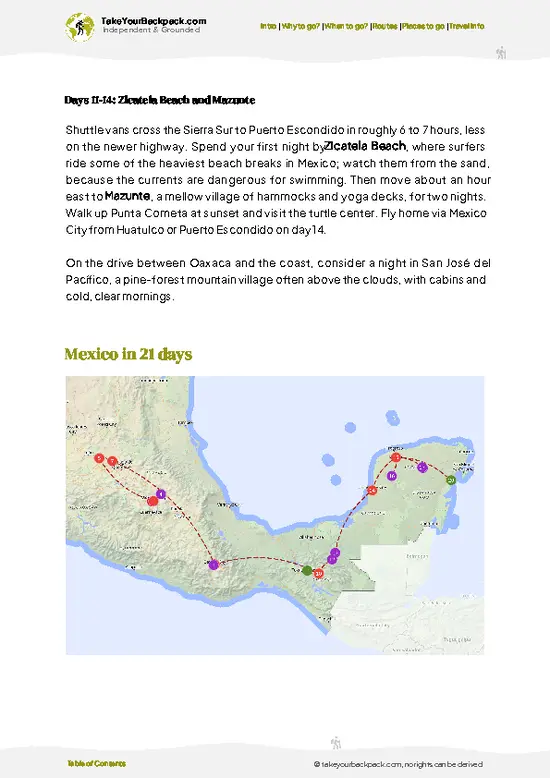
Chichen Itza lies about 2.5 hours by road from Cancun and 1.5 to 2 hours from Merida. From Valladolid, 40 kilometers east, colectivos and buses take 40 to 60 minutes and cost about US$2 to 4. ADO buses run from Cancun and Merida to the site directly for around US$12 to 22. A rental car takes you straight to the main parking lot.
⚠️ Things can change over time, so always validate details locally before you go.

Other Mexican landmarks near Chichen Itza

Explore more nearby:

  • Cenote Ik Kil—Open sinkhole, spiral stairs, hanging roots, jump platform| 3 km away
  • Río Lagartos—Estuary flamingos, pink salt ponds, mangrove channels, mud pool| 110 km away
  • Uxmal—Rounded Magician pyramid, Puuc latticework, Venus-aligned palace, night light show| 130 km away

💡 Not sure where to go next?
Create a personalized itinerary for Mexico including Chichen Itza and the places that fit your trip.

Generate my itinerary

👉 Discover all landmarks

Or checkout all Mexico has to offer (think cities, towns, villages, national parks, hikes, beaches, festivals)
Country photo of Mexico

We 💚 feedbackWhat to keep in mind

Chichen Itza is at its best in the first hour after the gates open, when the plaza is nearly empty and the echo off El Castillo carries clearly. I would book the earliest entry, go straight to the main pyramid and the ball court, and save the souvenir stalls for the walk out. I would skip the equinox weekends, when the crowds outweigh the shadow.

✈️ When did I visit Mexico?
As part of my 1.5 year travel around the world trip, I visited Mexico in February and March 2016. Had to hurry a bit as I didn’t want to miss the free performance of the Rolling Stones in Cuba.

✍️ Help improve this page!
The information on this page is based on my own backpacking experience in Mexico, supplemented with up-to-date research and feedback from other travelers. Travel details can change, so if you notice anything outdated or incomplete, feel free to let me know.


🙋‍♂️ Give feedback

👋 Meet the founderWho’s Behind Take Your Backpack?

Johan, backpacker and founder of TakeYourBackpackHi, I’m Johan (Netherlands 🇳🇱), the creator of TakeYourBackpack. Over the past 3 decades, I’ve backpacked through 90+ countries across six continents, gaining extensive experience with independent travel, long-term trips, and overland routes.

This site is built on a combination of firsthand travel experience and carefully curated insights from other backpackers. Many guides are based on places I’ve personally visited, while others bring together tips, observations, and practical advice shared by trusted travelers I’ve met along the way.

The goal is to provide realistic, experience-driven guidance — not generic itineraries — so you can explore destinations with better context, clearer expectations, and more confidence.