v2.webp)
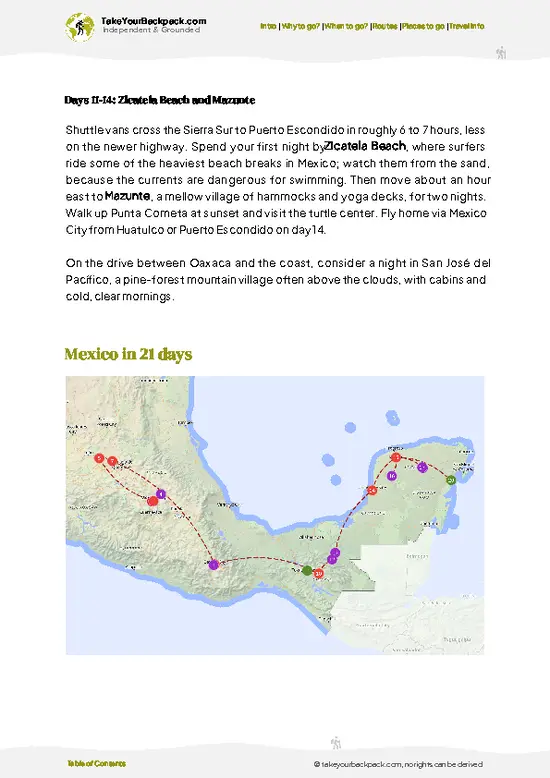
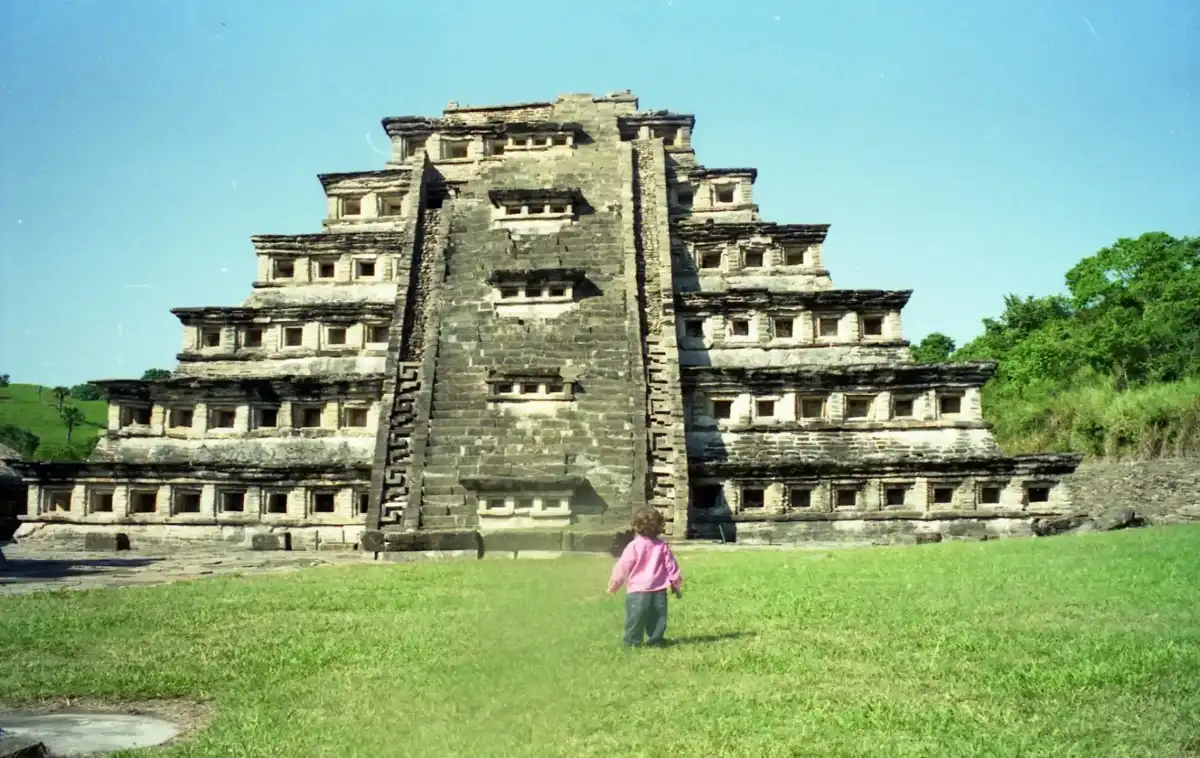
- Pyramid of the Niches: The icon of the site, with seven stepped levels and hundreds of square recesses that likely tied into calendar symbolism. Fine at any hour, best in early light.
- South Ball Court: Its six carved panels depict ritual ball game scenes, including a sacrifice, and are among the finest Mesoamerican relief work you can see up close.
- North Ball Court: Smaller and less photographed, with its own carved panels, and a good comparison to the south court.
- Voladores performance: Totonac men climb a tall pole, then spiral down tied by ropes while a musician plays a flute and drum from the top. It happens near the entrance, and a tip is expected.
- Plaza del Arroyo: A large sunken plaza framed by platforms, where you can sense how the city was laid out around its ceremonial center.
- Tajín Chico:
- Pyramid of the Niches: The icon of the site, with seven stepped levels and hundreds of square recesses that likely tied into calendar symbolism. Fine at any hour, best in early light.
- South Ball Court: Its six carved panels depict ritual ball game scenes, including a sacrifice, and are among the finest Mesoamerican relief work you can see up close.
- North Ball Court: Smaller and less photographed, with its own carved panels, and a good comparison to the south court.
- Voladores performance: Totonac men climb a tall pole, then spiral down tied by ropes while a musician plays a flute and drum from the top. It happens near the entrance, and a tip is expected.
- Plaza del Arroyo: A large sunken plaza framed by platforms, where you can sense how the city was laid out around its ceremonial center.
- Tajín Chico: A raised group of palace-style buildings with geometric fretwork and traces of old plaster, reached by a short climb.
- Site museum: Holds sculpture, ceramics and explanations of the Totonac connection, and gives context before you walk the ruins.
- Parque Takilhsukut: A cultural park beside the ruins with Totonac crafts, workshops and dance, and the best known for its festival.
Spotted a mistake or missing something? Contact us.


 Best Backpacking
.jpg) Hi, I’m Johan (Netherlands 🇳🇱), the creator of TakeYourBackpack. Over the past 3 decades, I’ve backpacked through 90+ countries across six continents, gaining extensive experience with independent travel, long-term trips, and overland routes.
Hi, I’m Johan (Netherlands 🇳🇱), the creator of TakeYourBackpack. Over the past 3 decades, I’ve backpacked through 90+ countries across six continents, gaining extensive experience with independent travel, long-term trips, and overland routes.