×

Mexico🇲🇽 | citiesCuliacánRiverside paths, Tamazula and Humaya, botanical garden, aguachile, Mercado Garmendia | things to do and best time to go

Explore NogalesExplore Los Mochis

Backpacking in Culiacán
👀 For curious travelerscity ranked #31
By Johan Kruseman 🇳🇱 | Updated October 20, 2026

Culiacán once made headlines for the wrong reasons, and the reputation still arrives before you do. On the ground, it is a hot, working city in northwest Mexico, in Sinaloa, with a tidy riverside and serious food. I paid about US$4 for a tray of aguachile and a cold beer at a taquería, because the tourist menus are for people who don’t ask locals. Unlike coastal Mazatlán, it has no beach and no hostel scene.

Discover everything you want to know in the 📖 Mexico Travel Guide.


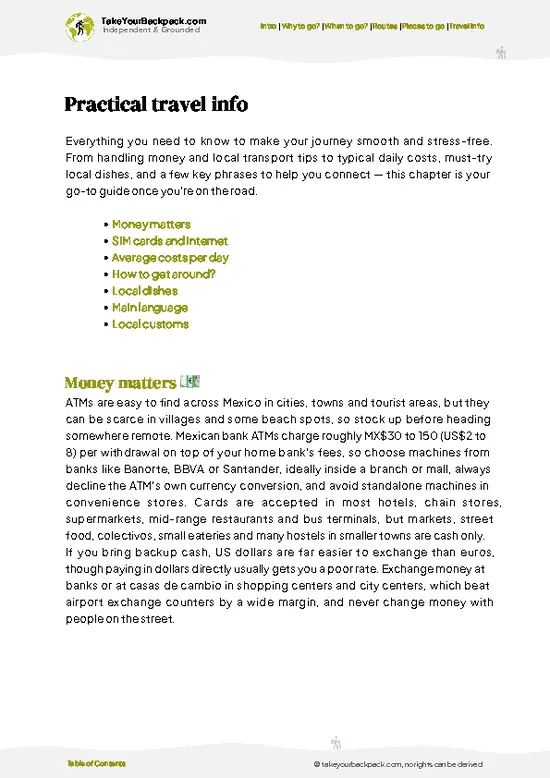
example page 0 from our offline Travel Guide for Mexico
example page 1 from our offline Travel Guide for Mexico
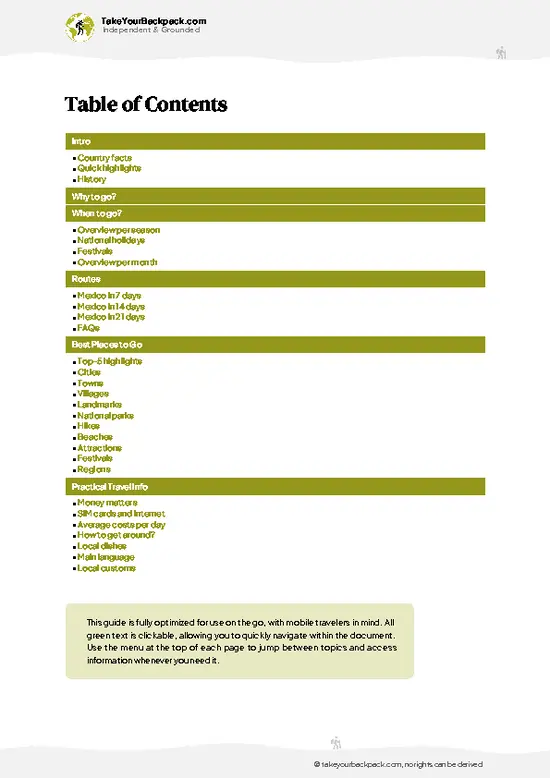
example page 2 from our offline Travel Guide for Mexico
example page 3 from our offline Travel Guide for Mexico
example page 4 from our offline Travel Guide for Mexico
example page 5 from our offline Travel Guide for Mexico
example page 6 from our offline Travel Guide for Mexico
example page 7 from our offline Travel Guide for Mexico
Loading the map 🌍
CLICK TO FILTER
cities
towns
villages
landmarks
national parks
hikes
beaches
attractions
festivals
regions
SHOW COUNTRY’S BESTSHOW ALL

✨ Why go?
Ranked #31 city in Mexico
Why Culiacán should be on your travel list

Culiacán works as a practical pause between the Pacific coast and the Copper Canyon side of the country, not as a place to spend a week. Backpackers come for the Sinaloan food, which is the best reason by far: seafood, carne asada and machaca at prices that beat the beach towns. The city is flat, walkable around the Centro Histórico, and has long-distance buses heading north and south at all hours. Nightlife is local rather than hostel-driven. Give it one night, maybe two.

💡 HighlightsPlaces and moments you shouldn't skip

  1. Catedral Basílica de Nuestra Señora del Rosario: the twin-towered 19th-century cathedral anchors Plazuela Rosales and the main square. Go in the early evening when families gather. Free, 20 to 30 minutes.
  2. Jardín Botánico de Culiacán: a large botanical garden on the old Urias estate beside the Tamazula River, with desert and tropical plants. Visit in the morning before the heat. About US$2 to 3, 1.5 to 2 hours.
  3. Museo de Arte de Sinaloa (MASIN): contemporary Mexican and Sinaloan art in a former school building near the center. Quiet and air-conditioned. About US$1 to 2, 1 hour.
  4. Parque Las Riberas: a riverside path along the Tamazula and Humaya rivers, good for walking or watching locals jog at dusk. Free, 45 minutes.
  5. Museo Regional de Sinaloa: local history and archaeology, including pre-Hispanic
… read more 👉
  1. Catedral Basílica de Nuestra Señora del Rosario: the twin-towered 19th-century cathedral anchors Plazuela Rosales and the main square. Go in the early evening when families gather. Free, 20 to 30 minutes.
  2. Jardín Botánico de Culiacán: a large botanical garden on the old Urias estate beside the Tamazula River, with desert and tropical plants. Visit in the morning before the heat. About US$2 to 3, 1.5 to 2 hours.
  3. Museo de Arte de Sinaloa (MASIN): contemporary Mexican and Sinaloan art in a former school building near the center. Quiet and air-conditioned. About US$1 to 2, 1 hour.
  4. Parque Las Riberas: a riverside path along the Tamazula and Humaya rivers, good for walking or watching locals jog at dusk. Free, 45 minutes.
  5. Museo Regional de Sinaloa: local history and archaeology, including pre-Hispanic pieces from the state. Cheap, around US$2, 1 hour.
  6. Mercado Garmendia: the old central market for fruit, tortillas, cheap lunches and fresh seafood stalls. Go before 2 PM. Free to enter, 45 minutes.
  7. Parque Ecológico Culiacán area, Cerro de la Memoria: a hilltop viewpoint over the city, best late afternoon. Free, 1 hour.
For day trips, Altata beach, the colonial town of Cosalá and the mountain village of Imala are the closest worthwhile outings from Culiacán. The Jardín Botánico charges an entrance fee, but none of the stops needs advance booking.
Spotted a mistake or missing something? Contact us.

Things to do near Culiacán

Ratings based on Tripadvisor reviews. When you book through this link, you support our work at no extra cost to you.

🏘️ NeighborhoodsHow different areas shape the experience

Culiacán sprawls along three rivers, and the useful parts sit close together, so plan by zone instead of by taxi.
  • Centro Histórico: The cathedral, Plaza Rosales and the Teatro Garmendia cluster here, all walkable in an hour. Streets are shuttered by Sunday evening, so see it by day and eat elsewhere at night.
  • Malecón and Tres Ríos: A riverside promenade with the Jardín Botánico, the Museo de Arte de Sinaloa and wide sidewalks. It is flat and open, which is why locals jog here at dusk. Go then, when the heat drops.
  • Zona Dorada and Las Quintas: Cafés, mall-style bars and late seafood joints. Spread out, so book a rideshare between stops rather than attempting the walk in July heat.

⌛️ 1 daySeeing the highlights in 24 hours

Start early and keep it on foot, with a taxi for the botanical garden and a long, cool lunch indoors when the sun peaks.
8:00 AM, Jardín Botánico: walk the shaded paths while it is cool, then take a short taxi back to the center.
11:00 AM, Catedral and Plazuela Rosales: look inside the cathedral, then wander the square.
1:00 PM, Mercado Garmendia: eat seafood or tacos here, then rest somewhere air-conditioned through the worst heat.
4:00 PM, MASIN: a lesser-visited art museum, a calm stop.
6:30 PM, Parque Las Riberas: stroll the riverside as the city comes out for the evening, then finish with dinner nearby.

🌤️ When to go?Choosing the right time of year

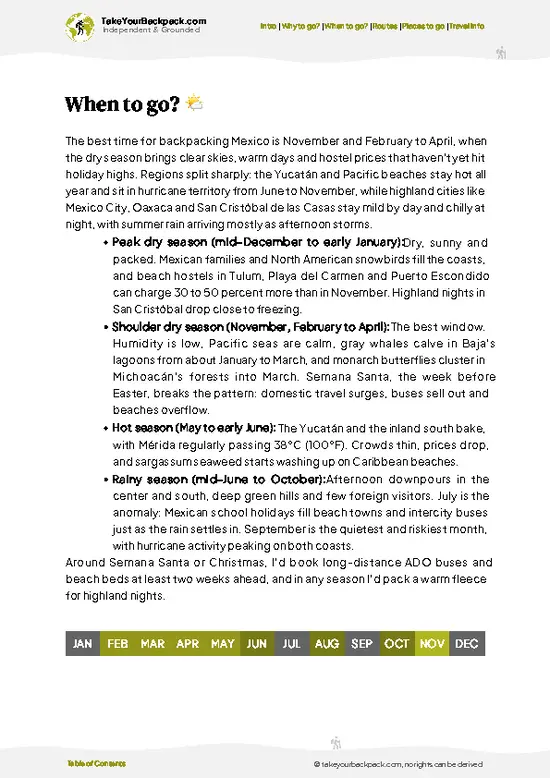
November to March is the comfortable window, with highs of 27 to 31°C (81 to 88°F) and cool evenings near 15°C (59°F).
  • Winter (Nov to Mar): Dry, pleasant, and the busiest for events and hotel rates.
  • Summer (Jun to Sep): Brutal, 35 to 40°C (95 to 104°F), humid, with storms and hurricane-season rain. Rooms are cheapest.
  • Spring and fall: Hot but manageable, with fewer visitors.
Book winter rooms early if you want Carnival season in nearby Mazatlán.

source: climatestotravel.comJANJanuary: excellent for travelingFEBFebruary: excellent for travelingMARMarch: excellent for travelingAPRApril: excellent for travelingMAYMay: good for travelingJUNJune: fair for travelingJULJuly: fair for travelingAUGAugust: fair for travelingSEPSeptember: fair for travelingOCTOctober: good for travelingNOVNovember: highly recommended for travelingDECDecember: highly recommended for traveling
when-to-go

✈️ The backpacker research shortcutMexico Travel Guide

An offline-friendly backpacking guide with optimized travel routes, ranked highlights, transport advice, and the best areas to stay.
example page 0 from our offline Travel Guide for Mexico
example page 1 from our offline Travel Guide for Mexico
example page 2 from our offline Travel Guide for Mexico
example page 3 from our offline Travel Guide for Mexico
example page 4 from our offline Travel Guide for Mexico
example page 5 from our offline Travel Guide for Mexico
example page 6 from our offline Travel Guide for Mexico
example page 7 from our offline Travel Guide for Mexico
The digital guide (402 pages) contains:
✅ 138 highlights, ranked by travel appeal
✅ Optimized 7, 14 & 21-day travel routes
✅ Cities, national parks, landmarks, beaches
✅ How to get around
✅ Offline-friendly for travel without Wi-Fi
👉 Click to see all 30+ guide features

📅 Plan smarter in minutes, not weeks
✅ Month by month travel advice
✅ Festivals & national holidays
✅ Budget expectations

🗺️ Go to the right places, skip the overrated ones
✅ Honest pros & cons of destinations
✅ Top hikes, parks & viewpoints
✅ Lesser-known places most travelers miss
✅ Clear “worth it vs skip it” guidance

🛏️ Travel smoothly without rookie mistakes
✅ Best areas to stay
✅ Transport systems explained simply
✅ Common scams & safety advice
✅ SIM cards, money & practical tips

🌍 Understand the country, not just visit it
✅ Culture & traditions
✅ 52 Essential phrases & customs
✅ Festivals worth planning around
✅ Traveler-friendly historical context
✅ Insights that make places more meaningful

📱 Built for real travel conditions
✅ Fully downloadable PDF
✅ Works completely offline
✅ Optimized for phone use
✅ Useful in remote areas & buses
✅ Everything in one place
Stop searching, start planning
Get instant access to your full guide. 30‑day money-back guarantee.
+ Add another guide for just

By proceeding you agree to our terms.
Sent to your inbox immediately after payment • 100% Secure Checkout
Best Backpacking Travel Advisor 2025 tourism awardBest Backpacking
Travel Advisor
2025
What others say about Take Your Backpack Guides:
⭐⭐⭐⭐⭐
Fantastic, amazing amount of information!
⭐⭐⭐⭐⭐
My goodness this is amazing, it's what I've been looking for hats off too you!
⭐⭐⭐⭐⭐
I think this is absolutely BRILLIANT
⭐⭐⭐⭐
Very complete and informative. It's still missing places, but I gotta to commend you
⭐⭐⭐⭐⭐
This is truly amazing, thank you, can't wait to explore it with my kids!
⭐⭐⭐⭐⭐
Awesome resource, thank you!
⭐⭐⭐⭐⭐
This is amazing! Can't wait to explore the ones I haven't seen
⭐⭐⭐⭐
I love this! Well done, great idea.
⭐⭐⭐⭐⭐
Thanks for taking the time to make this gem!
⭐⭐⭐⭐⭐
This might be the best website I've ever seen.
⭐⭐⭐⭐⭐
Congratulations, and thank you so much for your work; it's incredibly valuable.
⭐⭐⭐⭐
In all seriousness I think you did a great job pointing out the important spots
⭐⭐⭐⭐⭐
10/10 very good
⭐⭐⭐⭐⭐
As someone who's only just starting to visit regularly this is awesome, thank you.
⭐⭐⭐⭐
Thank you very much! I'm going to visit my dad, it's going to be very useful!
⭐⭐⭐⭐⭐
This is really cool! We'll be travelling for the first time and this definitely come in handy.
⭐⭐⭐⭐⭐
You are now our minister of culture, congratulations 👨‍💼
⭐⭐⭐⭐⭐
Just wanted to tell you that this is a pearl! Going to follow your recommendations.
⭐⭐⭐⭐⭐
This is so cool. I'll definitely be using the resource for my travels soon.
⭐⭐⭐⭐⭐
This is very impressive! Good work.
⭐⭐⭐⭐⭐
This is an amazing and informative site. Very well done!

🛏️ Where to stay?Best areas and accommodation options

Centro Histórico is the best base for a budget bed, with the most guesthouses and a few hostels within walking distance of the plazas and the bus lines. It is quiet after dark and easy to cross on foot during the day. Tres Ríos and the Malecón suit travelers who want a calmer, greener setting and slightly pricier private rooms, with rideshares reaching the center in minutes. Dorm beds are scarce in this city, so book ahead and expect budget hotels to fill the gap. Pick a place with air conditioning.

🚌 Getting aroundMoving around without the hassle

Taking a street-hailed taxi without agreeing on a fare is the quickest way to overpay in Culiacán, since cabs rarely use meters. Rideshare apps such as Uber and DiDi sidestep the haggling and show the price upfront. The city is spread out and hot, so walking works only in the center, and traffic thickens at rush hours.
  • Walking: Free and fine in Centro and along the Malecón. Do it early or after sunset, because midday sun makes even short blocks feel long.
  • City buses (camiones): Fares run about US$0.50 to 0.60, routes are posted in the windscreen, and service runs roughly 5:30am to 10pm. They are slow, but cheap and air-conditioned on some lines.
  • Uber and DiDi: Most rides across town cost US$2 to 6, and this is the easiest option at night. The airport run is about US$8 to 12.
  • Intercity buses: The
… read more 👉
Taking a street-hailed taxi without agreeing on a fare is the quickest way to overpay in Culiacán, since cabs rarely use meters. Rideshare apps such as Uber and DiDi sidestep the haggling and show the price upfront. The city is spread out and hot, so walking works only in the center, and traffic thickens at rush hours.
  • Walking: Free and fine in Centro and along the Malecón. Do it early or after sunset, because midday sun makes even short blocks feel long.
  • City buses (camiones): Fares run about US$0.50 to 0.60, routes are posted in the windscreen, and service runs roughly 5:30am to 10pm. They are slow, but cheap and air-conditioned on some lines.
  • Uber and DiDi: Most rides across town cost US$2 to 6, and this is the easiest option at night. The airport run is about US$8 to 12.
  • Intercity buses: The main terminal serves Mazatlán (about 3.5 hours, US$20 to 30) and Los Mochis (about 3 hours, US$18 to 25). Buy first-class tickets on the day.

👛 Costs (as of 20 October 2026)How expensive it really is

Culiacán costs about US$41 a day for a backpacker in high season.
CategoryBudget RangeLocal Reality
Dorm (high season)US$15 to 22Few hostels; budget hotels fill in.
Dorm (off-season)US$12 to 18Easier to find a bed in summer.
MealsUS$8 to 12Street tacos and set lunches.
Local transportUS$2 to 4Buses and occasional Uber.
City transport passUS$0None; pay per ride.
Activities and entry feesUS$2 to 5Museums and the botanical garden are cheap.
MiscellaneousUS$3 to 5Water, snacks and SIM data.
Total Daily BudgetUS$41High-season dorm, midrange of other rows.
Eat the big midday set meal and keep dinner light to cut costs.
⚠️ Prices can change and everyone travels differently, so take this as a rough guide. Hope it helps you plan your adventure!

🚌 Day tripsWhere to go beyond the main area

Culiacán works as a base for coast and mountain outings, mostly by bus or shared van, and every trip below fits in a day.Costa Rica, Sinaloa: A beach town on the Pacific, about 1 hour by bus or car. Expect wide sand, seafood shacks and a day cost of US$15 to 25. Go November to April, and avoid summer weekends when it is packed.
Altata: A fishing village on a sandbar, about 1 hour by bus and US$10 to 20 for the day, including grilled shrimp. First-timers often arrive late and miss the last return bus, so confirm it.
Imala: A small town about 30 minutes away with a quiet river and old streets, good as a half-day. Costs run US$5 to 12. Visit in winter, when the heat is bearable.
Mazatlán: About 3.5 hours each way and US$40 to 60 return by bus. Its old town and malecón make it a long but doable day, best November to April.
👉 Explore Mazatlán

🍲 FoodWhat to Eat & Drink

Culiacán eats seafood like few inland cities, because the Pacific is close. Order aguachile, raw shrimp in lime, chile and cucumber, and chilorio, shredded pork cooked in chile, which turns up in tacos and burritos. Pozole with a Sinaloan twist and machaca with eggs are also local. Look for taquerías and seafood stands near the Malecón and in Centro, where a plate costs around US$3 to 7. Cold Pacífico or Ballena beer cuts the heat, and sugarcane juice stands are everywhere.

🛡️ SafetySafety Tips and Common Scams in Culiacán

Culiacán has a serious organized-crime reputation, but visitors mostly deal with ordinary city risks. Stay in the central and well-lit areas, and use rideshare apps after dark instead of flagging cabs. Avoid conversations about cartels, and never take photos of security forces. If you hear gunfire or see roadblocks, leave calmly and move indoors. Check current local news before you travel, keep valuables out of sight, and skip rural roads at night.

FAQCommon questions from travelers

Two days are enough for Culiacán itself, covering the cathedral, the Malecón, the Museo de Arte de Sinaloa and the botanical garden. Add a third day for Altata, about 1 hour away, or Costa Rica beach. A trip to Mazatlán takes about 3.5 hours each way.
Culiacán has a heavy crime reputation, but visitors who stay in central areas and use Uber after dark mostly have trouble-free stays. Avoid rural roads at night and skip talk of cartels. Check local news, and expect a rideshare across town to cost US$2 to 6.
Culiacán is known for Sinaloan seafood such as aguachile and chilorio, for its cartel notoriety, and for its riverside Malecón. It is the capital of Sinaloa and is hot, with summer highs of 35 to 40°C. Tourists come for the botanical garden, the cathedral and easy trips to Altata.
⚠️ Things can change over time, so always validate details locally before you go.

Other Mexican cities near Culiacán

Explore more nearby:

  • Los Mochis—Copper Canyon rail gateway, chilorio tortillas, tropical garden, Topolobampo shrimp| 194 km away
  • Mazatlán—Centro Histórico, lighthouse climb, cliff divers, Plaza Machado| 200 km away
  • Durango—Baroque facade, Western film sets, cable car, marimba plaza| 290 km away

💡 Not sure where to go next?
Create a personalized itinerary for Mexico including Culiacán and the places that fit your trip.

Generate my itinerary

👉 Discover all cities

Or checkout all Mexico has to offer (think cities, towns, villages, national parks, hikes, beaches, festivals)
Country photo of Mexico

We 💚 feedbackSumming up the experience

Culiacán rewards people who eat where locals do. First-timers overlook the riverside paths, where evenings turn social once the heat breaks. I would plan meals around them, skip the hotel restaurant, and keep one afternoon free for sitting in the shade.

✈️ When did I visit Mexico?
As part of my 1.5 year travel around the world trip, I visited Mexico in February and March 2016. Had to hurry a bit as I didn’t want to miss the free performance of the Rolling Stones in Cuba.

✍️ Help improve this page!
The information on this page is based on my own backpacking experience in Mexico, supplemented with up-to-date research and feedback from other travelers. Travel details can change, so if you notice anything outdated or incomplete, feel free to let me know.


🙋‍♂️ Give feedback

👋 Meet the founderWho’s Behind Take Your Backpack?

Johan, backpacker and founder of TakeYourBackpackHi, I’m Johan (Netherlands 🇳🇱), the creator of TakeYourBackpack. Over the past 3 decades, I’ve backpacked through 90+ countries across six continents, gaining extensive experience with independent travel, long-term trips, and overland routes.

This site is built on a combination of firsthand travel experience and carefully curated insights from other backpackers. Many guides are based on places I’ve personally visited, while others bring together tips, observations, and practical advice shared by trusted travelers I’ve met along the way.

The goal is to provide realistic, experience-driven guidance — not generic itineraries — so you can explore destinations with better context, clearer expectations, and more confidence.