×

Mexico🇲🇽 | regionsRiviera MayaCenotes, Tulum cliff ruins, Sian Ka’an boat trips, Akumal turtles | things to do and best time to go

Explore Oaxaca CoastExplore Sierra Gorda

Backpacking in Riviera Maya
🏆 Top pickregion ranked #1
By Johan Kruseman 🇳🇱 | Updated October 20, 2026

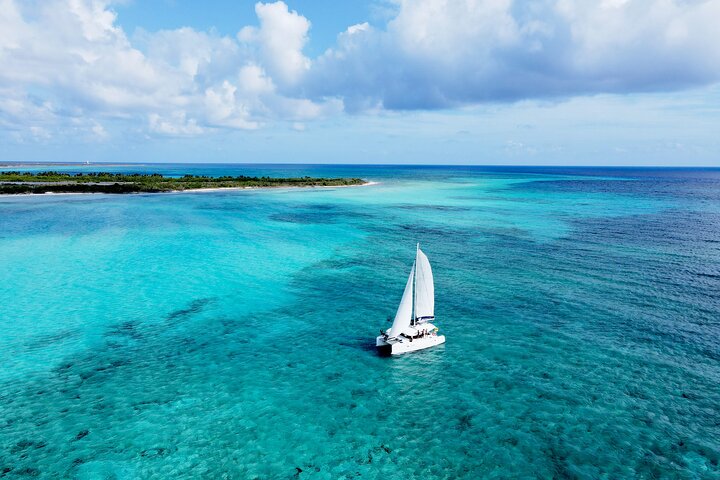
Riviera Maya has no single town center, only a 120-kilometer ribbon of coast where the colectivo vans are the real backbone of travel. It sits on the Caribbean side of Mexico’s Yucatán Peninsula, running south from Cancún past Playa del Carmen, Puerto Morelos, Akumal and Tulum. The good side is obvious: turquoise water, cenotes you can swim in, and Maya ruins perched over the sea. The bad side is a resort strip that can feel like an airport with sand, and prices that make a taco shop look like a bargain hunter’s prize. Playa del Carmen costs more than it deserves, while Tulum’s beach road is pricier still. Puerto Morelos and the inland cenote villages give you far more character for less cash and less noise, so I would sleep there and day-trip outward. One sound I tie to this coast is the rattle of a colectivo’s sliding door, followed by the driver’s shout of “Tulum, Tulum, Tulum.” Carry small pesos for those vans, since drivers rarely have change.

Discover everything you want to know in the 📖 Mexico Travel Guide.


example page 0 from our offline Travel Guide for Mexico
example page 1 from our offline Travel Guide for Mexico
example page 2 from our offline Travel Guide for Mexico
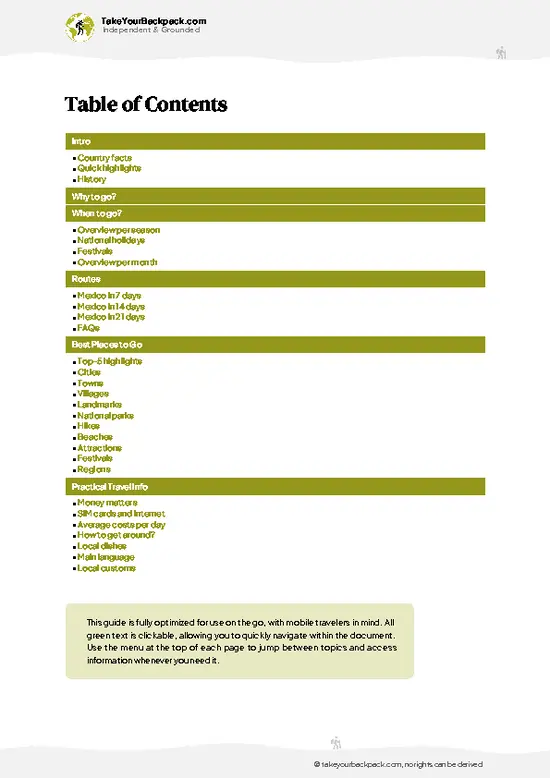
example page 3 from our offline Travel Guide for Mexico
example page 4 from our offline Travel Guide for Mexico
example page 5 from our offline Travel Guide for Mexico
example page 6 from our offline Travel Guide for Mexico
example page 7 from our offline Travel Guide for Mexico
Loading the map 🌍
CLICK TO FILTER
cities
towns
villages
landmarks
national parks
hikes
beaches
attractions
festivals
regions
SHOW COUNTRY’S BESTSHOW ALL

✨ Why go?
Ranked #1 region in Mexico
Reasons people choose to visit here

Riviera Maya lets you build a trip around one stretch of road without repacking every night. Highway 307 links the towns, and shared vans and long-distance buses run it all day, so you can sleep in one hostel and still reach the ruins, the reef and the caves.

The big draw is the sheer concentration of water. Cenotes within a short ride of Playa del Carmen and Tulum range from open jungle pools to cave systems where you float under stalactites with a guide, and you can swim a different one each day without repeating yourself.

The second reason is the mix of history and beach. Tulum’s walled Maya port sits above the same Caribbean you can snorkel an hour later, and inland Cobá’s jungle pyramids give you a quieter, bike-friendly counterpoint to the coast. Slow travel pays off here. Stay put in … read more 👉
Riviera Maya lets you build a trip around one stretch of road without repacking every night. Highway 307 links the towns, and shared vans and long-distance buses run it all day, so you can sleep in one hostel and still reach the ruins, the reef and the caves.

The big draw is the sheer concentration of water. Cenotes within a short ride of Playa del Carmen and Tulum range from open jungle pools to cave systems where you float under stalactites with a guide, and you can swim a different one each day without repeating yourself.

The second reason is the mix of history and beach. Tulum’s walled Maya port sits above the same Caribbean you can snorkel an hour later, and inland Cobá’s jungle pyramids give you a quieter, bike-friendly counterpoint to the coast. Slow travel pays off here. Stay put in a town for a few nights, rent a bicycle, and the crowds thin noticeably once you leave the main strips. The social side helps too: dorms fill with people heading the same way, so day trips and cab splits arrange themselves.

💡 HighlightsEssential experiences to have while visiting Riviera Maya

  1. Tulum Archaeological Zone: a walled Maya trading port perched on a limestone cliff above the sea, with El Castillo as its centerpiece. Entry runs around US$25, and going at opening keeps the heat and tour groups at bay.
  2. Gran Cenote: a cave-and-sunlit-pool cenote near Tulum where turtles drift past and bats hang overhead. Snorkeling the clear water is easy for beginners. Entry is roughly US$20 to 25.
  3. Cenote Dos Ojos: two linked sinkholes joined by a cave passage, popular for snorkeling and diving. The light in the main chamber is the draw.
  4. Akumal Bay: a calm, shallow bay where green sea turtles graze on seagrass. Go with a certified guide and keep your distance from the animals.
  5. Cobá ruins: Maya city spread through jungle, best seen by rented bike along shaded trails. Birdsong replaces the crowds
… read more 👉
  1. Tulum Archaeological Zone: a walled Maya trading port perched on a limestone cliff above the sea, with El Castillo as its centerpiece. Entry runs around US$25, and going at opening keeps the heat and tour groups at bay.
  2. Gran Cenote: a cave-and-sunlit-pool cenote near Tulum where turtles drift past and bats hang overhead. Snorkeling the clear water is easy for beginners. Entry is roughly US$20 to 25.
  3. Cenote Dos Ojos: two linked sinkholes joined by a cave passage, popular for snorkeling and diving. The light in the main chamber is the draw.
  4. Akumal Bay: a calm, shallow bay where green sea turtles graze on seagrass. Go with a certified guide and keep your distance from the animals.
  5. Cobá ruins: Maya city spread through jungle, best seen by rented bike along shaded trails. Birdsong replaces the crowds you get at the coastal sites.
  6. Quinta Avenida, Playa del Carmen: a pedestrian strip of taco stands, mezcal bars and souvenir touts. It’s touristy, but the street food at the quieter northern end is worth the stroll.
  7. Puerto Morelos: a small fishing town with a leaning lighthouse, a central plaza and a reef a short swim offshore. Locals come here for a slower weekend.
  8. Punta Esmeralda: a public beach near Playa del Carmen where a freshwater cenote stream spills into the sea. Locals picnic here and few tourists find it.
  9. Muyil and the Sian Ka’an lagoons: a quiet Maya site with a jungle path to a lagoon and ancient canals. You can float along a current channel in the biosphere reserve.
  10. Paamul beach: a small cove of rocky shore and calm water between Playa and Akumal, with a laid-back snorkeling spot and a few beachfront restaurants.
For a first visit to Riviera Maya, Gran Cenote gives you the clearest, most accessible taste of the region’s underground water.
Spotted a mistake or missing something? Contact us.
Things to do around Riviera Maya

Ratings based on Tripadvisor reviews. When you book through this link, you support our work at no extra cost to you.

⌛️ 5 daysSeeing the highlights in 5 days

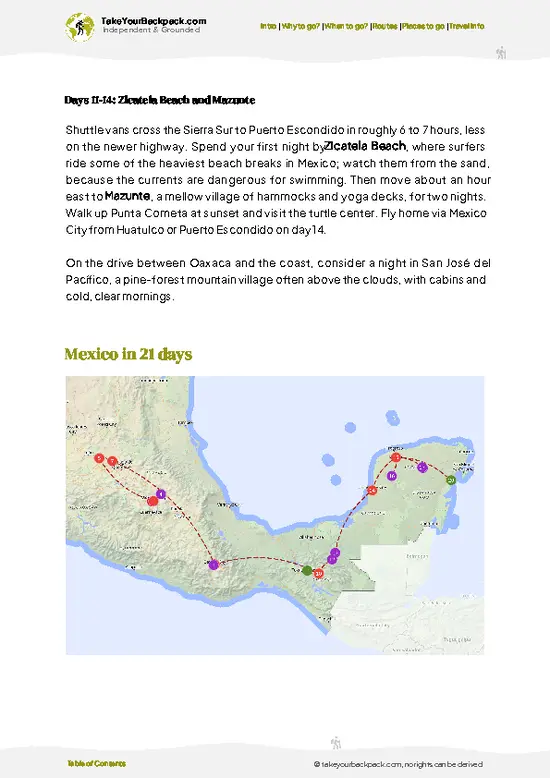
Day 1-2: Playa del Carmen: Start where transport is easiest. Playa del Carmen has the ferry to Cozumel, the long-distance bus terminal and the colectivo stands, so you can drop your bag at a hostel and reach nearly everything without a car. Spend the first day on Fifth Avenue and Punta Esmeralda to shake off the travel, then use the second to snorkel Akumal Bay, since the shared vans run past it on the main highway all day.

Day 3-4: Tulum: Move south on the colectivo, which stops often and costs little, so you lose time but save money. Tulum spreads along a road, so rent a bicycle. Day 3 belongs to the Archaeological Zone at opening and Gran Cenote in the afternoon, when the groups have thinned out. Day 4 is for the beach and for Cenote Dos Ojos, which the minibus routes reach easily.

Detour: … read more 👉
Day 1-2: Playa del Carmen: Start where transport is easiest. Playa del Carmen has the ferry to Cozumel, the long-distance bus terminal and the colectivo stands, so you can drop your bag at a hostel and reach nearly everything without a car. Spend the first day on Fifth Avenue and Punta Esmeralda to shake off the travel, then use the second to snorkel Akumal Bay, since the shared vans run past it on the main highway all day.

Day 3-4: Tulum: Move south on the colectivo, which stops often and costs little, so you lose time but save money. Tulum spreads along a road, so rent a bicycle. Day 3 belongs to the Archaeological Zone at opening and Gran Cenote in the afternoon, when the groups have thinned out. Day 4 is for the beach and for Cenote Dos Ojos, which the minibus routes reach easily.

Detour: spend a half day at Muyil and the Sian Ka’an lagoons. It sits on the same highway south of Tulum, so it needs no change of base, and it adds a quiet jungle walk and a float along a canal that the main sites lack.

Day 5: Cobá: Head inland by bus or colectivo for the last day. The ruins sit among long jungle trails, and renting a bike at the entrance lets you cover them quickly. You return to the coast by evening without changing hostels.

If I had to keep one day, it would be Day 3 in Tulum. A cliff-top ruin at opening, then a cave pool full of turtles, covers everything the region does well.

🌤️ When to go?Seasonal considerations and timing

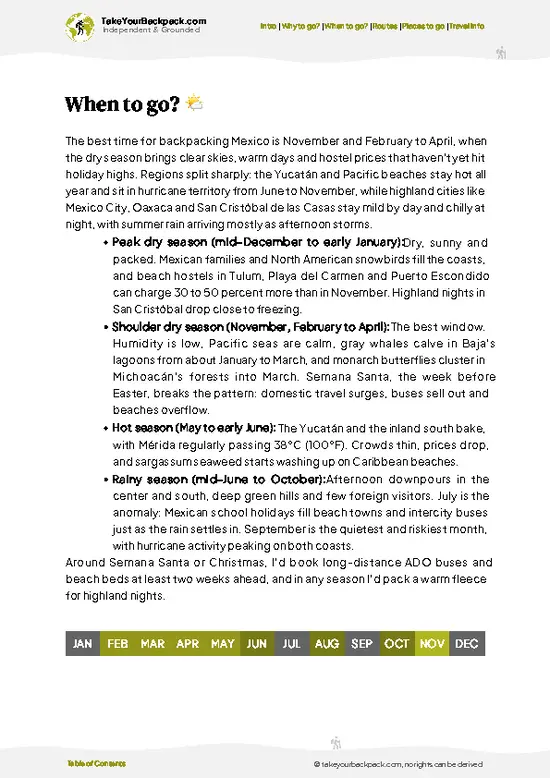
  • Dry Season (December to April): Days run 27 to 30°C (81 to 86°F) with lower humidity, calm seas and few storms. Daylight lasts about 11 to 12 hours. This is the busiest stretch, and beds in Playa del Carmen and Tulum cost 30 to 50 percent more around Christmas and Easter.
  • Sargassum Season (May to August): Heat climbs to 31 to 34°C (88 to 93°F) with sticky humidity, and brown seaweed can pile up on eastern beaches. Cenotes stay clear and cool, and prices drop noticeably.
  • Hurricane Season (September to October): Expect the heaviest rain, 28 to 32°C (82 to 90°F), and the highest storm risk. Crowds are thinnest and bargains are best, though tours get canceled.
  • Shoulder Months (November and early May): Rain fades, temperatures sit near 26 to 31°C (79 to 88°F), and rates stay moderate. Sea turtles
… read more 👉
  • Dry Season (December to April): Days run 27 to 30°C (81 to 86°F) with lower humidity, calm seas and few storms. Daylight lasts about 11 to 12 hours. This is the busiest stretch, and beds in Playa del Carmen and Tulum cost 30 to 50 percent more around Christmas and Easter.
  • Sargassum Season (May to August): Heat climbs to 31 to 34°C (88 to 93°F) with sticky humidity, and brown seaweed can pile up on eastern beaches. Cenotes stay clear and cool, and prices drop noticeably.
  • Hurricane Season (September to October): Expect the heaviest rain, 28 to 32°C (82 to 90°F), and the highest storm risk. Crowds are thinnest and bargains are best, though tours get canceled.
  • Shoulder Months (November and early May): Rain fades, temperatures sit near 26 to 31°C (79 to 88°F), and rates stay moderate. Sea turtles nest on beaches from roughly May to October, and whale sharks gather offshore from June to September.
Book Tulum and Playa beds at least a few weeks ahead for the holiday weeks, but walk in during November.


source: climatestotravel.comJANJanuary: highly recommended for travelingFEBFebruary: highly recommended for travelingMARMarch: highly recommended for travelingAPRApril: highly recommended for travelingMAYMay: good for travelingJUNJune: good for travelingJULJuly: fair for travelingAUGAugust: fair for travelingSEPSeptember: below average for travelingOCTOctober: good for travelingNOVNovember: highly recommended for travelingDECDecember: highly recommended for traveling
mexico-region-riviera-maya v1
© Google |

✈️ The backpacker research shortcutMexico Travel Guide

An offline-friendly backpacking guide with optimized travel routes, ranked highlights, transport advice, and the best areas to stay.
example page 0 from our offline Travel Guide for Mexico
example page 1 from our offline Travel Guide for Mexico
example page 2 from our offline Travel Guide for Mexico
example page 3 from our offline Travel Guide for Mexico
example page 4 from our offline Travel Guide for Mexico
example page 5 from our offline Travel Guide for Mexico
example page 6 from our offline Travel Guide for Mexico
example page 7 from our offline Travel Guide for Mexico
The digital guide (402 pages) contains:
✅ 138 highlights, ranked by travel appeal
✅ Optimized 7, 14 & 21-day travel routes
✅ Cities, national parks, landmarks, beaches
✅ How to get around
✅ Offline-friendly for travel without Wi-Fi
👉 Click to see all 30+ guide features

📅 Plan smarter in minutes, not weeks
✅ Month by month travel advice
✅ Festivals & national holidays
✅ Budget expectations

🗺️ Go to the right places, skip the overrated ones
✅ Honest pros & cons of destinations
✅ Top hikes, parks & viewpoints
✅ Lesser-known places most travelers miss
✅ Clear “worth it vs skip it” guidance

🛏️ Travel smoothly without rookie mistakes
✅ Best areas to stay
✅ Transport systems explained simply
✅ Common scams & safety advice
✅ SIM cards, money & practical tips

🌍 Understand the country, not just visit it
✅ Culture & traditions
✅ 52 Essential phrases & customs
✅ Festivals worth planning around
✅ Traveler-friendly historical context
✅ Insights that make places more meaningful

📱 Built for real travel conditions
✅ Fully downloadable PDF
✅ Works completely offline
✅ Optimized for phone use
✅ Useful in remote areas & buses
✅ Everything in one place
Stop searching, start planning
Get instant access to your full guide. 30‑day money-back guarantee.
+ Add another guide for just

By proceeding you agree to our terms.
Sent to your inbox immediately after payment • 100% Secure Checkout
Best Backpacking Travel Advisor 2025 tourism awardBest Backpacking
Travel Advisor
2025
What others say about Take Your Backpack Guides:
⭐⭐⭐⭐⭐
Fantastic, amazing amount of information!
⭐⭐⭐⭐⭐
My goodness this is amazing, it's what I've been looking for hats off too you!
⭐⭐⭐⭐⭐
I think this is absolutely BRILLIANT
⭐⭐⭐⭐
Very complete and informative. It's still missing places, but I gotta to commend you
⭐⭐⭐⭐⭐
This is truly amazing, thank you, can't wait to explore it with my kids!
⭐⭐⭐⭐⭐
Awesome resource, thank you!
⭐⭐⭐⭐⭐
This is amazing! Can't wait to explore the ones I haven't seen
⭐⭐⭐⭐
I love this! Well done, great idea.
⭐⭐⭐⭐⭐
Thanks for taking the time to make this gem!
⭐⭐⭐⭐⭐
This might be the best website I've ever seen.
⭐⭐⭐⭐⭐
Congratulations, and thank you so much for your work; it's incredibly valuable.
⭐⭐⭐⭐
In all seriousness I think you did a great job pointing out the important spots
⭐⭐⭐⭐⭐
10/10 very good
⭐⭐⭐⭐⭐
As someone who's only just starting to visit regularly this is awesome, thank you.
⭐⭐⭐⭐
Thank you very much! I'm going to visit my dad, it's going to be very useful!
⭐⭐⭐⭐⭐
This is really cool! We'll be travelling for the first time and this definitely come in handy.
⭐⭐⭐⭐⭐
You are now our minister of culture, congratulations 👨‍💼
⭐⭐⭐⭐⭐
Just wanted to tell you that this is a pearl! Going to follow your recommendations.
⭐⭐⭐⭐⭐
This is so cool. I'll definitely be using the resource for my travels soon.
⭐⭐⭐⭐⭐
This is very impressive! Good work.
⭐⭐⭐⭐⭐
This is an amazing and informative site. Very well done!

🛏️ Where to stay?Best areas to stay in Mexico

Playa del Carmen is the easiest base for most backpackers, with dorm beds around US$10 to 25 a night and the largest number of hostels in the region. It is walkable, has frequent buses to everywhere else, and the social scene is easy, with rooftop pools and organized cenote trips leaving daily. The streets a few blocks back from Quinta Avenida are quieter and cheaper, and safe to walk at night.

Tulum Pueblo, the town inland from the beach, is the second pick. Dorms cost US$12 to 28, and the mood is more relaxed and yoga-minded, with a younger crowd who rent bikes to reach the ruins, cenotes and … read more 👉
Playa del Carmen is the easiest base for most backpackers, with dorm beds around US$10 to 25 a night and the largest number of hostels in the region. It is walkable, has frequent buses to everywhere else, and the social scene is easy, with rooftop pools and organized cenote trips leaving daily. The streets a few blocks back from Quinta Avenida are quieter and cheaper, and safe to walk at night.

Tulum Pueblo, the town inland from the beach, is the second pick. Dorms cost US$12 to 28, and the mood is more relaxed and yoga-minded, with a younger crowd who rent bikes to reach the ruins, cenotes and beach. Avoid the beachfront hotel zone, which costs several times more and has little for solo budget travelers.

Puerto Morelos suits those who want calm. It is a small fishing town with an easy reef swim and a handful of simple guesthouses, around US$25 to 45 for a private room. Bacalar, a few hours south, makes a good detour for its lagoon, with a small hostel scene and hammocks over the water.

Cancún’s Downtown area, not the Hotel Zone, works for late flights, with beds from about US$10 to 20 and cheap local food. Most people stay one night and move on.

🚌 Getting aroundGetting around like a local

From the ADO bus terminal in Playa del Carmen, the town center and Quinta Avenida are a flat 5-minute walk, while taxis charge US$3 to 5 for the same distance and will tell you it is far. Most backpackers ride the buses and colectivos up and down Highway 307, and the system is frequent and reliable, if occasionally chilly.
  • Colectivo vans: These white Quintana Roo vans leave Playa del Carmen for Tulum, Puerto Morelos and Akumal every few minutes for roughly US$1.50 to 3. They cost the least and run the most often. You will be wedged against a stranger’s snorkel bag, but nothing else gives a backpacker better value per dollar.
  • ADO and Mayab buses: Air-conditioned coaches link Cancún, Playa del Carmen and Tulum in about 1 to 1.5 hours for US$3 to 8. They cost more than vans but you get a reserved
… read more 👉
From the ADO bus terminal in Playa del Carmen, the town center and Quinta Avenida are a flat 5-minute walk, while taxis charge US$3 to 5 for the same distance and will tell you it is far. Most backpackers ride the buses and colectivos up and down Highway 307, and the system is frequent and reliable, if occasionally chilly.
  • Colectivo vans: These white Quintana Roo vans leave Playa del Carmen for Tulum, Puerto Morelos and Akumal every few minutes for roughly US$1.50 to 3. They cost the least and run the most often. You will be wedged against a stranger’s snorkel bag, but nothing else gives a backpacker better value per dollar.
  • ADO and Mayab buses: Air-conditioned coaches link Cancún, Playa del Carmen and Tulum in about 1 to 1.5 hours for US$3 to 8. They cost more than vans but you get a reserved seat and a bathroom. Dress warmly, because the air conditioning is set to arctic.
  • Taxis: Fares are unmetered, so agree on the price first. Playa to Tulum runs US$50 to 80, and it makes sense only for groups splitting the bill or late arrivals.
  • Rental bikes and scooters: Tulum’s bike lane to the beach and ruins is flat and pleasant, with bikes at US$5 to 10 a day. They are the best choice there, if you can face the sun.
  • Ferries: Boats from Playa del Carmen to Cozumel take about 40 minutes for US$18 to 25 each way. They are pricey for the distance, but there is no budget alternative.
For efficiency, learn the colectivo stops on Highway 307 and say “aquí, por favor” in time, since drivers will not stop twice.

🍲 FoodLocal Cuisine & Drinks

Start with cochinita pibil, pork slow-roasted in achiote and sour orange until it falls apart, stuffed into a taco with pickled red onion and a stab of habanero salsa. Add tacos al pastor shaved off a spinning trompo, panuchos (fried tortillas stuffed with beans), and fresh ceviche or grilled pescado a la tikin xic. Along the coast, sopa de lima is a bright, tangy chicken soup that makes sense in the heat.

For drinks, order agua fresca (jamaica, horchata or tamarind) for about US$1.50 to 2, a cold Montejo beer, or a mezcal served with orange slices and sal de gusano. Xtabentún, an anise and honey liqueur, is the Maya region’s signature sip.

Eat where locals do. Taquerías away from Quinta Avenida serve tacos for US$0.75 to 1.50 each, and a comida corrida lunch costs around US$4 to 7. Markets … read more 👉
Start with cochinita pibil, pork slow-roasted in achiote and sour orange until it falls apart, stuffed into a taco with pickled red onion and a stab of habanero salsa. Add tacos al pastor shaved off a spinning trompo, panuchos (fried tortillas stuffed with beans), and fresh ceviche or grilled pescado a la tikin xic. Along the coast, sopa de lima is a bright, tangy chicken soup that makes sense in the heat.

For drinks, order agua fresca (jamaica, horchata or tamarind) for about US$1.50 to 2, a cold Montejo beer, or a mezcal served with orange slices and sal de gusano. Xtabentún, an anise and honey liqueur, is the Maya region’s signature sip.

Eat where locals do. Taquerías away from Quinta Avenida serve tacos for US$0.75 to 1.50 each, and a comida corrida lunch costs around US$4 to 7. Markets in Playa and Tulum Pueblo have stalls serving fresh juices and cooked meals, and supermarkets are a cheap fallback for breakfast. Beach bars are fine for a sunset beer but mark up prices heavily.

Basic customs help: the bill rarely arrives until you ask (“la cuenta, por favor”), tipping 10 to 15 percent is standard, and salsa heat varies wildly, so taste it first. Stick to bottled or purified water.

FAQTraveler FAQ

Four to six days covers the core of Riviera Maya. Spend two days in Playa del Carmen with a day trip to Cozumel, two in Tulum for the ruins and cenotes, and add one or two for Akumal’s turtles or Puerto Morelos. With a week or more you can add Chichén Itzá, a 2.5 to 3 hour drive inland, or Bacalar.
Public transport in Riviera Maya is good enough that a car is optional. Colectivo vans along Highway 307 link Playa del Carmen, Akumal and Tulum every few minutes for US$1.50 to 3, and ADO buses connect Cancún and Tulum in about 1.5 to 2 hours for US$5 to 10. In Tulum, a bike at US$5 to 10 a day reaches the ruins, beach and several cenotes, and Cozumel ferries run from Playa for US$18 to 25.
Riviera Maya is known for its Caribbean beaches, the cenotes (limestone sinkholes you can swim in) and the Maya ruins, with Tulum’s clifftop temple above the sea as the best known. Playa del Carmen has the nightlife and Quinta Avenida, Akumal is famous for swimming with sea turtles, and Xcaret and Xel-Há are the big eco-parks. Entry to Tulum ruins runs around US$5 to 8 and most cenotes cost US$10 to 25.
⚠️ Things can change over time, so always validate details locally before you go.

Other Mexican regions near Riviera Maya

Explore more nearby:

  • Cozumel—Drift dives, west-shore sunsets, sandbar boat trips, ferry from Playa| 19 km away
  • Isla Holbox—Car-free sand streets, bioluminescence, flamingo flats, whale sharks| 102 km away
  • Yucatán Peninsula—Maya ruins, flamingo coast, yellow-walled Izamal, Mérida plazas| 261 km away

💡 Not sure where to go next?
Create a personalized itinerary for Mexico including Riviera Maya and the places that fit your trip.

Generate my itinerary

👉 Discover all regions

Or checkout all Mexico has to offer (think cities, towns, villages, national parks, hikes, beaches, festivals)
Country photo of Mexico

We 💚 feedbackWhat to keep in mind

Riviera Maya is at its best from December to April, and at its best every day just after the gates open. Be at the cenote or ruin at opening, then take lunch and a siesta while the tour vans clog the highway. I’d choose a hostel in Tulum or Puerto Morelos over Cancún, and carry cash for the smaller entrances.

✈️ When did I visit Mexico?
As part of my 1.5 year travel around the world trip, I visited Mexico in February and March 2016. Had to hurry a bit as I didn’t want to miss the free performance of the Rolling Stones in Cuba.

✍️ Help improve this page!
The information on this page is based on my own backpacking experience in Mexico, supplemented with up-to-date research and feedback from other travelers. Travel details can change, so if you notice anything outdated or incomplete, feel free to let me know.


🙋‍♂️ Give feedback

👋 Meet the founderWho’s Behind Take Your Backpack?

Johan, backpacker and founder of TakeYourBackpackHi, I’m Johan (Netherlands 🇳🇱), the creator of TakeYourBackpack. Over the past 3 decades, I’ve backpacked through 90+ countries across six continents, gaining extensive experience with independent travel, long-term trips, and overland routes.

This site is built on a combination of firsthand travel experience and carefully curated insights from other backpackers. Many guides are based on places I’ve personally visited, while others bring together tips, observations, and practical advice shared by trusted travelers I’ve met along the way.

The goal is to provide realistic, experience-driven guidance — not generic itineraries — so you can explore destinations with better context, clearer expectations, and more confidence.