×

Moldova🇲🇩 | citiesChișinăuCapital, linden-shaded avenues, underground wine cellars, central market | things to do and best time to go

Explore Tipova Cave MonasteryExplore Tiraspol

Backpacking in Chișinău
🏆 Top pickcity ranked #1
By Johan Kruseman 🇳🇱 | Updated November 5, 2026

Chișinău has one of the largest wine cellars in the world just outside town, but the surprise for backpackers is that the capital itself is a city of tree-lined boulevards where the shade matters more than any monument. It sits in the center of Moldova, on rolling hills above the Bâc river. Summer pavements radiate heat, Soviet apartment blocks stand behind lime and chestnut trees, and the market stalls smell of brined cucumbers and sheep cheese. It suits curious travelers who like slow, unpolished cities, good cheap wine and conversation with locals. It won’t suit anyone who needs polished sights or fast pace. Cafés and the central parks work well; pavements are cracked and signage is often only in Romanian or Russian. Learn a few Romanian words, because English fades quickly outside the center. Before you go, carry some cash, since markets and minibuses run on small banknotes and many stalls refuse cards.

Part of Backpacking in Moldova: all 66 places on one map, with routes and the best time to go.
Discover everything you want to know in the 📖 Moldova Travel Guide.
Loading the map 🌍
CLICK TO FILTER
cities
towns
villages
landmarks
national parks
hikes
attractions
festivals
SHOW COUNTRY’S BESTSHOW ALL

✨ Why go?
Ranked #1 city in Moldova
Reasons people choose to visit here

Chișinău is the logical anchor for anyone crossing Moldova, because nearly every road in the country starts here. That makes it a practical base more than a place to rush through. The center is compact enough to walk, with the long axis of Ștefan cel Mare Boulevard tying together parks, cafés, museums and the main bus links. Hostels are few but friendly, and they double as the best source of current information on minibus times and winery bookings. Food is the other draw: Moldovan kitchens serve plăcinte pastries, mămăligă with cheese and sour cream, and zeamă soup, all cheap and filling. Wine bars pour local grapes you will rarely see abroad, such as Fetească Neagră. Nightlife is relaxed, with small bars and terraces rather than big clubs. The city also works as a border hub, with overnight … read more 👉
Chișinău is the logical anchor for anyone crossing Moldova, because nearly every road in the country starts here. That makes it a practical base more than a place to rush through. The center is compact enough to walk, with the long axis of Ștefan cel Mare Boulevard tying together parks, cafés, museums and the main bus links. Hostels are few but friendly, and they double as the best source of current information on minibus times and winery bookings. Food is the other draw: Moldovan kitchens serve plăcinte pastries, mămăligă with cheese and sour cream, and zeamă soup, all cheap and filling. Wine bars pour local grapes you will rarely see abroad, such as Fetească Neagră. Nightlife is relaxed, with small bars and terraces rather than big clubs. The city also works as a border hub, with overnight trains to Romania and easy connections toward Ukraine’s south and Bucharest. Give it two or three days. That is enough to sample the center, then use it to reach the countryside, where Moldova’s real character lives.

💡 HighlightsDon't-miss highlights and experiences

  1. Ștefan cel Mare Boulevard and the Nativity Cathedral Park: The main artery runs past the triumphal arch and the green-domed cathedral, a good place to start. Go in the morning or at dusk when it cools. Free, 1 to 2 hours.
  2. National Museum of History of Moldova: Covers the region from prehistoric finds to Roman and medieval periods, plus a good section on the Soviet era. Entry is about €1 to 2, allow 1 to 2 hours. Visit midday when it is hot.
  3. Central Market (Piața Centrală): A sprawl of produce, honey, cheeses, pickles and walnuts that locals actually shop in. Go before 10 AM. Free to wander, budget €3 to 6 for snacks, about 1 hour.
  4. Cricova Winery: Underground limestone tunnels with streets, driven through in an electric cart, and tastings at the end. Tours cost roughly €15 to 40 depending on the
… read more 👉
  1. Ștefan cel Mare Boulevard and the Nativity Cathedral Park: The main artery runs past the triumphal arch and the green-domed cathedral, a good place to start. Go in the morning or at dusk when it cools. Free, 1 to 2 hours.
  2. National Museum of History of Moldova: Covers the region from prehistoric finds to Roman and medieval periods, plus a good section on the Soviet era. Entry is about €1 to 2, allow 1 to 2 hours. Visit midday when it is hot.
  3. Central Market (Piața Centrală): A sprawl of produce, honey, cheeses, pickles and walnuts that locals actually shop in. Go before 10 AM. Free to wander, budget €3 to 6 for snacks, about 1 hour.
  4. Cricova Winery: Underground limestone tunnels with streets, driven through in an electric cart, and tastings at the end. Tours cost roughly €15 to 40 depending on the tasting. Book ahead, about 2 hours.
  5. Mileștii Mici Winery: A vast cellar network with a huge bottle collection. Tours run about €20 to 40, 2 to 3 hours. Morning visits are quieter.
  6. Valea Morilor Park: A lakeside park with paths, rowboats and cafés, popular with students. Free, 1 to 2 hours. Late afternoon is best.
  7. Chișinău Holocaust Memorial and Jewish quarter traces: A somber monument on the old ghetto site, a quiet counterpoint to the lively center. Free, 30 minutes.
  8. Soviet-era mosaics tour on foot: Faded mosaics on apartment blocks around the outer districts reward photographers. Free, 1 to 2 hours, best in soft morning light.
For day trips from Chișinău, consider Orheiul Vechi cave monastery, Cricova and Mileștii Mici wineries, Saharna monastery and Tipova. All of it together fills about two full days in the city, if you keep to the center and linger in cafés.
Spotted a mistake or missing something? Contact us.

Things to do in Chișinău

Ratings based on Tripadvisor reviews. When you book through this link, you support our work at no extra cost to you.

🏘️ NeighborhoodsWhere things are and how it's laid out

Chișinău is a Soviet-planned grid with a leafy center, so most of what you want sits within a 30-minute walk of the main boulevard. Distances look short on the map, but the streets are wide and shade is patchy in July, so plan the walking for mornings and evenings.
  • Centru: Stefan cel Mare boulevard runs through it, lined with chestnut and linden trees, with the Triumphal Arch, the cathedral park and the Government House. Wine bars and coffee spots tuck into courtyards off the main drag, so step off the boulevard when you want a quieter table. Fully walkable, and the best place for evening strolls when the stone still holds the day’s heat.
  • Piata Centrală and the old market area: The covered Central Market smells of smoked fish, pickles, dill and sweet cherries in season. Go before 10 am when
… read more 👉
Chișinău is a Soviet-planned grid with a leafy center, so most of what you want sits within a 30-minute walk of the main boulevard. Distances look short on the map, but the streets are wide and shade is patchy in July, so plan the walking for mornings and evenings.
  • Centru: Stefan cel Mare boulevard runs through it, lined with chestnut and linden trees, with the Triumphal Arch, the cathedral park and the Government House. Wine bars and coffee spots tuck into courtyards off the main drag, so step off the boulevard when you want a quieter table. Fully walkable, and the best place for evening strolls when the stone still holds the day’s heat.
  • Piata Centrală and the old market area: The covered Central Market smells of smoked fish, pickles, dill and sweet cherries in season. Go before 10 am when stalls are fully stocked and prices are easiest to haggle. Cash is the norm here, so carry small notes.
  • Râșcani: A residential district of Soviet apartment blocks, courtyards and neighborhood bakeries. It is a good place to see everyday life, with cheaper cafés. It is spread out, so use a trolleybus for the longer gaps.
  • Botanica: Hillier and greener, with the botanical garden and Valea Trandafirilor park, where you hear birds and distant joggers instead of traffic. Reach it by minibus, since the climb from the center is steeper than it looks.
  • Buiucani: Older low houses, small churches and quiet lanes. Evenings are calm and a few local restaurants cluster near the main street. Walkable within itself, but plan on a bus to reach the center.

⌛️ 1 dayWhat you can realistically do in a day

8:30 AM, Central Market: Start where locals shop, among stacks of honey jars, sheep cheese and pickles. Grab a warm plăcintă with cheese for breakfast and walk 10 minutes toward the center, which is the best way to see the city wake up.
10:00 AM, Ștefan cel Mare Boulevard and Nativity Cathedral: Stroll the main avenue, pass the triumphal arch and step into the cathedral park. The shade of old trees makes this the best walk of the day.
11:30 AM, National Museum of History: A short walk away, it gives context for what you have seen with Roman coins, medieval items and Soviet-era displays. Plan around 90 minutes.
1:30 PM, Lunch at a Moldovan restaurant: Order zeamă soup, mămăligă with brânză and a glass of local wine. Cafés near the center keep prices sensible.
3:30 PM, Holocaust Memorial: A lesser-known … read more 👉
8:30 AM, Central Market: Start where locals shop, among stacks of honey jars, sheep cheese and pickles. Grab a warm plăcintă with cheese for breakfast and walk 10 minutes toward the center, which is the best way to see the city wake up.
10:00 AM, Ștefan cel Mare Boulevard and Nativity Cathedral: Stroll the main avenue, pass the triumphal arch and step into the cathedral park. The shade of old trees makes this the best walk of the day.
11:30 AM, National Museum of History: A short walk away, it gives context for what you have seen with Roman coins, medieval items and Soviet-era displays. Plan around 90 minutes.
1:30 PM, Lunch at a Moldovan restaurant: Order zeamă soup, mămăligă with brânză and a glass of local wine. Cafés near the center keep prices sensible.
3:30 PM, Holocaust Memorial: A lesser-known stop in the old Jewish quarter, a quiet, sobering monument on the site of the former ghetto. It adds depth most people never see. Allow 30 minutes, then take a short ride to the park.
4:30 PM, Valea Morilor Park: Walk the lake path, rent a rowboat if you like and rest from the heat. Students play guitar on benches and the air smells of cut grass.
7:30 PM, Wine bar on Strada Bulgară or nearby: End with a flight of Fetească Neagră and local cheese, then wander back through the lit streets of the center.

🌤️ When to go?Seasonal considerations and timing

  • Spring (April to May): Highs run about 14 to 22°C (57 to 72°F), the chestnut trees bloom and parks fill with locals. Rain showers are common but short, and prices stay low.
  • Summer (June to August): Highs of 27 to 33°C (81 to 91°F), with occasional heat spikes beyond that. Daylight lasts about 15 hours in June, markets overflow with fruit, and outdoor terraces are packed. Accommodation prices peak a little.
  • Autumn (September to October): Highs fall from about 24°C (75°F) to 14°C (57°F). This is harvest time, and the National Wine Day festival in early October draws large crowds and pushes up hotel prices in the center.
  • Winter (December to February): Temperatures hover around -5 to 3°C (23 to 37°F), with short gray days of about 9 hours of light. Rooms are cheapest and the city is quiet, though
… read more 👉
  • Spring (April to May): Highs run about 14 to 22°C (57 to 72°F), the chestnut trees bloom and parks fill with locals. Rain showers are common but short, and prices stay low.
  • Summer (June to August): Highs of 27 to 33°C (81 to 91°F), with occasional heat spikes beyond that. Daylight lasts about 15 hours in June, markets overflow with fruit, and outdoor terraces are packed. Accommodation prices peak a little.
  • Autumn (September to October): Highs fall from about 24°C (75°F) to 14°C (57°F). This is harvest time, and the National Wine Day festival in early October draws large crowds and pushes up hotel prices in the center.
  • Winter (December to February): Temperatures hover around -5 to 3°C (23 to 37°F), with short gray days of about 9 hours of light. Rooms are cheapest and the city is quiet, though pavements can be icy.
September and early October give you warm days, harvest-season food and wine, and fewer heat problems than midsummer.


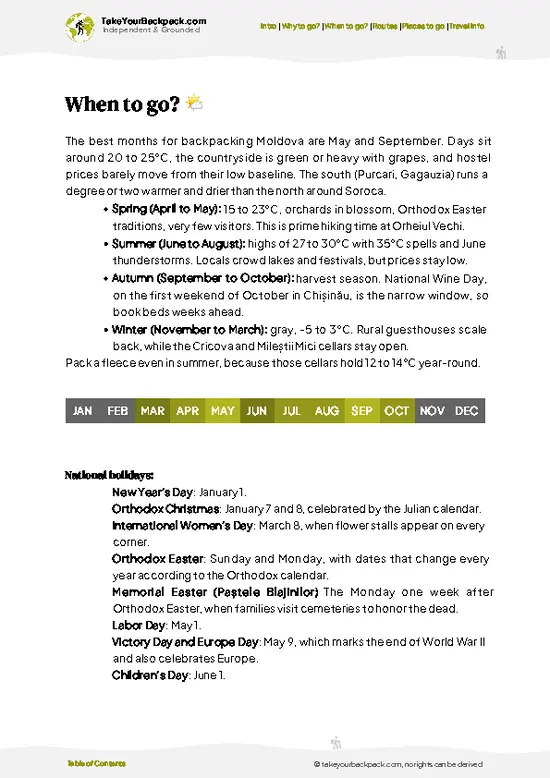
source: climatestotravel.comJANJanuary: fair for travelingFEBFebruary: fair for travelingMARMarch: good for travelingAPRApril: excellent for travelingMAYMay: excellent for travelingJUNJune: highly recommended for travelingJULJuly: good for travelingAUGAugust: good for travelingSEPSeptember: excellent for travelingOCTOctober: excellent for travelingNOVNovember: good for travelingDECDecember: fair for traveling
moldova-city-chisinau
© Google |

✈️ The backpacker research shortcutMoldova Travel Guide

What the free pages can't give you: ready-made routes, every place ranked, and it works offline. All in 1 guide.
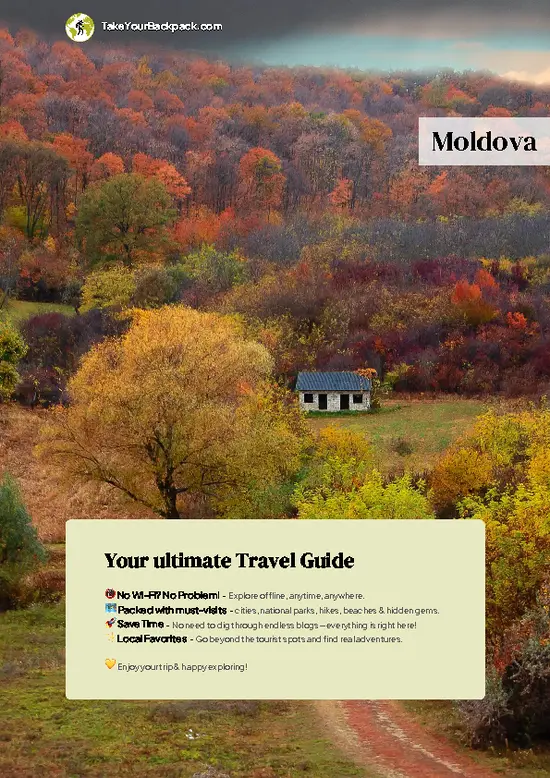
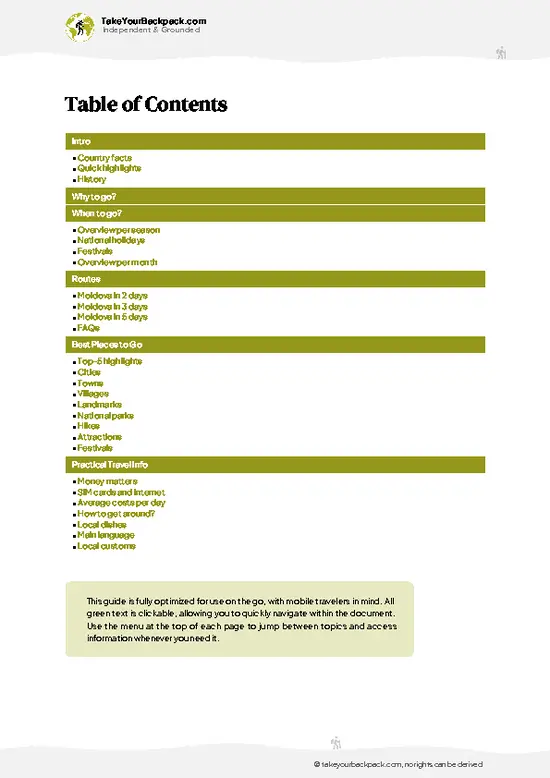
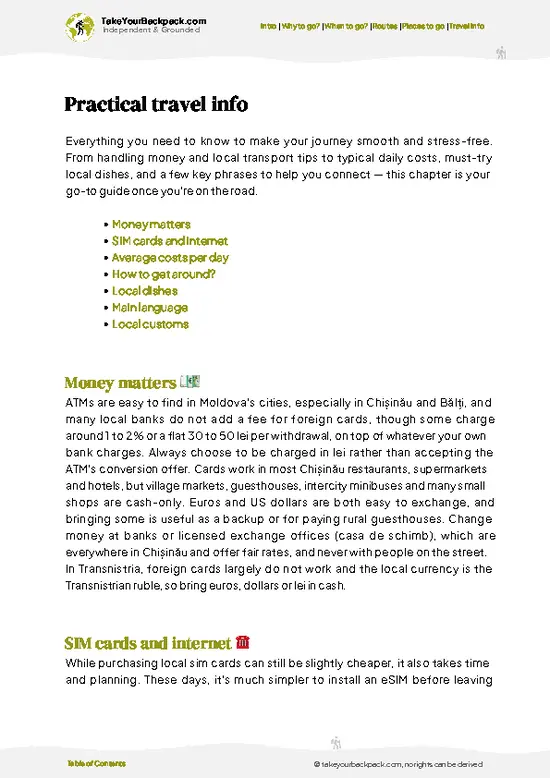
example page 0 from our offline Travel Guide for Moldova
example page 1 from our offline Travel Guide for Moldova
example page 2 from our offline Travel Guide for Moldova
example page 3 from our offline Travel Guide for Moldova
example page 4 from our offline Travel Guide for Moldova
example page 5 from our offline Travel Guide for Moldova
example page 6 from our offline Travel Guide for Moldova
example page 7 from our offline Travel Guide for Moldova
The digital guide (210 pages) contains:-page digital guide:
✅ Ready-made 2, 3 & 5-day routes
✅ All 66 places ranked, so you skip the overrated ones
✅ Works offline, all in 1 guide
✅ Cities, national parks, landmarks, beaches
✅ How to get around
👉 Click to see all 30+ guide features

📅 Plan smarter in minutes, not weeks
✅ Month by month travel advice
✅ Festivals & national holidays
✅ Budget expectations

🗺️ Go to the right places, skip the overrated ones
✅ Honest pros & cons of destinations
✅ Top hikes, parks & viewpoints
✅ Lesser-known places most travelers miss
✅ Clear “worth it vs skip it” guidance

🛏️ Travel smoothly without rookie mistakes
✅ Best areas to stay
✅ Transport systems explained simply
✅ Common scams & safety advice
✅ SIM cards, money & practical tips

🌍 Understand the country, not just visit it
✅ Culture & traditions
✅ 52 Essential phrases & customs
✅ Festivals worth planning around
✅ Traveler-friendly historical context
✅ Insights that make places more meaningful

📱 Built for real travel conditions
✅ Fully downloadable PDF
✅ Works completely offline
✅ Optimized for phone use
✅ Useful in remote areas & buses
✅ All in 1 guide
Stop searching, start planning
Get instant access to your full guide. 30‑day money-back guarantee.


By proceeding you agree to our terms.
Sent to your inbox immediately after payment • 100% Secure Checkout
Best Backpacking Travel Advisor 2025 tourism awardBest Backpacking
Travel Advisor
2025
What others say about Take Your Backpack Guides:
⭐⭐⭐⭐⭐
Fantastic, amazing amount of information!
⭐⭐⭐⭐⭐
My goodness this is amazing, it's what I've been looking for hats off too you!
⭐⭐⭐⭐⭐
I think this is absolutely BRILLIANT
⭐⭐⭐⭐
Very complete and informative. It's still missing places, but I gotta to commend you
⭐⭐⭐⭐⭐
This is truly amazing, thank you, can't wait to explore it with my kids!
⭐⭐⭐⭐⭐
Awesome resource, thank you!
⭐⭐⭐⭐⭐
This is amazing! Can't wait to explore the ones I haven't seen
⭐⭐⭐⭐
I love this! Well done, great idea.
⭐⭐⭐⭐⭐
Thanks for taking the time to make this gem!
⭐⭐⭐⭐⭐
This might be the best website I've ever seen.
⭐⭐⭐⭐⭐
Congratulations, and thank you so much for your work; it's incredibly valuable.
⭐⭐⭐⭐
In all seriousness I think you did a great job pointing out the important spots
⭐⭐⭐⭐⭐
10/10 very good
⭐⭐⭐⭐⭐
As someone who's only just starting to visit regularly this is awesome, thank you.
⭐⭐⭐⭐
Thank you very much! I'm going to visit my dad, it's going to be very useful!
⭐⭐⭐⭐⭐
This is really cool! We'll be travelling for the first time and this definitely come in handy.
⭐⭐⭐⭐⭐
You are now our minister of culture, congratulations 👨‍💼
⭐⭐⭐⭐⭐
Just wanted to tell you that this is a pearl! Going to follow your recommendations.
⭐⭐⭐⭐⭐
This is so cool. I'll definitely be using the resource for my travels soon.
⭐⭐⭐⭐⭐
This is very impressive! Good work.
⭐⭐⭐⭐⭐
This is an amazing and informative site. Very well done!

🛏️ Where to stay?Best areas to stay in Moldova

The Centru area, within about ten minutes of Stefan cel Mare boulevard, is the best place to sleep if you are on a budget. Hostel and guesthouse beds there tend to run about €10 to 18 a night, and the choice is far wider than anywhere else in the city. The streets are well lit and busy until late, so walking back at night feels comfortable. Some rooms face the main boulevard, where trolleybus and traffic noise starts early, so ask for a courtyard-facing bed if you are a light sleeper.
The area near the Central Market and train station is the second option, with a few simpler guesthouses and apartments … read more 👉
The Centru area, within about ten minutes of Stefan cel Mare boulevard, is the best place to sleep if you are on a budget. Hostel and guesthouse beds there tend to run about €10 to 18 a night, and the choice is far wider than anywhere else in the city. The streets are well lit and busy until late, so walking back at night feels comfortable. Some rooms face the main boulevard, where trolleybus and traffic noise starts early, so ask for a courtyard-facing bed if you are a light sleeper.
The area near the Central Market and train station is the second option, with a few simpler guesthouses and apartments at slightly lower prices. Transport is excellent there, as many trolleybuses and minibus routes pass through, plus the intercity bus stations are a short ride away. It is also a good base if you plan early departures to towns around the country. The edges around the station are less polished after dark, so keep to the main streets.
Book ahead for early October during the wine festival and for summer weekends. Outside those peaks, walking in the same day usually works and often brings a small discount.

🚌 Getting aroundMoving around without the hassle

A trolleybus or bus ride in Chișinău costs about €0.35, paid in cash to the conductor or via a card on newer vehicles, and the fare stays the same wherever you get off. Minibuses (rutierele) cost about €0.30 to 0.35 and are faster but crowded, with a driver who often brakes hard. Pay when you board or hand the money forward as locals do. The center is flat and walkable, though pavements can be uneven and summer afternoons are hot.
  • Walking: The core between the train station, Stefan cel Mare boulevard and the Central Market takes about 20 to 30 minutes on foot. Cross at marked crossings, as drivers rarely yield elsewhere.
  • Trolleybuses: The most reliable public option, running on electric lines through the main avenues from about 5:30 am until roughly 10 or 11 pm. Expect them to be crowded at
… read more 👉
A trolleybus or bus ride in Chișinău costs about €0.35, paid in cash to the conductor or via a card on newer vehicles, and the fare stays the same wherever you get off. Minibuses (rutierele) cost about €0.30 to 0.35 and are faster but crowded, with a driver who often brakes hard. Pay when you board or hand the money forward as locals do. The center is flat and walkable, though pavements can be uneven and summer afternoons are hot.
  • Walking: The core between the train station, Stefan cel Mare boulevard and the Central Market takes about 20 to 30 minutes on foot. Cross at marked crossings, as drivers rarely yield elsewhere.
  • Trolleybuses: The most reliable public option, running on electric lines through the main avenues from about 5:30 am until roughly 10 or 11 pm. Expect them to be crowded at peak hours and warm in summer, as windows are the only air conditioning. Buy the ticket from the conductor or use the card reader.
  • Minibuses (rutiere): Numbered routes cover almost every district, and there is no printed timetable, so you simply wait at a stop and flag one. The fare is about €0.30 to 0.35. Tell the driver your stop by calling out “la oprire” (at the stop) a little ahead of time.
  • Taxi and ride apps: Apps such as Yandex Go and Bolt show the price before you ride. A typical central trip costs €1.50 to 3, and a ride to the airport about €5 to 8. Street taxis often quote higher fares, so use the app instead.
  • Intercity buses: Most long-distance buses leave from the Central Bus Station and the North station. Check the platform on arrival, since departure points shift and drivers rarely speak English. Keep small change ready for luggage fees.

👛 Costs (as of 5 November 2026)Travel costs and budget guide for Chișinău

Chișinău costs about €37 a day for a backpacker on a careful budget, which is low even by Eastern European standards. Prices are mostly in cash, and card use is spreading in cafés and bigger shops.
CategoryBudget RangeLocal Reality
Dorm bed (high season)€10 to 15Most hostels sit in the center, with summer and the early October wine festival at the top end.
Dorm bed (off-season)€8 to 12Winter prices drop and discounts for longer stays are easy to arrange.
Meals€8 to 14Plăcinte or a set lunch costs €2 to 5, and a sit-down dinner with a drink about €6 to 9.
Local transport€1 to 3Trolleybuses cost about €0.35 a ride and minibuses €0.30 to 0.35. Ride apps cost €1.50 to 3 for a central trip.
City transport pass€0 to 4No tourist pass is needed, and single fares are paid in cash or by card reader on board.
… read more 👉
Chișinău costs about €37 a day for a backpacker on a careful budget, which is low even by Eastern European standards. Prices are mostly in cash, and card use is spreading in cafés and bigger shops.
CategoryBudget RangeLocal Reality
Dorm bed (high season)€10 to 15Most hostels sit in the center, with summer and the early October wine festival at the top end.
Dorm bed (off-season)€8 to 12Winter prices drop and discounts for longer stays are easy to arrange.
Meals€8 to 14Plăcinte or a set lunch costs €2 to 5, and a sit-down dinner with a drink about €6 to 9.
Local transport€1 to 3Trolleybuses cost about €0.35 a ride and minibuses €0.30 to 0.35. Ride apps cost €1.50 to 3 for a central trip.
City transport pass€0 to 4No tourist pass is needed, and single fares are paid in cash or by card reader on board.
Basic activities and entry fees€3 to 8Museums cost about €1 to 3, and a winery tour with tasting costs €15 to 35 if you add one.
Miscellaneous€2 to 4SIM card, water, a coffee at about €1.50 to 2.50.
Total Daily Budget€37One high-season dorm bed, three meals, a few rides and a small entry fee.
To save money, eat your biggest meal at lunch, when many cafés offer set menus at lower prices than dinner.
⚠️ Prices can change and everyone travels differently, so take this as a rough guide. Hope it helps you plan your adventure!

🚌 Day tripsShort trips worth adding

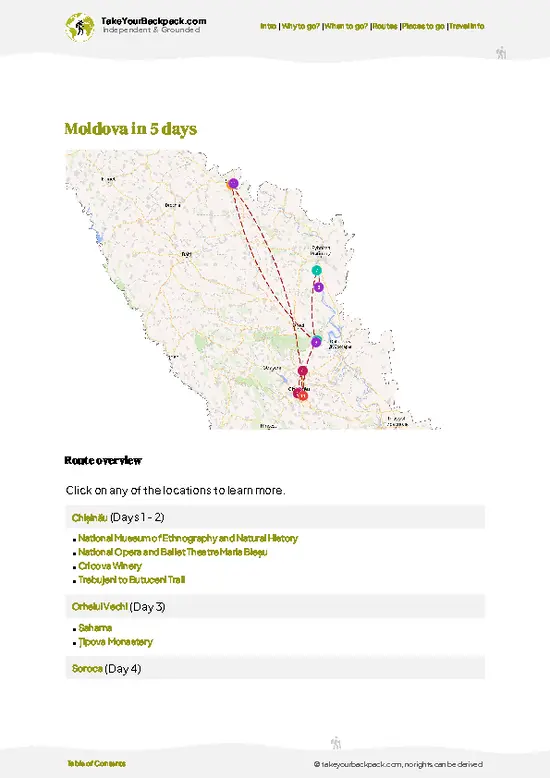
Chișinău works well as a base for day trips, since minibuses and buses leave for most of the places worth seeing from the city’s bus stations, and each of these returns the same evening.
Orheiul Vechi:
A cliffside monastery cut into limestone above a river bend, with sweeping fields all around. Minibuses run from the Northern Bus Station to Butuceni, taking about 1.5 hours and costing about €2 to 3 each way, though services thin out in the afternoon. First-timers often rely on getting a return ride late and get stuck, so confirm the last departure. Go from May to October.
👉 Explore Orheiul Vechi
Cricova:
Underground limestone tunnels hold a huge sparkling wine collection, and tours go by small electric train through streets named after wines. It is only about 15 km north, reachable by a minibus … read more 👉
Chișinău works well as a base for day trips, since minibuses and buses leave for most of the places worth seeing from the city’s bus stations, and each of these returns the same evening.
Orheiul Vechi:
A cliffside monastery cut into limestone above a river bend, with sweeping fields all around. Minibuses run from the Northern Bus Station to Butuceni, taking about 1.5 hours and costing about €2 to 3 each way, though services thin out in the afternoon. First-timers often rely on getting a return ride late and get stuck, so confirm the last departure. Go from May to October.
👉 Explore Orheiul Vechi
Cricova:
Underground limestone tunnels hold a huge sparkling wine collection, and tours go by small electric train through streets named after wines. It is only about 15 km north, reachable by a minibus or a taxi for about €5 to 8 each way. Tours cost roughly €15 to 35 depending on the tasting, and booking ahead matters in summer. It stays cool at about 12°C all year, so bring a jacket.
👉 Explore Cricova
Mileștii Mici:
The cellar network here stretches for hundreds of kilometers, and you tour it by car, so you need a taxi or a tour. A round trip by taxi costs about €15 to 25, and the visit with tasting about €15 to 30. It is a popular pick in autumn during harvest. Many first-timers underestimate the distances underground and wear thin shoes.

Old Orhei Alternative: Saharna:
Waterfalls, a monastery and a wooded valley, around 2 hours by minibus via Rezina, costing about €4 to 6 each way. Go in spring when the water is strongest. Wear shoes with grip for the stone steps.
👉 Explore Saharna

🍲 FoodWhat to Eat & Drink

Chișinău eats with a Moldovan accent shaped by the surrounding vineyards, so wine is the real local drink, poured by the carafe in casual cellars at about €3 to 6 a bottle in basic places. Try Fetească Neagră and Rara Neagră reds, or sparkling wine made in the nearby underground cellars. Divin, the local brandy, shows up in small glasses after meals.
For food, plăcinte (thin baked pies filled with cheese, potato, cabbage or pumpkin) are sold in bakeries for about €0.50 to 1 each and make a fast breakfast. Mămăligă with brânză and sour cream appears on many menus, often alongside zeamă, a chicken soup soured with borș. Look for sarmale wrapped in vine leaves, a nod to the grape country around the city.
The Central Market is the place for smoked meats, pickled vegetables, honey and fruit, and … read more 👉
Chișinău eats with a Moldovan accent shaped by the surrounding vineyards, so wine is the real local drink, poured by the carafe in casual cellars at about €3 to 6 a bottle in basic places. Try Fetească Neagră and Rara Neagră reds, or sparkling wine made in the nearby underground cellars. Divin, the local brandy, shows up in small glasses after meals.
For food, plăcinte (thin baked pies filled with cheese, potato, cabbage or pumpkin) are sold in bakeries for about €0.50 to 1 each and make a fast breakfast. Mămăligă with brânză and sour cream appears on many menus, often alongside zeamă, a chicken soup soured with borș. Look for sarmale wrapped in vine leaves, a nod to the grape country around the city.
The Central Market is the place for smoked meats, pickled vegetables, honey and fruit, and you can taste before buying. Casual Moldovan restaurants cluster around the center, with mains at about €4 to 8, and courtyard terraces fill up on summer evenings. Locals often toast with a short wish before the first sip, so wait for the glasses to clink.

🛡️ SafetyTraveler Safety Guide

Chișinău is broadly safe, and most visitors walk around the center at night without trouble. Pickpockets work crowded minibuses, the Central Market and the area around the train station, so carry your phone and wallet in a front pocket or zipped bag. Drivers are the more common hazard, as they rarely stop at crossings and pavements have open manholes and uneven slabs, so watch your feet after dark. Stay on lit streets in outer districts, and use a ride app instead of unmarked cabs. Solo travelers, women included, usually report few issues beyond curious stares and the occasional persistent taxi driver. Street taxis may overcharge foreigners, so agree on a price or use an app. Exchange money only at official bureaus or ATMs, never from people on the street. Stray dogs exist but are mostly passive.

FAQTraveler FAQ

Two to three days covers Chișinău itself, with museums, parks, markets and wine bars. Add a day for Orheiul Vechi, about 1.5 hours away by minibus for around €2 to 3 each way, and another for Cricova or Mileștii Mici. If wine is your focus, plan four days in total.
Yes, Chișinău is considered safe for solo backpackers, including women, in the center and around hostels at night. Pickpocketing on crowded minibuses and at the Central Market is the most common problem, so keep valuables in a front pocket. Use ride apps like Bolt or Yandex Go, where a central trip costs €1.50 to 3, rather than street taxis. Watch the uneven pavements and cars that rarely stop at crossings.
Chișinău is known for wine, with huge underground cellars at Cricova and Mileștii Mici about 15 to 20 km from the city, where tours cost around €15 to 35. It is also known for its Soviet-era architecture, leafy boulevards, and the Central Market. The Triumphal Arch and Stefan cel Mare park anchor the center. The early October National Wine Day festival is the city’s biggest annual event.
⚠️ Things can change over time, so always validate details locally before you go.

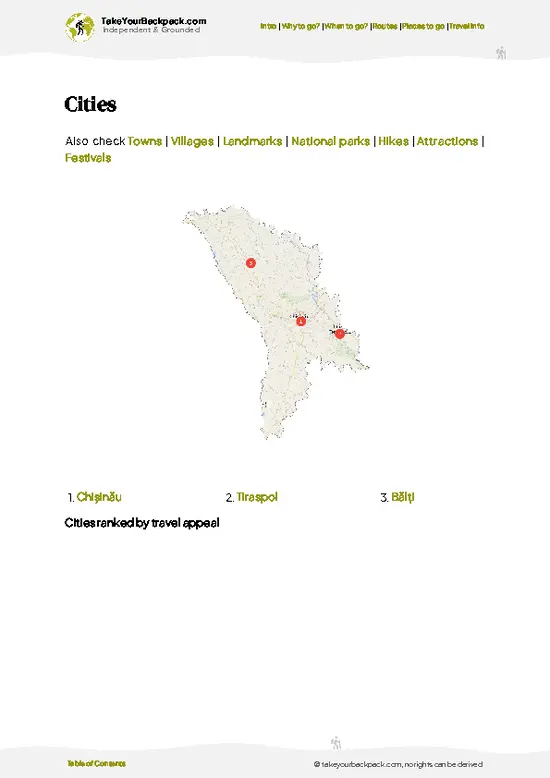
Other Moldovan cities near Chișinău

Explore more nearby:

  • Tiraspol—Dniester east bank, passport slip, Pokrovskaya Street, cognac, Lenin statue| 59 km away
  • Bălți—Northern market city, Răut River, Soviet boulevards, Russian-Romanian streets| 109 km away

💡 Not sure where to go next?
Create a personalized itinerary for Moldova including Chișinău and the places that fit your trip.

Generate my itinerary

👉 Discover all cities

Or checkout all Moldova has to offer (think cities, towns, villages, national parks, hikes, beaches, festivals)
Country photo of Moldova

We 💚 feedbackKey takeaways before you go

Chișinău suits slow travelers who like wine, markets and conversation over ticking off sights. Give it two or three days, then head out to the vineyards and monasteries. I would book a winery tour a day ahead, carry small cash for minibuses and markets, and skip rushing around in midday summer heat.

✍️ Help improve this page!
The information on this page is based on in-depth research, insights shared by experienced travelers, and feedback from the local travel community in Moldova. While every effort is made to keep the information accurate and current, conditions can change — so if you spot anything incorrect or outdated, please get in touch.


🙋‍♂️ Give feedback

👋 Meet the founderWho’s Behind Take Your Backpack?

Johan, backpacker and founder of TakeYourBackpackHi, I’m Johan (Netherlands 🇳🇱), the creator of TakeYourBackpack. Over the past 30 years, I’ve backpacked through 88 countries across six continents, gaining extensive experience with independent travel, long-term trips, and overland routes.

This site is built on a combination of firsthand travel experience and carefully curated insights from other backpackers. Many guides are based on places I’ve personally visited, while others bring together tips, observations, and practical advice shared by trusted travelers I’ve met along the way.

The goal is to provide realistic, experience-driven guidance — not generic itineraries — so you can explore destinations with better context, clearer expectations, and more confidence.