×

Mongolia🇲🇳 | townsChoibalsaneastern rail terminus, Soviet-era blocks, riverside park | things to do and best time to go

Explore Baruun-UrtExplore Arvaikheer

Backpacking in Choibalsan
🌟 Highlighttown ranked #8
By Johan Kruseman 🇳🇱 | Updated June 5, 2026

Everyone talks about Choibalsan as “that old Soviet air base in the east,” as if you’re coming just to stare at crumbling concrete. The real reason to care is quieter: this is where Mongolia starts to feel like an edge-of-the-map frontier again, with long, empty roads and big skies that belong more to herders than to history books. Choibalsan sits in Dornod Province, far in eastern Mongolia, closer to the Chinese border than to Ulaanbaatar. For backpackers, it’s less a destination than a functional hub: a place to reset between long bus rides, arrange trips into the steppe, or push onward toward remote border regions. The town itself is flat, spread out, and workmanlike. You get a central square, a few low-key monuments, a market that smells of flour, mutton, and petrol, and some cafés where tea comes faster than coffee. It’s walkable in the core, but you’ll probably grab cheap taxis for the outskirts and bus station. Compared with Ulaanbaatar or Darkhan, Choibalsan feels slower, more provincial, and far less geared to tourism; that’s good if you want real daily life, bad if you crave craft beer bars and hostel pub crawls. Accommodation runs from basic hotels to a couple of simple guesthouses; prices are reasonable, but comfort is closer to “Soviet throwback” than “boutique.” Safety is generally fine if you use normal street sense, though late-night wandering after vodka-heavy evenings isn’t smart. Socially, expect to meet more NGO workers, traders, and soldiers than backpackers, so you make your own scene: chat with shopkeepers, linger at the market, and treat Choibalsan as a practical, slightly rough-edged springboard into the emptier, wilder east.

Discover everything you want to know in the 📖 Mongolia Travel Guide.


Get your Mongolia guide
70 ranked highlights, routes & tips, works offline (282 pages)
Loading the map 🌍
CLICK TO FILTER
cities
towns
villages
landmarks
national parks
hikes
attractions
festivals
regions
SHOW COUNTRY’S BESTSHOW ALL

✨ Why go?
Ranked #8 town in Mongolia
The unique appeal for travelers

Choibalsan serves as a gateway for backpackers exploring eastern Mongolia. Its convenience lies in access to nearby hikes and cultural sites, making it a strategic stop for those seeking adventure. The walkable streets invite exploration, with small-scale guesthouses offering a cozy atmosphere that feels like home. You’ll find local food experiences that highlight traditional flavors, perfect for refueling after a day outdoors. Travelers often stay a few days, soaking in the friendly social atmosphere that encourages connection among solo travelers and small groups alike. It’s not a party town, but the sense of community makes it easy to share stories and tips. If you’re after a blend of quiet reflection and active exploration, Choibalsan fits the bill beautifully.
Want to include Choibalsan in your Mongolia route?
Create a personalized Mongolia itinerary that includes Choibalsan and the places that fit your trip — based on your travel style, budget, and available time. Get your route in seconds.

Generate my trip

💡 HighlightsTop highlights of Choibalsan

  • Dornod Aimag Museum (Choibalsan Museum) — The best single spot to get oriented: displays on local archaeology, nomadic life, Soviet-era history and artifacts from the eastern steppes. Small but well-curated and useful before heading into the countryside.
  • Central Square & Marshal Choibalsan statue — The civic heart of town: a wide square dominated by the statue of the city’s namesake, surrounded by government buildings and meeting places where locals gather. Good for people-watching and photos that show the Soviet-era town planning.
  • Choibalsan Central Market (Zakh) — Properly local: raw dairy products, dried meat, boots, and winter hats; lively early in the morning. You’ll see how food is actually bought and traded in eastern Mongolia and can try local snacks without the tourist gloss.
read more 👉
  • Dornod Aimag Museum (Choibalsan Museum) — The best single spot to get oriented: displays on local archaeology, nomadic life, Soviet-era history and artifacts from the eastern steppes. Small but well-curated and useful before heading into the countryside.
  • Central Square & Marshal Choibalsan statue — The civic heart of town: a wide square dominated by the statue of the city’s namesake, surrounded by government buildings and meeting places where locals gather. Good for people-watching and photos that show the Soviet-era town planning.
  • Choibalsan Central Market (Zakh) — Properly local: raw dairy products, dried meat, boots, and winter hats; lively early in the morning. You’ll see how food is actually bought and traded in eastern Mongolia and can try local snacks without the tourist gloss.
  • Choibalsan Railway Station — A working piece of transport history. The station’s simple Soviet-era architecture and the slow regional trains give a real feel for long-distance travel in Mongolia; perfect if you’re arriving or timing a train leg.
  • Choibalsan Airport terminal — Small regional airport with crisp, utilitarian Soviet-style terminal. Useful to visit if you want to understand how the city links to Ulaanbaatar and nearby provinces, and often the quickest way in or out when time is tight.
  • Dornod Academic Drama Theatre — The local theater is where traditional song, dance and modern plays surface in town. If you can catch a performance (or even a rehearsal), it’s an immediate, human way to meet the region’s performing culture.
  • Palace of Culture (Soyolyn Ordon) — Home to concerts, exhibitions and community events. It’s where children’s choirs, folk ensembles and visiting artists perform — good for an evening activity and to see everyday cultural life.
  • Aimag Sports Complex / Naadam Grounds — The stadium and grounds are the focal point during Naadam (wrestling, horse racing, archery), but they’re also used year-round for local sport and public gatherings. Visit outside festival time to see training and meet athletes.
  • Victory / Liberation Memorial — A modest memorial and park area remembering Mongolia’s WWII-era history and the 1945 actions on the eastern front. It’s a useful, reflective stop to understand how 20th-century geopolitics shaped the town and region.
  • Local Buddhist temple (city gompa) — A working temple complex in town where you can observe daily worship, prayer flags and local rituals. Visiting a gompa is an easy, respectful way to connect with the spiritual life of eastern Mongolians without leaving the city.
A few excellent day trips from Choibalsan include Buir Lake (Buir Nuur) for lakeside scenery and fishing villages, the Mongol Daguur protected area for steppe wildlife and wetlands, and the Khalkh Gol / Khalkhin Gol battle memorial sites for 1939/1945 history — Buir Lake is my personal favorite.
Spotted a mistake or missing something? Contact us.

🏘️ NeighborhoodsKey areas and districts to know

Choibalsan, the capital of Dornod Province, offers a unique blend of Soviet-era charm and Mongolian culture. Here’s how to navigate its neighborhoods for the best backpacking experience.

City Center: This is the heartbeat of Choibalsan. You’ll find budget-friendly guesthouses and local eateries. The vibe is bustling, with street vendors selling everything from fried dough to fresh produce. Walkability is high; everything is within a short stroll. Nightlife is low-key, with a few bars where locals gather. Perfect for short stays.

Khentii District: A quieter area, ideal for those seeking a more laid-back atmosphere. It’s less touristy, giving you a genuine feel of local life. Accommodation is affordable, and you can easily access public transport to explore further. Great for longer stays … read more 👉
Choibalsan, the capital of Dornod Province, offers a unique blend of Soviet-era charm and Mongolian culture. Here’s how to navigate its neighborhoods for the best backpacking experience.

City Center: This is the heartbeat of Choibalsan. You’ll find budget-friendly guesthouses and local eateries. The vibe is bustling, with street vendors selling everything from fried dough to fresh produce. Walkability is high; everything is within a short stroll. Nightlife is low-key, with a few bars where locals gather. Perfect for short stays.

Khentii District: A quieter area, ideal for those seeking a more laid-back atmosphere. It’s less touristy, giving you a genuine feel of local life. Accommodation is affordable, and you can easily access public transport to explore further. Great for longer stays if you want to immerse yourself in the culture.

Airport Road: This area is practical for quick access to the airport. While it lacks the charm of the City Center, it’s convenient for those on tight schedules. Limited nightlife, but you can find a few cafes. Best for short stays or layovers.

⌛️ 1 daySeeing the highlights in 24 hours

Choibalsan, the capital of Dornod Province, offers a raw glimpse into Mongolia’s heart. It’s a town where the vast steppe meets the pulse of local life, often overlooked by travelers chasing the more popular destinations. But here, you’ll find a blend of Soviet-era architecture and vibrant local culture that tells a story worth hearing.

Start your morning at the bustling Central Market. The air is thick with the scent of fresh produce and the chatter of locals haggling over everything from woolen goods to dried meats. Grab a steaming bowl of buuz (Mongolian dumplings) from a street vendor; the warmth will fuel your day. Afterward, stroll through the nearby Peace Memorial Park, where the light filters through the trees, casting playful shadows on the ground. It’s a peaceful spot to reflect … read more 👉
Choibalsan, the capital of Dornod Province, offers a raw glimpse into Mongolia’s heart. It’s a town where the vast steppe meets the pulse of local life, often overlooked by travelers chasing the more popular destinations. But here, you’ll find a blend of Soviet-era architecture and vibrant local culture that tells a story worth hearing.

Start your morning at the bustling Central Market. The air is thick with the scent of fresh produce and the chatter of locals haggling over everything from woolen goods to dried meats. Grab a steaming bowl of buuz (Mongolian dumplings) from a street vendor; the warmth will fuel your day. Afterward, stroll through the nearby Peace Memorial Park, where the light filters through the trees, casting playful shadows on the ground. It’s a peaceful spot to reflect on the town’s history.

In the afternoon, head to the Choibalsan Museum. It’s not on every tourist’s radar, but it offers fascinating insights into the region’s past. The exhibits are simple yet evocative, allowing you to connect with the local heritage.

As evening approaches, wander through the quiet streets of the Zuunburen neighborhood. The golden hour casts a warm glow on the buildings, and you might catch a glimpse of children playing. For dinner, seek out a local eatery serving khorkhog, a traditional dish cooked with hot stones. The smoky aroma will linger in your memory long after you leave.

By the end of the day, you’ll have experienced Choibalsan’s soul, a blend of history, warmth, and authenticity that makes every moment feel earned.
Turn your Choibalsan visit into an Mongolia adventure
Build a complete Mongolia route with Choibalsan, hidden gems, must-see destinations, and realistic travel times included.

Generate my trip

🌤️ When to go?Seasonal considerations and timing


  • Weather: Summers in Choibalsan are brief but warm, with highs around 20-25°C (68-77°F). Winters plunge below -20°C (-4°F), making outdoor exploration brutal unless you’re fully geared. Spring and fall bring unpredictable winds and sudden cold snaps.

  • Temperature: Daytime warmth in July and August feels like a dry heat, perfect for hiking without sweat drenching your gear. Nights can still dip to 5-10°C (41-50°F), so layering is key. Avoid winter unless you crave a Siberian chill that bites deep.

  • Daylight Hours: Peak summer offers long days—up to 16 hours of light—giving you plenty of time to roam and soak in the steppe’s vastness. Winter days shrink to 7-8 hours, limiting your window for adventure.

  • Crowds: Choibalsan is off the beaten path year-round, but summer sees a slight uptick
read more 👉

  • Weather: Summers in Choibalsan are brief but warm, with highs around 20-25°C (68-77°F). Winters plunge below -20°C (-4°F), making outdoor exploration brutal unless you’re fully geared. Spring and fall bring unpredictable winds and sudden cold snaps.

  • Temperature: Daytime warmth in July and August feels like a dry heat, perfect for hiking without sweat drenching your gear. Nights can still dip to 5-10°C (41-50°F), so layering is key. Avoid winter unless you crave a Siberian chill that bites deep.

  • Daylight Hours: Peak summer offers long days—up to 16 hours of light—giving you plenty of time to roam and soak in the steppe’s vastness. Winter days shrink to 7-8 hours, limiting your window for adventure.

  • Crowds: Choibalsan is off the beaten path year-round, but summer sees a slight uptick in local tourists and nomads moving through. This means more interaction but still no crowds to spoil the solitude.

  • Seasonal Activities: Summer is prime for horseback riding, hiking, and attending local festivals that showcase Mongolian culture. Winter offers ice fishing and snow trekking but demands serious preparation.

  • Price Fluctuations: Accommodation and transport costs rise modestly in summer due to demand but remain reasonable compared to Mongolia’s capital. Winter prices drop but so does availability and comfort.


Pro-tip: Aim for late June to early September—when the steppe smells of dry grass, the light lingers, and the cold hasn’t yet crept in. You’ll earn every breathtaking moment without battling the elements.


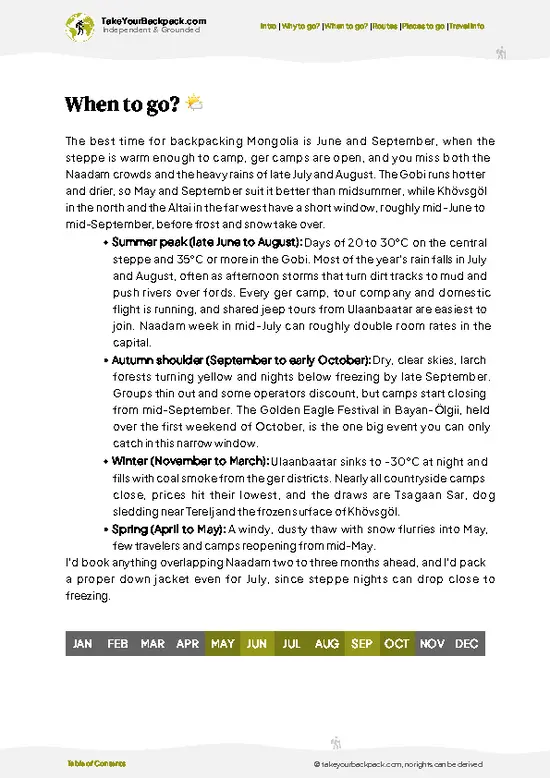
source: climatestotravel.comJANJanuary: below average for travelingFEBFebruary: below average for travelingMARMarch: fair for travelingAPRApril: fair for travelingMAYMay: good for travelingJUNJune: highly recommended for travelingJULJuly: excellent for travelingAUGAugust: excellent for travelingSEPSeptember: highly recommended for travelingOCTOctober: good for travelingNOVNovember: fair for travelingDECDecember: below average for traveling
when-to-go

✈️ The backpacker research shortcutMongolia Travel Guide

An offline-friendly backpacking guide with optimized travel routes, ranked highlights, transport advice, and the best areas to stay.
example page 0 from our offline Travel Guide for Mongolia
example page 1 from our offline Travel Guide for Mongolia
example page 2 from our offline Travel Guide for Mongolia
example page 3 from our offline Travel Guide for Mongolia
example page 4 from our offline Travel Guide for Mongolia
example page 5 from our offline Travel Guide for Mongolia
example page 6 from our offline Travel Guide for Mongolia
example page 7 from our offline Travel Guide for Mongolia
The digital guide (282 pages) contains:
70 highlights, ranked by travel appeal
Optimized 7, 14 & 21-day travel routes
Cities, national parks, landmarks, beaches
How to get around
Offline-friendly for travel without Wi-Fi
👉 Click to see all 30+ guide features

📅 Plan smarter in minutes, not weeks
Month by month travel advice
Festivals & national holidays
Budget expectations

🗺️ Go to the right places, skip the overrated ones
Honest pros & cons of destinations
Top hikes, parks & viewpoints
Lesser-known places most travelers miss
Clear “worth it vs skip it” guidance

🛏️ Travel smoothly without rookie mistakes
Best areas to stay
Transport systems explained simply
Common scams & safety advice
SIM cards, money & practical tips

🌍 Understand the country, not just visit it
Culture & traditions
52 Essential phrases & customs
Festivals worth planning around
Traveler-friendly historical context
Insights that make places more meaningful

📱 Built for real travel conditions
Fully downloadable PDF
Works completely offline
Optimized for phone use
Useful in remote areas & buses
Everything in one place
Save weeks of stressful planning
Get instant access to your full guide. 30‑day money-back guarantee.


By proceeding you agree to our terms.
Sent to your inbox immediately after payment • 100% Secure Checkout
Best Backpacking Travel Advisor 2025 tourism awardBest Backpacking
Travel Advisor
2025
What others say about Take Your Backpack Guides:
⭐⭐⭐⭐⭐
Fantastic, amazing amount of information!
⭐⭐⭐⭐⭐
My goodness this is amazing, it's what I've been looking for hats off too you!
⭐⭐⭐⭐⭐
I think this is absolutely BRILLIANT
⭐⭐⭐⭐
Very complete and informative. It's still missing places, but I gotta to commend you
⭐⭐⭐⭐⭐
This is truly amazing, thank you, can't wait to explore it with my kids!
⭐⭐⭐⭐⭐
Awesome resource, thank you!
⭐⭐⭐⭐⭐
This is amazing! Can't wait to explore the ones I haven't seen
⭐⭐⭐⭐
I love this! Well done, great idea.
⭐⭐⭐⭐⭐
Thanks for taking the time to make this gem!
⭐⭐⭐⭐⭐
This might be the best website I've ever seen.
⭐⭐⭐⭐⭐
Congratulations, and thank you so much for your work; it's incredibly valuable.
⭐⭐⭐⭐
In all seriousness I think you did a great job pointing out the important spots
⭐⭐⭐⭐⭐
10/10 very good
⭐⭐⭐⭐⭐
As someone who's only just starting to visit regularly this is awesome, thank you.
⭐⭐⭐⭐
Thank you very much! I'm going to visit my dad, it's going to be very useful!
⭐⭐⭐⭐⭐
This is really cool! We'll be travelling for the first time and this definitely come in handy.
⭐⭐⭐⭐⭐
You are now our minister of culture, congratulations 👨‍💼
⭐⭐⭐⭐⭐
Just wanted to tell you that this is a pearl! Going to follow your recommendations.
⭐⭐⭐⭐⭐
This is so cool. I'll definitely be using the resource for my travels soon.
⭐⭐⭐⭐⭐
This is very impressive! Good work.
⭐⭐⭐⭐⭐
This is an amazing and informative site. Very well done!

🛏️ Where to stay?Choosing the right base

Choibalsan’s heart for backpackers pulses strongest around the city center, where the streets hum with local life and the air carries the faint scent of fried dumplings and fresh bread from nearby markets. This area is your best bet—not just for safety, but for the kind of social buzz that turns solo travel from lonely to lively. Here, modest guesthouses and hostels cluster within easy walking distance, offering simple beds and the chance to swap stories over a shared meal or a cup of salty Mongolian tea.

Venture beyond this core, and you’ll find quieter residential zones that feel a bit too … read more 👉
Choibalsan’s heart for backpackers pulses strongest around the city center, where the streets hum with local life and the air carries the faint scent of fried dumplings and fresh bread from nearby markets. This area is your best bet—not just for safety, but for the kind of social buzz that turns solo travel from lonely to lively. Here, modest guesthouses and hostels cluster within easy walking distance, offering simple beds and the chance to swap stories over a shared meal or a cup of salty Mongolian tea.

Venture beyond this core, and you’ll find quieter residential zones that feel a bit too remote, with fewer fellow travelers and limited public transport. The city’s edges lack the same energy and practical amenities, making them less ideal for those who want to plug into Choibalsan’s rhythm without fuss. Staying central means you wake up to the city’s slow stir, step out into streets where locals nod hello, and have everything—from bus stops to budget eateries—within reach. It’s the kind of place where the city’s modest scale works in your favor, making every corner feel like a new discovery rather than a trek.

🚌 Getting aroundTransportation options and practical tips

Choibalsan moves at its own pace—less a clock-driven city, more a place where the rhythm is set by the sun and the wind off the steppe. The streets don’t hum with the urgency of a metropolis; instead, they breathe with a quiet, deliberate flow. You’ll notice locals taking their time, chatting over cups of salty milk tea or pausing to watch the dust swirl in the afternoon light. This isn’t a place where you’ll find strict timetables or a rush-hour crush. Instead, it’s about reading the signs—the slow shuffle of a minibus arriving, the clatter of a shared taxi pulling up, or the steady footsteps of someone making their way on foot. Understanding this flow means you don’t just get around—you sync with the town’s pulse, turning what could be a logistical headache into a part of the experience … read more 👉
Choibalsan moves at its own pace—less a clock-driven city, more a place where the rhythm is set by the sun and the wind off the steppe. The streets don’t hum with the urgency of a metropolis; instead, they breathe with a quiet, deliberate flow. You’ll notice locals taking their time, chatting over cups of salty milk tea or pausing to watch the dust swirl in the afternoon light. This isn’t a place where you’ll find strict timetables or a rush-hour crush. Instead, it’s about reading the signs—the slow shuffle of a minibus arriving, the clatter of a shared taxi pulling up, or the steady footsteps of someone making their way on foot. Understanding this flow means you don’t just get around—you sync with the town’s pulse, turning what could be a logistical headache into a part of the experience itself.


  • Walking: The heart of Choibalsan is compact enough to explore on foot, especially around the central market and main square. Walking lets you soak in the scent of fresh bread from local bakeries and catch the subtle shifts in light as the day unfolds. It’s free, flexible, and the best way to discover the town’s quieter corners.


  • Minibus (маршрутка): These shared minibuses are the backbone of local transit. They run roughly from 7 AM to 7 PM, with fares around 300-500 MNT (about 10-15 cents). They’re not always on a strict schedule, so expect a bit of waiting and a casual boarding process where the driver calls out destinations. It’s a cheap, authentic way to move between neighborhoods, though comfort is basic and space tight.


  • Shared Taxi: For slightly faster trips, shared taxis operate on popular routes, especially to the bus station or outskirts. Prices hover around 1,000-1,500 MNT. They leave when full, so timing depends on passenger flow. Expect a bumpy ride on unpaved roads but a chance to chat with locals squeezed into the backseat.


  • Intercity Bus: If you’re heading out of town, the bus station offers scheduled departures to nearby provinces. Buses typically leave early morning and mid-afternoon. Tickets cost between 5,000-10,000 MNT depending on distance. The ride is slow but steady, with windows that frame the endless steppe and occasional stops at roadside stalls selling dried meat and tea.

👛 Costs (as of 1 August 2025)Money, prices, and spending tips

Backpacking in Choibalsan, Mongolia, offers a raw, off-the-beaten-path experience where costs stay modest but the environment demands a bit of planning to stretch your budget wisely.
  • Dorm Accommodation: Expect to pay around $8 to $15 per night for a bed in a basic guesthouse or hostel dorm. These places are simple, often with shared bathrooms and minimal heating, so bring layers for chilly nights.
  • Meals: Local eateries serve hearty Mongolian staples like buuz (steamed dumplings) and noodle soups for about $2 to $5 per meal. Western-style or imported food will push the price higher, around $7 to $10. Street snacks and tea are cheap and filling.
  • Local Transport: Choibalsan is small, so walking covers most needs. For longer trips or to nearby sights, shared taxis or minibuses cost roughly
read more 👉
Backpacking in Choibalsan, Mongolia, offers a raw, off-the-beaten-path experience where costs stay modest but the environment demands a bit of planning to stretch your budget wisely.
  • Dorm Accommodation: Expect to pay around $8 to $15 per night for a bed in a basic guesthouse or hostel dorm. These places are simple, often with shared bathrooms and minimal heating, so bring layers for chilly nights.
  • Meals: Local eateries serve hearty Mongolian staples like buuz (steamed dumplings) and noodle soups for about $2 to $5 per meal. Western-style or imported food will push the price higher, around $7 to $10. Street snacks and tea are cheap and filling.
  • Local Transport: Choibalsan is small, so walking covers most needs. For longer trips or to nearby sights, shared taxis or minibuses cost roughly $1 to $3 per ride. Renting a bike is rare but possible, around $5 per day.
  • Basic Activities/Entry Fees: Museums and cultural sites charge nominal fees, usually $1 to $3. Guided tours or horseback riding excursions, if available, start at about $20 but are not common in this remote town.
  • Miscellaneous Expenses: Budget $2 to $5 daily for essentials like bottled water, snacks, or phone credit. Internet access is spotty and often requires buying a local SIM card, which costs around $10 with some data included.

All told, a realistic daily budget for backpacking in Choibalsan falls between $15 and $30. The town’s quiet streets and sparse tourist infrastructure mean you’re paying mostly for essentials, not extras. This lean budget keeps you grounded in the local rhythm, where every tug of warmth from a hot meal or a shared taxi ride feels earned against the wide, open Mongolian sky.
⚠️ Prices can change and everyone travels differently, so take this as a rough guide. Hope it helps you plan your adventure!

🚌 Day tripsBest day trips from Choibalsan

Choibalsan, Mongolia, is a backpacker’s launching pad for unforgettable day trips into the wild heart of the country. The town itself has a rugged charm, with the scent of fresh bread wafting from local bakeries and the distant sound of horses echoing through the streets. Here are some standout excursions that make the effort worthwhile.

Lake Khalkh
Just a couple of hours from Choibalsan, Lake Khalkh offers a serene escape. The turquoise waters reflect the sky, and the surrounding hills are perfect for a picnic. Bring a camera; the light here is magical, especially at sunrise. Expect to pay around 10,000 MNT for transport. Late spring to early fall is ideal, but avoid peak summer when the crowds roll in. A common mistake? Forgetting to pack enough water; it’s a long day without easy access … read more 👉
Choibalsan, Mongolia, is a backpacker’s launching pad for unforgettable day trips into the wild heart of the country. The town itself has a rugged charm, with the scent of fresh bread wafting from local bakeries and the distant sound of horses echoing through the streets. Here are some standout excursions that make the effort worthwhile.

Lake Khalkh
Just a couple of hours from Choibalsan, Lake Khalkh offers a serene escape. The turquoise waters reflect the sky, and the surrounding hills are perfect for a picnic. Bring a camera; the light here is magical, especially at sunrise. Expect to pay around 10,000 MNT for transport. Late spring to early fall is ideal, but avoid peak summer when the crowds roll in. A common mistake? Forgetting to pack enough water; it’s a long day without easy access to supplies.


Chinggis Khaan Statue
A trip to the colossal Chinggis Khaan statue is a must. Roughly 90 minutes away, this towering monument stands proud against the skyline. The climb up offers panoramic views that are worth every step. Budget around 15,000 MNT for transport and entry. Spring and autumn provide the best weather, while summer can be sweltering. Many first-timers miss the small museum at the base; it’s packed with fascinating history.


Onon-Balj National Park
For those craving nature, Onon-Balj National Park is a gem. About two hours from Choibalsan, it’s a haven for hiking and wildlife spotting. The scent of pine fills the air, and the trails are well-marked. Expect to spend around 20,000 MNT for transport. Late spring is perfect for wildflowers, while autumn offers stunning foliage. A common oversight? Not checking the weather; it can change rapidly in the mountains.
👉 Explore Onon-Balj National Park
Want to know what more Mongolia offers?
The Mongolia Travel Guide describes 70 highlights, from cities to national parks, from beaches to hikes

Get the Travel Guide -

🛡️ SafetyScams, Hazards, and Annoyances

Choibalsan is generally safe, but staying aware enhances your experience. Stick to well-lit areas at night, especially around the bus station and market. Solo travelers should blend in; avoid drawing attention with flashy gear.

Scams are rare, but be cautious with unofficial taxi drivers; always negotiate fares upfront. A common annoyance is the occasional language barrier, so learning a few basic Mongolian phrases can go a long way.

Keep your belongings close in crowded spots, and don’t hesitate to ask locals for directions or advice. They’re usually friendly and willing to help, making your journey smoother and more authentic.

Other Mongolian towns near Choibalsan

Explore more nearby:

  • Baruun-Urt—steppe crossroads, mining influence, regional market| 182 km away
  • Choir—military history, steppe plateau, rail stop| 502 km away
  • Zamiin-Uud—border crossing, rail terminus, duty-free shops| 525 km away

💡 Not sure where to go next?
Create a personalized itinerary for Mongolia including Choibalsan and the places that fit your trip.

Generate my itinerary

👉 Discover all towns

Or checkout all Mongolia has to offer (think cities, towns, villages, national parks, hikes, beaches, festivals)
Country photo of Mongolia

We 💚 feedbackSumming up the experience

Choibalsan offers a raw glimpse into Mongolia’s heart, where the vast steppe stretches endlessly and the air is filled with the scent of wild sage. But be ready for limited amenities; it’s not a tourist hub. Embrace the simplicity, and you’ll find a deeper connection to the land and its people. That’s where the magic lies.

✈️ When did I visit Mongolia?
As part of my 1.5 year travel around the world trip, I visited Mongolia in July 2015. After a month of horse-riding and hitch-hiking I took the TransMongolia express to China.

✍️ Help improve this page!
The information on this page is based on my own backpacking experience in Mongolia, supplemented with up-to-date research and feedback from other travelers. Travel details can change, so if you notice anything outdated or incomplete, feel free to let me know.


🙋‍♂️ Give feedback

👋 Meet the founderWho’s Behind Take Your Backpack?

Johan, backpacker and founder of TakeYourBackpackHi, I’m Johan (Netherlands 🇳🇱), the creator of TakeYourBackpack. Over the past decade, I’ve backpacked through 80+ countries across six continents, gaining extensive experience with independent travel, long-term trips, and overland routes.

This site is built on a combination of firsthand travel experience and carefully curated insights from other backpackers. Many guides are based on places I’ve personally visited, while others bring together tips, observations, and practical advice shared by trusted travelers I’ve met along the way.

The goal is to provide realistic, experience-driven guidance — not generic itineraries — so you can explore destinations with better context, clearer expectations, and more confidence.

Get full Mongolia guide •
Instant download • 70 highlights • Full Offline guide