×

Mongolia🇲🇳 | best townsExplore the 10 Best towns in Mongolia

In Mongolia, towns pulse with a unique rhythm shaped by vast landscapes and nomadic traditions. Each town offers a distinct flavor, influenced by its geography and culture. For backpackers and independent travelers, the choice of town can transform your experience.

In the bustling capital, Ulaanbaatar, you’ll find a mix of modern amenities and rich history, perfect for those seeking urban energy. In contrast, towns like Khovd or Moron provide a glimpse into rural life, where the pace slows and local customs shine. Seasonal shifts also play a crucial role; summer brings vibrant festivals, while winter offers a stark beauty that few dare to explore.

Choosing the right town affects your budget, safety, and ease of travel. A well-chosen base can enhance cultural immersion, making every interaction more meaningful. Embrace the grit of the streets or the warmth of a ger camp; the right town sets the stage for your Mongolian adventure.

By Johan Kruseman 🇳🇱 | Updated September 4, 2026
Explore the best villages in Mongolia

Why go?Why These town Stand Out

Mongolia’s towns pulse with a unique rhythm, shaped by vast landscapes and a rich nomadic heritage. Unlike many countries, where urban centers dominate, Mongolia’s towns offer a blend of cultural authenticity and geographic diversity. Each town serves as a gateway to the surrounding wilderness, where the steppe meets the mountains, and the Gobi Desert stretches endlessly. This geographical variety creates distinct local flavors, from the hearty buuz dumplings to the refreshing airag (fermented mare’s milk), reflecting the deep-rooted traditions of the nomadic lifestyle.

Traveling through these towns requires a keen understanding of accessibility versus immersion. While some towns are more accessible, they may lack the depth of experience found in more remote areas. The trade-off is clear: … read more 👉
Mongolia’s towns pulse with a unique rhythm, shaped by vast landscapes and a rich nomadic heritage. Unlike many countries, where urban centers dominate, Mongolia’s towns offer a blend of cultural authenticity and geographic diversity. Each town serves as a gateway to the surrounding wilderness, where the steppe meets the mountains, and the Gobi Desert stretches endlessly. This geographical variety creates distinct local flavors, from the hearty buuz dumplings to the refreshing airag (fermented mare’s milk), reflecting the deep-rooted traditions of the nomadic lifestyle.

Traveling through these towns requires a keen understanding of accessibility versus immersion. While some towns are more accessible, they may lack the depth of experience found in more remote areas. The trade-off is clear: a longer journey often leads to richer interactions with local culture and a more profound appreciation of the landscape. However, the rugged infrastructure can challenge even seasoned travelers, with long distances between towns and limited transport options.

The climatic extremes also play a role in shaping the towns’ character. Harsh winters and short summers dictate the pace of life, influencing everything from local festivals to daily routines. This seasonal rhythm offers travelers a chance to witness the resilience of the people and their traditions, but it also means planning your visit carefully to align with the best weather and cultural events.

Ultimately, Mongolia’s towns matter because they encapsulate the spirit of a nation that thrives on connection to the land and community. They invite exploration, offering a chance to engage with a culture that is as vast and varied as the landscapes themselves. Understanding these nuances is essential for anyone looking to delve into the heart of Mongolia.
How the List Was Created
The list of best towns in Mongolia is created based on charm, local culture, atmosphere, hidden gems, and visitor appeal. If you feel a town is missing in this list, please let us know.

When to go?Seasonal Guide to Visiting

Seasonality shapes the pulse of life in Mongolia’s towns. Each season brings a distinct character, influencing local activities and the overall atmosphere.

Winter blankets the landscape from November to March. Temperatures plunge, often reaching extremes. Towns become quieter, with locals huddled indoors. This is a time for traditional festivals, where warmth and community spirit shine through. However, travel can be challenging; icy roads and frigid air require preparation.

Spring bursts forth in April and May, awakening the land. The thaw reveals vibrant colors, and towns come alive with the hustle of preparation for the summer months. This shoulder season offers a sweet spot: fewer tourists and lower prices. However, unpredictable weather can lead to muddy trails and sudden storms. … read more 👉
Seasonality shapes the pulse of life in Mongolia’s towns. Each season brings a distinct character, influencing local activities and the overall atmosphere.

Winter blankets the landscape from November to March. Temperatures plunge, often reaching extremes. Towns become quieter, with locals huddled indoors. This is a time for traditional festivals, where warmth and community spirit shine through. However, travel can be challenging; icy roads and frigid air require preparation.

Spring bursts forth in April and May, awakening the land. The thaw reveals vibrant colors, and towns come alive with the hustle of preparation for the summer months. This shoulder season offers a sweet spot: fewer tourists and lower prices. However, unpredictable weather can lead to muddy trails and sudden storms.

Summer transforms towns into bustling hubs from June to August. Festivals, markets, and outdoor activities flourish. The weather is generally warm, inviting exploration. However, this peak season attracts crowds, and accommodations can fill quickly. Prices rise, but the energy is palpable.

Autumn in September and October brings a stunning display of colors. The harvest season is in full swing, and towns celebrate with local fairs. This shoulder season offers a balance of pleasant weather and fewer tourists. However, as temperatures drop, some services may begin to wind down, and the days shorten.

Travelers should consider these seasonal nuances when planning their trips. Each season offers unique experiences, but understanding the trade-offs in weather, crowd levels, and local events is crucial for a rewarding visit.

town hoppingPlanning Your Route Efficiently

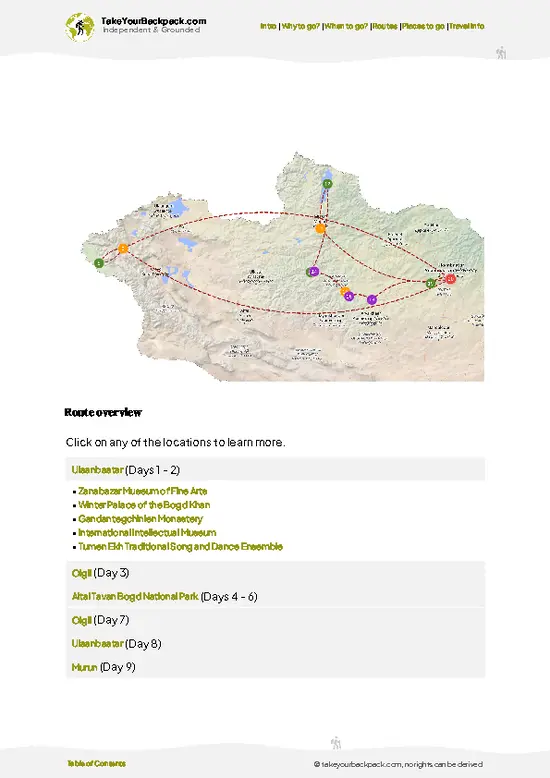
Traveling through Mongolia is about embracing the vastness and diversity of its landscapes while connecting with its vibrant towns. Start by clustering your stops regionally. The central area, including Ulaanbaatar, serves as a natural hub. From there, head north to the picturesque Khuvsgul Lake, where the air is crisp and the scenery is stunning. This route allows for a blend of urban and natural experiences, maximizing both cultural immersion and breathtaking views.

Timing is crucial. Allocate at least two days in Ulaanbaatar to soak in its unique blend of history and modernity. After that, spend another two days at Khuvsgul Lake. This pacing allows for exploration without feeling rushed. Each town deserves attention; rushing through can lead to missed connections and experiences.

Common read more 👉
Traveling through Mongolia is about embracing the vastness and diversity of its landscapes while connecting with its vibrant towns. Start by clustering your stops regionally. The central area, including Ulaanbaatar, serves as a natural hub. From there, head north to the picturesque Khuvsgul Lake, where the air is crisp and the scenery is stunning. This route allows for a blend of urban and natural experiences, maximizing both cultural immersion and breathtaking views.

Timing is crucial. Allocate at least two days in Ulaanbaatar to soak in its unique blend of history and modernity. After that, spend another two days at Khuvsgul Lake. This pacing allows for exploration without feeling rushed. Each town deserves attention; rushing through can lead to missed connections and experiences.

Common pitfalls include underestimating travel times. Roads can be rough, and distances are deceptive. Plan for longer travel times than expected, especially when venturing into the countryside. Flexibility is key; if a local festival or event catches your eye, adjust your itinerary to dive deeper into the culture.

Consider trade-offs between speed and depth. A fast-paced trip might cover more ground, but it sacrifices the richness of experience. Budget constraints can also influence comfort levels; opting for local guesthouses over hotels can enhance the experience while saving money.

Ultimately, the reward lies in the journey itself. Each town offers a unique slice of Mongolian life, from the bustling markets of Ulaanbaatar to the serene shores of Khuvsgul. Embrace the grit of the roads and the warmth of the people, and let the adventure unfold at its own pace.

The ListThe Best towns of Mongolia

1 Kharkhorin

ancient capital site, Erdene Zuu monastery, Orkhon Valley

Stand where empires rose and fell, with ruins and temples marking the heart of Mongolia’s historical and spiritual landscape.

2 Dalanzadgad

Gobi access point, desert airstrip, supply town

Use this functional desert town as a launchpad for Gobi expeditions, with basic services and direct routes to dunes and canyons.

mongolia-city-dalanzadgad
© Google |

3 Olgii

Kazakh culture, eagle hunters, western mountains

Experience a distinct culture in Mongolia’s far west, where Kazakh traditions, music, and festivals shape daily life.

4 Erdenet

Copper mine, Soviet-era blocks, steppe outskirts

Experience a city built around Mongolia’s mining industry, where utilitarian architecture meets wide grasslands and a slower, practical pace of life.

5 Tsetserleg

mountain backdrop, monastery complex, central square

Walk shaded streets beneath granite cliffs, visit the town’s monastery, and find a rare sense of calm in the heart of Arkhangai.

6 Murun

gateway to Khuvsgul, provincial hub, local museums

Start your journey to Lake Khuvsgul here, where practical amenities, regional history, and a busy market support travelers heading north.

7 Khovd

multi-ethnic markets, Altai foothills, university town

Experience a crossroads of cultures where Kazakh, Uriankhai, and Mongol influences meet in a lively town surrounded by rugged mountains and steppe.

mongolia-city-khovd
© Google |

8 Bayankhongor

mineral springs, regional bazaar, arid plain

Rest in a practical town on the edge of the desert, where travelers find supplies, hot springs, and a window into provincial life.

9 Altai

Zavkhan mountains, cold climate, regional market

Prepare for rugged travel in a high-altitude town, where supplies are limited and the weather can change quickly even in summer.

10 Baruun-Urt

steppe crossroads, mining influence, regional market

Pass through a windswept town shaped by mining and trade, where the open grasslands stretch in every direction beyond the main streets.

11 Choibalsan

eastern rail terminus, Soviet-era blocks, riverside park

Arrive at Mongolia’s eastern edge, where broad boulevards and faded architecture reflect a Soviet past along the Kherlen River.

12 Darkhan

industrial center, Soviet grid, urban parks

Explore a planned city with broad avenues, factories, and green spaces, offering a different pace from the capital.

13 Arvaikheer

horse culture, provincial museum, dry hills

Pause in a town known for equestrian traditions, with a small museum and wide views over the rolling, arid landscape of Ovorkhangai.

14 Mandalgovi

Gobi fringe, wind-swept streets, administrative center

Stop for fuel and food in a no-nonsense town on the way south, surrounded by dry steppe and distant hills.

15 Zamiin-Uud

border crossing, rail terminus, duty-free shops

Navigate the main entry point from China, where customs, logistics, and cross-border trade dominate the dusty townscape.

16 Sukhbaatar

northern border, Selenge River, trade hub

Cross into Russia or linger in a town shaped by border traffic, river views, and a steady flow of goods and people.

17 Choir

military history, steppe plateau, rail stop

Visit a strategic town on the Trans-Mongolian line, where military relics and wide-open plains define the landscape.

18 Dzuunharaa

rail junction, forest edge, small factories

Pause in a modest town at the meeting point of rail lines and pine forests, with local industry supporting the surrounding area.

19 Uliastai

valley setting, river confluence, remote outpost

Reach a secluded town nestled between hills, where two rivers meet and isolation shapes daily rhythms and local hospitality.

20 Zuunmod

Bogd Khan foothills, monastery ruins, commuter town

Stay close to Ulaanbaatar in a quieter setting, with easy access to forested slopes and the remains of Manzushir Monastery.

21 Nalaikh

coal mining legacy, industrial outskirts, mixed communities

See the impact of mining on a working-class district, where diverse groups live on the edge of Ulaanbaatar’s urban sprawl.

Think you know Mongolia?

Prove you’re a true local — uncover 11 lesser-known towns in Mongolia that locals tend to keep to themselves.
Loading the map 🌍

Expert viewInsights from Locals and Experts

Expert Commentary


Mongolia’s towns are like stepping stones across a vast, rugged landscape, each offering a unique slice of life and culture. Aim to visit around five to seven towns to truly grasp the country’s diversity. This isn’t just about checking boxes; it’s about immersing yourself in the rhythm of local life.

Start with the capital, where the pulse of modern Mongolia beats strongest. From there, branch out to smaller towns that reveal the heart of the steppes. Each town has its own character, shaped by geography and history. The northern towns are often cooler, with lush forests and a slower pace, while the southern towns pulse with the energy of the Gobi Desert.

Plan for at least two to three days in each town. This allows you to soak in the local culture, explore nearby landscapes, … read more 👉

Expert Commentary


Mongolia’s towns are like stepping stones across a vast, rugged landscape, each offering a unique slice of life and culture. Aim to visit around five to seven towns to truly grasp the country’s diversity. This isn’t just about checking boxes; it’s about immersing yourself in the rhythm of local life.

Start with the capital, where the pulse of modern Mongolia beats strongest. From there, branch out to smaller towns that reveal the heart of the steppes. Each town has its own character, shaped by geography and history. The northern towns are often cooler, with lush forests and a slower pace, while the southern towns pulse with the energy of the Gobi Desert.

Plan for at least two to three days in each town. This allows you to soak in the local culture, explore nearby landscapes, and engage with the people. The effort pays off when you find yourself sharing a meal with a nomadic family or watching the sun dip below the horizon over endless grasslands.

Budget-wise, expect to spend more in urban areas where amenities are plentiful, but don’t shy away from the rural towns. They offer authentic experiences at a fraction of the cost. However, be prepared for limited infrastructure; some towns may lack reliable internet or even basic services. This is where the adventure truly begins.

Traveling between towns can be a challenge. Roads vary from well-maintained to barely there, and public transport can be sporadic. Renting a vehicle gives you flexibility but requires confidence in navigating rough terrain. Alternatively, consider joining a local tour; it’s a great way to connect with fellow travelers and gain insights from guides who know the land intimately.

Safety is generally not a major concern, but always stay aware of your surroundings, especially in crowded areas. Respect local customs, particularly in rural settings where traditions run deep. A simple greeting in Mongolian can go a long way in breaking the ice.

The cultural tapestry of Mongolia is woven with threads of hospitality. In many towns, you’ll find ger camps where you can stay overnight. These traditional felt tents offer a cozy refuge after a day of exploration. Engage with your hosts; they often have stories that reveal the soul of the region.

In the west, towns are influenced by the Altai Mountains, where eagle hunting is a revered tradition. Here, you might witness a falconer in action, a breathtaking display of skill and partnership between man and bird. The local cuisine is hearty, often featuring mutton and dairy, perfect fuel for the chilly evenings.

Traveling eastward, the towns shift to a more pastoral vibe, with rolling hills and expansive pastures. This is where you can truly appreciate the nomadic lifestyle. Spend a day or two riding horses across the steppe, feeling the wind whip through your hair as you connect with the land.

Don’t overlook the southern towns, where the Gobi Desert stretches endlessly. The stark beauty here is mesmerizing, but logistics can be tricky. Water and supplies are limited, so stock up before venturing into the desert. The reward? A night under a blanket of stars, with the Milky Way stretching across the sky like a cosmic river.

As you plan your journey, consider the seasonal variations. Summer brings vibrant life, while winter offers a stark, serene beauty. Each season has its own charm, but be prepared for temperature swings. Layering is key; you’ll want to be ready for anything from scorching sun to biting cold.

In summary, the towns of Mongolia are not just destinations; they are experiences waiting to unfold. Embrace the grit of the roads, the warmth of the people, and the breathtaking landscapes. Each town offers a unique perspective on this vast country, and the effort to explore them is richly rewarded. The journey itself becomes a part of the story, one that you’ll carry with you long after you’ve left the steppes behind.

✈️ The backpacker research shortcutMongolia Travel Guide

An offline-friendly backpacking guide with optimized travel routes, ranked highlights, transport advice, and the best areas to stay.
example page 0 from our offline Travel Guide for Mongolia
example page 1 from our offline Travel Guide for Mongolia
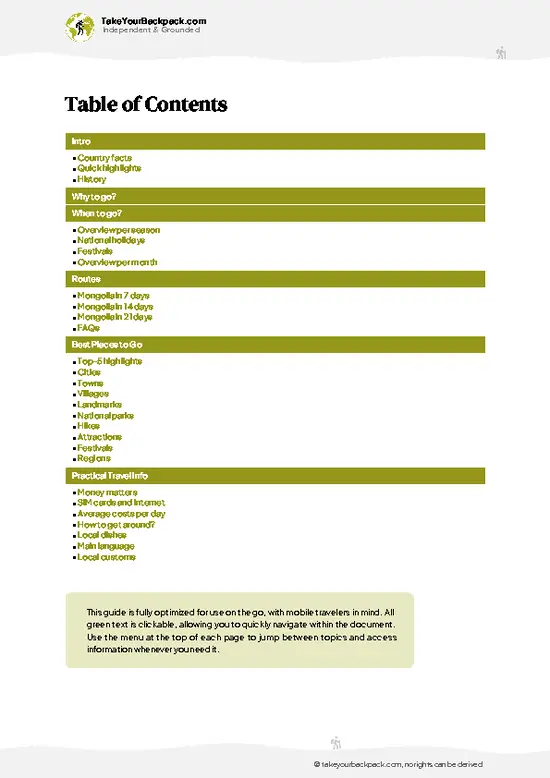
example page 2 from our offline Travel Guide for Mongolia
example page 3 from our offline Travel Guide for Mongolia
example page 4 from our offline Travel Guide for Mongolia
example page 5 from our offline Travel Guide for Mongolia
example page 6 from our offline Travel Guide for Mongolia
example page 7 from our offline Travel Guide for Mongolia
The digital guide (272 pages) contains:
68 highlights, ranked by travel appeal
Optimized 7, 14 & 21-day travel routes
Cities, national parks, landmarks, beaches
How to get around
Offline-friendly for travel without Wi-Fi
👉 Click to see all 30+ guide features

📅 Plan smarter in minutes, not weeks
Month by month travel advice
Festivals & national holidays
Budget expectations

🗺️ Go to the right places, skip the overrated ones
Honest pros & cons of destinations
Top hikes, parks & viewpoints
Lesser-known places most travelers miss
Clear “worth it vs skip it” guidance

🛏️ Travel smoothly without rookie mistakes
Best areas to stay
Transport systems explained simply
Common scams & safety advice
SIM cards, money & practical tips

🌍 Understand the country, not just visit it
Culture & traditions
52 Essential phrases & customs
Festivals worth planning around
Traveler-friendly historical context
Insights that make places more meaningful

📱 Built for real travel conditions
Fully downloadable PDF
Works completely offline
Optimized for phone use
Useful in remote areas & buses
Everything in one place
Save weeks of stressful planning
Get instant access to your full guide. 30‑day money-back guarantee.
+ Add another guide for just US$7.80

By proceeding you agree to our terms.
Sent to your inbox immediately after payment • 100% Secure Checkout
Best Backpacking Travel Advisor 2025 tourism awardBest Backpacking
Travel Advisor
2025
What others say about Take Your Backpack Guides:
⭐⭐⭐⭐⭐
Fantastic, amazing amount of information!
⭐⭐⭐⭐⭐
My goodness this is amazing, it's what I've been looking for hats off too you!
⭐⭐⭐⭐⭐
I think this is absolutely BRILLIANT
⭐⭐⭐⭐
Very complete and informative. It's still missing places, but I gotta to commend you
⭐⭐⭐⭐⭐
This is truly amazing, thank you, can't wait to explore it with my kids!
⭐⭐⭐⭐⭐
Awesome resource, thank you!
⭐⭐⭐⭐⭐
This is amazing! Can't wait to explore the ones I haven't seen
⭐⭐⭐⭐
I love this! Well done, great idea.
⭐⭐⭐⭐⭐
Thanks for taking the time to make this gem!
⭐⭐⭐⭐⭐
This might be the best website I've ever seen.
⭐⭐⭐⭐⭐
Congratulations, and thank you so much for your work; it's incredibly valuable.
⭐⭐⭐⭐
In all seriousness I think you did a great job pointing out the important spots
⭐⭐⭐⭐⭐
10/10 very good
⭐⭐⭐⭐⭐
As someone who's only just starting to visit regularly this is awesome, thank you.
⭐⭐⭐⭐
Thank you very much! I'm going to visit my dad, it's going to be very useful!
⭐⭐⭐⭐⭐
This is really cool! We'll be travelling for the first time and this definitely come in handy.
⭐⭐⭐⭐⭐
You are now our minister of culture, congratulations 👨‍💼
⭐⭐⭐⭐⭐
Just wanted to tell you that this is a pearl! Going to follow your recommendations.
⭐⭐⭐⭐⭐
This is so cool. I'll definitely be using the resource for my travels soon.
⭐⭐⭐⭐⭐
This is very impressive! Good work.
⭐⭐⭐⭐⭐
This is an amazing and informative site. Very well done!

🛏️ Where to stay?Best Places to Stay in Mongolia

Yes — hostels and budget guesthouses are common in Ulaanbaatar and available in smaller cities, with budget ger camps in tourist areas like the Gobi for remote stays.
Sukhbaatar Square / Peace Avenue (city center) has the largest selection and best access to museums, restaurants, transport and nightlife but is noisier and slightly pricier; Bayangol and areas near the train station are quieter and cheaper with easy market access but sit a bit farther from key sights; ger camps offer direct access to landscapes at low cost but are seasonal, very basic, often cold at night and require transport planning.
Book ahead in summer and holidays, carry cash, and expect simpler heating and sanitation … read more 👉
Yes — hostels and budget guesthouses are common in Ulaanbaatar and available in smaller cities, with budget ger camps in tourist areas like the Gobi for remote stays.
Sukhbaatar Square / Peace Avenue (city center) has the largest selection and best access to museums, restaurants, transport and nightlife but is noisier and slightly pricier; Bayangol and areas near the train station are quieter and cheaper with easy market access but sit a bit farther from key sights; ger camps offer direct access to landscapes at low cost but are seasonal, very basic, often cold at night and require transport planning.
Book ahead in summer and holidays, carry cash, and expect simpler heating and sanitation outside the city to avoid unpleasant surprises.

If you enjoy meeting fellow travelers, consider choosing hostels with high ratings for atmosphere. On the other hand, if you prefer having your own space, a hotel might be a better option.

MongoliaExplore Mongolia

👋 Meet the founderWho’s Behind Take Your Backpack?

Johan, backpacker and founder of TakeYourBackpackHi, I’m Johan (Netherlands 🇳🇱), the creator of TakeYourBackpack. Over the past decade, I’ve backpacked through 80+ countries across six continents, gaining extensive experience with independent travel, long-term trips, and overland routes.

This site is built on a combination of firsthand travel experience and carefully curated insights from other backpackers. Many guides are based on places I’ve personally visited, while others bring together tips, observations, and practical advice shared by trusted travelers I’ve met along the way.

The goal is to provide realistic, experience-driven guidance — not generic itineraries — so you can explore destinations with better context, clearer expectations, and more confidence.

Get full Mongolia guide •
Instant download • 68 highlights • Full Offline guide