×

Mongolia🇲🇳 | townsArvaikheerhorse culture, provincial museum, dry hills | things to do and best time to go

Explore ChoibalsanExplore Uliastai

Backpacking in Arvaikheer
👍 Recommendedtown ranked #10
By Johan Kruseman 🇳🇱 | Updated June 9, 2026

Your first real fork in the road with Arvaikheer is this: do you treat it as a quick refuel stop on the long road between Ulaanbaatar and the Gobi, or slow down and use it as a low-key base for central steppe life. That choice matters, because what Arvaikheer does best is rhythm, not spectacle. Sitting in Övörkhangai province in central Mongolia, it’s a modest town where dust, horse sweat, and bakery steam mix in the morning air. For backpackers, it’s practical more than pretty: decent guesthouses, a couple of simple monasteries, a market, and access to rolling hills rather than headline sights. Buses connect it reliably, the center is walkable, and shared taxis handle the rest. Evenings are quiet, with a few cafés and billiard halls instead of bars, so meeting other travelers is hit-or-miss unless you sync with the occasional overlander crowd. It’s cheaper and calmer than Kharkhorin, less scenic than the Orkhon Valley, but if you want a real Mongolian provincial town as your staging point for nearby countryside camps or as a sanity break on a long transit day, it earns its place on the route.

Discover everything you want to know in the 📖 Mongolia Travel Guide.


Get your Mongolia guide
70 ranked highlights, routes & tips, works offline (282 pages)
Loading the map 🌍
CLICK TO FILTER
cities
towns
villages
landmarks
national parks
hikes
attractions
festivals
regions
SHOW COUNTRY’S BESTSHOW ALL

✨ Why go?
Ranked #10 town in Mongolia
What sets this place apart

Arvaikheer serves as a gateway for backpackers exploring Mongolia’s rugged beauty. Its walkable streets make it easy to navigate, while small-scale guesthouses offer a cozy base for weary travelers. The town is a convenient stop for those heading to nearby hikes in the Khangai Mountains or seeking the serene lakes that dot the landscape. You’ll find local food experiences that showcase hearty Mongolian dishes, perfect after a day on the trails.

Travelers often linger here for a few days, soaking in the friendly social atmosphere that encourages connections among solo travelers and small groups. It’s not a party town, but rather a place for those who appreciate the quiet charm of rural life and the thrill of adventure. If you’re a slow traveler or a hiker, Arvaikheer could be just the right fit.
Want to include Arvaikheer in your Mongolia route?
Create a personalized Mongolia itinerary that includes Arvaikheer and the places that fit your trip — based on your travel style, budget, and available time. Get your route in seconds.

Generate my trip

💡 HighlightsEssential experiences to have while visiting Arvaikheer

  • Övörkhangai Provincial Museum (Arvaikheer Museum) — The best place in town to understand the region: displays on provincial history, archaeological finds, traditional nomadic clothing and tools, and local ethnography. Compact, well-organized and perfect for a one-hour deep dive into what this part of Mongolia is about.
  • Arvaikheer Central Market — A lively market where nomads and townspeople trade dairy, meat, felt goods, boots and household items. Mornings are busiest; worth visiting for fresh products, cheap wool hats, and honest people-watching.
  • Central Square and Naadam Stadium — The civic heart of town with a prominent monument and an adjacent field that hosts the aimag’s Naadam festival. Visiting during Naadam gives close-up wrestling, archery and short-distance horse racing in a
read more 👉
  • Övörkhangai Provincial Museum (Arvaikheer Museum) — The best place in town to understand the region: displays on provincial history, archaeological finds, traditional nomadic clothing and tools, and local ethnography. Compact, well-organized and perfect for a one-hour deep dive into what this part of Mongolia is about.
  • Arvaikheer Central Market — A lively market where nomads and townspeople trade dairy, meat, felt goods, boots and household items. Mornings are busiest; worth visiting for fresh products, cheap wool hats, and honest people-watching.
  • Central Square and Naadam Stadium — The civic heart of town with a prominent monument and an adjacent field that hosts the aimag’s Naadam festival. Visiting during Naadam gives close-up wrestling, archery and short-distance horse racing in a very local atmosphere.
  • Main Buddhist temple (town monastery) — A modest gompa in town where you can observe morning prayers, incense, and local lama activity. It’s a good spot to see post-socialist revival Buddhism and authentic ritual life without heading out to the big tourist monasteries.
  • Arvaikheer Airport (domestic terminal) — A small, functional domestic airstrip that’s useful for getting in and out quickly; also interesting for travelers who like Soviet-era airport architecture and short regional flights.
  • Ger district walk — The ring of gers (yurts) on the edge of town is a living snapshot of contemporary nomadic life: animals close by, everyday chores, backyard craftsmen and small open-air dairies selling fresh curds and yoghurt.
  • Local craft and leather workshops — Small family-run shops making traditional gutal boots, saddles and felt goods. Workshops let you watch the process, haggle a fair price, and leave with a durable, locally made souvenir.
A few close, visitable day-trip highlights outside Arvaikheer are Kharkhorin with Erdene Zuu Monastery, Tövkhön Monastery on the ridge above Kharkhorin, and the Orkhon Valley waterfalls and archaeological sites — Erdene Zuu in Kharkhorin is my personal favorite.
Spotted a mistake or missing something? Contact us.

Things to do near Arvaikheer

Ratings based on Tripadvisor reviews. When you book through this link, you support our work at no extra cost to you.

🏘️ NeighborhoodsWhere things are and how it's laid out

Arvaikheer, the capital of the Uvurkhangai Province, offers a unique blend of Mongolian culture and rugged charm. Here’s how to navigate its neighborhoods for an optimal backpacking experience.

Central District: This is the heart of Arvaikheer, where you’ll find local markets and eateries. The vibe is bustling yet manageable, perfect for short stays. Walkability is high; everything is within reach. Grab a bowl of buuz at a street stall, and soak in the local life. Nightlife is low-key, with a few bars that close early.

Gobi Street Area: A bit quieter, this area is ideal for longer stays. It’s lined with guesthouses and cafes, offering a more relaxed atmosphere. The scent of fresh bread wafts through the air, inviting you to linger. Transport access is decent, with local buses nearby.

Outskirts: … read more 👉
Arvaikheer, the capital of the Uvurkhangai Province, offers a unique blend of Mongolian culture and rugged charm. Here’s how to navigate its neighborhoods for an optimal backpacking experience.

Central District: This is the heart of Arvaikheer, where you’ll find local markets and eateries. The vibe is bustling yet manageable, perfect for short stays. Walkability is high; everything is within reach. Grab a bowl of buuz at a street stall, and soak in the local life. Nightlife is low-key, with a few bars that close early.

Gobi Street Area: A bit quieter, this area is ideal for longer stays. It’s lined with guesthouses and cafes, offering a more relaxed atmosphere. The scent of fresh bread wafts through the air, inviting you to linger. Transport access is decent, with local buses nearby.

Outskirts: For those seeking adventure, the outskirts provide a gateway to the surrounding landscapes. It’s less walkable, but the trade-off is stunning views and tranquility. Perfect for backpackers wanting to escape the hustle and immerse themselves in nature.

⌛️ 1 daySeeing the highlights in 24 hours

Arvaikheer, the capital of the Uvurkhangai Province, is a slice of Mongolia that feels like a well-kept secret. It’s a town where the vast steppe meets a rich tapestry of nomadic culture, and you can almost taste the history in the air.

Start your morning at the bustling local market. The scent of fresh bread mingles with the earthy aroma of dried herbs. Vendors call out, showcasing everything from handmade boots to vibrant vegetables. Grab a steaming bowl of buuz (dumplings) from a street stall; the warmth will fuel your exploration.

In the afternoon, head to the nearby Kharkhorin, the ancient capital of the Mongol Empire. It’s a short drive, but the landscape shifts dramatically, revealing rolling hills and distant mountains. The Erdene Zuu Monastery, with its intricate architecture, … read more 👉
Arvaikheer, the capital of the Uvurkhangai Province, is a slice of Mongolia that feels like a well-kept secret. It’s a town where the vast steppe meets a rich tapestry of nomadic culture, and you can almost taste the history in the air.

Start your morning at the bustling local market. The scent of fresh bread mingles with the earthy aroma of dried herbs. Vendors call out, showcasing everything from handmade boots to vibrant vegetables. Grab a steaming bowl of buuz (dumplings) from a street stall; the warmth will fuel your exploration.

In the afternoon, head to the nearby Kharkhorin, the ancient capital of the Mongol Empire. It’s a short drive, but the landscape shifts dramatically, revealing rolling hills and distant mountains. The Erdene Zuu Monastery, with its intricate architecture, stands as a testament to Mongolia’s spiritual heritage. Spend time wandering the grounds, absorbing the serene atmosphere.

As evening falls, return to Arvaikheer and stroll through the quieter neighborhoods. The golden light casts long shadows, and you might catch a glimpse of locals playing traditional games. For dinner, seek out a small family-run restaurant where you can savor hearty khorkhog (mutton cooked with hot stones) while chatting with the friendly owners.

This day in Arvaikheer isn’t just about ticking boxes; it’s about immersing yourself in the rhythm of Mongolian life, where every moment feels like a story waiting to be told.
Turn your Arvaikheer visit into an Mongolia adventure
Build a complete Mongolia route with Arvaikheer, hidden gems, must-see destinations, and realistic travel times included.

Generate my trip

🌤️ When to go?Seasonal considerations and timing


  • Weather: Arvaikheer’s climate swings sharply. Summers (June to August) bring mild warmth, around 15-25°C (59-77°F), perfect for hiking without overheating. Winters plunge below -20°C (-4°F), freezing and harsh, best avoided unless you’re geared for extreme cold.

  • Temperature: Spring and autumn offer cool days (5-15°C / 41-59°F) but chilly nights, so pack layers. Summer days stretch comfortably warm, but nights can still dip, reminding you this is Mongolia, not a tropical escape.

  • Daylight Hours: Summer days stretch long, up to 16 hours of light, giving you plenty of time to explore. Winter shrinks daylight to about 8 hours, limiting your window for outdoor activities and making early starts essential.

  • Crowds: Peak season is summer, when nomads gather for festivals and tourists arrive.
read more 👉

  • Weather: Arvaikheer’s climate swings sharply. Summers (June to August) bring mild warmth, around 15-25°C (59-77°F), perfect for hiking without overheating. Winters plunge below -20°C (-4°F), freezing and harsh, best avoided unless you’re geared for extreme cold.

  • Temperature: Spring and autumn offer cool days (5-15°C / 41-59°F) but chilly nights, so pack layers. Summer days stretch comfortably warm, but nights can still dip, reminding you this is Mongolia, not a tropical escape.

  • Daylight Hours: Summer days stretch long, up to 16 hours of light, giving you plenty of time to explore. Winter shrinks daylight to about 8 hours, limiting your window for outdoor activities and making early starts essential.

  • Crowds: Peak season is summer, when nomads gather for festivals and tourists arrive. It’s lively but not overwhelming—expect a handful of fellow travelers rather than hordes. Off-season is quiet, almost empty, but some services close down.

  • Seasonal Activities: Summer hosts Naadam festivals and horse races, a cultural jackpot. Spring and autumn bring birdwatching and wildflower blooms, while winter offers stark, silent landscapes for the truly adventurous.

  • Price Fluctuations: Summer sees a modest bump in accommodation and transport costs due to demand. Off-season prices drop, but so do options and comfort. Balancing cost and experience leans toward late spring or early autumn.


Pro-tip: Aim for late June to early July—days are long, the air smells of fresh grass and smoke from gers, and you catch the Naadam festival’s pulse without the crush.


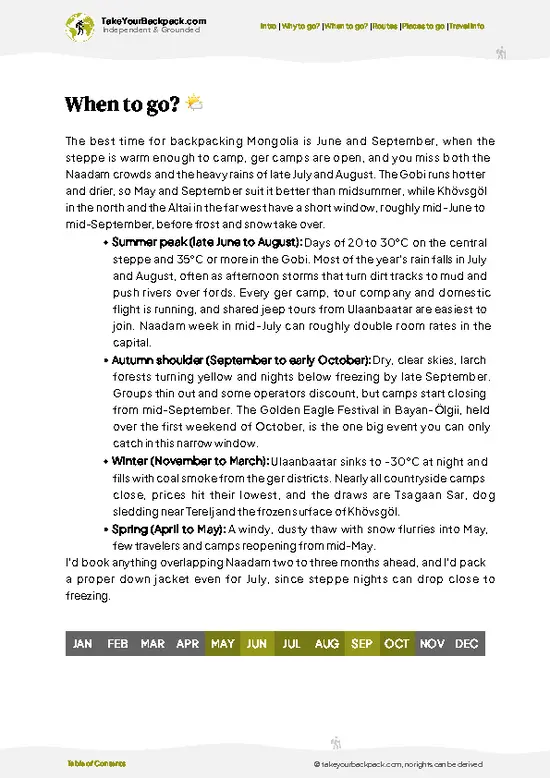
source: climatestotravel.comJANJanuary: below average for travelingFEBFebruary: below average for travelingMARMarch: fair for travelingAPRApril: good for travelingMAYMay: highly recommended for travelingJUNJune: excellent for travelingJULJuly: excellent for travelingAUGAugust: highly recommended for travelingSEPSeptember: highly recommended for travelingOCTOctober: good for travelingNOVNovember: fair for travelingDECDecember: below average for traveling
when-to-go

✈️ The backpacker research shortcutMongolia Travel Guide

An offline-friendly backpacking guide with optimized travel routes, ranked highlights, transport advice, and the best areas to stay.
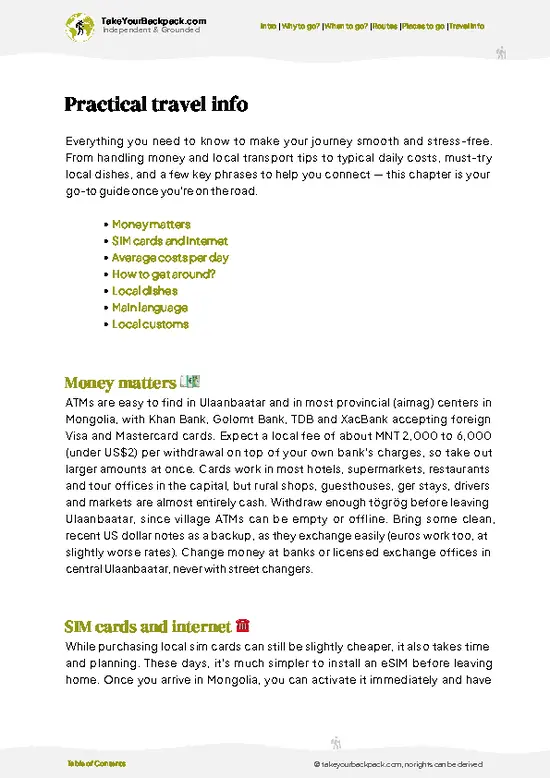
example page 0 from our offline Travel Guide for Mongolia
example page 1 from our offline Travel Guide for Mongolia
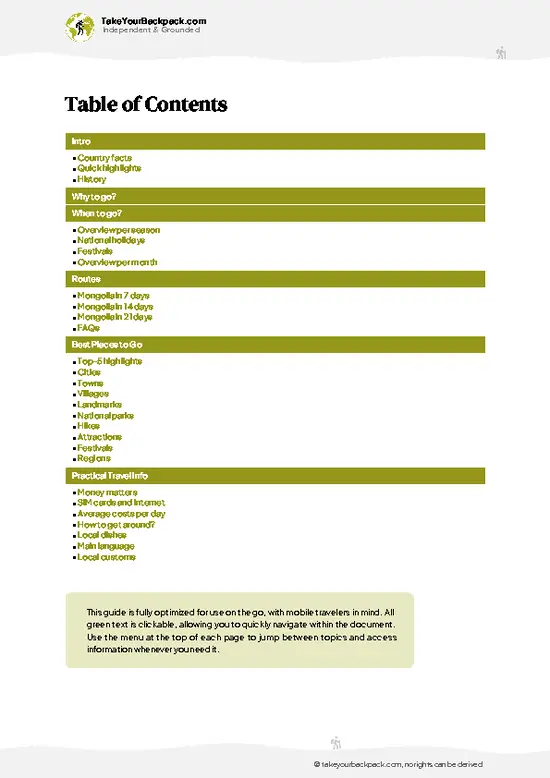
example page 2 from our offline Travel Guide for Mongolia
example page 3 from our offline Travel Guide for Mongolia
example page 4 from our offline Travel Guide for Mongolia
example page 5 from our offline Travel Guide for Mongolia
example page 6 from our offline Travel Guide for Mongolia
example page 7 from our offline Travel Guide for Mongolia
The digital guide (282 pages) contains:
70 highlights, ranked by travel appeal
Optimized 7, 14 & 21-day travel routes
Cities, national parks, landmarks, beaches
How to get around
Offline-friendly for travel without Wi-Fi
👉 Click to see all 30+ guide features

📅 Plan smarter in minutes, not weeks
Month by month travel advice
Festivals & national holidays
Budget expectations

🗺️ Go to the right places, skip the overrated ones
Honest pros & cons of destinations
Top hikes, parks & viewpoints
Lesser-known places most travelers miss
Clear “worth it vs skip it” guidance

🛏️ Travel smoothly without rookie mistakes
Best areas to stay
Transport systems explained simply
Common scams & safety advice
SIM cards, money & practical tips

🌍 Understand the country, not just visit it
Culture & traditions
52 Essential phrases & customs
Festivals worth planning around
Traveler-friendly historical context
Insights that make places more meaningful

📱 Built for real travel conditions
Fully downloadable PDF
Works completely offline
Optimized for phone use
Useful in remote areas & buses
Everything in one place
Save weeks of stressful planning
Get instant access to your full guide. 30‑day money-back guarantee.


By proceeding you agree to our terms.
Sent to your inbox immediately after payment • 100% Secure Checkout
Best Backpacking Travel Advisor 2025 tourism awardBest Backpacking
Travel Advisor
2025
What others say about Take Your Backpack Guides:
⭐⭐⭐⭐⭐
Fantastic, amazing amount of information!
⭐⭐⭐⭐⭐
My goodness this is amazing, it's what I've been looking for hats off too you!
⭐⭐⭐⭐⭐
I think this is absolutely BRILLIANT
⭐⭐⭐⭐
Very complete and informative. It's still missing places, but I gotta to commend you
⭐⭐⭐⭐⭐
This is truly amazing, thank you, can't wait to explore it with my kids!
⭐⭐⭐⭐⭐
Awesome resource, thank you!
⭐⭐⭐⭐⭐
This is amazing! Can't wait to explore the ones I haven't seen
⭐⭐⭐⭐
I love this! Well done, great idea.
⭐⭐⭐⭐⭐
Thanks for taking the time to make this gem!
⭐⭐⭐⭐⭐
This might be the best website I've ever seen.
⭐⭐⭐⭐⭐
Congratulations, and thank you so much for your work; it's incredibly valuable.
⭐⭐⭐⭐
In all seriousness I think you did a great job pointing out the important spots
⭐⭐⭐⭐⭐
10/10 very good
⭐⭐⭐⭐⭐
As someone who's only just starting to visit regularly this is awesome, thank you.
⭐⭐⭐⭐
Thank you very much! I'm going to visit my dad, it's going to be very useful!
⭐⭐⭐⭐⭐
This is really cool! We'll be travelling for the first time and this definitely come in handy.
⭐⭐⭐⭐⭐
You are now our minister of culture, congratulations 👨‍💼
⭐⭐⭐⭐⭐
Just wanted to tell you that this is a pearl! Going to follow your recommendations.
⭐⭐⭐⭐⭐
This is so cool. I'll definitely be using the resource for my travels soon.
⭐⭐⭐⭐⭐
This is very impressive! Good work.
⭐⭐⭐⭐⭐
This is an amazing and informative site. Very well done!

🛏️ Where to stay?Choosing the right base

Arvaikheer’s heart for backpackers pulses strongest around the central district near the main market and the town square. This area hums with daily life—the scent of fresh bread mingling with the crisp mountain air, vendors calling out in Mongolian, and the steady rhythm of locals and travelers weaving through narrow streets. It’s the safest spot, with a friendly, communal vibe that makes solo travelers feel less like outsiders and more like part of a shared adventure.

Why settle here? Because this neighborhood offers the perfect balance: easy access to budget hostels where you can swap stories … read more 👉
Arvaikheer’s heart for backpackers pulses strongest around the central district near the main market and the town square. This area hums with daily life—the scent of fresh bread mingling with the crisp mountain air, vendors calling out in Mongolian, and the steady rhythm of locals and travelers weaving through narrow streets. It’s the safest spot, with a friendly, communal vibe that makes solo travelers feel less like outsiders and more like part of a shared adventure.

Why settle here? Because this neighborhood offers the perfect balance: easy access to budget hostels where you can swap stories over a warm ger tea, and enough local flavor to keep your senses engaged without overwhelming you. Compared to the quieter, more residential outskirts, staying central means you’re steps away from the pulse of Arvaikheer’s social scene—think impromptu gatherings, street food stalls, and the occasional folk music drifting through the evening air. It’s where the real Mongolian rhythm lives, and where your backpacking experience gains texture beyond the usual tourist checklist.

🚌 Getting aroundMoving around without the hassle

Arvaikheer moves at its own rhythm—neither frantic nor sluggish, but a steady pulse that feels like the slow burn of afternoon sun on a dusty street. The town’s flow is a blend of deliberate pauses and bursts of activity, where locals navigate with a mix of routine and improvisation. You won’t find strict timetables here; instead, there’s a sense of knowing when to wait and when to move, like catching the right gust of wind before setting sail. The air carries the scent of dry earth and pine, and the occasional clatter of hooves on gravel reminds you that this is a place where old ways still hold sway alongside the modest hum of modern life.


  • Walking: The heart of Arvaikheer is compact enough to explore on foot, making walking your default mode. Streets are mostly unpaved, so sturdy shoes
read more 👉
Arvaikheer moves at its own rhythm—neither frantic nor sluggish, but a steady pulse that feels like the slow burn of afternoon sun on a dusty street. The town’s flow is a blend of deliberate pauses and bursts of activity, where locals navigate with a mix of routine and improvisation. You won’t find strict timetables here; instead, there’s a sense of knowing when to wait and when to move, like catching the right gust of wind before setting sail. The air carries the scent of dry earth and pine, and the occasional clatter of hooves on gravel reminds you that this is a place where old ways still hold sway alongside the modest hum of modern life.


  • Walking: The heart of Arvaikheer is compact enough to explore on foot, making walking your default mode. Streets are mostly unpaved, so sturdy shoes are a must. Walking lets you soak in the scent of fresh yak butter tea brewing in roadside stalls and catch the subtle shifts in light as the sun arcs over the surrounding hills.


  • Local Minibuses (Marshrutkas): These shared vans run from early morning around 7 AM until dusk, roughly 6 PM. They’re cheap—about 300-500 MNT per ride—and zigzag through the town and nearby ger districts. Expect a bumpy ride with frequent stops, but it’s the fastest way to cover longer distances without breaking the bank.


  • Motorbike Taxis: For quick hops, motorbike taxis are everywhere. Negotiate the fare upfront—usually 1,000-2,000 MNT for short trips. They’re nimble on dusty lanes where cars can’t easily go, but hold tight and prepare for a bit of dust in your face.


  • Private Taxi Cars: More comfortable and faster than minibuses, private taxis cost around 5,000-10,000 MNT depending on distance. They don’t run on a schedule, so you’ll need to find one at the main market or arrange through your guesthouse. Ideal for early departures or late returns when other options have dried up.


  • Bicycles: Renting a bike is a solid choice if you want control over your pace and route. Rental shops are limited but available near the central market. The terrain is mostly flat with occasional hills, so a mountain bike is best. Prices hover around 5,000-7,000 MNT per day, and the morning light makes for a crisp, invigorating ride.

👛 Costs (as of 1 August 2025)Travel costs and budget guide for Arvaikheer

Backpacking in Arvaikheer, Mongolia, feels like stepping into a quieter, less-traveled chapter of the country, where costs stay modest but the experience is rich. Here’s what you can expect to spend daily as an independent traveler.
  • Dorm Accommodation: Hostels and guesthouses in Arvaikheer typically charge between €8 and €15 per night. The rooms are basic but clean, often with shared bathrooms. Expect simple furnishings and a chance to mingle with other travelers or locals in a low-key setting.
  • Meals: Eating out is affordable, with local meals costing around €2 to €5. Traditional Mongolian dishes like buuz (steamed dumplings) or khuushuur (fried meat pies) are filling and budget-friendly. If you shop at local markets, you can grab fresh produce or snacks for even less.
  • Local Transport:
read more 👉
Backpacking in Arvaikheer, Mongolia, feels like stepping into a quieter, less-traveled chapter of the country, where costs stay modest but the experience is rich. Here’s what you can expect to spend daily as an independent traveler.
  • Dorm Accommodation: Hostels and guesthouses in Arvaikheer typically charge between €8 and €15 per night. The rooms are basic but clean, often with shared bathrooms. Expect simple furnishings and a chance to mingle with other travelers or locals in a low-key setting.
  • Meals: Eating out is affordable, with local meals costing around €2 to €5. Traditional Mongolian dishes like buuz (steamed dumplings) or khuushuur (fried meat pies) are filling and budget-friendly. If you shop at local markets, you can grab fresh produce or snacks for even less.
  • Local Transport: Getting around Arvaikheer is straightforward and cheap. Minibuses or shared taxis cost roughly €0.50 to €1 per ride within town. For longer trips outside the town, prices rise but remain reasonable, around €5 to €10 depending on distance.
  • Basic Activities/Entry Fees: Most cultural sites and museums in Arvaikheer have entry fees under €3. Outdoor activities like hiking or visiting nearby natural spots are often free or require a small guide fee, usually under €10 if you want local expertise.
  • Miscellaneous Expenses: This includes things like bottled water, snacks, or occasional internet access. Budget around €1 to €3 daily. Keep in mind that some essentials might be pricier due to the town’s remote location, so plan accordingly.

All told, you’re looking at a daily budget of roughly €15 to €35. This range covers the basics without cutting corners but leaves room for a few small splurges. Arvaikheer’s charm isn’t in luxury—it’s in the quiet rhythms of daily life, where every tug on your wallet feels like a step closer to understanding Mongolia beyond the tourist trail.
⚠️ Prices can change and everyone travels differently, so take this as a rough guide. Hope it helps you plan your adventure!

🚌 Day tripsBest day trips from Arvaikheer

Arvaikheer, Mongolia, is a backpacker’s dream base, offering a gateway to stunning landscapes and rich culture. The town itself buzzes with local life, from the scent of freshly baked bread wafting through the market to the vibrant chatter of nomadic families. Here are some day trips that will make your journey unforgettable.

Kharkhorin and Erdene Zuu Monastery
Just a two-hour ride from Arvaikheer, Kharkhorin is steeped in history as the ancient capital of the Mongol Empire. The ride is a bumpy adventure, but the reward is worth it: the serene Erdene Zuu Monastery, surrounded by a wall of 108 stupas. Spend time wandering the grounds, soaking in the atmosphere, and don’t miss the chance to chat with the monks. Budget around 10,000 MNT for transport and entry fees. Late spring or early autumn … read more 👉
Arvaikheer, Mongolia, is a backpacker’s dream base, offering a gateway to stunning landscapes and rich culture. The town itself buzzes with local life, from the scent of freshly baked bread wafting through the market to the vibrant chatter of nomadic families. Here are some day trips that will make your journey unforgettable.

Kharkhorin and Erdene Zuu Monastery
Just a two-hour ride from Arvaikheer, Kharkhorin is steeped in history as the ancient capital of the Mongol Empire. The ride is a bumpy adventure, but the reward is worth it: the serene Erdene Zuu Monastery, surrounded by a wall of 108 stupas. Spend time wandering the grounds, soaking in the atmosphere, and don’t miss the chance to chat with the monks. Budget around 10,000 MNT for transport and entry fees. Late spring or early autumn is ideal for fewer crowds and pleasant weather. A common mistake is underestimating the time needed to explore; plan for a full day.
👉 Explore Kharkhorin

Orkhon Valley
This UNESCO World Heritage site is about a three-hour drive from Arvaikheer. The valley is a feast for the senses, with rolling hills, wildflowers, and the sound of the Orkhon River flowing nearby. You can hike to the Orkhon Waterfall, a stunning sight, especially in summer when the water is full. Expect to spend around 15,000 MNT for transport and snacks. The best time to visit is from June to September. Many first-timers miss the chance to enjoy a picnic by the river; don’t skip this!
👉 Explore Orkhon Valley

Shankh Monastery
A mere hour away, Shankh Monastery offers a peaceful retreat. The journey is short, but the tranquility you’ll find here is profound. The monastery is perched on a hill, providing sweeping views of the surrounding steppe. It’s a great spot for reflection or simply soaking in the quiet. Budget about 5,000 MNT for transport. Spring and early fall are perfect for visiting, as the weather is mild. A common mistake is rushing through; take your time to absorb the atmosphere.
Want to know what more Mongolia offers?
The Mongolia Travel Guide describes 70 highlights, from cities to national parks, from beaches to hikes

Get the Travel Guide -

🛡️ SafetyScams, Hazards, and Annoyances

Arvaikheer is generally safe, but a few practical tips can enhance your experience. Stay aware in crowded markets; pickpockets can lurk where excitement brews. If you’re solo, avoid wandering too far after dark—stick to well-lit areas and main streets.

When it comes to transportation, be cautious with unofficial taxis; always negotiate fares upfront. Locals are friendly, but some might try to overcharge tourists. Carry small bills to avoid awkward change situations.

Embrace the local vibe, but keep your belongings close. A confident demeanor goes a long way. With these simple strategies, you’ll navigate Arvaikheer like a pro, soaking in its authentic charm without a hitch.

Other Mongolian towns near Arvaikheer

Explore more nearby:

  • Kharkhorin—ancient capital site, Erdene Zuu monastery, Orkhon Valley| 102 km away
  • Bayankhongor—mineral springs, regional bazaar, arid plain| 159 km away
  • Tsetserleg—mountain backdrop, monastery complex, central square| 167 km away

💡 Not sure where to go next?
Create a personalized itinerary for Mongolia including Arvaikheer and the places that fit your trip.

Generate my itinerary

👉 Discover all towns

Or checkout all Mongolia has to offer (think cities, towns, villages, national parks, hikes, beaches, festivals)
Country photo of Mongolia

We 💚 feedbackKey takeaways before you go

Arvaikheer is a slice of Mongolia where the vast steppe meets the warmth of local culture. You’ll savor the rich aroma of homemade buuz while soaking in the stunning sunsets. But be ready for the reality: amenities can be sparse, and English isn’t widely spoken. Embrace the challenge; it’s part of the adventure that makes the experience feel authentic.

✈️ When did I visit Mongolia?
As part of my 1.5 year travel around the world trip, I visited Mongolia in July 2015. After a month of horse-riding and hitch-hiking I took the TransMongolia express to China.

✍️ Help improve this page!
The information on this page is based on my own backpacking experience in Mongolia, supplemented with up-to-date research and feedback from other travelers. Travel details can change, so if you notice anything outdated or incomplete, feel free to let me know.


🙋‍♂️ Give feedback

👋 Meet the founderWho’s Behind Take Your Backpack?

Johan, backpacker and founder of TakeYourBackpackHi, I’m Johan (Netherlands 🇳🇱), the creator of TakeYourBackpack. Over the past decade, I’ve backpacked through 80+ countries across six continents, gaining extensive experience with independent travel, long-term trips, and overland routes.

This site is built on a combination of firsthand travel experience and carefully curated insights from other backpackers. Many guides are based on places I’ve personally visited, while others bring together tips, observations, and practical advice shared by trusted travelers I’ve met along the way.

The goal is to provide realistic, experience-driven guidance — not generic itineraries — so you can explore destinations with better context, clearer expectations, and more confidence.

Get full Mongolia guide •
Instant download • 70 highlights • Full Offline guide