v2.webp)
- Horse racing across the steppe — Nothing beats the raw, thunderous spectacle of hundreds of horses straining across open grassland. Races are long by Western standards, the jockeys (often kids from herding families) are fearless, and the crowd follows the course on foot, in cars, or on horseback — a proper nomadic soundtrack of hooves, dust and cheers. Personal favorite: the way the landscape and the race become one big communal moment.
- Mongolian wrestling (Bökh) — More ritual than gym routine: wrestlers wear traditional gear, bow and circle before each bout, and the whole contest is built on lineage, ceremony and stamina rather than timed rounds or weight classes. The pageantry — fanfare, eagle-like victory moves and the shouting encouragement from local fans — gives wrestling a mythic,
- Horse racing across the steppe — Nothing beats the raw, thunderous spectacle of hundreds of horses straining across open grassland. Races are long by Western standards, the jockeys (often kids from herding families) are fearless, and the crowd follows the course on foot, in cars, or on horseback — a proper nomadic soundtrack of hooves, dust and cheers. Personal favorite: the way the landscape and the race become one big communal moment.
- Mongolian wrestling (Bökh) — More ritual than gym routine: wrestlers wear traditional gear, bow and circle before each bout, and the whole contest is built on lineage, ceremony and stamina rather than timed rounds or weight classes. The pageantry — fanfare, eagle-like victory moves and the shouting encouragement from local fans — gives wrestling a mythic, tribal feel you won’t get at a stadium match.
- Traditional archery — Archery at Naadam is a study in precision and tradition: long wooden bows, colorful quivers, and a steady, communal rhythm as shooters aim at distant targets. Both men and women compete, and the crowd appreciates technique and consistency; it’s a quieter, oddly meditative counterpoint between the louder events.
- Throat singing, morin khuur and folk performances — The music is hauntingly local: overtone throat singing (khoomei), the horsehead fiddle’s deep, vocal-like moan, and group dances in deels that tell nomadic stories. These performances aren’t polished pop acts — they’re raw, live cultural expressions that resonate in the wide-open air and stick with you long after the festival ends.
- Food, markets and the nomadic atmosphere — Food stalls and ger-camps turn the festival grounds into a living market: try airag (fermented mare’s milk) if you dare, share a communal bowl of mutton, and spot artisans selling silver jewelry and hand-stitched deels. More than souvenirs, it’s the chance to taste and trade with herding families and pass an evening around a campfire that makes Naadam feel like a big, friendly village reunion.
Spotted a mistake or missing something? Contact us.

Cooking Class in a Traditional Ger Home in Ulaanbaatar Suburbs

Private tour wth Olivia: Genghis Statue-Turtle Rock-Terelj-Zaisan

Private 3-Day Tour of National Parks From Ulaanbaatar

Day Trip to Terelj National Park & Giant Chinggis Khaan Statue

Ulaanbaatar Walking Tour & Cooking Class in a Mongolian Home

Ulaanbaatar Signature Tour – Mongolia’s Capital in One Day

Full Day Private Tour in Terelj National Park with Horse Riding

Full Day Chinggis Khaan Statue & Terelj NP Tour +Horseride, Eagle

4 Days Tour: Central Mongolia

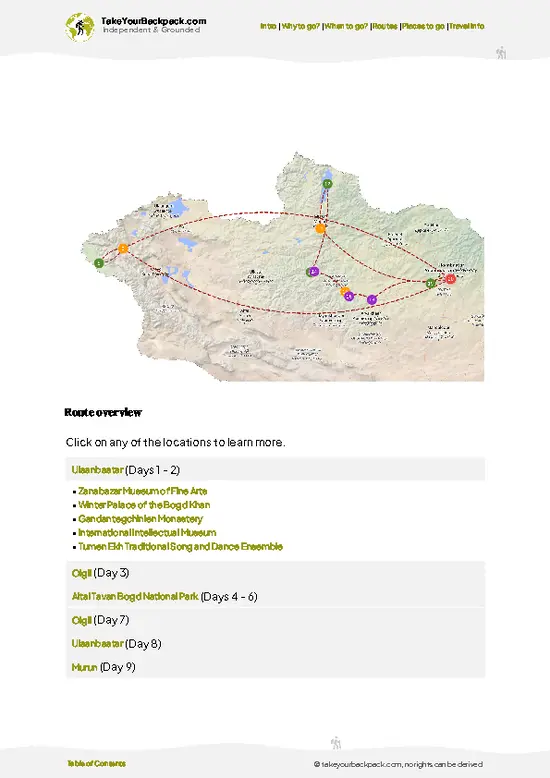
 Best Backpacking
.jpg) Hi, I’m Johan (Netherlands 🇳🇱), the creator of TakeYourBackpack. Over the past 3 decades, I’ve backpacked through 90+ countries across six continents, gaining extensive experience with independent travel, long-term trips, and overland routes.
Hi, I’m Johan (Netherlands 🇳🇱), the creator of TakeYourBackpack. Over the past 3 decades, I’ve backpacked through 90+ countries across six continents, gaining extensive experience with independent travel, long-term trips, and overland routes.