×

Mongolia🇲🇳 | national parksGreat Gobi B Strictly Protected Areadesert steppe, wild camels, saiga antelope | things to do and best time to go

Explore Khar Us Nuur National ParkExplore Numrug Strictly Protected Area

Backpacking in Great Gobi B Strictly Protected Area
👀 For curious travelersnational park ranked #11
By Johan Kruseman 🇳🇱 | Updated May 14, 2026

Most people imagine Great Gobi B as a dramatic dune playground like Khongoryn Els; it’s not. This is a remote, flat, scrubby corner of southwest Mongolia near the Chinese border, important more for conservation than for postcard views. For backpackers, it’s harsh but rewarding if you care about wildness and critically endangered wild Bactrian camels more than easy hikes. Trails are basically tracks; you’ll walk long, exposed distances with little shade or water. Access is difficult, transport costly, and there’s usually no formal entrance gate or clear fee system, unlike Gobi Gurvansaikhan. Crowds are almost nonexistent, camping is fully wild, and the vibe is raw research outpost, not classic “Gobi desert tour.”

Discover everything you want to know in the 📖 Mongolia Travel Guide.


Get your Mongolia guide
70 ranked highlights, routes & tips, works offline (282 pages)
Loading the map 🌍
CLICK TO FILTER
cities
towns
villages
landmarks
national parks
hikes
attractions
festivals
regions
SHOW COUNTRY’S BESTSHOW ALL

✨ Why go?
Ranked #11 national park in Mongolia
Reasons people choose to explore here

The Great Gobi B Strictly Protected Area in Mongolia draws backpackers for several compelling reasons. First, the chance for independent exploration is a major draw. You can roam vast landscapes without the constraints of guided tours, allowing for a more personal connection with the rugged terrain.

Budget-conscious travelers appreciate the camping options and nearby hostels, which keep costs low while offering a chance to immerse in nature. The park features a variety of trails, catering to different skill levels, from easy walks to challenging hikes.

Self-guided travelers thrive here; the park’s layout encourages you to chart your own course. Just be aware of the weather—it can shift quickly, so pack accordingly. Also, plan for limited services; bring enough supplies to avoid unnecessary … read more 👉
The Great Gobi B Strictly Protected Area in Mongolia draws backpackers for several compelling reasons. First, the chance for independent exploration is a major draw. You can roam vast landscapes without the constraints of guided tours, allowing for a more personal connection with the rugged terrain.

Budget-conscious travelers appreciate the camping options and nearby hostels, which keep costs low while offering a chance to immerse in nature. The park features a variety of trails, catering to different skill levels, from easy walks to challenging hikes.

Self-guided travelers thrive here; the park’s layout encourages you to chart your own course. Just be aware of the weather—it can shift quickly, so pack accordingly. Also, plan for limited services; bring enough supplies to avoid unnecessary expenses. This preparation ensures you can focus your energy and budget on the experiences that truly matter.
Want to include Great Gobi B Strictly Protected Area in your Mongolia route?
Create a personalized Mongolia itinerary that includes Great Gobi B Strictly Protected Area and the places that fit your trip — based on your travel style, budget, and available time. Get your route in seconds.

Generate my trip

💡 HighlightsThe experiences that define the visit

  • Wild Bactrian Camels — One of the last strongholds for truly wild Bactrian camels (not feral), with sturdy two-humped animals that look like they were carved for this landscape. Sightings are rare and special; seeing them at a distance, moving slowly across a salt plain, is why many people come here.
  • Gobi Bear (Mazaalai) Territory — The Gobi bear is a critically endangered, desert-adapted brown bear subspecies found only in this region. Your chances of an actual sighting are slim, but visiting their habitat — dry riverbeds, rocky outcrops and sparse shrubland — is a humbling reminder of how wild this place still is.
  • Endless Semi-Desert Plains & Panoramas — Wide-open gravel plains, sculpted badlands and long horizons that turn raw colors at dawn and dusk. There aren’t marked hiking trails
read more 👉
  • Wild Bactrian Camels — One of the last strongholds for truly wild Bactrian camels (not feral), with sturdy two-humped animals that look like they were carved for this landscape. Sightings are rare and special; seeing them at a distance, moving slowly across a salt plain, is why many people come here.
  • Gobi Bear (Mazaalai) Territory — The Gobi bear is a critically endangered, desert-adapted brown bear subspecies found only in this region. Your chances of an actual sighting are slim, but visiting their habitat — dry riverbeds, rocky outcrops and sparse shrubland — is a humbling reminder of how wild this place still is.
  • Endless Semi-Desert Plains & Panoramas — Wide-open gravel plains, sculpted badlands and long horizons that turn raw colors at dawn and dusk. There aren’t marked hiking trails here; trekking is honest navigation across big spaces, so plan multi-day routes with a local guide or ranger if you want to walk it.
  • Sand Ridges and Dune Fields — Smaller dune systems and wind-carved ridges give variety to the monotone desert—great for short climbs, minimal scrambling and dramatic photos. They’re quieter and less touristy than the big dunes elsewhere, so you often get them to yourself at sunrise.
  • Oases, Seasonal Waterholes & Salt Flats — Scattered springs and temporary ponds create tiny green pockets that wildlife absolutely depend on, and salt pans that reflect light in surreal ways. These micro-habitats concentrate life, so if you want to watch animals from a respectful distance, head for the water.
  • Birdlife and Raptors — Expect hardy desert birds: larks, wheatears, and the occasional falcon or steppe eagle cruising thermals. It’s not a birdwatcher’s tropical rainforest, but the species you do see are adapted to extremes and photograph well against the stark landscape.
  • Night Skies and Desert Silence — The stars here are ridiculous; zero light pollution turns the Milky Way into something you can almost walk on. Personal favorite: lying on cold sand after dinner, watching constellations wheel overhead—nothing else quite clears your head like Gobi night silence.
Spotted a mistake or missing something? Contact us.

🌤️ When to go?Best time to explore Great Gobi B Strictly Protected Area


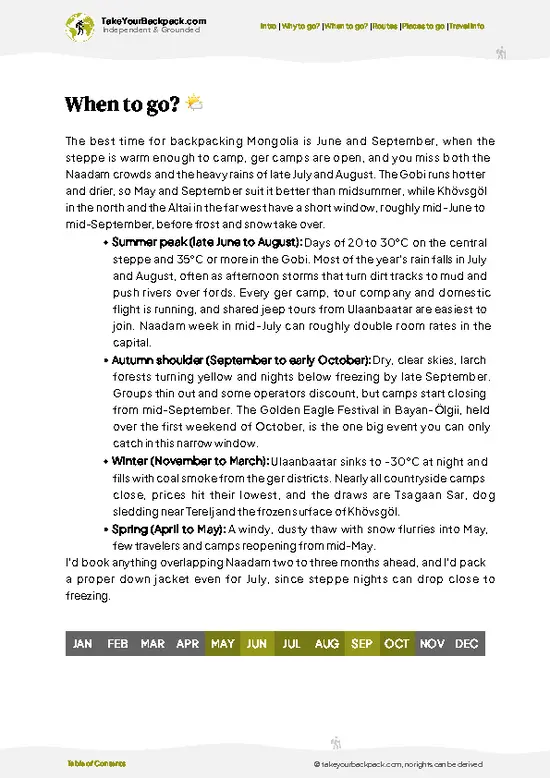
  • Weather: The best window is late spring to early autumn (May to September). Winters are brutal, plunging below -30°C (-22°F), making backpacking nearly impossible.

  • Temperature: Summer days hover around 20-25°C (68-77°F), but nights can drop sharply, so pack layers. Early spring and late autumn bring unpredictable swings, often dipping below freezing at night.

  • Daylight Hours: Long summer days offer up to 16 hours of light, perfect for extended trekking. Winter days shrink to 6-7 hours, limiting exploration time.

  • Crowds: This park is remote and rarely crowded year-round, but summer sees a slight uptick from local tourists and researchers. Expect solitude, especially outside July and August.

  • Seasonal Activities: Summer is prime for wildlife spotting and hiking. Spring and autumn bring
read more 👉

  • Weather: The best window is late spring to early autumn (May to September). Winters are brutal, plunging below -30°C (-22°F), making backpacking nearly impossible.

  • Temperature: Summer days hover around 20-25°C (68-77°F), but nights can drop sharply, so pack layers. Early spring and late autumn bring unpredictable swings, often dipping below freezing at night.

  • Daylight Hours: Long summer days offer up to 16 hours of light, perfect for extended trekking. Winter days shrink to 6-7 hours, limiting exploration time.

  • Crowds: This park is remote and rarely crowded year-round, but summer sees a slight uptick from local tourists and researchers. Expect solitude, especially outside July and August.

  • Seasonal Activities: Summer is prime for wildlife spotting and hiking. Spring and autumn bring migration patterns but harsher weather. Winter is reserved for hardy adventurers with specialized gear.

  • Price Fluctuations: Costs peak in summer due to demand for guides and transport. Off-season offers cheaper rates but comes with weather risks and limited services.


Pro-tip: Aim for June or early September to balance mild weather, fewer crowds, and better rates—this timing preserves your energy for the wild moments that count.


source: climatestotravel.comJANJanuary: below average for travelingFEBFebruary: below average for travelingMARMarch: fair for travelingAPRApril: good for travelingMAYMay: excellent for travelingJUNJune: excellent for travelingJULJuly: highly recommended for travelingAUGAugust: highly recommended for travelingSEPSeptember: excellent for travelingOCTOctober: good for travelingNOVNovember: fair for travelingDECDecember: below average for traveling
when-to-go

✈️ The backpacker research shortcutMongolia Travel Guide

An offline-friendly backpacking guide with optimized travel routes, ranked highlights, transport advice, and the best areas to stay.
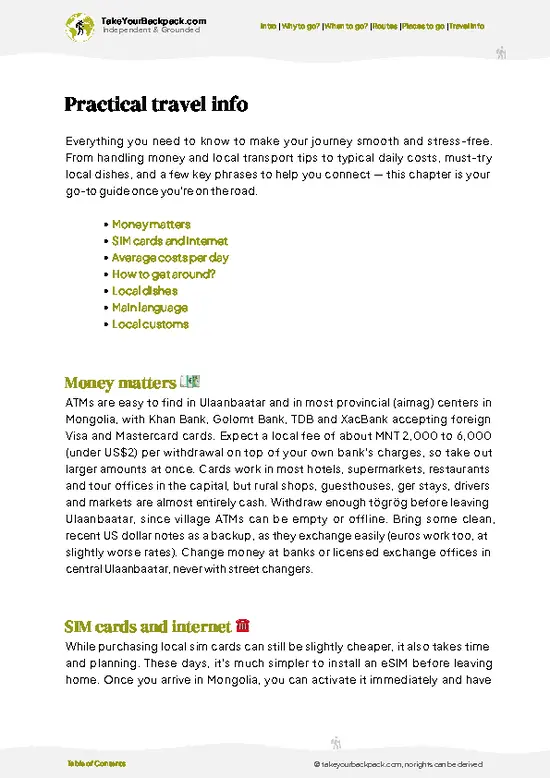
example page 0 from our offline Travel Guide for Mongolia
example page 1 from our offline Travel Guide for Mongolia
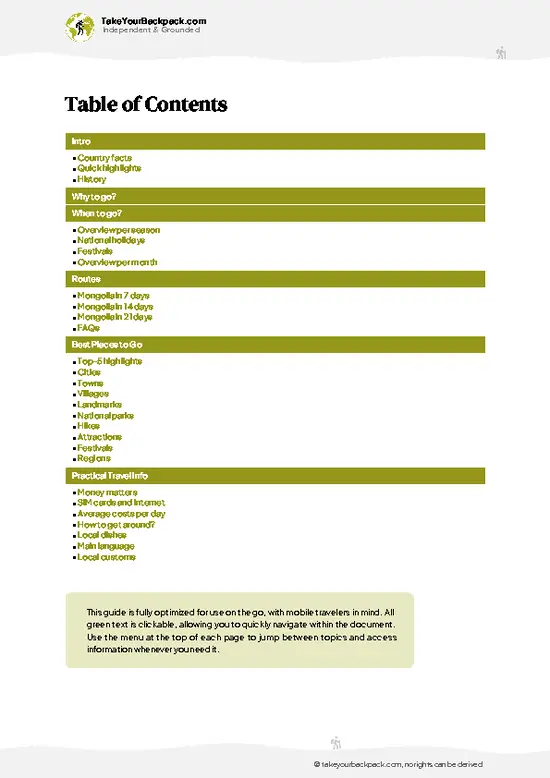
example page 2 from our offline Travel Guide for Mongolia
example page 3 from our offline Travel Guide for Mongolia
example page 4 from our offline Travel Guide for Mongolia
example page 5 from our offline Travel Guide for Mongolia
example page 6 from our offline Travel Guide for Mongolia
example page 7 from our offline Travel Guide for Mongolia
The digital guide (282 pages) contains:
70 highlights, ranked by travel appeal
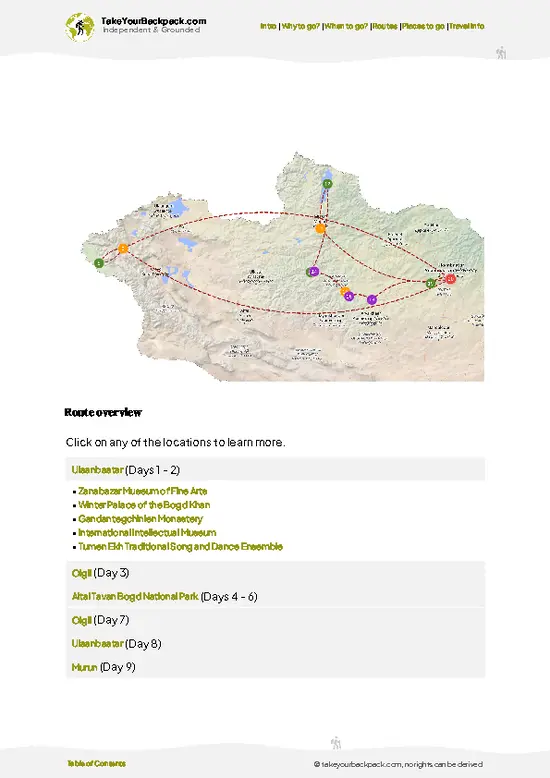
Optimized 7, 14 & 21-day travel routes
Cities, national parks, landmarks, beaches
How to get around
Offline-friendly for travel without Wi-Fi
👉 Click to see all 30+ guide features

📅 Plan smarter in minutes, not weeks
Month by month travel advice
Festivals & national holidays
Budget expectations

🗺️ Go to the right places, skip the overrated ones
Honest pros & cons of destinations
Top hikes, parks & viewpoints
Lesser-known places most travelers miss
Clear “worth it vs skip it” guidance

🛏️ Travel smoothly without rookie mistakes
Best areas to stay
Transport systems explained simply
Common scams & safety advice
SIM cards, money & practical tips

🌍 Understand the country, not just visit it
Culture & traditions
52 Essential phrases & customs
Festivals worth planning around
Traveler-friendly historical context
Insights that make places more meaningful

📱 Built for real travel conditions
Fully downloadable PDF
Works completely offline
Optimized for phone use
Useful in remote areas & buses
Everything in one place
Save weeks of stressful planning
Get instant access to your full guide. 30‑day money-back guarantee.


By proceeding you agree to our terms.
Sent to your inbox immediately after payment • 100% Secure Checkout
Best Backpacking Travel Advisor 2025 tourism awardBest Backpacking
Travel Advisor
2025
What others say about Take Your Backpack Guides:
⭐⭐⭐⭐⭐
Fantastic, amazing amount of information!
⭐⭐⭐⭐⭐
My goodness this is amazing, it's what I've been looking for hats off too you!
⭐⭐⭐⭐⭐
I think this is absolutely BRILLIANT
⭐⭐⭐⭐
Very complete and informative. It's still missing places, but I gotta to commend you
⭐⭐⭐⭐⭐
This is truly amazing, thank you, can't wait to explore it with my kids!
⭐⭐⭐⭐⭐
Awesome resource, thank you!
⭐⭐⭐⭐⭐
This is amazing! Can't wait to explore the ones I haven't seen
⭐⭐⭐⭐
I love this! Well done, great idea.
⭐⭐⭐⭐⭐
Thanks for taking the time to make this gem!
⭐⭐⭐⭐⭐
This might be the best website I've ever seen.
⭐⭐⭐⭐⭐
Congratulations, and thank you so much for your work; it's incredibly valuable.
⭐⭐⭐⭐
In all seriousness I think you did a great job pointing out the important spots
⭐⭐⭐⭐⭐
10/10 very good
⭐⭐⭐⭐⭐
As someone who's only just starting to visit regularly this is awesome, thank you.
⭐⭐⭐⭐
Thank you very much! I'm going to visit my dad, it's going to be very useful!
⭐⭐⭐⭐⭐
This is really cool! We'll be travelling for the first time and this definitely come in handy.
⭐⭐⭐⭐⭐
You are now our minister of culture, congratulations 👨‍💼
⭐⭐⭐⭐⭐
Just wanted to tell you that this is a pearl! Going to follow your recommendations.
⭐⭐⭐⭐⭐
This is so cool. I'll definitely be using the resource for my travels soon.
⭐⭐⭐⭐⭐
This is very impressive! Good work.
⭐⭐⭐⭐⭐
This is an amazing and informative site. Very well done!

🛏️ Where to stay?Choosing the right base

When it comes to staying near the Great Gobi B Strictly Protected Area, options are limited but solid. Inside the park, there are no formal accommodations. This means you’ll need to plan for camping or staying in nearby towns.

The closest town is Dalanzadgad, about 150 kilometers away. Here, you’ll find a few guesthouses and hotels that cater to backpackers. Places like the Gobi Oasis Hotel offer basic amenities and a chance to meet fellow travelers. Expect simple rooms and a communal vibe.

If you’re looking for a more authentic experience, consider staying with local nomadic families. They … read more 👉
When it comes to staying near the Great Gobi B Strictly Protected Area, options are limited but solid. Inside the park, there are no formal accommodations. This means you’ll need to plan for camping or staying in nearby towns.

The closest town is Dalanzadgad, about 150 kilometers away. Here, you’ll find a few guesthouses and hotels that cater to backpackers. Places like the Gobi Oasis Hotel offer basic amenities and a chance to meet fellow travelers. Expect simple rooms and a communal vibe.

If you’re looking for a more authentic experience, consider staying with local nomadic families. They often welcome travelers and provide a unique glimpse into their way of life. Just be sure to arrange this in advance, as it’s not as straightforward as booking a hotel.

Budget for transportation costs, as getting to the park can be tricky. Shared taxis or arranged tours are common, but they can add up. Keep your energy and budget intact by planning ahead, and you’ll be set for the adventure of a lifetime.

👛 Costs (as of 6 July 2025)What things cost and how to budget

Visiting the Great Gobi B Strictly Protected Area in Mongolia requires careful budgeting. Here’s what you need to know.

Entry fees for the park typically range from $5 to $10 USD per person. This fee grants you access to the stunning landscapes and unique wildlife. However, it’s essential to check if there are additional fees for specific activities or guided tours, which can add another $20 to $100 USD depending on the experience.

Transportation is another key cost. If you’re traveling from Ulaanbaatar, expect to pay around $200 to $400 USD for a round trip by 4x4 vehicle. This price can vary based on the number of passengers and the type of vehicle.

Accommodation options near the park can range from basic ger camps at about $15 to $30 USD per night to more comfortable lodges that might … read more 👉
Visiting the Great Gobi B Strictly Protected Area in Mongolia requires careful budgeting. Here’s what you need to know.

Entry fees for the park typically range from $5 to $10 USD per person. This fee grants you access to the stunning landscapes and unique wildlife. However, it’s essential to check if there are additional fees for specific activities or guided tours, which can add another $20 to $100 USD depending on the experience.

Transportation is another key cost. If you’re traveling from Ulaanbaatar, expect to pay around $200 to $400 USD for a round trip by 4x4 vehicle. This price can vary based on the number of passengers and the type of vehicle.

Accommodation options near the park can range from basic ger camps at about $15 to $30 USD per night to more comfortable lodges that might charge $50 to $100 USD. Meals are generally affordable, with local dishes costing around $5 to $10 USD each.

Plan for extra costs like park guides, which can be essential for navigating the terrain and understanding the ecosystem. These services typically run between $30 to $60 USD per day.

In summary, budgeting around $300 to $600 USD for a short trip to the Great Gobi B can cover entry fees, transportation, accommodation, meals, and a guide. This range allows for flexibility while ensuring you can fully enjoy the experience without unexpected financial stress.
⚠️ Prices can change and everyone travels differently, so take this as a rough guide. Hope it helps you plan your adventure!

🥾 TrailsWhere to hike in Great Gobi B Strictly Protected Area: trails for every level

The Great Gobi B Strictly Protected Area in Mongolia is a hidden gem for hikers looking for something off the beaten path. Picture vast, sweeping landscapes with rolling sand dunes and rugged mountains, all under a massive sky. The terrain varies from rocky outcrops to arid plains, making it a playground for adventurers. Wildlife is a highlight here—keep an eye out for the elusive Gobi bear, wild camels, and a variety of birds that call this place home.

While there aren’t a ton of marked trails, one notable route is the Gobi Gurvansaikhan Trail. Here are some details:
  • Length: 15 km
  • Estimated Duration:
read more 👉
The Great Gobi B Strictly Protected Area in Mongolia is a hidden gem for hikers looking for something off the beaten path. Picture vast, sweeping landscapes with rolling sand dunes and rugged mountains, all under a massive sky. The terrain varies from rocky outcrops to arid plains, making it a playground for adventurers. Wildlife is a highlight here—keep an eye out for the elusive Gobi bear, wild camels, and a variety of birds that call this place home.

While there aren’t a ton of marked trails, one notable route is the Gobi Gurvansaikhan Trail. Here are some details:
  • Length: 15 km
  • Estimated Duration: 5-7 hours
  • Difficulty Level: Moderate
  • Key Features: Stunning views of the Gobi Gurvansaikhan Mountains, unique rock formations, and potential wildlife sightings
  • Terrain: A mix of rocky paths and sandy stretches, with some steep sections

Getting to the park isn’t too tricky. You can hop on a bus from Ulaanbaatar to Dalanzadgad, which takes about 10-12 hours. From there, it’s a local taxi or shared van to the park entrance. As for crowds, don’t expect to see many people—this area is pretty remote, so you’ll likely have the trails mostly to yourself. Just be prepared for a small entrance fee, which helps with conservation efforts. Pack your essentials, and enjoy the solitude and stunning scenery!
⚠️ Hiking info can sometimes be outdated or inaccurate. Before you hit the trail, check the latest conditions with locals. If you do spot anything that's off, I'd love to hear from you, so I can update it for fellow travelers.

🛡️ SafetyScams, Hazards, and Annoyances

The Great Gobi B Strictly Protected Area offers a unique experience, but it’s essential to be prepared. Weather can shift rapidly; sunny skies can turn to fierce winds or sudden rain. Layer your clothing to adapt easily. The terrain varies from flat expanses to steep, rocky sections. Good footwear is crucial—opt for sturdy, supportive boots to navigate uneven ground.

Wildlife encounters are possible, particularly with camels and gazelles. Keep a respectful distance; observe rather than approach.

First-time visitors often underestimate the importance of navigation skills. Carry a reliable map and GPS device, as trails can be less defined than expected. Lastly, be mindful of your pace. The altitude can affect stamina, so take breaks and hydrate regularly. This preparation will help you focus … read more 👉
The Great Gobi B Strictly Protected Area offers a unique experience, but it’s essential to be prepared. Weather can shift rapidly; sunny skies can turn to fierce winds or sudden rain. Layer your clothing to adapt easily. The terrain varies from flat expanses to steep, rocky sections. Good footwear is crucial—opt for sturdy, supportive boots to navigate uneven ground.

Wildlife encounters are possible, particularly with camels and gazelles. Keep a respectful distance; observe rather than approach.

First-time visitors often underestimate the importance of navigation skills. Carry a reliable map and GPS device, as trails can be less defined than expected. Lastly, be mindful of your pace. The altitude can affect stamina, so take breaks and hydrate regularly. This preparation will help you focus on the beauty around you, rather than potential pitfalls.

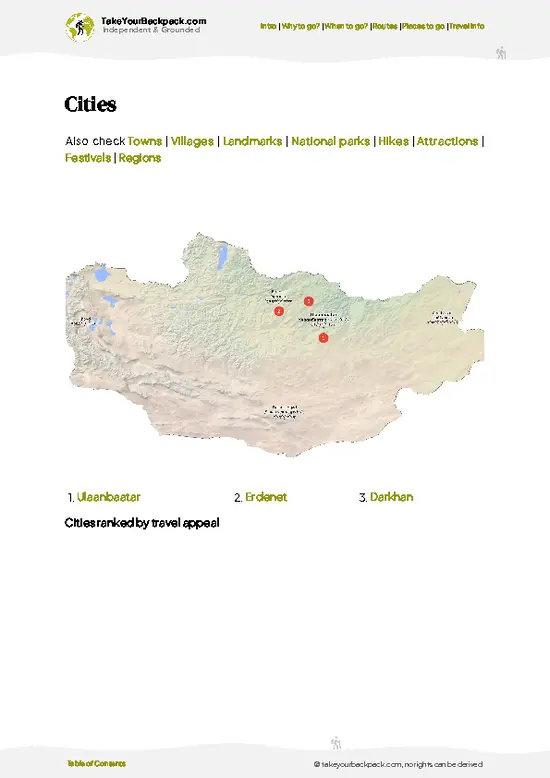
Other Mongolian national parks near Great Gobi B Strictly Protected Area

Explore more nearby:


💡 Not sure where to go next?
Create a personalized itinerary for Mongolia including Great Gobi B Strictly Protected Area and the places that fit your trip.

Generate my itinerary

👉 Discover all national parks

Or checkout all Mongolia has to offer (think cities, towns, villages, national parks, hikes, beaches, festivals)
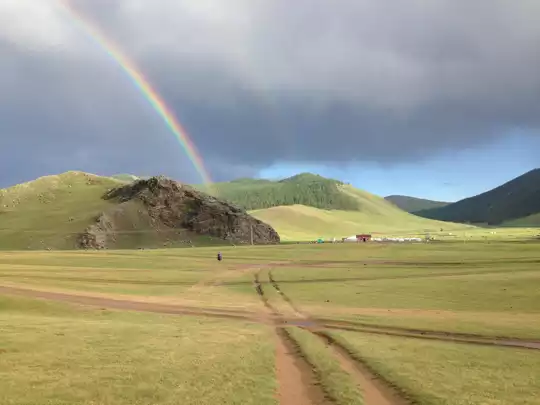
Country photo of Mongolia

We 💚 feedbackWhat to keep in mind

The Great Gobi B is a wild expanse that feels untouched, where the silence is as profound as the starry nights. You’ll find a raw beauty that’s hard to replicate elsewhere. But be ready for the reality check: the remoteness means limited facilities and unpredictable weather. Pack wisely and embrace the unpredictability. It’s all part of the adventure, and those moments of solitude are what make it worthwhile.

✈️ When did I visit Mongolia?
As part of my 1.5 year travel around the world trip, I visited Mongolia in July 2015. After a month of horse-riding and hitch-hiking I took the TransMongolia express to China.

✍️ Help improve this page!
The information on this page is based on my own backpacking experience in Mongolia, supplemented with up-to-date research and feedback from other travelers. Travel details can change, so if you notice anything outdated or incomplete, feel free to let me know.


🙋‍♂️ Give feedback

👋 Meet the founderWho’s Behind Take Your Backpack?

Johan, backpacker and founder of TakeYourBackpackHi, I’m Johan (Netherlands 🇳🇱), the creator of TakeYourBackpack. Over the past decade, I’ve backpacked through 80+ countries across six continents, gaining extensive experience with independent travel, long-term trips, and overland routes.

This site is built on a combination of firsthand travel experience and carefully curated insights from other backpackers. Many guides are based on places I’ve personally visited, while others bring together tips, observations, and practical advice shared by trusted travelers I’ve met along the way.

The goal is to provide realistic, experience-driven guidance — not generic itineraries — so you can explore destinations with better context, clearer expectations, and more confidence.

Get full Mongolia guide •
Instant download • 70 highlights • Full Offline guide