×

Mongolia🇲🇳 | best national parksExplore the 12 Best national parks in Mongolia

Mongolia’s national parks are a wild tapestry of rugged landscapes, diverse wildlife, and adventure waiting to unfold. Defined by vast steppes, towering mountains, and shimmering lakes, these parks offer a unique playground for backpacking and independent travel. Each park presents its own character, influenced by regional and seasonal nuances that dictate the pace and style of exploration.

For instance, Hustai National Park is perfect for those seeking to spot the elusive Przewalski’s horse, while Terelj National Park invites you to hike through granite formations and lush valleys. Your choice of park significantly impacts your experience—think vibe, budget, and safety. Some parks are more accessible, making them ideal for first-timers, while others demand a deeper commitment, rewarding you with solitude and cultural immersion. Understanding these dynamics is key to crafting your Mongolian adventure.

By Johan Kruseman 🇳🇱 | Updated September 4, 2026
Explore the best hikes in Mongolia

Why go?Why These national park Stand Out

Mongolia’s national parks stand apart in a world filled with natural wonders. The vast landscapes—from rolling steppes to rugged mountains—offer a canvas that feels untouched. This country is a living testament to the balance between biodiversity and the raw power of nature. Here, you can encounter unique wildlife, like the elusive snow leopard or the wild horse, in their natural habitats, making every trek a chance to witness life in its most authentic form.

However, the infrastructure can be a double-edged sword. While the remoteness adds to the allure, it also means that access can be challenging. Many parks require long drives over bumpy roads, which can eat into exploration time. This trade-off between accessibility and the quality of experience is crucial. The journey may be arduous, … read more 👉
Mongolia’s national parks stand apart in a world filled with natural wonders. The vast landscapes—from rolling steppes to rugged mountains—offer a canvas that feels untouched. This country is a living testament to the balance between biodiversity and the raw power of nature. Here, you can encounter unique wildlife, like the elusive snow leopard or the wild horse, in their natural habitats, making every trek a chance to witness life in its most authentic form.

However, the infrastructure can be a double-edged sword. While the remoteness adds to the allure, it also means that access can be challenging. Many parks require long drives over bumpy roads, which can eat into exploration time. This trade-off between accessibility and the quality of experience is crucial. The journey may be arduous, but the reward is a deeper connection to the land and its history.

Mongolia’s climatic extremes also shape the experience. Summers can be scorching, while winters are brutally cold, influencing when and how you explore. The best times to visit are fleeting, often leading to crowded trails during peak seasons. Understanding these constraints is vital for planning an immersive adventure.

Culturally, Mongolia’s nomadic heritage enriches the experience. The parks are not just natural reserves; they are intertwined with the stories of the people who have roamed these lands for centuries. This connection adds layers to the exploration, making it more than just a physical journey.

In essence, Mongolia’s national parks offer a unique blend of adventure opportunities and profound experiences. The trade-offs are significant but lead to a richer understanding of a land that is as challenging as it is beautiful.
How the List Was Created
The list of best national parks in Mongolia is created based on landscapes, wildlife, adventure opportunities, facilities, and overall experience. If you feel a national park is missing in this list, please let us know.

When to go?Seasonal Guide to Visiting

Spring bursts forth in Mongolia around March to May. Temperatures rise, but mornings can still bite. Wildlife stirs, making this a prime time for spotting animals emerging from winter slumber. Trails begin to thaw, but expect some muddy patches. The scenery transforms as flowers bloom, painting the landscape with color. However, this is also when the crowds start to trickle in, especially during the warmer weekends.

Summer reigns from June to August, bringing warmth and long days. This is the peak season for national parks. Wildlife visibility is at its highest, with animals active and easily spotted. Trails are generally in good condition, though some can become crowded. The trade-off? Higher costs and the potential for a less solitary experience. Rainfall can occur, but it’s often brief, … read more 👉
Spring bursts forth in Mongolia around March to May. Temperatures rise, but mornings can still bite. Wildlife stirs, making this a prime time for spotting animals emerging from winter slumber. Trails begin to thaw, but expect some muddy patches. The scenery transforms as flowers bloom, painting the landscape with color. However, this is also when the crowds start to trickle in, especially during the warmer weekends.

Summer reigns from June to August, bringing warmth and long days. This is the peak season for national parks. Wildlife visibility is at its highest, with animals active and easily spotted. Trails are generally in good condition, though some can become crowded. The trade-off? Higher costs and the potential for a less solitary experience. Rainfall can occur, but it’s often brief, leaving behind a fresh, invigorating atmosphere.

Autumn sweeps in from September to October, offering a stunning display of fall colors. Temperatures drop, and the trails become quieter. This shoulder season is ideal for those seeking solitude and breathtaking vistas. Wildlife sightings remain good, but some animals begin their migration. Rainfall decreases, making conditions favorable for exploration. Costs may drop, but the chill in the air signals that winter is approaching.

Winter blankets Mongolia from November to February. The cold can be extreme, with temperatures plummeting. National parks become stark and beautiful, but access can be limited. Trails may be covered in snow, making hiking challenging. Wildlife visibility drops significantly as many animals hibernate or migrate. This season is for the adventurous, offering a unique, tranquil experience, but requires careful planning and gear.

Understanding these seasonal shifts is crucial for effective trip planning. Each season offers distinct rewards and challenges, shaping the experience in national parks across Mongolia.

national park hoppingPlanning Your Route Efficiently

Combining national parks in Mongolia requires strategic planning and a sense of adventure. Start by clustering parks regionally. The vastness of Mongolia means that distances can be deceptive. For instance, the Gobi Desert parks are far from the northern Taiga, so grouping parks by proximity saves time and energy.

Travelers should consider a logical route that flows from one park to the next. Begin in the central region, visiting Khustain Nuruu for its wild horses, then head south to the Gobi for its dramatic landscapes. This sequence allows for a natural progression, minimizing backtracking. Each park offers unique experiences, so allocate time wisely. A day or two in each park is often sufficient to soak in the highlights, but longer stays allow for deeper exploration.

Common pitfalls read more 👉
Combining national parks in Mongolia requires strategic planning and a sense of adventure. Start by clustering parks regionally. The vastness of Mongolia means that distances can be deceptive. For instance, the Gobi Desert parks are far from the northern Taiga, so grouping parks by proximity saves time and energy.

Travelers should consider a logical route that flows from one park to the next. Begin in the central region, visiting Khustain Nuruu for its wild horses, then head south to the Gobi for its dramatic landscapes. This sequence allows for a natural progression, minimizing backtracking. Each park offers unique experiences, so allocate time wisely. A day or two in each park is often sufficient to soak in the highlights, but longer stays allow for deeper exploration.

Common pitfalls include trying to see too much too quickly. Rushing through parks can lead to missed opportunities. Instead, embrace flexibility. If a particular park captivates, adjust the itinerary to linger longer. This balance between speed and depth is crucial. Budget considerations also come into play; some parks have limited facilities, so plan for basic accommodations or camping to stretch funds.

Effort versus reward is another key factor. The trails may be rugged, but the payoff is often breathtaking views or encounters with wildlife. Prioritize experiences that resonate personally. Ultimately, the journey through Mongolia’s national parks is about the thrill of discovery, where each stop adds a layer to the adventure. Embrace the grit of the trails and the beauty of the landscapes, and let the experience unfold at its own pace.

The ListThe Best national parks of Mongolia

1 Khovsgol Nuur National Park

deep freshwater lake, taiga forest, reindeer herders

Travel along the shores of Mongolia’s largest lake, passing through dense taiga and encountering Tsaatan families with their reindeer.

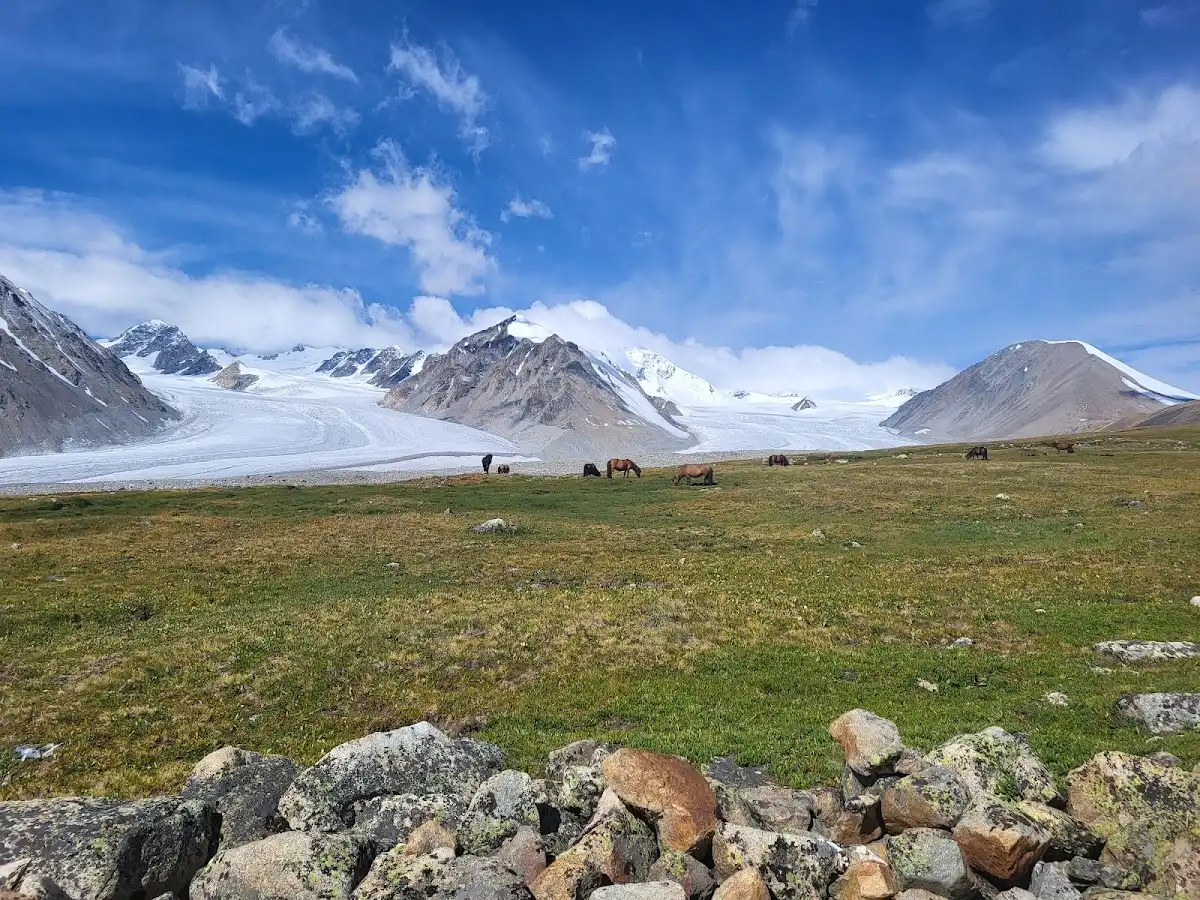
2 Altai Tavan Bogd National Park

glaciated peaks, petroglyphs, Kazakh eagle hunters

Ascend to glacier-capped mountains where ancient rock art and nomadic Kazakh traditions shape the high-altitude experience.

mongolia-national-park-altai-tavan-bogd-national-park
© Google |

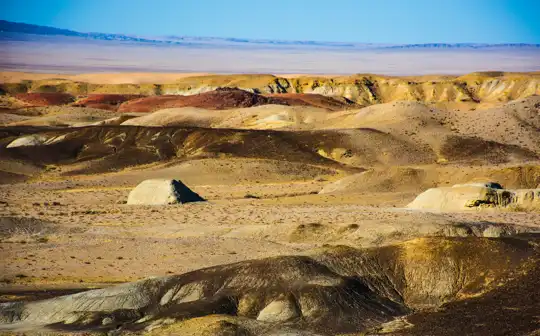
3 Gobi Gurvansaikhan National Park

sand dunes, ice canyon, wild argali sheep

Traverse shifting dunes and hidden canyons, encountering wildlife adapted to the extremes of Mongolia’s southern desert.

Mongolia - Gobi Gurvansaikhan National Park

4 Terelj National Park

granite formations, alpine meadows, nomad camps

Hike among dramatic rock outcrops and wildflower meadows, staying in traditional gers scattered across the valley.

mongolia-national-park-terelj-national-park
© Google |

5 Hustai National Park

wild horses, rolling hills, steppe flora

Spot herds of Przewalski’s horses grazing among wildflowers and low hills in a protected steppe ecosystem.

mongolia-national-park-hustai-national-park
© Google |

6 Terkhiin Tsagaan Lake

volcanic lake, basalt cliffs, migratory birds

Camp beside a volcanic lake where basalt outcrops frame the water and flocks of birds gather at dawn and dusk.

7 Khan Khentii National Park

mountain taiga, sacred sites, river headwaters

Trek through forested mountains and river valleys, exploring landscapes tied to Mongolia’s spiritual and historical roots.

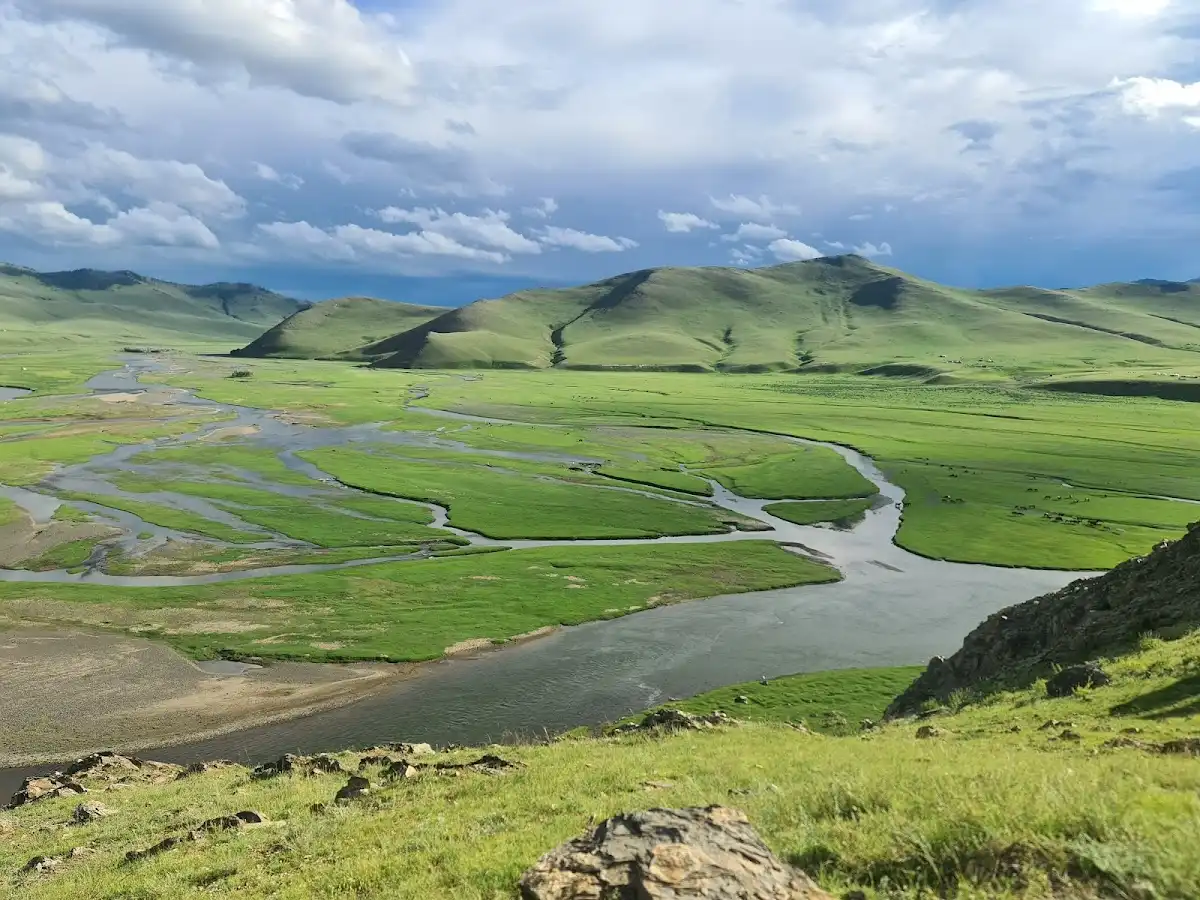
8 Orkhon Valley National Park

river valley, ancient ruins, steppe grasslands

Trace the Orkhon River through open grasslands, discovering archaeological sites and the legacy of Mongolia’s earliest civilizations.

mongolia-national-park-orkhon-valley-national-park
© Google |

9 Khar Us Nuur National Park

shallow lakes, reed beds, migratory waterfowl

Watch pelicans and cranes gather in vast wetlands, where shallow lakes and reeds stretch across the western steppe.

10 Onon-Balj National Park

pine forests, wild rivers, Amur fauna

Follow winding rivers through pine woods where rare wildlife from the Amur region crosses into Mongolia’s remote northeast.

11 Great Gobi B Strictly Protected Area

desert steppe, wild camels, saiga antelope

Venture into a remote desert where wild Bactrian camels and rare antelope survive in one of Asia’s harshest landscapes.

12 Numrug Strictly Protected Area

riparian forest, border rivers, rare mammals

Navigate tangled riverbanks and dense forests along Mongolia’s eastern frontier, home to elusive mammals and untouched habitats.

Loading the map 🌍

Expert viewInsights from Locals and Experts

Terrain
Mongolia’s national parks are a wild tapestry of landscapes, each offering a unique flavor of adventure. From the rolling steppes to rugged mountains, the terrain varies dramatically. You’ll find yourself navigating vast grasslands where the wind whips through the tall grasses, and then suddenly, you’re climbing rocky outcrops that demand every ounce of your energy. The Altai Mountains, for instance, challenge even seasoned trekkers with their steep ascents and unpredictable weather. But the payoff? A panoramic view that stretches into infinity, where the horizon seems to kiss the sky.

In contrast, the Gobi Desert’s stark beauty presents a different kind of challenge. The shifting sands and arid conditions can drain your stamina, yet the sight of a lone Bactrian camel against a … read more 👉
Terrain
Mongolia’s national parks are a wild tapestry of landscapes, each offering a unique flavor of adventure. From the rolling steppes to rugged mountains, the terrain varies dramatically. You’ll find yourself navigating vast grasslands where the wind whips through the tall grasses, and then suddenly, you’re climbing rocky outcrops that demand every ounce of your energy. The Altai Mountains, for instance, challenge even seasoned trekkers with their steep ascents and unpredictable weather. But the payoff? A panoramic view that stretches into infinity, where the horizon seems to kiss the sky.

In contrast, the Gobi Desert’s stark beauty presents a different kind of challenge. The shifting sands and arid conditions can drain your stamina, yet the sight of a lone Bactrian camel against a sunset backdrop is a moment that etches itself into your memory. Each park demands respect for its terrain; understanding the physicality of the land is crucial. You’ll need to gauge your own endurance and time constraints wisely. If you’re short on time, prioritize parks that offer diverse landscapes within a compact area, but be prepared for the trade-off of missing out on the deeper, more remote experiences that require longer treks.

Park Infrastructure
Mongolia’s national parks are a mixed bag when it comes to infrastructure. Some parks, like Khustain Nuruu, have well-marked trails and basic facilities, making them accessible for families and first-timers. You can easily spend a day hiking and still have time to spot the elusive Przewalski’s horse. However, as you venture deeper into the wild, the infrastructure can dwindle. Parks like Khovsgol Lake offer stunning views and rich wildlife, but the trails can be less defined, and amenities are sparse.

This means you’ll need to be self-sufficient. Carry enough food, water, and gear to last your adventure. If you’re planning to camp, be ready for the elements; the weather can shift from sunny to stormy in a heartbeat. The trade-off here is clear: while you may sacrifice comfort for authenticity, the raw beauty of the untouched landscape is worth the effort. If you’re keen on covering multiple parks, consider the logistics of travel time. Distances can be deceptive; what looks close on a map can take hours on rugged roads.

Wildlife Activity
Wildlife in Mongolia is as diverse as its landscapes. In the national parks, you might encounter everything from snow leopards in the Altai Mountains to migratory birds in the wetlands of Khustai. The thrill of spotting a wild animal in its natural habitat is a rush that few experiences can match. Early mornings and late afternoons are prime times for wildlife activity, so plan your hikes accordingly.

However, the trade-off here is the unpredictability of wildlife sightings. You may spend hours trekking without a glimpse of the elusive creatures you’ve come to see. Be patient and embrace the journey; the landscapes themselves are a reward. If you’re keen on maximizing your wildlife encounters, consider focusing on a couple of parks known for their biodiversity rather than trying to see them all. This allows you to immerse yourself in the environment and increase your chances of spotting wildlife.

Time and Budget
When it comes to time, I recommend aiming for at least three to four parks if you want a well-rounded experience. Each park has its own character, and spending a few days in each will allow you to soak in the atmosphere. However, if you’re pressed for time, focus on two parks that offer contrasting experiences.

Budget-wise, be prepared for a range of expenses. Park entry fees are generally low, but transportation can be a significant cost, especially if you’re hiring a guide or driver. Factor in the cost of camping gear if you plan to stay overnight. The trade-off here is between comfort and adventure; while staying in a ger camp can be more expensive, it offers a cultural experience that enhances your journey.

Planning and Prioritizing
Planning your national park visits in Mongolia requires a blend of flexibility and foresight. Research the parks that resonate with your interests—whether it’s hiking, wildlife, or cultural experiences. Local culture plays a significant role in your experience; engaging with nomadic communities can provide insights that enrich your understanding of the land.

Safety is paramount. Be aware of the weather conditions and prepare for sudden changes. Carry a first-aid kit and know basic phrases in Mongolian; it can go a long way in building rapport with locals. Cultural considerations are also important; respect local customs and traditions, especially in rural areas.

Ultimately, the key to enjoying Mongolia’s national parks lies in balancing your ambitions with the realities of the terrain, infrastructure, and wildlife. Embrace the grit of the journey, and let the landscapes and experiences shape your adventure. Each step you take is a step into the heart of a land that’s as raw as it is beautiful.

✈️ The backpacker research shortcutMongolia Travel Guide

An offline-friendly backpacking guide with optimized travel routes, ranked highlights, transport advice, and the best areas to stay.
example page 0 from our offline Travel Guide for Mongolia
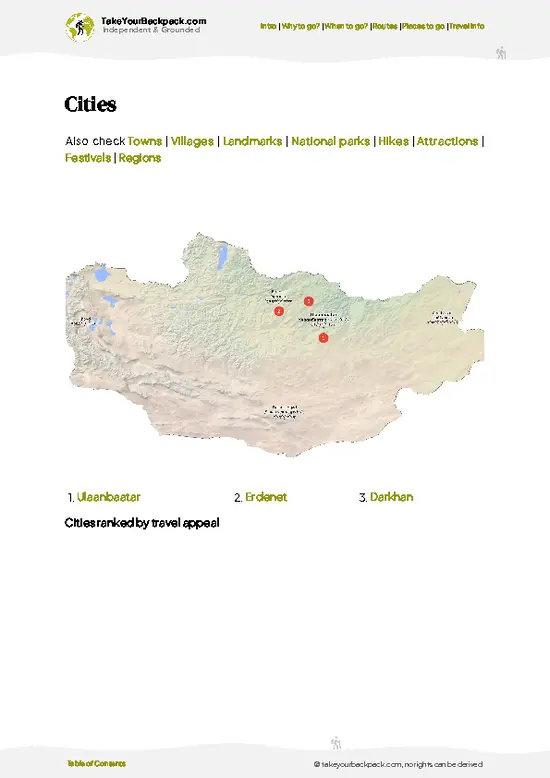
example page 1 from our offline Travel Guide for Mongolia
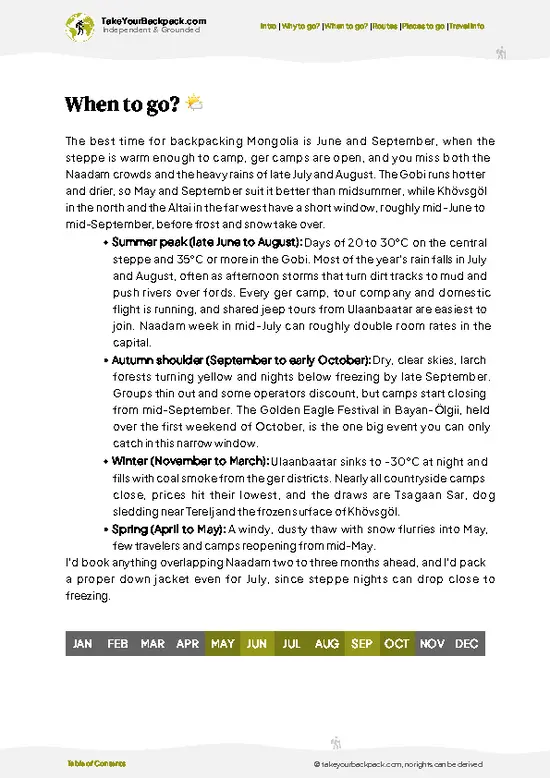
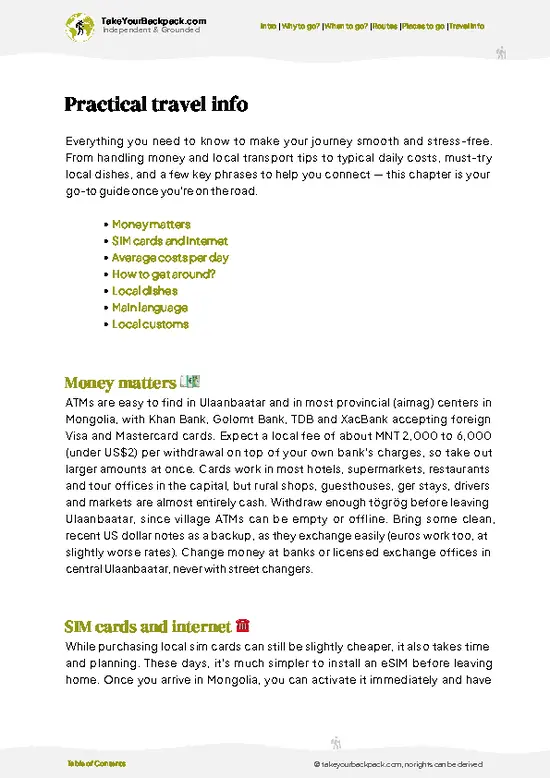
example page 2 from our offline Travel Guide for Mongolia
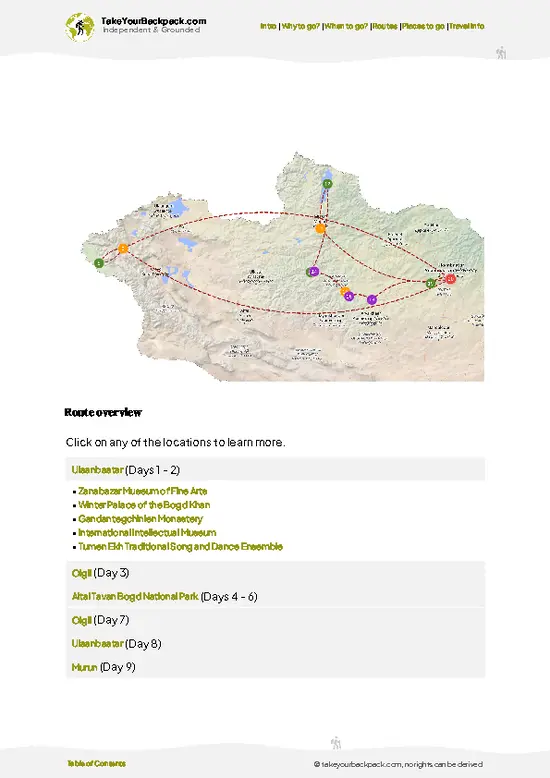
example page 3 from our offline Travel Guide for Mongolia
example page 4 from our offline Travel Guide for Mongolia
example page 5 from our offline Travel Guide for Mongolia
example page 6 from our offline Travel Guide for Mongolia
example page 7 from our offline Travel Guide for Mongolia
The digital guide (272 pages) contains:
68 highlights, ranked by travel appeal
Optimized 7, 14 & 21-day travel routes
Cities, national parks, landmarks, beaches
How to get around
Offline-friendly for travel without Wi-Fi
👉 Click to see all 30+ guide features

📅 Plan smarter in minutes, not weeks
Month by month travel advice
Festivals & national holidays
Budget expectations

🗺️ Go to the right places, skip the overrated ones
Honest pros & cons of destinations
Top hikes, parks & viewpoints
Lesser-known places most travelers miss
Clear “worth it vs skip it” guidance

🛏️ Travel smoothly without rookie mistakes
Best areas to stay
Transport systems explained simply
Common scams & safety advice
SIM cards, money & practical tips

🌍 Understand the country, not just visit it
Culture & traditions
52 Essential phrases & customs
Festivals worth planning around
Traveler-friendly historical context
Insights that make places more meaningful

📱 Built for real travel conditions
Fully downloadable PDF
Works completely offline
Optimized for phone use
Useful in remote areas & buses
Everything in one place
Save weeks of stressful planning
Get instant access to your full guide. 30‑day money-back guarantee.
+ Add another guide for just US$7.80

By proceeding you agree to our terms.
Sent to your inbox immediately after payment • 100% Secure Checkout
Best Backpacking Travel Advisor 2025 tourism awardBest Backpacking
Travel Advisor
2025
What others say about Take Your Backpack Guides:
⭐⭐⭐⭐⭐
Fantastic, amazing amount of information!
⭐⭐⭐⭐⭐
My goodness this is amazing, it's what I've been looking for hats off too you!
⭐⭐⭐⭐⭐
I think this is absolutely BRILLIANT
⭐⭐⭐⭐
Very complete and informative. It's still missing places, but I gotta to commend you
⭐⭐⭐⭐⭐
This is truly amazing, thank you, can't wait to explore it with my kids!
⭐⭐⭐⭐⭐
Awesome resource, thank you!
⭐⭐⭐⭐⭐
This is amazing! Can't wait to explore the ones I haven't seen
⭐⭐⭐⭐
I love this! Well done, great idea.
⭐⭐⭐⭐⭐
Thanks for taking the time to make this gem!
⭐⭐⭐⭐⭐
This might be the best website I've ever seen.
⭐⭐⭐⭐⭐
Congratulations, and thank you so much for your work; it's incredibly valuable.
⭐⭐⭐⭐
In all seriousness I think you did a great job pointing out the important spots
⭐⭐⭐⭐⭐
10/10 very good
⭐⭐⭐⭐⭐
As someone who's only just starting to visit regularly this is awesome, thank you.
⭐⭐⭐⭐
Thank you very much! I'm going to visit my dad, it's going to be very useful!
⭐⭐⭐⭐⭐
This is really cool! We'll be travelling for the first time and this definitely come in handy.
⭐⭐⭐⭐⭐
You are now our minister of culture, congratulations 👨‍💼
⭐⭐⭐⭐⭐
Just wanted to tell you that this is a pearl! Going to follow your recommendations.
⭐⭐⭐⭐⭐
This is so cool. I'll definitely be using the resource for my travels soon.
⭐⭐⭐⭐⭐
This is very impressive! Good work.
⭐⭐⭐⭐⭐
This is an amazing and informative site. Very well done!

🛏️ Where to stay?Where to Stay in Mongolia

Yes — hostels and budget guesthouses are common in Ulaanbaatar and available in smaller cities, with budget ger camps in tourist areas like the Gobi for remote stays.
Sukhbaatar Square / Peace Avenue (city center) has the largest selection and best access to museums, restaurants, transport and nightlife but is noisier and slightly pricier; Bayangol and areas near the train station are quieter and cheaper with easy market access but sit a bit farther from key sights; ger camps offer direct access to landscapes at low cost but are seasonal, very basic, often cold at night and require transport planning.
Book ahead in summer and holidays, carry cash, and expect simpler heating and sanitation … read more 👉
Yes — hostels and budget guesthouses are common in Ulaanbaatar and available in smaller cities, with budget ger camps in tourist areas like the Gobi for remote stays.
Sukhbaatar Square / Peace Avenue (city center) has the largest selection and best access to museums, restaurants, transport and nightlife but is noisier and slightly pricier; Bayangol and areas near the train station are quieter and cheaper with easy market access but sit a bit farther from key sights; ger camps offer direct access to landscapes at low cost but are seasonal, very basic, often cold at night and require transport planning.
Book ahead in summer and holidays, carry cash, and expect simpler heating and sanitation outside the city to avoid unpleasant surprises.

If you enjoy meeting fellow travelers, consider choosing hostels with high ratings for atmosphere. On the other hand, if you prefer having your own space, a hotel might be a better option.

MongoliaMore of Mongolia

👋 Meet the founderWho’s Behind Take Your Backpack?

Johan, backpacker and founder of TakeYourBackpackHi, I’m Johan (Netherlands 🇳🇱), the creator of TakeYourBackpack. Over the past decade, I’ve backpacked through 80+ countries across six continents, gaining extensive experience with independent travel, long-term trips, and overland routes.

This site is built on a combination of firsthand travel experience and carefully curated insights from other backpackers. Many guides are based on places I’ve personally visited, while others bring together tips, observations, and practical advice shared by trusted travelers I’ve met along the way.

The goal is to provide realistic, experience-driven guidance — not generic itineraries — so you can explore destinations with better context, clearer expectations, and more confidence.

Get full Mongolia guide •
Instant download • 68 highlights • Full Offline guide