×

Mongolia🇲🇳 | national parksAltai Tavan Bogd National Parkglaciated peaks, petroglyphs, Kazakh eagle hunters | things to do and best time to go

Explore Khangai Mountain Range TrekExplore Gobi Gurvansaikhan National Park

Backpacking in Altai Tavan Bogd
🏆 Top picknational park ranked #3
By Johan Kruseman 🇳🇱 | Updated May 16, 2026

The first real decision at Altai Tavan Bogd is whether you pay for a full logistics package (jeep, guide, cook, camels) or try to piece things together yourself in Ölgii. That choice decides if your trip is a smooth high-altitude trek or a slow bleed of time, money, and patience. The park sits in Mongolia’s far west, in Bayan-Ölgii province, pressed against Russia and China. It’s big-mountain country: glaciers, snow-capped peaks, wide valleys, and real silence. Hiking is superb but often boggy and weather-exposed; wildlife is there (ibex, marmots, maybe snow leopard tracks) but not a zoo. Access is the main tax: long drives, rough roads, and permits plus entrance fees that add up. Camping is easy and wild; budget gers or homestays are sparse and basic. Compared with Terelj or Khorgo-Terkhiin Tsagaan Nuur, Altai Tavan Bogd is wilder, emptier, more work—and more rewarding if you like feeling very far from everything.

Discover everything you want to know in the 📖 Mongolia Travel Guide.


Get your Mongolia guide
70 ranked highlights, routes & tips, works offline (282 pages)
Loading the map 🌍
CLICK TO FILTER
cities
towns
villages
landmarks
national parks
hikes
attractions
festivals
regions
SHOW COUNTRY’S BESTSHOW ALL

✨ Why go?
Ranked #3 national park in Mongolia
What makes this national park worth exploring

Backpackers flock to Altai Tavan Bogd National Park for its blend of independent exploration and breathtaking landscapes. This park offers a rare chance to roam freely, making it ideal for those who prefer self-guided adventures over organized tours. The trail variety is impressive, ranging from gentle walks to challenging treks that lead you to stunning glacial lakes and towering peaks.

Budget-conscious travelers will appreciate the camping options and nearby hostels, which keep costs low while providing a base for exploration. Just be aware that facilities can be basic, so come prepared. The park’s remoteness means you’ll often find yourself alone with nature, a refreshing change from crowded tourist spots.

However, be mindful of the weather; conditions can shift rapidly, so pack accordingly. … read more 👉
Backpackers flock to Altai Tavan Bogd National Park for its blend of independent exploration and breathtaking landscapes. This park offers a rare chance to roam freely, making it ideal for those who prefer self-guided adventures over organized tours. The trail variety is impressive, ranging from gentle walks to challenging treks that lead you to stunning glacial lakes and towering peaks.

Budget-conscious travelers will appreciate the camping options and nearby hostels, which keep costs low while providing a base for exploration. Just be aware that facilities can be basic, so come prepared. The park’s remoteness means you’ll often find yourself alone with nature, a refreshing change from crowded tourist spots.

However, be mindful of the weather; conditions can shift rapidly, so pack accordingly. Also, consider the altitude; acclimatization is key to enjoying your time here. By planning wisely and embracing the park’s rugged charm, you’ll preserve your energy and budget for the moments that truly matter.
Want to include Altai Tavan Bogd National Park in your Mongolia route?
Create a personalized Mongolia itinerary that includes Altai Tavan Bogd National Park and the places that fit your trip — based on your travel style, budget, and available time. Get your route in seconds.

Generate my trip

💡 HighlightsPlaces and moments you shouldn't skip

  • Tavan Bogd massif & Khuiten Peak — the five towering summits that give the park its name; Khuiten is Mongolia’s highest point, capped in ice and offering jaw-dropping alpine scenery. It’s a serious almost-glacier climb if you go for the summit, but even watching the ridges change light at dawn is worth the effort.
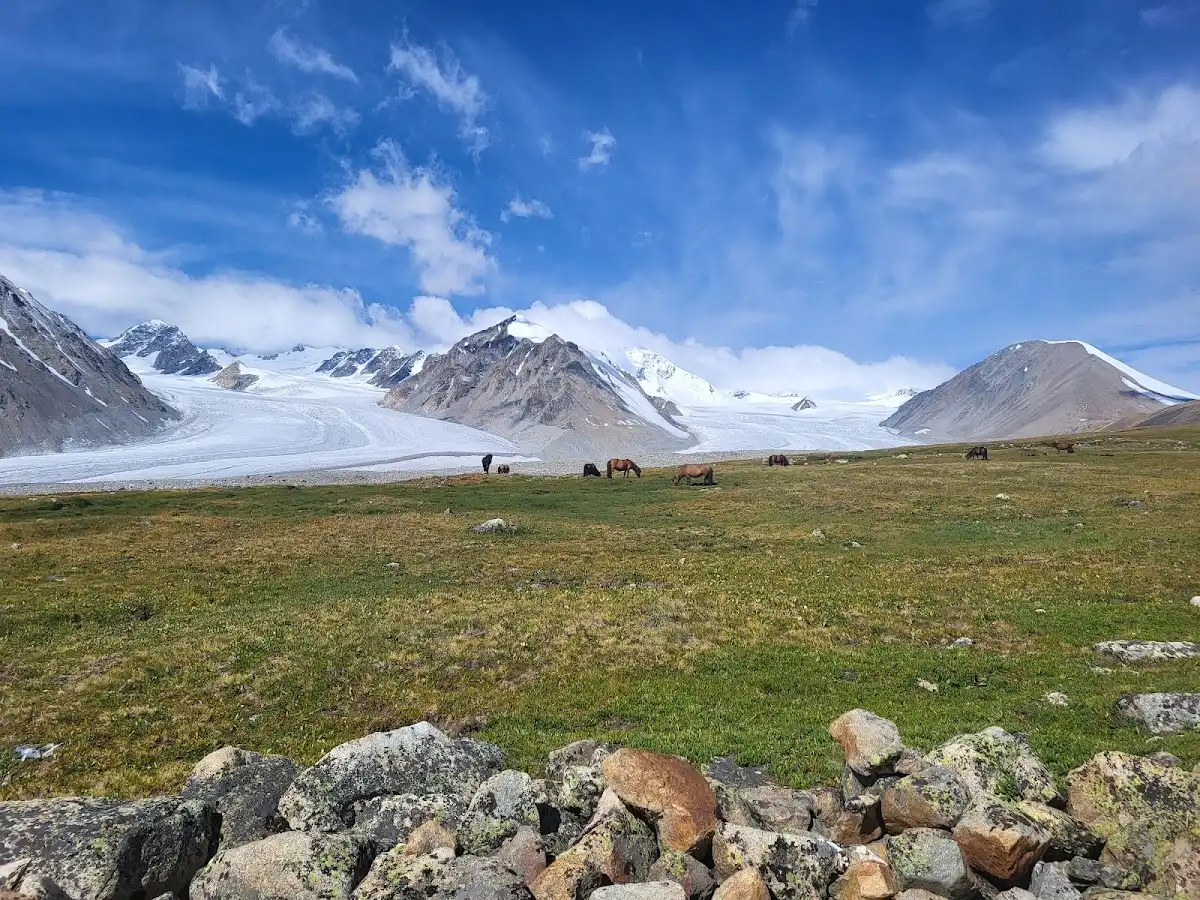
  • Potanin Glacier — Mongolia’s largest glacier, an impressive blue-white tongue feeding moraine lakes and rivers. Close enough for dramatic close-up photographs and day-hikes to the forefield (glacier travel requires a guide and gear), it’s raw, photogenic, and oddly peaceful.
  • Khoton and Khurgan Lakes — a pair of pristine high-altitude lakes set in a broad valley, with crystal reflections, trout, and campable shorelines. Great for easy day walks, boating with nomad families, and
read more 👉
  • Tavan Bogd massif & Khuiten Peak — the five towering summits that give the park its name; Khuiten is Mongolia’s highest point, capped in ice and offering jaw-dropping alpine scenery. It’s a serious almost-glacier climb if you go for the summit, but even watching the ridges change light at dawn is worth the effort.
  • Potanin Glacier — Mongolia’s largest glacier, an impressive blue-white tongue feeding moraine lakes and rivers. Close enough for dramatic close-up photographs and day-hikes to the forefield (glacier travel requires a guide and gear), it’s raw, photogenic, and oddly peaceful.
  • Khoton and Khurgan Lakes — a pair of pristine high-altitude lakes set in a broad valley, with crystal reflections, trout, and campable shorelines. Great for easy day walks, boating with nomad families, and evenings watching the sky go wild with stars.
  • Tsagaan Salaa petroglyphs and burial mounds — ancient rock art and Bronze-Age sites tucked into the landscape; thousands of carvings of ibex, deer, riders and symbols. Feels like stumbling into history after a day on the trail, and gives the park a cultural layer beyond the mountains.
  • Alpine meadows and nomadic summer pastures — carpets of wildflowers and rolling green valleys where Kazakh herders move their yurts and flocks. Perfect for slow walking, camping with local families, and seeing how people still live with the land.
  • Wildlife viewing — Argali, ibex, and raptors — look for massive Altai argali sheep on steep slopes, nimble ibex, and soaring golden eagles; snow leopards exist here but are extremely elusive. Binoculars and patience pay off; mornings and evenings are the best times.
  • Border panoramas and remote wilderness — from certain passes you can literally look into Russia and China, which gives a weirdly satisfying edge to the views. The real draw is the remoteness: multi-day treks here feel properly off-grid, with huge skies and very few people.
  • Personal favorite: Potanin Glacier — the scale, the ice-blue tones, and the way the glacier sits against the rocky peaks make it my top pick; you can get close enough to feel the chill and hear the meltwater, so it sticks with you.
Spotted a mistake or missing something? Contact us.
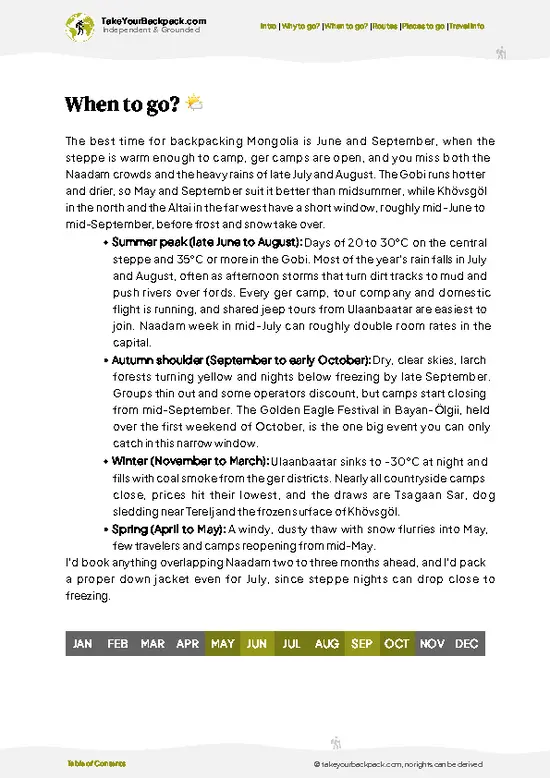
🌤️ When to go?When to go for the best experience


  • Weather: The best window is late June to early September. Outside this, expect harsh cold and snow that can shut down trails. Summer brings milder conditions but be ready for sudden rain and chilly nights.

  • Temperature: Summer highs hover around 15-20°C (59-68°F), dropping near freezing at night. Spring and fall can swing from 0°C (32°F) to 10°C (50°F) during the day but plunge well below freezing after dark.

  • Daylight Hours: Summer offers long days—up to 16 hours of light—ideal for extended hikes. Winter days shrink to 6-7 hours, limiting your trekking time and increasing risk.

  • Crowds: The park sees a modest influx in summer, but it’s never packed. Visiting early or late in the season means fewer people but more unpredictable weather.

  • Seasonal Activities: Summer is prime for trekking,
read more 👉

  • Weather: The best window is late June to early September. Outside this, expect harsh cold and snow that can shut down trails. Summer brings milder conditions but be ready for sudden rain and chilly nights.

  • Temperature: Summer highs hover around 15-20°C (59-68°F), dropping near freezing at night. Spring and fall can swing from 0°C (32°F) to 10°C (50°F) during the day but plunge well below freezing after dark.

  • Daylight Hours: Summer offers long days—up to 16 hours of light—ideal for extended hikes. Winter days shrink to 6-7 hours, limiting your trekking time and increasing risk.

  • Crowds: The park sees a modest influx in summer, but it’s never packed. Visiting early or late in the season means fewer people but more unpredictable weather.

  • Seasonal Activities: Summer is prime for trekking, horseback riding, and glacier views. Winter closes most trails but offers a stark, quiet landscape for experienced adventurers prepared for extreme cold.

  • Price Fluctuations: Expect higher costs for guides and accommodation in peak summer. Off-season rates drop but factor in limited services and tougher conditions.


Pro-tip: Aim for July or August to balance weather, daylight, and crowd size—this keeps your energy focused on the trail, not battling the elements or scrambling for last-minute gear.


source: climatestotravel.comJANJanuary: below average for travelingFEBFebruary: below average for travelingMARMarch: fair for travelingAPRApril: fair for travelingMAYMay: good for travelingJUNJune: highly recommended for travelingJULJuly: excellent for travelingAUGAugust: excellent for travelingSEPSeptember: highly recommended for travelingOCTOctober: good for travelingNOVNovember: fair for travelingDECDecember: below average for traveling
mongolia-national-park-altai-tavan-bogd-national-park
© Google |

✈️ The backpacker research shortcutMongolia Travel Guide

An offline-friendly backpacking guide with optimized travel routes, ranked highlights, transport advice, and the best areas to stay.
example page 0 from our offline Travel Guide for Mongolia
example page 1 from our offline Travel Guide for Mongolia
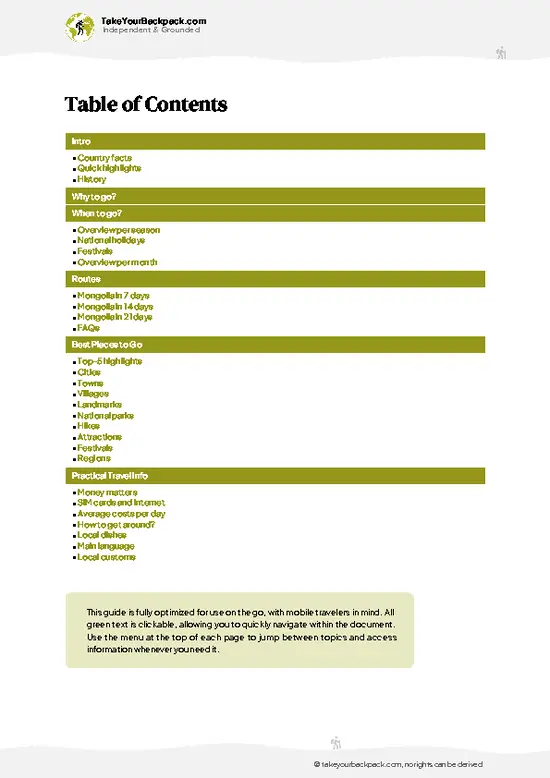
example page 2 from our offline Travel Guide for Mongolia
example page 3 from our offline Travel Guide for Mongolia
example page 4 from our offline Travel Guide for Mongolia
example page 5 from our offline Travel Guide for Mongolia
example page 6 from our offline Travel Guide for Mongolia
example page 7 from our offline Travel Guide for Mongolia
The digital guide (282 pages) contains:
70 highlights, ranked by travel appeal
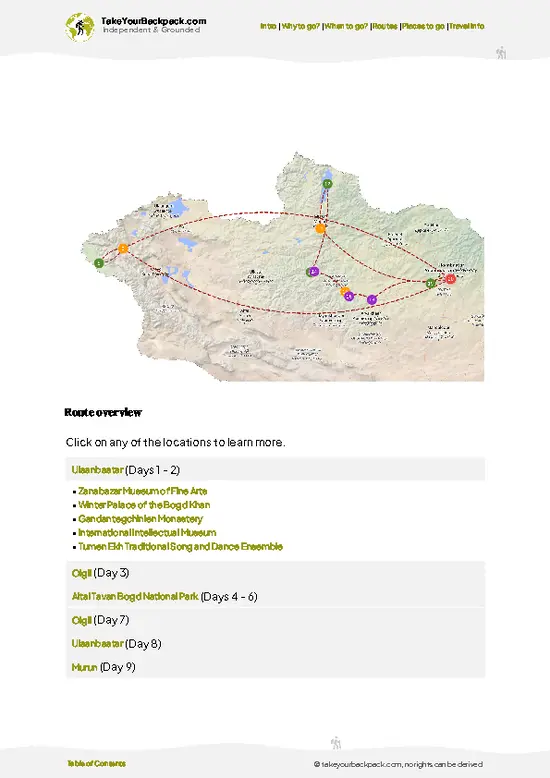
Optimized 7, 14 & 21-day travel routes
Cities, national parks, landmarks, beaches
How to get around
Offline-friendly for travel without Wi-Fi
👉 Click to see all 30+ guide features

📅 Plan smarter in minutes, not weeks
Month by month travel advice
Festivals & national holidays
Budget expectations

🗺️ Go to the right places, skip the overrated ones
Honest pros & cons of destinations
Top hikes, parks & viewpoints
Lesser-known places most travelers miss
Clear “worth it vs skip it” guidance

🛏️ Travel smoothly without rookie mistakes
Best areas to stay
Transport systems explained simply
Common scams & safety advice
SIM cards, money & practical tips

🌍 Understand the country, not just visit it
Culture & traditions
52 Essential phrases & customs
Festivals worth planning around
Traveler-friendly historical context
Insights that make places more meaningful

📱 Built for real travel conditions
Fully downloadable PDF
Works completely offline
Optimized for phone use
Useful in remote areas & buses
Everything in one place
Save weeks of stressful planning
Get instant access to your full guide. 30‑day money-back guarantee.


By proceeding you agree to our terms.
Sent to your inbox immediately after payment • 100% Secure Checkout
Best Backpacking Travel Advisor 2025 tourism awardBest Backpacking
Travel Advisor
2025
What others say about Take Your Backpack Guides:
⭐⭐⭐⭐⭐
Fantastic, amazing amount of information!
⭐⭐⭐⭐⭐
My goodness this is amazing, it's what I've been looking for hats off too you!
⭐⭐⭐⭐⭐
I think this is absolutely BRILLIANT
⭐⭐⭐⭐
Very complete and informative. It's still missing places, but I gotta to commend you
⭐⭐⭐⭐⭐
This is truly amazing, thank you, can't wait to explore it with my kids!
⭐⭐⭐⭐⭐
Awesome resource, thank you!
⭐⭐⭐⭐⭐
This is amazing! Can't wait to explore the ones I haven't seen
⭐⭐⭐⭐
I love this! Well done, great idea.
⭐⭐⭐⭐⭐
Thanks for taking the time to make this gem!
⭐⭐⭐⭐⭐
This might be the best website I've ever seen.
⭐⭐⭐⭐⭐
Congratulations, and thank you so much for your work; it's incredibly valuable.
⭐⭐⭐⭐
In all seriousness I think you did a great job pointing out the important spots
⭐⭐⭐⭐⭐
10/10 very good
⭐⭐⭐⭐⭐
As someone who's only just starting to visit regularly this is awesome, thank you.
⭐⭐⭐⭐
Thank you very much! I'm going to visit my dad, it's going to be very useful!
⭐⭐⭐⭐⭐
This is really cool! We'll be travelling for the first time and this definitely come in handy.
⭐⭐⭐⭐⭐
You are now our minister of culture, congratulations 👨‍💼
⭐⭐⭐⭐⭐
Just wanted to tell you that this is a pearl! Going to follow your recommendations.
⭐⭐⭐⭐⭐
This is so cool. I'll definitely be using the resource for my travels soon.
⭐⭐⭐⭐⭐
This is very impressive! Good work.
⭐⭐⭐⭐⭐
This is an amazing and informative site. Very well done!

🛏️ Where to stay?Where staying makes the most sense

When it comes to staying near Altai Tavan Bogd National Park, options are limited but solid. Inside the park, there aren’t formal accommodations like hotels. Instead, you’ll find a few basic ger camps. These camps offer a unique experience, allowing you to sleep in traditional Mongolian yurts. They provide meals and sometimes guided tours, but be prepared for a rustic vibe. Bring your own sleeping bag for extra comfort.

If you prefer more amenities, head to the nearby town of Olgii. It’s about a two-hour drive from the park entrance. Here, you’ll find guesthouses and small hotels that cater to … read more 👉
When it comes to staying near Altai Tavan Bogd National Park, options are limited but solid. Inside the park, there aren’t formal accommodations like hotels. Instead, you’ll find a few basic ger camps. These camps offer a unique experience, allowing you to sleep in traditional Mongolian yurts. They provide meals and sometimes guided tours, but be prepared for a rustic vibe. Bring your own sleeping bag for extra comfort.

If you prefer more amenities, head to the nearby town of Olgii. It’s about a two-hour drive from the park entrance. Here, you’ll find guesthouses and small hotels that cater to backpackers. The local hospitality is genuine, and you can often arrange transport to the park from here.

Keep in mind, prices can vary widely. Some guesthouses may charge more during peak season, so it’s wise to book ahead if you can. Always confirm what’s included in your stay—some places might not provide meals or transport, which can add unexpected costs.

Ultimately, whether you choose a ger camp or a guesthouse in Olgii, the key is to embrace the simplicity and focus on the breathtaking landscapes that await you.

👛 Costs (as of 12 July 2025)Money, prices, and spending tips

Visiting Altai Tavan Bogd National Park in Mongolia can be an incredible experience, but it’s essential to be aware of the costs involved to avoid surprises.

Entry fees for the park typically range from €3 to €5 (about $3 to $5). This fee grants you access to the stunning landscapes and unique wildlife. However, if you plan to camp or stay overnight, expect to pay an additional €2 to €4 ($2 to $4) per night for camping permits.

Transportation can be a significant expense. A shared jeep ride from Olgii to the park can cost between €30 and €50 ($30 to $50) per person, depending on the number of passengers and the season. Private transfers will set you back considerably more, often around €100 to €150 ($100 to $150) for the vehicle.

Accommodation options are limited. Basic guesthouses in Olgii … read more 👉
Visiting Altai Tavan Bogd National Park in Mongolia can be an incredible experience, but it’s essential to be aware of the costs involved to avoid surprises.

Entry fees for the park typically range from €3 to €5 (about $3 to $5). This fee grants you access to the stunning landscapes and unique wildlife. However, if you plan to camp or stay overnight, expect to pay an additional €2 to €4 ($2 to $4) per night for camping permits.

Transportation can be a significant expense. A shared jeep ride from Olgii to the park can cost between €30 and €50 ($30 to $50) per person, depending on the number of passengers and the season. Private transfers will set you back considerably more, often around €100 to €150 ($100 to $150) for the vehicle.

Accommodation options are limited. Basic guesthouses in Olgii may charge €10 to €20 ($10 to $20) per night. If you’re looking for a more immersive experience, consider staying in a ger (yurt) near the park, which can range from €15 to €30 ($15 to $30) per night, including meals.

Food costs can vary. Expect to spend about €5 to €10 ($5 to $10) per meal at local eateries. If you’re self-catering, groceries in Olgii are reasonably priced, but availability can be hit or miss.

Lastly, guided tours can enhance your experience but come at a cost. A multi-day trek with a guide may range from €100 to €300 ($100 to $300) depending on the itinerary and inclusions.

Being aware of these costs will help you budget effectively and focus your energy on enjoying the breathtaking scenery and rich culture of Altai Tavan Bogd National Park.
⚠️ Prices can change and everyone travels differently, so take this as a rough guide. Hope it helps you plan your adventure!

🥾 TrailsPlan your hike in Altai Tavan Bogd: routes, terrain, and sights

Altai Tavan Bogd National Park is a gem tucked away in Mongolia, perfect for those craving breathtaking views and a bit of adventure. The park is home to towering peaks, glacial lakes, and vast valleys, making it a visual feast. You’ll find yourself surrounded by rugged mountains and lush meadows, where the scenery shifts dramatically with every step. Wildlife enthusiasts will be thrilled to spot ibex, snow leopards, and various bird species, adding a touch of excitement to your trek.

For those looking to dive into the hiking scene, one popular route is the Tavan Bogd Base Camp Trail. Here are … read more 👉
Altai Tavan Bogd National Park is a gem tucked away in Mongolia, perfect for those craving breathtaking views and a bit of adventure. The park is home to towering peaks, glacial lakes, and vast valleys, making it a visual feast. You’ll find yourself surrounded by rugged mountains and lush meadows, where the scenery shifts dramatically with every step. Wildlife enthusiasts will be thrilled to spot ibex, snow leopards, and various bird species, adding a touch of excitement to your trek.

For those looking to dive into the hiking scene, one popular route is the Tavan Bogd Base Camp Trail. Here are the details:
  • Length: 40 km
  • Estimated Duration: 3-5 days
  • Difficulty Level: Moderate to Challenging
  • Key Features: Stunning views of the five sacred peaks, glacial lakes, and rich wildlife
  • Terrain: Varied, including rocky paths, meadows, and some steep ascents

Getting to the park isn’t too tricky. You can catch a bus from Ulaanbaatar to Olgii, and then a jeep or taxi to the park entrance. Just be prepared for a bit of a bumpy ride! As for crowds, it can get a little busy during peak season, but nothing like the tourist traps you might find elsewhere. The entrance fee is quite reasonable, so you won’t break the bank just to soak in the beauty of this wild place.
⚠️ Hiking info can sometimes be outdated or inaccurate. Before you hit the trail, check the latest conditions with locals. If you do spot anything that's off, I'd love to hear from you, so I can update it for fellow travelers.

🛡️ SafetySafety Tips and Common Scams in Altai Tavan Bogd

Altai Tavan Bogd National Park offers a stunning backdrop for backpackers, but it’s essential to be prepared for its realities. Weather can shift quickly; sunny mornings can turn into rain or snow by afternoon. Layering is key. Bring a reliable waterproof jacket and thermal layers to adapt.

The terrain varies from gentle slopes to steep, rocky paths. Navigation can be tricky, especially in fog or rain, so a good map and compass are non-negotiable. Footing can be unstable, particularly near river crossings, where water levels fluctuate. Take your time and scout your path carefully.

Wildlife is present, including marmots and the occasional eagle. Keep a respectful distance and avoid feeding them; this keeps both you and the animals safe.

First-timers often underestimate the altitude. Hydration … read more 👉
Altai Tavan Bogd National Park offers a stunning backdrop for backpackers, but it’s essential to be prepared for its realities. Weather can shift quickly; sunny mornings can turn into rain or snow by afternoon. Layering is key. Bring a reliable waterproof jacket and thermal layers to adapt.

The terrain varies from gentle slopes to steep, rocky paths. Navigation can be tricky, especially in fog or rain, so a good map and compass are non-negotiable. Footing can be unstable, particularly near river crossings, where water levels fluctuate. Take your time and scout your path carefully.

Wildlife is present, including marmots and the occasional eagle. Keep a respectful distance and avoid feeding them; this keeps both you and the animals safe.

First-timers often underestimate the altitude. Hydration and pacing are crucial. Don’t rush; acclimatize to avoid altitude sickness. With the right preparation, you can focus on the breathtaking views and the adventure ahead.

Other Mongolian national parks near Altai Tavan Bogd

Explore more nearby:


💡 Not sure where to go next?
Create a personalized itinerary for Mongolia including Altai Tavan Bogd and the places that fit your trip.

Generate my itinerary

👉 Discover all national parks

Or checkout all Mongolia has to offer (think cities, towns, villages, national parks, hikes, beaches, festivals)
Country photo of Mongolia

We 💚 feedbackParting advice and final tips

Altai Tavan Bogd National Park is a breathtaking tapestry of mountains, glaciers, and rich nomadic culture. You’ll find a sense of peace here that’s hard to replicate elsewhere. But be prepared: the weather can change on a dime. One moment it’s sunny, the next you’re in a snowstorm. Pack layers and don’t underestimate the chill. Embrace the unpredictability; it’s part of the adventure. Just don’t let it catch you off guard.

✈️ When did I visit Mongolia?
As part of my 1.5 year travel around the world trip, I visited Mongolia in July 2015. After a month of horse-riding and hitch-hiking I took the TransMongolia express to China.

✍️ Help improve this page!
The information on this page is based on my own backpacking experience in Mongolia, supplemented with up-to-date research and feedback from other travelers. Travel details can change, so if you notice anything outdated or incomplete, feel free to let me know.


🙋‍♂️ Give feedback

👋 Meet the founderWho’s Behind Take Your Backpack?

Johan, backpacker and founder of TakeYourBackpackHi, I’m Johan (Netherlands 🇳🇱), the creator of TakeYourBackpack. Over the past decade, I’ve backpacked through 80+ countries across six continents, gaining extensive experience with independent travel, long-term trips, and overland routes.

This site is built on a combination of firsthand travel experience and carefully curated insights from other backpackers. Many guides are based on places I’ve personally visited, while others bring together tips, observations, and practical advice shared by trusted travelers I’ve met along the way.

The goal is to provide realistic, experience-driven guidance — not generic itineraries — so you can explore destinations with better context, clearer expectations, and more confidence.

Get full Mongolia guide •
Instant download • 70 highlights • Full Offline guide