v2.webp)
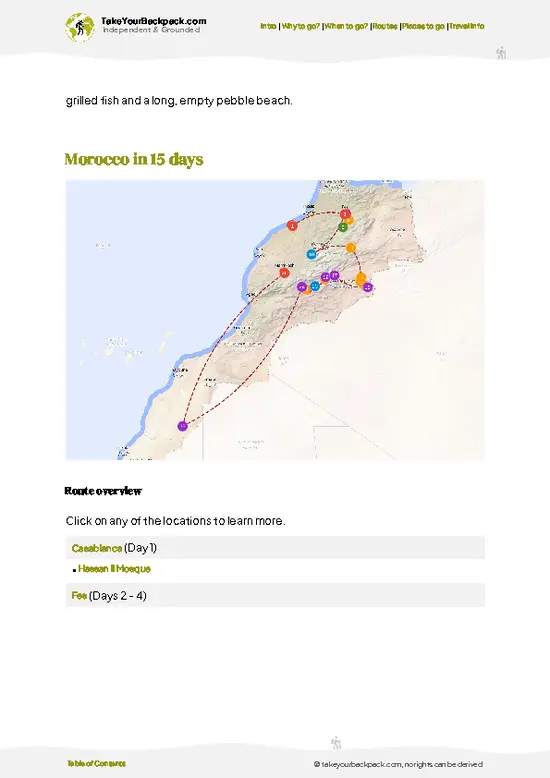
- Todgha Gorge: The town’s signature sight, a narrow canyon whose limestone walls close to about 10 meters apart at the tightest point. Go early morning, before tour vans arrive, or late afternoon. Entry is free, and allow 1 to 3 hours, longer if you walk beyond the main stretch.
- Todgha Palm Grove (Palmeraie): Terraced gardens of date palms, almonds, pomegranates and vegetables fed by old channels. Walk in the morning when farmers are working. Free on your own, or about US$10 to 20 for a local guide, for 2 to 3 hours.
- Old Kasbah and Ksar quarters: Mud-brick lanes and crumbling clay houses at the edge of the palmeraie, quiet and photogenic in afternoon light. Free, and 1 hour is plenty.
- Souk and Avenue Hassan II: The weekly market and daily shops are where you see local life, with spices, olives
- Todgha Gorge: The town’s signature sight, a narrow canyon whose limestone walls close to about 10 meters apart at the tightest point. Go early morning, before tour vans arrive, or late afternoon. Entry is free, and allow 1 to 3 hours, longer if you walk beyond the main stretch.
- Todgha Palm Grove (Palmeraie): Terraced gardens of date palms, almonds, pomegranates and vegetables fed by old channels. Walk in the morning when farmers are working. Free on your own, or about US$10 to 20 for a local guide, for 2 to 3 hours.
- Old Kasbah and Ksar quarters: Mud-brick lanes and crumbling clay houses at the edge of the palmeraie, quiet and photogenic in afternoon light. Free, and 1 hour is plenty.
- Souk and Avenue Hassan II: The weekly market and daily shops are where you see local life, with spices, olives and fabrics. Visit mornings, and expect 1 hour. Free to browse, with small purchases from US$1.
- Berber rug cooperatives: Women weave and explain patterns and dyes, and you can watch the process. Go in the daytime for 30 to 60 minutes. Viewing is free, with rugs from about US$40 and up.
Spotted a mistake or missing something? Contact us.

Private Hike to Monkey Fingers Canyon

Dades Gorge-Monkey Finger's Canyon Hike in Boumalne Dades

Hiking Valley of Roses and Dades Morocco

Dades Gorge Monkey Fingers Canyon Guided with Local Experience

Private Hike and trek in Gorge Dades-Monkey Fingers Canyon

Hike & Overnight With Nomads Families

Saghro Trek Adventures

Dades Valley-Monkey Fingers hike with Local Guide

Dades Gorge - Roses Valley -1000 Kasbah ruins Trek


 Best Backpacking
.jpg) Hi, I’m Johan (Netherlands 🇳🇱), the creator of TakeYourBackpack. Over the past 3 decades, I’ve backpacked through 90+ countries across six continents, gaining extensive experience with independent travel, long-term trips, and overland routes.
Hi, I’m Johan (Netherlands 🇳🇱), the creator of TakeYourBackpack. Over the past 3 decades, I’ve backpacked through 90+ countries across six continents, gaining extensive experience with independent travel, long-term trips, and overland routes.