×

Morocco🇲🇦 | townsImilchilAtlas mountain plateau, seasonal lakes, Berber marriage festival | things to do and best time to go

Explore Boumalne DadesExplore Rissani

Backpacking in Imilchil
🏆 Top picktown ranked #1
By Johan Kruseman 🇳🇱 | Updated June 8, 2026

Steam rises from your chipped glass of mint tea as the late afternoon wind rattles the wooden shutters—outside, the High Atlas air smells of dust, sheep, and woodsmoke. Imilchil sits high and spare in Morocco’s Atlas Mountains, a full day’s journey from Marrakech’s chaos, but a world apart in tempo. This is not a place you stumble into by accident; backpackers come here for the hush between peaks, the raw edge of Berber hospitality, and the sense that you’ve crossed into a Morocco that’s more mountain than market. The village itself is plain, almost severe, but the payoff is the landscape—two legendary lakes, endless hiking ridges, and, if you time it right, the surreal energy of the September marriage festival. Evenings are quiet, sometimes almost too quiet, with guesthouses serving communal tagines and conversation flickering between travelers who’ve braved the same switchbacks. Compared to Todra or Dades, Imilchil is less polished, less trafficked, and more honest—harder to reach, but that’s the point.

Discover everything you want to know in the 📖 Morocco Travel Guide.


Get your Morocco guide
128 ranked highlights, routes & tips, works offline (487 pages)
Loading the map 🌍
CLICK TO FILTER
cities
towns
villages
landmarks
national parks
hikes
beaches
attractions
festivals
regions
SHOW COUNTRY’S BESTSHOW ALL

✨ Why go?
Ranked #1 town in Morocco
Why Imilchil should be on your travel list

In the heart of the Atlas Mountains, Imilchil offers a unique blend of serenity and local character that draws backpackers looking for a breather between busier destinations. The crisp mountain air carries the scent of wild thyme, and the slow pace invites you to unwind. This village is a perfect stop for hikers eager to explore nearby trails leading to stunning lakes, like the Lac Isli and Lac Tislit, where you can soak in the views without the crowds.

Travelers often linger here, soaking up the authentic Berber culture and sharing stories with locals over a cup of mint tea. It’s a place where solo travelers can find peace, while couples might enjoy the romantic backdrop of the mountains. The atmosphere is social yet tranquil, allowing for connection without the chaos of larger towns.
read more 👉
In the heart of the Atlas Mountains, Imilchil offers a unique blend of serenity and local character that draws backpackers looking for a breather between busier destinations. The crisp mountain air carries the scent of wild thyme, and the slow pace invites you to unwind. This village is a perfect stop for hikers eager to explore nearby trails leading to stunning lakes, like the Lac Isli and Lac Tislit, where you can soak in the views without the crowds.

Travelers often linger here, soaking up the authentic Berber culture and sharing stories with locals over a cup of mint tea. It’s a place where solo travelers can find peace, while couples might enjoy the romantic backdrop of the mountains. The atmosphere is social yet tranquil, allowing for connection without the chaos of larger towns.

If you’re a slow traveler or someone seeking a moment of calm, Imilchil is more than just a pit stop; it’s a chance to recharge before diving back into the vibrant chaos of Morocco. Just remember, the real beauty here is in the experience, not just the sights.
Want to include Imilchil in your Morocco route?
Create a personalized Morocco itinerary that includes Imilchil and the places that fit your trip — based on your travel style, budget, and available time. Get your route in seconds.

Generate my trip

💡 HighlightsThe experiences that define the visit

  • Imilchil weekly souk (market square) — The real heartbeat: traders, shepherds and nomads bring livestock, carpets and food; best for people-watching, buying small crafts and catching the village’s social rhythm.
  • Imilchil Marriage Festival grounds — Where the famous local wedding rites happen once a year; even off-season the square and nearby shrines tell the story of the festival and the legend of the twin lakes.
  • Traditional stone Berber houses and alleyways — Walkable, maze-like lanes and flat-roofed homes show how people live in this high-Atlas hamlet; great for photography and noticing local construction techniques up close.
  • Village teahouses and auberges — Small cafés and family-run guesthouses are social hubs; sit for mint tea, swap stories with shepherds and sample homemade tagines
read more 👉
  • Imilchil weekly souk (market square) — The real heartbeat: traders, shepherds and nomads bring livestock, carpets and food; best for people-watching, buying small crafts and catching the village’s social rhythm.
  • Imilchil Marriage Festival grounds — Where the famous local wedding rites happen once a year; even off-season the square and nearby shrines tell the story of the festival and the legend of the twin lakes.
  • Traditional stone Berber houses and alleyways — Walkable, maze-like lanes and flat-roofed homes show how people live in this high-Atlas hamlet; great for photography and noticing local construction techniques up close.
  • Village teahouses and auberges — Small cafés and family-run guesthouses are social hubs; sit for mint tea, swap stories with shepherds and sample homemade tagines — the best way to meet real locals.
  • Local weaving workshops — You’ll find women hand-weaving rugs and belts; visiting a workshop gives insight into patterns, dyes and the economics of village craft (buy directly if you want to help).
  • Village mosque and courtyard — A modest but meaningful place to observe daily prayer rhythms and local architecture; non-Muslims should observe respectful behavior but can learn a lot from watching the communal life around it.
  • Oued Imilchil and the stone bridge — The small river running through the village is where people wash, children play and pack animals stop; an easy, accessible spot that shows everyday rural life and offers good light for photos.
  • Old cemetery and Amazigh grave markers — Weathered stones and carved markers reflect centuries of local history and family lineages; solemn, informative and quietly photogenic if you keep a respectful distance.
  • Communal hammam — Not glamorous, but an authentic communal ritual: steam, scrubs and conversation. A true cultural experience if you’re up for it (and follow the local rules).
  • Village viewpoint / short ridge walks — A five- to twenty-minute climb from the center gives wide views of the valley, the village rooftops and distant plateaus. Great for sunrise, sunset or checking out grazing patterns on the surrounding pastures.
Nearby day trips that are easy from Imilchil include the famous twin lakes Isli and Tislit, short high-plateau hikes to shepherd camps and visits to neighboring Berber villages for homestays — the twin lakes are my personal favorite.
Spotted a mistake or missing something? Contact us.

Things to do near Imilchil

Ratings based on Tripadvisor reviews. When you book through this link, you support our work at no extra cost to you.

🏘️ NeighborhoodsNeighborhood guide to Imilchil

Imilchil is a compact town where every corner feels like a step into Berber life, but knowing where to drop your pack makes all the difference. Here’s how to orient yourself like a local pro.

Central Market Area
This is the heartbeat of Imilchil. Expect a lively mix of vendors, locals, and the scent of spices and fresh bread. It’s noisy, bustling, and perfect if you want to dive straight into daily life. Walkability is excellent—everything you need is within a few minutes on foot. Budget travelers will find cheap eats and basic accommodations here. Nightlife is minimal but expect some late chatter and music from nearby cafés. Ideal for short stays or those who thrive on energy.

Near the Imilchil Lake Road
A quieter stretch just a 10-minute walk from the center, this area offers a slower … read more 👉
Imilchil is a compact town where every corner feels like a step into Berber life, but knowing where to drop your pack makes all the difference. Here’s how to orient yourself like a local pro.

Central Market Area
This is the heartbeat of Imilchil. Expect a lively mix of vendors, locals, and the scent of spices and fresh bread. It’s noisy, bustling, and perfect if you want to dive straight into daily life. Walkability is excellent—everything you need is within a few minutes on foot. Budget travelers will find cheap eats and basic accommodations here. Nightlife is minimal but expect some late chatter and music from nearby cafés. Ideal for short stays or those who thrive on energy.

Near the Imilchil Lake Road
A quieter stretch just a 10-minute walk from the center, this area offers a slower pace and better access to transport heading toward the lake and surrounding mountains. Accommodations here tend to be slightly pricier but more comfortable, often with terraces catching the soft evening light. It’s a sweet spot for those who want to balance exploration with downtime. Nightlife is nearly nonexistent, so pack a good book or enjoy the stars.

Outskirts and Berber Villages
If you’re here for the long haul or want to experience authentic Berber hospitality, consider staying in one of the villages around Imilchil. It’s a different rhythm—quiet, with earthy smells of wood smoke and fresh herbs. Transport is less frequent, so plan your trips carefully. This is where you’ll find homestays and the chance to wake up to mountain air and traditional meals. Not for the faint-hearted or those craving convenience, but a rich, immersive choice.

Each area offers a distinct flavor of Imilchil. Choose your base depending on whether you want to be in the thick of it, close to nature, or deep in cultural immersion.

⌛️ 1 dayWhat you can realistically do in a day

Imilchil is a small town perched high in the Atlas Mountains, known less for flashy sights and more for its raw, earthy pulse. It’s the kind of place where the air smells sharp with pine and wood smoke, and the light shifts quickly, casting long shadows over rugged stone houses. What draws most travelers here is the annual Imilchil Marriage Festival, but even outside that brief burst of color and chaos, the town offers a quiet, authentic slice of Berber life that feels like stepping back in time.

Start your morning wandering through the old quarter, locally called Ait Haddidou. The narrow alleys are lined with mud-brick homes, their walls rough and sunbaked, and you’ll catch the scent of fresh bread baking in communal ovens. Stop by the small market near the mosque where locals trade vegetables … read more 👉
Imilchil is a small town perched high in the Atlas Mountains, known less for flashy sights and more for its raw, earthy pulse. It’s the kind of place where the air smells sharp with pine and wood smoke, and the light shifts quickly, casting long shadows over rugged stone houses. What draws most travelers here is the annual Imilchil Marriage Festival, but even outside that brief burst of color and chaos, the town offers a quiet, authentic slice of Berber life that feels like stepping back in time.

Start your morning wandering through the old quarter, locally called Ait Haddidou. The narrow alleys are lined with mud-brick homes, their walls rough and sunbaked, and you’ll catch the scent of fresh bread baking in communal ovens. Stop by the small market near the mosque where locals trade vegetables and handwoven rugs. It’s low-key but alive with the rhythm of daily life. If you’re lucky, a shepherd might pass by with his goats, bells tinkling softly in the crisp mountain air.

By afternoon, head out on foot or hire a local guide to visit the nearby Aït Bouguemez Valley, often overlooked by tourists who stick to the town center. This valley is a green ribbon threading through the rocky landscape, dotted with terraced fields and traditional villages. The walk here is a sensory feast: the crunch of dry earth underfoot, the distant murmur of a stream, and the occasional burst of wild thyme scent carried on the breeze. Stop at a small family-run guesthouse for mint tea and homemade tagine — the kind of meal that tastes like the place itself, simple but deeply satisfying.

As evening falls, return to Imilchil and settle into a café near the main square. The fading light softens the stone walls, and the chatter of locals blends with the occasional strum of an oud. This is when the town’s quiet charm feels most profound — no rush, just the slow unfolding of night under a sky so clear you can see every star. It’s a reminder that sometimes the best travel moments come not from ticking off sights, but from sinking into the atmosphere of a place that’s lived and breathed for centuries.
Turn your Imilchil visit into an Morocco adventure
Build a complete Morocco route with Imilchil, hidden gems, must-see destinations, and realistic travel times included.

Generate my trip

🌤️ When to go?When to go for the best experience


  • Weather: Imilchil sits high in the Atlas Mountains, so expect sharp contrasts. Summers (June to August) bring dry heat, often 25-30°C (77-86°F), but nights can dip sharply. Winters plunge below freezing, with snow common, making trails tricky but the air crisp and clear.

  • Temperature: Spring and autumn offer the sweet spot—daytime temps hover around 15-22°C (59-72°F), perfect for hiking without overheating or freezing. Nights still get chilly, so pack layers.

  • Daylight Hours: Peak daylight stretches from May to September, giving you up to 14 hours to explore. Winter days shrink to about 10 hours, so plan your hikes accordingly.

  • Crowds: The Imilchil Marriage Festival in September draws a surge of visitors, a rare cultural spectacle but also a crowd magnet. Outside this, expect solitude
read more 👉

  • Weather: Imilchil sits high in the Atlas Mountains, so expect sharp contrasts. Summers (June to August) bring dry heat, often 25-30°C (77-86°F), but nights can dip sharply. Winters plunge below freezing, with snow common, making trails tricky but the air crisp and clear.

  • Temperature: Spring and autumn offer the sweet spot—daytime temps hover around 15-22°C (59-72°F), perfect for hiking without overheating or freezing. Nights still get chilly, so pack layers.

  • Daylight Hours: Peak daylight stretches from May to September, giving you up to 14 hours to explore. Winter days shrink to about 10 hours, so plan your hikes accordingly.

  • Crowds: The Imilchil Marriage Festival in September draws a surge of visitors, a rare cultural spectacle but also a crowd magnet. Outside this, expect solitude and quiet—ideal for those craving space and authenticity.

  • Seasonal Activities: The festival is the highlight, but spring wildflowers and autumn harvests offer quieter, sensory-rich experiences—think earthy scents and golden light filtering through walnut groves.

  • Price Fluctuations: Festival time spikes prices on lodging and guides. Off-season, especially winter, sees lower costs but fewer services open, so balance budget with access.


Pro-tip: Aim for late spring or early autumn to catch mild weather, fewer crowds, and vibrant local life without the festival frenzy or winter chill stealing your breath.


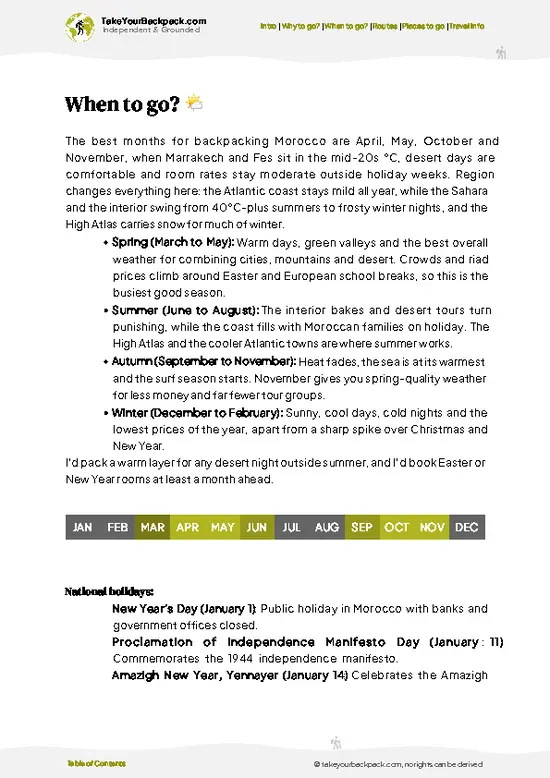
source: climatestotravel.comJANJanuary: fair for travelingFEBFebruary: fair for travelingMARMarch: good for travelingAPRApril: highly recommended for travelingMAYMay: highly recommended for travelingJUNJune: highly recommended for travelingJULJuly: highly recommended for travelingAUGAugust: highly recommended for travelingSEPSeptember: good for travelingOCTOctober: highly recommended for travelingNOVNovember: good for travelingDECDecember: fair for traveling
when-to-go

✈️ The backpacker research shortcutMorocco Travel Guide

An offline-friendly backpacking guide with optimized travel routes, ranked highlights, transport advice, and the best areas to stay.
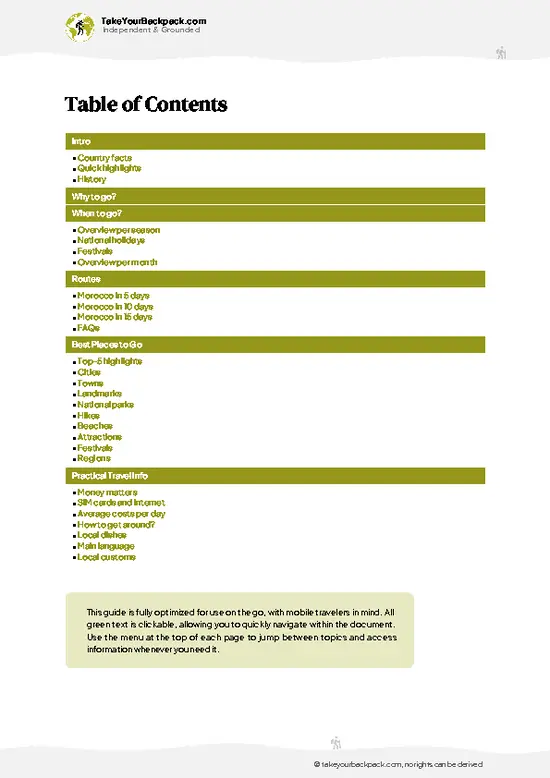
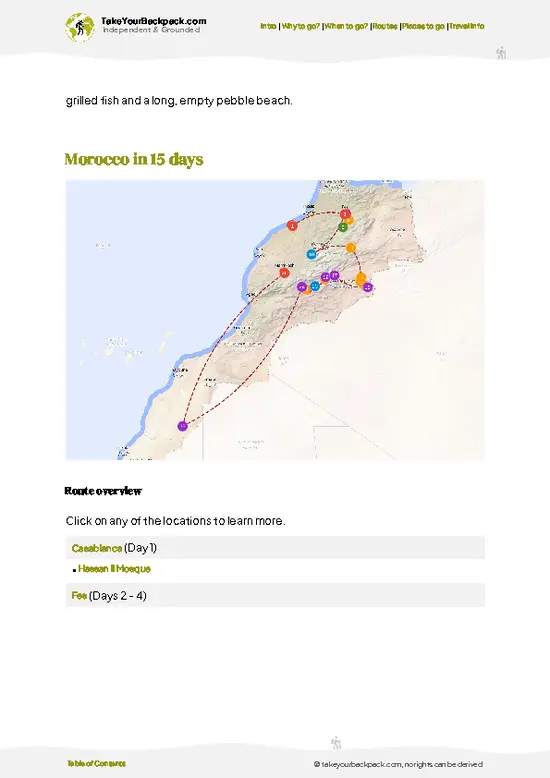
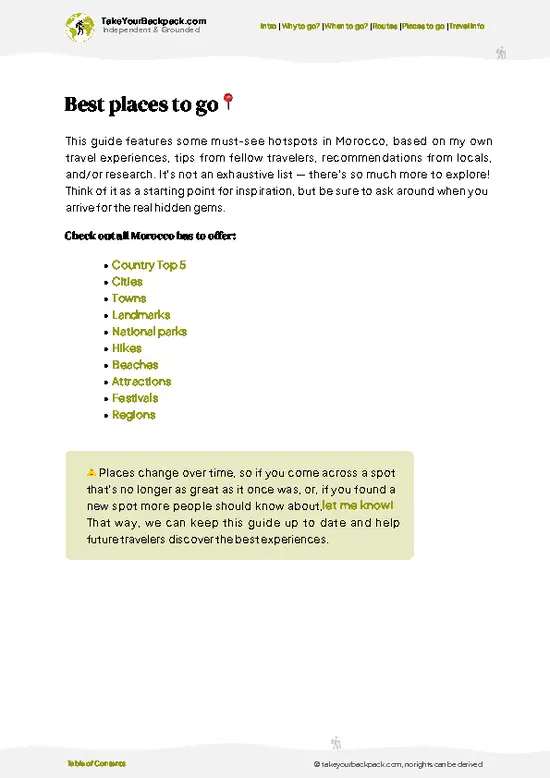
example page 0 from our offline Travel Guide for Morocco
example page 1 from our offline Travel Guide for Morocco
example page 2 from our offline Travel Guide for Morocco
example page 3 from our offline Travel Guide for Morocco
example page 4 from our offline Travel Guide for Morocco
example page 5 from our offline Travel Guide for Morocco
example page 6 from our offline Travel Guide for Morocco
example page 7 from our offline Travel Guide for Morocco
The digital guide (487 pages) contains:
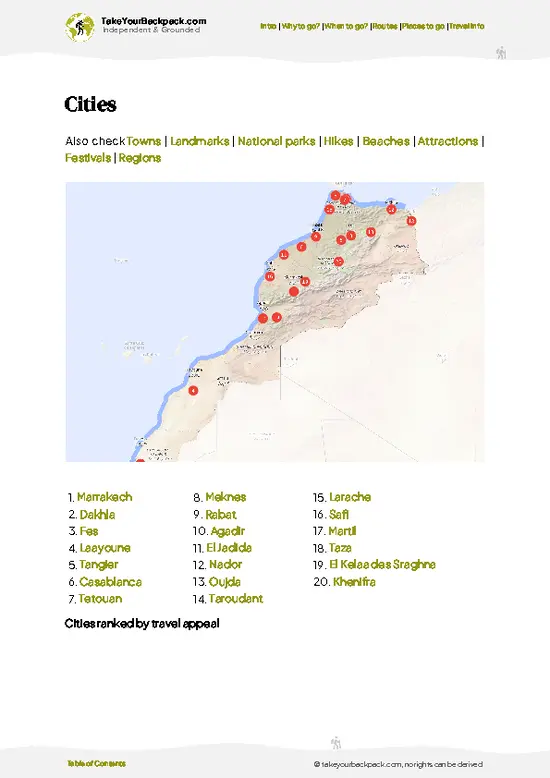
128 highlights, ranked by travel appeal
Optimized 5, 10 & 15-day travel routes
Cities, national parks, landmarks, beaches
How to get around
Offline-friendly for travel without Wi-Fi
👉 Click to see all 30+ guide features

📅 Plan smarter in minutes, not weeks
Month by month travel advice
Festivals & national holidays
Budget expectations

🗺️ Go to the right places, skip the overrated ones
Honest pros & cons of destinations
Top hikes, parks & viewpoints
Lesser-known places most travelers miss
Clear “worth it vs skip it” guidance

🛏️ Travel smoothly without rookie mistakes
Best areas to stay
Transport systems explained simply
Common scams & safety advice
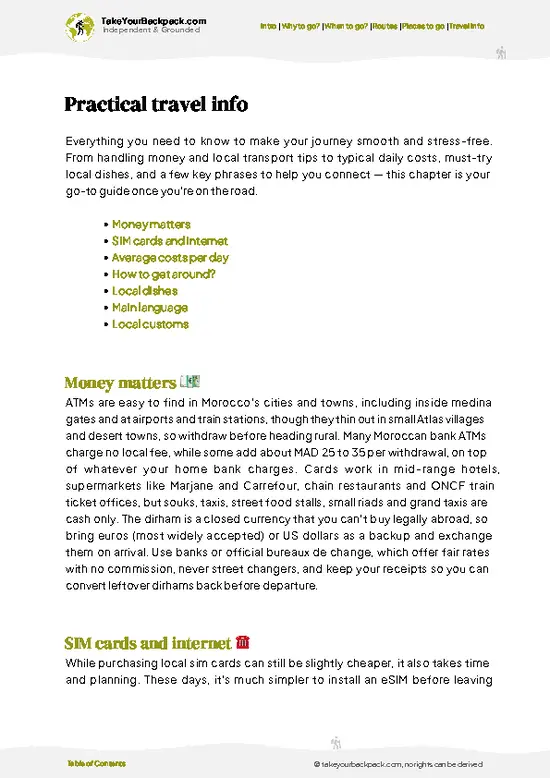
SIM cards, money & practical tips

🌍 Understand the country, not just visit it
Culture & traditions
52 Essential phrases & customs
Festivals worth planning around
Traveler-friendly historical context
Insights that make places more meaningful

📱 Built for real travel conditions
Fully downloadable PDF
Works completely offline
Optimized for phone use
Useful in remote areas & buses
Everything in one place
Save weeks of stressful planning
Get instant access to your full guide. 30‑day money-back guarantee.


By proceeding you agree to our terms.
Sent to your inbox immediately after payment • 100% Secure Checkout
Best Backpacking Travel Advisor 2025 tourism awardBest Backpacking
Travel Advisor
2025
What others say about Take Your Backpack Guides:
⭐⭐⭐⭐⭐
Fantastic, amazing amount of information!
⭐⭐⭐⭐⭐
My goodness this is amazing, it's what I've been looking for hats off too you!
⭐⭐⭐⭐⭐
I think this is absolutely BRILLIANT
⭐⭐⭐⭐
Very complete and informative. It's still missing places, but I gotta to commend you
⭐⭐⭐⭐⭐
This is truly amazing, thank you, can't wait to explore it with my kids!
⭐⭐⭐⭐⭐
Awesome resource, thank you!
⭐⭐⭐⭐⭐
This is amazing! Can't wait to explore the ones I haven't seen
⭐⭐⭐⭐
I love this! Well done, great idea.
⭐⭐⭐⭐⭐
Thanks for taking the time to make this gem!
⭐⭐⭐⭐⭐
This might be the best website I've ever seen.
⭐⭐⭐⭐⭐
Congratulations, and thank you so much for your work; it's incredibly valuable.
⭐⭐⭐⭐
In all seriousness I think you did a great job pointing out the important spots
⭐⭐⭐⭐⭐
10/10 very good
⭐⭐⭐⭐⭐
As someone who's only just starting to visit regularly this is awesome, thank you.
⭐⭐⭐⭐
Thank you very much! I'm going to visit my dad, it's going to be very useful!
⭐⭐⭐⭐⭐
This is really cool! We'll be travelling for the first time and this definitely come in handy.
⭐⭐⭐⭐⭐
You are now our minister of culture, congratulations 👨‍💼
⭐⭐⭐⭐⭐
Just wanted to tell you that this is a pearl! Going to follow your recommendations.
⭐⭐⭐⭐⭐
This is so cool. I'll definitely be using the resource for my travels soon.
⭐⭐⭐⭐⭐
This is very impressive! Good work.
⭐⭐⭐⭐⭐
This is an amazing and informative site. Very well done!

🛏️ Where to stay?Best areas and accommodation options

In ’Imilchil’, the real draw isn’t luxury—it’s the raw, unfiltered Atlas Mountain vibe. Backpackers here thrive in the handful of guesthouses and small riads that feel more like a family’s home than a hotel. These places are your best bet because they offer more than just a bed; they’re your gateway to the local Berber culture. Expect thick earthen walls that hold the day’s warmth, and windows that frame the dusty, sun-bleached village streets where kids chase goats and elders sip mint tea.

Why avoid the few pricier lodges? Because they tend to isolate you from the village’s pulse. Staying in … read more 👉
In ’Imilchil’, the real draw isn’t luxury—it’s the raw, unfiltered Atlas Mountain vibe. Backpackers here thrive in the handful of guesthouses and small riads that feel more like a family’s home than a hotel. These places are your best bet because they offer more than just a bed; they’re your gateway to the local Berber culture. Expect thick earthen walls that hold the day’s warmth, and windows that frame the dusty, sun-bleached village streets where kids chase goats and elders sip mint tea.

Why avoid the few pricier lodges? Because they tend to isolate you from the village’s pulse. Staying in a guesthouse means waking up to the scent of wood smoke and fresh bread, not sterile hotel air. It also means you can negotiate your own meals—tagine cooked over a wood fire, rich with local spices, served in a room where the walls echo with Berber songs.

Booking ahead isn’t always necessary, but arriving mid-afternoon helps. The light then softens the rugged peaks, and hosts are more relaxed, ready to share stories or arrange a guide for the nearby lakes. This rhythm—arriving with the sun, settling into a home, and syncing with local time—turns ’Imilchil from a stopover into a lived experience.

🚌 Getting aroundHow to get from A to B

Imilchil moves at its own pace, a rhythm carved by mountain air and centuries-old Berber traditions rather than strict timetables. The light here shifts slowly, casting long shadows over dusty streets where time feels elastic—sometimes stretched by waiting, sometimes snapped tight by sudden bursts of activity. You won’t find a clock dictating the day; instead, you’ll navigate a blend of informal signals and local intuition. This isn’t a place where buses arrive on the dot or taxis line up in neat rows. Instead, you learn to read the flow: a murmured word here, a gathering crowd there, a sudden honk from a shared taxi ready to roll. The payoff is a raw, authentic experience where the journey itself becomes part of the story.

Walking: The most reliable and immersive way to get around Imilchil. … read more 👉
Imilchil moves at its own pace, a rhythm carved by mountain air and centuries-old Berber traditions rather than strict timetables. The light here shifts slowly, casting long shadows over dusty streets where time feels elastic—sometimes stretched by waiting, sometimes snapped tight by sudden bursts of activity. You won’t find a clock dictating the day; instead, you’ll navigate a blend of informal signals and local intuition. This isn’t a place where buses arrive on the dot or taxis line up in neat rows. Instead, you learn to read the flow: a murmured word here, a gathering crowd there, a sudden honk from a shared taxi ready to roll. The payoff is a raw, authentic experience where the journey itself becomes part of the story.

Walking: The most reliable and immersive way to get around Imilchil. Streets are unpaved and uneven, so sturdy shoes are a must. Walking lets you soak in the scent of pine and earth, hear the chatter of locals, and spot the occasional wandering goat. Distances between key spots are short—usually under 30 minutes on foot—making this the default mode for budget travelers who want to stay grounded in the town’s pulse.

Shared Taxis (Grand Taxis): These are old Mercedes sedans that run fixed routes but leave only when full, which means waiting times can be unpredictable. Expect to pay around 20-30 MAD for short trips within the region. They’re faster than walking but less comfortable—seats are tight, and the ride can be bumpy on mountain roads. Departures typically start around 7:00 AM and taper off by early evening, but don’t count on a strict schedule. Flag one down near the main square or the bus station.

Local Minibuses: Less common than shared taxis but useful for slightly longer distances to nearby villages. They run on a looser timetable, usually filling up before departure. Fares hover around 15-25 MAD. Minibuses are slower due to frequent stops but offer a window into local life, with open windows letting in the crisp mountain air and the occasional waft of wood smoke.

Hitchhiking: Surprisingly common and culturally accepted here, especially among locals and adventurous travelers. It’s free and can be quicker than waiting for shared taxis, but it requires patience and a good sense of timing. The key is to stand near main roads during daylight hours and look approachable—locals often stop to offer rides, especially if you’re polite and speak a few words of Tamazight or Arabic.

Private Car Hire: For those with a bit more budget and a tight schedule, renting a car or hiring a driver is the smoothest way to explore beyond Imilchil. Prices start around 500 MAD per day, negotiable depending on season and distance. This option offers flexibility and comfort, letting you chase the golden hour light over the High Atlas without the stress of coordinating with local transit quirks.

Mastering Imilchil’s transit means embracing its unpredictability and using it to your advantage. Walk when you want to absorb the town’s atmosphere, hitchhike or grab a shared taxi when you’re ready to move on, and save private hires for when time is tight or comfort is king. This flow isn’t about rigid efficiency—it’s about syncing with the land and its people, turning every trip into a story worth telling.

👛 Costs (as of 11 November 2025)What things cost and how to budget

Backpacking in Imilchil, Morocco, offers a raw, authentic slice of the Atlas Mountains, but the costs reflect its remote, less-touristy vibe. Here’s what you can expect to spend daily as an independent traveler.
  • Dorm Accommodation: Expect to pay around €5 to €10 per night for a basic dorm bed in a local guesthouse or hostel. These places are simple—think shared bathrooms, thick stone walls, and the scent of wood smoke from the communal hearth. It’s not luxury, but it’s genuine and cozy.
  • Meals: Local eateries serve hearty tagines and couscous for about €3 to €6 per meal. Street food options like flatbreads or fresh fruit can drop your costs even lower. Meals here are filling and flavored with the earthy spices of the region, often eaten with your hands around a shared table.
  • Local Transport:
read more 👉
Backpacking in Imilchil, Morocco, offers a raw, authentic slice of the Atlas Mountains, but the costs reflect its remote, less-touristy vibe. Here’s what you can expect to spend daily as an independent traveler.
  • Dorm Accommodation: Expect to pay around €5 to €10 per night for a basic dorm bed in a local guesthouse or hostel. These places are simple—think shared bathrooms, thick stone walls, and the scent of wood smoke from the communal hearth. It’s not luxury, but it’s genuine and cozy.
  • Meals: Local eateries serve hearty tagines and couscous for about €3 to €6 per meal. Street food options like flatbreads or fresh fruit can drop your costs even lower. Meals here are filling and flavored with the earthy spices of the region, often eaten with your hands around a shared table.
  • Local Transport: Imilchil is small, so walking is your best bet and costs nothing. For longer trips to nearby villages or markets, shared taxis run around €1 to €3. The roads are rugged, so rides can be bumpy but scenic, with the scent of cedar and wild herbs in the air.
  • Basic Activities/Entry Fees: Most cultural experiences, like visiting local festivals or hiking nearby trails, are free or ask for a small donation of €1 to €3. Organized tours are rare and usually pricier, so independent exploration is both cheaper and more rewarding here.
  • Miscellaneous Expenses: Budget about €1 to €3 for essentials like bottled water, snacks, or a cup of mint tea at a café. Internet access is limited and often costs extra if available, so plan accordingly.

All told, you’re looking at roughly €10 to €25 per day to live comfortably in Imilchil without cutting corners. The modest price tags reflect the town’s simplicity and the slow pace of life here. It’s a place where the payoff isn’t just the sights but the quiet moments between—the cool mountain air, the crackle of a fire, the shared smiles of locals.


source: visitmorocco.com
⚠️ Prices can change and everyone travels differently, so take this as a rough guide. Hope it helps you plan your adventure!

🚌 Day tripsWhere to go beyond the main area

Using the village of ’Imilchil’ as a base for day trips opens up a treasure trove of experiences that blend stunning landscapes with rich culture. Here are some worthwhile excursions that will deepen your connection to this enchanting region.

Lake Isli and Lake Tislit
Just a short 30-minute ride from ’Imilchil’, these twin lakes are a must-see. The shimmering blue waters reflect the surrounding mountains, creating a serene backdrop for a picnic or a leisurely stroll. The best time to visit is early morning when the light dances on the water, and the air is crisp. Expect to spend around 50 dirhams for transport and snacks. A common mistake is to rush through; take your time to soak in the tranquility. The lakes are not just pretty; they hold local legends that add depth to your visit. 👉 read more 👉
Using the village of ’Imilchil’ as a base for day trips opens up a treasure trove of experiences that blend stunning landscapes with rich culture. Here are some worthwhile excursions that will deepen your connection to this enchanting region.

Lake Isli and Lake Tislit
Just a short 30-minute ride from ’Imilchil’, these twin lakes are a must-see. The shimmering blue waters reflect the surrounding mountains, creating a serene backdrop for a picnic or a leisurely stroll. The best time to visit is early morning when the light dances on the water, and the air is crisp. Expect to spend around 50 dirhams for transport and snacks. A common mistake is to rush through; take your time to soak in the tranquility. The lakes are not just pretty; they hold local legends that add depth to your visit. 👉 Explore Imilchil

Jbel Ayachi
For those craving a bit of adventure, the hike up Jbel Ayachi is a rewarding challenge. It takes about two hours to reach the base, and the ascent can take 4-6 hours, depending on your pace. The panoramic views from the summit are breathtaking, showcasing the vastness of the High Atlas. Budget around 100 dirhams for transport and snacks. Spring and early fall are ideal for this trek, as summer heat can be punishing. Many first-timers underestimate the trail’s difficulty; come prepared with water and sturdy shoes. 👉 Explore Imilchil

Berber Villages
Exploring nearby Berber villages offers a glimpse into the traditional way of life. A 20-minute ride will get you to a village where you can wander through narrow alleys, interact with locals, and perhaps even share a cup of mint tea. This experience is priceless, costing around 30 dirhams for transport. Visit in the late afternoon to catch the golden hour lighting up the mud-brick homes. A common pitfall is sticking to the main paths; venture off the beaten track for a more authentic experience. 👉 Explore Imilchil

Gorges of Ziz
A bit further afield, the Gorges of Ziz are about an hour’s drive from ’Imilchil’. The dramatic cliffs and winding river create a stunning landscape that feels like stepping into another world. Plan for a full day, with transport and snacks totaling around 150 dirhams. The best time to visit is in spring when the wildflowers bloom. Many travelers miss the smaller trails along the gorge; these paths offer unique perspectives and fewer crowds. 👉 Explore Imilchil

Day Trip to Tinerhir
Rounding out your adventures, Tinerhir is about an hour and a half away. This bustling town is the gateway to the Todra Gorge, where towering cliffs create a dramatic canyon. The journey costs around 100 dirhams, and you’ll want to spend a good part of the day exploring. Late afternoon is ideal for capturing the gorge’s colors as the sun sets. A common mistake is to overlook the local markets; they’re a fantastic way to experience the culture and pick up unique souvenirs. 👉 Explore Imilchil
Want to know what more Morocco offers?
The Morocco Travel Guide describes 128 highlights, from cities to national parks, from beaches to hikes

Get the Travel Guide -

🛡️ SafetySafety Tips and Common Scams in Imilchil

Imilchil is a quiet town where the pace slows and the air carries the scent of cedar and earth, but that calm can lull you into a false sense of ease. The main streets and market areas are generally safe, even for solo travelers, but keep your wits about you when wandering after dark. Street lighting is minimal, and the shadows can play tricks, so stick to well-traveled paths and avoid isolated alleys. Locals are friendly, but some vendors may push hard for sales or inflate prices if you seem unsure—firm, polite bargaining is your best defense. Watch your belongings in crowded spots; pickpocketing isn’t common but can happen when you’re distracted. The most frequent annoyance is persistent offers for guided tours or mule rides, especially near the festival season—decline firmly if you’re not … read more 👉
Imilchil is a quiet town where the pace slows and the air carries the scent of cedar and earth, but that calm can lull you into a false sense of ease. The main streets and market areas are generally safe, even for solo travelers, but keep your wits about you when wandering after dark. Street lighting is minimal, and the shadows can play tricks, so stick to well-traveled paths and avoid isolated alleys. Locals are friendly, but some vendors may push hard for sales or inflate prices if you seem unsure—firm, polite bargaining is your best defense. Watch your belongings in crowded spots; pickpocketing isn’t common but can happen when you’re distracted. The most frequent annoyance is persistent offers for guided tours or mule rides, especially near the festival season—decline firmly if you’re not interested, and they’ll usually back off. Carry yourself with quiet confidence, respect local customs, and you’ll find Imilchil’s rugged charm unfolds without hassle.

Other Moroccan towns near Imilchil

Explore more nearby:

  • Tinghir—Todgha Gorge, palm oasis, Amazigh villages| 71 km away
  • Boumalne Dades—Dades Gorge, mountain panoramas, Berber villages| 94 km away
  • Midelt—apple orchards, high plateau, mining heritage| 103 km away

💡 Not sure where to go next?
Create a personalized itinerary for Morocco including Imilchil and the places that fit your trip.

Generate my itinerary

👉 Discover all towns

Or checkout all Morocco has to offer (think cities, towns, villages, national parks, hikes, beaches, festivals)
Country photo of Morocco

We 💚 feedbackKey takeaways before you go

Imilchil is a slice of Morocco where the air is crisp and the mountains loom like ancient guardians. The local Berber culture pulses with life, especially during the annual wedding festival, a vibrant celebration of love and tradition. But be ready for the isolation; the roads can be rough, and amenities are basic. Embrace the challenge, though. That grit makes the warmth of the village and its people feel like a hard-earned treasure.

✈️ When did I visit Morocco?
In October 2011, I backpacked Morocco for two weeks, with climbing the Mount Toubkal in summer clothing as a highlight.

✍️ Help improve this page!
The information on this page is based on my own backpacking experience in Morocco, supplemented with up-to-date research and feedback from other travelers. Travel details can change, so if you notice anything outdated or incomplete, feel free to let me know.


🙋‍♂️ Give feedback

👋 Meet the founderWho’s Behind Take Your Backpack?

Johan, backpacker and founder of TakeYourBackpackHi, I’m Johan (Netherlands 🇳🇱), the creator of TakeYourBackpack. Over the past decade, I’ve backpacked through 80+ countries across six continents, gaining extensive experience with independent travel, long-term trips, and overland routes.

This site is built on a combination of firsthand travel experience and carefully curated insights from other backpackers. Many guides are based on places I’ve personally visited, while others bring together tips, observations, and practical advice shared by trusted travelers I’ve met along the way.

The goal is to provide realistic, experience-driven guidance — not generic itineraries — so you can explore destinations with better context, clearer expectations, and more confidence.

Get full Morocco guide •
Instant download • 128 highlights • Full Offline guide