×

Mozambique🇲🇿 | citiesBeiraIndian Ocean port, faded colonial grid, cyclone-prone coastline | things to do and best time to go

Explore Vilanculos BeachExplore Cuamba

Backpacking in Beira
🏆 Top pickcity ranked #4
By Johan Kruseman 🇳🇱 | Updated June 12, 2026

Forget the idea that Beira is just a gritty port you should skip on your way to somewhere “prettier.” Beira sits on Mozambique’s central coast, where the Pungwe River meets the Indian Ocean—a crossroads with more character than polish. For backpackers, Beira is a paradox: colonial-era buildings with peeling pastel facades, the faded grandeur of the Grande Hotel, and a lively central market where you’ll hear more Portuguese than English. The city’s not built for tourists, which means you’ll spend less, but you’ll also work harder for creature comforts—think basic hostels, patchy Wi-Fi, and a nightlife scene that’s more local bar than backpacker pub. It’s easier to meet locals than fellow travelers, and safety is a notch below Maputo or Vilanculos, especially after dark. But if you want a raw, real slice of Mozambique—where the system isn’t smoothed out for you—Beira delivers.

Discover everything you want to know in the 📖 Mozambique Travel Guide.
Loading the map 🌍
CLICK TO FILTER
cities
towns
national parks
hikes
beaches
attractions
festivals
regions
SHOW COUNTRY’S BESTSHOW ALL

✨ Why go?
Ranked #4 city in Mozambique
The unique appeal for travelers

Beira, Mozambique, is a strategic stop for backpackers weaving through Southern Africa. It’s not just about the highlights; it’s about the value it offers as a basecamp. The city has a laid-back vibe, making it easy to find affordable hostels that cater to travelers. You’ll enjoy local food that’s both delicious and budget-friendly, giving you a taste of authentic Mozambican culture without breaking the bank.

Beira’s walkability enhances your experience. You can explore the bustling markets and waterfront with ease, soaking in the local life. When the sun sets, the nightlife offers a mix of chill bars and lively spots, perfect for unwinding after a day of exploration.

Plus, it serves as a gateway for day trips to stunning beaches and natural wonders. If you’re looking to balance time, money,read more 👉
Beira, Mozambique, is a strategic stop for backpackers weaving through Southern Africa. It’s not just about the highlights; it’s about the value it offers as a basecamp. The city has a laid-back vibe, making it easy to find affordable hostels that cater to travelers. You’ll enjoy local food that’s both delicious and budget-friendly, giving you a taste of authentic Mozambican culture without breaking the bank.

Beira’s walkability enhances your experience. You can explore the bustling markets and waterfront with ease, soaking in the local life. When the sun sets, the nightlife offers a mix of chill bars and lively spots, perfect for unwinding after a day of exploration.

Plus, it serves as a gateway for day trips to stunning beaches and natural wonders. If you’re looking to balance time, money, and comfort, Beira fits the bill. It’s not just a stopover; it’s a place that enriches your journey, making it a worthy addition to your backpacking route.
Want to include Beira in your Mozambique route?
Create a personalized Mozambique itinerary that includes Beira and the places that fit your trip — based on your travel style, budget, and available time. Get your route in seconds.

Generate my trip

💡 HighlightsWhat this place is best known for

  • Estação Central da Beira (Beira Railway Station) — a striking colonial-era station that still anchors the city; great for people-watching, old ironwork architecture, and getting a feel for Beira’s role as a regional transport hub.
  • Farol da Beira / Ponta Gêa — the working lighthouse and nearby breakwater give you the best harbour-and-sea views in the city; popular at sunset and useful for seeing the scale of Beira’s port activity up close.
  • Mercado Central da Beira (Municipal Market) — noisy, colourful and extremely local: fresh fish, produce, street snacks and stalls selling everything from cassava to phone credits. A must for photos and real-feel street shopping (go with a local or a guide if you’re unsure).
  • Museu de Sofala — the small provincial museum where you can pick up the region’s
read more 👉
  • Estação Central da Beira (Beira Railway Station) — a striking colonial-era station that still anchors the city; great for people-watching, old ironwork architecture, and getting a feel for Beira’s role as a regional transport hub.
  • Farol da Beira / Ponta Gêa — the working lighthouse and nearby breakwater give you the best harbour-and-sea views in the city; popular at sunset and useful for seeing the scale of Beira’s port activity up close.
  • Mercado Central da Beira (Municipal Market) — noisy, colourful and extremely local: fresh fish, produce, street snacks and stalls selling everything from cassava to phone credits. A must for photos and real-feel street shopping (go with a local or a guide if you’re unsure).
  • Museu de Sofala — the small provincial museum where you can pick up the region’s history in one visit: colonial-era objects, traditional crafts and displays on Sofala’s trading past that put the city in context.
  • Avenida 25 de Setembro & the Beira seafront — the main waterfront artery and adjoining beach strip where locals hang out, roadside cafés sit, and you can walk to watch pelicans, fishermen and the city’s everyday rhythm.
  • Porto da Beira & fish landing area — not a postcard beach, but visiting the port and fish-landing zones is an honest, gritty experience: watch boats come in, see fish auctions, and observe the commerce that keeps Beira alive.
  • Estuário do Rio Chiveve and riverside — the Chiveve river mouth and nearby mangrove edges are surprisingly atmospheric: good for short boat rides, watching tides, local fishing scenes, and quiet sunrise walks away from the busy centre.
  • Sé Catedral da Beira (the city cathedral) — a colonial-era cathedral that’s central to the city’s skyline and community life; the architecture and the neighbourhood around it reveal Beira’s Portuguese-era layers.
  • Bairro da Munhava (local neighbourhood life) — skip the sanitized tourist strip and spend time in Munhava to catch live music, street markets, informal cafés and the real urban pulse; visit respectfully and maybe with a local to introduce you to spots worth seeing.
  • Palácio do Governo Provincial & Praça central — the provincial government building and the adjoining central square are useful for understanding Beira’s civic heart: colonial facades, local vendors, and frequent public gatherings or events.
A few great places to explore as day trips from Beira: Gorongosa National Park for wildlife and landscapes, the pottery and rural scenes around Dondo, and the mangrove/estuary areas northward (Marromeu/Buzi fringes) if you want birding and a mangrove experience.
Spotted a mistake or missing something? Contact us.

🏘️ NeighborhoodsUnderstanding the local layout

Beira, Mozambique, is a city where the rhythm of life pulses through its neighborhoods, each offering unique experiences for backpackers. Here’s a breakdown to help you navigate your options.

Central Beira: This is the heartbeat of the city. It’s bustling, with markets and street vendors everywhere. You’ll find affordable accommodations and plenty of local eateries. Walkability is high, making it easy to explore on foot. Nightlife is vibrant, with bars and music spilling into the streets. Perfect for short stays if you want to soak up the local culture quickly.

Macuti Beach: If you’re craving sun and sand, this is your spot. It’s quieter than Central Beira, ideal for relaxation. Accommodations range from budget hostels to mid-range hotels. The beach vibe is laid-back, but you’ll still find … read more 👉
Beira, Mozambique, is a city where the rhythm of life pulses through its neighborhoods, each offering unique experiences for backpackers. Here’s a breakdown to help you navigate your options.

Central Beira: This is the heartbeat of the city. It’s bustling, with markets and street vendors everywhere. You’ll find affordable accommodations and plenty of local eateries. Walkability is high, making it easy to explore on foot. Nightlife is vibrant, with bars and music spilling into the streets. Perfect for short stays if you want to soak up the local culture quickly.

Macuti Beach: If you’re craving sun and sand, this is your spot. It’s quieter than Central Beira, ideal for relaxation. Accommodations range from budget hostels to mid-range hotels. The beach vibe is laid-back, but you’ll still find some nightlife options, mostly beach bars. It’s a great choice for longer stays, especially if you want to unwind after exploring.

Chicoa: A bit off the beaten path, Chicoa offers a more local experience. It’s less touristy, which means lower prices and a chance to connect with residents. Walkability can be tricky, so consider local transport. This area is quieter, making it suitable for longer stays if you want to immerse yourself in daily life.

Each neighborhood has its own flavor, so choose based on what you value most in your Beira adventure.

⌛️ 1 dayWhat you can realistically do in a day

Beira, Mozambique, is a city where the Indian Ocean meets a rich tapestry of culture and history. It’s not just a stopover; it’s a vibrant hub that pulses with life, from its bustling markets to its colonial architecture. You’ll find a blend of Portuguese influence and local traditions that create a unique atmosphere.

Start your day in the heart of Beira at the Mercado Central. The early morning is when the market comes alive. Vendors shout their wares, and the air is thick with the scent of fresh produce and spices. Grab a local breakfast of *pão* (bread) and *matapa* (a dish made from cassava leaves) from a stall. This is a great way to fuel up while soaking in the local vibe.

After breakfast, stroll along the waterfront promenade. The views of the ocean are refreshing, and you can watch … read more 👉
Beira, Mozambique, is a city where the Indian Ocean meets a rich tapestry of culture and history. It’s not just a stopover; it’s a vibrant hub that pulses with life, from its bustling markets to its colonial architecture. You’ll find a blend of Portuguese influence and local traditions that create a unique atmosphere.

Start your day in the heart of Beira at the Mercado Central. The early morning is when the market comes alive. Vendors shout their wares, and the air is thick with the scent of fresh produce and spices. Grab a local breakfast of *pão* (bread) and *matapa* (a dish made from cassava leaves) from a stall. This is a great way to fuel up while soaking in the local vibe.

After breakfast, stroll along the waterfront promenade. The views of the ocean are refreshing, and you can watch fishermen bringing in their catch. Head towards the iconic Beira Cathedral, a striking piece of architecture that stands as a testament to the city’s colonial past. Spend some time exploring the surrounding neighborhood, where you might stumble upon street art that tells stories of the local community.

In the afternoon, make your way to the less-traveled neighborhood of Macuti. Here, you can visit the Macuti Lighthouse, which offers panoramic views of the coastline. It’s not on every tourist’s radar, but the experience is worth it. Grab lunch at a nearby café, where you can enjoy fresh seafood while listening to the waves.

As evening approaches, return to the city center and find a local restaurant for dinner. Try *xima* (a maize dish) paired with grilled fish. Afterward, take a leisurely walk along the beach, where the sunset paints the sky in hues of orange and pink. This day in Beira will leave you with a deeper understanding of its culture and a sense of connection to its people.
Turn your Beira visit into an Mozambique adventure
Build a complete Mozambique route with Beira, hidden gems, must-see destinations, and realistic travel times included.

Generate my trip

🌤️ When to go?Choosing the right time of year


  • Topic: Weather – Beira’s climate is tropical, with a wet season from November to April bringing heavy rains and humidity. The dry season from May to October offers clearer skies and less moisture, making trekking and exploring far more pleasant.

  • Topic: Temperature – Expect highs around 28–32°C (82–90°F) in the dry months, which is warm but manageable. The wet season can push temps higher, with sticky humidity that saps energy quickly.

  • Topic: Daylight Hours – Daylight stays fairly consistent year-round, roughly 11 to 12 hours daily. This steadiness means you won’t lose precious hiking or sightseeing time no matter when you go.

  • Topic: Crowds – Beira isn’t a tourist hotspot, so crowds are minimal year-round. However, local holidays and festivals in the dry season can bring a lively buzz
read more 👉

  • Topic: Weather – Beira’s climate is tropical, with a wet season from November to April bringing heavy rains and humidity. The dry season from May to October offers clearer skies and less moisture, making trekking and exploring far more pleasant.

  • Topic: Temperature – Expect highs around 28–32°C (82–90°F) in the dry months, which is warm but manageable. The wet season can push temps higher, with sticky humidity that saps energy quickly.

  • Topic: Daylight Hours – Daylight stays fairly consistent year-round, roughly 11 to 12 hours daily. This steadiness means you won’t lose precious hiking or sightseeing time no matter when you go.

  • Topic: Crowds – Beira isn’t a tourist hotspot, so crowds are minimal year-round. However, local holidays and festivals in the dry season can bring a lively buzz without overwhelming the vibe.

  • Topic: Seasonal Activities – Dry months are prime for beach days, wildlife spotting, and cultural events. Wet season limits outdoor plans but can reveal lush landscapes and fewer travelers.

  • Topic: Price Fluctuations – Accommodation and transport costs dip during the wet season due to lower demand. The dry season sees a slight price bump but rewards you with better conditions and more options.


Pro-tip: Aim for May to October to maximize comfort and activity options, but if you’re chasing bargains and don’t mind a little rain, the wet season can surprise you with its quiet charm.


source: climatestotravel.comJANJanuary: fair for travelingFEBFebruary: fair for travelingMARMarch: fair for travelingAPRApril: good for travelingMAYMay: excellent for travelingJUNJune: excellent for travelingJULJuly: excellent for travelingAUGAugust: excellent for travelingSEPSeptember: excellent for travelingOCTOctober: excellent for travelingNOVNovember: good for travelingDECDecember: fair for traveling
when-to-go

✈️ The backpacker research shortcutMozambique Travel Guide

An offline-friendly backpacking guide with optimized travel routes, ranked highlights, transport advice, and the best areas to stay.
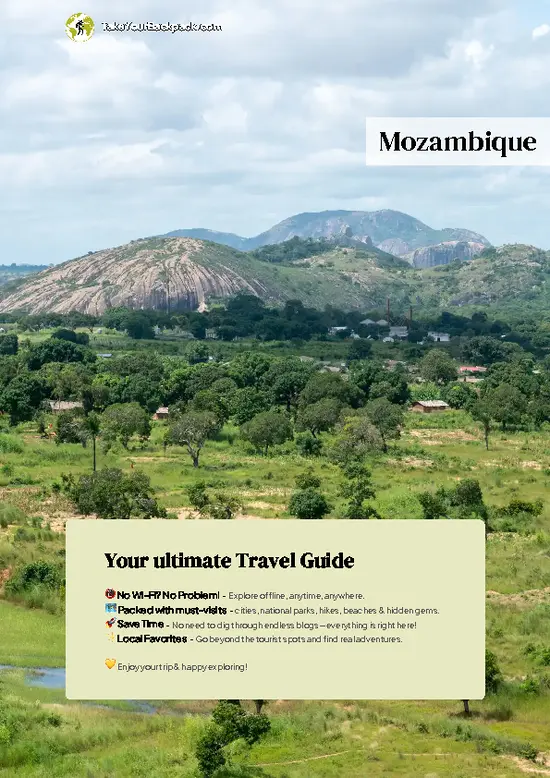
example page 0 from our offline Travel Guide for Mozambique
example page 1 from our offline Travel Guide for Mozambique
example page 2 from our offline Travel Guide for Mozambique
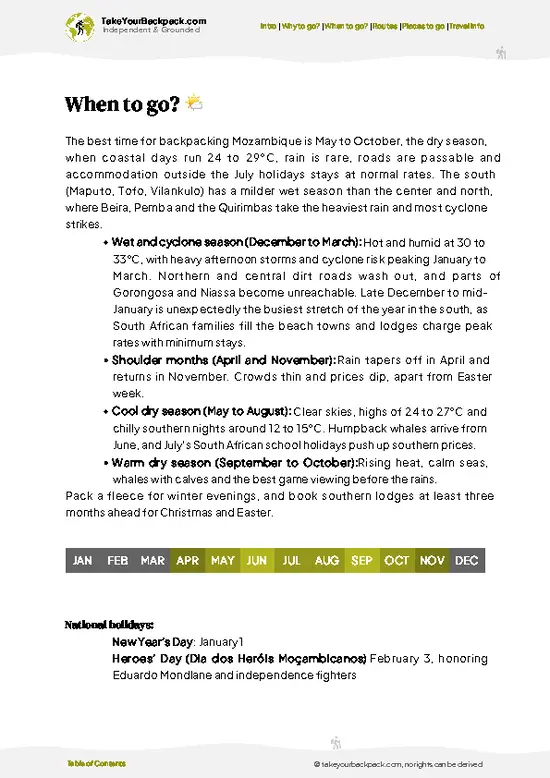
example page 3 from our offline Travel Guide for Mozambique
example page 4 from our offline Travel Guide for Mozambique
example page 5 from our offline Travel Guide for Mozambique
example page 6 from our offline Travel Guide for Mozambique
example page 7 from our offline Travel Guide for Mozambique
The digital guide (346 pages) contains:
86 highlights, ranked by travel appeal
Optimized 5, 10 & 15-day travel routes
Cities, national parks, landmarks, beaches
How to get around
Offline-friendly for travel without Wi-Fi
👉 Click to see all 30+ guide features

📅 Plan smarter in minutes, not weeks
Month by month travel advice
Festivals & national holidays
Budget expectations

🗺️ Go to the right places, skip the overrated ones
Honest pros & cons of destinations
Top hikes, parks & viewpoints
Lesser-known places most travelers miss
Clear “worth it vs skip it” guidance

🛏️ Travel smoothly without rookie mistakes
Best areas to stay
Transport systems explained simply
Common scams & safety advice
SIM cards, money & practical tips

🌍 Understand the country, not just visit it
Culture & traditions
52 Essential phrases & customs
Festivals worth planning around
Traveler-friendly historical context
Insights that make places more meaningful

📱 Built for real travel conditions
Fully downloadable PDF
Works completely offline
Optimized for phone use
Useful in remote areas & buses
Everything in one place
Save weeks of stressful planning
Get instant access to your full guide. 30‑day money-back guarantee.


By proceeding you agree to our terms.
Sent to your inbox immediately after payment • 100% Secure Checkout
Best Backpacking Travel Advisor 2025 tourism awardBest Backpacking
Travel Advisor
2025
What others say about Take Your Backpack Guides:
⭐⭐⭐⭐⭐
Fantastic, amazing amount of information!
⭐⭐⭐⭐⭐
My goodness this is amazing, it's what I've been looking for hats off too you!
⭐⭐⭐⭐⭐
I think this is absolutely BRILLIANT
⭐⭐⭐⭐
Very complete and informative. It's still missing places, but I gotta to commend you
⭐⭐⭐⭐⭐
This is truly amazing, thank you, can't wait to explore it with my kids!
⭐⭐⭐⭐⭐
Awesome resource, thank you!
⭐⭐⭐⭐⭐
This is amazing! Can't wait to explore the ones I haven't seen
⭐⭐⭐⭐
I love this! Well done, great idea.
⭐⭐⭐⭐⭐
Thanks for taking the time to make this gem!
⭐⭐⭐⭐⭐
This might be the best website I've ever seen.
⭐⭐⭐⭐⭐
Congratulations, and thank you so much for your work; it's incredibly valuable.
⭐⭐⭐⭐
In all seriousness I think you did a great job pointing out the important spots
⭐⭐⭐⭐⭐
10/10 very good
⭐⭐⭐⭐⭐
As someone who's only just starting to visit regularly this is awesome, thank you.
⭐⭐⭐⭐
Thank you very much! I'm going to visit my dad, it's going to be very useful!
⭐⭐⭐⭐⭐
This is really cool! We'll be travelling for the first time and this definitely come in handy.
⭐⭐⭐⭐⭐
You are now our minister of culture, congratulations 👨‍💼
⭐⭐⭐⭐⭐
Just wanted to tell you that this is a pearl! Going to follow your recommendations.
⭐⭐⭐⭐⭐
This is so cool. I'll definitely be using the resource for my travels soon.
⭐⭐⭐⭐⭐
This is very impressive! Good work.
⭐⭐⭐⭐⭐
This is an amazing and informative site. Very well done!

🛏️ Where to stay?Choosing the right base

Beira’s backpacker sweet spot is the central district around Avenida 25 de Setembro. This area strikes a rare balance: it’s safe enough to walk after dark, lively enough to meet other travelers, and packed with budget-friendly guesthouses and hostels. You’re close to the waterfront, local markets, and a handful of cafés where the Wi-Fi is decent and the vibe is relaxed but social. It’s not polished tourist central—more a place where you can feel the pulse of the city without the usual tourist bubble.

Compared to the outskirts or newer developments, this central zone offers a compact, walkable … read more 👉
Beira’s backpacker sweet spot is the central district around Avenida 25 de Setembro. This area strikes a rare balance: it’s safe enough to walk after dark, lively enough to meet other travelers, and packed with budget-friendly guesthouses and hostels. You’re close to the waterfront, local markets, and a handful of cafés where the Wi-Fi is decent and the vibe is relaxed but social. It’s not polished tourist central—more a place where you can feel the pulse of the city without the usual tourist bubble.

Compared to the outskirts or newer developments, this central zone offers a compact, walkable experience. You won’t waste time or money on taxis, which is a big win when every metical counts. The trade-off here is comfort: accommodations lean toward the basic side, but that’s part of the charm. You’re trading a bit of luxury for authenticity and connection.

Other neighborhoods either push you into quieter, less social zones or pricier, less authentic areas. If your priority is meeting fellow backpackers and soaking in local life without breaking the bank, the central district near Avenida 25 de Setembro is your strategic base camp. It’s where the city’s rhythm syncs with your budget and social needs—no fluff, just smart choices.

🚌 Getting aroundHow to get around Beira

Beira moves at its own rhythm—somewhere between the pulse of a well-oiled machine and the unpredictable beat of a street drum circle. The city’s flow isn’t about strict timetables or polished efficiency; it’s a dance of improvisation, where schedules exist but rarely dictate your pace. You’ll find that time here is elastic, bending around the realities of traffic, weather, and local moods. Comfort is a relative term, often sacrificed for the sake of getting somewhere, but that’s part of the charm. Understanding this dynamic is your first win: Beira’s transit isn’t about rigid control, it’s about reading the room and making smart, flexible choices.


  • Walking: The ultimate budget option and the best way to absorb Beira’s street life. It’s free, flexible, and surprisingly efficient within the
read more 👉
Beira moves at its own rhythm—somewhere between the pulse of a well-oiled machine and the unpredictable beat of a street drum circle. The city’s flow isn’t about strict timetables or polished efficiency; it’s a dance of improvisation, where schedules exist but rarely dictate your pace. You’ll find that time here is elastic, bending around the realities of traffic, weather, and local moods. Comfort is a relative term, often sacrificed for the sake of getting somewhere, but that’s part of the charm. Understanding this dynamic is your first win: Beira’s transit isn’t about rigid control, it’s about reading the room and making smart, flexible choices.


  • Walking: The ultimate budget option and the best way to absorb Beira’s street life. It’s free, flexible, and surprisingly efficient within the central districts. Expect uneven sidewalks and occasional crowds, but nothing that slows you down more than a good conversation or a street vendor’s call.


  • Chapa Minibus: The backbone of local transit, these minibuses run from dawn until late evening, roughly 5:30 AM to 9 PM. Fares hover around 20-50 MZN (about $0.30-$0.75), making them the cheapest motorized option. They’re slow and packed, often stopping on a whim, but they cover most routes and offer a raw, authentic experience. Comfort is minimal—think hard seats and open windows—but speed varies wildly depending on traffic and how many stops the driver decides to make.


  • Taxis: More expensive but faster and more comfortable than chapas. Expect to pay around 300-600 MZN ($5-$10) for typical city trips. Taxis don’t run on fixed schedules; you flag them down or book by phone. They’re your best bet for early mornings or late nights when chapas aren’t running, or if you’re carrying heavy gear. Negotiation is part of the game, so know your routes and typical prices to avoid overpaying.


  • Bicycle Rentals: A middle ground between walking and motorized transport, bikes offer speed and flexibility without the cost of taxis. Rentals are about 300 MZN per day ($5), and while Beira’s roads can be rough, cycling lets you cover more ground on your own schedule. It’s a solid choice if you want to blend comfort with budget and avoid the unpredictability of public transit.


  • Motorcycle Taxis (Moto-taxis): Quick and nimble, moto-taxis weave through traffic and offer a cheap alternative to taxis, usually costing 100-200 MZN ($1.50-$3) per trip. They’re available throughout the day but less so after dark. Comfort is minimal and safety varies, so use them for short hops when time is tight and you’re comfortable with a bit of risk.


Mastering Beira’s transit means balancing your priorities: save money by walking or taking chapas, gain time with taxis or moto-taxis, or find a sweet spot with a bike. Each choice comes with trade-offs in comfort and reliability, but knowing the system’s pulse lets you play it smart and come out ahead.

👛 Costs (as of 6 September 2025)Money, prices, and spending tips

Backpacking in Beira, Mozambique, offers a clear trade-off between cost and comfort, with prices that reflect its developing infrastructure and local economy. Here’s a breakdown of what you’re likely to spend daily:
  • Dorm Accommodation (High Season): Expect to pay around €10-€15 per night. High season drives prices up slightly due to demand, but options remain basic and functional rather than luxurious.
  • Dorm Accommodation (Off-Season): Prices drop to about €7-€10 per night. Fewer tourists mean better deals, but some places might close or reduce services.
  • Meals: Local eateries serve filling meals for roughly €2-€5 each. Street food is cheaper and authentic, while small restaurants offer more variety at the higher end of this range.
  • Local Transport: Minibus taxis and shared rides cost about
read more 👉
Backpacking in Beira, Mozambique, offers a clear trade-off between cost and comfort, with prices that reflect its developing infrastructure and local economy. Here’s a breakdown of what you’re likely to spend daily:
  • Dorm Accommodation (High Season): Expect to pay around €10-€15 per night. High season drives prices up slightly due to demand, but options remain basic and functional rather than luxurious.
  • Dorm Accommodation (Off-Season): Prices drop to about €7-€10 per night. Fewer tourists mean better deals, but some places might close or reduce services.
  • Meals: Local eateries serve filling meals for roughly €2-€5 each. Street food is cheaper and authentic, while small restaurants offer more variety at the higher end of this range.
  • Local Transport: Minibus taxis and shared rides cost about €0.30-€0.50 per trip. They’re frequent but can be crowded and unpredictable in timing.
  • City Transport Pass: Beira doesn’t have a formal city transport pass system. Budgeting for daily minibus rides or occasional private taxis is necessary.
  • Basic Activities/Entry Fees: Entry to local museums or cultural sites typically runs €1-€3. Nature reserves or guided tours can push this higher, around €5-€10, depending on the activity.
  • Miscellaneous Expenses: This includes bottled water, snacks, and small purchases, averaging €1-€3 daily. Always factor in a bit extra for unexpected needs or tips.

In total, a backpacker in Beira can expect to spend between €15 and €30 per day, depending on season and personal choices. This range balances basic comfort with the authentic local experience, letting you decide where to save and where to splurge.


source: visitmozambique.net
⚠️ Prices can change and everyone travels differently, so take this as a rough guide. Hope it helps you plan your adventure!

🚌 Day tripsShort trips worth adding

Beira, Mozambique, is a strategic launchpad for day trips that blend adventure with cultural immersion. Here’s how to make the most of your time and money while exploring the region.

Chimoio
Just a three-hour bus ride from Beira, Chimoio offers a glimpse into the heart of Mozambique’s highlands. The journey is scenic, with rolling hills and vibrant local markets along the way. Once there, explore the bustling market for fresh produce and handmade crafts. The real highlight? The nearby Chimanimani Mountains, perfect for a day hike. Expect to spend around $10 on transport and food. The best time to visit is during the dry season, from May to October, when the trails are more accessible. A common mistake? Underestimating the mountain weather—bring layers!
👉 Explore Chimoio

Inhassoro
A … read more 👉
Beira, Mozambique, is a strategic launchpad for day trips that blend adventure with cultural immersion. Here’s how to make the most of your time and money while exploring the region.

Chimoio
Just a three-hour bus ride from Beira, Chimoio offers a glimpse into the heart of Mozambique’s highlands. The journey is scenic, with rolling hills and vibrant local markets along the way. Once there, explore the bustling market for fresh produce and handmade crafts. The real highlight? The nearby Chimanimani Mountains, perfect for a day hike. Expect to spend around $10 on transport and food. The best time to visit is during the dry season, from May to October, when the trails are more accessible. A common mistake? Underestimating the mountain weather—bring layers!
👉 Explore Chimoio

Inhassoro
A bit further afield, about four hours by bus, Inhassoro is a coastal paradise. This beach town is less touristy than others, offering pristine sands and crystal-clear waters. Spend your day swimming, snorkeling, or simply lounging under the sun. The total cost for a round trip and a meal can be around $20. The ideal time to visit is from May to September, when the weather is perfect for beach activities. Many first-timers miss the local seafood shacks—don’t skip them!


Gorongosa National Park
For wildlife enthusiasts, Gorongosa National Park is a must. It’s about a two-hour drive from Beira, making it accessible for a day trip. The park is a biodiversity hotspot, home to elephants, lions, and countless bird species. Entrance fees are around $20, and you can join a guided tour for an additional cost. The best time to visit is during the dry season when animals are easier to spot. A common rookie mistake? Not booking a guide—self-exploration can lead to missed opportunities.
👉 Explore Gorongosa National Park

Pungwe River
Just an hour from Beira, the Pungwe River offers a serene escape. You can kayak or take a boat tour to soak in the lush surroundings and spot wildlife. The cost is minimal, around $15 for rentals and snacks. The dry season is ideal for this trip, as the river is calmer. First-timers often overlook the early morning hours—sunrise on the river is breathtaking.
Want to know what more Mozambique offers?
The Mozambique Travel Guide describes 86 highlights, from cities to national parks, from beaches to hikes

Get the Travel Guide -

🍲 FoodWhat to Eat & Drink

In Beira, food is a vibrant tapestry of flavors that tells the story of its coastal roots. You can’t miss trying matapa, a dish made from cassava leaves cooked with peanuts and coconut milk. It’s rich, creamy, and a staple that locals savor. Pair it with xima, a maize porridge that’s the perfect vehicle for soaking up all those delicious sauces.

Street food is where the action is. Vendors line the bustling markets, serving up piri-piri chicken grilled to perfection, its spicy marinade a fiery delight. Grab a skewer of chamuças, crispy pastries filled with spiced meat or vegetables, and you’ll feel like you’re in the heart of the city’s culinary pulse.

When it comes to drinks, coconut water is a refreshing choice, especially on a hot day. For something stronger, try a local beer; it’s a social … read more 👉
In Beira, food is a vibrant tapestry of flavors that tells the story of its coastal roots. You can’t miss trying matapa, a dish made from cassava leaves cooked with peanuts and coconut milk. It’s rich, creamy, and a staple that locals savor. Pair it with xima, a maize porridge that’s the perfect vehicle for soaking up all those delicious sauces.

Street food is where the action is. Vendors line the bustling markets, serving up piri-piri chicken grilled to perfection, its spicy marinade a fiery delight. Grab a skewer of chamuças, crispy pastries filled with spiced meat or vegetables, and you’ll feel like you’re in the heart of the city’s culinary pulse.

When it comes to drinks, coconut water is a refreshing choice, especially on a hot day. For something stronger, try a local beer; it’s a social staple. Beira’s drinking culture is laid-back, often enjoyed in the company of friends at casual bars or along the beach.

Etiquette is simple: share food and laughter. Meals are communal, and it’s common to see people passing dishes around. Embrace the warmth of this community, and you’ll find that every bite and sip is a connection to the heart of Mozambique.

🛡️ SafetyStaying Safe: What Travelers Should Know

Beira is generally safe for backpackers, but a few situational awareness tips can enhance your experience. Stick to well-lit areas at night, especially along the waterfront. While solo travel is doable, consider joining a group for evening outings; it adds a layer of safety and camaraderie.

Watch for common scams, like overly friendly locals offering unsolicited help, which can lead to inflated prices or awkward situations. If someone approaches you with a deal that seems too good to be true, trust your instincts. Everyday annoyances include aggressive street vendors; a polite but firm “no, thank you” usually does the trick.

Carry your belongings close and avoid flashy displays of wealth. A confident demeanor goes a long way. Overall, with a bit of mindfulness, you can navigate Beira smoothly and enjoy its unique charm.

Other Mozambican cities near Beira

Explore more nearby:

  • Dondo—railway workshops, industrial zone, river proximity| 26 km away
  • Nhamatanda—agricultural center, roadside town, grain markets| 91 km away
  • Chimoio—mountain backdrop, fruit orchards, transport hub| 165 km away

💡 Not sure where to go next?
Create a personalized itinerary for Mozambique including Beira and the places that fit your trip.

Generate my itinerary

👉 Discover all cities

Or checkout all Mozambique has to offer (think cities, towns, villages, national parks, hikes, beaches, festivals)
Country photo of Mozambique

We 💚 feedbackIs it worth it?

Beira has a raw, unpolished charm that’s hard to resist. The bustling markets are a sensory overload—colors, sounds, and the smell of grilled fish fill the air. Don’t miss the sunset at Praia de Macuti; it’s a postcard moment. Just a heads-up: the infrastructure can be a bit rough, so be ready for some bumps in the road. Embrace the unpredictability, and you’ll find the real magic here. It’s a place that rewards the curious traveler.

✍️ Help improve this page!
The information on this page is based on in-depth research, insights shared by experienced travelers, and feedback from the local travel community in Mozambique. While every effort is made to keep the information accurate and current, conditions can change — so if you spot anything incorrect or outdated, please get in touch.


🙋‍♂️ Give feedback

👋 Meet the founderWho’s Behind Take Your Backpack?

Johan, backpacker and founder of TakeYourBackpackHi, I’m Johan (Netherlands 🇳🇱), the creator of TakeYourBackpack. Over the past decade, I’ve backpacked through 80+ countries across six continents, gaining extensive experience with independent travel, long-term trips, and overland routes.

This site is built on a combination of firsthand travel experience and carefully curated insights from other backpackers. Many guides are based on places I’ve personally visited, while others bring together tips, observations, and practical advice shared by trusted travelers I’ve met along the way.

The goal is to provide realistic, experience-driven guidance — not generic itineraries — so you can explore destinations with better context, clearer expectations, and more confidence.

Get full Mozambique guide •
Instant download • 86 highlights • Full Offline guide