×

Mozambique🇲🇿 | citiesQuelimaneZambezi delta, coconut groves, stilted houses | things to do and best time to go

Explore ChimoioExplore Xai-Xai

Backpacking in Quelimane
🌟 Highlightcity ranked #7
By Johan Kruseman 🇳🇱 | Updated June 9, 2026

Everyone says you come to Quelimane for the Indian Ocean coast, but let’s be honest: the beaches here are muddy, not postcard material. What actually matters is the city’s pulse—its crumbling colonial architecture, the slow swirl of bicycles, and the feeling that you’re seeing a side of Mozambique most travelers skip. Quelimane sits in central Mozambique, where the Rio dos Bons Sinais meets the sea, and it’s a city that rewards curiosity more than checklist sightseeing. You’ll find a faded Art Deco cinema, a lively central market, and a cathedral that’s seen better centuries. Backpacking here is cheap, but you’ll work for your rewards—English is rare, transport is slow, and the backpacker scene is nearly invisible. It’s safer than Maputo but less lively than Nampula. The vibe? Sleepy, scrappy, and stubbornly authentic.

Discover everything you want to know in the 📖 Mozambique Travel Guide.
Loading the map 🌍
CLICK TO FILTER
cities
towns
national parks
hikes
beaches
attractions
festivals
regions
SHOW COUNTRY’S BESTSHOW ALL

✨ Why go?
Ranked #7 city in Mozambique
What makes this city worth visiting

Quelimane is a strategic stop for backpackers weaving through Mozambique. It offers a unique blend of affordability and accessibility that makes it a solid basecamp for day trips. The hostels here are not just budget-friendly; they foster a sense of community, perfect for swapping stories with fellow travelers.

The city’s walkability means you can explore local markets and street food without breaking a sweat. Speaking of food, the culinary scene is a delightful mix of flavors that won’t drain your wallet.

When the sun sets, the nightlife kicks in, with local bars and music that keep the vibe lively without feeling overwhelming. Plus, Quelimane’s location makes onward travel to other destinations a breeze, whether you’re heading to the coast or deeper into the interior.

In short, if … read more 👉
Quelimane is a strategic stop for backpackers weaving through Mozambique. It offers a unique blend of affordability and accessibility that makes it a solid basecamp for day trips. The hostels here are not just budget-friendly; they foster a sense of community, perfect for swapping stories with fellow travelers.

The city’s walkability means you can explore local markets and street food without breaking a sweat. Speaking of food, the culinary scene is a delightful mix of flavors that won’t drain your wallet.

When the sun sets, the nightlife kicks in, with local bars and music that keep the vibe lively without feeling overwhelming. Plus, Quelimane’s location makes onward travel to other destinations a breeze, whether you’re heading to the coast or deeper into the interior.

In short, if you’re looking for a place that balances high-value experiences with a laid-back atmosphere, Quelimane is worth more than just a quick stop.
Want to include Quelimane in your Mozambique route?
Create a personalized Mozambique itinerary that includes Quelimane and the places that fit your trip — based on your travel style, budget, and available time. Get your route in seconds.

Generate my trip

💡 HighlightsPlaces and moments you shouldn't skip

  • Quelimane riverfront (the Cais/Porto) — The heart of the city: a working quay where dhows and small ferries line up, fishermen unload their catch, and you can watch life along the estuary change with the tide. Great for photos at sunset and for catching boat trips into the mangroves.
  • Mercado Municipal (Central Market) — A bustling, colorful market where you’ll see the real day-to-day: piles of cassava, piles of spices, live fish, and local traders. It’s the best place to taste street food, buy cheap produce, and eavesdrop on local rhythms.
  • Grande Mesquita de Quelimane (the major mosque) — One of the city’s most visible religious landmarks. Visiting (outside prayer times if you’re not Muslim) gives insight into the significant Islamic community here and the role it plays in Quelimane’s
read more 👉
  • Quelimane riverfront (the Cais/Porto) — The heart of the city: a working quay where dhows and small ferries line up, fishermen unload their catch, and you can watch life along the estuary change with the tide. Great for photos at sunset and for catching boat trips into the mangroves.
  • Mercado Municipal (Central Market) — A bustling, colorful market where you’ll see the real day-to-day: piles of cassava, piles of spices, live fish, and local traders. It’s the best place to taste street food, buy cheap produce, and eavesdrop on local rhythms.
  • Grande Mesquita de Quelimane (the major mosque) — One of the city’s most visible religious landmarks. Visiting (outside prayer times if you’re not Muslim) gives insight into the significant Islamic community here and the role it plays in Quelimane’s culture.
  • Cathedral / Catholic churches in the city centre — Quelimane’s colonial-era churches (the cathedral and nearby parish churches) offer quiet interiors, classic Portuguese-era architecture, and a different side of the city’s religious life. They’re useful reference points for walking the old downtown.
  • Fish market and quayside stalls — A slightly different market vibe from the municipal market — this is where fish are gutted, salted and smoked; you’ll see small-scale processing and can sample freshly grilled seafood right by the water.
  • Boat trips into the mangroves and estuary — Short, easily arranged excursions from the riverfront take you through mangrove channels where you’ll spot birds, small crabs, and local fishing communities. It’s the best quick nature escape without leaving the city limits.
  • Casa da Cultura / local cultural centers — Small but lively spaces where local arts, music and theatre happen. Timetable varies, so check locally — catching a community performance or exhibition gives real insight into Quelimane’s contemporary culture.
  • Colonial-era streets and wooden houses in the historic centre — Walkable, human-scale streets with faded Portuguese façades and old wooden homes. Not glamorous, but they tell the city’s story better than a plaque: the worn shutters, tiled entrances and street-level life are worth wandering.
  • Local craft stalls and small workshops — Scattered around the central market and waterfront, these tiny shops sell woven mats, reed baskets, carved items and everyday tools. Great for picking up inexpensive, authentic souvenirs and meeting local makers.
  • Community neighbourhoods along the estuary (for market walks and street food) — Venture a little off the main drag into riverside bairros to find informal markets, charcoal grills and simple cafés run by families. Safe in daytime and invaluable for seeing everyday Quelimane away from tourist gloss.
For nearby day trips you can easily reach the mangrove islands and estuary by boat, the coastal villages and beaches around Nicoadala, and the historic port town of Chinde.
Spotted a mistake or missing something? Contact us.
🏘️ NeighborhoodsNeighborhood guide to Quelimane

Quelimane is a vibrant city where the rhythm of life pulses through its neighborhoods. Each area offers unique experiences for backpackers, balancing time, money, and comfort.

Centro: This is the heart of Quelimane. It’s bustling, with local markets and street vendors. Costs are moderate, and you can easily walk to most attractions. The nightlife here is lively, with bars and music spilling into the streets. Perfect for short stays, but longer visits can feel overwhelming.

Praia de Quelimane: If you crave a beach vibe, head to this area. It’s quieter, with stunning views of the Indian Ocean. Accommodation can be pricier, but the tranquility is worth it. Ideal for relaxation, it’s less walkable to the city center, so plan for transport. Great for longer stays if you want to unwind.

Macuti: … read more 👉
Quelimane is a vibrant city where the rhythm of life pulses through its neighborhoods. Each area offers unique experiences for backpackers, balancing time, money, and comfort.

Centro: This is the heart of Quelimane. It’s bustling, with local markets and street vendors. Costs are moderate, and you can easily walk to most attractions. The nightlife here is lively, with bars and music spilling into the streets. Perfect for short stays, but longer visits can feel overwhelming.

Praia de Quelimane: If you crave a beach vibe, head to this area. It’s quieter, with stunning views of the Indian Ocean. Accommodation can be pricier, but the tranquility is worth it. Ideal for relaxation, it’s less walkable to the city center, so plan for transport. Great for longer stays if you want to unwind.

Macuti: This neighborhood offers a mix of local culture and tourist amenities. It’s affordable, with plenty of guesthouses and eateries. Walkability is decent, but nightlife is more subdued. It’s a solid choice for both short and long stays, especially if you want a local feel without sacrificing comfort.

Chibuto: A bit off the beaten path, this area is for the adventurous. Costs are low, but amenities are limited. It’s not very walkable, so you’ll need to rely on transport. Best for longer stays if you want to immerse yourself in local life.

⌛️ 1 dayWhat you can realistically do in a day

Quelimane, Mozambique, is a city where the pulse of life beats in rhythm with the Zambezi River. It’s a place where colonial architecture meets vibrant local markets, and the air is filled with the scent of grilled fish and spices. You’ll find a blend of cultures here, making it a fascinating stop for any traveler.

Start your morning at the bustling Mercado Municipal. This market is a sensory overload, with vendors selling everything from fresh produce to handcrafted goods. Grab a local breakfast of *pão* (bread) and *matapa* (a dish made from cassava leaves) while chatting with friendly locals. The energy is contagious, and you’ll feel the city waking up around you.

After fueling up, take a stroll to the nearby Praça da Independência, the heart of Quelimane. Here, you can admire the colonial … read more 👉
Quelimane, Mozambique, is a city where the pulse of life beats in rhythm with the Zambezi River. It’s a place where colonial architecture meets vibrant local markets, and the air is filled with the scent of grilled fish and spices. You’ll find a blend of cultures here, making it a fascinating stop for any traveler.

Start your morning at the bustling Mercado Municipal. This market is a sensory overload, with vendors selling everything from fresh produce to handcrafted goods. Grab a local breakfast of *pão* (bread) and *matapa* (a dish made from cassava leaves) while chatting with friendly locals. The energy is contagious, and you’ll feel the city waking up around you.

After fueling up, take a stroll to the nearby Praça da Independência, the heart of Quelimane. Here, you can admire the colonial buildings and the vibrant street art that tells stories of the city’s history. Spend some time soaking in the atmosphere, perhaps chatting with a local artist or two.

In the afternoon, head towards the waterfront. The coastal area offers a chance to relax and enjoy the views of the Indian Ocean. If you’re feeling adventurous, consider a boat trip to explore the nearby islands. This isn’t on every tourist’s radar, but it’s a fantastic way to experience the local marine life and enjoy some quiet time away from the city.

As evening approaches, make your way to the neighborhood of Muculungo. Here, you’ll find a variety of local restaurants. Try some grilled prawns or a traditional *xima* dish while watching the sunset. The day wraps up beautifully as the sky turns shades of orange and pink, leaving you with memories of a city that’s rich in culture and warmth.
Turn your Quelimane visit into an Mozambique adventure
Build a complete Mozambique route with Quelimane, hidden gems, must-see destinations, and realistic travel times included.

Generate my trip

🌤️ When to go?Weather, crowds, and seasonal trade-offs


  • Weather: Quelimane’s climate is tropical, with a wet season from November to April bringing heavy rains and humidity that can slow you down. The dry season, May to October, offers clearer skies and less mud—ideal for trekking and exploring.

  • Temperature: Expect highs around 28-32°C (82-90°F) during the dry months, which is warm but manageable. The wet season heats up to 33°C (91°F) or more, paired with sticky humidity that can sap your energy fast.

  • Daylight Hours: Daylight is fairly consistent year-round, roughly 12 hours a day, so timing your hikes or city strolls isn’t complicated by shifting daylight.

  • Crowds: Tourist traffic is low year-round, but the dry season sees a slight uptick as travelers avoid the rains. You’ll rarely feel overwhelmed, making it a peaceful backpacking destination.
read more 👉

  • Weather: Quelimane’s climate is tropical, with a wet season from November to April bringing heavy rains and humidity that can slow you down. The dry season, May to October, offers clearer skies and less mud—ideal for trekking and exploring.

  • Temperature: Expect highs around 28-32°C (82-90°F) during the dry months, which is warm but manageable. The wet season heats up to 33°C (91°F) or more, paired with sticky humidity that can sap your energy fast.

  • Daylight Hours: Daylight is fairly consistent year-round, roughly 12 hours a day, so timing your hikes or city strolls isn’t complicated by shifting daylight.

  • Crowds: Tourist traffic is low year-round, but the dry season sees a slight uptick as travelers avoid the rains. You’ll rarely feel overwhelmed, making it a peaceful backpacking destination.

  • Seasonal Activities: The dry season is best for outdoor activities like fishing, birdwatching, and river excursions. The wet season can limit these but brings lush landscapes and fewer visitors.

  • Price Fluctuations: Accommodation and transport costs dip during the wet season due to lower demand, but you trade off comfort and accessibility. The dry season commands higher prices but smoother logistics.


Pro-tip: Aim for the shoulder months of May and October to balance decent weather, fewer crowds, and better prices—your sweet spot for smart backpacking in Quelimane.


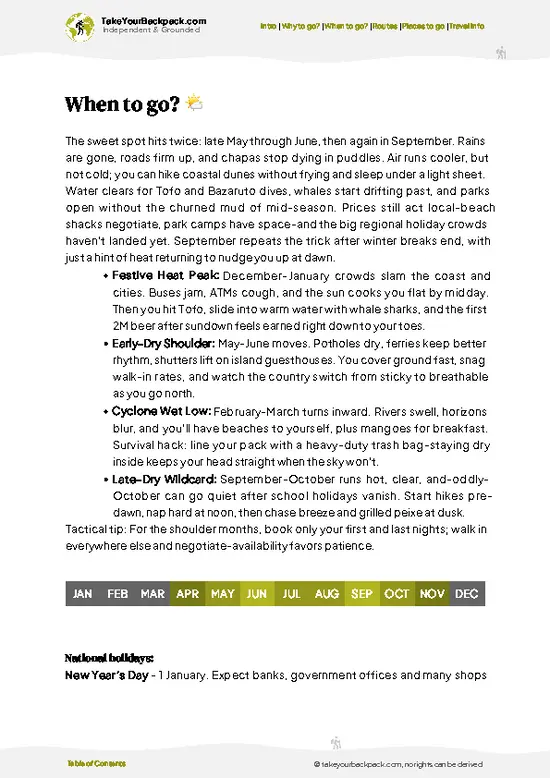
source: climatestotravel.comJANJanuary: fair for travelingFEBFebruary: fair for travelingMARMarch: fair for travelingAPRApril: fair for travelingMAYMay: highly recommended for travelingJUNJune: excellent for travelingJULJuly: excellent for travelingAUGAugust: excellent for travelingSEPSeptember: excellent for travelingOCTOctober: highly recommended for travelingNOVNovember: fair for travelingDECDecember: fair for traveling
when-to-go

✈️ The backpacker research shortcutMozambique Travel Guide

An offline-friendly backpacking guide with optimized travel routes, ranked highlights, transport advice, and the best areas to stay.
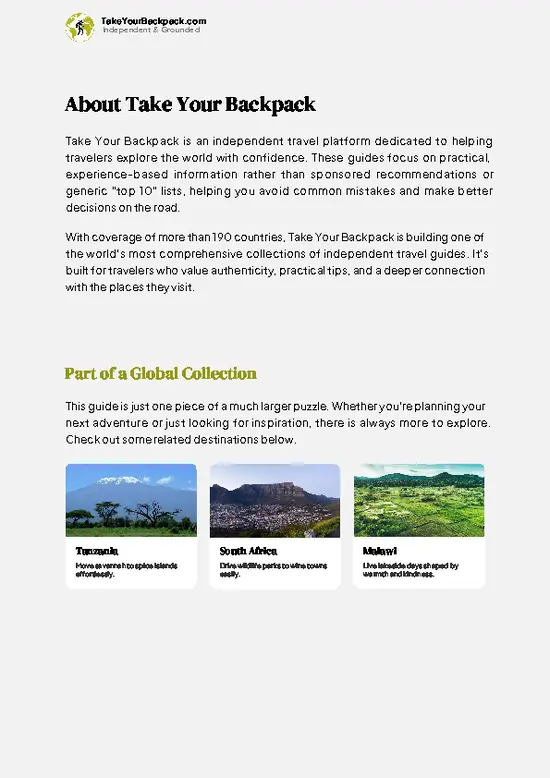
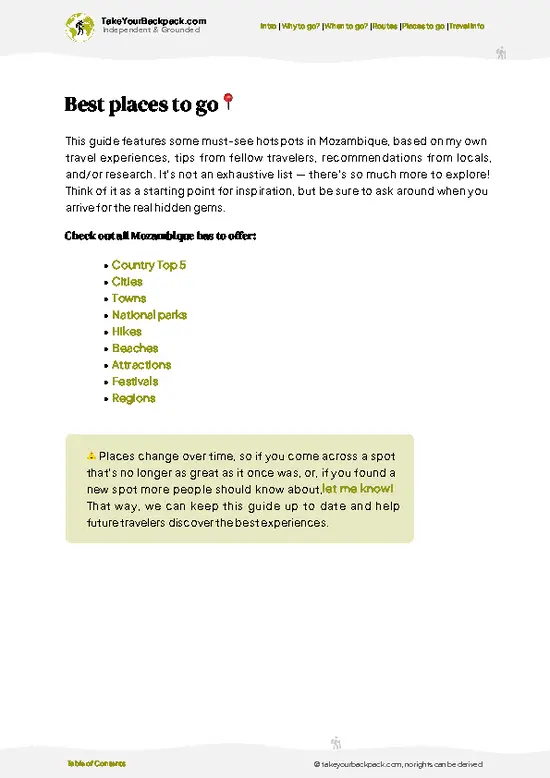
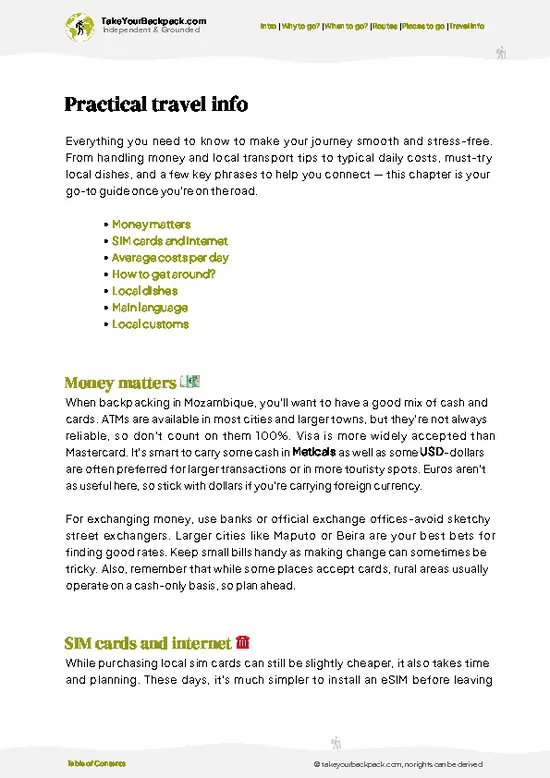
example page 0 from our offline Travel Guide for Mozambique
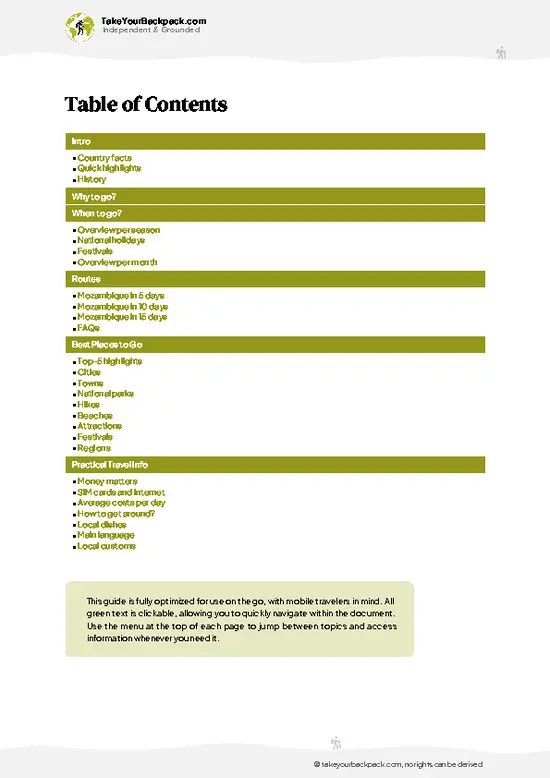
example page 1 from our offline Travel Guide for Mozambique
example page 2 from our offline Travel Guide for Mozambique
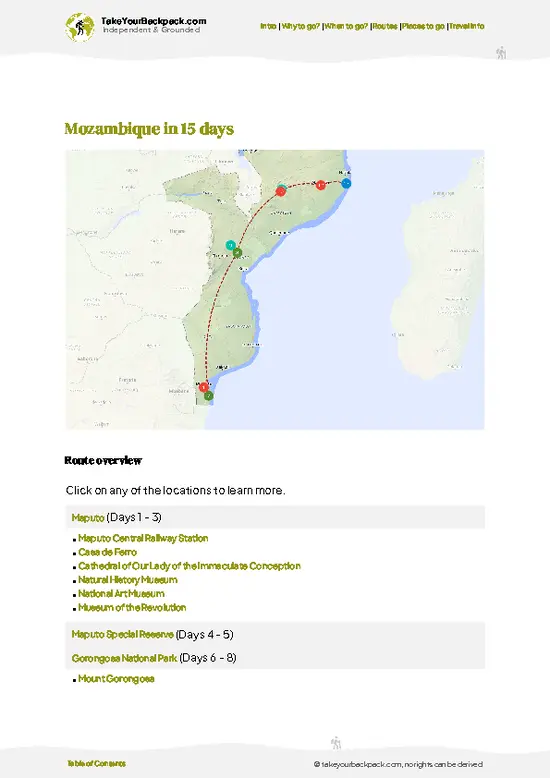
example page 3 from our offline Travel Guide for Mozambique
example page 4 from our offline Travel Guide for Mozambique
example page 5 from our offline Travel Guide for Mozambique
example page 6 from our offline Travel Guide for Mozambique
example page 7 from our offline Travel Guide for Mozambique
The digital guide (345 pages) contains:
86 highlights, ranked by travel appeal
Optimized 5, 10 & 15-day travel routes
Cities, national parks, landmarks, beaches
How to get around
Offline-friendly for travel without Wi-Fi
👉 Click to see all 30+ guide features

📅 Plan smarter in minutes, not weeks
Month by month travel advice
Festivals & national holidays
Budget expectations

🗺️ Go to the right places, skip the overrated ones
Honest pros & cons of destinations
Top hikes, parks & viewpoints
Lesser-known places most travelers miss
Clear “worth it vs skip it” guidance

🛏️ Travel smoothly without rookie mistakes
Best areas to stay
Transport systems explained simply
Common scams & safety advice
SIM cards, money & practical tips

🌍 Understand the country, not just visit it
Culture & traditions
52 Essential phrases & customs
Festivals worth planning around
Traveler-friendly historical context
Insights that make places more meaningful

📱 Built for real travel conditions
Fully downloadable PDF
Works completely offline
Optimized for phone use
Useful in remote areas & buses
Everything in one place
Save weeks of stressful planning
Get instant access to your full guide. 30‑day money-back guarantee.


By proceeding you agree to our terms.
Sent to your inbox immediately after payment • 100% Secure Checkout
Best Backpacking Travel Advisor 2025 tourism awardBest Backpacking
Travel Advisor
2025
What others say about Take Your Backpack Guides:
⭐⭐⭐⭐⭐
Fantastic, amazing amount of information!
⭐⭐⭐⭐⭐
My goodness this is amazing, it's what I've been looking for hats off too you!
⭐⭐⭐⭐⭐
I think this is absolutely BRILLIANT
⭐⭐⭐⭐
Very complete and informative. It's still missing places, but I gotta to commend you
⭐⭐⭐⭐⭐
This is truly amazing, thank you, can't wait to explore it with my kids!
⭐⭐⭐⭐⭐
Awesome resource, thank you!
⭐⭐⭐⭐⭐
This is amazing! Can't wait to explore the ones I haven't seen
⭐⭐⭐⭐
I love this! Well done, great idea.
⭐⭐⭐⭐⭐
Thanks for taking the time to make this gem!
⭐⭐⭐⭐⭐
This might be the best website I've ever seen.
⭐⭐⭐⭐⭐
Congratulations, and thank you so much for your work; it's incredibly valuable.
⭐⭐⭐⭐
In all seriousness I think you did a great job pointing out the important spots
⭐⭐⭐⭐⭐
10/10 very good
⭐⭐⭐⭐⭐
As someone who's only just starting to visit regularly this is awesome, thank you.
⭐⭐⭐⭐
Thank you very much! I'm going to visit my dad, it's going to be very useful!
⭐⭐⭐⭐⭐
This is really cool! We'll be travelling for the first time and this definitely come in handy.
⭐⭐⭐⭐⭐
You are now our minister of culture, congratulations 👨‍💼
⭐⭐⭐⭐⭐
Just wanted to tell you that this is a pearl! Going to follow your recommendations.
⭐⭐⭐⭐⭐
This is so cool. I'll definitely be using the resource for my travels soon.
⭐⭐⭐⭐⭐
This is very impressive! Good work.
⭐⭐⭐⭐⭐
This is an amazing and informative site. Very well done!

🛏️ Where to stay?How to pick the right area

In Quelimane, the best spot for backpackers is the city center, especially around Avenida 25 de Setembro. This area strikes a smart balance between safety and social buzz, making it a natural magnet for budget travelers and solo adventurers. You’ll find a handful of hostels and guesthouses here, which means easy access to fellow travelers without the isolation of more residential zones. The vibe is low-key but lively enough to keep you connected—street vendors, local cafés, and markets create a rhythm that’s both authentic and approachable.

Compared to the outskirts or more industrial parts of … read more 👉
In Quelimane, the best spot for backpackers is the city center, especially around Avenida 25 de Setembro. This area strikes a smart balance between safety and social buzz, making it a natural magnet for budget travelers and solo adventurers. You’ll find a handful of hostels and guesthouses here, which means easy access to fellow travelers without the isolation of more residential zones. The vibe is low-key but lively enough to keep you connected—street vendors, local cafés, and markets create a rhythm that’s both authentic and approachable.

Compared to the outskirts or more industrial parts of Quelimane, the center feels more secure and walkable, which is crucial when you’re carrying your gear and scouting for your next meal or transport option. It’s not flashy, but it’s real, and that’s where you get the best bang for your buck. Other neighborhoods tend to be quieter or less geared toward visitors, which can mean fewer social opportunities and more logistical headaches. So, if you want to maximize your time and comfort without blowing your budget, the city center is your strategic base camp.

🚌 Getting aroundHow to get around Quelimane

Quelimane moves at its own rhythm—neither a strict clockwork nor a free-for-all chaos. The city’s pulse is a blend of informal hustle and pockets of predictability. You won’t find a metro timetable etched in stone, but there’s a logic to the ebb and flow of transport here if you know where to look. It’s a place where patience and street smarts pay off, and where your choice of transit isn’t just about getting from A to B, but about how much time, money, and comfort you’re willing to trade for the experience.


  • Walking: The ultimate budget option and the best way to soak in Quelimane’s street life. It costs nothing, obviously, but expect to spend more time on your feet. The city center is compact enough to explore on foot, making this the most comfortable and flexible choice if you’re not
read more 👉
Quelimane moves at its own rhythm—neither a strict clockwork nor a free-for-all chaos. The city’s pulse is a blend of informal hustle and pockets of predictability. You won’t find a metro timetable etched in stone, but there’s a logic to the ebb and flow of transport here if you know where to look. It’s a place where patience and street smarts pay off, and where your choice of transit isn’t just about getting from A to B, but about how much time, money, and comfort you’re willing to trade for the experience.


  • Walking: The ultimate budget option and the best way to soak in Quelimane’s street life. It costs nothing, obviously, but expect to spend more time on your feet. The city center is compact enough to explore on foot, making this the most comfortable and flexible choice if you’re not in a rush.


  • Chapa Minibus: These shared minibuses are the backbone of local transit. They run roughly from dawn until early evening, with fares typically under $1 USD. They’re cheap and relatively fast but can get cramped and noisy. Comfort is minimal, but the trade-off is a genuine slice of daily life and a quick way to cover longer distances.


  • Tuk-Tuk: A step up in comfort and speed compared to walking and chapas, tuk-tuks offer door-to-door service. Prices vary but expect to pay a few dollars per trip. They’re perfect for short hops when you want to save time without breaking the bank. Tuk-tuks run all day, but negotiating fares upfront is key to avoid surprises.


  • Bicycle Rental: For the adventurous, renting a bike balances speed and cost. It’s cheaper than motorized options and faster than walking, with the added bonus of freedom to explore off the beaten path. Rentals are generally available during daylight hours, and you’ll need to be comfortable navigating uneven roads.


  • Taxi: The priciest option, taxis offer the most comfort and flexibility, especially if you’re traveling with luggage or in a group. They’re available 24/7 but expect to pay significantly more than other options. Use taxis when time is tight or when you want to avoid the unpredictability of public transport.


Understanding these trade-offs lets you play the city’s transit game smartly. You decide: save cash and time by hopping on a chapa, or spend a bit more for comfort and speed with a tuk-tuk or taxi. Walking keeps you grounded in the city’s texture but costs you time and energy. Each choice shapes your experience, so pick your moves like a strategist, not a tourist.

👛 Costs (as of 2 September 2025)How expensive it really is

Backpacking in Quelimane, Mozambique, offers a clear trade-off between cost and comfort, with prices that reflect its status as a less-touristed city in a developing country. Understanding these costs helps you decide where to economize and where to invest for a smoother experience.
  • Dorm Accommodation (High Season): Expect to pay around €8 to €12 per night. High season pushes prices up slightly due to demand, but options remain basic, often with shared bathrooms and limited amenities.
  • Dorm Accommodation (Off-Season): Prices drop to about €5 to €8 per night. Off-season travel here rewards you with quieter hostels and better bargaining power, though facilities stay modest.
  • Meals: Street food and local eateries dominate the scene, with typical meals costing between €1.50 and €3.50. For a mix
read more 👉
Backpacking in Quelimane, Mozambique, offers a clear trade-off between cost and comfort, with prices that reflect its status as a less-touristed city in a developing country. Understanding these costs helps you decide where to economize and where to invest for a smoother experience.
  • Dorm Accommodation (High Season): Expect to pay around €8 to €12 per night. High season pushes prices up slightly due to demand, but options remain basic, often with shared bathrooms and limited amenities.
  • Dorm Accommodation (Off-Season): Prices drop to about €5 to €8 per night. Off-season travel here rewards you with quieter hostels and better bargaining power, though facilities stay modest.
  • Meals: Street food and local eateries dominate the scene, with typical meals costing between €1.50 and €3.50. For a mix of local staples like matapa or grilled fish, budget around €3 to €5 if you opt for a sit-down restaurant.
  • Local Transport: Boda-bodas (motorbike taxis) and chapas (minibus taxis) are the norm. Individual rides usually cost €0.30 to €0.70 depending on distance. Budget about €1.50 to €3 daily if you move around moderately.
  • City Transport Pass: Quelimane doesn’t have a formal city transport pass system. Instead, rely on paying per ride, which keeps flexibility high but requires daily budgeting.
  • Basic Activities/Entry Fees: Cultural sites and local markets often have minimal or no entry fees. Expect to pay up to €2 for museum entries or guided tours, though many experiences are free if you explore on your own.
  • Miscellaneous Expenses: This includes bottled water, snacks, occasional tips, and small purchases. Allocate around €1 to €3 daily to cover these essentials without surprises.

Summing it up, a backpacker in Quelimane can expect to spend roughly €12 to €25 per day. The range depends heavily on your accommodation choice and how much you lean into local transport and dining options. This budget framework lets you weigh your priorities clearly: spend less and embrace simplicity, or invest a bit more for added comfort and convenience.


source: visitmozambique.net
⚠️ Prices can change and everyone travels differently, so take this as a rough guide. Hope it helps you plan your adventure!

🚌 Day tripsEasy escapes and nearby places

Quelimane serves as a fantastic launchpad for day trips that blend adventure with cultural immersion. Here’s how to make the most of your time without breaking the bank.

Ilha de Moçambique
A UNESCO World Heritage site, this island is a treasure trove of history and stunning coastal views. The ferry ride takes about an hour, and you’ll want to budget around $10 for the round trip. Once there, explore the old fort, wander through the narrow streets, and soak in the vibrant local culture. The best time to visit is during the dry season, from May to October, when the weather is perfect for wandering. A common mistake? Underestimating how much time you’ll want to spend soaking in the atmosphere—plan for a full day.
👉 Explore Ilha de Moçambique

Lugela River
Just a short drive from Quelimane, … read more 👉
Quelimane serves as a fantastic launchpad for day trips that blend adventure with cultural immersion. Here’s how to make the most of your time without breaking the bank.

Ilha de Moçambique
A UNESCO World Heritage site, this island is a treasure trove of history and stunning coastal views. The ferry ride takes about an hour, and you’ll want to budget around $10 for the round trip. Once there, explore the old fort, wander through the narrow streets, and soak in the vibrant local culture. The best time to visit is during the dry season, from May to October, when the weather is perfect for wandering. A common mistake? Underestimating how much time you’ll want to spend soaking in the atmosphere—plan for a full day.
👉 Explore Ilha de Moçambique

Lugela River
Just a short drive from Quelimane, the Lugela River offers a serene escape into nature. Expect about a 45-minute journey by shared taxi, costing around $5. Here, you can swim, picnic, or simply enjoy the lush surroundings. The river is particularly beautiful during the rainy season, from November to April, when the landscape is vibrant and alive. First-timers often miss the best swimming spots, so ask locals for their favorite places.


Chinde
This small town is a hidden gem, about an hour’s drive from Quelimane. For around $7, you can hop on a local bus and experience a slice of authentic Mozambican life. Chinde is known for its laid-back vibe and beautiful mangroves. Spend your day exploring the local market and enjoying fresh seafood. The best time to visit is during the cooler months, from May to September. Many travelers overlook the local cuisine, so don’t skip the chance to try the grilled fish!


Morrumbala
A bit further afield, Morrumbala is about a two-hour trip by bus, costing around $8. This area is rich in natural beauty and offers opportunities for hiking and birdwatching. The dry season is ideal for clear skies and comfortable temperatures. A common misstep is not bringing enough water and snacks for the journey, so stock up before you go.
Want to know what more Mozambique offers?
The Mozambique Travel Guide describes 86 highlights, from cities to national parks, from beaches to hikes

Get the Travel Guide -

🍲 FoodEating & Drinking in Quelimane

In Quelimane, the food scene is a vibrant tapestry of flavors that beckons every backpacker to dive in. Start with matapa, a local dish made from cassava leaves, often cooked with peanuts and coconut milk. It’s rich, creamy, and a must-try. Pair it with xima, a thick cornmeal porridge that’s the perfect vehicle for soaking up all that goodness.

Street food is where the magic happens. Vendors line the streets, grilling piri-piri chicken that sizzles with spice and smoke. Grab a skewer of chamuças, crispy pastries filled with meat or vegetables, and you’ll be in snack heaven. Markets buzz with life, offering fresh fruits like juicy mangoes and pineapples that are a refreshing escape from the heat.

When it comes to drinks, don’t miss out on coconut water straight from the shell. It’s hydrating … read more 👉
In Quelimane, the food scene is a vibrant tapestry of flavors that beckons every backpacker to dive in. Start with matapa, a local dish made from cassava leaves, often cooked with peanuts and coconut milk. It’s rich, creamy, and a must-try. Pair it with xima, a thick cornmeal porridge that’s the perfect vehicle for soaking up all that goodness.

Street food is where the magic happens. Vendors line the streets, grilling piri-piri chicken that sizzles with spice and smoke. Grab a skewer of chamuças, crispy pastries filled with meat or vegetables, and you’ll be in snack heaven. Markets buzz with life, offering fresh fruits like juicy mangoes and pineapples that are a refreshing escape from the heat.

When it comes to drinks, don’t miss out on coconut water straight from the shell. It’s hydrating and delicious. Locals often gather in bars to sip on 2M, a popular beer that pairs perfectly with the laid-back vibe.

Etiquette is simple: share your food and drinks. It’s a way to connect. So, embrace the communal spirit, and let the flavors of Quelimane guide your adventure.

🛡️ SafetyStaying Safe: What Travelers Should Know

Quelimane is generally safe for travelers, but a few situational awareness tips can enhance your experience. Stick to well-lit areas at night, especially if you’re solo. The waterfront can be charming, but it’s best to explore during the day.

Watch for common scams, like overly friendly locals offering unsolicited help or guiding you to shops where they receive a commission. Politely decline and trust your instincts.

Street vendors can be persistent, but a friendly smile and a firm “no, thank you” usually do the trick. Carry your belongings close, especially in crowded markets.

Overall, approach Quelimane with an open mind and a bit of caution, and you’ll find it welcoming. Enjoy the local culture and the vibrant atmosphere without letting minor annoyances dampen your adventure.

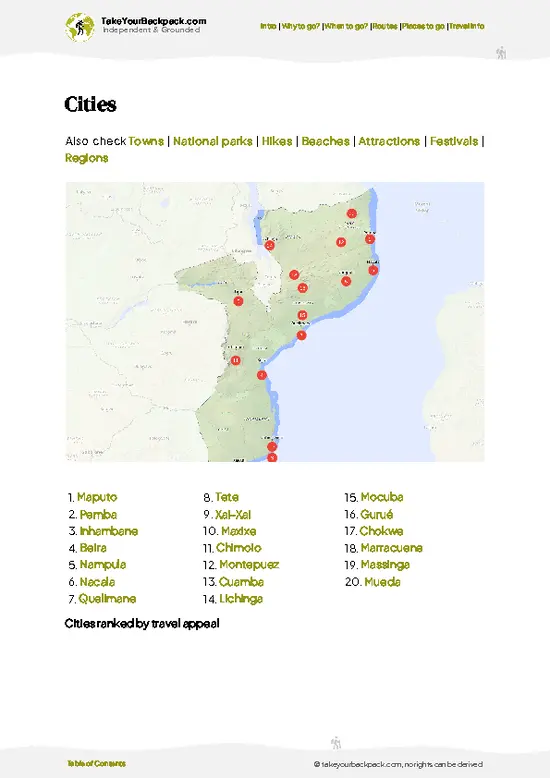
Other Mozambican cities near Quelimane

Explore more nearby:

  • Mocuba—Licungo River, textile industry, rural crossroads| 112 km away
  • Gurué—tea estates, mountain backdrop, cool climate| 265 km away
  • Dondo—railway workshops, industrial zone, river proximity| 302 km away

💡 Not sure where to go next?
Create a personalized itinerary for Mozambique including Quelimane and the places that fit your trip.

Generate my itinerary

👉 Discover all cities

Or checkout all Mozambique has to offer (think cities, towns, villages, national parks, hikes, beaches, festivals)
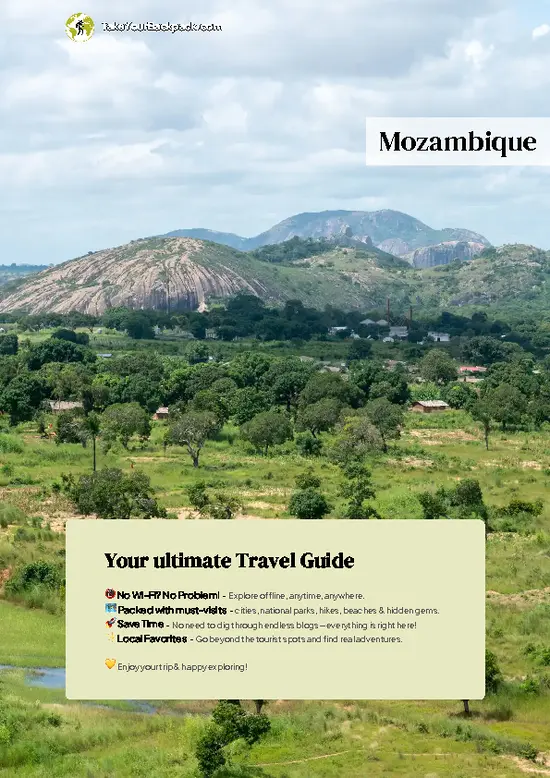
Country photo of Mozambique

We 💚 feedbackSumming up the experience

Quelimane has a laid-back vibe that feels like a secret you’re lucky to stumble upon. The best surprise? The local seafood markets—fresh catches that make your taste buds dance. Just be ready for the heat; it can be intense, so hydrate often. Embrace the slower pace; it’s part of the charm. This isn’t a place for a packed itinerary, but for savoring moments. Trust me, you’ll leave with stories that linger longer than the sunburn.

✍️ Help improve this page!
The information on this page is based on in-depth research, insights shared by experienced travelers, and feedback from the local travel community in Mozambique. While every effort is made to keep the information accurate and current, conditions can change — so if you spot anything incorrect or outdated, please get in touch.


🙋‍♂️ Give feedback

👋 Meet the founderWho’s Behind Take Your Backpack?

Johan, backpacker and founder of TakeYourBackpackHi, I’m Johan (Netherlands 🇳🇱), the creator of TakeYourBackpack. Over the past decade, I’ve backpacked through 80+ countries across six continents, gaining extensive experience with independent travel, long-term trips, and overland routes.

This site is built on a combination of firsthand travel experience and carefully curated insights from other backpackers. Many guides are based on places I’ve personally visited, while others bring together tips, observations, and practical advice shared by trusted travelers I’ve met along the way.

The goal is to provide realistic, experience-driven guidance — not generic itineraries — so you can explore destinations with better context, clearer expectations, and more confidence.

Get full Mozambique guide •
Instant download • 86 highlights • Full Offline guide