
×

Mozambique🇲🇿 | beachesBenguerra IslandBazaruto reefs, tall dunes, dhow hops, village lanes | things to do and best time to go

Explore Bazaruto ArchipelagoExplore Pomene

Backpacking in Benguerra Island
🏆 Top pickbeach ranked #2
By Johan Kruseman 🇳🇱 | Updated October 22, 2026

Warm sand squeaks under your sandals as a dhow glides in, its triangular sail slack, and the Indian Ocean is the color of a swimming pool. That's the pace here. Benguerra Island beach lies off the coast of Mozambique, in the Bazaruto Archipelago, a boat ride east of Vilankulo. The sand is clean, the dunes are tall, and the snorkeling and diving over the reefs are the best on this stretch of coast. Swimming is easy at high tide, and crowds are thin because lodges dominate the shoreline. The cost is real: the island is pricey, there is no surf worth chasing, and cheap beds and food exist only in the small village areas. Skip the resort strips and walk the wild stretches. Divers, snorkelers and beachcombers will love it. Party seekers and tight budgets won't.

Discover everything you want to know in the 📖 Mozambique Travel Guide.


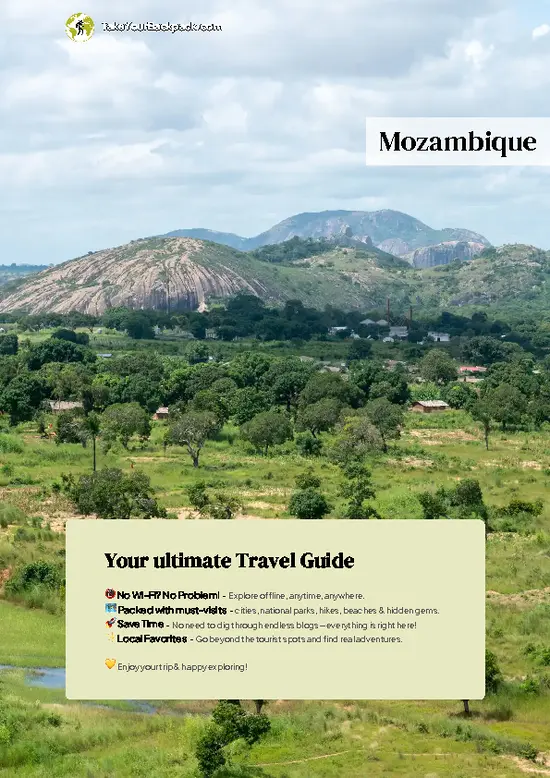
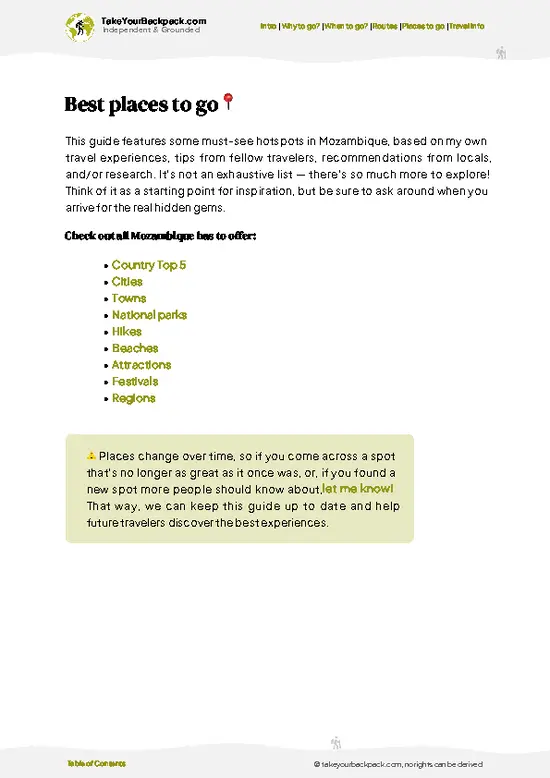
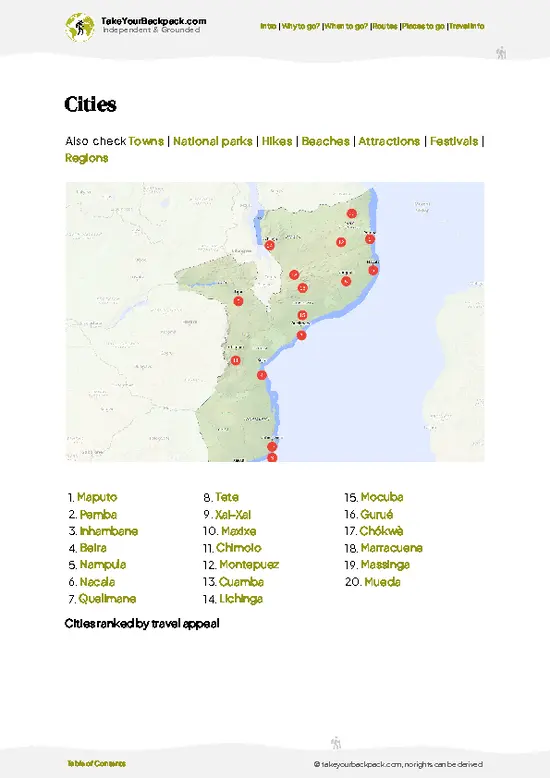
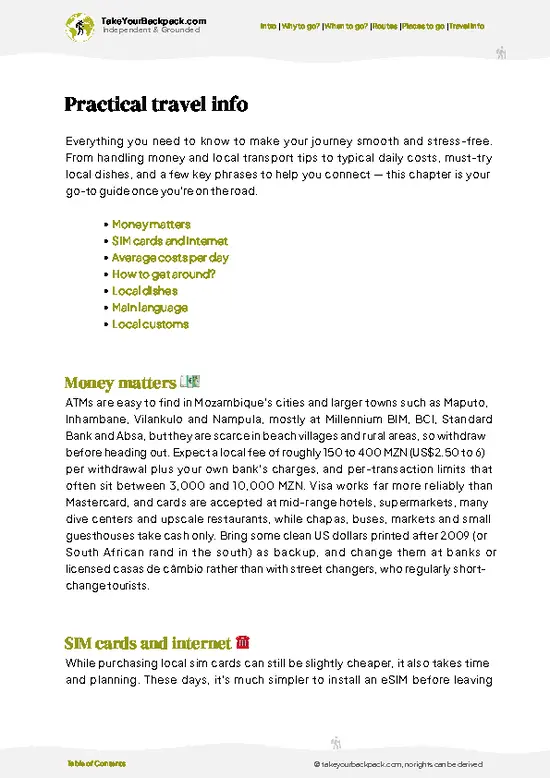
example page 0 from our offline Travel Guide for Mozambique
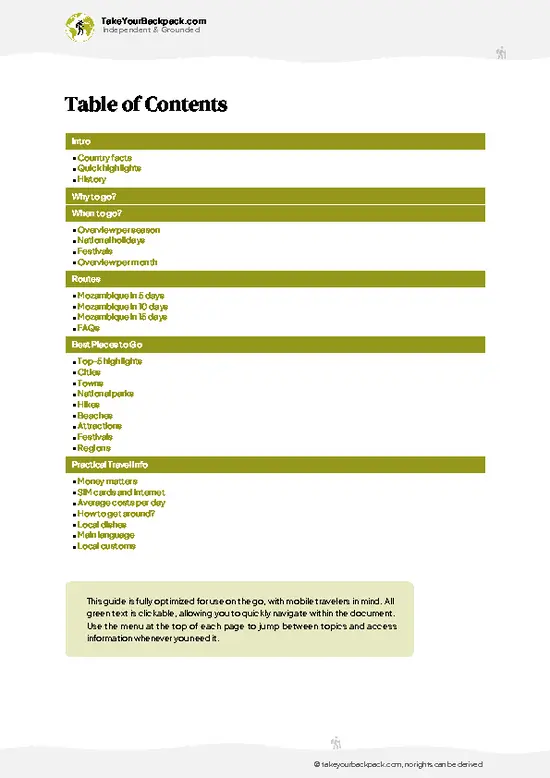
example page 1 from our offline Travel Guide for Mozambique
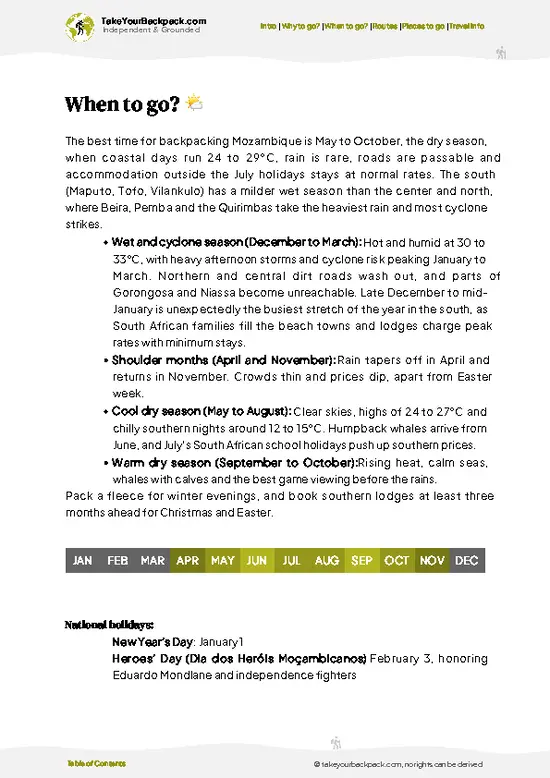
example page 2 from our offline Travel Guide for Mozambique
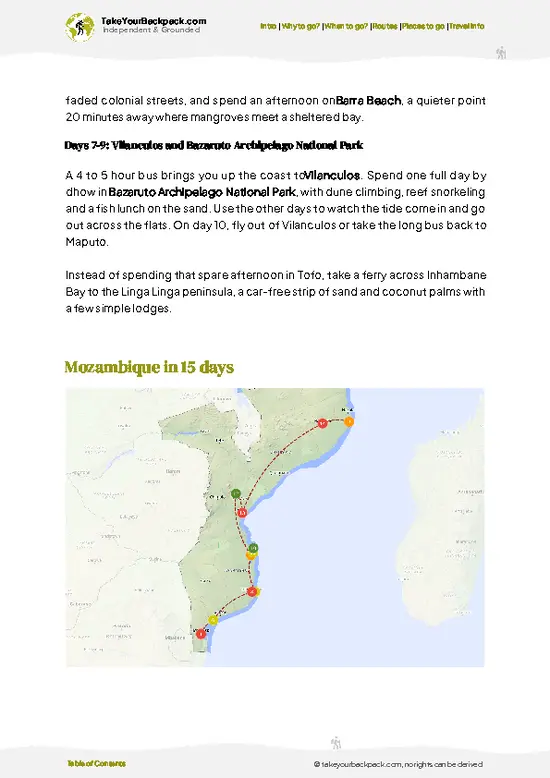
example page 3 from our offline Travel Guide for Mozambique
example page 4 from our offline Travel Guide for Mozambique
example page 5 from our offline Travel Guide for Mozambique
example page 6 from our offline Travel Guide for Mozambique
example page 7 from our offline Travel Guide for Mozambique
Loading the map 🌍
CLICK TO FILTER
cities
towns
national parks
hikes
beaches
attractions
festivals
regions
SHOW COUNTRY’S BESTSHOW ALL

✨ Why go?
Ranked #2 beach in Mozambique
Why visitors keep coming back

Benguerra Island beach draws backpackers who want the Bazaruto Archipelago’s reefs without a luxury-lodge bill, and who are willing to plan a little for it. The water is the reason. Offshore coral gardens hold parrotfish, moray eels and turtles, and the channels between islands produce dolphin sightings that locals treat as routine. Day trips by dhow from the mainland make the island reachable without a long commitment.

The second reason is the landscape. Behind the shoreline, towering dunes and freshwater lakes give you something to climb and explore once you’ve had enough of the sea. Walking inland, you pass small villages where fishing families still build wooden dhows by hand.

The third is contrast. After the mainland’s dusty roads and busy markets, the island is quiet, with no traffic … read more 👉
Benguerra Island beach draws backpackers who want the Bazaruto Archipelago’s reefs without a luxury-lodge bill, and who are willing to plan a little for it. The water is the reason. Offshore coral gardens hold parrotfish, moray eels and turtles, and the channels between islands produce dolphin sightings that locals treat as routine. Day trips by dhow from the mainland make the island reachable without a long commitment.

The second reason is the landscape. Behind the shoreline, towering dunes and freshwater lakes give you something to climb and explore once you’ve had enough of the sea. Walking inland, you pass small villages where fishing families still build wooden dhows by hand.

The third is contrast. After the mainland’s dusty roads and busy markets, the island is quiet, with no traffic and almost no noise. It works best as a deliberate pause, a couple of days of swimming and sand before you head back to the coastal highway.

💡 HighlightsMust-see experiences and standout moments

  1. Snorkeling the Bazaruto reefs: Boats take you to coral formations just offshore where visibility is often good. You can expect reef fish in large numbers, and turtles are a regular sight.
  2. Diving the archipelago: Dive operators on the island run trips to nearby reefs and drop-offs. Rays, large pelagic fish and healthy coral make it a serious draw for certified divers.
  3. Dhow sailing: A traditional wooden dhow with a triangular sail is the classic way to move between islands. Sailing at a slow pace, you see the coastline from the water and can stop at sandbanks for a swim.
  4. The island’s big dunes: Climbing the high sand ridges behind the beach gives wide views over the channel and the neighboring islands. Go early or late, when the sand is cooler underfoot.
  5. Village walks: Walking through the island’s
… read more 👉
  1. Snorkeling the Bazaruto reefs: Boats take you to coral formations just offshore where visibility is often good. You can expect reef fish in large numbers, and turtles are a regular sight.
  2. Diving the archipelago: Dive operators on the island run trips to nearby reefs and drop-offs. Rays, large pelagic fish and healthy coral make it a serious draw for certified divers.
  3. Dhow sailing: A traditional wooden dhow with a triangular sail is the classic way to move between islands. Sailing at a slow pace, you see the coastline from the water and can stop at sandbanks for a swim.
  4. The island’s big dunes: Climbing the high sand ridges behind the beach gives wide views over the channel and the neighboring islands. Go early or late, when the sand is cooler underfoot.
  5. Village walks: Walking through the island’s small settlements shows you daily life, from fishermen mending nets to boat builders at work. Greet people first, and ask before taking photos.
Benguerra Island beach can be covered in two full days, though one day of snorkeling plus a dune walk gives you the highlights.
Spotted a mistake or missing something? Contact us.

🌤️ When to go?Best time to visit Benguerra Island

  • Cool Dry Season (May to September): Days run 24 to 28°C (75 to 82°F) with cool evenings near 16 to 19°C (61 to 66°F), little rain, and calmer, clearer water for diving and snorkeling in the Bazaruto archipelago. Whale sharks and humpbacks are seen from roughly June to October. Daylight lasts about 11 hours.
  • Warm Shoulder (October to November): Temperatures climb to 26 to 31°C (79 to 88°F), crowds thin, and lodges often drop rates by 10 to 20 percent. Showers start late in the period.
  • Hot Wet Season (December to March): Expect 29 to 33°C (84 to 91°F), heavy humidity, and sharp afternoon downpours. Daylight stretches to about 13.5 hours. Cyclone risk peaks January to March, boat transfers can be canceled, and some camps close.
  • Holiday Peak (July and December to early January): South African school
… read more 👉
  • Cool Dry Season (May to September): Days run 24 to 28°C (75 to 82°F) with cool evenings near 16 to 19°C (61 to 66°F), little rain, and calmer, clearer water for diving and snorkeling in the Bazaruto archipelago. Whale sharks and humpbacks are seen from roughly June to October. Daylight lasts about 11 hours.
  • Warm Shoulder (October to November): Temperatures climb to 26 to 31°C (79 to 88°F), crowds thin, and lodges often drop rates by 10 to 20 percent. Showers start late in the period.
  • Hot Wet Season (December to March): Expect 29 to 33°C (84 to 91°F), heavy humidity, and sharp afternoon downpours. Daylight stretches to about 13.5 hours. Cyclone risk peaks January to March, boat transfers can be canceled, and some camps close.
  • Holiday Peak (July and December to early January): South African school breaks fill beds and push prices up 20 to 40 percent.
Book August and September a few months ahead, since the small number of beds on the island sells out before the mainland does.


source: climatestotravel.comJANJanuary: fair for travelingFEBFebruary: fair for travelingMARMarch: fair for travelingAPRApril: fair for travelingMAYMay: excellent for travelingJUNJune: highly recommended for travelingJULJuly: highly recommended for travelingAUGAugust: highly recommended for travelingSEPSeptember: excellent for travelingOCTOctober: highly recommended for travelingNOVNovember: fair for travelingDECDecember: fair for traveling
when-to-go

✈️ The backpacker research shortcutMozambique Travel Guide

An offline-friendly backpacking guide with optimized travel routes, ranked highlights, transport advice, and the best areas to stay.
example page 0 from our offline Travel Guide for Mozambique
example page 1 from our offline Travel Guide for Mozambique
example page 2 from our offline Travel Guide for Mozambique
example page 3 from our offline Travel Guide for Mozambique
example page 4 from our offline Travel Guide for Mozambique
example page 5 from our offline Travel Guide for Mozambique
example page 6 from our offline Travel Guide for Mozambique
example page 7 from our offline Travel Guide for Mozambique
The digital guide (324 pages) contains:
✅ 78 highlights, ranked by travel appeal
✅ Optimized 5, 10 & 15-day travel routes
✅ Cities, national parks, landmarks, beaches
✅ How to get around
✅ Offline-friendly for travel without Wi-Fi
👉 Click to see all 30+ guide features

📅 Plan smarter in minutes, not weeks
✅ Month by month travel advice
✅ Festivals & national holidays
✅ Budget expectations

🗺️ Go to the right places, skip the overrated ones
✅ Honest pros & cons of destinations
✅ Top hikes, parks & viewpoints
✅ Lesser-known places most travelers miss
✅ Clear “worth it vs skip it” guidance

🛏️ Travel smoothly without rookie mistakes
✅ Best areas to stay
✅ Transport systems explained simply
✅ Common scams & safety advice
✅ SIM cards, money & practical tips

🌍 Understand the country, not just visit it
✅ Culture & traditions
✅ 52 Essential phrases & customs
✅ Festivals worth planning around
✅ Traveler-friendly historical context
✅ Insights that make places more meaningful

📱 Built for real travel conditions
✅ Fully downloadable PDF
✅ Works completely offline
✅ Optimized for phone use
✅ Useful in remote areas & buses
✅ Everything in one place
Stop searching, start planning
Get instant access to your full guide. 30‑day money-back guarantee.
+ Add another guide for just

By proceeding you agree to our terms.
Sent to your inbox immediately after payment • 100% Secure Checkout
Best Backpacking Travel Advisor 2025 tourism awardBest Backpacking
Travel Advisor
2025
What others say about Take Your Backpack Guides:
⭐⭐⭐⭐⭐
Fantastic, amazing amount of information!
⭐⭐⭐⭐⭐
My goodness this is amazing, it's what I've been looking for hats off too you!
⭐⭐⭐⭐⭐
I think this is absolutely BRILLIANT
⭐⭐⭐⭐
Very complete and informative. It's still missing places, but I gotta to commend you
⭐⭐⭐⭐⭐
This is truly amazing, thank you, can't wait to explore it with my kids!
⭐⭐⭐⭐⭐
Awesome resource, thank you!
⭐⭐⭐⭐⭐
This is amazing! Can't wait to explore the ones I haven't seen
⭐⭐⭐⭐
I love this! Well done, great idea.
⭐⭐⭐⭐⭐
Thanks for taking the time to make this gem!
⭐⭐⭐⭐⭐
This might be the best website I've ever seen.
⭐⭐⭐⭐⭐
Congratulations, and thank you so much for your work; it's incredibly valuable.
⭐⭐⭐⭐
In all seriousness I think you did a great job pointing out the important spots
⭐⭐⭐⭐⭐
10/10 very good
⭐⭐⭐⭐⭐
As someone who's only just starting to visit regularly this is awesome, thank you.
⭐⭐⭐⭐
Thank you very much! I'm going to visit my dad, it's going to be very useful!
⭐⭐⭐⭐⭐
This is really cool! We'll be travelling for the first time and this definitely come in handy.
⭐⭐⭐⭐⭐
You are now our minister of culture, congratulations 👨‍💼
⭐⭐⭐⭐⭐
Just wanted to tell you that this is a pearl! Going to follow your recommendations.
⭐⭐⭐⭐⭐
This is so cool. I'll definitely be using the resource for my travels soon.
⭐⭐⭐⭐⭐
This is very impressive! Good work.
⭐⭐⭐⭐⭐
This is an amazing and informative site. Very well done!

🛏️ Where to stay?How to pick the right area

The best base for backpackers is the stretch of eastern shore around the island’s main lodge strip, and the second option is the western village side facing the mainland channel. Here is how the two compare.
The eastern coast has the open Indian Ocean beach, dune walks and the best swimming. Accommodation here is mostly small lodges and self-catering cottages, so budget travelers do better sharing a unit with other travelers or booking a simple room off-season. Expect US$40 to 100 per person in low season, and far more in peak months. Evenings are quiet, with few bars, so socializing happens over … read more 👉
The best base for backpackers is the stretch of eastern shore around the island’s main lodge strip, and the second option is the western village side facing the mainland channel. Here is how the two compare.
The eastern coast has the open Indian Ocean beach, dune walks and the best swimming. Accommodation here is mostly small lodges and self-catering cottages, so budget travelers do better sharing a unit with other travelers or booking a simple room off-season. Expect US$40 to 100 per person in low season, and far more in peak months. Evenings are quiet, with few bars, so socializing happens over shared boat trips and communal dinners.
The western side near the local villages is cheaper and more down to earth. Fishing dhows pull up on the sand, small shops sell basics, and you can eat grilled fish cooked by residents for roughly US$4 to 8. Simple guesthouses and a few camping spots sit here, with rooms often around US$25 to 50. It is the more authentic option, though facilities are thin and electricity can be limited.
Many backpackers base themselves on the mainland at Vilankulo, where hostels are social and dorms cost about US$12 to 20, then take day boats across. That works well if the island’s prices stretch your budget.

🛡️ SafetyTraveler Safety Guide

Benguerra is a calm, low-crime island where the main concerns are sun, tides and the occasional stinging critter. The eastern ocean beach shelves quickly in places and can carry a pull on the outgoing tide, so swim on the calmer, sheltered side or near the lodges and ask staff where the water is gentlest. The western channel side has strong tidal flow and shallow sandbars that vanish and reappear, so check the tide before wading far out. Jellyfish and blue bottles wash up occasionally, and sea urchins and sharp coral sit on the reefs, so wear reef shoes when snorkeling. Sharks are rarely a problem close to shore. The sun is intense year-round, especially from October to March, so cover up between late morning and mid-afternoon and carry plenty of water, since shade is limited on the dunes. … read more 👉
Benguerra is a calm, low-crime island where the main concerns are sun, tides and the occasional stinging critter. The eastern ocean beach shelves quickly in places and can carry a pull on the outgoing tide, so swim on the calmer, sheltered side or near the lodges and ask staff where the water is gentlest. The western channel side has strong tidal flow and shallow sandbars that vanish and reappear, so check the tide before wading far out. Jellyfish and blue bottles wash up occasionally, and sea urchins and sharp coral sit on the reefs, so wear reef shoes when snorkeling. Sharks are rarely a problem close to shore. The sun is intense year-round, especially from October to March, so cover up between late morning and mid-afternoon and carry plenty of water, since shade is limited on the dunes. Theft is uncommon, but keep valuables out of sight on boats and in unlocked rooms. Walk dune tracks in daylight, and stay clear of the island’s crocodile lakes.

FAQTraveler FAQ

Most travelers reach Benguerra Island beach by boat from Vilankulo on the mainland, a trip of about 45 minutes to 1.5 hours depending on the vessel and tide. Lodge transfers by speedboat typically cost US$50 to 120 return, while shared local dhows are cheaper but slower. Vilankulo has an airport with flights from Maputo and Johannesburg, and buses on the EN1 highway run from Maputo in about 12 to 14 hours.
Benguerra Island beach is good for swimming, snorkeling and diving, and fair for surfing only when ocean swell lifts, which is uncommon. Snorkeling and diving tours around the Bazaruto archipelago run about US$60 to 120 and are best from May to October when visibility is strongest. Swim on the sheltered side and watch tides, since sandbars and currents change quickly. Beginner kitesurfing and sailing are also offered by some operators.
Benguerra Island beach itself is free to visit, but the island lies within Bazaruto Archipelago National Park, which charges a conservation fee of roughly US$5 to 15 per person per day, often included in boat or lodge bookings. Boat transfers from Vilankulo are the main cost, at around US$50 to 120 return. Local villagers sell fish and handicrafts for a few dollars, and you pay in meticais or sometimes US dollars.
⚠️ Things can change over time, so always validate details locally before you go.

Other Mozambican beaches near Benguerra Island

Explore more nearby:

  • Bazaruto Archipelago—dune islands, turquoise lagoons, dugong habitat| 12 km away
  • Vilankulo Beach—Dhow departures, wide tidal flats, Two Mile Reef, football sunsets| 18 km away
  • Pomene—Reserve peninsula, mangrove channels, 4x4 access, dune camps| 116 km away

💡 Not sure where to go next?
Create a personalized itinerary for Mozambique including Benguerra Island and the places that fit your trip.

Generate my itinerary

👉 Discover all beaches

Or checkout all Mozambique has to offer (think cities, towns, villages, national parks, hikes, beaches, festivals)
Country photo of Mozambique

We 💚 feedbackFinal thoughts on visiting Benguerra Island

Benguerra Island beach fits best as a short island break between stops along the Mozambican coast, with Vilankulo as the natural gateway and a further beach town to the south for the rest of your route. I would plan two nights, book snorkeling early, and bring cash, reef-safe sunscreen and your own snacks.

✍️ Help improve this page!
The information on this page is based on in-depth research, insights shared by experienced travelers, and feedback from the local travel community in Mozambique. While every effort is made to keep the information accurate and current, conditions can change — so if you spot anything incorrect or outdated, please get in touch.


🙋‍♂️ Give feedback

👋 Meet the founderWho’s Behind Take Your Backpack?

Johan, backpacker and founder of TakeYourBackpackHi, I’m Johan (Netherlands 🇳🇱), the creator of TakeYourBackpack. Over the past 3 decades, I’ve backpacked through 90+ countries across six continents, gaining extensive experience with independent travel, long-term trips, and overland routes.

This site is built on a combination of firsthand travel experience and carefully curated insights from other backpackers. Many guides are based on places I’ve personally visited, while others bring together tips, observations, and practical advice shared by trusted travelers I’ve met along the way.

The goal is to provide realistic, experience-driven guidance — not generic itineraries — so you can explore destinations with better context, clearer expectations, and more confidence.