×

Mozambique🇲🇿 | beachesPomeneReserve peninsula, mangrove channels, 4x4 access, dune camps | things to do and best time to go

Explore Benguerra IslandExplore Ponta do Ouro

Backpacking in Pomene
👌 Worth visitingbeach ranked #7
By Johan Kruseman 🇳🇱 | Updated October 22, 2026

Your 4x4 grinds through the last soft sand, the casuarinas open up, and the Indian Ocean hits you with salt and the smell of wet mangrove. Pomene beach sits on the Inhambane coast of Mozambique, on a peninsula inside Pomene National Reserve, north of Massinga. It is not crowded, and that is the point. Getting here takes a high-clearance vehicle, camping and lodges cost more than mainland backpacker dives, and food options are thin, so bring supplies. The payoff is empty sand, warm water, mangrove channels to paddle and reef to snorkel. Your first day could go like this: pitch your tent, walk the beach to the lagoon edge, snorkel at low tide, then watch the fishermen haul in at dusk.

Discover everything you want to know in the 📖 Mozambique Travel Guide.


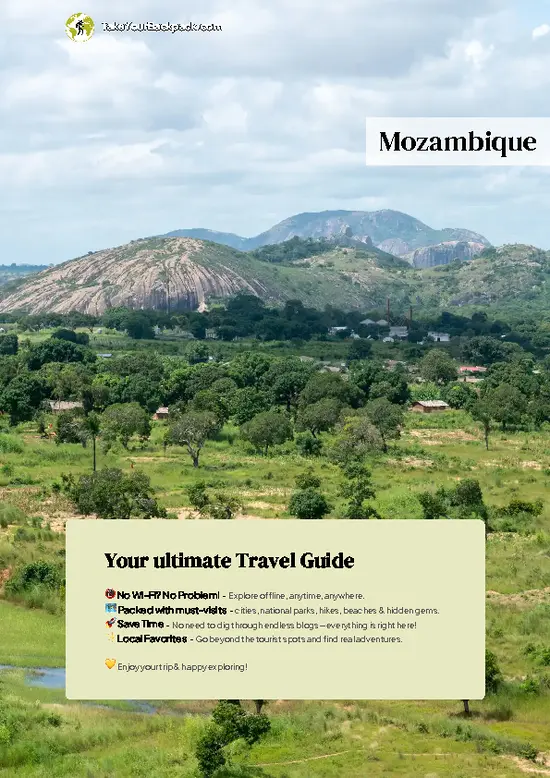
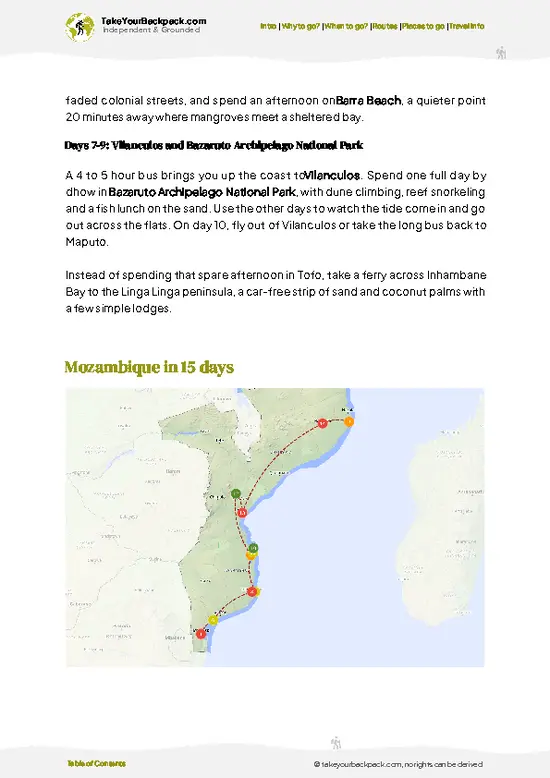
example page 0 from our offline Travel Guide for Mozambique
example page 1 from our offline Travel Guide for Mozambique
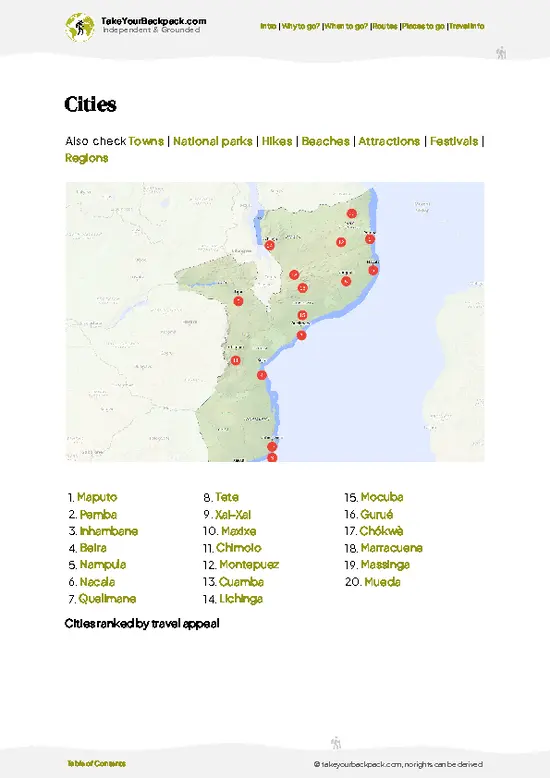
example page 2 from our offline Travel Guide for Mozambique
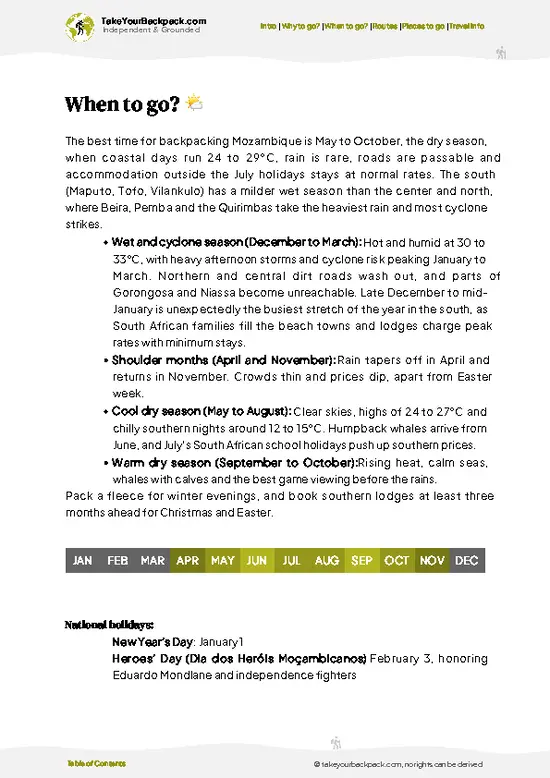
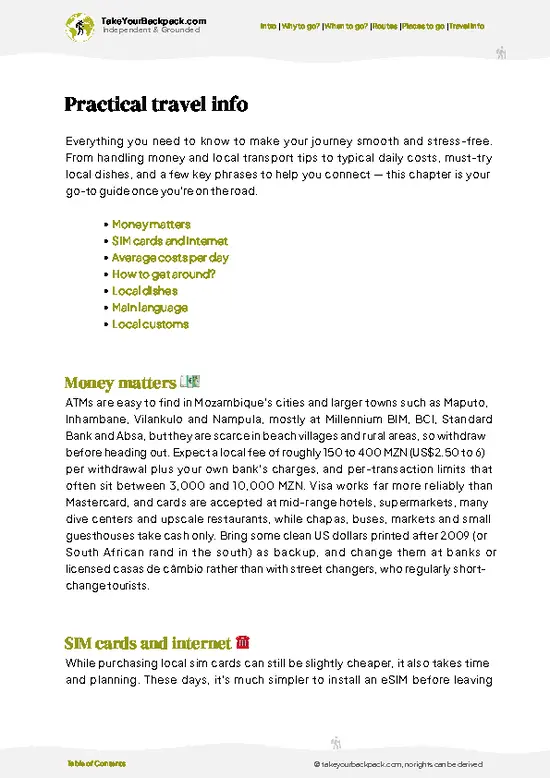
example page 3 from our offline Travel Guide for Mozambique
example page 4 from our offline Travel Guide for Mozambique
example page 5 from our offline Travel Guide for Mozambique
example page 6 from our offline Travel Guide for Mozambique
example page 7 from our offline Travel Guide for Mozambique
Loading the map 🌍
CLICK TO FILTER
cities
towns
national parks
hikes
beaches
attractions
festivals
regions
SHOW COUNTRY’S BESTSHOW ALL

✨ Why go?
Ranked #7 beach in Mozambique
What sets this place apart

Pomene beach pulls in backpackers who want to disconnect from the Inhambane tourist trail without leaving the coast. The first reason is the setting: a narrow strip of land between the open ocean on one side and a mangrove-fringed estuary on the other, so you can surf-gaze, paddle and walk within a few hundred meters. The second is the quiet. Overnight guests are few, the camp sites sit among dune forest, and evenings revolve around a fire, a few other travelers and a sky with almost no light pollution. The third is the wildlife and sea access: the reserve protects dunes, wetlands and Pomene National Reserve’s birdlife, and the reef offshore gives you snorkeling and, in season, whale and dolphin sightings from the shore. It works best as a two or three night pause on the long coastal run between … read more 👉
Pomene beach pulls in backpackers who want to disconnect from the Inhambane tourist trail without leaving the coast. The first reason is the setting: a narrow strip of land between the open ocean on one side and a mangrove-fringed estuary on the other, so you can surf-gaze, paddle and walk within a few hundred meters. The second is the quiet. Overnight guests are few, the camp sites sit among dune forest, and evenings revolve around a fire, a few other travelers and a sky with almost no light pollution. The third is the wildlife and sea access: the reserve protects dunes, wetlands and Pomene National Reserve’s birdlife, and the reef offshore gives you snorkeling and, in season, whale and dolphin sightings from the shore. It works best as a two or three night pause on the long coastal run between Maxixe and Vilankulo, when you want to swap towns for sand.

💡 HighlightsEssential experiences to have while visiting Pomene

  1. Pomene Beach Walk: the long, wide sweep of pale sand backed by dune forest is the reason people come. Walk it at low tide when the flats open up and shells and crab trails cover the sand.
  2. Snorkeling the Offshore Reef: warm, often clear water and patches of coral hold reef fish and the occasional turtle. Go on a calm morning with your own mask or rent one from a lodge.
  3. Mangrove Estuary Paddle: the sheltered channels behind the peninsula are ideal for a kayak or a boat trip among mangroves, with kingfishers, herons and other waders along the banks.
  4. Whale and Dolphin Watching: humpback whales pass offshore in the southern winter months, and dolphins can show up at any time of year. Climb a dune for a wide view and bring binoculars.
  5. Evening Fire and Stargazing: with no town glow, the Milky Way is
… read more 👉
  1. Pomene Beach Walk: the long, wide sweep of pale sand backed by dune forest is the reason people come. Walk it at low tide when the flats open up and shells and crab trails cover the sand.
  2. Snorkeling the Offshore Reef: warm, often clear water and patches of coral hold reef fish and the occasional turtle. Go on a calm morning with your own mask or rent one from a lodge.
  3. Mangrove Estuary Paddle: the sheltered channels behind the peninsula are ideal for a kayak or a boat trip among mangroves, with kingfishers, herons and other waders along the banks.
  4. Whale and Dolphin Watching: humpback whales pass offshore in the southern winter months, and dolphins can show up at any time of year. Climb a dune for a wide view and bring binoculars.
  5. Evening Fire and Stargazing: with no town glow, the Milky Way is sharp over the dune camps. Fishermen bring in their catch at dusk, and a campfire with grilled fish is the standard night out.
For a first visit, start with the Pomene Beach Walk, because it shows you the ocean, dunes and estuary in one go.
Spotted a mistake or missing something? Contact us.

🌤️ When to go?Weather, crowds, and seasonal trade-offs

  • Dry Season (May to September): Days run 24 to 28°C (75 to 82°F) with cool nights near 15 to 18°C (59 to 64°F), little rain and calm seas. Daylight lasts about 11 hours, so plan beach and dune walks for the morning.
  • Hot Wet Season (November to March): Expect 28 to 33°C (82 to 91°F), thick humidity and afternoon downpours. Daylight stretches to roughly 13.5 hours. Roads to the beach turn to soft sand and mud, and cyclone swells can churn the water.
  • Shoulder Months (April, October): Temperatures sit around 25 to 30°C (77 to 86°F) with lighter showers and thin crowds.
  • South African Holidays (July, December and Easter): Overlanders and fishing groups fill the camping areas, and rates rise by 20 to 40 percent.
  • Whale Season (July to October): Humpbacks pass offshore, and dolphin sightings are common.
… read more 👉
  • Dry Season (May to September): Days run 24 to 28°C (75 to 82°F) with cool nights near 15 to 18°C (59 to 64°F), little rain and calm seas. Daylight lasts about 11 hours, so plan beach and dune walks for the morning.
  • Hot Wet Season (November to March): Expect 28 to 33°C (82 to 91°F), thick humidity and afternoon downpours. Daylight stretches to roughly 13.5 hours. Roads to the beach turn to soft sand and mud, and cyclone swells can churn the water.
  • Shoulder Months (April, October): Temperatures sit around 25 to 30°C (77 to 86°F) with lighter showers and thin crowds.
  • South African Holidays (July, December and Easter): Overlanders and fishing groups fill the camping areas, and rates rise by 20 to 40 percent.
  • Whale Season (July to October): Humpbacks pass offshore, and dolphin sightings are common.
Book ahead for July and December, since pitches are limited.


source: climatestotravel.comJANJanuary: fair for travelingFEBFebruary: fair for travelingMARMarch: fair for travelingAPRApril: good for travelingMAYMay: highly recommended for travelingJUNJune: excellent for travelingJULJuly: excellent for travelingAUGAugust: excellent for travelingSEPSeptember: highly recommended for travelingOCTOctober: excellent for travelingNOVNovember: fair for travelingDECDecember: fair for traveling
when-to-go

✈️ The backpacker research shortcutMozambique Travel Guide

An offline-friendly backpacking guide with optimized travel routes, ranked highlights, transport advice, and the best areas to stay.
example page 0 from our offline Travel Guide for Mozambique
example page 1 from our offline Travel Guide for Mozambique
example page 2 from our offline Travel Guide for Mozambique
example page 3 from our offline Travel Guide for Mozambique
example page 4 from our offline Travel Guide for Mozambique
example page 5 from our offline Travel Guide for Mozambique
example page 6 from our offline Travel Guide for Mozambique
example page 7 from our offline Travel Guide for Mozambique
The digital guide (324 pages) contains:
✅ 78 highlights, ranked by travel appeal
✅ Optimized 5, 10 & 15-day travel routes
✅ Cities, national parks, landmarks, beaches
✅ How to get around
✅ Offline-friendly for travel without Wi-Fi
👉 Click to see all 30+ guide features

📅 Plan smarter in minutes, not weeks
✅ Month by month travel advice
✅ Festivals & national holidays
✅ Budget expectations

🗺️ Go to the right places, skip the overrated ones
✅ Honest pros & cons of destinations
✅ Top hikes, parks & viewpoints
✅ Lesser-known places most travelers miss
✅ Clear “worth it vs skip it” guidance

🛏️ Travel smoothly without rookie mistakes
✅ Best areas to stay
✅ Transport systems explained simply
✅ Common scams & safety advice
✅ SIM cards, money & practical tips

🌍 Understand the country, not just visit it
✅ Culture & traditions
✅ 52 Essential phrases & customs
✅ Festivals worth planning around
✅ Traveler-friendly historical context
✅ Insights that make places more meaningful

📱 Built for real travel conditions
✅ Fully downloadable PDF
✅ Works completely offline
✅ Optimized for phone use
✅ Useful in remote areas & buses
✅ Everything in one place
Stop searching, start planning
Get instant access to your full guide. 30‑day money-back guarantee.
+ Add another guide for just

By proceeding you agree to our terms.
Sent to your inbox immediately after payment • 100% Secure Checkout
Best Backpacking Travel Advisor 2025 tourism awardBest Backpacking
Travel Advisor
2025
What others say about Take Your Backpack Guides:
⭐⭐⭐⭐⭐
Fantastic, amazing amount of information!
⭐⭐⭐⭐⭐
My goodness this is amazing, it's what I've been looking for hats off too you!
⭐⭐⭐⭐⭐
I think this is absolutely BRILLIANT
⭐⭐⭐⭐
Very complete and informative. It's still missing places, but I gotta to commend you
⭐⭐⭐⭐⭐
This is truly amazing, thank you, can't wait to explore it with my kids!
⭐⭐⭐⭐⭐
Awesome resource, thank you!
⭐⭐⭐⭐⭐
This is amazing! Can't wait to explore the ones I haven't seen
⭐⭐⭐⭐
I love this! Well done, great idea.
⭐⭐⭐⭐⭐
Thanks for taking the time to make this gem!
⭐⭐⭐⭐⭐
This might be the best website I've ever seen.
⭐⭐⭐⭐⭐
Congratulations, and thank you so much for your work; it's incredibly valuable.
⭐⭐⭐⭐
In all seriousness I think you did a great job pointing out the important spots
⭐⭐⭐⭐⭐
10/10 very good
⭐⭐⭐⭐⭐
As someone who's only just starting to visit regularly this is awesome, thank you.
⭐⭐⭐⭐
Thank you very much! I'm going to visit my dad, it's going to be very useful!
⭐⭐⭐⭐⭐
This is really cool! We'll be travelling for the first time and this definitely come in handy.
⭐⭐⭐⭐⭐
You are now our minister of culture, congratulations 👨‍💼
⭐⭐⭐⭐⭐
Just wanted to tell you that this is a pearl! Going to follow your recommendations.
⭐⭐⭐⭐⭐
This is so cool. I'll definitely be using the resource for my travels soon.
⭐⭐⭐⭐⭐
This is very impressive! Good work.
⭐⭐⭐⭐⭐
This is an amazing and informative site. Very well done!

🛏️ Where to stay?Best areas and accommodation options

The best place to stay is the cluster of campsites and basic chalets inside the Pomene reserve, a few minutes on foot from the sand. This is the only real option, and it suits backpackers who carry a tent or rent a simple unit. Budget travelers usually pitch on the sheltered dune side, where tall coastal trees break the wind and the sea is a short walk away. Camping runs about US$10 to 20 per person, while basic chalets start near US$40 to 60 for two. Evenings are social because everyone gathers at the same few bars and fire pits, so solo travelers meet South African overlanders, anglers and the … read more 👉
The best place to stay is the cluster of campsites and basic chalets inside the Pomene reserve, a few minutes on foot from the sand. This is the only real option, and it suits backpackers who carry a tent or rent a simple unit. Budget travelers usually pitch on the sheltered dune side, where tall coastal trees break the wind and the sea is a short walk away. Camping runs about US$10 to 20 per person, while basic chalets start near US$40 to 60 for two. Evenings are social because everyone gathers at the same few bars and fire pits, so solo travelers meet South African overlanders, anglers and the odd cyclist without trying. Splitting a chalet with new friends brings the cost down. Staying beside the estuary gives you quiet mornings and birdlife, while the ocean side offers surf noise and easier access to the beach. Shops are tiny, so bring food and water from Vilankulo or Massinga before you arrive. Power is limited, and a headlamp helps.

🛡️ SafetySafety Tips and Common Scams in Pomene

Pomene beach is calm and low-key, and the main hazards are the tides and the sun. Swim on the sheltered estuary side or at the main beach when the tide is high, since low tide exposes wide sand flats and the ocean side can carry rips and strong shore break. Locals fish and wade near the estuary mouth, where the current runs fast as the tide turns, so avoid swimming there. Stingrays can rest in shallow sand, so shuffle your feet when wading. Midday sun is intense, so cover up and carry plenty of water. Sand roads are the bigger challenge than crime, and petty theft is uncommon, but keep valuables locked inside your tent or vehicle. Mosquitoes are active at dusk, particularly in the wet season.

FAQTraveler FAQ

Most travelers reach Pomene beach by 4x4 from the N1 highway, turning off near Massinga, roughly 60 km of sand track that takes 1.5 to 2.5 hours. Vilankulo is about 3 hours away by road and Maxixe/Inhambane around 3 to 4 hours. Chapas run to Massinga for US$3 to 6, but you will need to arrange a private transfer or hitch the final stretch, which can cost US$60 to 120.
Pomene beach is best for swimming, beach walks and fishing, with snorkeling and surfing being limited. Swim on the sheltered estuary side or at high tide, since low tide leaves broad flats. Snorkeling is possible on nearby reef patches in calm, clear weather, and guides can run boat trips for roughly US$30 to 60 per person. Surf breaks exist but are inconsistent, and there is no board rental, so bring your own.
No, Pomene beach charges an entry fee because it lies inside the Pomene Reserve. Expect to pay roughly US$5 to 10 per person plus a small vehicle fee at the gate, usually in cash. Camping costs extra at about US$10 to 20 per person a night. Bring cash since card machines are unreliable and there are no ATMs nearby.
⚠️ Things can change over time, so always validate details locally before you go.

Other Mozambican beaches near Pomene

Explore more nearby:

  • Barra Beach—Reef point, tidal sandbar, dune sunsets, lodge-side dives| 99 km away
  • Vilankulo Beach—Dhow departures, wide tidal flats, Two Mile Reef, football sunsets| 106 km away
  • Tofo Beach—Manta cleaning stations, whale sharks, Tofinho waves, shack seafood| 106 km away

💡 Not sure where to go next?
Create a personalized itinerary for Mozambique including Pomene and the places that fit your trip.

Generate my itinerary

👉 Discover all beaches

Or checkout all Mozambique has to offer (think cities, towns, villages, national parks, hikes, beaches, festivals)
Country photo of Mozambique

We 💚 feedbackIs it worth it?

Pomene beach is at its best in the southern winter, roughly June to September, when the air is dry, the nights are cool and whales cruise past offshore. I would arrive early in the day, set up camp, and save the beach walk for the hour around low tide. Bring all your own food and cash.

✍️ Help improve this page!
The information on this page is based on in-depth research, insights shared by experienced travelers, and feedback from the local travel community in Mozambique. While every effort is made to keep the information accurate and current, conditions can change — so if you spot anything incorrect or outdated, please get in touch.


🙋‍♂️ Give feedback

👋 Meet the founderWho’s Behind Take Your Backpack?

Johan, backpacker and founder of TakeYourBackpackHi, I’m Johan (Netherlands 🇳🇱), the creator of TakeYourBackpack. Over the past 3 decades, I’ve backpacked through 90+ countries across six continents, gaining extensive experience with independent travel, long-term trips, and overland routes.

This site is built on a combination of firsthand travel experience and carefully curated insights from other backpackers. Many guides are based on places I’ve personally visited, while others bring together tips, observations, and practical advice shared by trusted travelers I’ve met along the way.

The goal is to provide realistic, experience-driven guidance — not generic itineraries — so you can explore destinations with better context, clearer expectations, and more confidence.