×

Mozambique🇲🇿 | best beachesDiscover the 7 Best beaches Across Mozambique

Mozambique stretches 2,470 kilometers along the Indian Ocean, and the sand changes character every few hundred. Southern beaches around Tofo and Ponta do Ouro deliver surf, diving and a lively backpacker scene with hostels and cheap seafood. The central coast brings long empty strands and rough roads. The far north opens onto coral islands, dhow harbors and Swahili-influenced towns where you can go days without meeting another traveler. Costs climb on the private islands and drop sharply in fishing villages. Independent travel works best here, because chapas (minibuses), beach campsites and local guesthouses open up places no resort bus reaches. Pick your coast, then go.

By Johan Kruseman 🇳🇱 | Updated October 23, 2026
Explore the best attractions in Mozambique

Why go?What Makes Them Special

Mozambique gives you warm Indian Ocean water, long undeveloped shorelines and some of the richest marine life in Africa, with a fraction of the crowds you meet in Zanzibar or Thailand. The coast runs through subtropical and tropical zones, so the south offers dune-backed surf beaches while the north offers fringing coral reefs and sheltered bays. Centuries of Swahili trade, Arab dhow sailing and Portuguese rule left their mark on coastal towns, seafood cooking and island architecture, so the beach days come with real culture attached.

Know the limits before you commit. Infrastructure is thin: sand roads need 4x4s in many areas, distances are huge, and public transport leaves when it fills rather than on a timetable. Prices for foreigners run higher than in East Africa's budget hubs, especially … read more 👉
Mozambique gives you warm Indian Ocean water, long undeveloped shorelines and some of the richest marine life in Africa, with a fraction of the crowds you meet in Zanzibar or Thailand. The coast runs through subtropical and tropical zones, so the south offers dune-backed surf beaches while the north offers fringing coral reefs and sheltered bays. Centuries of Swahili trade, Arab dhow sailing and Portuguese rule left their mark on coastal towns, seafood cooking and island architecture, so the beach days come with real culture attached.

Know the limits before you commit. Infrastructure is thin: sand roads need 4x4s in many areas, distances are huge, and public transport leaves when it fills rather than on a timetable. Prices for foreigners run higher than in East Africa's budget hubs, especially for fuel, flights and lodges. Malaria is present along the whole coast, so prophylaxis matters. The north has had security problems in parts of Cabo Delgado province, so check current advice before heading there. Cyclones can hit between roughly December and April. In return for a little planning, you get raw, open coastline, fresh prawns grilled on the sand and the feeling that you found it yourself.
Behind the Scenes of Selection
The list of best beaches in Mozambique is created based on beauty, vibe, water quality, activities, and surrounding scenery. If you feel a beach is missing in this list, please let us know.

When to go?When to Plan Your Trip

Best months: May to October: The best months for Mozambique's beaches are May to October, when the dry season brings clear skies, low humidity and calm roads. Daytime highs sit around 24 to 28°C in the south and 27 to 31°C in the north, and rainfall is minimal, often under 30 millimeters a month. Water runs about 21 to 25°C in the south and 25 to 28°C in the north, warm enough for long swims and snorkeling.
Shoulder seasons and peak periods: September to November and April to May are the sweet spot for value. Crowds thin, lodges drop rates, and temperatures climb without the heavy rain. Southern Mozambique, including Maputo province and Inhambane, sees whale sharks and manta rays year-round but humpback whales mainly from July to October, which pulls divers in.

December and January are the … read more 👉
Best months: May to October: The best months for Mozambique's beaches are May to October, when the dry season brings clear skies, low humidity and calm roads. Daytime highs sit around 24 to 28°C in the south and 27 to 31°C in the north, and rainfall is minimal, often under 30 millimeters a month. Water runs about 21 to 25°C in the south and 25 to 28°C in the north, warm enough for long swims and snorkeling.
Shoulder seasons and peak periods: September to November and April to May are the sweet spot for value. Crowds thin, lodges drop rates, and temperatures climb without the heavy rain. Southern Mozambique, including Maputo province and Inhambane, sees whale sharks and manta rays year-round but humpback whales mainly from July to October, which pulls divers in.

December and January are the most expensive and busiest weeks, driven by South African school holidays. Beach towns in the south fill up, and rates can rise 30 to 100 percent. Book ahead then, or avoid the south entirely.
The wet season: November to April brings heat, humidity of 80 percent or more, and heavy rain, especially in the center and north, where monthly totals can pass 200 to 300 millimeters. Cyclones are most likely from January to March. Roads turn to mud, some lodges close, and boats do not run in rough weather. Go then only if you want empty sand and bargain rates.

beach hoppingHow to Combine beaches Into One Trip

How long you need: A trip linking several Mozambique beaches needs 14 to 21 days, because distances are large and transport is slow. Squeezing it into 10 days means long hauls and little beach time.
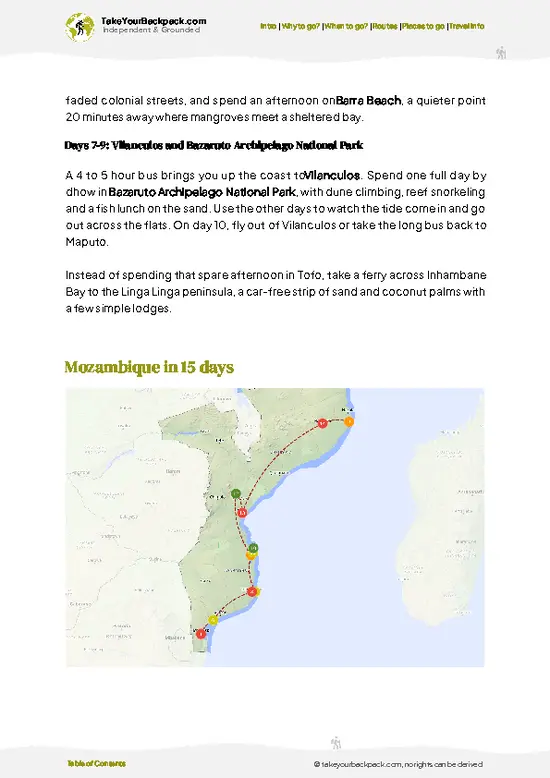
Regions that cluster and the direction to travel: The south groups easily: Maputo, Ponta do Ouro in the far south and the Inhambane coast around Tofo and Vilanculos link by road or short flights. The center, including Beira and Gorongosa, sits halfway and suits a bush detour. The north, around Pemba, Ilha de Moçambique and the Quirimbas, forms a separate cluster best reached by air. Travel south to north if you plan to fly out of Pemba, or reverse it if your international flight leaves from Maputo or Johannesburg. Maputo to Inhambane takes 7 to 9 hours by road. Maputo to Pemba by air takes about … read more 👉
How long you need: A trip linking several Mozambique beaches needs 14 to 21 days, because distances are large and transport is slow. Squeezing it into 10 days means long hauls and little beach time.
Regions that cluster and the direction to travel: The south groups easily: Maputo, Ponta do Ouro in the far south and the Inhambane coast around Tofo and Vilanculos link by road or short flights. The center, including Beira and Gorongosa, sits halfway and suits a bush detour. The north, around Pemba, Ilha de Moçambique and the Quirimbas, forms a separate cluster best reached by air. Travel south to north if you plan to fly out of Pemba, or reverse it if your international flight leaves from Maputo or Johannesburg. Maputo to Inhambane takes 7 to 9 hours by road. Maputo to Pemba by air takes about 2.5 to 3 hours, and overland the trip takes several days.
Time per stop and common mistakes: Give each beach base 3 to 5 days. That leaves time to rest, dive or surf, and absorb the pace of a place. The biggest mistake is treating the coast like a European rail map. Buses and chapas run slowly, often 40 to 50 kilometers an hour on poor stretches, and delays are normal. Instead, plan one long travel day per region change, leave a buffer day before flights, and skip trying to cover both the far south and far north in a short trip.

The ListTop beaches of Mozambique

1 Benguerra Island

Bazaruto reefs, tall dunes, dhow hops, village lanes

Sail a wooden dhow between sandbanks, snorkel the offshore coral, then climb the high dunes for views across the channel.

2 Tofo Beach

Manta cleaning stations, whale sharks, Tofinho waves, shack seafood

Book a dive or snorkel outing to meet mantas and whale sharks, then surf Tofinho or eat grilled fish on the sand.

mozambique-beach-tofo-beach
© Google |

3 Vilankulo Beach

Dhow departures, wide tidal flats, Two Mile Reef, football sunsets

Cross the flats at low tide, board a dhow for the Bazaruto islands, and end the day watching football on firm sand.

4 Barra Beach

Reef point, tidal sandbar, dune sunsets, lodge-side dives

Head out by boat from the sand to the reef point, then walk the low-tide sandbar and climb the dunes for evening color.

mozambique-beach-barra-beach
© Google |

5 Ponta do Ouro

Dolphin boats, point break, southern border, beachfront grills

Launch through the surf to find resident dolphins, then surf the point or walk the sand toward Ponta Malongane.

mozambique-beach-ponta-do-ouro
© Google |

6 Pomene

Reserve peninsula, mangrove channels, 4x4 access, dune camps

Pitch a tent behind the dunes, paddle the mangrove estuary, and snorkel the offshore reef before fishermen land their catch at dusk.

7 Praia do Bilene

Calm lagoon, ocean-side surf, charcoal prawns, weekend sound systems

Wade the shallow lagoon, paddle out to quiet sandbanks, and finish at waterfront stalls grilling prawns and calamari over charcoal.

Loading the map 🌍

Expert viewExpert Commentary on beaches

How many beaches to visit: Visit three to four beach bases on a trip of two to three weeks. That number leaves two or three full days at each, which matters because travel between them eats most of a day, and often more. Hopping across seven or eight places means you spend the trip in a chapa instead of the water. Slow down and the reward is real: a sunrise swim before the fishermen launch their boats, or an afternoon watching dhows cross the bay.
Choosing the kind of beach: Social travelers and divers should prioritize the southern surf and dive towns, where hostels, dive shops and bars make it easy to meet people. Those who want solitude should aim for the central and northern coast, where you can walk for an hour without seeing another footprint. Island lovers and culture seekers will find … read more 👉
How many beaches to visit: Visit three to four beach bases on a trip of two to three weeks. That number leaves two or three full days at each, which matters because travel between them eats most of a day, and often more. Hopping across seven or eight places means you spend the trip in a chapa instead of the water. Slow down and the reward is real: a sunrise swim before the fishermen launch their boats, or an afternoon watching dhows cross the bay.
Choosing the kind of beach: Social travelers and divers should prioritize the southern surf and dive towns, where hostels, dive shops and bars make it easy to meet people. Those who want solitude should aim for the central and northern coast, where you can walk for an hour without seeing another footprint. Island lovers and culture seekers will find the north's old Swahili towns and coral islands the strongest draw. If you have limited time, choose one cluster instead of sampling all three.
What it costs: Budget US$30 to 50 a day in the south on dorm beds (US$10 to 20), market meals, grilled fish and chapa rides. Expect US$50 to 80 in the north, where transport and lodging cost more. Dive outings run about US$60 to 120, snorkeling or whale shark trips US$50 to 100, and dhow day trips US$30 to 70. Many beach areas charge small entry or parking fees, typically US$1 to 5, and some lodges charge for camping access. Mozambique’s currency is the metical (MZN), and ATMs are scarce outside towns, so carry enough cash for remote stops.
Safety and cultural considerations: Do not leave bags unattended on the sand, and avoid walking isolated beaches after dark, particularly near towns. Swim only in calm water: rip currents and strong surf are common on exposed coasts, and many beaches have no lifeguards. Malaria prophylaxis, long sleeves at dusk and a good repellent are essential. Coastal communities are often Muslim, especially in the north, so cover shoulders and knees when walking through villages, and keep swimwear to the beach. Ask before photographing people, and never take pictures of police or military. Buy fish straight from boats and pay fair prices, which supports the people who live there. Check official advice for Cabo Delgado before any northern travel, because security conditions there have changed repeatedly.

✈️ The backpacker research shortcutMozambique Travel Guide

An offline-friendly backpacking guide with optimized travel routes, ranked highlights, transport advice, and the best areas to stay.
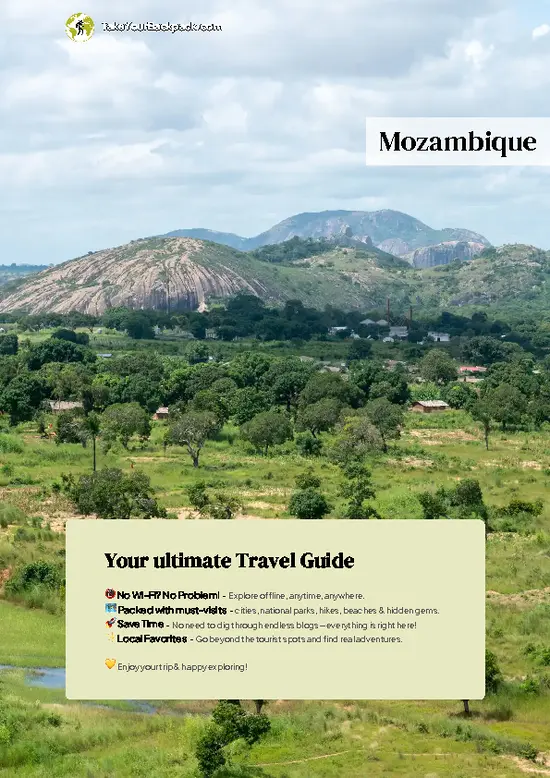
example page 0 from our offline Travel Guide for Mozambique
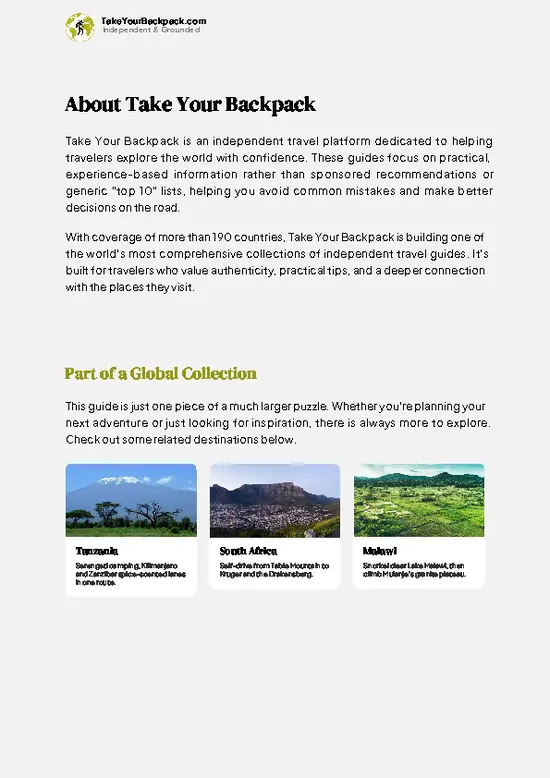
example page 1 from our offline Travel Guide for Mozambique
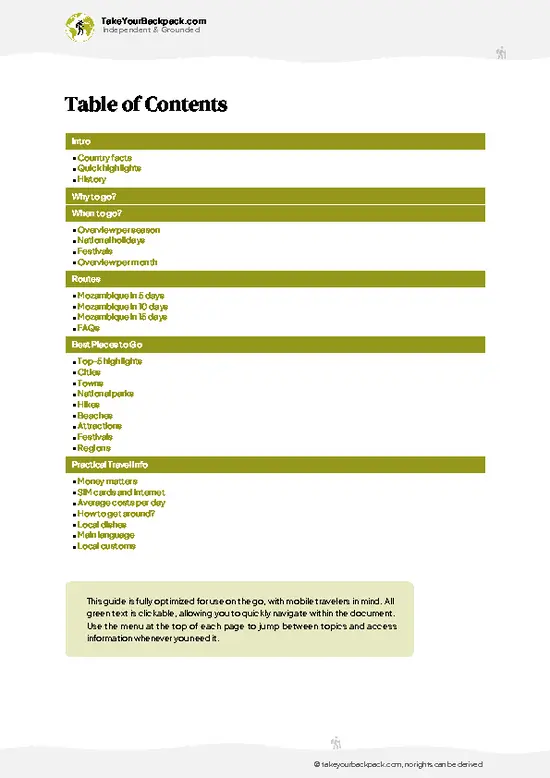
example page 2 from our offline Travel Guide for Mozambique
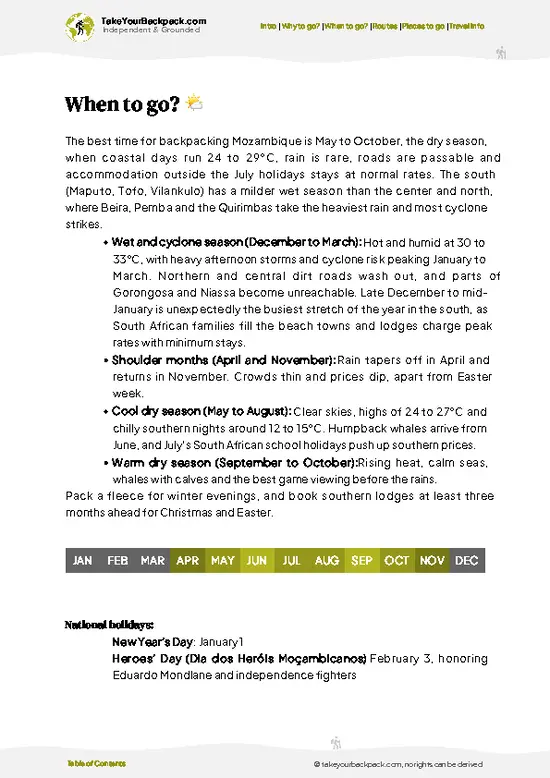
example page 3 from our offline Travel Guide for Mozambique
example page 4 from our offline Travel Guide for Mozambique
example page 5 from our offline Travel Guide for Mozambique
example page 6 from our offline Travel Guide for Mozambique
example page 7 from our offline Travel Guide for Mozambique
The digital guide (324 pages) contains:
✅ 78 highlights, ranked by travel appeal
✅ Optimized 5, 10 & 15-day travel routes
✅ Cities, national parks, landmarks, beaches
✅ How to get around
✅ Offline-friendly for travel without Wi-Fi
👉 Click to see all 30+ guide features

📅 Plan smarter in minutes, not weeks
✅ Month by month travel advice
✅ Festivals & national holidays
✅ Budget expectations

🗺️ Go to the right places, skip the overrated ones
✅ Honest pros & cons of destinations
✅ Top hikes, parks & viewpoints
✅ Lesser-known places most travelers miss
✅ Clear “worth it vs skip it” guidance

🛏️ Travel smoothly without rookie mistakes
✅ Best areas to stay
✅ Transport systems explained simply
✅ Common scams & safety advice
✅ SIM cards, money & practical tips

🌍 Understand the country, not just visit it
✅ Culture & traditions
✅ 52 Essential phrases & customs
✅ Festivals worth planning around
✅ Traveler-friendly historical context
✅ Insights that make places more meaningful

📱 Built for real travel conditions
✅ Fully downloadable PDF
✅ Works completely offline
✅ Optimized for phone use
✅ Useful in remote areas & buses
✅ Everything in one place
Stop searching, start planning
Get instant access to your full guide. 30‑day money-back guarantee.
+ Add another guide for just

By proceeding you agree to our terms.
Sent to your inbox immediately after payment • 100% Secure Checkout
Best Backpacking Travel Advisor 2025 tourism awardBest Backpacking
Travel Advisor
2025
What others say about Take Your Backpack Guides:
⭐⭐⭐⭐⭐
Fantastic, amazing amount of information!
⭐⭐⭐⭐⭐
My goodness this is amazing, it's what I've been looking for hats off too you!
⭐⭐⭐⭐⭐
I think this is absolutely BRILLIANT
⭐⭐⭐⭐
Very complete and informative. It's still missing places, but I gotta to commend you
⭐⭐⭐⭐⭐
This is truly amazing, thank you, can't wait to explore it with my kids!
⭐⭐⭐⭐⭐
Awesome resource, thank you!
⭐⭐⭐⭐⭐
This is amazing! Can't wait to explore the ones I haven't seen
⭐⭐⭐⭐
I love this! Well done, great idea.
⭐⭐⭐⭐⭐
Thanks for taking the time to make this gem!
⭐⭐⭐⭐⭐
This might be the best website I've ever seen.
⭐⭐⭐⭐⭐
Congratulations, and thank you so much for your work; it's incredibly valuable.
⭐⭐⭐⭐
In all seriousness I think you did a great job pointing out the important spots
⭐⭐⭐⭐⭐
10/10 very good
⭐⭐⭐⭐⭐
As someone who's only just starting to visit regularly this is awesome, thank you.
⭐⭐⭐⭐
Thank you very much! I'm going to visit my dad, it's going to be very useful!
⭐⭐⭐⭐⭐
This is really cool! We'll be travelling for the first time and this definitely come in handy.
⭐⭐⭐⭐⭐
You are now our minister of culture, congratulations 👨‍💼
⭐⭐⭐⭐⭐
Just wanted to tell you that this is a pearl! Going to follow your recommendations.
⭐⭐⭐⭐⭐
This is so cool. I'll definitely be using the resource for my travels soon.
⭐⭐⭐⭐⭐
This is very impressive! Good work.
⭐⭐⭐⭐⭐
This is an amazing and informative site. Very well done!

🛏️ Where to stay?Where to Stay: Mozambique Edition

Mozambique has a small but solid hostel scene, with dorm beds typically running 650 to 1,150 meticais (about US$10 to 18) a night and simple private rooms or beach huts from roughly 1,600 to 3,200 meticais (US$25 to 50). In Maputo, Polana Cimento and Sommerschield hold most backpacker options and are the calmest, best-lit areas with easy access to restaurants and the seafront, while the Baixa puts you near the Central Market, the railway station and late bars but gets sketchy after dark. On the coast, Tofo has the liveliest beach-hostel scene with diving on the doorstep and loud weekends, and Vilankulo is quieter and spread out, a better base for Bazaruto boat trips than for nightlife.

If you … read more 👉
Mozambique has a small but solid hostel scene, with dorm beds typically running 650 to 1,150 meticais (about US$10 to 18) a night and simple private rooms or beach huts from roughly 1,600 to 3,200 meticais (US$25 to 50). In Maputo, Polana Cimento and Sommerschield hold most backpacker options and are the calmest, best-lit areas with easy access to restaurants and the seafront, while the Baixa puts you near the Central Market, the railway station and late bars but gets sketchy after dark. On the coast, Tofo has the liveliest beach-hostel scene with diving on the doorstep and loud weekends, and Vilankulo is quieter and spread out, a better base for Bazaruto boat trips than for nightlife.

If you enjoy meeting fellow travelers, consider choosing hostels with high ratings for atmosphere. On the other hand, if you prefer having your own space, a hotel might be a better option.

MozambiqueExplore Beyond This Category

👋 Meet the founderWho’s Behind Take Your Backpack?

Johan, backpacker and founder of TakeYourBackpackHi, I’m Johan (Netherlands 🇳🇱), the creator of TakeYourBackpack. Over the past 3 decades, I’ve backpacked through 90+ countries across six continents, gaining extensive experience with independent travel, long-term trips, and overland routes.

This site is built on a combination of firsthand travel experience and carefully curated insights from other backpackers. Many guides are based on places I’ve personally visited, while others bring together tips, observations, and practical advice shared by trusted travelers I’ve met along the way.

The goal is to provide realistic, experience-driven guidance — not generic itineraries — so you can explore destinations with better context, clearer expectations, and more confidence.