×

Mozambique🇲🇿 | citiesMocubaLicungo River, textile industry, rural crossroads | things to do and best time to go

Explore GuruéExplore Montepuez

Backpacking in Mocuba
👀 For curious travelerscity ranked #15
By Johan Kruseman 🇳🇱 | Updated June 8, 2026

Forget the idea that Mocuba is just a pit stop on the way to somewhere “better.” Mocuba sits in central Mozambique, straddling the Licungo River, and it’s more than a dot on the map—it’s a crossroads city with a pulse. For backpackers, Mocuba is raw and real: you’ll find a lively central market, colonial-era buildings with peeling charm, and a gritty, workaday energy. It’s not touristy, so meeting fellow travelers is rare, but costs are low and street food is honest. Safety is average for Mozambique—keep your wits about you. Compared to Nampula or Quelimane, Mocuba is less polished, but more authentic.

Discover everything you want to know in the 📖 Mozambique Travel Guide.
Loading the map 🌍
CLICK TO FILTER
cities
towns
national parks
hikes
beaches
attractions
festivals
regions
SHOW COUNTRY’S BESTSHOW ALL

✨ Why go?
Ranked #15 city in Mozambique
Why visitors keep coming back

Mocuba is a strategic stop for backpackers weaving through Mozambique. It offers a solid basecamp for day trips, making it easy to explore the surrounding natural beauty without breaking the bank. The hostels here are budget-friendly and often buzzing with fellow travelers, creating a sense of community that’s hard to beat.

You’ll find affordable food options that showcase local flavors, from street vendors to cozy eateries. The city is walkable, allowing you to soak in the atmosphere without the hassle of transport. When the sun sets, the nightlife is laid-back yet lively, perfect for unwinding after a day of adventure.

While Mocuba isn’t overflowing with highlights, it serves as a practical waypoint, balancing time, money, and comfort for those looking to dive deeper into Mozambique’s charm.
Want to include Mocuba in your Mozambique route?
Create a personalized Mozambique itinerary that includes Mocuba and the places that fit your trip — based on your travel style, budget, and available time. Get your route in seconds.

Generate my trip

💡 HighlightsThe experiences that define the visit

  • Mercado Municipal de Mocuba — The beating commercial heart: stalls piled with cassava, fresh fish, spices and secondhand clothes, plus local traders who’ll happily haggle. Best place to watch everyday life and pick up inexpensive snacks and handmade goods.
  • Rio Licungo riverside and bridge — The Licungo slices the town and watching life along the banks is the main low-cost attraction: fishermen, small boats, kids swimming and dramatic sunsets. The bridge is a good vantage point for photos and local activity.
  • Estação Ferroviária de Mocuba (Mocuba Railway Station) — A functional, modest station with real railway atmosphere. Trains still move people and goods here; hanging around the platform gives a direct window into regional transport and commerce.
  • Praça Central / Town Square — Where people
read more 👉
  • Mercado Municipal de Mocuba — The beating commercial heart: stalls piled with cassava, fresh fish, spices and secondhand clothes, plus local traders who’ll happily haggle. Best place to watch everyday life and pick up inexpensive snacks and handmade goods.
  • Rio Licungo riverside and bridge — The Licungo slices the town and watching life along the banks is the main low-cost attraction: fishermen, small boats, kids swimming and dramatic sunsets. The bridge is a good vantage point for photos and local activity.
  • Estação Ferroviária de Mocuba (Mocuba Railway Station) — A functional, modest station with real railway atmosphere. Trains still move people and goods here; hanging around the platform gives a direct window into regional transport and commerce.
  • Praça Central / Town Square — Where people meet, kids play, and informal markets pop up. The square is surrounded by municipal buildings and simple colonial-era facades, so it’s an easy place to feel the town’s rhythm and overhear local conversations.
  • Casa da Cultura / Local cultural center — Often the site of music nights, community events or small exhibitions. If something’s on while you’re in town, you’ll get live music, dance or storytelling that’s rooted in local tradition.
  • Main parish church (Igreja Matriz) — The town’s main church is worth a visit for architecture, calm refuge from the midday heat, and to observe how religion and community life intersect in Mocuba.
  • Weekly livestock market — A lively, very Mozambican scene where people bring goats, chickens and cattle to trade. It’s noisy, colorful and an honest look at rural commerce feeding the town—best visited early in the morning.
  • Artisan workshops and timber carpenters — Small streets and yards where carpenters and woodworkers hammer out chairs, doors and decorative pieces. You can watch things being made and often buy sturdy, local souvenirs for cheap.
  • Estádio Municipal (local football ground) — Catching a weekend match is about as authentic as it gets: loud, local, and social. Football brings the community together and you’ll leave with a sense of local pride and plenty of friendly banter.
  • Old colonial buildings and the Town Hall (Câmara Municipal) — Scattered older buildings show Mocuba’s colonial past and municipal life. They’re best appreciated on a slow walk that lets you take in facades, signage and everyday street commerce.
A few real day-trip options outside Mocuba: the provincial capital Quelimane (for the river estuary and larger markets), coastal mangroves and beaches near Quelimane, and the villages and markets dotting the Licungo valley for honest rural life and scenery.
Spotted a mistake or missing something? Contact us.

🏘️ NeighborhoodsKey areas and districts to know

Mocuba is a vibrant hub in Mozambique, offering a mix of local culture and backpacker-friendly amenities. Here’s how the neighborhoods stack up for your adventure:

Centro: This is the heart of Mocuba. It’s bustling with markets and street vendors. Costs are low, making it ideal for budget travelers. Walkability is high; you can easily explore on foot. The nightlife is lively, with local bars where you can mingle. Perfect for short stays, as everything is within reach.

Praia de Mocuba: If you’re craving some beach time, this area is your go-to. It’s quieter than Centro, offering a more relaxed vibe. Accommodation here can be pricier, but the views are worth it. Transport options are limited, so plan ahead. Great for longer stays if you want to unwind by the water.

Alto de Mocuba: This neighborhood … read more 👉
Mocuba is a vibrant hub in Mozambique, offering a mix of local culture and backpacker-friendly amenities. Here’s how the neighborhoods stack up for your adventure:

Centro: This is the heart of Mocuba. It’s bustling with markets and street vendors. Costs are low, making it ideal for budget travelers. Walkability is high; you can easily explore on foot. The nightlife is lively, with local bars where you can mingle. Perfect for short stays, as everything is within reach.

Praia de Mocuba: If you’re craving some beach time, this area is your go-to. It’s quieter than Centro, offering a more relaxed vibe. Accommodation here can be pricier, but the views are worth it. Transport options are limited, so plan ahead. Great for longer stays if you want to unwind by the water.

Alto de Mocuba: This neighborhood offers a glimpse into local life. It’s less touristy, which means lower costs and a more authentic experience. Walkability is decent, but expect some hills. Nightlife is minimal, making it suitable for those seeking peace. Ideal for longer stays to soak in the culture.

⌛️ 1 dayHow to make the most of one day

Mocuba, Mozambique, is a vibrant hub where the pulse of local life beats strong. Nestled along the banks of the Licungo River, it offers a glimpse into the everyday rhythms of Mozambican culture, far from the typical tourist path.

Start your morning with a stroll through the bustling Mercado Municipal. The air is thick with the scent of fresh produce and spices. Engage with local vendors selling everything from colorful fruits to handmade crafts. Grab a quick breakfast of *pão* (bread) and *matapa* (a dish made from cassava leaves) at a nearby stall. This is where you’ll feel the city’s heartbeat.

In the afternoon, head to the nearby Ilha de Mocuba. This small island is often overlooked but offers serene views and a chance to relax by the water. Bring a book or simply enjoy the gentle breeze. … read more 👉
Mocuba, Mozambique, is a vibrant hub where the pulse of local life beats strong. Nestled along the banks of the Licungo River, it offers a glimpse into the everyday rhythms of Mozambican culture, far from the typical tourist path.

Start your morning with a stroll through the bustling Mercado Municipal. The air is thick with the scent of fresh produce and spices. Engage with local vendors selling everything from colorful fruits to handmade crafts. Grab a quick breakfast of *pão* (bread) and *matapa* (a dish made from cassava leaves) at a nearby stall. This is where you’ll feel the city’s heartbeat.

In the afternoon, head to the nearby Ilha de Mocuba. This small island is often overlooked but offers serene views and a chance to relax by the water. Bring a book or simply enjoy the gentle breeze. If you’re feeling adventurous, rent a canoe and paddle along the river, soaking in the lush surroundings.

As evening falls, make your way to the Praça da Independência. This central square is a gathering spot for locals, especially as the sun sets. Grab dinner at a local eatery like *Restaurante Mavala*, where you can savor grilled fish and *xima* (a cornmeal dish).

Mocuba may not be on every traveler’s radar, but its authentic experiences and warm community make it a worthwhile stop. Embrace the trade-offs of time and comfort here, and you’ll leave with memories that linger long after your visit.
Turn your Mocuba visit into an Mozambique adventure
Build a complete Mozambique route with Mocuba, hidden gems, must-see destinations, and realistic travel times included.

Generate my trip

🌤️ When to go?When to go for the best experience


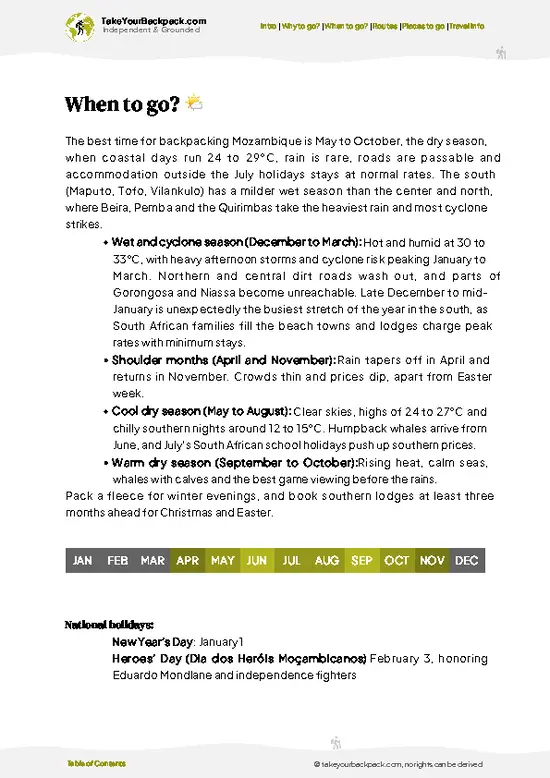
  • Weather: Mocuba experiences a tropical climate with a wet season from November to April, bringing heavy rains and humidity that can bog down your trek. The dry season, May to October, offers clearer skies and less mud—ideal for backpacking.

  • Temperature: During the dry months, expect daytime highs around 25-30°C (77-86°F), cooling to 15-20°C (59-68°F) at night. The wet season pushes temps higher but with oppressive humidity that saps energy.

  • Daylight Hours: Daylight is fairly consistent year-round, roughly 11 to 12 hours daily, so timing won’t drastically affect how much you can explore each day.

  • Crowds: Mocuba isn’t a tourist hotspot, so crowds are minimal year-round. However, local festivals in the dry season can add a lively, authentic vibe without overwhelming the scene.

  • Seasonal
read more 👉

  • Weather: Mocuba experiences a tropical climate with a wet season from November to April, bringing heavy rains and humidity that can bog down your trek. The dry season, May to October, offers clearer skies and less mud—ideal for backpacking.

  • Temperature: During the dry months, expect daytime highs around 25-30°C (77-86°F), cooling to 15-20°C (59-68°F) at night. The wet season pushes temps higher but with oppressive humidity that saps energy.

  • Daylight Hours: Daylight is fairly consistent year-round, roughly 11 to 12 hours daily, so timing won’t drastically affect how much you can explore each day.

  • Crowds: Mocuba isn’t a tourist hotspot, so crowds are minimal year-round. However, local festivals in the dry season can add a lively, authentic vibe without overwhelming the scene.

  • Seasonal Activities: The dry season is prime for hiking and river excursions, while the wet season’s lush landscape is perfect if you’re into birdwatching or photography—just be ready for slippery trails.

  • Price Fluctuations: Accommodation and transport costs dip during the wet season due to lower demand, but you trade off comfort and accessibility. The dry season commands a slight premium but rewards with reliability and ease.


Pro-tip: Aim for the shoulder months of May and October to balance fewer crowds, manageable weather, and better prices—your sweet spot for smart backpacking in Mocuba.


source: climatestotravel.comJANJanuary: fair for travelingFEBFebruary: fair for travelingMARMarch: fair for travelingAPRApril: fair for travelingMAYMay: highly recommended for travelingJUNJune: excellent for travelingJULJuly: excellent for travelingAUGAugust: excellent for travelingSEPSeptember: excellent for travelingOCTOctober: highly recommended for travelingNOVNovember: fair for travelingDECDecember: fair for traveling
when-to-go

✈️ The backpacker research shortcutMozambique Travel Guide

An offline-friendly backpacking guide with optimized travel routes, ranked highlights, transport advice, and the best areas to stay.
example page 0 from our offline Travel Guide for Mozambique
example page 1 from our offline Travel Guide for Mozambique
example page 2 from our offline Travel Guide for Mozambique
example page 3 from our offline Travel Guide for Mozambique
example page 4 from our offline Travel Guide for Mozambique
example page 5 from our offline Travel Guide for Mozambique
example page 6 from our offline Travel Guide for Mozambique
example page 7 from our offline Travel Guide for Mozambique
The digital guide (346 pages) contains:
86 highlights, ranked by travel appeal
Optimized 5, 10 & 15-day travel routes
Cities, national parks, landmarks, beaches
How to get around
Offline-friendly for travel without Wi-Fi
👉 Click to see all 30+ guide features

📅 Plan smarter in minutes, not weeks
Month by month travel advice
Festivals & national holidays
Budget expectations

🗺️ Go to the right places, skip the overrated ones
Honest pros & cons of destinations
Top hikes, parks & viewpoints
Lesser-known places most travelers miss
Clear “worth it vs skip it” guidance

🛏️ Travel smoothly without rookie mistakes
Best areas to stay
Transport systems explained simply
Common scams & safety advice
SIM cards, money & practical tips

🌍 Understand the country, not just visit it
Culture & traditions
52 Essential phrases & customs
Festivals worth planning around
Traveler-friendly historical context
Insights that make places more meaningful

📱 Built for real travel conditions
Fully downloadable PDF
Works completely offline
Optimized for phone use
Useful in remote areas & buses
Everything in one place
Save weeks of stressful planning
Get instant access to your full guide. 30‑day money-back guarantee.


By proceeding you agree to our terms.
Sent to your inbox immediately after payment • 100% Secure Checkout
Best Backpacking Travel Advisor 2025 tourism awardBest Backpacking
Travel Advisor
2025
What others say about Take Your Backpack Guides:
⭐⭐⭐⭐⭐
Fantastic, amazing amount of information!
⭐⭐⭐⭐⭐
My goodness this is amazing, it's what I've been looking for hats off too you!
⭐⭐⭐⭐⭐
I think this is absolutely BRILLIANT
⭐⭐⭐⭐
Very complete and informative. It's still missing places, but I gotta to commend you
⭐⭐⭐⭐⭐
This is truly amazing, thank you, can't wait to explore it with my kids!
⭐⭐⭐⭐⭐
Awesome resource, thank you!
⭐⭐⭐⭐⭐
This is amazing! Can't wait to explore the ones I haven't seen
⭐⭐⭐⭐
I love this! Well done, great idea.
⭐⭐⭐⭐⭐
Thanks for taking the time to make this gem!
⭐⭐⭐⭐⭐
This might be the best website I've ever seen.
⭐⭐⭐⭐⭐
Congratulations, and thank you so much for your work; it's incredibly valuable.
⭐⭐⭐⭐
In all seriousness I think you did a great job pointing out the important spots
⭐⭐⭐⭐⭐
10/10 very good
⭐⭐⭐⭐⭐
As someone who's only just starting to visit regularly this is awesome, thank you.
⭐⭐⭐⭐
Thank you very much! I'm going to visit my dad, it's going to be very useful!
⭐⭐⭐⭐⭐
This is really cool! We'll be travelling for the first time and this definitely come in handy.
⭐⭐⭐⭐⭐
You are now our minister of culture, congratulations 👨‍💼
⭐⭐⭐⭐⭐
Just wanted to tell you that this is a pearl! Going to follow your recommendations.
⭐⭐⭐⭐⭐
This is so cool. I'll definitely be using the resource for my travels soon.
⭐⭐⭐⭐⭐
This is very impressive! Good work.
⭐⭐⭐⭐⭐
This is an amazing and informative site. Very well done!

🛏️ Where to stay?Choosing the right base

In Mocuba, the best spot for backpackers is the city center, especially around the main market and Avenida 25 de Setembro. This area strikes a solid balance between safety and social buzz, making it a natural hub for budget travelers and solo adventurers. You’ll find a handful of hostels here, modest but clean, offering a chance to meet fellow travelers without the touristy gloss. Compared to the quieter, more residential neighborhoods, the center pulses with local life—street vendors, small cafés, and the occasional impromptu music session. It’s not luxury, but it’s authentic and alive, which … read more 👉
In Mocuba, the best spot for backpackers is the city center, especially around the main market and Avenida 25 de Setembro. This area strikes a solid balance between safety and social buzz, making it a natural hub for budget travelers and solo adventurers. You’ll find a handful of hostels here, modest but clean, offering a chance to meet fellow travelers without the touristy gloss. Compared to the quieter, more residential neighborhoods, the center pulses with local life—street vendors, small cafés, and the occasional impromptu music session. It’s not luxury, but it’s authentic and alive, which is exactly what you want when you’re after connection over comfort. Venturing outside this zone means sacrificing that social vibe for more isolation or sketchier streets, so stick close to the heart if you want to maximize your Mocuba experience.

🚌 Getting aroundHow to get from A to B

Mocuba moves at its own rhythm—somewhere between the pulse of a bustling market and the slow, deliberate pace of a town that knows time is a suggestion, not a rule. You won’t find strict timetables or polished transit hubs here. Instead, the city’s flow is a dance of improvisation and local know-how. If you want to win at getting around, you need to read the cues: when the minibuses fill up, when the moto-taxis start buzzing, and when the streets clear for a good walk. Your choices between time, money, and comfort will shape your experience more than any map or schedule.


  • Walking: Mocuba’s compact center makes walking the default for budget travelers. It’s free, flexible, and the best way to soak in street life. Expect uneven sidewalks and occasional dust, but the pace lets you catch details
read more 👉
Mocuba moves at its own rhythm—somewhere between the pulse of a bustling market and the slow, deliberate pace of a town that knows time is a suggestion, not a rule. You won’t find strict timetables or polished transit hubs here. Instead, the city’s flow is a dance of improvisation and local know-how. If you want to win at getting around, you need to read the cues: when the minibuses fill up, when the moto-taxis start buzzing, and when the streets clear for a good walk. Your choices between time, money, and comfort will shape your experience more than any map or schedule.


  • Walking: Mocuba’s compact center makes walking the default for budget travelers. It’s free, flexible, and the best way to soak in street life. Expect uneven sidewalks and occasional dust, but the pace lets you catch details missed by faster transport.

  • Minibuses (Chapas): These shared vans run roughly from 6 a.m. to 6 p.m., costing about 50-100 MZN per ride. They’re cheap and relatively quick but can get crowded and noisy. No fixed stops—just flag one down and hop off when you see your street.

  • Moto-Taxis: Available from dawn till late evening, moto-taxis offer door-to-door service for around 100-150 MZN. They’re faster than walking and more flexible than minibuses but less comfortable and riskier if you’re not used to the local traffic chaos.

  • Private Taxis: More expensive, starting at 500 MZN, private taxis provide comfort and reliability, especially if you’re carrying gear or traveling at odd hours. They’re your go-to for longer trips outside the city or when time is tight.


Mastering Mocuba’s transit is about balancing your priorities. Want to save cash and savor local life? Walk or catch a chapa. Need speed and convenience? Moto-taxis or private taxis get you there faster but at a price. Your choice shapes not just your budget, but how you experience the city’s pulse.

👛 Costs (as of 5 September 2025)Money, prices, and spending tips

Backpacking in Mocuba, Mozambique, offers a clear trade-off between cost and comfort, with prices that reflect its status as a less-touristed city in a developing country. Understanding these costs helps you decide where to save and where to invest for a smoother trip.
  • Dorm Accommodation (High Season): Expect to pay around €8 to €12 per night. High season sees a slight bump due to demand, but options remain basic, often with shared bathrooms and minimal amenities.
  • Dorm Accommodation (Off-Season): Prices drop to about €5 to €8 per night. Fewer travelers mean more negotiating power and quieter stays, though some places may close or reduce services.
  • Meals: Street food and local eateries offer meals for €1.50 to €3.50. Simple dishes like rice, beans, and grilled fish dominate. Western-style
read more 👉
Backpacking in Mocuba, Mozambique, offers a clear trade-off between cost and comfort, with prices that reflect its status as a less-touristed city in a developing country. Understanding these costs helps you decide where to save and where to invest for a smoother trip.
  • Dorm Accommodation (High Season): Expect to pay around €8 to €12 per night. High season sees a slight bump due to demand, but options remain basic, often with shared bathrooms and minimal amenities.
  • Dorm Accommodation (Off-Season): Prices drop to about €5 to €8 per night. Fewer travelers mean more negotiating power and quieter stays, though some places may close or reduce services.
  • Meals: Street food and local eateries offer meals for €1.50 to €3.50. Simple dishes like rice, beans, and grilled fish dominate. Western-style restaurants are rare and pricier, so sticking local saves both money and gives authentic flavor.
  • Local Transport: Boda-bodas (motorcycle taxis) and minibuses cost between €0.30 and €1 per ride within the city. These are the quickest way to get around but require a bit of bargaining and a tolerance for bumpy rides.
  • City Transport Pass: Mocuba does not have a formal city transport pass system. Budget travelers rely on single rides or negotiate daily rates with boda-boda drivers if staying longer.
  • Basic Activities/Entry Fees: Cultural sites and small museums charge around €1 to €3. Organized tours are rare and generally more expensive, so self-guided exploration is the norm.
  • Miscellaneous Expenses: Budget €1 to €2 for bottled water, snacks, or small essentials. Internet access is limited but available in some guesthouses for a small fee.

Total daily costs for backpacking in Mocuba typically range from €15 to €25. This budget balances basic comfort with local experiences, allowing you to stretch your money without sacrificing the essentials that make your trip manageable and enjoyable.


source: visitmozambique.net
⚠️ Prices can change and everyone travels differently, so take this as a rough guide. Hope it helps you plan your adventure!

🚌 Day tripsShort trips worth adding

Mocuba, Mozambique, serves as a fantastic launchpad for day trips that blend adventure with cultural immersion. Here are some standout options that make the most of your time and money.

Ilha de Moçambique
Just a two-hour bus ride from Mocuba, this UNESCO World Heritage Site is a treasure trove of history and stunning coastal views. Explore the narrow streets lined with colonial architecture, visit the old fort, and indulge in fresh seafood at local eateries. The vibrant culture and rich history make it a must-see. Aim for the dry season (May to October) for the best weather. A round trip will set you back around $10, but don’t forget to haggle for the best seafood prices! First-timers often underestimate the time needed to explore, so plan for a full day.
👉 Explore Ilha de Moçambique
read more 👉
Mocuba, Mozambique, serves as a fantastic launchpad for day trips that blend adventure with cultural immersion. Here are some standout options that make the most of your time and money.

Ilha de Moçambique
Just a two-hour bus ride from Mocuba, this UNESCO World Heritage Site is a treasure trove of history and stunning coastal views. Explore the narrow streets lined with colonial architecture, visit the old fort, and indulge in fresh seafood at local eateries. The vibrant culture and rich history make it a must-see. Aim for the dry season (May to October) for the best weather. A round trip will set you back around $10, but don’t forget to haggle for the best seafood prices! First-timers often underestimate the time needed to explore, so plan for a full day.
👉 Explore Ilha de Moçambique

Nampula
About an hour and a half away, Nampula offers a bustling market scene and a chance to experience local life. The Mercado Municipal is a sensory overload of colors, sounds, and smells. Sample street food, shop for handmade crafts, and soak in the local vibe. Budget around $5 for transport and a few extra bucks for snacks. The best time to visit is early morning when the market is lively but not overwhelming. A common mistake is to rush through; take your time to engage with vendors.
👉 Explore Nampula

Quirimbas National Park
For the nature lovers, a day trip to Quirimbas National Park is a game-changer. It’s a bit farther at about three hours by bus, but the pristine beaches and diverse wildlife are worth it. Snorkeling and birdwatching opportunities abound. Expect to spend around $15 on transport and entry fees. The dry season is ideal for wildlife spotting. Many backpackers overlook the need for a guide; having one enhances the experience significantly.
👉 Explore Quirimbas National Park

Mocuba’s River Beaches
If you’re looking for a chill day, the nearby river beaches are perfect. Just a short ride away, these spots offer a serene escape with opportunities for swimming and picnicking. Bring your own food and drinks to keep costs low—around $5 for transport. The best time to go is during the dry season when the water is clear and inviting. First-timers often forget sunscreen; don’t be that traveler!
Want to know what more Mozambique offers?
The Mozambique Travel Guide describes 86 highlights, from cities to national parks, from beaches to hikes

Get the Travel Guide -

🍲 FoodLocal Cuisine & Drinks

In Mocuba, food is a vibrant tapestry of flavors that tells the story of its culture. You can’t miss trying matapa, a dish made from cassava leaves cooked with peanuts and coconut milk. It’s rich, earthy, and a staple here. Pair it with xima, a thick cornmeal porridge that’s the perfect vehicle for soaking up sauces.

Street food is where the magic happens. Vendors line the streets, serving up grilled fish fresh from the river, seasoned with local spices. The aroma wafts through the air, drawing you in. Don’t skip the piri-piri chicken; it’s spicy and smoky, a true taste of Mozambique.

When it comes to drinks, sugarcane juice is a refreshing choice, especially in the heat. Locals often sip it while chatting at roadside stalls. Remember, sharing food is a sign of friendship here, so don’t … read more 👉
In Mocuba, food is a vibrant tapestry of flavors that tells the story of its culture. You can’t miss trying matapa, a dish made from cassava leaves cooked with peanuts and coconut milk. It’s rich, earthy, and a staple here. Pair it with xima, a thick cornmeal porridge that’s the perfect vehicle for soaking up sauces.

Street food is where the magic happens. Vendors line the streets, serving up grilled fish fresh from the river, seasoned with local spices. The aroma wafts through the air, drawing you in. Don’t skip the piri-piri chicken; it’s spicy and smoky, a true taste of Mozambique.

When it comes to drinks, sugarcane juice is a refreshing choice, especially in the heat. Locals often sip it while chatting at roadside stalls. Remember, sharing food is a sign of friendship here, so don’t hesitate to join in on communal meals. Embrace the flavors and the warmth of the people; it’s all part of the experience.

🛡️ SafetySafety Tips and Common Scams in Mocuba

Mocuba is generally safe, but like any city, it has its quirks. Stay aware in crowded markets, where pickpockets might lurk. If you’re solo, avoid wandering too far after dark; stick to well-lit areas and main streets.

Common scams are rare, but be cautious of overly friendly locals offering unsolicited help—often, they expect a tip. When using public transport, confirm prices upfront to avoid surprises.

Carry your belongings close and keep your phone out of sight when not in use. A confident demeanor goes a long way; blend in, and you’ll navigate the city with ease. Embrace the experience, and you’ll find Mocuba welcoming.

Other Mozambican cities near Mocuba

Explore more nearby:

  • Quelimane—Zambezi delta, coconut groves, stilted houses| 112 km away
  • Gurué—tea estates, mountain backdrop, cool climate| 153 km away
  • Cuamba—railway junction, agricultural markets, Niassa gateway| 231 km away

💡 Not sure where to go next?
Create a personalized itinerary for Mozambique including Mocuba and the places that fit your trip.

Generate my itinerary

👉 Discover all cities

Or checkout all Mozambique has to offer (think cities, towns, villages, national parks, hikes, beaches, festivals)
Country photo of Mozambique

We 💚 feedbackSumming up the experience

Mocuba has a laid-back vibe that feels like a well-kept secret. The best surprise? The local markets bursting with flavors and colors—don’t skip the grilled fish! Just a heads-up: the roads can be rough, so pack some patience. Embrace the slow pace; it’s part of the charm. You’ll leave with stories that linger long after you’ve gone.

✍️ Help improve this page!
The information on this page is based on in-depth research, insights shared by experienced travelers, and feedback from the local travel community in Mozambique. While every effort is made to keep the information accurate and current, conditions can change — so if you spot anything incorrect or outdated, please get in touch.


🙋‍♂️ Give feedback

👋 Meet the founderWho’s Behind Take Your Backpack?

Johan, backpacker and founder of TakeYourBackpackHi, I’m Johan (Netherlands 🇳🇱), the creator of TakeYourBackpack. Over the past decade, I’ve backpacked through 80+ countries across six continents, gaining extensive experience with independent travel, long-term trips, and overland routes.

This site is built on a combination of firsthand travel experience and carefully curated insights from other backpackers. Many guides are based on places I’ve personally visited, while others bring together tips, observations, and practical advice shared by trusted travelers I’ve met along the way.

The goal is to provide realistic, experience-driven guidance — not generic itineraries — so you can explore destinations with better context, clearer expectations, and more confidence.

Get full Mozambique guide •
Instant download • 86 highlights • Full Offline guide