v2.webp)
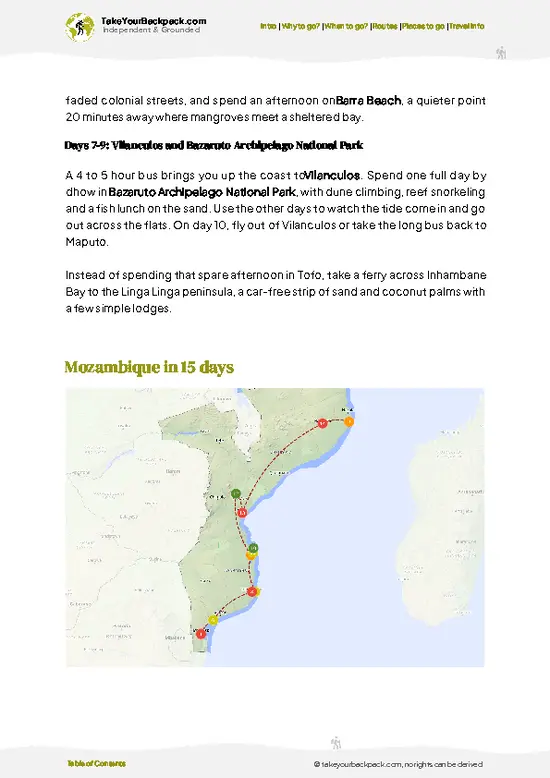
- Nacala Bay waterfront: The deepwater harbor is the reason for the town. Walk the shoreline to watch dhows and cargo ships share the water. Late afternoon is coolest. Free, 1 to 2 hours.
- Nacala-a-Velha: The older settlement across the bay, with a slower pace, fishing boats and quiet beaches. Go in the morning, when the fishers return. Free, half a day including the crossing.
- Old town streets of Nacala-Porto: Portuguese-era buildings, a few faded facades and lively corners around the market. Early morning is best. Free, 1 hour.
- Central market: Fruit, dried fish, capulana cloth and cheap grilled snacks. Morning is busiest and freshest. Expect to spend US$2 to 5 on food, 1 hour.
- Fishing beach at the harbor edge: Boats come in with the catch and buyers gather on the sand. Early morning gives the best
- Nacala Bay waterfront: The deepwater harbor is the reason for the town. Walk the shoreline to watch dhows and cargo ships share the water. Late afternoon is coolest. Free, 1 to 2 hours.
- Nacala-a-Velha: The older settlement across the bay, with a slower pace, fishing boats and quiet beaches. Go in the morning, when the fishers return. Free, half a day including the crossing.
- Old town streets of Nacala-Porto: Portuguese-era buildings, a few faded facades and lively corners around the market. Early morning is best. Free, 1 hour.
- Central market: Fruit, dried fish, capulana cloth and cheap grilled snacks. Morning is busiest and freshest. Expect to spend US$2 to 5 on food, 1 hour.
- Fishing beach at the harbor edge: Boats come in with the catch and buyers gather on the sand. Early morning gives the best action. Free, 1 hour.
- Nearby bay beaches: Sandy stretches for a swim and a sunset walk, calmest at high tide. Free, 2 to 3 hours.
Spotted a mistake or missing something? Contact us.

 Best Backpacking
.jpg) Hi, I’m Johan (Netherlands 🇳🇱), the creator of TakeYourBackpack. Over the past 3 decades, I’ve backpacked through 90+ countries across six continents, gaining extensive experience with independent travel, long-term trips, and overland routes.
Hi, I’m Johan (Netherlands 🇳🇱), the creator of TakeYourBackpack. Over the past 3 decades, I’ve backpacked through 90+ countries across six continents, gaining extensive experience with independent travel, long-term trips, and overland routes.