


×

Mozambique🇲🇿 | townsVilankuloBazaruto boat trips, lateen dhows, tidal sandbars, beachfront bars | things to do and best time to go

Explore MorrumbeneExplore Ilha de Moçambique

Backpacking in Vilankulo
🏆 Top picktown ranked #2
By Johan Kruseman 🇳🇱 | Updated October 22, 2026

Vilankulo used to be a sleepy fishing village with a handful of beach lodges and a long memory of the civil war. Today you get dhows on the water, a lively beachfront and a steady stream of travelers heading for the islands. The town sits on the coast of Inhambane Province in southern Mozambique, facing the Bazaruto Archipelago. Streets are sandy and ringed with palms, so you walk, grab a chapa (minibus) or hop on a motorbike taxi, and every route ends at the same turquoise bay. The market delivers fresh prawns and cashews, and the sunset dhow sails are the moment you came for. Getting here is easy, with a highway, buses and a small airport. Hostels and beach bars keep evenings social, and meeting other backpackers takes about one beer. Compared with Tofo, the surf and party town to the south, Vilankulo is calmer, flatter and built around island trips rather than waves.

Discover everything you want to know in the 📖 Mozambique Travel Guide.


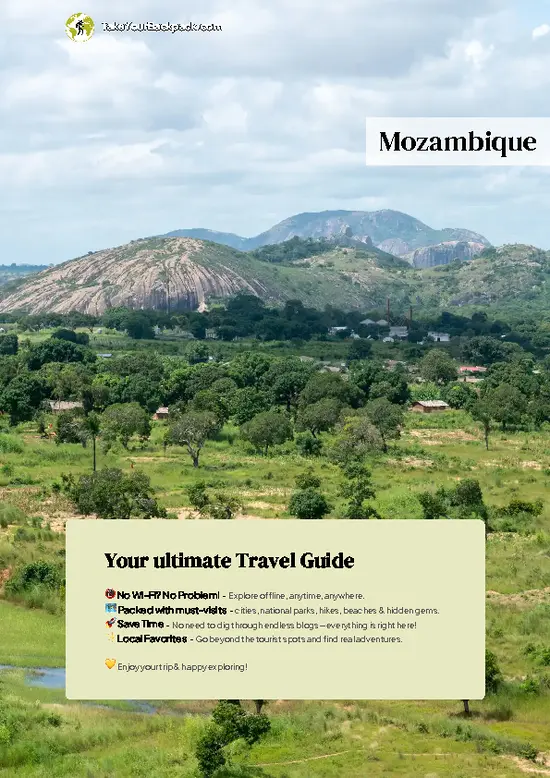
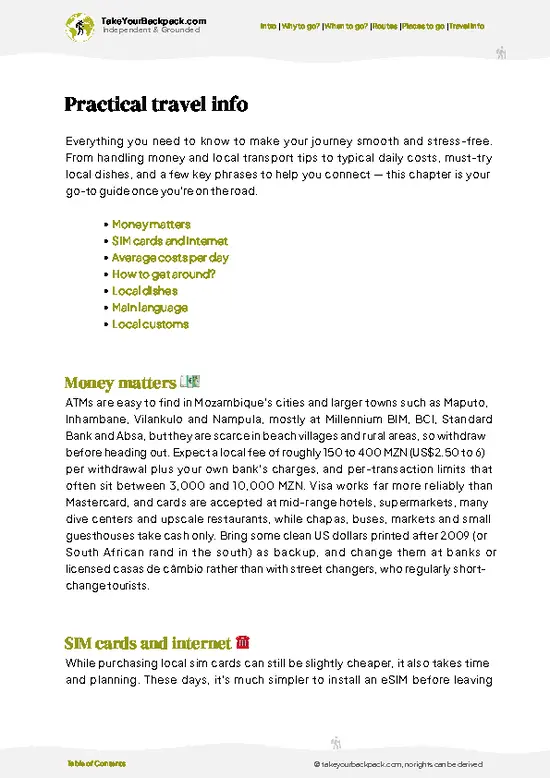
example page 0 from our offline Travel Guide for Mozambique
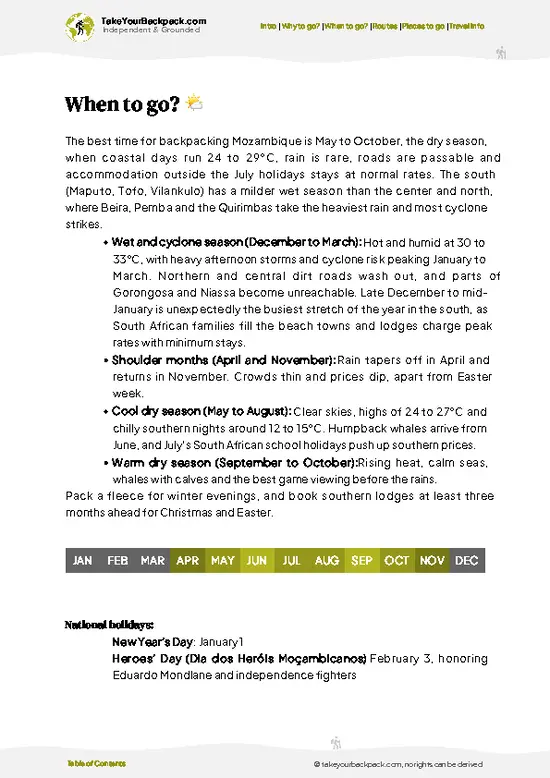
example page 1 from our offline Travel Guide for Mozambique
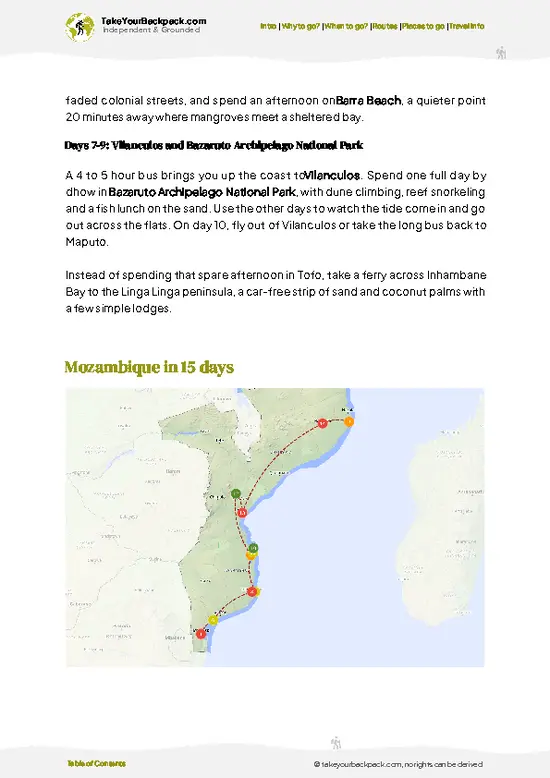
example page 2 from our offline Travel Guide for Mozambique
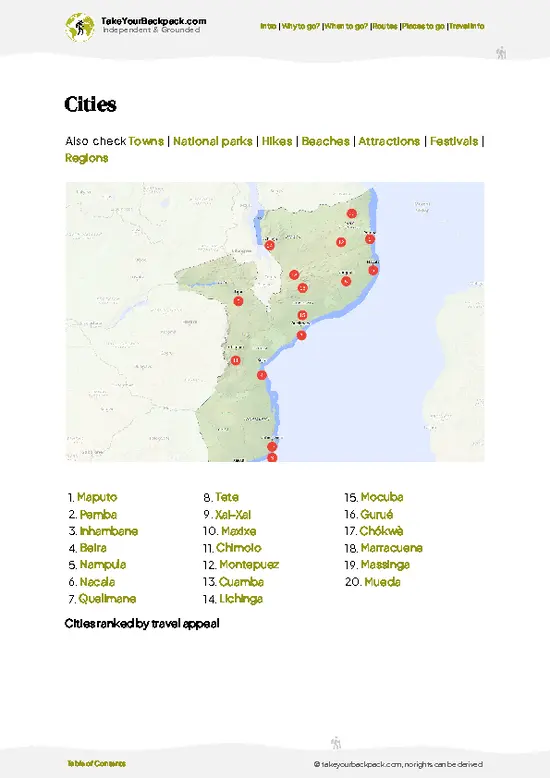
example page 3 from our offline Travel Guide for Mozambique
example page 4 from our offline Travel Guide for Mozambique
example page 5 from our offline Travel Guide for Mozambique
example page 6 from our offline Travel Guide for Mozambique
example page 7 from our offline Travel Guide for Mozambique
Loading the map 🌍
CLICK TO FILTER
cities
towns
national parks
hikes
beaches
attractions
festivals
regions
SHOW COUNTRY’S BESTSHOW ALL

✨ Why go?
Ranked #2 town in Mozambique
Why visitors keep coming back

Vilankulo is the launchpad for the Bazaruto Archipelago, and that is the reason most backpackers stop here. Snorkeling over coral, sandy dunes on Bazaruto Island and a dhow ride home under a full sail all start from the beachfront. Because every trip needs a group to split the boat cost, the town is naturally social. You will find yourself comparing itineraries at breakfast and forming a crew by afternoon. Most people stay two to four nights: one for an island day, one to recover and one to wander. Slow travelers linger longer, since the town has a gentle pace and the Vilankulo central market makes self-catering simple and fun. The hostels and guesthouses are small, with shared kitchens and open courtyards where stories swap easily. Solo travelers fit in with no effort, and small groups can … read more 👉
Vilankulo is the launchpad for the Bazaruto Archipelago, and that is the reason most backpackers stop here. Snorkeling over coral, sandy dunes on Bazaruto Island and a dhow ride home under a full sail all start from the beachfront. Because every trip needs a group to split the boat cost, the town is naturally social. You will find yourself comparing itineraries at breakfast and forming a crew by afternoon. Most people stay two to four nights: one for an island day, one to recover and one to wander. Slow travelers linger longer, since the town has a gentle pace and the Vilankulo central market makes self-catering simple and fun. The hostels and guesthouses are small, with shared kitchens and open courtyards where stories swap easily. Solo travelers fit in with no effort, and small groups can charter a dhow cheaply. If you want a nightlife-heavy city or technical hikes, look elsewhere. If you want warm water, fresh seafood and people to share a boat with, this is a very easy place to be. The sunset dhow sail alone justifies the detour.

💡 HighlightsTop highlights of Vilankulo

  1. Bazaruto Archipelago day trip: The reason Vilankulo exists on most itineraries. Dhows or speedboats take you to Magaruque and Bazaruto islands for snorkeling, sand dunes and a seafood lunch on the beach. Go in the cooler, calmer months, and set off early. Expect US$60 to 120 per person, a full day of 7 to 9 hours.
  2. Sunset dhow sail: Traditional wooden sailing boats glide across the shallow bay as the sky shifts color. It is quiet, slow and very photogenic. Trips run in the late afternoon for 2 to 3 hours and cost about US$20 to 35.
  3. Vilankulo Market: A working market where you can buy prawns, cashews, mangoes and capulana cloth, plus phone credit and spices. Mornings are best, when the catch is freshest. Entry is free, and an hour of browsing is plenty.
  4. Vilankulo Beach at low tide: The tide drains
… read more 👉
  1. Bazaruto Archipelago day trip: The reason Vilankulo exists on most itineraries. Dhows or speedboats take you to Magaruque and Bazaruto islands for snorkeling, sand dunes and a seafood lunch on the beach. Go in the cooler, calmer months, and set off early. Expect US$60 to 120 per person, a full day of 7 to 9 hours.
  2. Sunset dhow sail: Traditional wooden sailing boats glide across the shallow bay as the sky shifts color. It is quiet, slow and very photogenic. Trips run in the late afternoon for 2 to 3 hours and cost about US$20 to 35.
  3. Vilankulo Market: A working market where you can buy prawns, cashews, mangoes and capulana cloth, plus phone credit and spices. Mornings are best, when the catch is freshest. Entry is free, and an hour of browsing is plenty.
  4. Vilankulo Beach at low tide: The tide drains the bay and leaves wide sandbars and tidal pools. You can walk far out, watch fishermen collect their nets and spot starfish. Check tide times locally, as low tide is the whole point. It is free and takes 1 to 2 hours.
  5. Baobab Beach and the Vilankulo seafront promenade: A stretch of beachfront bars and restaurants where cold drinks meet grilled fish and lively evenings. Late afternoon into evening is the time to be here. A meal and drink typically costs US$8 to 15, and you can easily spend two hours.
From Vilankulo, day trips reach Magaruque Island, Bazaruto Island and Santa Carolina (Paradise Island) by boat, and Inhassoro to the north is a quieter coastal stop. The island trips need booking a day ahead with an operator, while the rest need no ticket.
Spotted a mistake or missing something? Contact us.

🏘️ NeighborhoodsWhere things are and how it's laid out

Vilankulo spreads along a sandy coast, and the best way to learn it is to ride, walk and wade through its pieces.
  • Town Center and Market Area: Sandy lanes funnel toward the main market, where you bargain for cashews, tomatoes and fresh bread rolls, and where chapa minibuses gather in a noisy knot. Walk it in an hour, then grab grilled chicken with piri-piri from a street stall and eat it standing in the shade.
  • Beachfront and Esplanade: A wide, flat beach stretches north and south of the main access road. At low tide you stroll for kilometers on hard sand, and boats of every size sit pulled up on the shore. Evening brings sundowners at beach bars and a view of dhows against the Bazaruto islands.
  • Fish Market Beach: Fishermen haul in the morning catch here, and the dhows are loaded for island trips.
… read more 👉
Vilankulo spreads along a sandy coast, and the best way to learn it is to ride, walk and wade through its pieces.
  • Town Center and Market Area: Sandy lanes funnel toward the main market, where you bargain for cashews, tomatoes and fresh bread rolls, and where chapa minibuses gather in a noisy knot. Walk it in an hour, then grab grilled chicken with piri-piri from a street stall and eat it standing in the shade.
  • Beachfront and Esplanade: A wide, flat beach stretches north and south of the main access road. At low tide you stroll for kilometers on hard sand, and boats of every size sit pulled up on the shore. Evening brings sundowners at beach bars and a view of dhows against the Bazaruto islands.
  • Fish Market Beach: Fishermen haul in the morning catch here, and the dhows are loaded for island trips. Arrive early, haggle for prawns or calamari, and watch the sails go up. It is chaotic, smelly and absolutely worth a look.
  • Beach Road North (Mangrove and Lodge Strip): Sand tracks lead to quieter stretches with small lodges, kitesurfing spots and low-key bars. Rent a bike or hop a tuk-tuk, since the distances are too long to walk in heat. You get empty sand, big sky and cold drinks with your feet in the surf.
  • Old Town Residential Streets: Behind the market, everyday life plays out among cashew and coconut trees, with kids playing football in the dust. Wander with a smile, and you will find tiny cafés selling cheap xima, rice and fish stews.

⌛️ 1 dayWhat you can realistically do in a day

7:00 AM: Vilankulo Beach
Start at the waterfront while the tide is out and the fishermen are hauling in nets, because the flats and the dhow sails against the Bazaruto islands are at their best before the heat builds. Walk the sand north toward the lodges, then turn inland when your feet tell you to.
8:30 AM: Breakfast at a beachfront café
Order eggs, fresh bread and strong coffee, and use the hour to sort out island trips with the operators along the main beach road. Prices are lower if you gather a few people from your hostel first.
10:00 AM: Vilankulo Municipal Market
Walk inland to the market, where you’ll find piles of tomatoes, dried fish, cashews, capulana cloth and phone-credit sellers shouting over each other. Buy a bag of cashews and a mango, then ask a vendor to point out the stall with … read more 👉
7:00 AM: Vilankulo Beach
Start at the waterfront while the tide is out and the fishermen are hauling in nets, because the flats and the dhow sails against the Bazaruto islands are at their best before the heat builds. Walk the sand north toward the lodges, then turn inland when your feet tell you to.
8:30 AM: Breakfast at a beachfront café
Order eggs, fresh bread and strong coffee, and use the hour to sort out island trips with the operators along the main beach road. Prices are lower if you gather a few people from your hostel first.
10:00 AM: Vilankulo Municipal Market
Walk inland to the market, where you’ll find piles of tomatoes, dried fish, cashews, capulana cloth and phone-credit sellers shouting over each other. Buy a bag of cashews and a mango, then ask a vendor to point out the stall with the best grilled chicken for later. Expect to bargain gently.
12:30 PM: Lunch of grilled chicken and piri-piri
Sit at one of the simple local grills and order chicken with rice and a cold drink. The sauce is hot, so ask for it on the side. Afterward, rest in the shade for an hour while the midday sun does its worst.
2:30 PM: Fishing boats and the old jetty area
This is the corner most visitors skip. Wander the working shoreline south of the main beach, where boatbuilders patch wooden hulls and women sort the catch on tarps. Greet people first and ask before taking photos. You’ll see the town as locals live it, not as lodges sell it.
4:30 PM: Sunset sundowner on the sand
Head back to the main beach with a drink from a bar overlooking the bay. The tide returns, the sky goes orange over the water, and the islands fade to silhouettes.
7:00 PM: Seafood dinner
Finish with grilled prawns or fresh fish at a restaurant close to the beach road. Walk back in a group and carry a flashlight, as streets away from the waterfront are dim.

🌤️ When to go?When to go for the best experience

Vilankulo is best from May to October, when mild, dry weather suits the island boat trips.
  • Cool Dry Season (May to September): Days reach 24 to 28°C (75 to 82°F), nights dip to 14 to 18°C (57 to 64°F), and rain is rare. Sea visibility is good for snorkeling and diving, and whale sharks and humpbacks may show up between roughly June and October. Days are shorter, with about 11 hours of light. Lodge prices peak during South African school holidays in July and December.
  • Hot Wet Season (November to March): Expect 30 to 35°C (86 to 95°F), heavy humidity and afternoon downpours. Cyclone risk rises from January to March, and roads can flood. Rooms are cheaper, beaches are empty, and daylight stretches to about 14 hours, though boats sometimes cancel in rough seas.
  • Shoulder Months (April and October):
… read more 👉
Vilankulo is best from May to October, when mild, dry weather suits the island boat trips.
  • Cool Dry Season (May to September): Days reach 24 to 28°C (75 to 82°F), nights dip to 14 to 18°C (57 to 64°F), and rain is rare. Sea visibility is good for snorkeling and diving, and whale sharks and humpbacks may show up between roughly June and October. Days are shorter, with about 11 hours of light. Lodge prices peak during South African school holidays in July and December.
  • Hot Wet Season (November to March): Expect 30 to 35°C (86 to 95°F), heavy humidity and afternoon downpours. Cyclone risk rises from January to March, and roads can flood. Rooms are cheaper, beaches are empty, and daylight stretches to about 14 hours, though boats sometimes cancel in rough seas.
  • Shoulder Months (April and October): Temperatures sit at 26 to 31°C (79 to 88°F), crowds thin and prices ease before or after the holiday rush.
Book island trips and beds well ahead for July and December, and leave a buffer day in case wind cancels your boat.


source: climatestotravel.comJANJanuary: fair for travelingFEBFebruary: fair for travelingMARMarch: fair for travelingAPRApril: fair for travelingMAYMay: highly recommended for travelingJUNJune: highly recommended for travelingJULJuly: excellent for travelingAUGAugust: excellent for travelingSEPSeptember: highly recommended for travelingOCTOctober: highly recommended for travelingNOVNovember: fair for travelingDECDecember: fair for traveling
when-to-go

✈️ The backpacker research shortcutMozambique Travel Guide

An offline-friendly backpacking guide with optimized travel routes, ranked highlights, transport advice, and the best areas to stay.
example page 0 from our offline Travel Guide for Mozambique
example page 1 from our offline Travel Guide for Mozambique
example page 2 from our offline Travel Guide for Mozambique
example page 3 from our offline Travel Guide for Mozambique
example page 4 from our offline Travel Guide for Mozambique
example page 5 from our offline Travel Guide for Mozambique
example page 6 from our offline Travel Guide for Mozambique
example page 7 from our offline Travel Guide for Mozambique
The digital guide (324 pages) contains:
✅ 78 highlights, ranked by travel appeal
✅ Optimized 5, 10 & 15-day travel routes
✅ Cities, national parks, landmarks, beaches
✅ How to get around
✅ Offline-friendly for travel without Wi-Fi
👉 Click to see all 30+ guide features

📅 Plan smarter in minutes, not weeks
✅ Month by month travel advice
✅ Festivals & national holidays
✅ Budget expectations

🗺️ Go to the right places, skip the overrated ones
✅ Honest pros & cons of destinations
✅ Top hikes, parks & viewpoints
✅ Lesser-known places most travelers miss
✅ Clear “worth it vs skip it” guidance

🛏️ Travel smoothly without rookie mistakes
✅ Best areas to stay
✅ Transport systems explained simply
✅ Common scams & safety advice
✅ SIM cards, money & practical tips

🌍 Understand the country, not just visit it
✅ Culture & traditions
✅ 52 Essential phrases & customs
✅ Festivals worth planning around
✅ Traveler-friendly historical context
✅ Insights that make places more meaningful

📱 Built for real travel conditions
✅ Fully downloadable PDF
✅ Works completely offline
✅ Optimized for phone use
✅ Useful in remote areas & buses
✅ Everything in one place
Stop searching, start planning
Get instant access to your full guide. 30‑day money-back guarantee.
+ Add another guide for just

By proceeding you agree to our terms.
Sent to your inbox immediately after payment • 100% Secure Checkout
Best Backpacking Travel Advisor 2025 tourism awardBest Backpacking
Travel Advisor
2025
What others say about Take Your Backpack Guides:
⭐⭐⭐⭐⭐
Fantastic, amazing amount of information!
⭐⭐⭐⭐⭐
My goodness this is amazing, it's what I've been looking for hats off too you!
⭐⭐⭐⭐⭐
I think this is absolutely BRILLIANT
⭐⭐⭐⭐
Very complete and informative. It's still missing places, but I gotta to commend you
⭐⭐⭐⭐⭐
This is truly amazing, thank you, can't wait to explore it with my kids!
⭐⭐⭐⭐⭐
Awesome resource, thank you!
⭐⭐⭐⭐⭐
This is amazing! Can't wait to explore the ones I haven't seen
⭐⭐⭐⭐
I love this! Well done, great idea.
⭐⭐⭐⭐⭐
Thanks for taking the time to make this gem!
⭐⭐⭐⭐⭐
This might be the best website I've ever seen.
⭐⭐⭐⭐⭐
Congratulations, and thank you so much for your work; it's incredibly valuable.
⭐⭐⭐⭐
In all seriousness I think you did a great job pointing out the important spots
⭐⭐⭐⭐⭐
10/10 very good
⭐⭐⭐⭐⭐
As someone who's only just starting to visit regularly this is awesome, thank you.
⭐⭐⭐⭐
Thank you very much! I'm going to visit my dad, it's going to be very useful!
⭐⭐⭐⭐⭐
This is really cool! We'll be travelling for the first time and this definitely come in handy.
⭐⭐⭐⭐⭐
You are now our minister of culture, congratulations 👨‍💼
⭐⭐⭐⭐⭐
Just wanted to tell you that this is a pearl! Going to follow your recommendations.
⭐⭐⭐⭐⭐
This is so cool. I'll definitely be using the resource for my travels soon.
⭐⭐⭐⭐⭐
This is very impressive! Good work.
⭐⭐⭐⭐⭐
This is an amazing and informative site. Very well done!

🛏️ Where to stay?Choosing the right base

The best budget base in Vilankulo is the stretch near the town center and the beachfront access road, where most backpacker beds sit within a 10 to 15 minute walk of the market. Dorm beds usually cost US$10 to 20, and basic private rooms US$25 to 45. Being central means you can buy food, change money, and catch chapas or buses without paying for transport. Nights stay lively but not rowdy, with beach bars winding down fairly early. Streets are sandy and poorly lit, so take a small flashlight and stick to the main road after dark, or take a short tuk-tuk ride.

The second option is the beach strip … read more 👉
The best budget base in Vilankulo is the stretch near the town center and the beachfront access road, where most backpacker beds sit within a 10 to 15 minute walk of the market. Dorm beds usually cost US$10 to 20, and basic private rooms US$25 to 45. Being central means you can buy food, change money, and catch chapas or buses without paying for transport. Nights stay lively but not rowdy, with beach bars winding down fairly early. Streets are sandy and poorly lit, so take a small flashlight and stick to the main road after dark, or take a short tuk-tuk ride.

The second option is the beach strip heading north, where guesthouses and simple lodges offer a quieter, sea-breeze experience. Camping spots and shared rooms are more common here, and prices are similar or slightly higher. Expect to rely on tuk-tuks or a rented bike for supplies, and bring mosquito repellent because of the mangroves. Nights are very quiet, with the sound of waves and little else, which suits sleepers and kitesurfers. Book ahead in July and December, when beds fill fast, and keep valuables locked up in any dorm.

🚌 Getting aroundMoving around without the hassle

Vilankulo’s center is compact enough to cover on foot in 20 to 30 minutes, and sandy lanes keep the stroll relaxed. Walking stops making sense once you head up the coast to the lodges, where distances stretch to 5 to 15 km along soft sand and midday heat bites hard. Traffic is light, but vehicles wobble through dust and potholes, and public transport is informal rather than scheduled. Expect to negotiate prices and wait until vehicles fill.
  • Walking: Free and the best option for the market, the beachfront and the fish landing. Go early morning or late afternoon, and you’ll pass cashew sellers, kids with footballs and fishermen mending nets.
  • Tuk-tuks and motorbike taxis: Short hops in town cost about US$1 to 2, and rides to beach lodges run US$3 to 7. You skim along sandy tracks with a breeze
… read more 👉
Vilankulo’s center is compact enough to cover on foot in 20 to 30 minutes, and sandy lanes keep the stroll relaxed. Walking stops making sense once you head up the coast to the lodges, where distances stretch to 5 to 15 km along soft sand and midday heat bites hard. Traffic is light, but vehicles wobble through dust and potholes, and public transport is informal rather than scheduled. Expect to negotiate prices and wait until vehicles fill.
  • Walking: Free and the best option for the market, the beachfront and the fish landing. Go early morning or late afternoon, and you’ll pass cashew sellers, kids with footballs and fishermen mending nets.
  • Tuk-tuks and motorbike taxis: Short hops in town cost about US$1 to 2, and rides to beach lodges run US$3 to 7. You skim along sandy tracks with a breeze in your face. Agree on the fare before you hop on.
  • Chapas (minibuses): These shared vans cover local routes and the highway for US$0.30 to 1 in town and more for longer legs. They leave when full, usually from early morning until late afternoon, and you will be elbow to elbow with chickens and sacks of produce. The trade is price: it is the cheapest way around.
  • Long-distance buses and minibuses: Services run along the EN1 to Maputo (roughly 12 to 15 hours, US$25 to 40), Inhambane (about 4 to 5 hours, US$7 to 12) and Beira. Most leave early, often before 6 am, so arrive at the depot with time to spare. You get a window seat on a long, flat, palm-fringed highway.
  • Bicycle or scooter rental: Daily rates are typically US$8 to 20. Pedal the hard-packed sand at low tide and stop wherever the water looks good. A bike gives you total freedom, but tide tables matter.

👛 Costs (as of 22 October 2026)What things cost and how to budget

Vilankulo costs about US$60 to 75 per day for a backpacker who splits time between beach and island trips. Prices rise in July and December, and the island excursions are the biggest expense.
CategoryBudget RangeLocal Reality
Dorm accommodationUS$10 to 20 (high season), US$8 to 14 (low season)Simple dorms and camping spots near the beachfront; fans, shared bathrooms and often a kitchen.
MealsUS$12 to 22Grilled chicken, fish and rice at market stalls cost US$3 to 6; restaurant seafood is US$8 to 15.
Local transportUS$3 to 8Tuk-tuk hops cost US$1 to 2 each, and chapas under US$1.
Basic activities/entry feesUS$20 to 30Averaged across days: a dhow or snorkel trip costs US$50 to 110, while the beach, market and fish landing are free.
Miscellaneous expensesUS$5 to 8Water, sunscreen, beer at US$1.50 to
… read more 👉
Vilankulo costs about US$60 to 75 per day for a backpacker who splits time between beach and island trips. Prices rise in July and December, and the island excursions are the biggest expense.
CategoryBudget RangeLocal Reality
Dorm accommodationUS$10 to 20 (high season), US$8 to 14 (low season)Simple dorms and camping spots near the beachfront; fans, shared bathrooms and often a kitchen.
MealsUS$12 to 22Grilled chicken, fish and rice at market stalls cost US$3 to 6; restaurant seafood is US$8 to 15.
Local transportUS$3 to 8Tuk-tuk hops cost US$1 to 2 each, and chapas under US$1.
Basic activities/entry feesUS$20 to 30Averaged across days: a dhow or snorkel trip costs US$50 to 110, while the beach, market and fish landing are free.
Miscellaneous expensesUS$5 to 8Water, sunscreen, beer at US$1.50 to 3, and SIM data.
Total Daily BudgetUS$60 to 75Based on dorm bed, local meals, short rides and one paid excursion every few days.
Buy seafood straight from the fishermen at the beach in the morning and cook at your hostel kitchen to cut meal costs by half. Pay in meticais or cash dollars where accepted, and carry small notes.
⚠️ Prices can change and everyone travels differently, so take this as a rough guide. Hope it helps you plan your adventure!

🚌 Day tripsEasy escapes and nearby places

Vilankulo works well as a base for day trips, because the Bazaruto Archipelago sits just offshore and most other outings run by boat, 4x4 or a short chapa ride.
Bazaruto Archipelago Day Boat Trip:
This is the one to do. Dhow or speedboat trips sail 30 to 60 minutes to Magaruque, Benguerra or Bazaruto Island for snorkeling over coral, a seafood lunch on the sand and a climb up the dunes on Bazaruto. Expect US$80 to 130 per person with a group tour, lunch and park fee usually included. The calmest, clearest water comes between May and October. First-timers often book the cheapest quote from a beach tout, then find park fees and snorkel gear are extra, so ask exactly what is covered and go through a registered operator.
👉 Explore Bazaruto Archipelago
Two-Mile Reef and Paradise Island Snorkel:
If … read more 👉
Vilankulo works well as a base for day trips, because the Bazaruto Archipelago sits just offshore and most other outings run by boat, 4x4 or a short chapa ride.
Bazaruto Archipelago Day Boat Trip:
This is the one to do. Dhow or speedboat trips sail 30 to 60 minutes to Magaruque, Benguerra or Bazaruto Island for snorkeling over coral, a seafood lunch on the sand and a climb up the dunes on Bazaruto. Expect US$80 to 130 per person with a group tour, lunch and park fee usually included. The calmest, clearest water comes between May and October. First-timers often book the cheapest quote from a beach tout, then find park fees and snorkel gear are extra, so ask exactly what is covered and go through a registered operator.
👉 Explore Bazaruto Archipelago
Two-Mile Reef and Paradise Island Snorkel:
If the full archipelago trip stretches your budget, a half-day sail to Paradise Island (Santa Carolina) is a cheaper option. The dhow crosses shallow turquoise channels in about 1 to 1.5 hours each way, and you wade onto a sandbar with ruined colonial-era buildings behind it. Budget US$50 to 90 including lunch. Go with a morning departure, since afternoon winds can make the return choppy, and bring a rash vest because the sun on open water is fierce.

Mangrove and Coastal Dune Day with Local Fishermen:
A short ride north or south along the coast takes you past Vilankulo’s mangrove flats and village fishing beaches, where the tide drops out and leaves long sand bars. You can arrange a guide and a motorbike or small 4x4 for US$30 to 60, and the whole outing takes three to five hours. Time it around low tide for the best walking and birdwatching, mainly between April and October. Many people plan this at midday and find the heat flattens them, so start early.

Inhassoro Beach Day:
Inhassoro, about 50 km north, is an easy outing by chapa in roughly an hour for US$2 to 4 each way. It has a quieter beachfront, simple grilled fish and fewer tourists than Vilankulo. Come back by mid-afternoon, because shared transport thins out toward evening and you do not want to be stranded. It suits a low-key day when the seas are too rough for boats.

🛡️ SafetyScams, Hazards, and Annoyances

Vilankulo is broadly relaxed, and most problems are petty. Keep phones and cameras out of sight on the beach and in the market, where bag snatching and opportunistic theft happen, especially at busy times. After dark, avoid walking alone on unlit sandy stretches or the empty beach, and take a tuk-tuk to your door, which costs only a few dollars. Solo travelers, including women, generally manage fine with normal caution, though persistent attention from men at beach bars can be handled with a firm, polite no. Agree on prices for boat trips, taxis and souvenirs beforehand, and book island excursions with licensed operators, since touts sometimes sell vague or overpriced packages. Police checkpoints along the highway are common, so carry a passport copy and stay calm and polite. Swim only in … read more 👉
Vilankulo is broadly relaxed, and most problems are petty. Keep phones and cameras out of sight on the beach and in the market, where bag snatching and opportunistic theft happen, especially at busy times. After dark, avoid walking alone on unlit sandy stretches or the empty beach, and take a tuk-tuk to your door, which costs only a few dollars. Solo travelers, including women, generally manage fine with normal caution, though persistent attention from men at beach bars can be handled with a firm, polite no. Agree on prices for boat trips, taxis and souvenirs beforehand, and book island excursions with licensed operators, since touts sometimes sell vague or overpriced packages. Police checkpoints along the highway are common, so carry a passport copy and stay calm and polite. Swim only in calm areas and watch the tide, since strong currents occur around channels.

FAQFrequently asked questions about Vilankulo

Vilankulo is well worth visiting in its own right. It is the main gateway to the Bazaruto Archipelago, where day boats cost roughly US$80 to 130 for snorkeling and island time, and the town itself has a long beach, a fish market and cheap grilled seafood. Plenty of travelers arrive planning one night on the Maputo to Pemba overland route and end up staying longer.
Vilankulo suits three to four days for most backpackers. That gives you one full day for a Bazaruto island trip, a second for a quieter snorkel or sandbar outing, and time to rest on the beach and eat at the waterfront. Add a day or two if you want to dive, sail or visit Inhassoro, about an hour north by chapa for US$2 to 4.
Vilankulo is a poor fit for a day trip from another city, because the nearest large hubs such as Maputo are roughly 1,000 km away, a journey of 12 to 15 hours by road. Flights from Maputo or Johannesburg land at Vilankulo airport, but a return day trip would leave almost no time on the ground. Smaller places like Inhassoro are better as day trips from Vilankulo, not the other way around.
⚠️ Things can change over time, so always validate details locally before you go.

Other Mozambican towns near Vilankulo

Explore more nearby:

  • Morrumbene—Mphanda estuary, crab and prawn sellers, EN1 stalls, sandy lanes| 184 km away
  • Inharrime—Cashew groves, roadside market, faded shopfronts, mission church| 277 km away
  • Quissico—Chopi timbila music, lagoon lookout, dune ridge, empty ocean beach| 308 km away

💡 Not sure where to go next?
Create a personalized itinerary for Mozambique including Vilankulo and the places that fit your trip.

Generate my itinerary

👉 Discover all towns

Or checkout all Mozambique has to offer (think cities, towns, villages, national parks, hikes, beaches, festivals)
Country photo of Mozambique

We 💚 feedbackIs it worth it?

Vilankulo is at its best in the cooler, drier months of roughly May to September, and within a day, early morning and late afternoon are the golden hours for boats and beach walks. I would book the island trip on your first evening so the weather and your energy are on your side, and skip midday sun on the sand.

✍️ Help improve this page!
The information on this page is based on in-depth research, insights shared by experienced travelers, and feedback from the local travel community in Mozambique. While every effort is made to keep the information accurate and current, conditions can change — so if you spot anything incorrect or outdated, please get in touch.


🙋‍♂️ Give feedback

👋 Meet the founderWho’s Behind Take Your Backpack?

Johan, backpacker and founder of TakeYourBackpackHi, I’m Johan (Netherlands 🇳🇱), the creator of TakeYourBackpack. Over the past 3 decades, I’ve backpacked through 90+ countries across six continents, gaining extensive experience with independent travel, long-term trips, and overland routes.

This site is built on a combination of firsthand travel experience and carefully curated insights from other backpackers. Many guides are based on places I’ve personally visited, while others bring together tips, observations, and practical advice shared by trusted travelers I’ve met along the way.

The goal is to provide realistic, experience-driven guidance — not generic itineraries — so you can explore destinations with better context, clearer expectations, and more confidence.