×

Mozambique🇲🇿 | townsInharrimeCashew groves, roadside market, faded shopfronts, mission church | things to do and best time to go

Explore QuissicoExplore Island of Mozambique Stone Town

Backpacking in Inharrime
🌟 Highlighttown ranked #4
By Johan Kruseman 🇳🇱 | Updated October 22, 2026

Inharrime once sat on the main coastal highway as a quiet colonial-era market and farming town, known for its cashew and coconut groves and a handful of Portuguese-era buildings. Today it is a roadside stop that most buses blow past. Stop anyway. The town lies in Inhambane Province in southern Mozambique, inland from the sea and about halfway between Maxixe and Xai-Xai along the EN1. Chapas (minibuses) run the highway all day, but they leave when full, so you flag one down early and keep your pack on your lap. Hostels are scarce because few travelers stay, so book a basic guesthouse and bring cash, since card machines are rare. Evenings are slow, with a few beers at a roadside bar, and meeting other backpackers is luck. Your reward is the nearby Lagoa Poelela and the dunes. The market smells of roasted cashews at dawn.

Discover everything you want to know in the 📖 Mozambique Travel Guide.


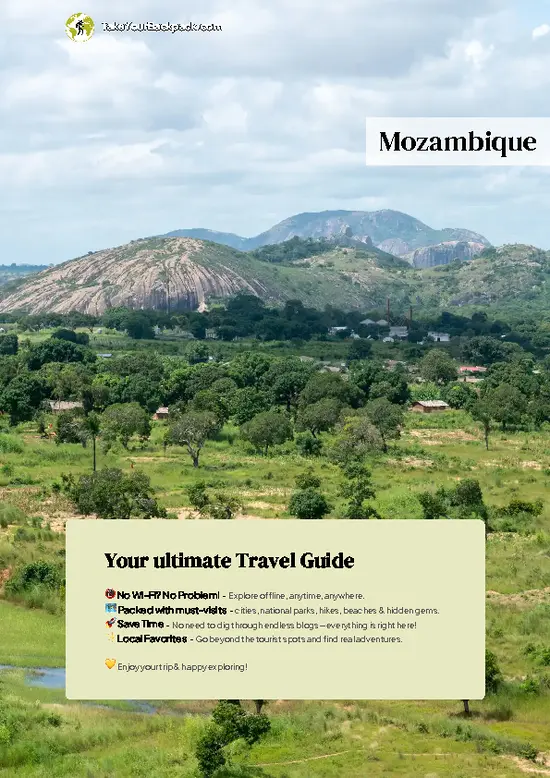
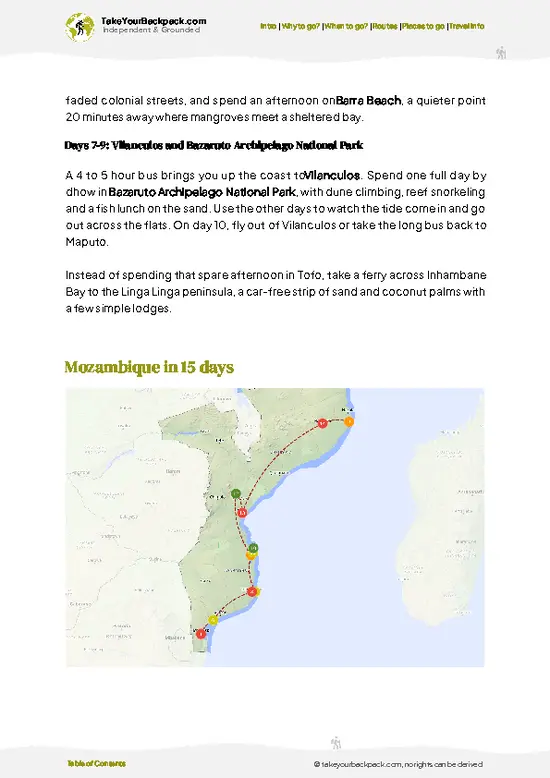
example page 0 from our offline Travel Guide for Mozambique
example page 1 from our offline Travel Guide for Mozambique
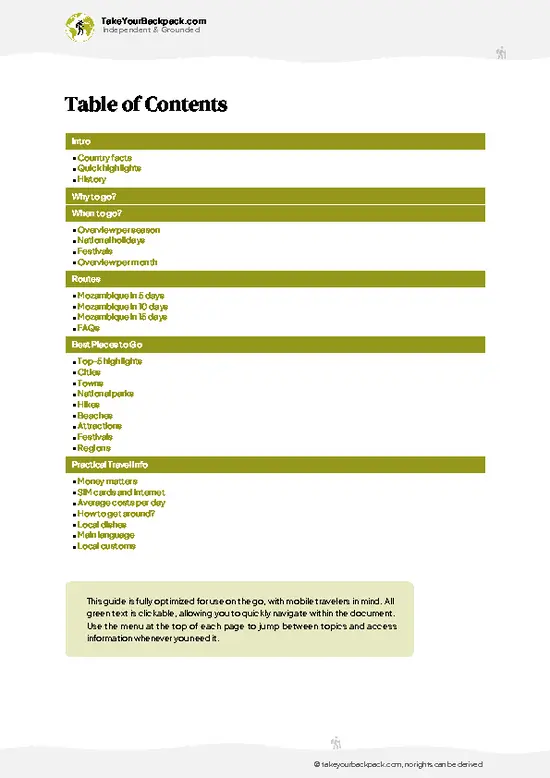
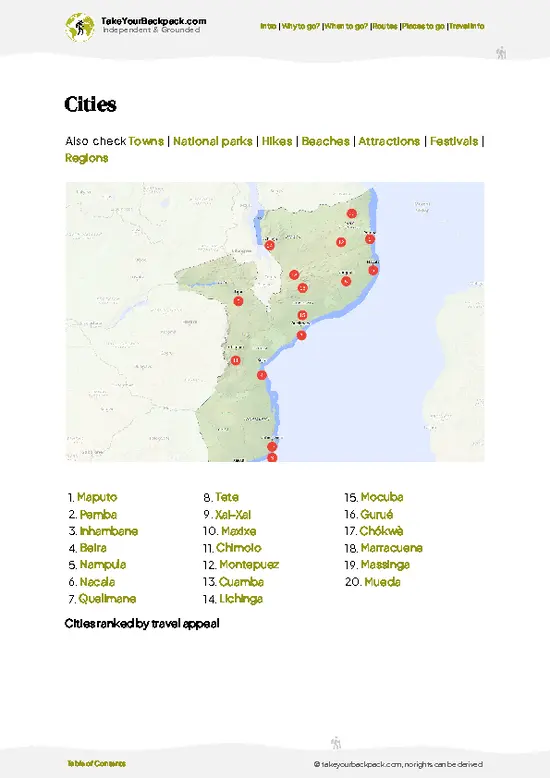
example page 2 from our offline Travel Guide for Mozambique
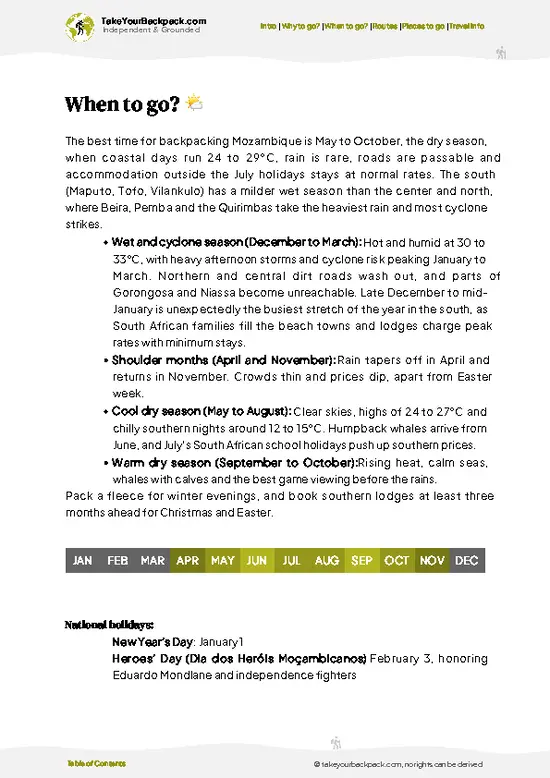
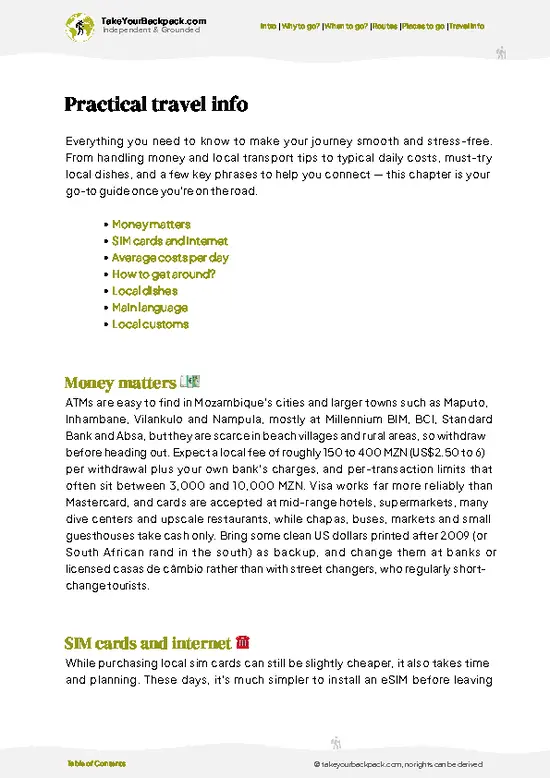
example page 3 from our offline Travel Guide for Mozambique
example page 4 from our offline Travel Guide for Mozambique
example page 5 from our offline Travel Guide for Mozambique
example page 6 from our offline Travel Guide for Mozambique
example page 7 from our offline Travel Guide for Mozambique
Loading the map 🌍
CLICK TO FILTER
cities
towns
national parks
hikes
beaches
attractions
festivals
regions
SHOW COUNTRY’S BESTSHOW ALL

✨ Why go?
Ranked #4 town in Mozambique
Reasons people choose to visit here

Inharrime suits the traveler who likes to find places before the guidebooks do. It works as an overnight pause on the long run along the EN1, and most people stay one night, maybe two if the lakes pull them in. The draw is its Lagoa Poelela side of the coast, a string of freshwater and brackish lakes and dunes that you reach by arranging a local lift, and the cashew and coconut groves around town, where harvest-season roadside stalls sell fresh nuts and palm wine. Guesthouses are small and family-run, so you get real conversation over breakfast rather than a dorm crowd. This is a slow-travel stop for solo travelers who are comfortable with a little Portuguese and a lot of pointing and smiling. Hikers and beach seekers will find more polish in Tofo, farther north. Nightlife is a bar and a speaker, … read more 👉
Inharrime suits the traveler who likes to find places before the guidebooks do. It works as an overnight pause on the long run along the EN1, and most people stay one night, maybe two if the lakes pull them in. The draw is its Lagoa Poelela side of the coast, a string of freshwater and brackish lakes and dunes that you reach by arranging a local lift, and the cashew and coconut groves around town, where harvest-season roadside stalls sell fresh nuts and palm wine. Guesthouses are small and family-run, so you get real conversation over breakfast rather than a dorm crowd. This is a slow-travel stop for solo travelers who are comfortable with a little Portuguese and a lot of pointing and smiling. Hikers and beach seekers will find more polish in Tofo, farther north. Nightlife is a bar and a speaker, nothing more. If you want the Mozambique that sits between the famous spots, linger here.

💡 HighlightsWhat this place is best known for

  1. Inharrime Central Market: The town’s daily heart, with stalls of cashews, dried fish, cassava, coconuts and capulana cloth. Go before 9 am when produce is freshest. Entry is free, and a loop with a snack takes 45 minutes to an hour. Bargain gently and in small notes.
  2. Catholic Mission Church area: The colonial-era church and its quiet grounds speak to the town’s Portuguese past and show how faith still anchors local life. Late afternoon light is soft for photos. It is free to look around, and 20 to 30 minutes is plenty. Dress modestly and ask before entering during services.
  3. Roadside cashew and coconut groves: Walk the tracks at the edge of town to see the trees that built the local economy. Harvest runs roughly from late in the year into the new year, when stalls sell fresh nuts for about US$1
… read more 👉
  1. Inharrime Central Market: The town’s daily heart, with stalls of cashews, dried fish, cassava, coconuts and capulana cloth. Go before 9 am when produce is freshest. Entry is free, and a loop with a snack takes 45 minutes to an hour. Bargain gently and in small notes.
  2. Catholic Mission Church area: The colonial-era church and its quiet grounds speak to the town’s Portuguese past and show how faith still anchors local life. Late afternoon light is soft for photos. It is free to look around, and 20 to 30 minutes is plenty. Dress modestly and ask before entering during services.
  3. Roadside cashew and coconut groves: Walk the tracks at the edge of town to see the trees that built the local economy. Harvest runs roughly from late in the year into the new year, when stalls sell fresh nuts for about US$1 to 3 a bag. Allow one to two hours. Mornings are cooler.
  4. Old colonial town center: A short stroll around the main street shows faded Portuguese-era shopfronts and administrative buildings. Late afternoon is pleasant and free, and 30 to 45 minutes covers it. It is more atmosphere than monument.
  5. Sunset beers at a local bar: The best way to meet townspeople is a cold local lager at a roadside bar, usually US$1 to 2 a bottle. Go around dusk and stay an hour or two. Keep your phone in your pocket and your Portuguese phrasebook handy.
For day trips, Inharrime works well for reaching Lagoa Poelela and the dunes on the coast, the beaches near Quissico, and the lakes around Zavala. Combine the market with the cashew groves in one relaxed morning, then save the old center for the late afternoon.
Spotted a mistake or missing something? Contact us.

🏘️ NeighborhoodsUnderstanding the local layout

Inharrime is compact, and you can cover every corner on foot in an afternoon, so lace up and start at the center. Here is how the areas work and how to handle each one.
  • Town center and EN1 strip: Everything runs along the main highway, which is why chapas, trucks and buses all stop here and the air smells of diesel and charcoal smoke. Walk it early, before the heat builds. Grab bread rolls, grilled chicken and cold drinks from stalls and small shops, and pay in meticais, since few places take cards.
  • Central market: This is the town’s engine room. Stallholders sell tomatoes, cassava, cashews, dried fish and capulana cloth, and prices are flexible, so smile, greet first in Portuguese (“bom dia”) and bargain gently. Go before noon, because the best produce vanishes by midday.
  • Residential bairros
… read more 👉
Inharrime is compact, and you can cover every corner on foot in an afternoon, so lace up and start at the center. Here is how the areas work and how to handle each one.
  • Town center and EN1 strip: Everything runs along the main highway, which is why chapas, trucks and buses all stop here and the air smells of diesel and charcoal smoke. Walk it early, before the heat builds. Grab bread rolls, grilled chicken and cold drinks from stalls and small shops, and pay in meticais, since few places take cards.
  • Central market: This is the town’s engine room. Stallholders sell tomatoes, cassava, cashews, dried fish and capulana cloth, and prices are flexible, so smile, greet first in Portuguese (“bom dia”) and bargain gently. Go before noon, because the best produce vanishes by midday.
  • Residential bairros off the highway: Sandy lanes of cement-block homes, cashew trees and papaya. There is no nightlife and little to see formally, so wander with a greeting ready. Kids will practice their English on you. Stick to daylight, since streets are unlit.
  • Lagoon and coast side: West of town, Lake Nhanhele and the sand tracks toward the Indian Ocean beaches open up palm groves and quiet water. Distances are longer than they look and the sand is soft, so hire a ride rather than walking in midday heat.

⌛️ 1 dayA smart one-day plan

7:30 AM, Inharrime Central Market: Start here, because this is the one stop not to skip. Vendors are setting up, cashews are roasting and the freshest produce sells first. Buy a bag of nuts and a bread roll, then wander the stalls for about an hour. Walk onward along the main street.
9:00 AM, Old town center: Stroll the faded colonial facades and the administrative buildings. It is quick and free, and gives context for the town’s past. Stop for coffee at a small café, then head toward the church on foot.
10:30 AM, Catholic Mission Church: Visit the quiet grounds and the church, a calm contrast to the market. Dress modestly and ask before entering. Then follow a dirt track toward the edge of town.
12:00 PM, Cashew and coconut groves: This is the off-route stop. Walk the sandy lanes among the trees … read more 👉
7:30 AM, Inharrime Central Market: Start here, because this is the one stop not to skip. Vendors are setting up, cashews are roasting and the freshest produce sells first. Buy a bag of nuts and a bread roll, then wander the stalls for about an hour. Walk onward along the main street.
9:00 AM, Old town center: Stroll the faded colonial facades and the administrative buildings. It is quick and free, and gives context for the town’s past. Stop for coffee at a small café, then head toward the church on foot.
10:30 AM, Catholic Mission Church: Visit the quiet grounds and the church, a calm contrast to the market. Dress modestly and ask before entering. Then follow a dirt track toward the edge of town.
12:00 PM, Cashew and coconut groves: This is the off-route stop. Walk the sandy lanes among the trees and talk with farmers, who often share a handful of nuts or fresh coconut water. Stay about two hours, since shade is thin at midday.
2:30 PM, Lunch at a local eatery: Order grilled fish or chicken with rice and a cold drink. Rest through the hottest hours.
4:30 PM, Slow walk back through town: Browse any remaining shops and chat with locals as the light softens.
6:00 PM, Roadside bar: Finish with a cold lager and the evening traffic along the EN1.

🌤️ When to go?When to go for the best experience

May to September is the easiest window for Inharrime, with dry, sunny days of 22 to 27°C (72 to 81°F) and cool nights that can dip to 12 to 15°C (54 to 59°F).
  • Cool Dry Season (May to September): Comfortable walking weather and daylight of roughly 11 to 12 hours. Coastal beaches get busier in July, and rooms cost slightly more then.
  • Hot Wet Season (November to March): Temperatures of 28 to 33°C (82 to 91°F), heavy humidity and afternoon downpours. Sand tracks turn boggy, and cyclone-linked storms are possible, especially January to March. Daylight stretches to about 13 hours.
  • Shoulder Months (April, October): Warm, fewer visitors and lower prices, though the first rains can arrive in October.
  • Festive Periods: Late December to early January fills coastal lodges with South African holidaymakers and
… read more 👉
May to September is the easiest window for Inharrime, with dry, sunny days of 22 to 27°C (72 to 81°F) and cool nights that can dip to 12 to 15°C (54 to 59°F).
  • Cool Dry Season (May to September): Comfortable walking weather and daylight of roughly 11 to 12 hours. Coastal beaches get busier in July, and rooms cost slightly more then.
  • Hot Wet Season (November to March): Temperatures of 28 to 33°C (82 to 91°F), heavy humidity and afternoon downpours. Sand tracks turn boggy, and cyclone-linked storms are possible, especially January to March. Daylight stretches to about 13 hours.
  • Shoulder Months (April, October): Warm, fewer visitors and lower prices, though the first rains can arrive in October.
  • Festive Periods: Late December to early January fills coastal lodges with South African holidaymakers and lifts prices and transport demand.
Arrive midweek in June or August and you will have the roads and beaches nearly to yourself.


source: climatestotravel.comJANJanuary: fair for travelingFEBFebruary: fair for travelingMARMarch: fair for travelingAPRApril: fair for travelingMAYMay: highly recommended for travelingJUNJune: excellent for travelingJULJuly: excellent for travelingAUGAugust: excellent for travelingSEPSeptember: excellent for travelingOCTOctober: highly recommended for travelingNOVNovember: fair for travelingDECDecember: fair for traveling
when-to-go

✈️ The backpacker research shortcutMozambique Travel Guide

An offline-friendly backpacking guide with optimized travel routes, ranked highlights, transport advice, and the best areas to stay.
example page 0 from our offline Travel Guide for Mozambique
example page 1 from our offline Travel Guide for Mozambique
example page 2 from our offline Travel Guide for Mozambique
example page 3 from our offline Travel Guide for Mozambique
example page 4 from our offline Travel Guide for Mozambique
example page 5 from our offline Travel Guide for Mozambique
example page 6 from our offline Travel Guide for Mozambique
example page 7 from our offline Travel Guide for Mozambique
The digital guide (324 pages) contains:
✅ 78 highlights, ranked by travel appeal
✅ Optimized 5, 10 & 15-day travel routes
✅ Cities, national parks, landmarks, beaches
✅ How to get around
✅ Offline-friendly for travel without Wi-Fi
👉 Click to see all 30+ guide features

📅 Plan smarter in minutes, not weeks
✅ Month by month travel advice
✅ Festivals & national holidays
✅ Budget expectations

🗺️ Go to the right places, skip the overrated ones
✅ Honest pros & cons of destinations
✅ Top hikes, parks & viewpoints
✅ Lesser-known places most travelers miss
✅ Clear “worth it vs skip it” guidance

🛏️ Travel smoothly without rookie mistakes
✅ Best areas to stay
✅ Transport systems explained simply
✅ Common scams & safety advice
✅ SIM cards, money & practical tips

🌍 Understand the country, not just visit it
✅ Culture & traditions
✅ 52 Essential phrases & customs
✅ Festivals worth planning around
✅ Traveler-friendly historical context
✅ Insights that make places more meaningful

📱 Built for real travel conditions
✅ Fully downloadable PDF
✅ Works completely offline
✅ Optimized for phone use
✅ Useful in remote areas & buses
✅ Everything in one place
Stop searching, start planning
Get instant access to your full guide. 30‑day money-back guarantee.
+ Add another guide for just

By proceeding you agree to our terms.
Sent to your inbox immediately after payment • 100% Secure Checkout
Best Backpacking Travel Advisor 2025 tourism awardBest Backpacking
Travel Advisor
2025
What others say about Take Your Backpack Guides:
⭐⭐⭐⭐⭐
Fantastic, amazing amount of information!
⭐⭐⭐⭐⭐
My goodness this is amazing, it's what I've been looking for hats off too you!
⭐⭐⭐⭐⭐
I think this is absolutely BRILLIANT
⭐⭐⭐⭐
Very complete and informative. It's still missing places, but I gotta to commend you
⭐⭐⭐⭐⭐
This is truly amazing, thank you, can't wait to explore it with my kids!
⭐⭐⭐⭐⭐
Awesome resource, thank you!
⭐⭐⭐⭐⭐
This is amazing! Can't wait to explore the ones I haven't seen
⭐⭐⭐⭐
I love this! Well done, great idea.
⭐⭐⭐⭐⭐
Thanks for taking the time to make this gem!
⭐⭐⭐⭐⭐
This might be the best website I've ever seen.
⭐⭐⭐⭐⭐
Congratulations, and thank you so much for your work; it's incredibly valuable.
⭐⭐⭐⭐
In all seriousness I think you did a great job pointing out the important spots
⭐⭐⭐⭐⭐
10/10 very good
⭐⭐⭐⭐⭐
As someone who's only just starting to visit regularly this is awesome, thank you.
⭐⭐⭐⭐
Thank you very much! I'm going to visit my dad, it's going to be very useful!
⭐⭐⭐⭐⭐
This is really cool! We'll be travelling for the first time and this definitely come in handy.
⭐⭐⭐⭐⭐
You are now our minister of culture, congratulations 👨‍💼
⭐⭐⭐⭐⭐
Just wanted to tell you that this is a pearl! Going to follow your recommendations.
⭐⭐⭐⭐⭐
This is so cool. I'll definitely be using the resource for my travels soon.
⭐⭐⭐⭐⭐
This is very impressive! Good work.
⭐⭐⭐⭐⭐
This is an amazing and informative site. Very well done!

🛏️ Where to stay?How to pick the right area

The town center along the EN1 is the practical choice for a budget bed in Inharrime. Guesthouses and simple pensions cluster close to the highway and market, which puts you within a few minutes’ walk of food stalls, shops and the roadside spots where chapas and coaches stop. That matters because early departures are the norm here, and you will not want a long trek at dawn with a pack.

Dorm-style hostels are rare in Inharrime, so expect private rooms with fan and shared or basic en-suite bathrooms, typically at US$12 to 25 a night. Rooms nearest the highway get truck noise from early morning, … read more 👉
The town center along the EN1 is the practical choice for a budget bed in Inharrime. Guesthouses and simple pensions cluster close to the highway and market, which puts you within a few minutes’ walk of food stalls, shops and the roadside spots where chapas and coaches stop. That matters because early departures are the norm here, and you will not want a long trek at dawn with a pack.

Dorm-style hostels are rare in Inharrime, so expect private rooms with fan and shared or basic en-suite bathrooms, typically at US$12 to 25 a night. Rooms nearest the highway get truck noise from early morning, so ask for one at the back of the property. Nights in the center are quiet after about 9 pm, and lit main roads make a short walk back from dinner straightforward.

The second option is the coast and lagoon side, a drive of some distance from town. Simple lodges and camping spots there suit travelers who want sand, palms and silence, and who have their own transport or have arranged a ride. Camping is cheapest at roughly US$5 to 10 per person, but shops are thin, so stock up on food and water in town first. Book ahead for late December and July, when coastal beds fill fast.

🚌 Getting aroundHow to get around Inharrime

Waiting for a long-distance bus to fill a seat at the roadside instead of boarding early at a terminal in Maxixe or Xai-Xai costs visitors hours, so flag vehicles before 8 am. Inharrime sits on the EN1 highway, which means almost everything stops here, and the town itself is small enough that you will rarely need a vehicle inside it. Public transport is frequent but informal, and it leaves when full, not on a timetable.
  • Walking: The center, market and highway strip take under 20 minutes end to end. Do it in the morning, because midday sun on tarmac saps you quickly.
  • Chapas (minibuses): These are the backbone of regional travel along the EN1. Expect US$1 to 4 for hops to nearby towns such as Zavala or Jangamo, and roughly US$5 to 9 toward Xai-Xai or Inhambane. They run from dawn to mid-afternoon,
… read more 👉
Waiting for a long-distance bus to fill a seat at the roadside instead of boarding early at a terminal in Maxixe or Xai-Xai costs visitors hours, so flag vehicles before 8 am. Inharrime sits on the EN1 highway, which means almost everything stops here, and the town itself is small enough that you will rarely need a vehicle inside it. Public transport is frequent but informal, and it leaves when full, not on a timetable.
  • Walking: The center, market and highway strip take under 20 minutes end to end. Do it in the morning, because midday sun on tarmac saps you quickly.
  • Chapas (minibuses): These are the backbone of regional travel along the EN1. Expect US$1 to 4 for hops to nearby towns such as Zavala or Jangamo, and roughly US$5 to 9 toward Xai-Xai or Inhambane. They run from dawn to mid-afternoon, and later services thin out, so start early. Seats are tight and bags often ride on the roof or at your feet.
  • Long-distance coaches: Larger buses pass along the EN1 between Maputo and Inhambane or farther north. Fares run about US$10 to 20 depending on the leg, and you flag them at the roadside or pre-book in a larger city. They are more comfortable but may arrive full, so ask locals which stop to wait at.
  • Motorbike taxis and tuk-tuks: Short hops in town cost about US$0.50 to 2, and rides toward the lagoon or beaches US$3 to 8. Agree the price before you climb on and carry small notes, since drivers rarely have change.
  • Hitching or private transfer: On the sandy coastal tracks, a 4x4 pickup is often the only option. Rates vary widely, around US$20 to 40 for a return trip, and sharing the cost with other travelers helps.

👛 Costs (as of 22 October 2026)What things cost and how to budget

Inharrime costs a backpacker about US$38 to 55 a day, and the figure below puts the total at US$47 with a basic private room in high season, since dorm beds are hard to find.
CategoryBudget RangeLocal Reality
Dorm/Basic AccommodationUS$12 to 25 (high season), US$10 to 18 (low season)Private rooms in guesthouses are the norm. Camping on the coast runs US$5 to 10.
MealsUS$7 to 12Grilled chicken, rice and beans, fresh bread and stew from market stalls and small restaurants.
Local TransportUS$3 to 8Chapas for nearby towns, motorbike taxis for short hops. Longer trips add up quickly.
Basic Activities/Entry FeesUS$0 to 5Beaches, the lagoon and the market are free, though rides to them cost extra.
MiscellaneousUS$3 to 6Water, SIM data, snacks and small tips.
Total Daily BudgetUS$47Realistic for independent
… read more 👉
Inharrime costs a backpacker about US$38 to 55 a day, and the figure below puts the total at US$47 with a basic private room in high season, since dorm beds are hard to find.
CategoryBudget RangeLocal Reality
Dorm/Basic AccommodationUS$12 to 25 (high season), US$10 to 18 (low season)Private rooms in guesthouses are the norm. Camping on the coast runs US$5 to 10.
MealsUS$7 to 12Grilled chicken, rice and beans, fresh bread and stew from market stalls and small restaurants.
Local TransportUS$3 to 8Chapas for nearby towns, motorbike taxis for short hops. Longer trips add up quickly.
Basic Activities/Entry FeesUS$0 to 5Beaches, the lagoon and the market are free, though rides to them cost extra.
MiscellaneousUS$3 to 6Water, SIM data, snacks and small tips.
Total Daily BudgetUS$47Realistic for independent travelers in high season.
Carry small bills in meticais and withdraw cash in a larger town first, since ATMs in Inharrime can be unreliable. Buying produce and bread at the market instead of eating at lodges cuts your food spend by a third.
⚠️ Prices can change and everyone travels differently, so take this as a rough guide. Hope it helps you plan your adventure!

🚌 Day tripsShort trips worth adding

Inharrime works well as a base for day trips, because the EN1 gives you a straight line to coast and lagoon destinations and frequent chapas run in daylight.
Lake Nhanhele and the Lagoon Shore:
A freshwater lagoon framed by dunes and palms, ideal for a swim or a slow walk on pale sand. Reaching it takes about 30 to 60 minutes by motorbike taxi or pickup, and a return trip costs around US$6 to 15. Go between May and September when tracks are firm. First-timers often start walking in midday heat and underestimate soft sand, so hire a ride.

Zavala and Zandamela Coast:
A short hop along the EN1 plus a sandy track delivers long Indian Ocean beaches with little development. Allow 1 to 2 hours each way by chapa then a local ride, for about US$8 to 20 in total. Bring your own water and snacks, since … read more 👉
Inharrime works well as a base for day trips, because the EN1 gives you a straight line to coast and lagoon destinations and frequent chapas run in daylight.
Lake Nhanhele and the Lagoon Shore:
A freshwater lagoon framed by dunes and palms, ideal for a swim or a slow walk on pale sand. Reaching it takes about 30 to 60 minutes by motorbike taxi or pickup, and a return trip costs around US$6 to 15. Go between May and September when tracks are firm. First-timers often start walking in midday heat and underestimate soft sand, so hire a ride.

Zavala and Zandamela Coast:
A short hop along the EN1 plus a sandy track delivers long Indian Ocean beaches with little development. Allow 1 to 2 hours each way by chapa then a local ride, for about US$8 to 20 in total. Bring your own water and snacks, since beach stalls are sparse. Leave by early afternoon so you are not stuck waiting for a ride back.

Jangamo Beaches:
North of town, Jangamo has surf-pounded beaches, fishing boats and a few simple lodges. By chapa and a short transfer it takes about 1 to 1.5 hours, costing roughly US$6 to 14 return. Swim only where locals do, as rip currents run strong. The cooler months give the clearest days for walking the shoreline.

Inhambane City:
A colonial-era waterfront with a market, mosques and old Portuguese buildings, reached in roughly 2 to 3 hours by chapa or coach for about US$6 to 12 each way. It is a long day, so leave before 7 am and book your return seat on arrival.
👉 Explore Inhambane

🛡️ SafetyStaying Safe: What Travelers Should Know

Inharrime is a quiet, low-key town, and most problems are minor. Petty theft such as phone snatching or bag lifting can happen in the market and around chapa stops, so keep valuables in front pockets and a zipped daypack, and avoid flashing a camera or cash. Streets in residential bairros are unlit, so after dark take a motorbike taxi instead of walking, and solo travelers, women especially, will feel more comfortable arranging transport in advance. Police checkpoints along the EN1 are routine. Carry a photocopy of your passport and visa, stay polite, and ask for an official receipt if any fine is demanded. Drivers sometimes quote higher fares to foreigners, so ask locals the usual price first. On beaches, watch for strong currents and never leave belongings unattended on the sand. Swim only where locals swim.

FAQFrequently asked questions about Inharrime

Inharrime is mainly a stopover, though it earns a night if you want quiet beaches. The EN1 highway puts it between Xai-Xai and Inhambane, and Lake Nhanhele and the coast at Zavala and Jangamo are the real draws. You will find few sights in town itself, so plan on using it as a base for sand and lagoon time.
Inharrime needs one to two days. One day covers the market and a trip to Lake Nhanhele, costing around US$6 to 15 in rides. Add a second day if you want to reach the Zavala or Jangamo beaches, or to have a slow morning before an early chapa.
Inharrime can be visited as a day trip from Inhambane, roughly 2 to 3 hours each way by chapa at about US$6 to 12 one way, but it makes for a long day with little time on the ground. Staying one night gives you time for the lagoon and the coast. From Xai-Xai it is closer, around 2 hours by road, so a return trip is more realistic there.
⚠️ Things can change over time, so always validate details locally before you go.

Other Mozambican towns near Inharrime

Explore more nearby:

  • Quissico—Chopi timbila music, lagoon lookout, dune ridge, empty ocean beach| 39 km away
  • Morrumbene—Mphanda estuary, crab and prawn sellers, EN1 stalls, sandy lanes| 96 km away
  • Vilankulo—Bazaruto boat trips, lateen dhows, tidal sandbars, beachfront bars| 277 km away

💡 Not sure where to go next?
Create a personalized itinerary for Mozambique including Inharrime and the places that fit your trip.

Generate my itinerary

👉 Discover all towns

Or checkout all Mozambique has to offer (think cities, towns, villages, national parks, hikes, beaches, festivals)
Country photo of Mozambique

We 💚 feedbackWhat to keep in mind

Inharrime rewards those who look at the trees. Most people see cashew and coconut groves as roadside blur, but walking among them at harvest shows the real local economy at work. I would bring small notes for buying nuts straight from growers and skip rushing through. A single night here is enough, but a second lets you slow down.

✍️ Help improve this page!
The information on this page is based on in-depth research, insights shared by experienced travelers, and feedback from the local travel community in Mozambique. While every effort is made to keep the information accurate and current, conditions can change — so if you spot anything incorrect or outdated, please get in touch.


🙋‍♂️ Give feedback

👋 Meet the founderWho’s Behind Take Your Backpack?

Johan, backpacker and founder of TakeYourBackpackHi, I’m Johan (Netherlands 🇳🇱), the creator of TakeYourBackpack. Over the past 3 decades, I’ve backpacked through 90+ countries across six continents, gaining extensive experience with independent travel, long-term trips, and overland routes.

This site is built on a combination of firsthand travel experience and carefully curated insights from other backpackers. Many guides are based on places I’ve personally visited, while others bring together tips, observations, and practical advice shared by trusted travelers I’ve met along the way.

The goal is to provide realistic, experience-driven guidance — not generic itineraries — so you can explore destinations with better context, clearer expectations, and more confidence.