Exploring Mozambique’s TownsMozambique’s towns pulse with life, each offering a unique rhythm that reflects the country’s diverse culture and history. Aim to visit around five to seven towns to truly grasp the essence of this vibrant nation. Each stop reveals layers of local charm, from bustling markets to serene coastal views.
Start your journey in the north, where towns like Pemba and Nacala showcase the stunning coastline and rich Swahili influences. The beaches here are pristine, but getting around can be a challenge. Roads can be rough, and public transport is often unpredictable. Expect to spend some time navigating these logistics. However, the reward is worth it: fresh seafood, warm local hospitality, and the chance to dive into the Indian Ocean’s crystal-clear waters.
Moving …
read more 👉 Exploring Mozambique’s Towns
Mozambique’s towns pulse with life, each offering a unique rhythm that reflects the country’s diverse culture and history. Aim to visit around five to seven towns to truly grasp the essence of this vibrant nation. Each stop reveals layers of local charm, from bustling markets to serene coastal views.
Start your journey in the north, where towns like Pemba and Nacala showcase the stunning coastline and rich Swahili influences. The beaches here are pristine, but getting around can be a challenge. Roads can be rough, and public transport is often unpredictable. Expect to spend some time navigating these logistics. However, the reward is worth it: fresh seafood, warm local hospitality, and the chance to dive into the Indian Ocean’s crystal-clear waters.
Moving south, you’ll encounter towns like Beira and Inhambane. Beira, with its colonial architecture and vibrant street life, offers a gritty charm. The energy here is palpable, but be prepared for a slower pace. Infrastructure can be lacking, so plan for delays. Inhambane, on the other hand, is a gateway to stunning beaches and laid-back vibes. The contrast between the two towns highlights Mozambique’s regional diversity.
The central region is where you’ll find the heart of Mozambican culture. Towns like Chimoio and Tete provide a glimpse into daily life. Markets are bustling with locals selling everything from fresh produce to handmade crafts. Here, the cultural exchange is rich, but language barriers can be a hurdle. Brush up on a few Portuguese phrases; it goes a long way in connecting with the locals.
Safety is a consideration throughout your travels. While Mozambique is generally welcoming, petty crime can occur, especially in urban areas. Stay aware of your surroundings, avoid displaying valuables, and opt for reputable transport options. Engaging with local communities can enhance your experience, but approach with respect and openness.
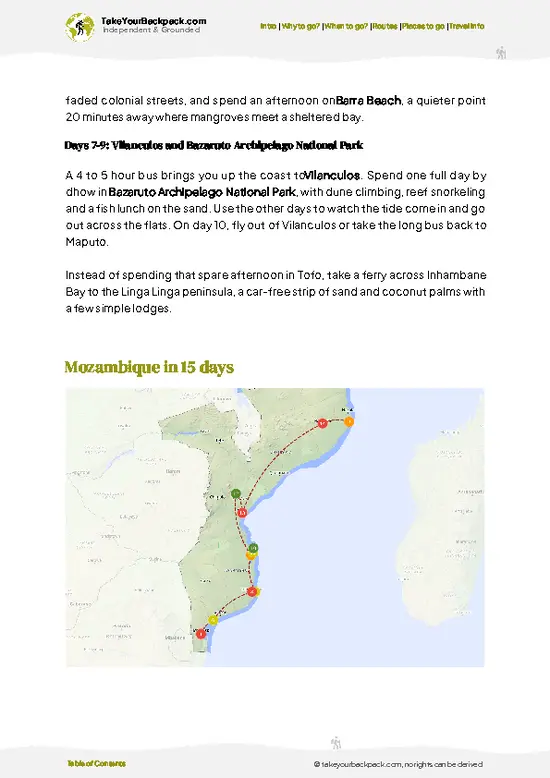
As you plan your itinerary, consider the travel rhythm. Distances can be deceptive; what looks close on a map may take longer than expected due to road conditions. Allocate time for unexpected detours—these often lead to the most memorable experiences. A good rule of thumb is to spend at least two to three days in each town to soak in the local atmosphere and explore nearby attractions.
Budget-wise, Mozambique can be a mixed bag. While some towns offer affordable accommodations and street food, others, especially those catering to tourists, can be pricier. Factor in transportation costs, which can vary widely. Local buses are cheap but can be cramped and slow. Renting a car gives you flexibility but comes with higher costs and the need for careful navigation.
In the end, the journey through Mozambique’s towns is about embracing the grit and the grind. The burn of the trails, the chatter of the markets, and the taste of local dishes all contribute to a rich tapestry of experiences. Each town has its own story, waiting for you to discover it. The effort you put in will pay off in moments of connection, breathtaking views, and the simple joy of being in a place that feels alive.