×

Myanmar🇲🇲 | landmarksKakku Pagodasclustered stupas, Shan hills, remote pilgrimage | things to do and best time to go

Explore Bagan TemplesExplore Laykyun Sekkya Buddha

Backpacking in Kakku Pagodas
👍 Recommendedunique site ranked #4
By Johan Kruseman 🇳🇱 | Updated June 2, 2026

You know what nobody tells you about Kakku? It’s one of the few major pagoda sites in Myanmar where you can still wander without feeling like you’re in a theme park queue. Kakku Pagodas sits in Shan State, southeast of Inle Lake, usually reached as a day trip from Nyaung Shwe or Taunggyi.

Picture a dense forest of over 2,000 slim stupas, packed shoulder to shoulder, bells tinkling in the wind, with barely any tour buses in sight. The wow-factor is real, but it’s quiet, almost eerie, not fireworks-and-drone-shots dramatic. Getting there is a bit of a mission (bumpy roads, permits usually arranged via local agencies, limited public transport), and costs add up more than you’d expect for “just a side trip.” But the cultural weight of this Pa-O religious site, the soft light on weathered stucco, and the freedom to explore without crowds make it feel like you’ve cheated the algorithm.

Discover everything you want to know in the 📖 Myanmar Travel Guide.
Safety warning

The current risk level for Myanmar is high. Check the advice before going.


Get your Myanmar guide
110 ranked highlights, routes & tips, works offline (405 pages)
Loading the map 🌍
CLICK TO FILTER
cities
towns
landmarks
national parks
hikes
beaches
attractions
festivals
regions
SHOW COUNTRY’S BESTSHOW ALL

✨ Why go?
Ranked #4 unique site in Myanmar
What makes this unique site worth visiting

The Kakku Pagodas in Myanmar are a breath of fresh air amid the usual tourist chaos. Forget the Instagram hype; this place is about authenticity and serenity. You’ll find over 2,500 ancient stupas, many still adorned with intricate carvings. It’s a unique experience that feels untouched by the commercialization that plagues other sites.

Getting there isn’t a hassle either. A short drive from Inle Lake makes it a perfect addition to your itinerary. The cost is minimal, often just a small entrance fee, which means you can soak in the history without breaking the bank.

The real magic lies in the atmosphere. Unlike the crowded temples elsewhere, Kakku offers a chance to wander and reflect. You can almost hear the whispers of the past as you stroll through the pagodas.

This isn’t just a stop; … read more 👉
The Kakku Pagodas in Myanmar are a breath of fresh air amid the usual tourist chaos. Forget the Instagram hype; this place is about authenticity and serenity. You’ll find over 2,500 ancient stupas, many still adorned with intricate carvings. It’s a unique experience that feels untouched by the commercialization that plagues other sites.

Getting there isn’t a hassle either. A short drive from Inle Lake makes it a perfect addition to your itinerary. The cost is minimal, often just a small entrance fee, which means you can soak in the history without breaking the bank.

The real magic lies in the atmosphere. Unlike the crowded temples elsewhere, Kakku offers a chance to wander and reflect. You can almost hear the whispers of the past as you stroll through the pagodas.

This isn’t just a stop; it’s a journey into the heart of Myanmar’s culture. Make time for Kakku, and you’ll leave with more than just photos—you’ll carry a piece of its soul with you.
Want to include Kakku Pagodas in your Myanmar route?
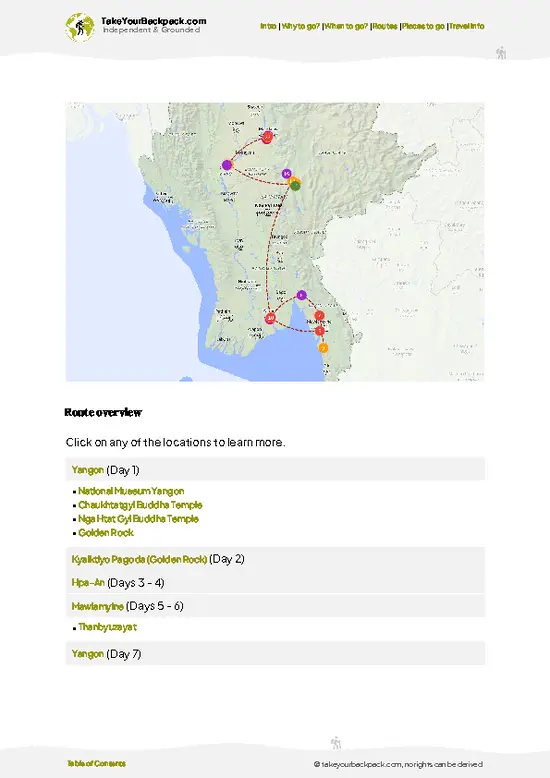
Create a personalized Myanmar itinerary that includes Kakku Pagodas and the places that fit your trip — based on your travel style, budget, and available time. Get your route in seconds.

Generate my trip

💡 HighlightsEssential experiences to have while visiting Kakku Pagodas

  • Sea of stupas — Thousands of small bell-shaped pagodas packed into terraces create a surreal, almost man-made landscape. From a distance it looks like a stone city; up close it’s obvious each stupa has its own wear and personality.
  • Intricate stupa details — Walk between the rows and you’ll find carved niches, tiny Buddha images, and subtle stylistic differences that hint at different building phases. It’s the kind of place where peering closely rewards you with delicate craftsmanship most guidebooks skip.
  • Pa-O cultural atmosphere — The site is cared for by local Pa-O communities, so you’ll see traditional dress, offerings, and everyday rituals happening alongside tourism. That living practice gives Kakku a humbler, more authentic vibe than heavily restored sites.
  • Sunrise and sunset silhouettes
read more 👉
  • Sea of stupas — Thousands of small bell-shaped pagodas packed into terraces create a surreal, almost man-made landscape. From a distance it looks like a stone city; up close it’s obvious each stupa has its own wear and personality.
  • Intricate stupa details — Walk between the rows and you’ll find carved niches, tiny Buddha images, and subtle stylistic differences that hint at different building phases. It’s the kind of place where peering closely rewards you with delicate craftsmanship most guidebooks skip.
  • Pa-O cultural atmosphere — The site is cared for by local Pa-O communities, so you’ll see traditional dress, offerings, and everyday rituals happening alongside tourism. That living practice gives Kakku a humbler, more authentic vibe than heavily restored sites.
  • Sunrise and sunset silhouettes (personal favorite) — Watching the stupas turn from cool grey to warm gold as the sun rises or sets is magical; light throws long shadows and makes the whole field glow. It’s quiet, photogenic, and easy to sit and just breathe—my favorite reason to come back.
  • Hidden alleys and small shrines — The narrow pathways between pagodas lead to tiny, often overlooked shrines and guardian figures. Exploring them feels like treasure-hunting and gives a sense of intimacy you won’t get from the main viewpoints.
  • Rural setting and views — Kakku sits among farms and low hills, so the backdrop of green fields and distant mountains adds a serene contrast to the dense stonework. The setting makes the site less crowded and more relaxed than bigger tourist hubs.
  • Easy day-trip value and combo potential — It’s a compact site that pairs well with visits to Taunggyi, Inle Lake, or nearby Pa-O villages, so you can add real cultural context without a huge detour. For budget travelers it’s a great high-impact stop that doesn’t demand a full day if you’re strapped for time.
Spotted a mistake or missing something? Contact us.

Things to do near Kakku Pagodas

Ratings based on Tripadvisor reviews. When you book through this link, you support our work at no extra cost to you.

🌤️ When to go?Seasonal considerations and timing


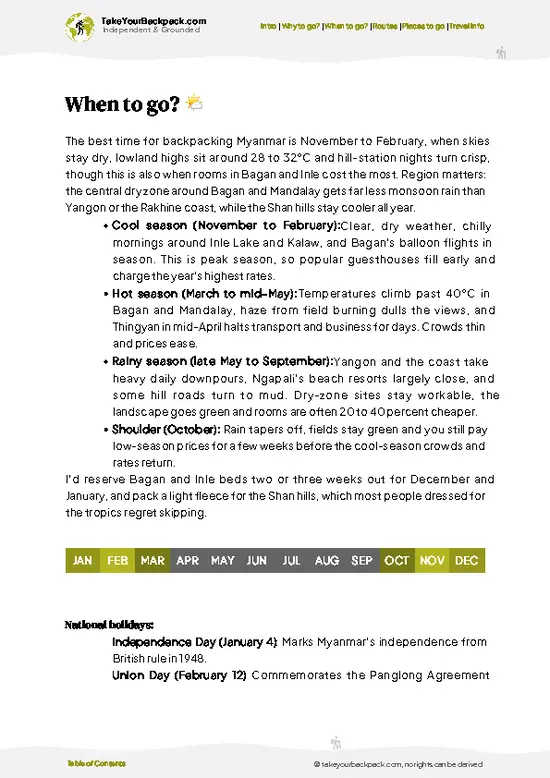
  • Weather: The dry season from November to February is your best bet. Expect clear skies and minimal rain, which means the dusty trails around Kakku Pagodas won’t turn into mud pits. Avoid the monsoon months (June to September) when heavy rains can wash out paths and obscure views.

  • Temperature: During the dry season, daytime temps hover around 20-25°C (68-77°F), perfect for trekking without overheating. Nights can dip to 10°C (50°F), so pack layers. The hot season (March to May) can spike above 35°C (95°F), making midday hikes brutal.

  • Daylight Hours: Myanmar enjoys roughly 11-12 hours of daylight year-round, but the dry season offers more consistent sunshine. This means you get reliable light for early starts and late afternoon explorations without the risk of sudden storms cutting your
read more 👉

  • Weather: The dry season from November to February is your best bet. Expect clear skies and minimal rain, which means the dusty trails around Kakku Pagodas won’t turn into mud pits. Avoid the monsoon months (June to September) when heavy rains can wash out paths and obscure views.

  • Temperature: During the dry season, daytime temps hover around 20-25°C (68-77°F), perfect for trekking without overheating. Nights can dip to 10°C (50°F), so pack layers. The hot season (March to May) can spike above 35°C (95°F), making midday hikes brutal.

  • Daylight Hours: Myanmar enjoys roughly 11-12 hours of daylight year-round, but the dry season offers more consistent sunshine. This means you get reliable light for early starts and late afternoon explorations without the risk of sudden storms cutting your day short.

  • Crowds: Kakku Pagodas is off the beaten path, but the dry season, especially December and January, draws more tourists and local pilgrims. If you want solitude, aim for shoulder months like November or February when the weather is still good but fewer people show up.

  • Seasonal Activities: The full moon festival in November is a cultural highlight, lighting up the pagodas with lanterns and ceremonies. It’s crowded but worth it if you want to witness local traditions in full swing. Otherwise, the quieter months offer a more meditative experience.

  • Price Fluctuations: Expect higher prices for accommodation and guides during peak dry season and festival times. Off-season rates drop noticeably, but so does accessibility and comfort. Budget travelers can save by visiting just before or after the main season.


Pro-tip: Visit in late November to catch the festival’s energy without the crush, then slip into the quieter days after for a deeper, more personal connection with Kakku’s ancient spires.


source: climatestotravel.comJANJanuary: excellent for travelingFEBFebruary: highly recommended for travelingMARMarch: fair for travelingAPRApril: fair for travelingMAYMay: fair for travelingJUNJune: below average for travelingJULJuly: below average for travelingAUGAugust: below average for travelingSEPSeptember: below average for travelingOCTOctober: good for travelingNOVNovember: highly recommended for travelingDECDecember: excellent for traveling
when-to-go

✈️ The backpacker research shortcutMyanmar Travel Guide

An offline-friendly backpacking guide with optimized travel routes, ranked highlights, transport advice, and the best areas to stay.
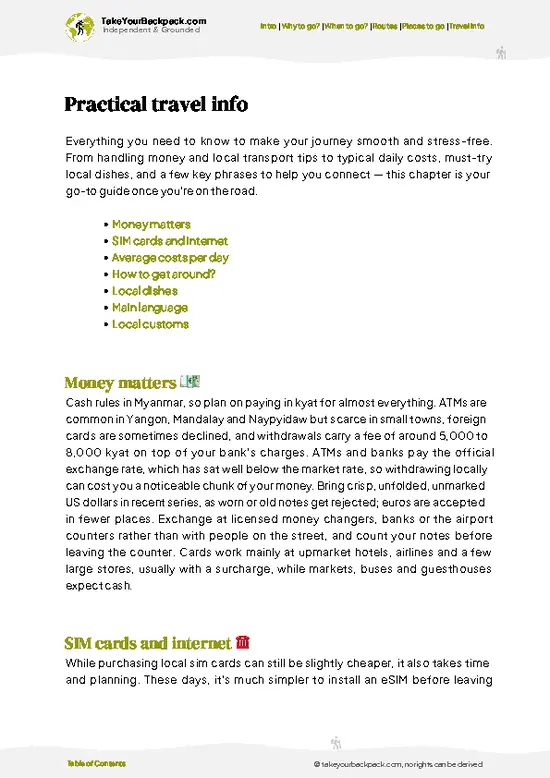
example page 0 from our offline Travel Guide for Myanmar
example page 1 from our offline Travel Guide for Myanmar
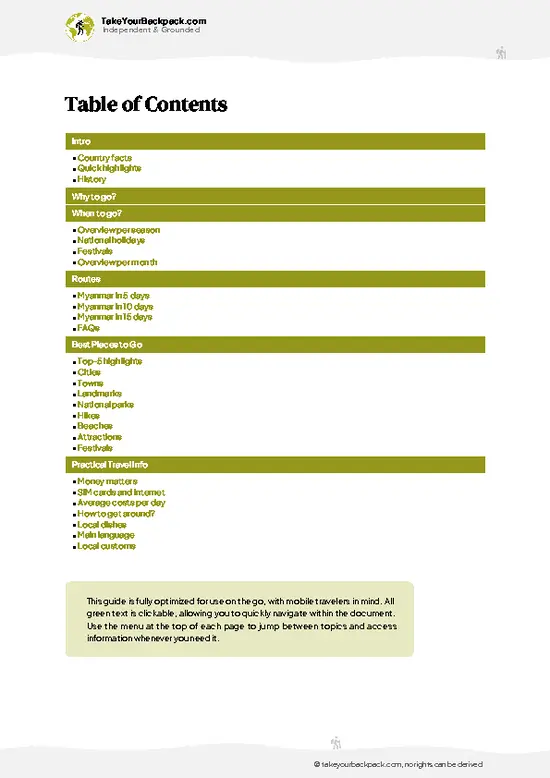
example page 2 from our offline Travel Guide for Myanmar
example page 3 from our offline Travel Guide for Myanmar
example page 4 from our offline Travel Guide for Myanmar
example page 5 from our offline Travel Guide for Myanmar
example page 6 from our offline Travel Guide for Myanmar
example page 7 from our offline Travel Guide for Myanmar
The digital guide (405 pages) contains:
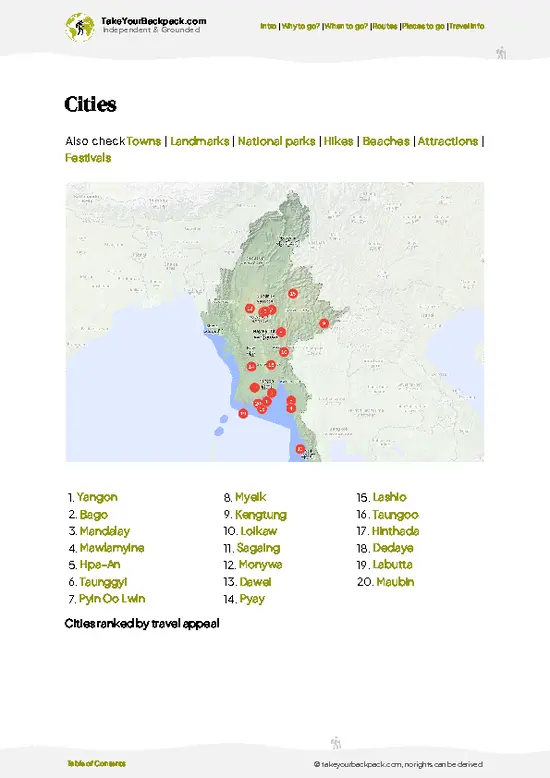
110 highlights, ranked by travel appeal
Optimized 5, 10 & 15-day travel routes
Cities, national parks, landmarks, beaches
How to get around
Offline-friendly for travel without Wi-Fi
👉 Click to see all 30+ guide features

📅 Plan smarter in minutes, not weeks
Month by month travel advice
Festivals & national holidays
Budget expectations

🗺️ Go to the right places, skip the overrated ones
Honest pros & cons of destinations
Top hikes, parks & viewpoints
Lesser-known places most travelers miss
Clear “worth it vs skip it” guidance

🛏️ Travel smoothly without rookie mistakes
Best areas to stay
Transport systems explained simply
Common scams & safety advice
SIM cards, money & practical tips

🌍 Understand the country, not just visit it
Culture & traditions
52 Essential phrases & customs
Festivals worth planning around
Traveler-friendly historical context
Insights that make places more meaningful

📱 Built for real travel conditions
Fully downloadable PDF
Works completely offline
Optimized for phone use
Useful in remote areas & buses
Everything in one place
Save weeks of stressful planning
Get instant access to your full guide. 30‑day money-back guarantee.


By proceeding you agree to our terms.
Sent to your inbox immediately after payment • 100% Secure Checkout
Best Backpacking Travel Advisor 2025 tourism awardBest Backpacking
Travel Advisor
2025
What others say about Take Your Backpack Guides:
⭐⭐⭐⭐⭐
Fantastic, amazing amount of information!
⭐⭐⭐⭐⭐
My goodness this is amazing, it's what I've been looking for hats off too you!
⭐⭐⭐⭐⭐
I think this is absolutely BRILLIANT
⭐⭐⭐⭐
Very complete and informative. It's still missing places, but I gotta to commend you
⭐⭐⭐⭐⭐
This is truly amazing, thank you, can't wait to explore it with my kids!
⭐⭐⭐⭐⭐
Awesome resource, thank you!
⭐⭐⭐⭐⭐
This is amazing! Can't wait to explore the ones I haven't seen
⭐⭐⭐⭐
I love this! Well done, great idea.
⭐⭐⭐⭐⭐
Thanks for taking the time to make this gem!
⭐⭐⭐⭐⭐
This might be the best website I've ever seen.
⭐⭐⭐⭐⭐
Congratulations, and thank you so much for your work; it's incredibly valuable.
⭐⭐⭐⭐
In all seriousness I think you did a great job pointing out the important spots
⭐⭐⭐⭐⭐
10/10 very good
⭐⭐⭐⭐⭐
As someone who's only just starting to visit regularly this is awesome, thank you.
⭐⭐⭐⭐
Thank you very much! I'm going to visit my dad, it's going to be very useful!
⭐⭐⭐⭐⭐
This is really cool! We'll be travelling for the first time and this definitely come in handy.
⭐⭐⭐⭐⭐
You are now our minister of culture, congratulations 👨‍💼
⭐⭐⭐⭐⭐
Just wanted to tell you that this is a pearl! Going to follow your recommendations.
⭐⭐⭐⭐⭐
This is so cool. I'll definitely be using the resource for my travels soon.
⭐⭐⭐⭐⭐
This is very impressive! Good work.
⭐⭐⭐⭐⭐
This is an amazing and informative site. Very well done!

🛏️ Where to stay?Best areas and accommodation options

Staying near the Kakku Pagodas in Myanmar? Let’s cut through the fluff. The area around Taunggyi is your best bet. It’s a hub for backpackers and offers a mix of budget options that keep you close to the action without breaking the bank.

Head to the local guesthouses. They’re often run by families who know the area inside and out. You’ll find a warm welcome and a chance to connect with fellow travelers. The vibe is relaxed, and you can swap stories over a cup of local tea.

Another option is to look for places in Nyaung Shwe. It’s a bit further but worth it for the social scene. The town buzzes … read more 👉
Staying near the Kakku Pagodas in Myanmar? Let’s cut through the fluff. The area around Taunggyi is your best bet. It’s a hub for backpackers and offers a mix of budget options that keep you close to the action without breaking the bank.

Head to the local guesthouses. They’re often run by families who know the area inside and out. You’ll find a warm welcome and a chance to connect with fellow travelers. The vibe is relaxed, and you can swap stories over a cup of local tea.

Another option is to look for places in Nyaung Shwe. It’s a bit further but worth it for the social scene. The town buzzes with backpackers, and you’ll find plenty of eateries and bars to unwind after a day of exploring. Plus, it’s a gateway to Inle Lake, so you can easily extend your adventure.

Crowds can be a hassle, especially during peak season. But if you’re smart about your timing and choose your base wisely, you’ll experience the real magic of Kakku without the Instagram filter.

👛 Costs (as of 25 January 2026)How expensive it really is

Visiting the Kakku Pagodas in Myanmar is a unique experience, but it comes with its own set of costs that you should be aware of.
  • Entrance Fee: Expect to pay around $5 to $10 USD for the entrance fee. This fee grants you access to the pagoda complex, which is home to over 2,000 stupas. It’s a small price for the chance to wander through this stunning site.
  • Transportation: Getting to Kakku can be a bit of a trek. If you’re coming from Inle Lake, a shared taxi or minivan will cost you about $20 to $30 USD one way. Private taxis can run upwards of $50 USD. Factor in the return trip, and it adds up quickly.
  • Guided Tours: If you want a deeper understanding of the site, consider a guided tour. Prices typically range from $30 to $50 USD per person. This often includes transportation and a knowledgeable
read more 👉
Visiting the Kakku Pagodas in Myanmar is a unique experience, but it comes with its own set of costs that you should be aware of.
  • Entrance Fee: Expect to pay around $5 to $10 USD for the entrance fee. This fee grants you access to the pagoda complex, which is home to over 2,000 stupas. It’s a small price for the chance to wander through this stunning site.
  • Transportation: Getting to Kakku can be a bit of a trek. If you’re coming from Inle Lake, a shared taxi or minivan will cost you about $20 to $30 USD one way. Private taxis can run upwards of $50 USD. Factor in the return trip, and it adds up quickly.
  • Guided Tours: If you want a deeper understanding of the site, consider a guided tour. Prices typically range from $30 to $50 USD per person. This often includes transportation and a knowledgeable guide who can share the history and significance of the pagodas.
  • Food and Drink: There are limited dining options near Kakku. Budget around $5 to $15 USD for a meal. Local eateries offer simple dishes, but if you’re looking for something more substantial, you might want to pack snacks or a picnic.
  • Souvenirs: If you’re keen on picking up local crafts or trinkets, set aside about $5 to $20 USD. Prices vary widely, but haggling is part of the fun. Just remember, supporting local artisans is always a good move.

Be prepared for the crowds, especially during peak tourist season. The beauty of Kakku lies not just in its structures but in the atmosphere. Embrace the experience, and you’ll find the real magic beyond the Instagram filters.


source: myanmar.travel
⚠️ Prices can change and everyone travels differently, so take this as a rough guide. Hope it helps you plan your adventure!

Other Burmese landmarks near Kakku Pagodas

Explore more nearby:

  • Pindaya Caves—limestone caverns, Buddha statues, Shan plateau| 74 km away
  • Mandalay Hill—panoramic lookout, stairway shrines, sunset gathering| 204 km away
  • Bagan Temples—ancient stupas, sunrise vistas, temple plains| 250 km away

💡 Not sure where to go next?
Create a personalized itinerary for Myanmar including Kakku Pagodas and the places that fit your trip.

Generate my itinerary

👉 Discover all landmarks

Or checkout all Myanmar has to offer (think cities, towns, villages, national parks, hikes, beaches, festivals)
Country photo of Myanmar

We 💚 feedbackKey takeaways before you go

Kakku Pagodas are a sight to behold—over 2,000 stupas rising from the earth like a surreal dream. The intricate carvings and the serene atmosphere make it feel like you’ve stepped into another world. But let’s be real: the crowds can be overwhelming, especially during peak season. If you can time your visit for the early morning or late afternoon, you’ll snag a moment of peace amidst the chaos. It’s worth the effort.

✈️ When did I visit Myanmar?
In November 2013 I backpacked through Myanmar, bringing a full stack of pristine dollar bills as they had no ATMs back then.

✍️ Help improve this page!
The information on this page is based on my own backpacking experience in Myanmar, supplemented with up-to-date research and feedback from other travelers. Travel details can change, so if you notice anything outdated or incomplete, feel free to let me know.


🙋‍♂️ Give feedback

👋 Meet the founderWho’s Behind Take Your Backpack?

Johan, backpacker and founder of TakeYourBackpackHi, I’m Johan (Netherlands 🇳🇱), the creator of TakeYourBackpack. Over the past decade, I’ve backpacked through 80+ countries across six continents, gaining extensive experience with independent travel, long-term trips, and overland routes.

This site is built on a combination of firsthand travel experience and carefully curated insights from other backpackers. Many guides are based on places I’ve personally visited, while others bring together tips, observations, and practical advice shared by trusted travelers I’ve met along the way.

The goal is to provide realistic, experience-driven guidance — not generic itineraries — so you can explore destinations with better context, clearer expectations, and more confidence.

Get full Myanmar guide •
Instant download • 110 highlights • Full Offline guide