×

Myanmar🇲🇲 | landmarksPindaya Caveslimestone caverns, Buddha statues, Shan plateau | things to do and best time to go

Explore Mandalay HillExplore Kyaiktiyo Pagoda (Golden Rock)

Backpacking in Pindaya Caves
🌟 Highlightunique site ranked #3
By Johan Kruseman 🇳🇱 | Updated June 3, 2026

Most people only realize after they leave that Pindaya Caves is one of the few big-name sights in Myanmar where you can still actually slow down and sit with the place instead of just shuffling through a queue. It’s in Shan State, in the hills west of Inle Lake, usually reached as a side trip from Nyaung Shwe or Kalaw. Inside, it’s not about one giant “wow” chamber; it’s about being swallowed by thousands of Buddha images crammed into a honeycomb of passages, with incense, dim light, and murmured prayers doing more work than any Instagram filter. It’s cheap by global standards, but not a shoestring Myanmar stop once you factor in transport. The climb or elevator up is easy enough, but the approach can feel overbuilt and a bit kitschy. Still, wait until the tour groups leave, and the place turns from tourist attraction into quiet, slightly eerie, spiritual maze.

Discover everything you want to know in the 📖 Myanmar Travel Guide.
Safety warning

The current risk level for Myanmar is high. Check the advice before going.


Get your Myanmar guide
110 ranked highlights, routes & tips, works offline (405 pages)
Loading the map 🌍
CLICK TO FILTER
cities
towns
landmarks
national parks
hikes
beaches
attractions
festivals
regions
SHOW COUNTRY’S BESTSHOW ALL

✨ Why go?
Ranked #3 unique site in Myanmar
What makes this unique site worth visiting

The Pindaya Caves in Myanmar are a must-see, but don’t let the Instagram hype fool you. Yes, it can get crowded, especially during peak tourist seasons, but the real magic lies in the experience itself. Imagine stepping into a labyrinth of limestone caves filled with over 8,000 Buddha statues, each one unique, some ancient, some modern. It’s a treasure trove of history and spirituality that’s often overlooked.

Getting there is straightforward. Pindaya is a convenient stop between Inle Lake and Kalaw, making it an easy addition to your route. The entrance fee is low, so you won’t break the bank. The effort-to-reward ratio is solid; a short trek leads you to the caves, and once inside, the atmosphere shifts. The flickering candlelight, the cool air, and the sense of reverence create a moment … read more 👉
The Pindaya Caves in Myanmar are a must-see, but don’t let the Instagram hype fool you. Yes, it can get crowded, especially during peak tourist seasons, but the real magic lies in the experience itself. Imagine stepping into a labyrinth of limestone caves filled with over 8,000 Buddha statues, each one unique, some ancient, some modern. It’s a treasure trove of history and spirituality that’s often overlooked.

Getting there is straightforward. Pindaya is a convenient stop between Inle Lake and Kalaw, making it an easy addition to your route. The entrance fee is low, so you won’t break the bank. The effort-to-reward ratio is solid; a short trek leads you to the caves, and once inside, the atmosphere shifts. The flickering candlelight, the cool air, and the sense of reverence create a moment that’s hard to replicate.

Skip the tourist traps and embrace the authenticity of Pindaya. It’s not just about the caves; it’s about connecting with a piece of Myanmar’s soul.
Want to include Pindaya Caves in your Myanmar route?
Create a personalized Myanmar itinerary that includes Pindaya Caves and the places that fit your trip — based on your travel style, budget, and available time. Get your route in seconds.

Generate my trip

💡 HighlightsKey sights and experiences for travelers

  • Thousands of Buddha images (personal favorite) — The main draw: Buddha statues of all sizes, materials and ages piled into niches and on ledges. It’s oddly intimate and a little chaotic in a good way; you’ll find ancient carved pieces next to newer donations, which tells the story of generations visiting this cave.
  • Limestone formations — Jagged stalactites and drippy stalagmites frame the statues, so the religious feel mixes with genuine cave geology. Light filtering into the chamber makes the rock textures pop, and that contrast is what makes Pindaya visually special.
  • Shwe U Min shrine layout — The way the shrine areas are arranged inside the cavern is almost architectural: small alcoves, raised platforms and gilded images tucked into natural hollows. It’s part temple, part natural cathedral,
read more 👉
  • Thousands of Buddha images (personal favorite) — The main draw: Buddha statues of all sizes, materials and ages piled into niches and on ledges. It’s oddly intimate and a little chaotic in a good way; you’ll find ancient carved pieces next to newer donations, which tells the story of generations visiting this cave.
  • Limestone formations — Jagged stalactites and drippy stalagmites frame the statues, so the religious feel mixes with genuine cave geology. Light filtering into the chamber makes the rock textures pop, and that contrast is what makes Pindaya visually special.
  • Shwe U Min shrine layout — The way the shrine areas are arranged inside the cavern is almost architectural: small alcoves, raised platforms and gilded images tucked into natural hollows. It’s part temple, part natural cathedral, and feels unlike a purpose-built pagoda.
  • Quiet pilgrimage vibe — This isn’t just a photo-stop; locals come here to pray and make offerings, so you get to watch living traditions up close. That ongoing devotion gives the place atmosphere—respectful observation is rewarded with real cultural context.
  • Viewpoint over Pindaya Lake — A short climb up from the cave takes you to open views of the lake and paddy patchwork beyond. Golden-hour light is lovely and the quiet rural panorama is a nice counterpoint to the cramped, statue-filled cave.
  • Paper umbrella and craft workshops — Pindaya is famous for its handmade parasols and Shan handicrafts. Swing by a workshop to see (and buy) bright umbrellas being painted and assembled—a great way to support local makers and grab a lightweight souvenir.
  • Lake boat rides and shoreline villages — Combine the cave visit with a relaxed row on Pindaya Lake or a wander through small villages on the shore. It’s low-key, scenic, and gives you a fuller sense of the area beyond the cave itself.
Spotted a mistake or missing something? Contact us.

Things to do near Pindaya Caves

Ratings based on Tripadvisor reviews. When you book through this link, you support our work at no extra cost to you.

🌤️ When to go?Choosing the right time of year


  • Weather: The dry season from November to February is your best bet. Expect clear skies and minimal rain, which means safer trails and better cave exploration. Avoid the monsoon months (June to September) when heavy rains can turn paths slippery and the whole experience soggy.

  • Temperature: During the dry season, daytime temps hover around 20-25°C (68-77°F), perfect for hiking without overheating. Nights can dip to 10-15°C (50-59°F), so pack a light jacket. The wet season is hotter and muggy, pushing 30°C (86°F) or more, making the caves feel like a sauna.

  • Daylight Hours: Myanmar enjoys roughly 11-12 hours of daylight year-round. The dry season offers crisp mornings and longer evenings, giving you more time to explore without rushing.

  • Crowds: Peak tourist season aligns with the dry
read more 👉

  • Weather: The dry season from November to February is your best bet. Expect clear skies and minimal rain, which means safer trails and better cave exploration. Avoid the monsoon months (June to September) when heavy rains can turn paths slippery and the whole experience soggy.

  • Temperature: During the dry season, daytime temps hover around 20-25°C (68-77°F), perfect for hiking without overheating. Nights can dip to 10-15°C (50-59°F), so pack a light jacket. The wet season is hotter and muggy, pushing 30°C (86°F) or more, making the caves feel like a sauna.

  • Daylight Hours: Myanmar enjoys roughly 11-12 hours of daylight year-round. The dry season offers crisp mornings and longer evenings, giving you more time to explore without rushing.

  • Crowds: Peak tourist season aligns with the dry months, so expect more visitors, especially on weekends and holidays. If you want a quieter vibe, aim for the shoulder months of October or March, when the weather’s still decent but the crowds thin out.

  • Seasonal Activities: The annual Pindaya Pagoda Festival in November adds a cultural punch with local markets and ceremonies. It’s lively but also means bigger crowds and higher prices.

  • Price Fluctuations: Accommodation and tours spike during the dry season and festival times. Booking ahead can save you from last-minute price gouges. The off-season offers better deals but comes with the risk of rain disrupting plans.


Pro-tip: Visit just before or after the peak season—late October or early March—to dodge the worst crowds and still enjoy solid weather and cultural events without paying a premium.


source: climatestotravel.comJANJanuary: excellent for travelingFEBFebruary: excellent for travelingMARMarch: highly recommended for travelingAPRApril: good for travelingMAYMay: fair for travelingJUNJune: below average for travelingJULJuly: below average for travelingAUGAugust: below average for travelingSEPSeptember: fair for travelingOCTOctober: highly recommended for travelingNOVNovember: excellent for travelingDECDecember: excellent for traveling
myanmar-unique-site-pindaya-caves
© Google |

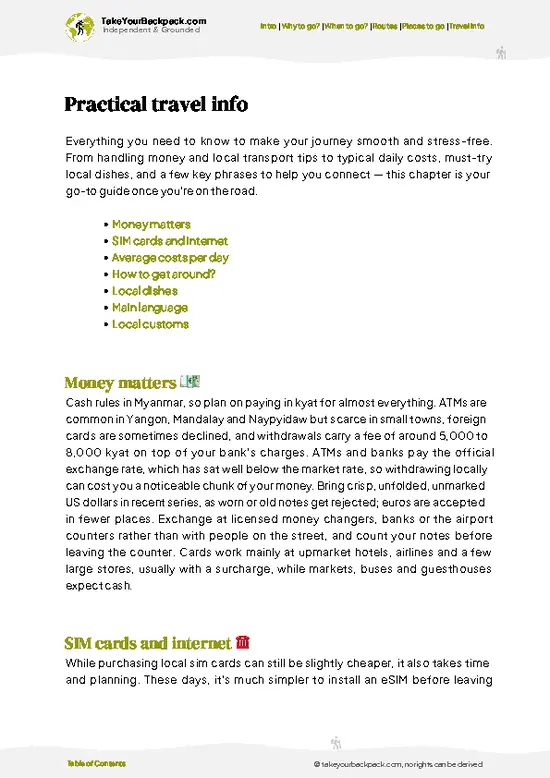
✈️ The backpacker research shortcutMyanmar Travel Guide

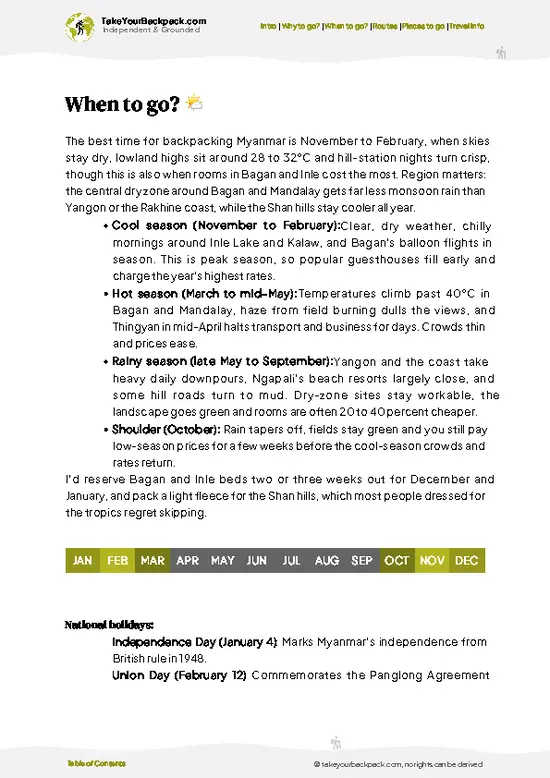
An offline-friendly backpacking guide with optimized travel routes, ranked highlights, transport advice, and the best areas to stay.
example page 0 from our offline Travel Guide for Myanmar
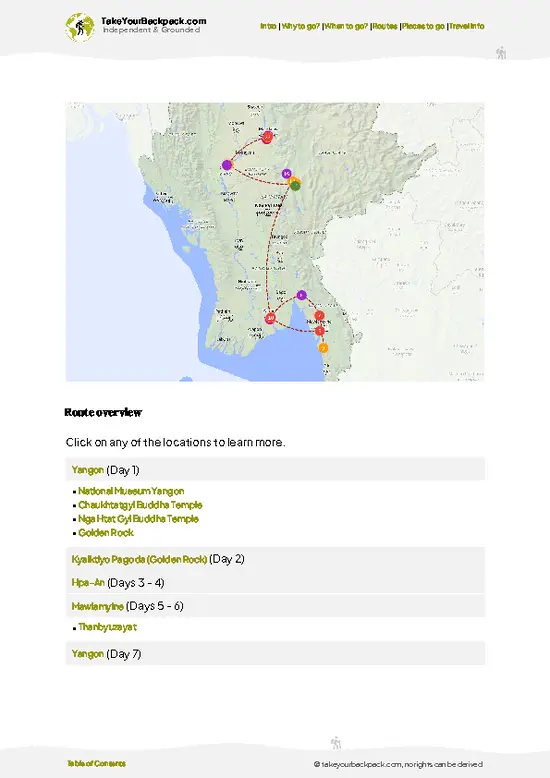
example page 1 from our offline Travel Guide for Myanmar
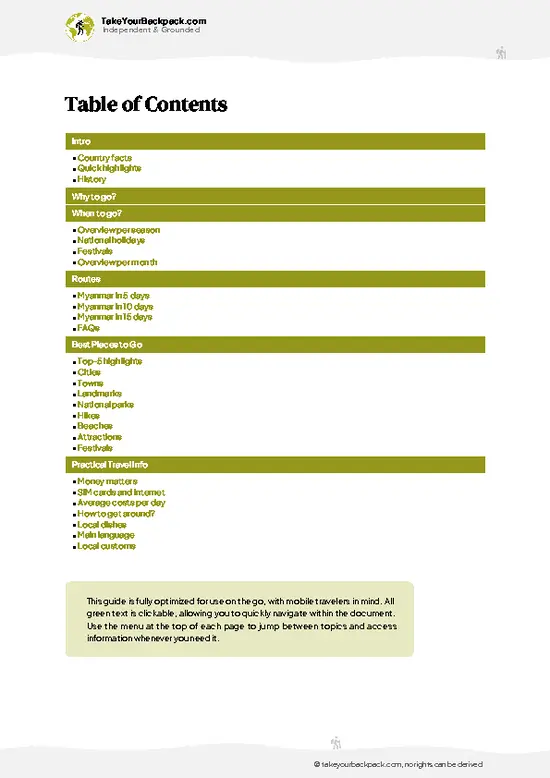
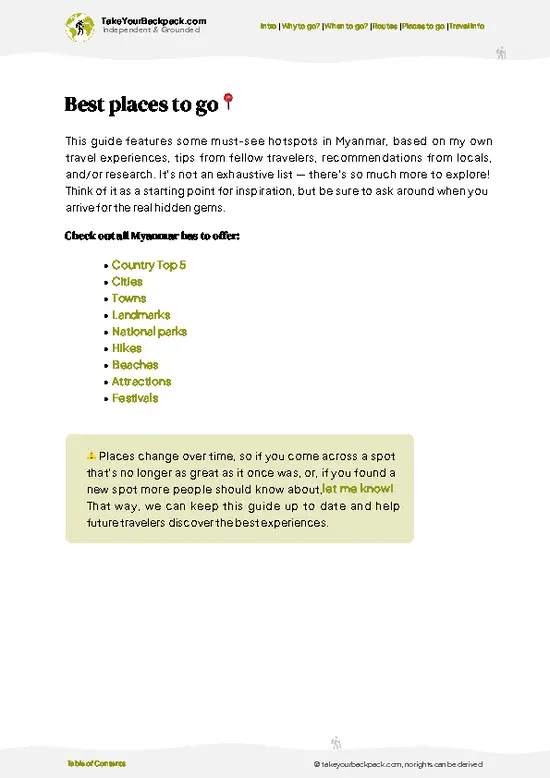
example page 2 from our offline Travel Guide for Myanmar
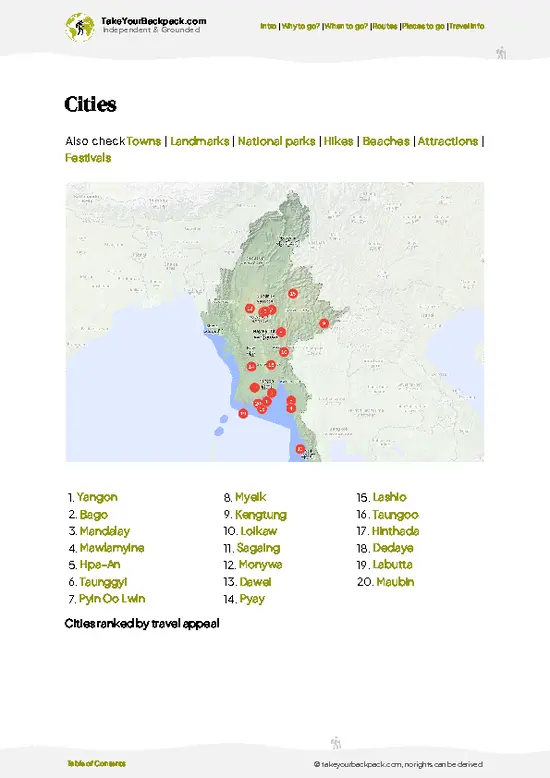
example page 3 from our offline Travel Guide for Myanmar
example page 4 from our offline Travel Guide for Myanmar
example page 5 from our offline Travel Guide for Myanmar
example page 6 from our offline Travel Guide for Myanmar
example page 7 from our offline Travel Guide for Myanmar
The digital guide (405 pages) contains:
110 highlights, ranked by travel appeal
Optimized 5, 10 & 15-day travel routes
Cities, national parks, landmarks, beaches
How to get around
Offline-friendly for travel without Wi-Fi
👉 Click to see all 30+ guide features

📅 Plan smarter in minutes, not weeks
Month by month travel advice
Festivals & national holidays
Budget expectations

🗺️ Go to the right places, skip the overrated ones
Honest pros & cons of destinations
Top hikes, parks & viewpoints
Lesser-known places most travelers miss
Clear “worth it vs skip it” guidance

🛏️ Travel smoothly without rookie mistakes
Best areas to stay
Transport systems explained simply
Common scams & safety advice
SIM cards, money & practical tips

🌍 Understand the country, not just visit it
Culture & traditions
52 Essential phrases & customs
Festivals worth planning around
Traveler-friendly historical context
Insights that make places more meaningful

📱 Built for real travel conditions
Fully downloadable PDF
Works completely offline
Optimized for phone use
Useful in remote areas & buses
Everything in one place
Save weeks of stressful planning
Get instant access to your full guide. 30‑day money-back guarantee.


By proceeding you agree to our terms.
Sent to your inbox immediately after payment • 100% Secure Checkout
Best Backpacking Travel Advisor 2025 tourism awardBest Backpacking
Travel Advisor
2025
What others say about Take Your Backpack Guides:
⭐⭐⭐⭐⭐
Fantastic, amazing amount of information!
⭐⭐⭐⭐⭐
My goodness this is amazing, it's what I've been looking for hats off too you!
⭐⭐⭐⭐⭐
I think this is absolutely BRILLIANT
⭐⭐⭐⭐
Very complete and informative. It's still missing places, but I gotta to commend you
⭐⭐⭐⭐⭐
This is truly amazing, thank you, can't wait to explore it with my kids!
⭐⭐⭐⭐⭐
Awesome resource, thank you!
⭐⭐⭐⭐⭐
This is amazing! Can't wait to explore the ones I haven't seen
⭐⭐⭐⭐
I love this! Well done, great idea.
⭐⭐⭐⭐⭐
Thanks for taking the time to make this gem!
⭐⭐⭐⭐⭐
This might be the best website I've ever seen.
⭐⭐⭐⭐⭐
Congratulations, and thank you so much for your work; it's incredibly valuable.
⭐⭐⭐⭐
In all seriousness I think you did a great job pointing out the important spots
⭐⭐⭐⭐⭐
10/10 very good
⭐⭐⭐⭐⭐
As someone who's only just starting to visit regularly this is awesome, thank you.
⭐⭐⭐⭐
Thank you very much! I'm going to visit my dad, it's going to be very useful!
⭐⭐⭐⭐⭐
This is really cool! We'll be travelling for the first time and this definitely come in handy.
⭐⭐⭐⭐⭐
You are now our minister of culture, congratulations 👨‍💼
⭐⭐⭐⭐⭐
Just wanted to tell you that this is a pearl! Going to follow your recommendations.
⭐⭐⭐⭐⭐
This is so cool. I'll definitely be using the resource for my travels soon.
⭐⭐⭐⭐⭐
This is very impressive! Good work.
⭐⭐⭐⭐⭐
This is an amazing and informative site. Very well done!

🛏️ Where to stay?Best areas and accommodation options

When you’re heading to the Pindaya Caves, skip the tourist traps and focus on the local vibe. The area around the caves is dotted with budget-friendly guesthouses and hostels that cater to backpackers.

Stay in the town of Pindaya itself. It’s small, but that’s the charm. You’ll find a mix of travelers sharing stories over tea. The locals are friendly, and you can easily walk to the caves from most places. This isn’t a bustling city; it’s a laid-back spot where you can soak in the culture without the chaos.

Another option is to look for accommodations near the lake. It’s a peaceful area, perfect … read more 👉
When you’re heading to the Pindaya Caves, skip the tourist traps and focus on the local vibe. The area around the caves is dotted with budget-friendly guesthouses and hostels that cater to backpackers.

Stay in the town of Pindaya itself. It’s small, but that’s the charm. You’ll find a mix of travelers sharing stories over tea. The locals are friendly, and you can easily walk to the caves from most places. This isn’t a bustling city; it’s a laid-back spot where you can soak in the culture without the chaos.

Another option is to look for accommodations near the lake. It’s a peaceful area, perfect for unwinding after a day of exploring. You’ll find some cozy spots that offer a glimpse into daily life, complete with stunning views.

Safety is generally good here, but always trust your instincts. The social scene is mellow, making it easy to connect with fellow travelers. You’ll leave with more than just photos; you’ll have stories and friendships that last well beyond your trip.

👛 Costs (as of 25 January 2026)How expensive it really is

Visiting the Pindaya Caves in Myanmar is a unique experience, but it comes with its own set of costs that you should be aware of.
  • Entrance Fee: Expect to pay around $3 to $5 USD. This fee grants you access to the caves and the surrounding area. It’s a small price for the chance to explore thousands of Buddha statues tucked into the limestone formations.
  • Transportation: Getting to Pindaya can vary widely. If you’re coming from Inle Lake, a shared taxi might cost you about $15 to $20 USD. If you’re feeling adventurous, local buses are cheaper, around $5 USD, but they can be less comfortable and take longer.
  • Guided Tours: If you want a deeper understanding of the caves, consider a guided tour. Prices typically range from $10 to $30 USD, depending on the length and depth of the tour. This can be
read more 👉
Visiting the Pindaya Caves in Myanmar is a unique experience, but it comes with its own set of costs that you should be aware of.
  • Entrance Fee: Expect to pay around $3 to $5 USD. This fee grants you access to the caves and the surrounding area. It’s a small price for the chance to explore thousands of Buddha statues tucked into the limestone formations.
  • Transportation: Getting to Pindaya can vary widely. If you’re coming from Inle Lake, a shared taxi might cost you about $15 to $20 USD. If you’re feeling adventurous, local buses are cheaper, around $5 USD, but they can be less comfortable and take longer.
  • Guided Tours: If you want a deeper understanding of the caves, consider a guided tour. Prices typically range from $10 to $30 USD, depending on the length and depth of the tour. This can be worth it for the insights into the local culture and history.
  • Food and Drink: Local eateries offer meals for as little as $2 to $5 USD. If you opt for a more upscale restaurant, expect to pay around $10 to $15 USD for a meal. Don’t skip the tea; it’s a local specialty!
  • Accommodation: Options range from budget guesthouses at about $10 to $20 USD per night to more comfortable hotels that can go up to $50 USD or more. The choice depends on your comfort level and budget.

These costs can add up, but the experience of standing in the presence of countless Buddhas in the serene caves is genuinely worth it.


source: myanmar.travel
⚠️ Prices can change and everyone travels differently, so take this as a rough guide. Hope it helps you plan your adventure!

Other Burmese landmarks near Pindaya Caves

Explore more nearby:

  • Kakku Pagodas—clustered stupas, Shan hills, remote pilgrimage| 74 km away
  • Mandalay Hill—panoramic lookout, stairway shrines, sunset gathering| 133 km away
  • Bagan Temples—ancient stupas, sunrise vistas, temple plains| 188 km away

💡 Not sure where to go next?
Create a personalized itinerary for Myanmar including Pindaya Caves and the places that fit your trip.

Generate my itinerary

👉 Discover all landmarks

Or checkout all Myanmar has to offer (think cities, towns, villages, national parks, hikes, beaches, festivals)
Country photo of Myanmar

We 💚 feedbackWhat to keep in mind

Visiting the Pindaya Caves is like stepping into a living history book. The sheer number of Buddhas—over 8,000—each with its own character, creates an atmosphere that’s both spiritual and surreal. But let’s be real: the crowds can be overwhelming, especially during peak season. If you can handle a few selfie sticks in your face, the experience is worth it. Just go early or late in the day for a more intimate vibe.

✈️ When did I visit Myanmar?
In November 2013 I backpacked through Myanmar, bringing a full stack of pristine dollar bills as they had no ATMs back then.

✍️ Help improve this page!
The information on this page is based on my own backpacking experience in Myanmar, supplemented with up-to-date research and feedback from other travelers. Travel details can change, so if you notice anything outdated or incomplete, feel free to let me know.


🙋‍♂️ Give feedback

👋 Meet the founderWho’s Behind Take Your Backpack?

Johan, backpacker and founder of TakeYourBackpackHi, I’m Johan (Netherlands 🇳🇱), the creator of TakeYourBackpack. Over the past decade, I’ve backpacked through 80+ countries across six continents, gaining extensive experience with independent travel, long-term trips, and overland routes.

This site is built on a combination of firsthand travel experience and carefully curated insights from other backpackers. Many guides are based on places I’ve personally visited, while others bring together tips, observations, and practical advice shared by trusted travelers I’ve met along the way.

The goal is to provide realistic, experience-driven guidance — not generic itineraries — so you can explore destinations with better context, clearer expectations, and more confidence.

Get full Myanmar guide •
Instant download • 110 highlights • Full Offline guide