

×

Myanmar🇲🇲 | national parksTanintharyi Nature Reservelowland rainforest, elephant habitat, remote trails | things to do and best time to go

Explore Moeyungyi Wetland Wildlife SanctuaryExplore Thamihla Kyun Wildlife Sanctuary

Backpacking in Tanintharyi Nature Reserve
👌 Worth visitingnational park ranked #11
By Johan Kruseman 🇳🇱 | Updated October 15, 2026

Your boots sink half an inch into warm, leaf-rot mud, cicadas drilling in your ears while a gibbon whoops somewhere you’ll never quite see. The air tastes like wet bark and salt. This is Tanintharyi Nature Reserve, way down in southern Myanmar, inland from the Andaman coast and the Dawei-Myeik corridor. For backpackers, it’s serious low-profile jungle: long, sweaty hikes, dense forest, real wildlife potential, and almost no crowds, but also patchy trails, limited public transport, and permits or local fixers that quietly inflate costs. Don’t expect clear entrance fees, tidy campgrounds, or easy budget lodges like you’d find around Dawei or in more visited parks near Yangon; expect negotiation, basic homestays at best, and a raw, slightly opaque vibe that rewards patience more than spontaneity.

Discover everything you want to know in the 📖 Myanmar Travel Guide.
Safety warning

The current risk level for Myanmar is high. Check the advice before going.


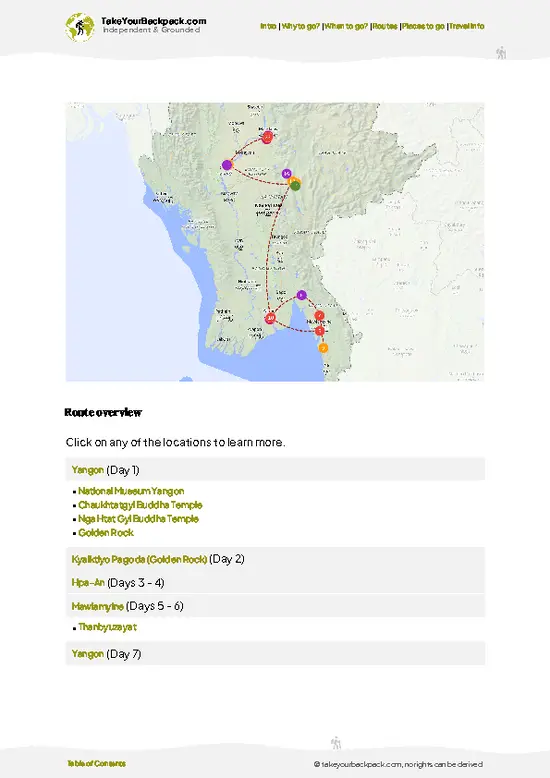
example page 0 from our offline Travel Guide for Myanmar
example page 1 from our offline Travel Guide for Myanmar
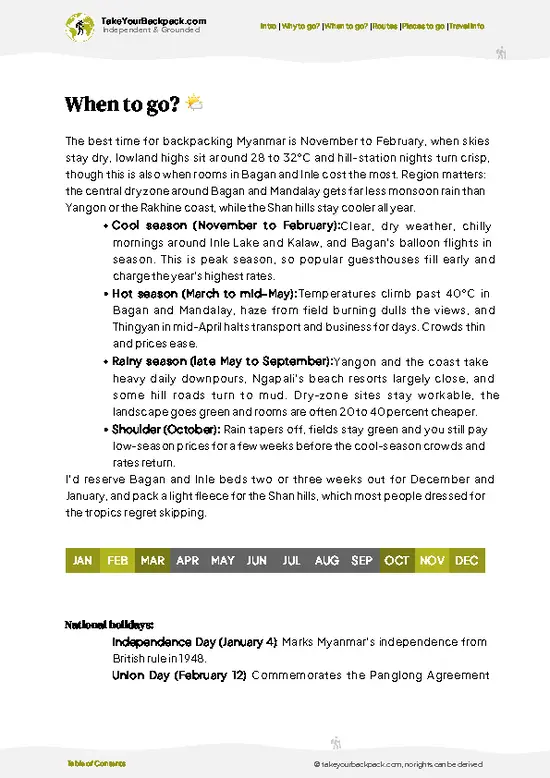
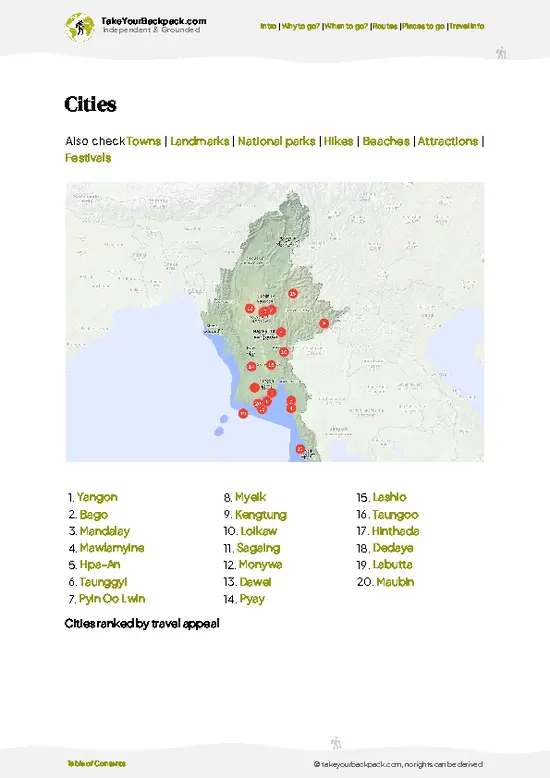
example page 2 from our offline Travel Guide for Myanmar
example page 3 from our offline Travel Guide for Myanmar
example page 4 from our offline Travel Guide for Myanmar
example page 5 from our offline Travel Guide for Myanmar
example page 6 from our offline Travel Guide for Myanmar
example page 7 from our offline Travel Guide for Myanmar
Loading the map 🌍
CLICK TO FILTER
cities
towns
landmarks
national parks
hikes
beaches
attractions
festivals
SHOW COUNTRY’S BESTSHOW ALL

✨ Why go?
Ranked #11 national park in Myanmar
The unique appeal for travelers

Backpackers flock to Tanintharyi Nature Reserve for its promise of independent exploration. The park offers a range of trails, from easy walks to challenging treks, catering to various skill levels. This variety allows you to tailor your adventure based on your energy and interests, making it ideal for self-guided travelers.

Budget-conscious adventurers appreciate the nearby camping options and hostels, which keep costs low while providing a chance to connect with fellow travelers. The absence of commercial tours means you can experience the park at your own pace, soaking in the sights without the pressure of a schedule.

However, be prepared for some hidden costs. Water and food supplies can be limited, so plan ahead to avoid unnecessary expenses. Navigating the trails requires a good … read more 👉
Backpackers flock to Tanintharyi Nature Reserve for its promise of independent exploration. The park offers a range of trails, from easy walks to challenging treks, catering to various skill levels. This variety allows you to tailor your adventure based on your energy and interests, making it ideal for self-guided travelers.

Budget-conscious adventurers appreciate the nearby camping options and hostels, which keep costs low while providing a chance to connect with fellow travelers. The absence of commercial tours means you can experience the park at your own pace, soaking in the sights without the pressure of a schedule.

However, be prepared for some hidden costs. Water and food supplies can be limited, so plan ahead to avoid unnecessary expenses. Navigating the trails requires a good map or GPS, as signage can be sparse. By staying aware of these factors, you’ll preserve your energy and budget for the moments that truly matter in this stunning reserve.

💡 HighlightsDon't-miss highlights and experiences

  • Lowland evergreen rainforest canopy — Dense, old-growth dipterocarp forest that feels properly wild: towering trees, thick understory and a real chorus of insects and frogs. Great for feeling small and off-grid; keep an eye out for silky-smooth trails under your boots after the rains.
  • River valleys and estuaries — Meandering rivers cut through the reserve and open into mangrove-studded estuaries. Perfect for slow boat trips, spotting riverine wildlife and watching the light change on the water at dusk. My personal favorite for peaceful, wildlife-rich afternoons.
  • Waterfalls and forest pools — Small but beautiful cascades tucked into the hills; ideal for a cooling dip after a sweaty hike. They’re not postcard mega-falls, but their jungle setting makes them lovely and usually quiet.
  • Ridge-line
… read more 👉
  • Lowland evergreen rainforest canopy — Dense, old-growth dipterocarp forest that feels properly wild: towering trees, thick understory and a real chorus of insects and frogs. Great for feeling small and off-grid; keep an eye out for silky-smooth trails under your boots after the rains.
  • River valleys and estuaries — Meandering rivers cut through the reserve and open into mangrove-studded estuaries. Perfect for slow boat trips, spotting riverine wildlife and watching the light change on the water at dusk. My personal favorite for peaceful, wildlife-rich afternoons.
  • Waterfalls and forest pools — Small but beautiful cascades tucked into the hills; ideal for a cooling dip after a sweaty hike. They’re not postcard mega-falls, but their jungle setting makes them lovely and usually quiet.
  • Ridge-line hikes and viewpoints — Short, punchy climbs to ridgelines give sweeping views over the Tenasserim hills and, in places, the Andaman coast. The trails are raw and satisfying — bring good shoes and mosquito spray.
  • Prime wildlife habitat — The reserve supports elusive large mammals like elephants and gaur plus troops of gibbons, macaques and other mammals. Sightings aren’t guaranteed, which is part of the thrill; dawn and dusk are your best bets.
  • Birdwatching hotspots — A hotspot for forest and coastal species: hornbills, pittas, kingfishers and migratory shorebirds in the estuaries. Binoculars and a quiet approach pay off here.
  • Coastal wetlands and sandy pockets — Where the reserve meets the sea you’ll find mangrove flats, tidal channels and small beaches—good for tide-watching, mudflat birding and informal beach walks without the tourist trappings.
Spotted a mistake or missing something? Contact us.

🌤️ When to go?Best time to explore Tanintharyi Nature Reserve

  • Weather: The dry season from November to February is your best bet. Expect less rain, which means trails won’t turn into mud pits. Avoid the monsoon months (May to October) when heavy rains can flood paths and make wildlife spotting tough.
  • Temperature: Daytime temps hover around 25-30°C (77-86°F) in the dry season, comfortable for hiking. The wet season heats up to 30-35°C (86-95°F) with high humidity, draining your energy fast.
  • Daylight Hours: Roughly 11-12 hours year-round, but the dry season offers clearer skies, making early mornings and late afternoons ideal for trekking and photography.
  • Crowds: This reserve is off the beaten path, so expect minimal crowds year-round. However, the dry season sees a slight uptick in local visitors, which can add to the atmosphere without overwhelming
… read more 👉
  • Weather: The dry season from November to February is your best bet. Expect less rain, which means trails won’t turn into mud pits. Avoid the monsoon months (May to October) when heavy rains can flood paths and make wildlife spotting tough.
  • Temperature: Daytime temps hover around 25-30°C (77-86°F) in the dry season, comfortable for hiking. The wet season heats up to 30-35°C (86-95°F) with high humidity, draining your energy fast.
  • Daylight Hours: Roughly 11-12 hours year-round, but the dry season offers clearer skies, making early mornings and late afternoons ideal for trekking and photography.
  • Crowds: This reserve is off the beaten path, so expect minimal crowds year-round. However, the dry season sees a slight uptick in local visitors, which can add to the atmosphere without overwhelming the trails.
  • Seasonal Activities: Dry months are prime for wildlife watching and river excursions. The wet season limits access to some areas, so plan accordingly if you want to explore deeper sections.
  • Price Fluctuations: Accommodation and guide fees tend to rise during the dry season due to demand. Booking ahead can save you from last-minute price hikes.
Pro-tip: Aim for late November or early December—cooler temps, manageable crowds, and the landscape still lush from the recent rains. It’s the sweet spot for energy and experience.


source: climatestotravel.comJANJanuary: excellent for travelingFEBFebruary: excellent for travelingMARMarch: highly recommended for travelingAPRApril: good for travelingMAYMay: below average for travelingJUNJune: below average for travelingJULJuly: below average for travelingAUGAugust: below average for travelingSEPSeptember: fair for travelingOCTOctober: fair for travelingNOVNovember: excellent for travelingDECDecember: excellent for traveling
when-to-go

✈️ The backpacker research shortcutMyanmar Travel Guide

An offline-friendly backpacking guide with optimized travel routes, ranked highlights, transport advice, and the best areas to stay.
example page 0 from our offline Travel Guide for Myanmar
example page 1 from our offline Travel Guide for Myanmar
example page 2 from our offline Travel Guide for Myanmar
example page 3 from our offline Travel Guide for Myanmar
example page 4 from our offline Travel Guide for Myanmar
example page 5 from our offline Travel Guide for Myanmar
example page 6 from our offline Travel Guide for Myanmar
example page 7 from our offline Travel Guide for Myanmar
The digital guide (377 pages) contains:
✅ 104 highlights, ranked by travel appeal
✅ Optimized 5, 10 & 15-day travel routes
✅ Cities, national parks, landmarks, beaches
✅ How to get around
✅ Offline-friendly for travel without Wi-Fi
👉 Click to see all 30+ guide features

📅 Plan smarter in minutes, not weeks
✅ Month by month travel advice
✅ Festivals & national holidays
✅ Budget expectations

🗺️ Go to the right places, skip the overrated ones
✅ Honest pros & cons of destinations
✅ Top hikes, parks & viewpoints
✅ Lesser-known places most travelers miss
✅ Clear “worth it vs skip it” guidance

🛏️ Travel smoothly without rookie mistakes
✅ Best areas to stay
✅ Transport systems explained simply
✅ Common scams & safety advice
✅ SIM cards, money & practical tips

🌍 Understand the country, not just visit it
✅ Culture & traditions
✅ 52 Essential phrases & customs
✅ Festivals worth planning around
✅ Traveler-friendly historical context
✅ Insights that make places more meaningful

📱 Built for real travel conditions
✅ Fully downloadable PDF
✅ Works completely offline
✅ Optimized for phone use
✅ Useful in remote areas & buses
✅ Everything in one place
Stop searching, start planning
Get instant access to your full guide. 30‑day money-back guarantee.
+ Add another guide for just

By proceeding you agree to our terms.
Sent to your inbox immediately after payment • 100% Secure Checkout
Best Backpacking Travel Advisor 2025 tourism awardBest Backpacking
Travel Advisor
2025
What others say about Take Your Backpack Guides:
⭐⭐⭐⭐⭐
Fantastic, amazing amount of information!
⭐⭐⭐⭐⭐
My goodness this is amazing, it's what I've been looking for hats off too you!
⭐⭐⭐⭐⭐
I think this is absolutely BRILLIANT
⭐⭐⭐⭐
Very complete and informative. It's still missing places, but I gotta to commend you
⭐⭐⭐⭐⭐
This is truly amazing, thank you, can't wait to explore it with my kids!
⭐⭐⭐⭐⭐
Awesome resource, thank you!
⭐⭐⭐⭐⭐
This is amazing! Can't wait to explore the ones I haven't seen
⭐⭐⭐⭐
I love this! Well done, great idea.
⭐⭐⭐⭐⭐
Thanks for taking the time to make this gem!
⭐⭐⭐⭐⭐
This might be the best website I've ever seen.
⭐⭐⭐⭐⭐
Congratulations, and thank you so much for your work; it's incredibly valuable.
⭐⭐⭐⭐
In all seriousness I think you did a great job pointing out the important spots
⭐⭐⭐⭐⭐
10/10 very good
⭐⭐⭐⭐⭐
As someone who's only just starting to visit regularly this is awesome, thank you.
⭐⭐⭐⭐
Thank you very much! I'm going to visit my dad, it's going to be very useful!
⭐⭐⭐⭐⭐
This is really cool! We'll be travelling for the first time and this definitely come in handy.
⭐⭐⭐⭐⭐
You are now our minister of culture, congratulations 👨‍💼
⭐⭐⭐⭐⭐
Just wanted to tell you that this is a pearl! Going to follow your recommendations.
⭐⭐⭐⭐⭐
This is so cool. I'll definitely be using the resource for my travels soon.
⭐⭐⭐⭐⭐
This is very impressive! Good work.
⭐⭐⭐⭐⭐
This is an amazing and informative site. Very well done!

🛏️ Where to stay?Best areas to stay in Myanmar

For backpackers heading to Tanintharyi Nature Reserve, your options are limited but solid. Inside the park, accommodations are sparse. You might find basic bungalows or campsites near the entrance, but amenities are minimal. Expect to rough it a bit—bring your own supplies and be ready for a true nature experience.

If you prefer a bit more comfort, head to nearby Dawei. This town offers guesthouses and budget hotels that cater to backpackers. Places like the Dawei Resort provide a decent base with local charm. It’s a short ride from the park, making it easy to explore the reserve during the day … read more 👉
For backpackers heading to Tanintharyi Nature Reserve, your options are limited but solid. Inside the park, accommodations are sparse. You might find basic bungalows or campsites near the entrance, but amenities are minimal. Expect to rough it a bit—bring your own supplies and be ready for a true nature experience.

If you prefer a bit more comfort, head to nearby Dawei. This town offers guesthouses and budget hotels that cater to backpackers. Places like the Dawei Resort provide a decent base with local charm. It’s a short ride from the park, making it easy to explore the reserve during the day and return to a hot shower at night.

Keep in mind that transportation can be tricky. Local buses are infrequent, and taxis can be pricey. Plan your travel times carefully to avoid wasting precious hours. Stock up on snacks and water before heading into the park; options are limited once you’re in. This way, you’ll preserve your energy and budget for the experiences that truly matter.

👛 Costs (as of 15 October 2026)Typical daily expenses

Visiting Tanintharyi Nature Reserve in Myanmar can be an incredible experience, but it’s essential to be aware of the costs involved to avoid any surprises.

First, the entrance fee for the reserve typically ranges from $5 to $10 USD. This fee helps maintain the park and its facilities. Keep in mind that prices can fluctuate, so it’s wise to check for any updates before your visit.

Accommodation options vary widely. Budget travelers can find basic guesthouses starting at around $15 to $25 USD per night. Mid-range hotels may charge between $30 and $60 USD, offering more comfort and amenities. If you’re looking for something upscale, expect to pay upwards of $100 USD.

Transportation is another factor. If you’re traveling from Dawei, a bus ride can cost around $5 to $10 USD. Hiring a private … read more 👉
Visiting Tanintharyi Nature Reserve in Myanmar can be an incredible experience, but it’s essential to be aware of the costs involved to avoid any surprises.

First, the entrance fee for the reserve typically ranges from $5 to $10 USD. This fee helps maintain the park and its facilities. Keep in mind that prices can fluctuate, so it’s wise to check for any updates before your visit.

Accommodation options vary widely. Budget travelers can find basic guesthouses starting at around $15 to $25 USD per night. Mid-range hotels may charge between $30 and $60 USD, offering more comfort and amenities. If you’re looking for something upscale, expect to pay upwards of $100 USD.

Transportation is another factor. If you’re traveling from Dawei, a bus ride can cost around $5 to $10 USD. Hiring a private vehicle or guide can significantly increase your costs, often ranging from $50 to $100 USD per day, depending on the distance and services included.

Food is generally affordable. Street food and local eateries can cost as little as $2 to $5 USD per meal. Dining in more established restaurants may set you back $10 to $20 USD.

Lastly, consider the costs of activities. Guided tours or excursions can range from $20 to $50 USD, depending on the length and type of experience.

By keeping these costs in mind, you can budget effectively and focus on enjoying the natural beauty and unique wildlife of Tanintharyi Nature Reserve without any financial stress.
⚠️ Prices can change and everyone travels differently, so take this as a rough guide. Hope it helps you plan your adventure!

🥾 TrailsBest hikes in Tanintharyi Nature Reserve national park

Tanintharyi Nature Reserve is a hidden gem in Myanmar that offers some fantastic hiking opportunities. The landscape is a mix of dense tropical forests, rugged hills, and stunning coastal views. You’ll find yourself surrounded by rich biodiversity, including rare birds and other wildlife, which makes every step feel like an adventure. The terrain can be challenging, with steep inclines and muddy paths, but the payoff is worth it when you reach those breathtaking viewpoints.

One of the standout trails is Tanintharyi Trail. Here are the details:
  • Length: 15 km
  • Estimated Duration: 6-8 hours
  • Difficulty
… read more 👉
Tanintharyi Nature Reserve is a hidden gem in Myanmar that offers some fantastic hiking opportunities. The landscape is a mix of dense tropical forests, rugged hills, and stunning coastal views. You’ll find yourself surrounded by rich biodiversity, including rare birds and other wildlife, which makes every step feel like an adventure. The terrain can be challenging, with steep inclines and muddy paths, but the payoff is worth it when you reach those breathtaking viewpoints.

One of the standout trails is Tanintharyi Trail. Here are the details:
  • Length: 15 km
  • Estimated Duration: 6-8 hours
  • Difficulty Level: Moderate to Challenging
  • Key Features: Panoramic views of the coastline, diverse flora and fauna, and the chance to spot gibbons swinging through the trees.
  • Terrain: Varied, with steep sections and some muddy patches, especially during the rainy season.

Getting to the park is relatively straightforward; you can catch a bus or shared taxi from Dawei, which is the nearest town. Just keep in mind that the roads can be bumpy, so brace yourself for a bit of a ride. As for crowds, it’s generally less touristy than other spots in Myanmar, making it a peaceful escape. There is an entrance fee, but it’s quite reasonable, so you won’t break the bank. Just remember to bring some cash in local currency, as ATMs can be scarce nearby.
⚠️ Hiking info can sometimes be outdated or inaccurate. Before you hit the trail, check the latest conditions with locals. If you do spot anything that's off, I'd love to hear from you, so I can update it for fellow travelers.

🛡️ SafetyScams, Hazards, and Annoyances

Tanintharyi Nature Reserve offers a rewarding experience, but it’s wise to stay grounded about safety and wildlife. The weather can shift unexpectedly, especially during the rainy season, so pack a reliable rain jacket and quick-dry gear. Trails are generally well-maintained, but expect steep sections and occasional river crossings. Good footwear is essential; sturdy hiking boots will keep you stable on uneven terrain.

Wildlife encounters are part of the charm here. Keep a respectful distance from animals, and don’t feed them. This helps maintain their natural behavior and your safety.

Preparation is key. Many first-timers underestimate the importance of hydration and snacks. Carry enough water and energy bars to keep your energy up. Overall, with sensible planning and respect for the environment, … read more 👉
Tanintharyi Nature Reserve offers a rewarding experience, but it’s wise to stay grounded about safety and wildlife. The weather can shift unexpectedly, especially during the rainy season, so pack a reliable rain jacket and quick-dry gear. Trails are generally well-maintained, but expect steep sections and occasional river crossings. Good footwear is essential; sturdy hiking boots will keep you stable on uneven terrain.

Wildlife encounters are part of the charm here. Keep a respectful distance from animals, and don’t feed them. This helps maintain their natural behavior and your safety.

Preparation is key. Many first-timers underestimate the importance of hydration and snacks. Carry enough water and energy bars to keep your energy up. Overall, with sensible planning and respect for the environment, you’ll navigate the trails smoothly and enjoy the beauty of this unique reserve.

FAQTraveler FAQ

3 to 4 days are sufficient to explore Tanintharyi Nature Reserve thoroughly, allowing time for trekking and wildlife observation. The reserve covers a large area with diverse habitats, so plan for multiple trails and some rest time. Peak visiting months are November to February for cooler weather.
No, visiting Tanintharyi Nature Reserve without a car is challenging due to limited public transport options and remote location. Hiring a local guide with a vehicle or arranging private transport from nearby towns like Dawei is recommended. Some trekking routes start from accessible points but require prior planning.
Yes, an entrance permit is required to enter Tanintharyi Nature Reserve. The fee is approximately 10,000 Myanmar Kyat (around 5 USD) per person, payable at the park entrance or through authorized tour operators. Permits help support conservation efforts and are mandatory for all visitors.
⚠️ Things can change over time, so always validate details locally before you go.

Other Burmese national parks near Tanintharyi Nature Reserve

Explore more nearby:


💡 Not sure where to go next?
Create a personalized itinerary for Myanmar including Tanintharyi Nature Reserve and the places that fit your trip.

Generate my itinerary

👉 Discover all national parks

Or checkout all Myanmar has to offer (think cities, towns, villages, national parks, hikes, beaches, festivals)
Country photo of Myanmar

We 💚 feedbackWhat to keep in mind

Tanintharyi Nature Reserve is a treasure for those craving raw, untouched beauty. The biodiversity here is staggering—think vibrant wildlife and lush landscapes that feel like stepping into another world. But be prepared: the infrastructure is basic. Expect long travel times and limited amenities. This isn’t a place for luxury seekers. Embrace the simplicity, and you’ll find the real magic in the experience.

✈️ When did I visit Myanmar?
In November 2013 I backpacked through Myanmar, bringing a full stack of pristine dollar bills as they had no ATMs back then.

✍️ Help improve this page!
The information on this page is based on my own backpacking experience in Myanmar, supplemented with up-to-date research and feedback from other travelers. Travel details can change, so if you notice anything outdated or incomplete, feel free to let me know.


🙋‍♂️ Give feedback

👋 Meet the founderWho’s Behind Take Your Backpack?

Johan, backpacker and founder of TakeYourBackpackHi, I’m Johan (Netherlands 🇳🇱), the creator of TakeYourBackpack. Over the past 3 decades, I’ve backpacked through 90+ countries across six continents, gaining extensive experience with independent travel, long-term trips, and overland routes.

This site is built on a combination of firsthand travel experience and carefully curated insights from other backpackers. Many guides are based on places I’ve personally visited, while others bring together tips, observations, and practical advice shared by trusted travelers I’ve met along the way.

The goal is to provide realistic, experience-driven guidance — not generic itineraries — so you can explore destinations with better context, clearer expectations, and more confidence.