×

Namibia🇳🇦 | national parksBwabwata National ParkKwando sand tracks, Khwe villages, Popa Falls rapids, carmine bee-eaters | things to do and best time to go

Explore Naukluft 4x4 TrailExplore Etosha National Park

Backpacking in Bwabwata
🌟 Highlightnational park ranked #6
By Johan Kruseman 🇳🇱 | Updated October 22, 2026

The decision most travelers face is whether to drive straight through on the B8 or stop and explore, and what tips it is whether you have a high-clearance vehicle and a tent. Bwabwata National Park sits in the northeast of Namibia, a long strip of Kalahari woodland between the Kavango and Kwando rivers, the Caprivi Strip's backbone. The main road is public and free to cross, which is why elephants wander over it, so slow down and keep your eyes on the verges. Sand tracks inside the Kwando core area are deep and soft, so let tires down and drive in low range. Mosquitoes, wood smoke and dry grass smell are constant, and the river light at dusk is soft. Unlike Etosha, with its waterholes and tarred loops, Bwabwata is quiet, unfenced and lived in by local communities.

Discover everything you want to know in the 📖 Namibia Travel Guide.


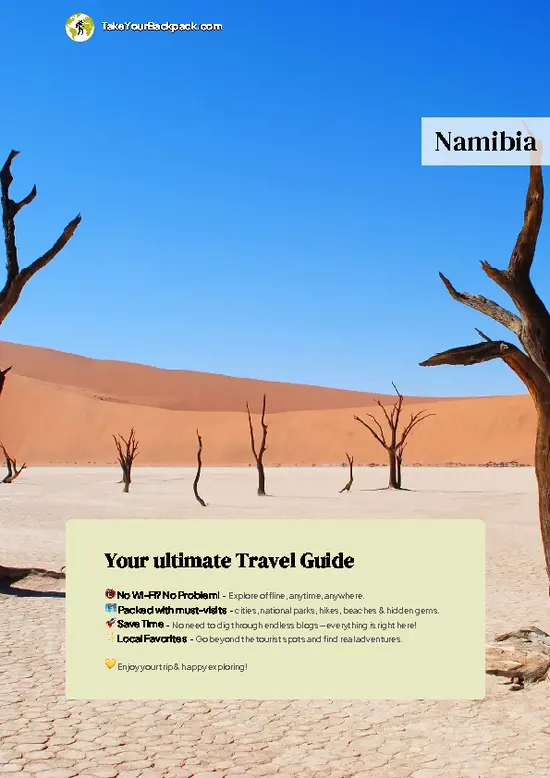
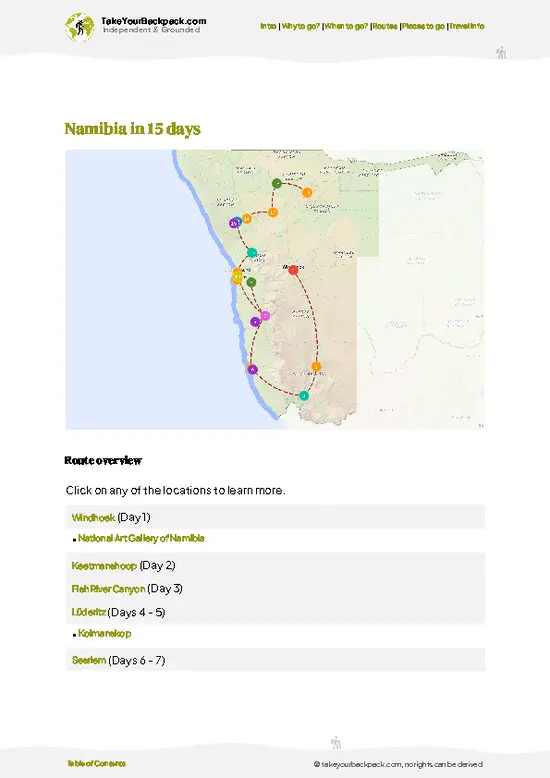
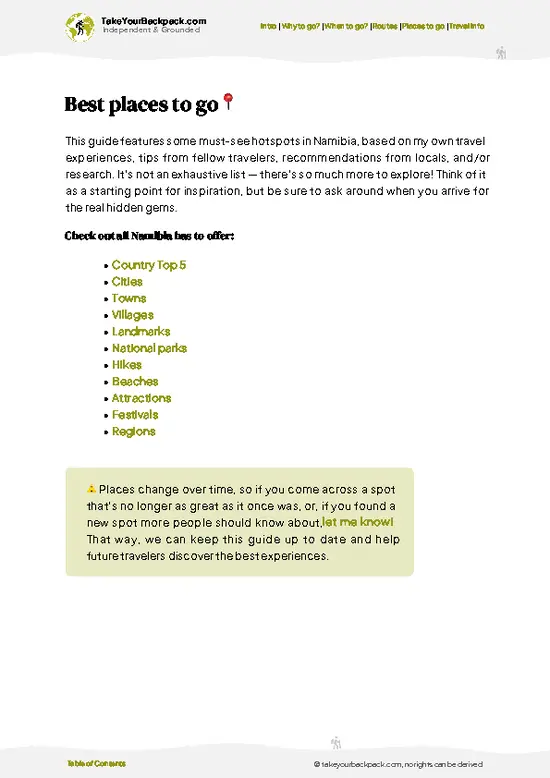
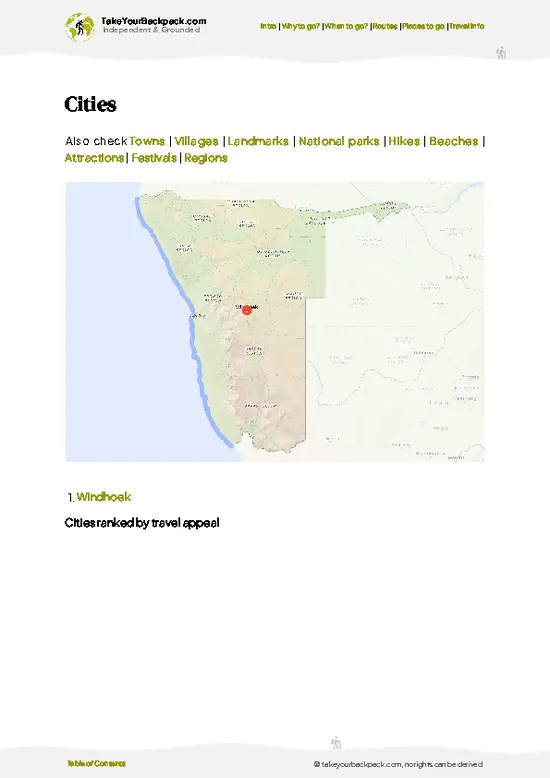
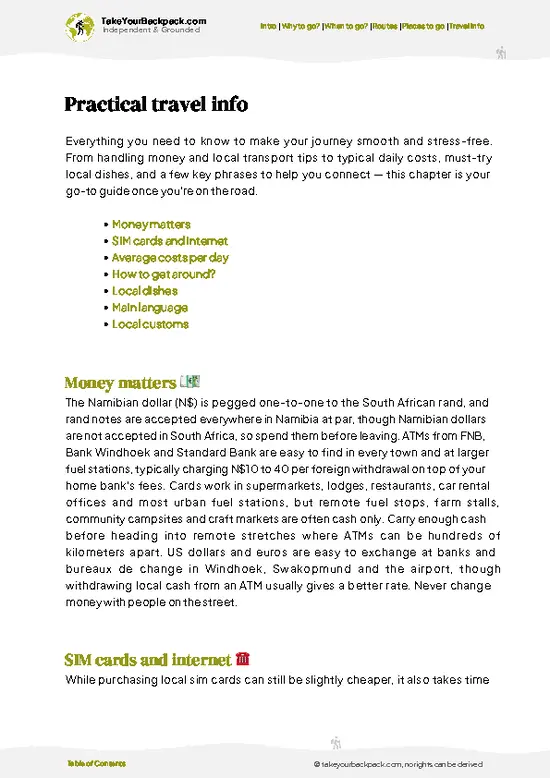
example page 0 from our offline Travel Guide for Namibia
example page 1 from our offline Travel Guide for Namibia
example page 2 from our offline Travel Guide for Namibia
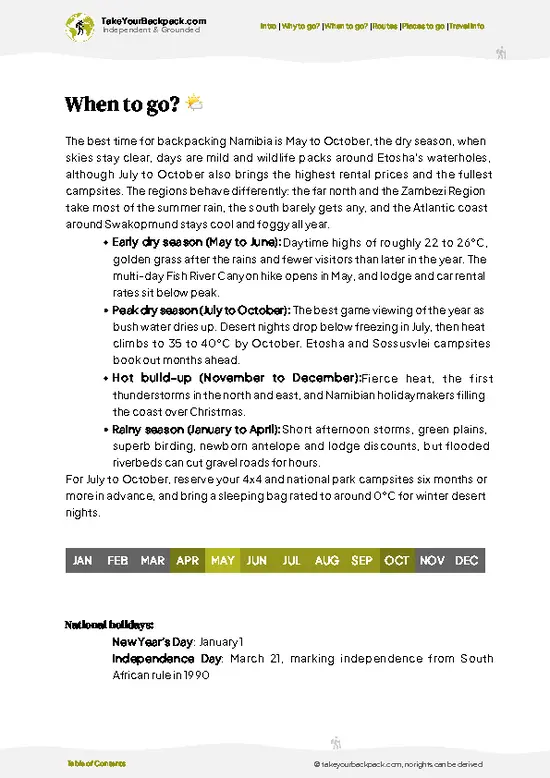
example page 3 from our offline Travel Guide for Namibia
example page 4 from our offline Travel Guide for Namibia
example page 5 from our offline Travel Guide for Namibia
example page 6 from our offline Travel Guide for Namibia
example page 7 from our offline Travel Guide for Namibia
Loading the map 🌍
CLICK TO FILTER
cities
towns
villages
landmarks
national parks
hikes
beaches
attractions
festivals
regions
SHOW COUNTRY’S BESTSHOW ALL

✨ Why go?
Ranked #6 national park in Namibia
Why Bwabwata should be on your travel list

Backpackers choose Bwabwata National Park because it is one of the few places in Namibia where you can see big game without a fence, a guide queue or a prebooked slot. The Kwando River floodplain draws elephants, buffalo, hippos and sable in the dry months, and you can watch them from your own camp chair. Sites along the river are simple and cheap, and cooking over a fire with the sound of hippos grunting is part of the appeal. It also suits self-drivers and hitchhikers who like to improvise: the B8 highway cuts through the park, so you can stop at community-run camps, buy firewood and move on when you like. If you want guided game drives, they exist, but the real reason to come is independence, plus the chance to meet Khwe and Mbukushu residents who live inside the park boundaries.

💡 HighlightsPlaces and moments you shouldn't skip

  1. Kwando Core Area: the best-known wildlife zone, with sandy tracks along the river, elephants, buffalo, lions and wild dogs in some seasons.
  2. Buffalo Core Area: a forested stretch on the Kavango side with riverside camping, birdlife and sociable hippo pods.
  3. Horseshoe Lagoon area: an oxbow of the Kwando with reed beds and herds coming to drink, good for patient waiting.
  4. Mahango Core Area: a small reserve section near the Botswana border, known for roan antelope, sable, reedbuck and large elephant herds on the Okavango floodplain.
  5. Popa Falls: a series of rapids on the Kavango, more of a rocky cascade than a drop, pleasant for an hour's wander and a swim-free look.
  6. Kwando River birding: carmine bee-eaters nest in the banks in season, along with African skimmers, fish eagles and wattled cranes.
  7. Community
… read more 👉
  1. Kwando Core Area: the best-known wildlife zone, with sandy tracks along the river, elephants, buffalo, lions and wild dogs in some seasons.
  2. Buffalo Core Area: a forested stretch on the Kavango side with riverside camping, birdlife and sociable hippo pods.
  3. Horseshoe Lagoon area: an oxbow of the Kwando with reed beds and herds coming to drink, good for patient waiting.
  4. Mahango Core Area: a small reserve section near the Botswana border, known for roan antelope, sable, reedbuck and large elephant herds on the Okavango floodplain.
  5. Popa Falls: a series of rapids on the Kavango, more of a rocky cascade than a drop, pleasant for an hour's wander and a swim-free look.
  6. Kwando River birding: carmine bee-eaters nest in the banks in season, along with African skimmers, fish eagles and wattled cranes.
  7. Community villages: visits to Khwe settlements can include talks on tracking, plants and bush crafts, and crafts bought directly support residents.
Entry to the core areas is paid at the gate or camp, while guided village visits are best arranged ahead through a community office or your lodge.
Spotted a mistake or missing something? Contact us.

🌤️ When to go?Choosing the right time of year

  • Dry Season (May to September): Bwabwata’s Zambezi Region floodplains are at their most walkable and game gathers along the Kavango and Kwando rivers. Days reach 26 to 31°C (79 to 88°F), nights drop to 5 to 10°C (41 to 50°F), and daylight runs roughly 11 hours. Lodges and campsites are busiest and priciest from July to September.
  • Hot Build-up (October to November): Highs of 34 to 40°C (93 to 104°F) make midday walking miserable, but elephants crowd the rivers and prices ease.
  • Rainy Season (December to March): Afternoon storms bring 28 to 33°C (82 to 91°F) and about 13 hours of light. Sandy tracks turn to deep mud, some become impassable, birdlife peaks and lodges often cut rates by 20 to 40 percent.
  • Early Wet Shoulder (April): Green bush, drying roads and few visitors.
Book river-side camps early … read more 👉
  • Dry Season (May to September): Bwabwata’s Zambezi Region floodplains are at their most walkable and game gathers along the Kavango and Kwando rivers. Days reach 26 to 31°C (79 to 88°F), nights drop to 5 to 10°C (41 to 50°F), and daylight runs roughly 11 hours. Lodges and campsites are busiest and priciest from July to September.
  • Hot Build-up (October to November): Highs of 34 to 40°C (93 to 104°F) make midday walking miserable, but elephants crowd the rivers and prices ease.
  • Rainy Season (December to March): Afternoon storms bring 28 to 33°C (82 to 91°F) and about 13 hours of light. Sandy tracks turn to deep mud, some become impassable, birdlife peaks and lodges often cut rates by 20 to 40 percent.
  • Early Wet Shoulder (April): Green bush, drying roads and few visitors.
Book river-side camps early for July and August, and aim for late May or June for cool nights with lighter crowds.


source: climatestotravel.comJANJanuary: fair for travelingFEBFebruary: fair for travelingMARMarch: fair for travelingAPRApril: fair for travelingMAYMay: highly recommended for travelingJUNJune: excellent for travelingJULJuly: excellent for travelingAUGAugust: excellent for travelingSEPSeptember: highly recommended for travelingOCTOctober: excellent for travelingNOVNovember: fair for travelingDECDecember: fair for traveling
when-to-go

✈️ The backpacker research shortcutNamibia Travel Guide

An offline-friendly backpacking guide with optimized travel routes, ranked highlights, transport advice, and the best areas to stay.
example page 0 from our offline Travel Guide for Namibia
example page 1 from our offline Travel Guide for Namibia
example page 2 from our offline Travel Guide for Namibia
example page 3 from our offline Travel Guide for Namibia
example page 4 from our offline Travel Guide for Namibia
example page 5 from our offline Travel Guide for Namibia
example page 6 from our offline Travel Guide for Namibia
example page 7 from our offline Travel Guide for Namibia
The digital guide (294 pages) contains:
✅ 71 highlights, ranked by travel appeal
✅ Optimized 5, 10 & 15-day travel routes
✅ Cities, national parks, landmarks, beaches
✅ How to get around
✅ Offline-friendly for travel without Wi-Fi
👉 Click to see all 30+ guide features

📅 Plan smarter in minutes, not weeks
✅ Month by month travel advice
✅ Festivals & national holidays
✅ Budget expectations

🗺️ Go to the right places, skip the overrated ones
✅ Honest pros & cons of destinations
✅ Top hikes, parks & viewpoints
✅ Lesser-known places most travelers miss
✅ Clear “worth it vs skip it” guidance

🛏️ Travel smoothly without rookie mistakes
✅ Best areas to stay
✅ Transport systems explained simply
✅ Common scams & safety advice
✅ SIM cards, money & practical tips

🌍 Understand the country, not just visit it
✅ Culture & traditions
✅ 52 Essential phrases & customs
✅ Festivals worth planning around
✅ Traveler-friendly historical context
✅ Insights that make places more meaningful

📱 Built for real travel conditions
✅ Fully downloadable PDF
✅ Works completely offline
✅ Optimized for phone use
✅ Useful in remote areas & buses
✅ Everything in one place
Stop searching, start planning
Get instant access to your full guide. 30‑day money-back guarantee.
+ Add another guide for just

By proceeding you agree to our terms.
Sent to your inbox immediately after payment • 100% Secure Checkout
Best Backpacking Travel Advisor 2025 tourism awardBest Backpacking
Travel Advisor
2025
What others say about Take Your Backpack Guides:
⭐⭐⭐⭐⭐
Fantastic, amazing amount of information!
⭐⭐⭐⭐⭐
My goodness this is amazing, it's what I've been looking for hats off too you!
⭐⭐⭐⭐⭐
I think this is absolutely BRILLIANT
⭐⭐⭐⭐
Very complete and informative. It's still missing places, but I gotta to commend you
⭐⭐⭐⭐⭐
This is truly amazing, thank you, can't wait to explore it with my kids!
⭐⭐⭐⭐⭐
Awesome resource, thank you!
⭐⭐⭐⭐⭐
This is amazing! Can't wait to explore the ones I haven't seen
⭐⭐⭐⭐
I love this! Well done, great idea.
⭐⭐⭐⭐⭐
Thanks for taking the time to make this gem!
⭐⭐⭐⭐⭐
This might be the best website I've ever seen.
⭐⭐⭐⭐⭐
Congratulations, and thank you so much for your work; it's incredibly valuable.
⭐⭐⭐⭐
In all seriousness I think you did a great job pointing out the important spots
⭐⭐⭐⭐⭐
10/10 very good
⭐⭐⭐⭐⭐
As someone who's only just starting to visit regularly this is awesome, thank you.
⭐⭐⭐⭐
Thank you very much! I'm going to visit my dad, it's going to be very useful!
⭐⭐⭐⭐⭐
This is really cool! We'll be travelling for the first time and this definitely come in handy.
⭐⭐⭐⭐⭐
You are now our minister of culture, congratulations 👨‍💼
⭐⭐⭐⭐⭐
Just wanted to tell you that this is a pearl! Going to follow your recommendations.
⭐⭐⭐⭐⭐
This is so cool. I'll definitely be using the resource for my travels soon.
⭐⭐⭐⭐⭐
This is very impressive! Good work.
⭐⭐⭐⭐⭐
This is an amazing and informative site. Very well done!

🛏️ Where to stay?Best areas to stay in Namibia

The easiest base for Bwabwata is Divundu, with Popa Falls to the west and Kongola to the east, though camping inside the park is the cheapest option. Inside the park, the Nambwa Campsite near the Kwando River and the Bwabwata Kwando camps offer basic, community-run sites with ablutions and no power. Mahango Core Area, the western section, has a public picnic site and no formal accommodation. Around Divundu, Ngepi and the Popa Falls rest camp suit backpackers with campsites at roughly US$10 to 15 per person and simple dorms or tents. Along the Kavango River, several lodges offer chalets from US$80 … read more 👉
The easiest base for Bwabwata is Divundu, with Popa Falls to the west and Kongola to the east, though camping inside the park is the cheapest option. Inside the park, the Nambwa Campsite near the Kwando River and the Bwabwata Kwando camps offer basic, community-run sites with ablutions and no power. Mahango Core Area, the western section, has a public picnic site and no formal accommodation. Around Divundu, Ngepi and the Popa Falls rest camp suit backpackers with campsites at roughly US$10 to 15 per person and simple dorms or tents. Along the Kavango River, several lodges offer chalets from US$80 upward. Near Kongola, the Mudumu and Nkasa Rupara area has riverfront campsites and basic lodges, and the Caprivi Strip towns of Katima Mulilo (about 200 km east) provide supermarkets, fuel and guesthouses from US$30 to 50. Rooftop tent hire from Windhoek or Rundu makes the camping circuit simple. Stock up on food and fuel in Rundu or Katima Mulilo, since supplies in Divundu and Kongola are limited.

👛 Costs (as of 22 October 2026)How expensive it really is

Bwabwata National Park costs about US$55 to 111 per day for a backpacker who camps and self-caters, with fuel or a rental vehicle the main variable.
CategoryBudget RangeLocal Reality
Entrance feesUS$3 to 6Per person and per vehicle charges at park gates, paid in Namibian dollars or by card.
Accommodation (high season)US$10 to 25Camping at community or riverside sites; chalets start around US$80 and are out of budget range.
Accommodation (low season)US$8 to 18Rates ease from December to March when roads are muddy.
Local transportUS$20 to 40Few buses enter the park, so most travelers use a shared rental vehicle; fuel is costed per person.
Food and suppliesUS$12 to 20Self-catering from Rundu or Katima Mulilo supermarkets; small shops in Divundu and Kongola have limited stock.
ActivitiesUS$10 to 20Boat
… read more 👉
Bwabwata National Park costs about US$55 to 111 per day for a backpacker who camps and self-caters, with fuel or a rental vehicle the main variable.
CategoryBudget RangeLocal Reality
Entrance feesUS$3 to 6Per person and per vehicle charges at park gates, paid in Namibian dollars or by card.
Accommodation (high season)US$10 to 25Camping at community or riverside sites; chalets start around US$80 and are out of budget range.
Accommodation (low season)US$8 to 18Rates ease from December to March when roads are muddy.
Local transportUS$20 to 40Few buses enter the park, so most travelers use a shared rental vehicle; fuel is costed per person.
Food and suppliesUS$12 to 20Self-catering from Rundu or Katima Mulilo supermarkets; small shops in Divundu and Kongola have limited stock.
ActivitiesUS$10 to 20Boat trips or guided walks from nearby camps cost extra.
Total Daily BudgetUS$55 to 111Based on camping and self-catering with a shared vehicle.
⚠️ Prices can change and everyone travels differently, so take this as a rough guide. Hope it helps you plan your adventure!

🥾 TrailsBest hikes in Bwabwata national park

Bwabwata National Park is more of a drive-and-wander park than a marked-trail park, so most walking happens near camps and on guided outings. There are no long signed trails, but several walks are done regularly.
  • Kwando riverbank walks: from camps near the Kwando core area, short strolls of one to two hours follow the floodplain edge. Terrain is flat, sandy and easy, with hippos and elephants nearby, so keep your distance.
  • Buffalo area riverside paths: flat, shaded tracks through woodland and reeds, around one to two hours, good for birds such as African skimmers and kingfishers.
  • Guided bush walks
… read more 👉
Bwabwata National Park is more of a drive-and-wander park than a marked-trail park, so most walking happens near camps and on guided outings. There are no long signed trails, but several walks are done regularly.
  • Kwando riverbank walks: from camps near the Kwando core area, short strolls of one to two hours follow the floodplain edge. Terrain is flat, sandy and easy, with hippos and elephants nearby, so keep your distance.
  • Buffalo area riverside paths: flat, shaded tracks through woodland and reeds, around one to two hours, good for birds such as African skimmers and kingfishers.
  • Guided bush walks with Khwe residents: lasting two to three hours, they are easy in difficulty and focus on tracking, edible plants and animal signs. Book through a community camp or lodge.
  • Popa Falls paths: a short, rocky, easy loop of thirty minutes beside the rapids, with sandy ground and the odd slippery stone.
  • Mahango loop: this is mainly a driving route, though you can stop and walk at the picnic spots along the Okavango. Roan and sable are the stars.
Wildlife is the main hazard, so walk with a guide or stay close to camp, especially at dawn and dusk. Public transport is limited, though minibuses and long-distance buses run along the B8 and can drop you near entrances. Reaching the core areas without your own vehicle is difficult, as sand tracks need high clearance. Crowds are thin, even in peak season. Park fees apply for the core areas and the Mahango section, paid in Namibian dollars or by card at gates and camps, while the main highway crossing is free.
⚠️ Hiking info can sometimes be outdated or inaccurate. Before you hit the trail, check the latest conditions with locals. If you do spot anything that's off, I'd love to hear from you, so I can update it for fellow travelers.

🛡️ SafetyStaying Safe: What Travelers Should Know

Bwabwata is straightforward for self-sufficient travelers, but wildlife and deep sand are the two things that matter. Elephants, buffalo, hippos and lions move through the park freely and unfenced, so walking away from camp at dusk or night is a bad idea. Give elephants a wide berth, never stand between a hippo and water, and stay in your vehicle on game drives. Crocodiles live in the Kavango, Kwando and Zambezi rivers, so skip swimming and keep clear of banks when fetching water. The main road through the park is paved, but side tracks are soft sand that needs a high-clearance 4x4 with low tire pressure and recovery gear. Cell coverage fades quickly, so carry offline maps, extra fuel and at least 5 liters of water per person per day. Malaria is present, especially from November to April, so take prophylaxis and cover up at dusk.

FAQTraveler FAQ

Plan on 2 to 3 days for Bwabwata National Park if you are driving the Trans-Caprivi road, and 4 to 5 days if you want the Kavango, Mahango and Kwando sections. The stretch between Divundu and Kongola is about 190 km, which is roughly 2.5 hours without stops. Add a night at Popa Falls and another at Nambwa or Kongola to allow for wildlife viewing.
Visiting Bwabwata National Park without a car is possible only in limited ways. Intercity buses and minibuses run along the paved B8 road between Rundu, Divundu and Katima Mulilo, with fares of about US$10 to 25, but they do not enter the park side roads. Most camps will arrange guided drives or boat trips from US$20 to 60, and hitching with other travelers is common.
Yes, Bwabwata National Park charges entrance fees at its gates, and no advance permit is needed for most areas. Fees are low, typically around US$3 to 6 per person and a small amount per vehicle, and you can drive the B8 highway through the park without paying if you do not stop. Campsites inside the park are booked directly with the operator or community, and payment is accepted in Namibian dollars or by card at some locations.
⚠️ Things can change over time, so always validate details locally before you go.

Other Namibian national parks near Bwabwata

Explore more nearby:


💡 Not sure where to go next?
Create a personalized itinerary for Namibia including Bwabwata and the places that fit your trip.

Generate my itinerary

👉 Discover all national parks

Or checkout all Namibia has to offer (think cities, towns, villages, national parks, hikes, beaches, festivals)
Country photo of Namibia

We 💚 feedbackParting advice and final tips

Bwabwata National Park works best as the middle chapter of a Caprivi route, linking Mahango and Popa Falls in the west with Katima Mulilo and the Zambezi in the east. I would camp two nights on the Kwando, fill up on fuel and food in towns beforehand, and bring a spare tire for the sand.

✍️ Help improve this page!
The information on this page is based on in-depth research, insights shared by experienced travelers, and feedback from the local travel community in Namibia. While every effort is made to keep the information accurate and current, conditions can change — so if you spot anything incorrect or outdated, please get in touch.


🙋‍♂️ Give feedback

👋 Meet the founderWho’s Behind Take Your Backpack?

Johan, backpacker and founder of TakeYourBackpackHi, I’m Johan (Netherlands 🇳🇱), the creator of TakeYourBackpack. Over the past 3 decades, I’ve backpacked through 90+ countries across six continents, gaining extensive experience with independent travel, long-term trips, and overland routes.

This site is built on a combination of firsthand travel experience and carefully curated insights from other backpackers. Many guides are based on places I’ve personally visited, while others bring together tips, observations, and practical advice shared by trusted travelers I’ve met along the way.

The goal is to provide realistic, experience-driven guidance — not generic itineraries — so you can explore destinations with better context, clearer expectations, and more confidence.