×

Namibia🇳🇦 | national parksNkasa Rupara National Parkseasonal swamps, buffalo herds, floodplain islands, delta ecosystem | things to do and best time to go

Explore Mudumu National ParkExplore Dorob National Park

Backpacking in Nkasa Rupara
👍 Recommendednational park ranked #7
By Johan Kruseman 🇳🇱 | Updated September 3, 2026

Forget the idea that Nkasa Rupara National Park is just a “mini Okavango.” It’s not a watered-down version of anything—it’s a wild, unpredictable wetland in Namibia’s far northeast, near the border with Botswana. For backpackers, Nkasa Rupara is both a reward and a test. The scenery is raw: reed-choked channels, mopane woodlands, and floodplains that shift with the seasons. Hiking is limited—this is lion and buffalo country, so guided walks are the norm, not solo rambles. Wildlife is abundant but elusive, and the park’s remoteness means you’ll rarely see crowds. Getting here is a mission: rough roads, few signs, and a real need for a 4x4. Entrance fees are low, but camping is basic and budget lodges are sparse. Compared to Etosha or Bwabwata, Nkasa Rupara is quieter, wilder, and less forgiving—perfect if you want Namibia’s untamed side, but not if you crave convenience.

Discover everything you want to know in the 📖 Namibia Travel Guide.


Get your Namibia guide
75 ranked highlights, routes & tips, works offline (305 pages)
Loading the map 🌍
CLICK TO FILTER
cities
towns
villages
landmarks
national parks
hikes
beaches
attractions
festivals
regions
SHOW COUNTRY’S BESTSHOW ALL

✨ Why go?
Ranked #7 national park in Namibia
Why visitors keep coming back

Backpackers flock to Nkasa Rupara National Park for its independent exploration opportunities. The park’s remote trails invite you to wander at your own pace, making it ideal for self-guided travelers. You can pitch a tent at budget-friendly campsites or find cozy hostels nearby, keeping costs low while enjoying the wild.

The trail variety is another draw; whether you’re into birdwatching or riverine hikes, there’s something for everyone. Just be aware that some trails can be challenging, so a good map and plenty of water are essential.

While guided tours are available, many find that navigating the park solo enhances the experience. This freedom allows you to soak in the landscape without the constraints of a group. Embrace the adventure, but stay prepared.
Want to include Nkasa Rupara National Park in your Namibia route?
Create a personalized Namibia itinerary that includes Nkasa Rupara National Park and the places that fit your trip — based on your travel style, budget, and available time. Get your route in seconds.

Generate my trip

💡 HighlightsThe experiences that define the visit

  • Floodplain maze and channels — a tangled network of shallow channels, reedbeds and islands that fills in the rainy season; the landscape changes constantly, making boat trips feel like exploring a new place every day.
  • Outstanding waterbirdlife — huge concentrations of herons, egrets, storks, kingfishers and raptors on the floodplain. Peak season brings breeding colonies and spectacular birdwatching right from the boat or riverbanks.
  • Hippo and crocodile country — the channels are full of hippos and Nile crocodiles; you’ll hear the hippo chorus at night and often see families loafing on sandbanks by day.
  • Wild elephant and buffalo herds — during the dry months animals compress onto the remaining islands and river margins, so sightings of elephants, buffalo and their calves are frequent and
read more 👉
  • Floodplain maze and channels — a tangled network of shallow channels, reedbeds and islands that fills in the rainy season; the landscape changes constantly, making boat trips feel like exploring a new place every day.
  • Outstanding waterbirdlife — huge concentrations of herons, egrets, storks, kingfishers and raptors on the floodplain. Peak season brings breeding colonies and spectacular birdwatching right from the boat or riverbanks.
  • Hippo and crocodile country — the channels are full of hippos and Nile crocodiles; you’ll hear the hippo chorus at night and often see families loafing on sandbanks by day.
  • Wild elephant and buffalo herds — during the dry months animals compress onto the remaining islands and river margins, so sightings of elephants, buffalo and their calves are frequent and dramatic.
  • Remote islands, sandbanks and papyrus fringes — places to stretch legs on short guided walks, watch sunsets over mirrored water, and camp or sleep in basic camps without the crowds.
  • Mopane woodland meets wetland contrast — sharp habitat changes in a small area mean you can go from papyrus and reeds to mopane trees and floodplain grasslands, which supports a surprising mix of species.
  • True backcountry feel and boat-based safaris — one of Namibia’s least-visited parks, Nkasa Rupara offers quiet, small-group boat safaris, guided canoeing and local-guided walks — a real off-grid experience if you want low tourist density and big skies.
Spotted a mistake or missing something? Contact us.

🌤️ When to go?Choosing the right time of year


  • Weather: The dry season from May to October is your best bet. Expect minimal rain, which means fewer mosquitoes and better wildlife spotting. The wet season (November to April) brings heavy rains that can flood roads and limit access.

  • Temperature: During the dry months, daytime highs hover around 25-30°C (77-86°F), cooling sharply at night to 5-10°C (41-50°F). Pack layers; mornings and evenings get surprisingly chilly.

  • Daylight Hours: Roughly 11 to 12 hours of daylight year-round, but the dry season offers clearer skies, making early mornings and late afternoons perfect for game viewing.

  • Crowds: Nkasa Rupara is remote and rarely crowded, even in peak season. You’ll find solitude here, but don’t expect bustling tourist infrastructure.

  • Seasonal Activities: Dry season is prime for
read more 👉

  • Weather: The dry season from May to October is your best bet. Expect minimal rain, which means fewer mosquitoes and better wildlife spotting. The wet season (November to April) brings heavy rains that can flood roads and limit access.

  • Temperature: During the dry months, daytime highs hover around 25-30°C (77-86°F), cooling sharply at night to 5-10°C (41-50°F). Pack layers; mornings and evenings get surprisingly chilly.

  • Daylight Hours: Roughly 11 to 12 hours of daylight year-round, but the dry season offers clearer skies, making early mornings and late afternoons perfect for game viewing.

  • Crowds: Nkasa Rupara is remote and rarely crowded, even in peak season. You’ll find solitude here, but don’t expect bustling tourist infrastructure.

  • Seasonal Activities: Dry season is prime for game drives and birdwatching. The wet season turns the park lush but can restrict movement and visibility.

  • Price Fluctuations: Expect higher prices and limited availability during the dry season when access is easier. The wet season offers lower rates but comes with logistical challenges.


Pro-tip: Plan for the dry season to maximize wildlife encounters and ease of travel, but bring warm gear for cold nights—you’ll thank yourself.


source: climatestotravel.comJANJanuary: fair for travelingFEBFebruary: fair for travelingMARMarch: fair for travelingAPRApril: good for travelingMAYMay: excellent for travelingJUNJune: excellent for travelingJULJuly: excellent for travelingAUGAugust: excellent for travelingSEPSeptember: excellent for travelingOCTOctober: highly recommended for travelingNOVNovember: fair for travelingDECDecember: fair for traveling
when-to-go

✈️ The backpacker research shortcutNamibia Travel Guide

An offline-friendly backpacking guide with optimized travel routes, ranked highlights, transport advice, and the best areas to stay.
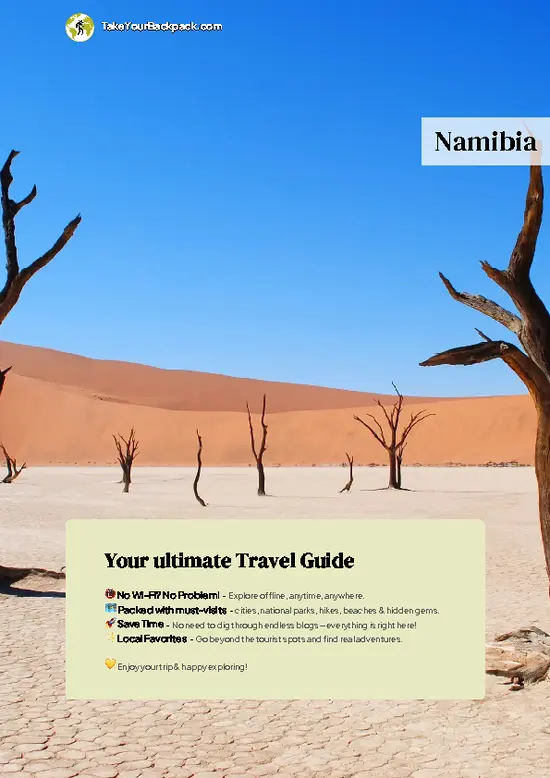
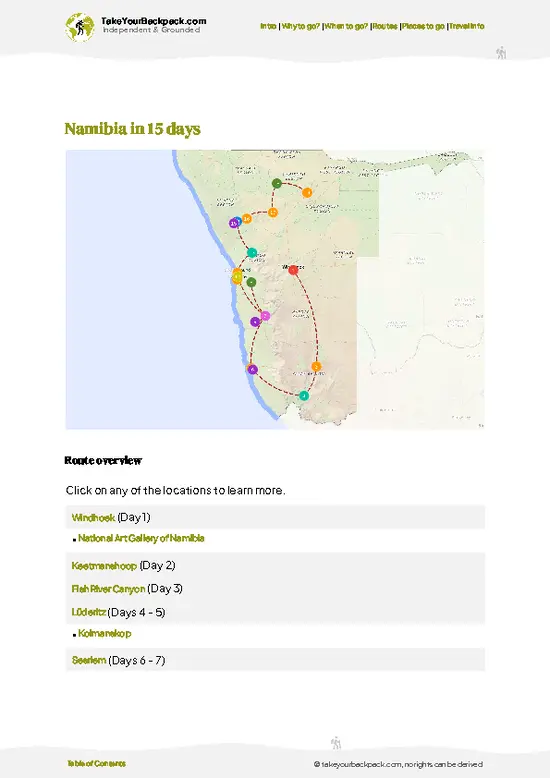
example page 0 from our offline Travel Guide for Namibia
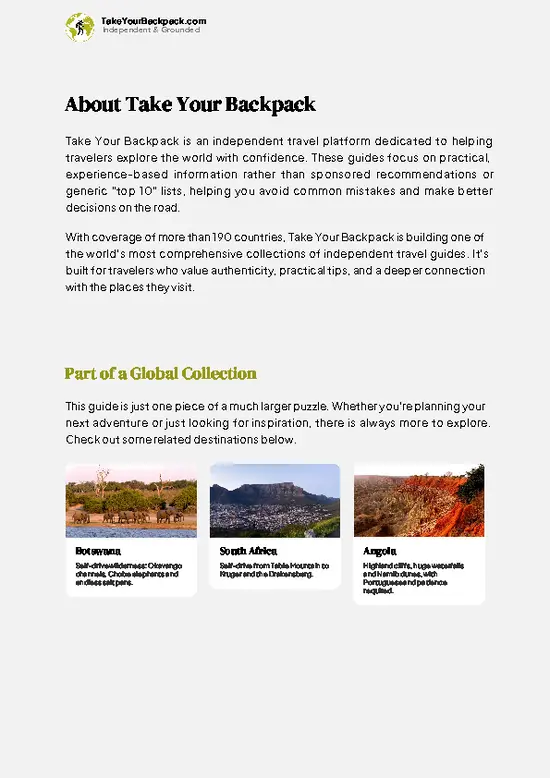
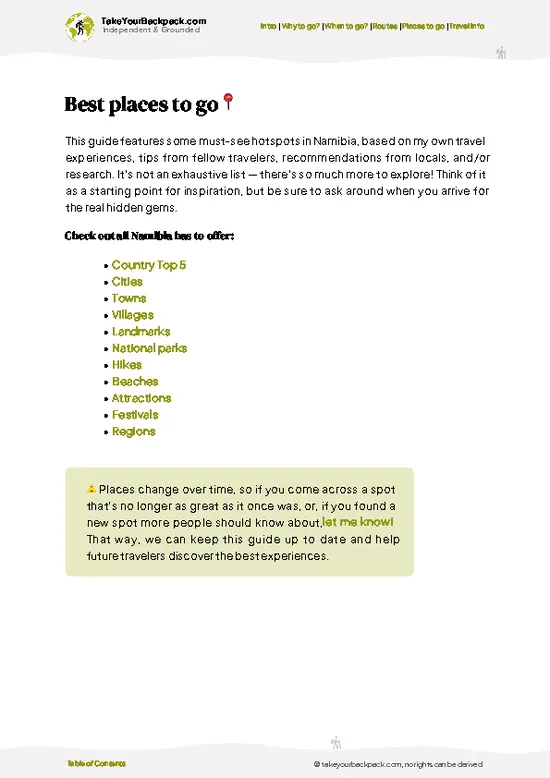
example page 1 from our offline Travel Guide for Namibia
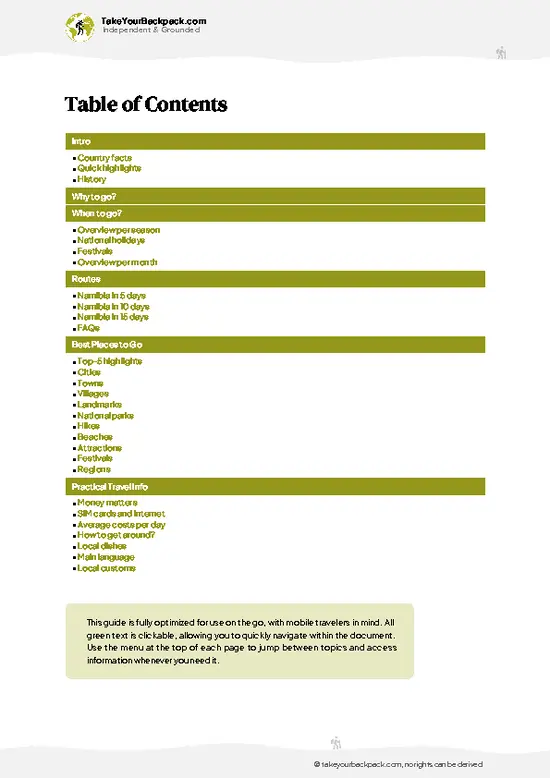
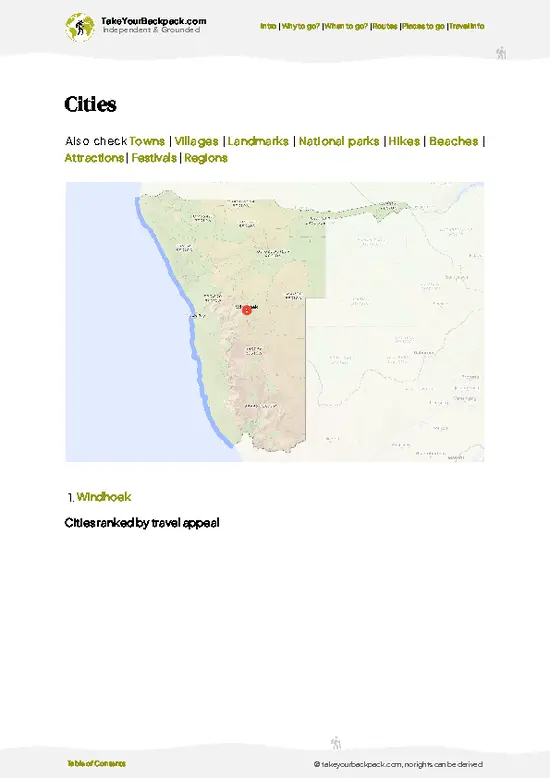
example page 2 from our offline Travel Guide for Namibia
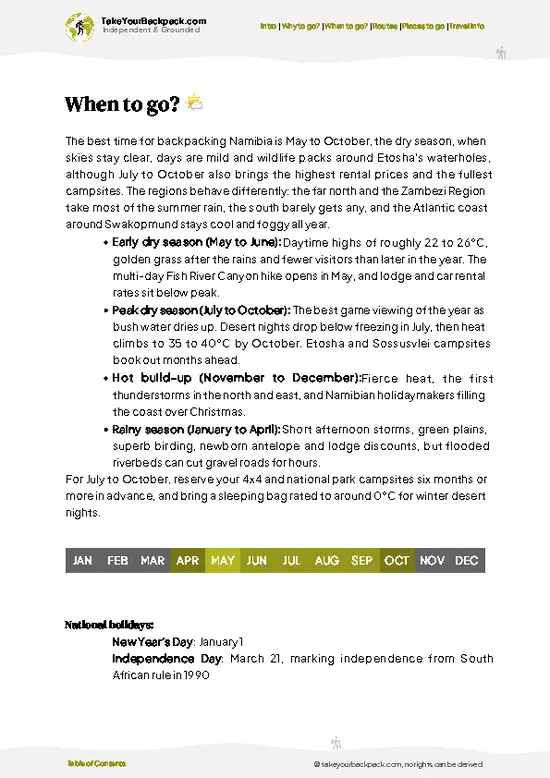
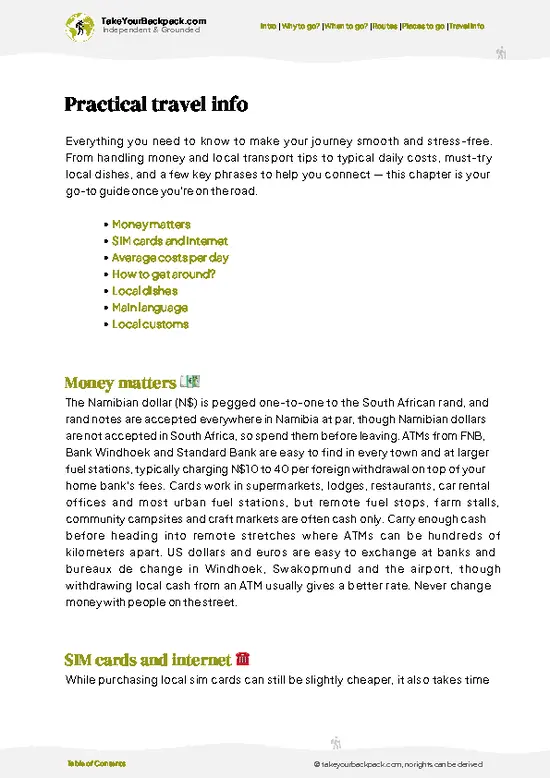
example page 3 from our offline Travel Guide for Namibia
example page 4 from our offline Travel Guide for Namibia
example page 5 from our offline Travel Guide for Namibia
example page 6 from our offline Travel Guide for Namibia
example page 7 from our offline Travel Guide for Namibia
The digital guide (305 pages) contains:
75 highlights, ranked by travel appeal
Optimized 5, 10 & 15-day travel routes
Cities, national parks, landmarks, beaches
How to get around
Offline-friendly for travel without Wi-Fi
👉 Click to see all 30+ guide features

📅 Plan smarter in minutes, not weeks
Month by month travel advice
Festivals & national holidays
Budget expectations

🗺️ Go to the right places, skip the overrated ones
Honest pros & cons of destinations
Top hikes, parks & viewpoints
Lesser-known places most travelers miss
Clear “worth it vs skip it” guidance

🛏️ Travel smoothly without rookie mistakes
Best areas to stay
Transport systems explained simply
Common scams & safety advice
SIM cards, money & practical tips

🌍 Understand the country, not just visit it
Culture & traditions
52 Essential phrases & customs
Festivals worth planning around
Traveler-friendly historical context
Insights that make places more meaningful

📱 Built for real travel conditions
Fully downloadable PDF
Works completely offline
Optimized for phone use
Useful in remote areas & buses
Everything in one place
Save weeks of stressful planning
Get instant access to your full guide. 30‑day money-back guarantee.
+ Add another guide for just US$7.80

By proceeding you agree to our terms.
Sent to your inbox immediately after payment • 100% Secure Checkout
Best Backpacking Travel Advisor 2025 tourism awardBest Backpacking
Travel Advisor
2025
What others say about Take Your Backpack Guides:
⭐⭐⭐⭐⭐
Fantastic, amazing amount of information!
⭐⭐⭐⭐⭐
My goodness this is amazing, it's what I've been looking for hats off too you!
⭐⭐⭐⭐⭐
I think this is absolutely BRILLIANT
⭐⭐⭐⭐
Very complete and informative. It's still missing places, but I gotta to commend you
⭐⭐⭐⭐⭐
This is truly amazing, thank you, can't wait to explore it with my kids!
⭐⭐⭐⭐⭐
Awesome resource, thank you!
⭐⭐⭐⭐⭐
This is amazing! Can't wait to explore the ones I haven't seen
⭐⭐⭐⭐
I love this! Well done, great idea.
⭐⭐⭐⭐⭐
Thanks for taking the time to make this gem!
⭐⭐⭐⭐⭐
This might be the best website I've ever seen.
⭐⭐⭐⭐⭐
Congratulations, and thank you so much for your work; it's incredibly valuable.
⭐⭐⭐⭐
In all seriousness I think you did a great job pointing out the important spots
⭐⭐⭐⭐⭐
10/10 very good
⭐⭐⭐⭐⭐
As someone who's only just starting to visit regularly this is awesome, thank you.
⭐⭐⭐⭐
Thank you very much! I'm going to visit my dad, it's going to be very useful!
⭐⭐⭐⭐⭐
This is really cool! We'll be travelling for the first time and this definitely come in handy.
⭐⭐⭐⭐⭐
You are now our minister of culture, congratulations 👨‍💼
⭐⭐⭐⭐⭐
Just wanted to tell you that this is a pearl! Going to follow your recommendations.
⭐⭐⭐⭐⭐
This is so cool. I'll definitely be using the resource for my travels soon.
⭐⭐⭐⭐⭐
This is very impressive! Good work.
⭐⭐⭐⭐⭐
This is an amazing and informative site. Very well done!

🛏️ Where to stay?Where staying makes the most sense

For backpackers heading to Nkasa Rupara National Park, options are limited but solid. Inside the park, you’ll find Nkasa Rupara Camp. It’s basic but offers a genuine experience, with tents set up along the river. Bring your own supplies; the camp is remote, and amenities are minimal.

If you prefer a bit more comfort, consider staying in nearby towns like Kongola or Katima Mulilo. Both have guesthouses and lodges that cater to budget travelers. Kongola is closer, with a few local eateries to refuel after a day of exploring.

Be aware of the park’s access fees, which can add up if you’re planning … read more 👉
For backpackers heading to Nkasa Rupara National Park, options are limited but solid. Inside the park, you’ll find Nkasa Rupara Camp. It’s basic but offers a genuine experience, with tents set up along the river. Bring your own supplies; the camp is remote, and amenities are minimal.

If you prefer a bit more comfort, consider staying in nearby towns like Kongola or Katima Mulilo. Both have guesthouses and lodges that cater to budget travelers. Kongola is closer, with a few local eateries to refuel after a day of exploring.

Be aware of the park’s access fees, which can add up if you’re planning multiple visits. Also, check for seasonal flooding; it can affect road access and your overall experience. Planning ahead will save you time and energy, allowing you to focus on the wildlife and landscapes that make this park special.

👛 Costs (as of 3 September 2026)Money, prices, and spending tips

Visiting Nkasa Rupara National Park in Namibia requires some financial planning. Here’s what to expect.

Entry fees for the park are around $10 to $15 per person. This fee grants you access to the park’s diverse wildlife and stunning landscapes.

If you’re considering guided tours, prices can vary significantly. Expect to pay between $50 and $150 per person for a half-day tour. Full-day tours can range from $100 to $300, depending on the inclusions like meals or transportation.

Accommodation options nearby can also impact your budget. Campsites within the park typically charge around $10 to $20 per night. If you prefer more comfort, lodges can range from $80 to $200 per night, depending on the level of luxury and amenities.

Fuel costs should not be overlooked. Gas prices in Namibia hover … read more 👉
Visiting Nkasa Rupara National Park in Namibia requires some financial planning. Here’s what to expect.

Entry fees for the park are around $10 to $15 per person. This fee grants you access to the park’s diverse wildlife and stunning landscapes.

If you’re considering guided tours, prices can vary significantly. Expect to pay between $50 and $150 per person for a half-day tour. Full-day tours can range from $100 to $300, depending on the inclusions like meals or transportation.

Accommodation options nearby can also impact your budget. Campsites within the park typically charge around $10 to $20 per night. If you prefer more comfort, lodges can range from $80 to $200 per night, depending on the level of luxury and amenities.

Fuel costs should not be overlooked. Gas prices in Namibia hover around $1.20 to $1.50 per liter. If you’re driving, factor in the distance to the park and your vehicle’s fuel efficiency.

Lastly, always have a buffer for unexpected expenses. Whether it’s a last-minute guided tour or a snack at a local shop, a little extra cash can go a long way in enhancing your experience.
⚠️ Prices can change and everyone travels differently, so take this as a rough guide. Hope it helps you plan your adventure!

🥾 TrailsPlan your hike in Nkasa Rupara: routes, terrain, and sights

Nkasa Rupara National Park is a hidden gem in Namibia, offering a mix of wetlands and savannah that make for some stunning views. The terrain varies from flat, open grasslands to dense thickets, and the park is crisscrossed by rivers and channels, which can make for some interesting navigation. Wildlife is abundant here; you might spot elephants, hippos, and a variety of bird species, making it a paradise for nature lovers.

While there aren’t a ton of well-marked trails, one notable option is the Nkasa Rupara Trail. Here are the details:
  • Length: 10 km
  • Estimated Duration: 3-4 hours
  • Difficulty Level:
read more 👉
Nkasa Rupara National Park is a hidden gem in Namibia, offering a mix of wetlands and savannah that make for some stunning views. The terrain varies from flat, open grasslands to dense thickets, and the park is crisscrossed by rivers and channels, which can make for some interesting navigation. Wildlife is abundant here; you might spot elephants, hippos, and a variety of bird species, making it a paradise for nature lovers.

While there aren’t a ton of well-marked trails, one notable option is the Nkasa Rupara Trail. Here are the details:
  • Length: 10 km
  • Estimated Duration: 3-4 hours
  • Difficulty Level: Moderate
  • Key Features: Scenic river views, diverse flora and fauna, potential wildlife sightings
  • Terrain: Mix of flat paths and some uneven ground

Getting to the park can be a bit of an adventure. Public transport options are limited, but you can catch a bus to nearby towns and then arrange for a taxi or shuttle to the park entrance. Expect it to be pretty quiet; crowds are rare, so you can enjoy the serenity. As for the entrance fee, it’s usually around 50 Namibian dollars, which is a steal for the experience you’ll get. Just make sure to check for any updates before you go!
⚠️ Hiking info can sometimes be outdated or inaccurate. Before you hit the trail, check the latest conditions with locals. If you do spot anything that's off, I'd love to hear from you, so I can update it for fellow travelers.

🛡️ SafetySafety Tips and Common Scams in Nkasa Rupara

Nkasa Rupara National Park offers a generally straightforward experience, but a few realities can catch you off guard. Weather can shift quickly, so pack layers and be ready for sudden changes. The terrain is mostly flat, but some trails can be muddy or uneven, especially after rain. Navigation is usually clear, but keep a map handy; cell service is spotty.

Wildlife encounters are common, so maintain a respectful distance. If you spot elephants or hippos, give them space and avoid startling them. Lastly, don’t underestimate the sun—apply sunscreen regularly and stay hydrated. With these practical tips, you’ll preserve your energy and budget for the moments that truly matter.

FAQTraveler FAQ

3 to 4 days are ideal to explore Nkasa Rupara National Park thoroughly, allowing time for game drives and bird watching. The park is remote, so extra days help accommodate travel time and enjoy the diverse wildlife.
No, visiting Nkasa Rupara National Park without a car is difficult due to its remote location and lack of public transport. Most visitors rent 4x4 vehicles or join guided tours that provide transport within the park.
Yes, an entrance fee is required to enter Nkasa Rupara National Park. The fee is approximately 100 Namibian dollars per person per day, and permits must be purchased at the park entrance or through authorized tour operators.
⚠️ Things can change over time, so always validate details locally before you go.

Other Namibian national parks near Nkasa Rupara

Explore more nearby:


💡 Not sure where to go next?
Create a personalized itinerary for Namibia including Nkasa Rupara and the places that fit your trip.

Generate my itinerary

👉 Discover all national parks

Or checkout all Namibia has to offer (think cities, towns, villages, national parks, hikes, beaches, festivals)
Country photo of Namibia

We 💚 feedbackIs it worth it?

Nkasa Rupara National Park has a raw, untouched vibe that feels like stepping into a living postcard. The best surprise? The wildlife is often just a few feet away, and the sunsets are pure magic. Just a heads-up: the roads can be rough, so take it slow to preserve your energy for those unforgettable moments.

✍️ Help improve this page!
The information on this page is based on in-depth research, insights shared by experienced travelers, and feedback from the local travel community in Namibia. While every effort is made to keep the information accurate and current, conditions can change — so if you spot anything incorrect or outdated, please get in touch.


🙋‍♂️ Give feedback

👋 Meet the founderWho’s Behind Take Your Backpack?

Johan, backpacker and founder of TakeYourBackpackHi, I’m Johan (Netherlands 🇳🇱), the creator of TakeYourBackpack. Over the past decade, I’ve backpacked through 80+ countries across six continents, gaining extensive experience with independent travel, long-term trips, and overland routes.

This site is built on a combination of firsthand travel experience and carefully curated insights from other backpackers. Many guides are based on places I’ve personally visited, while others bring together tips, observations, and practical advice shared by trusted travelers I’ve met along the way.

The goal is to provide realistic, experience-driven guidance — not generic itineraries — so you can explore destinations with better context, clearer expectations, and more confidence.

Get full Namibia guide •
Instant download • 75 highlights • Full Offline guide