×

Namibia🇳🇦 | attractionsLiving Museum of the Ju/’Hoansi-Sanbush survival, tracking, San language | things to do and best time to go

Explore Living Museum of the DamaraExplore Nakambale Museum & Mission Station

Backpacking in Living Museum of the Ju/’Hoansi-San
🌟 Highlightattraction ranked #5
By Johan Kruseman 🇳🇱 | Updated May 17, 2026

Forget the fantasy of “dancing bushmen for your camera” — the Living Museum of the Ju/’Hoansi-San isn’t a theme park or a sanitized cultural show. It’s a raw, participatory window into the daily life, skills, and worldview of one of humanity’s oldest lineages, set in the sun-baked bush near Grashoek in Namibia’s Otjozondjupa region, far from the Etosha safari circuit or the Instagrammed dunes of Sossusvlei. Here, you’re not just watching; you’re learning to make fire by hand, tracking animals, and hearing stories that predate any colonial map. The wow-factor isn’t in spectacle, but in the quiet, unfiltered moments — a bowstring humming, laughter around a smoky fire, the realization that you’re a guest in someone else’s living history. Yes, it’s remote and the journey isn’t cheap or quick, but the crowds are thin and the experience is refreshingly unscripted. Compared to Namibia’s blockbuster sights, this is less postcard, more passport stamp for your soul.

Discover everything you want to know in the 📖 Namibia Travel Guide.


Get your Namibia guide
79 ranked highlights, routes & tips, works offline (319 pages)
Loading the map 🌍
CLICK TO FILTER
cities
towns
villages
landmarks
national parks
hikes
beaches
attractions
festivals
regions
SHOW COUNTRY’S BESTSHOW ALL

✨ Why go?
Ranked #5 attraction in Namibia
Why Living Museum of the Ju/’Hoansi-San should be on your travel list

The Living Museum of the Ju/’Hoansi-San in Namibia isn’t just another stop on the tourist checklist—it’s a raw, unfiltered dive into one of the world’s oldest continuous cultures. Forget the polished, sanitized exhibits you might expect. This place throws you into the thick of Ju/’Hoansi-San life, where traditions aren’t relics but living, breathing realities. Yes, it’s popular, so expect crowds, especially during peak season. But that’s part of the deal when you’re chasing authenticity in a world that’s increasingly packaged and predictable.

What hooks backpackers here is the cultural significance—you’re not just looking at artifacts behind glass; you’re witnessing survival strategies honed over tens of thousands of years. The museum’s interactive approach means you get to see, hear, and … read more 👉
The Living Museum of the Ju/’Hoansi-San in Namibia isn’t just another stop on the tourist checklist—it’s a raw, unfiltered dive into one of the world’s oldest continuous cultures. Forget the polished, sanitized exhibits you might expect. This place throws you into the thick of Ju/’Hoansi-San life, where traditions aren’t relics but living, breathing realities. Yes, it’s popular, so expect crowds, especially during peak season. But that’s part of the deal when you’re chasing authenticity in a world that’s increasingly packaged and predictable.

What hooks backpackers here is the cultural significance—you’re not just looking at artifacts behind glass; you’re witnessing survival strategies honed over tens of thousands of years. The museum’s interactive approach means you get to see, hear, and sometimes even try the skills that have kept the Ju/’Hoansi-San connected to their land and each other. It’s a milestone on any Namibian route because it grounds your journey in the deep history of human resilience and adaptation.

The effort-to-reward ratio is high. It’s not a quick, easy stop. You’ll need time and patience to absorb the stories and the subtle lessons embedded in daily life here. But if you’re willing to lean in, the payoff is a perspective shift that no Instagram snapshot can capture. This is where history, culture, and humanity collide in a way that sticks with you long after you’ve left.
Want to include Living Museum of the Ju/’Hoansi-San in your Namibia route?
Create a personalized Namibia itinerary that includes Living Museum of the Ju/’Hoansi-San and the places that fit your trip — based on your travel style, budget, and available time. Get your route in seconds.

Generate my trip

💡 HighlightsMust-see experiences and standout moments

1. Fire-Making by Hand
Forget the Instagram slow-mo of sparks flying—this is sweat, friction, and a real sense of stakes. The Ju/’Hoansi-San don’t just show you how to make fire with sticks; they make you feel the pressure of survival. You’ll see hands calloused by decades of practice, coaxing a coal from dry wood and grass, all while cracking jokes in a language that pops with clicks. It’s not a magic trick. It’s a skill honed over millennia, and when that first wisp of smoke curls up, you realize you’re watching a living thread of human history—no filters, no shortcuts.


2. Tracking and Trapping Demonstrations
This isn’t a sanitized nature walk. The guides—actual Ju/’Hoansi-San hunters—read the ground like a novel. They’ll point out a barely-there hoof print, a snapped twig, a tuft of fur, … read more 👉
1. Fire-Making by Hand
Forget the Instagram slow-mo of sparks flying—this is sweat, friction, and a real sense of stakes. The Ju/’Hoansi-San don’t just show you how to make fire with sticks; they make you feel the pressure of survival. You’ll see hands calloused by decades of practice, coaxing a coal from dry wood and grass, all while cracking jokes in a language that pops with clicks. It’s not a magic trick. It’s a skill honed over millennia, and when that first wisp of smoke curls up, you realize you’re watching a living thread of human history—no filters, no shortcuts.


2. Tracking and Trapping Demonstrations
This isn’t a sanitized nature walk. The guides—actual Ju/’Hoansi-San hunters—read the ground like a novel. They’ll point out a barely-there hoof print, a snapped twig, a tuft of fur, and suddenly you’re seeing a whole story unfold in the sand. Then comes the trap-making: ingenious, brutal, and efficient. You’ll witness how a snare is set using nothing but local materials, and you’ll understand why these skills kept people alive in a place that doesn’t forgive mistakes. It’s not about spectacle; it’s about the thrill of seeing expertise in action.


3. Traditional Bow and Arrow Practice
You’re not just watching—if you’re game, you’ll get a bow in your hands. The arrows are short, feathered, and tipped with poison (don’t worry, they’re not using the real stuff for tourists). The Ju/’Hoansi-San archers make it look easy, but the moment you try to draw and aim, you realize how much strength and finesse it takes. The entertainment here is in the humility: you’ll miss, you’ll laugh, and you’ll respect the skill it takes to hunt dinner with these tools.


4. Storytelling Around the Fire
This is where the museum drops the ‘museum’ act and becomes a living, breathing community. As dusk falls, the elders gather around the fire and the stories start—some are ancient myths, others are sharp, funny commentaries on modern life. The language barrier is real, but the rhythm, gestures, and laughter are universal. You’re not just hearing about the Ju/’Hoansi-San; you’re being welcomed into their world, if only for an evening.


5. Healing Dance Ritual
If you’re lucky enough to catch this, it’s not a performance—it’s a ceremony. The trance dance is raw, intense, and deeply personal. The drumming, the singing, the stamping feet: it’s a communal act of healing and connection, not a show for outsiders. You’ll feel the energy ripple through the sand, and for a moment, you’ll understand why this ritual has survived against all odds. It’s not comfortable, and it’s not always easy to watch, but it’s real. That’s the point.
Spotted a mistake or missing something? Contact us.

🌤️ When to go?Best time to visit Living Museum of the Ju/’Hoansi-San


  • Weather: The best time to visit the Living Museum of the Ju/’Hoansi-San is during Namibia’s dry season, from May to October. Expect clear skies and minimal rain, which means dusty trails but no mud to slow you down. Avoid the rainy season (November to April) when the area can be wet and less accessible.

  • Temperature: Daytime temperatures in the dry season hover between 20°C and 28°C (68°F to 82°F), perfect for hiking and exploring without overheating. Nights can get chilly, dropping to around 5°C (41°F), so pack layers. The wet season is hotter and more humid, often pushing above 30°C (86°F).

  • Daylight Hours: From May to August, you get long, bright days with about 11 to 12 hours of daylight—ideal for maximizing your time outdoors. The sun sets earlier in June and July, so plan your activities
read more 👉

  • Weather: The best time to visit the Living Museum of the Ju/’Hoansi-San is during Namibia’s dry season, from May to October. Expect clear skies and minimal rain, which means dusty trails but no mud to slow you down. Avoid the rainy season (November to April) when the area can be wet and less accessible.

  • Temperature: Daytime temperatures in the dry season hover between 20°C and 28°C (68°F to 82°F), perfect for hiking and exploring without overheating. Nights can get chilly, dropping to around 5°C (41°F), so pack layers. The wet season is hotter and more humid, often pushing above 30°C (86°F).

  • Daylight Hours: From May to August, you get long, bright days with about 11 to 12 hours of daylight—ideal for maximizing your time outdoors. The sun sets earlier in June and July, so plan your activities accordingly.

  • Crowds: This isn’t a tourist hotspot, but the dry season attracts more visitors. You’ll find a few small groups, but nothing overwhelming. The wet season sees fewer travelers, offering a quieter, more intimate experience if you don’t mind the occasional rain.

  • Seasonal Activities: Dry months are prime for cultural demonstrations, tracking, and storytelling around the fire. The wet season brings lush landscapes and more wildlife activity, but some trails might be off-limits.

  • Price Fluctuations: Prices tend to peak in the dry season due to demand, especially from June to August. Booking ahead can save you some cash. The wet season offers lower rates but fewer guaranteed activities.


Pro-tip: Aim for May or September to catch great weather, fewer crowds, and better prices—sweet spot for authentic Ju/’Hoansi-San immersion without the hassle.


source: climatestotravel.comJANJanuary: fair for travelingFEBFebruary: fair for travelingMARMarch: fair for travelingAPRApril: fair for travelingMAYMay: excellent for travelingJUNJune: highly recommended for travelingJULJuly: highly recommended for travelingAUGAugust: highly recommended for travelingSEPSeptember: excellent for travelingOCTOctober: excellent for travelingNOVNovember: fair for travelingDECDecember: fair for traveling
when-to-go

✈️ The backpacker research shortcutNamibia Travel Guide

An offline-friendly backpacking guide with optimized travel routes, ranked highlights, transport advice, and the best areas to stay.
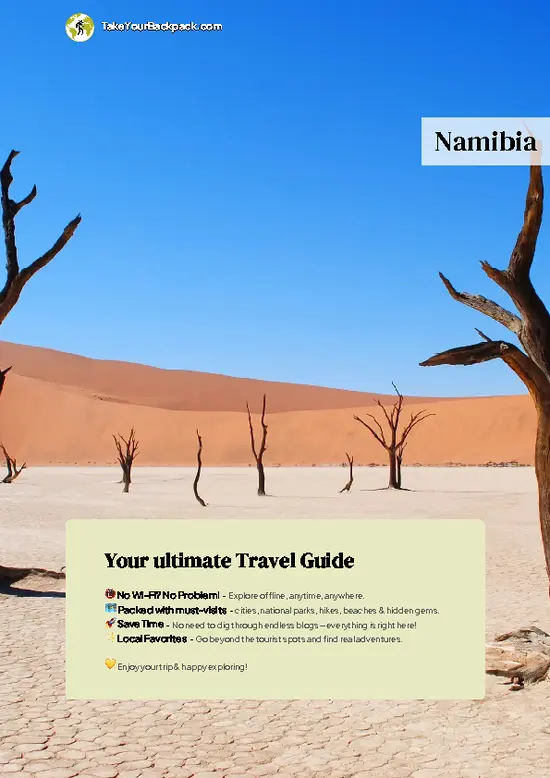
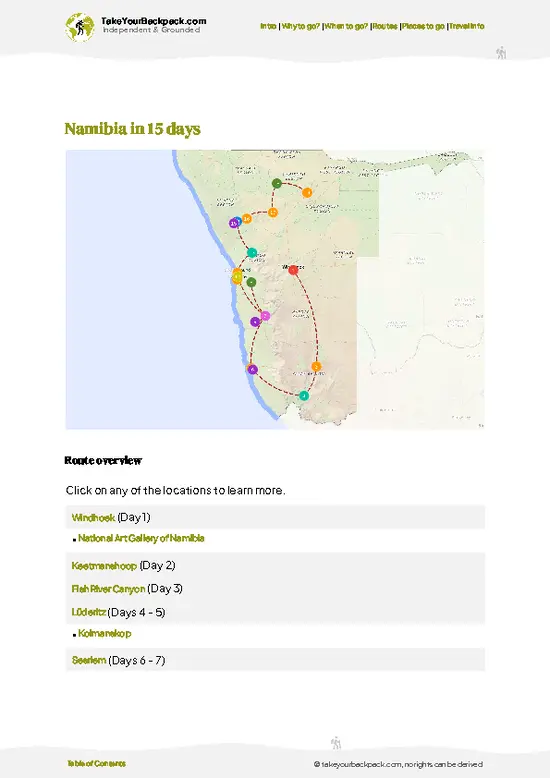
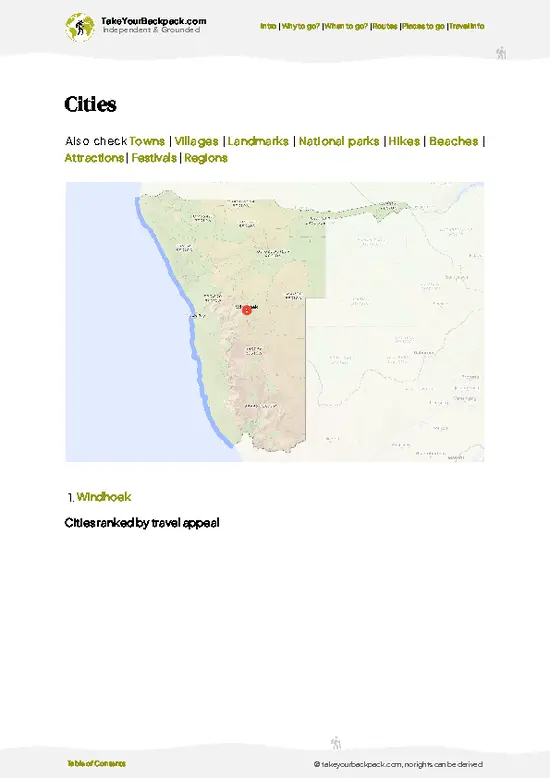
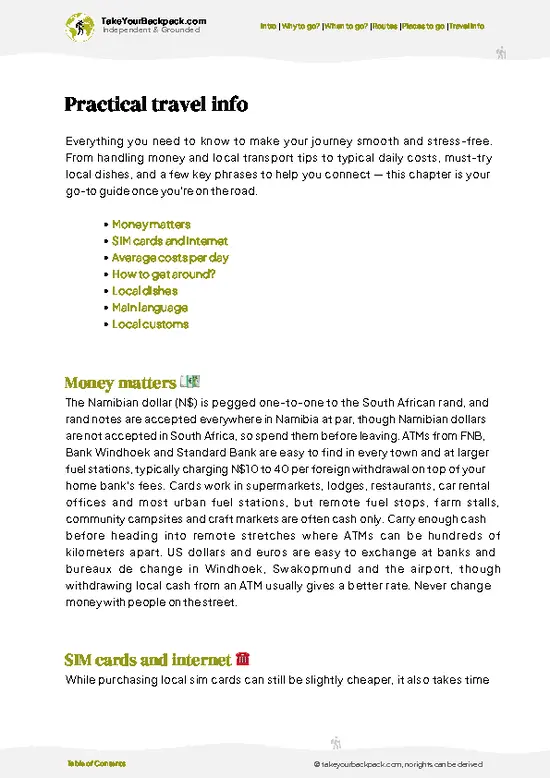
example page 0 from our offline Travel Guide for Namibia
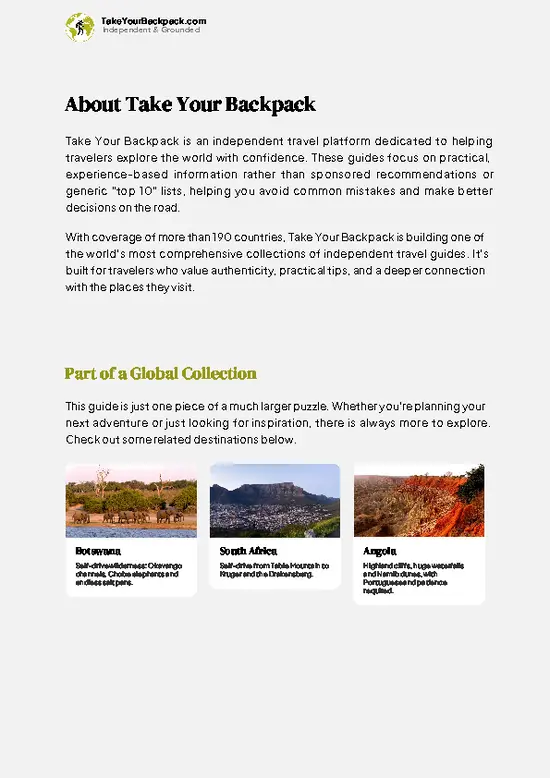
example page 1 from our offline Travel Guide for Namibia
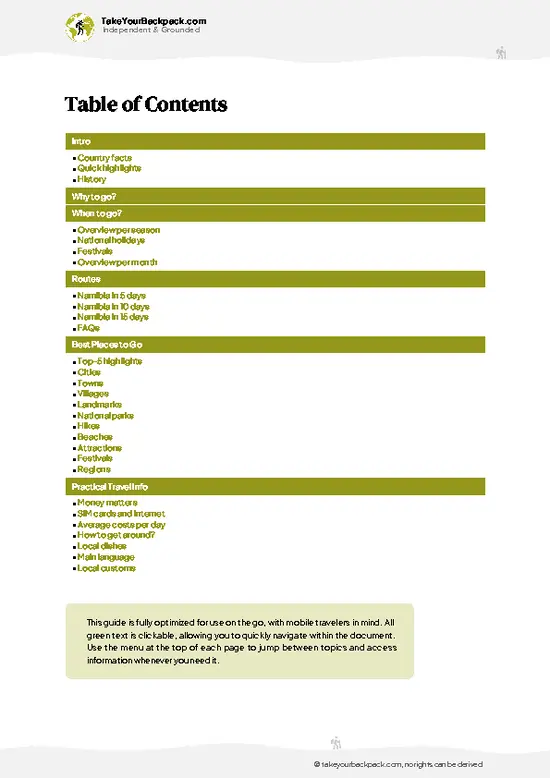
example page 2 from our offline Travel Guide for Namibia
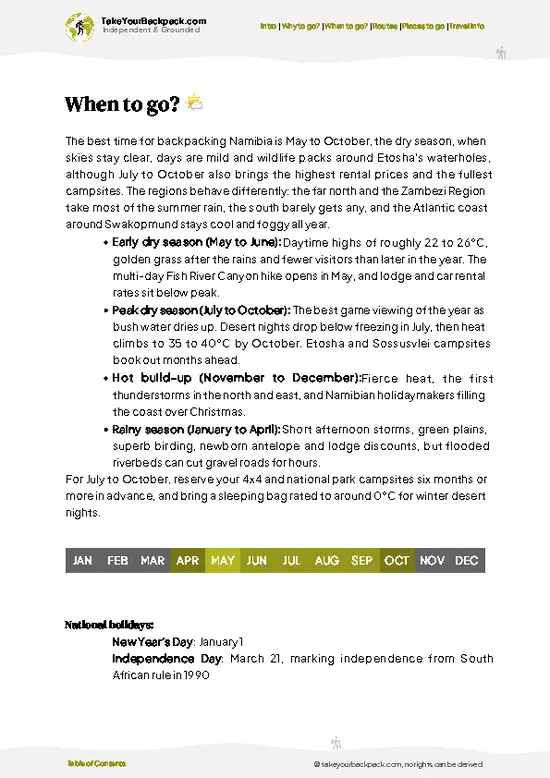
example page 3 from our offline Travel Guide for Namibia
example page 4 from our offline Travel Guide for Namibia
example page 5 from our offline Travel Guide for Namibia
example page 6 from our offline Travel Guide for Namibia
example page 7 from our offline Travel Guide for Namibia
The digital guide (319 pages) contains:
79 highlights, ranked by travel appeal
Optimized 5, 10 & 15-day travel routes
Cities, national parks, landmarks, beaches
How to get around
Offline-friendly for travel without Wi-Fi
👉 Click to see all 30+ guide features

📅 Plan smarter in minutes, not weeks
Month by month travel advice
Festivals & national holidays
Budget expectations

🗺️ Go to the right places, skip the overrated ones
Honest pros & cons of destinations
Top hikes, parks & viewpoints
Lesser-known places most travelers miss
Clear “worth it vs skip it” guidance

🛏️ Travel smoothly without rookie mistakes
Best areas to stay
Transport systems explained simply
Common scams & safety advice
SIM cards, money & practical tips

🌍 Understand the country, not just visit it
Culture & traditions
52 Essential phrases & customs
Festivals worth planning around
Traveler-friendly historical context
Insights that make places more meaningful

📱 Built for real travel conditions
Fully downloadable PDF
Works completely offline
Optimized for phone use
Useful in remote areas & buses
Everything in one place
Save weeks of stressful planning
Get instant access to your full guide. 30‑day money-back guarantee.


By proceeding you agree to our terms.
Sent to your inbox immediately after payment • 100% Secure Checkout
Best Backpacking Travel Advisor 2025 tourism awardBest Backpacking
Travel Advisor
2025
What others say about Take Your Backpack Guides:
⭐⭐⭐⭐⭐
Fantastic, amazing amount of information!
⭐⭐⭐⭐⭐
My goodness this is amazing, it's what I've been looking for hats off too you!
⭐⭐⭐⭐⭐
I think this is absolutely BRILLIANT
⭐⭐⭐⭐
Very complete and informative. It's still missing places, but I gotta to commend you
⭐⭐⭐⭐⭐
This is truly amazing, thank you, can't wait to explore it with my kids!
⭐⭐⭐⭐⭐
Awesome resource, thank you!
⭐⭐⭐⭐⭐
This is amazing! Can't wait to explore the ones I haven't seen
⭐⭐⭐⭐
I love this! Well done, great idea.
⭐⭐⭐⭐⭐
Thanks for taking the time to make this gem!
⭐⭐⭐⭐⭐
This might be the best website I've ever seen.
⭐⭐⭐⭐⭐
Congratulations, and thank you so much for your work; it's incredibly valuable.
⭐⭐⭐⭐
In all seriousness I think you did a great job pointing out the important spots
⭐⭐⭐⭐⭐
10/10 very good
⭐⭐⭐⭐⭐
As someone who's only just starting to visit regularly this is awesome, thank you.
⭐⭐⭐⭐
Thank you very much! I'm going to visit my dad, it's going to be very useful!
⭐⭐⭐⭐⭐
This is really cool! We'll be travelling for the first time and this definitely come in handy.
⭐⭐⭐⭐⭐
You are now our minister of culture, congratulations 👨‍💼
⭐⭐⭐⭐⭐
Just wanted to tell you that this is a pearl! Going to follow your recommendations.
⭐⭐⭐⭐⭐
This is so cool. I'll definitely be using the resource for my travels soon.
⭐⭐⭐⭐⭐
This is very impressive! Good work.
⭐⭐⭐⭐⭐
This is an amazing and informative site. Very well done!

🛏️ Where to stay?Best areas and accommodation options

The Living Museum of the Ju/’Hoansi-San is a rare window into a culture that’s often romanticized but rarely understood. Let’s cut through the Instagram gloss: this isn’t a polished tourist trap with endless amenities. It’s remote, raw, and yes, getting there and staying nearby isn’t cheap or easy. The crowds? They’re small but steady, mostly serious travelers and researchers, not party-seeking backpackers. So if you’re expecting a buzzing hostel scene, you’ll be disappointed.

That said, the real magic lies in the areas around Tsumkwe and the broader Kalahari region. Tsumkwe is your best bet … read more 👉
The Living Museum of the Ju/’Hoansi-San is a rare window into a culture that’s often romanticized but rarely understood. Let’s cut through the Instagram gloss: this isn’t a polished tourist trap with endless amenities. It’s remote, raw, and yes, getting there and staying nearby isn’t cheap or easy. The crowds? They’re small but steady, mostly serious travelers and researchers, not party-seeking backpackers. So if you’re expecting a buzzing hostel scene, you’ll be disappointed.

That said, the real magic lies in the areas around Tsumkwe and the broader Kalahari region. Tsumkwe is your best bet for a safe, social base camp. It’s a small settlement but the hub for anyone wanting to dive deep into Ju/’Hoansi culture. Here, you’ll find guesthouses and community-run lodges that attract budget travelers and solo backpackers who want to connect with locals and fellow adventurers. It’s not luxury, but it’s authentic and grounded.

Staying in Tsumkwe means you’re close enough for day trips to the museum and other cultural experiences, but far enough from tourist overload to keep it real. The vibe is quiet but welcoming, with a chance to swap stories around a fire rather than drown in Wi-Fi. If you want to experience the Ju/’Hoansi beyond the surface, this is where you plant your flag.

👛 Costs (as of 21 December 2024)What things cost and how to budget

The Living Museum of the Ju/'Hoansi-San offers various programs ranging from N$ 50.00 to N$ 600.00 per person, with camping facilities at N$ 70.00 per person per day. ([museums.com.na](https://www.museums.com.na/museums/north/juhoansi-living-museum?utm_source=openai)) As of the latest exchange rates, this translates to approximately €15 to €50 per person per program.

source: lcfn.info
⚠️ Prices can change and everyone travels differently, so take this as a rough guide. Hope it helps you plan your adventure!

Other Namibian attractions near Living Museum of the Ju/’Hoansi-San

Explore more nearby:


💡 Not sure where to go next?
Create a personalized itinerary for Namibia including Living Museum of the Ju/’Hoansi-San and the places that fit your trip.

Generate my itinerary

👉 Discover all attractions

Or checkout all Namibia has to offer (think cities, towns, villages, national parks, hikes, beaches, festivals)
Country photo of Namibia

We 💚 feedbackWhat to keep in mind

The Living Museum of the Ju/’Hoansi-San isn’t a polished theme park—it’s raw and real, sometimes crowded with curious tourists, which can dilute the intimacy you’re after. But here’s the kicker: when the group thins and the elders start sharing stories or demonstrating their ancient skills, that’s when the place stops feeling like a show and starts feeling like a rare window into a world that’s stubbornly alive. Don’t expect luxury or quiet; expect authenticity that grabs you by the guts.

✍️ Help improve this page!
The information on this page is based on in-depth research, insights shared by experienced travelers, and feedback from the local travel community in Namibia. While every effort is made to keep the information accurate and current, conditions can change — so if you spot anything incorrect or outdated, please get in touch.


🙋‍♂️ Give feedback

👋 Meet the founderWho’s Behind Take Your Backpack?

Johan, backpacker and founder of TakeYourBackpackHi, I’m Johan (Netherlands 🇳🇱), the creator of TakeYourBackpack. Over the past decade, I’ve backpacked through 80+ countries across six continents, gaining extensive experience with independent travel, long-term trips, and overland routes.

This site is built on a combination of firsthand travel experience and carefully curated insights from other backpackers. Many guides are based on places I’ve personally visited, while others bring together tips, observations, and practical advice shared by trusted travelers I’ve met along the way.

The goal is to provide realistic, experience-driven guidance — not generic itineraries — so you can explore destinations with better context, clearer expectations, and more confidence.

Get full Namibia guide •
Instant download • 79 highlights • Full Offline guide